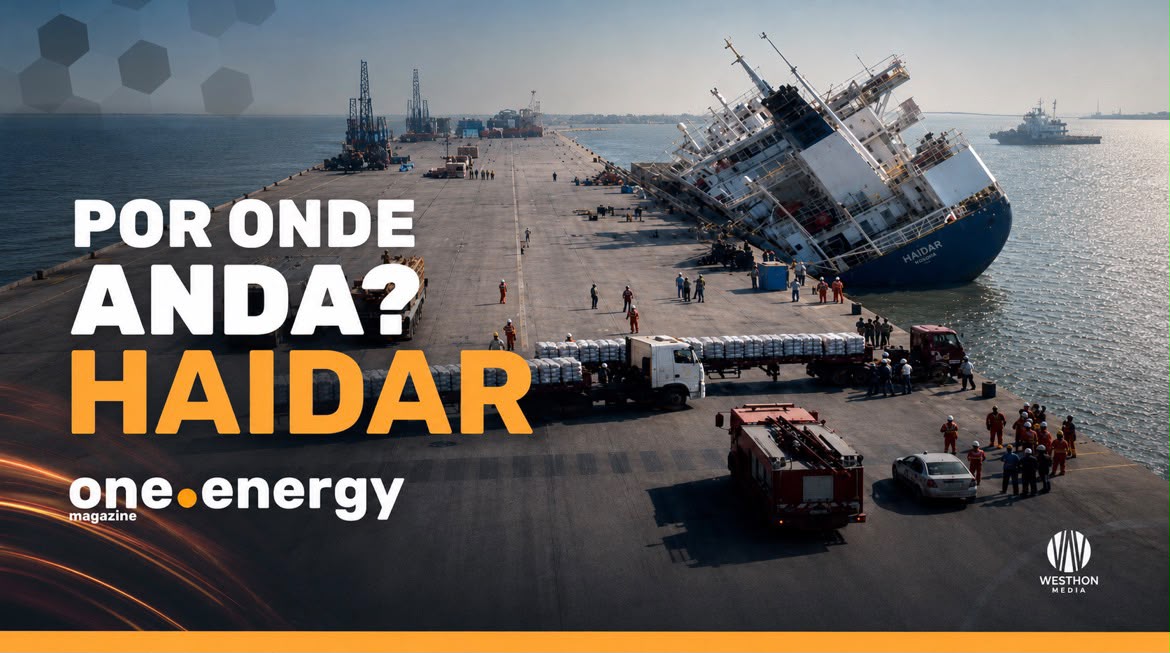
At around 8:45 a.m. on October 6, 2015, the Haidar, moored portside at Pier 302 in the Port of Vila do Conde, Barcarena, Pará, lost stability, listed and eventually sank. On board were nearly 5,000 live cattle bound for Venezuela. Although there were no human casualties, the accident became one of the worst socio-environmental disasters ever recorded in the state of Pará.
Built in 1994, the Haidar (IMO 9083067) sailed under the Lebanese flag and measured 116.96 metres in length, with a gross tonnage of 6,419. Originally built as a containership, the vessel was later converted into a livestock carrier. It was owned by Lebanese shipowner Hussein Ahmad Sleiman, operated by Tamara Shipping, and was carrying cargo belonging to Minerva S/A.
Nearly all of the animals drowned inside the vessel’s livestock pens, while an estimated 700,000 litres of fuel and diesel products spilled into the Pará River, contaminating beaches, aquatic ecosystems and disrupting the daily lives of riverside communities in Barcarena and Abaetetuba. The social impact was severe: beaches remained closed for weeks, local fishing activities declined sharply, and many residents temporarily left their homes for Belém and Abaetetuba to escape the overwhelming odour caused by the decomposition of thousands of animal carcasses.
In 2018, a Conduct Adjustment Agreement (TAC) secured compensation for affected families. However, another oil leak detected months later revealed that residual fuel remained trapped inside the wreck. An attempt to remove the vessel, awarded to Superpesa in 2019 under a BRL 44.6 million contract, also failed to move forward. The company was ultimately fined and suspended by Brazil’s National Department of Transport Infrastructure (DNIT) in 2022 for failing to complete the project. In the United Kingdom, a claim filed by the law firm Pogust Goodhead on behalf of more than 18,000 local residents against Salic (UK) Limited, an investor linked to Minerva, was dismissed in May 2026, not on the merits of the case, but over questions surrounding the legal standing of the claimants’ representation.
Por Onde Anda?
Ten years later, Haidar remains submerged at the same location in the Port of Vila do Conde. In November 2025, Brazil’s Federal Public Prosecutor’s Office (MPF) filed a new civil lawsuit seeking the permanent removal of the wreck, warning that as much as 215,000 litres of oil may still be trapped inside the hull. The MPF argues that the wreck continues to pose environmental risks while restricting port operations in the surrounding berths. While the Federal Court has yet to issue a final decision, Haidar remains on the riverbed, where it has been since October 2015.
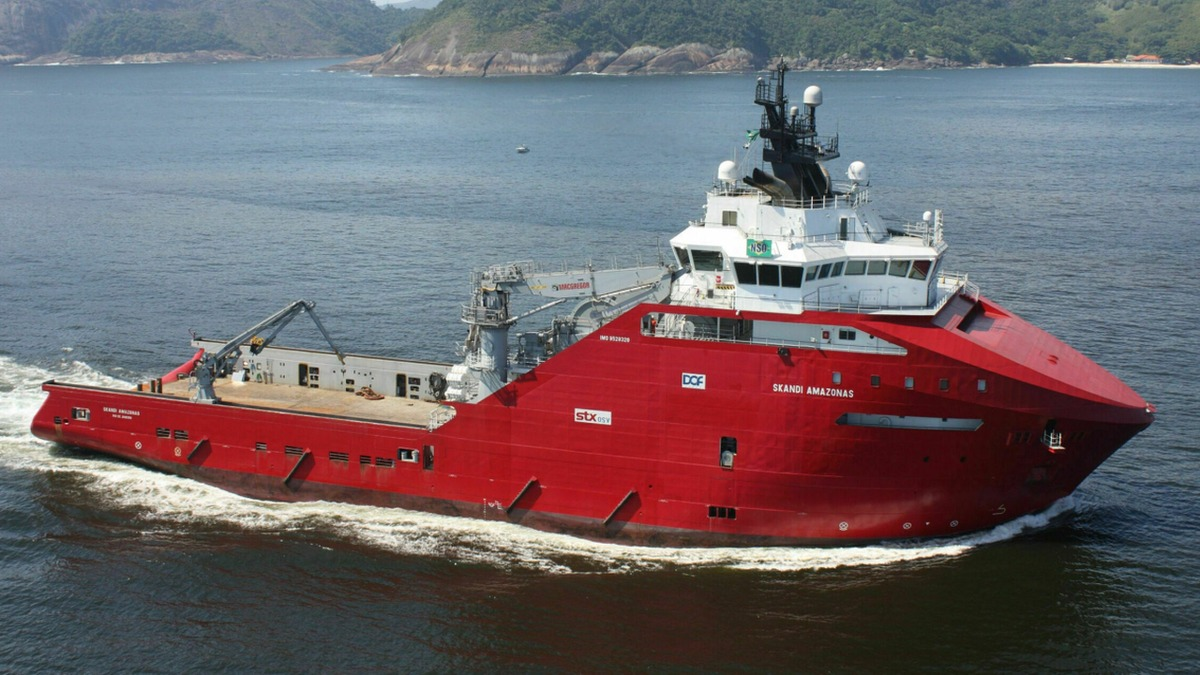
DOF has provided a market update on the two most significant incidents involving its fleet in recent months, confirming the constructive total loss of the AHTS Skandi Amazonas while also outlining the latest developments regarding the electrical incident aboard Skandi Logger.
Regarding Skandi Amazonas, the company confirmed it has declared the vessel a Constructive Total Loss (CTL) following the grounding that occurred on 15 May 2026 off Macaé, Brazil. The incident damaged the hull, allowing water to enter the vessel.
Following an extensive technical assessment, DOF concluded that the estimated cost of rebuilding the vessel exceeds its insured hull and machinery value. As a result, the company will receive a USD 115 million Hull & Machinery insurance payout, bringing market speculation over the vessel’s future to an end.
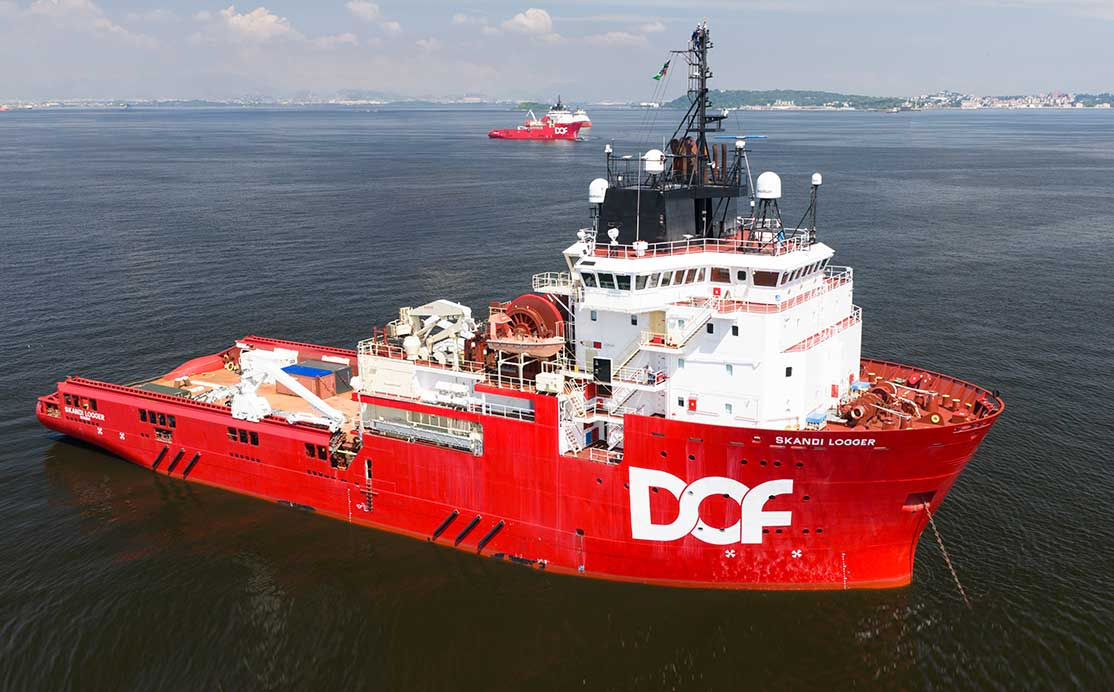
DOF also provided an update on Skandi Logger, confirming that, during the early hours of Wednesday (22), the vessel experienced an electrical fault resulting in a short circuit, with no open flame, in its main switchboard while operating alongside Petrobras’ P-37 platform in the Marlim Field, Campos Basin.
According to the company, the response was immediate, with support provided to the onboard crew and preparations initiated to release the vessel from the field so that the necessary repairs can be carried out. DOF stated that there were no injuries or environmental impacts. The vessel remains under control while the company continues to monitor the situation and implement the necessary measures to ensure the safety of personnel, the environment and ongoing operations.
At WSB, we have always believed that the offshore, maritime and nautical sectors are not only about assets, steel, fiberglass, engines and contracts. They are also about culture, design, engineering intelligence and the ability to see value where others may see only a common boat.
We are now launching a new experimental initiative: WSB Classic Boats.
This will not start as a conventional business line. It will start as a laboratory.
WSB will unite its Nautical Survey and Engineering teams to sponsor and follow the first full refit experiment aimed at transforming an existing boat into a desirable, elegant and affordable classic-inspired vessel.
The base boat will be a vessel of at least 30 feet, with overnight capacity for four people. The outcome will not be a cosmetic intervention, but a fully developed refit project — engineering, naval architecture, interior design, technical feasibility, cost control, documentation and lessons learned.
For this first experiment, we are selecting a small multidisciplinary team:
One engineer from WSB. One engineer from a client, partner or fellow company. One architect. One interior designer.
The mission is simple in concept, but complex in execution: to take a “sem sal” boat and study how far Brazilian engineering, design and craftsmanship can go in transforming it into a Classic Boat, inspired by the timeless lines of builders such as Riva, Hinckley and other classic nautical references, while respecting technical limitations, safety, cost and practical use.
This initiative will be closely followed by WSB leadership. Our purpose is not only to create one beautiful boat. It is to learn whether Brazil can develop a credible refit niche capable of giving new life to existing vessels, creating value, beauty and affordability under the WSB Classic Boats name.
Brazil has boats. Brazil has craftsmen. Brazil has engineers. Brazil has designers. What we want to test is whether these capabilities can be organized into a repeatable refit model.
The first project will be our proof of concept.
A boat can be more than transportation. It can be identity, memory, engineering and desire.
Let the experiment begin.
WSB Classic Boats From ordinary boats to classic desire.
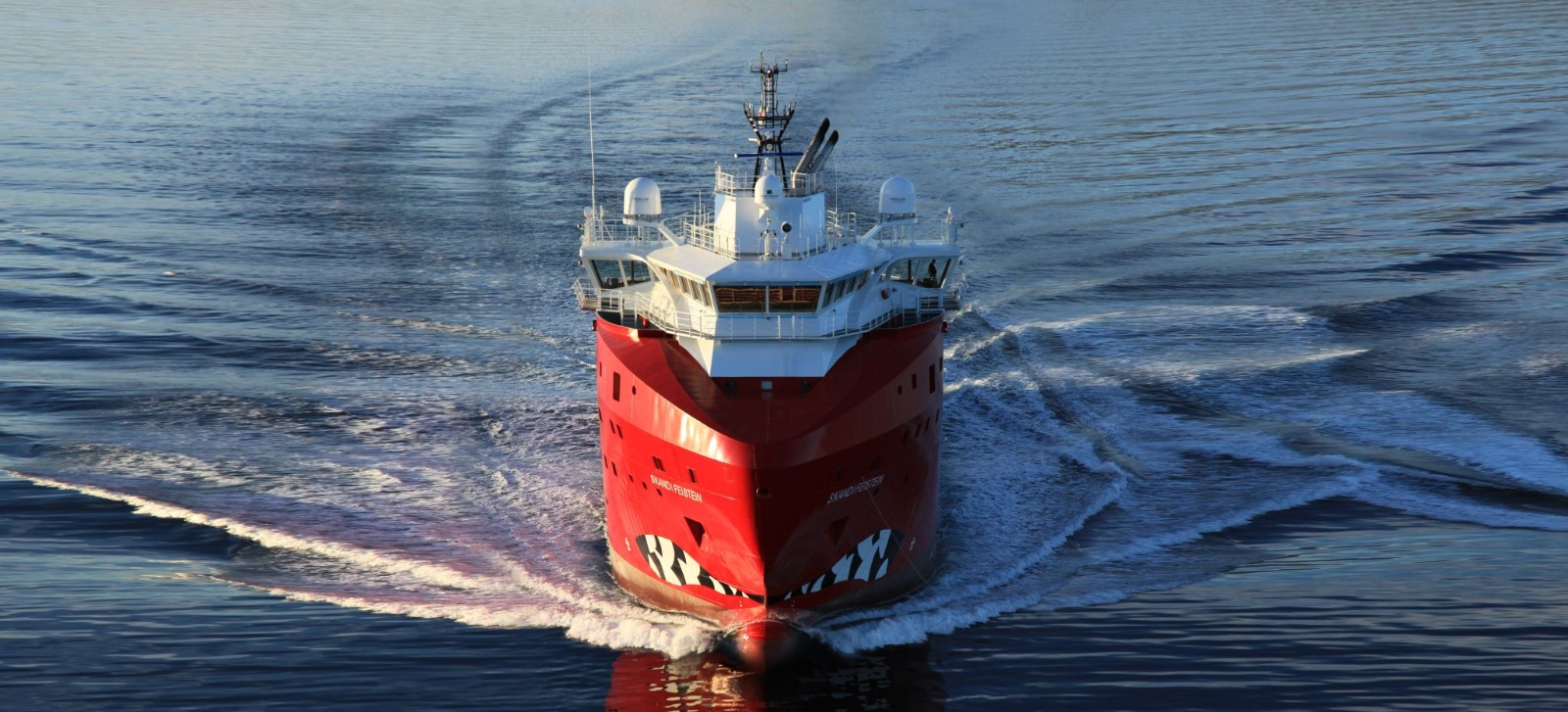
DOF has announced the sale of four Platform Supply Vessels (PSVs), Skandi Mongstad, Skandi Flora, Skandi Feistein and Skandi Kvitsøy, as part of its ongoing fleet optimisation strategy. The vessels will be delivered to their new owners during the third quarter of 2026 while remaining on their existing contracts. The transaction is expected to generate approximately USD 50 million in net cash after repayment of the debt associated with the vessels.
As part of the agreement, DOF will continue to manage the four PSVs and will retain a minority ownership interest in the acquiring company.
At the same time, the company has acquired two new Construction Support Vessels (CSVs) currently under construction at the PaxOcean shipyard in China. Based on the SALT 310 OCV design, the vessels will be equipped with 250-tonne offshore cranes, two work-class ROVs and accommodation for 123 personnel. They are intended for subsea operations, including inspection, maintenance and repair (IMR) campaigns, as well as offshore construction support, with deliveries scheduled for the fourth quarter of 2027 and the first quarter of 2028.
The transaction reflects DOF’s continued strategy of optimising its fleet by reducing exposure to lower-value PSV assets while expanding its subsea capabilities with higher-specification vessels. The move also comes as the company points to a record backlog and sustained demand for offshore services.
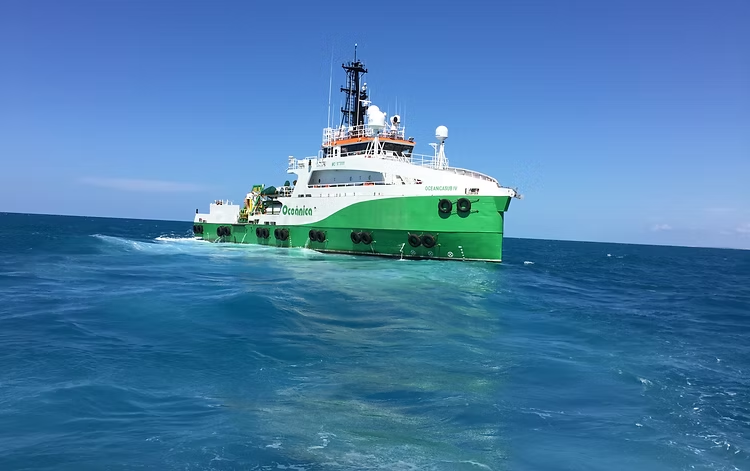
Maritime officers and electricians employed by Oceânica have voted in favour of strike action after months of unsuccessful collective bargaining negotiations, marking a significant escalation in one of Brazil’s largest offshore support operators.
According to Sindmar, 97% of those attending the extraordinary general assembly approved the measure following the rejection of three company proposals. The union said Oceânica will be formally notified on Thursday, after which the legal procedures required before any work stoppage will be observed. Operations continue normally at this stage.
The dispute centres on food allowance levels, differences between offshore and shore-based remuneration, length-of-service recognition and other employment conditions.
While negotiations officially remain open, the vote significantly increases pressure on both parties to reach an agreement before industrial action affects offshore operations.
One Energy News has approached Oceânica for comment and will update this story upon receipt of the company’s position.
Our newsroom has received an audio recording reportedly from the bridge of the Skandi Logger, broadcasting a Mayday distress call and an order to abandon ship near the P-37 platform in the Marlim field. The vessel’s position has been confirmed.
Sources at the scene report that the vessel is already receiving assistance and connected for towing. The situation appears to be under control. At this stage, there is no confirmed information of any injuries or casualties.
In contact with our team, DOF said:
“DOF reports that, in the early hours of Wednesday (22), the Skandi Logger experienced an electrical short circuit, with no open flame, in its main switchboard while operating alongside the P-37 platform in Brazil’s Campos Basin.
The company responded immediately to the incident and is providing full support to the onboard crew, while also coordinating and planning the operation to release the vessel from the field and carry out the necessary repairs.
No injuries were reported among those on board, and, at this time, no environmental impact has been identified.
The vessel remains under control, and DOF continues to monitor the situation while taking all necessary measures to ensure the safety of personnel, the environment, and the operation”
We are seeking further details from Brazilian Navy and will provide updates as information becomes available.
UPDATE, July 22: The barge FLU IPÊ was removed from the Icaraí breakwater in Caucaia, Ceará, on Wednesday morning at approximately 9:00 a.m., concluding a refloating operation that lasted nearly 28 hours. Sulnorte Serviços Marítimos, the company responsible for the operation, said the work was conducted in accordance with the plan approved by the Ceará Port Captaincy, with no environmental impact and no injuries reported among crew, company personnel or local residents.
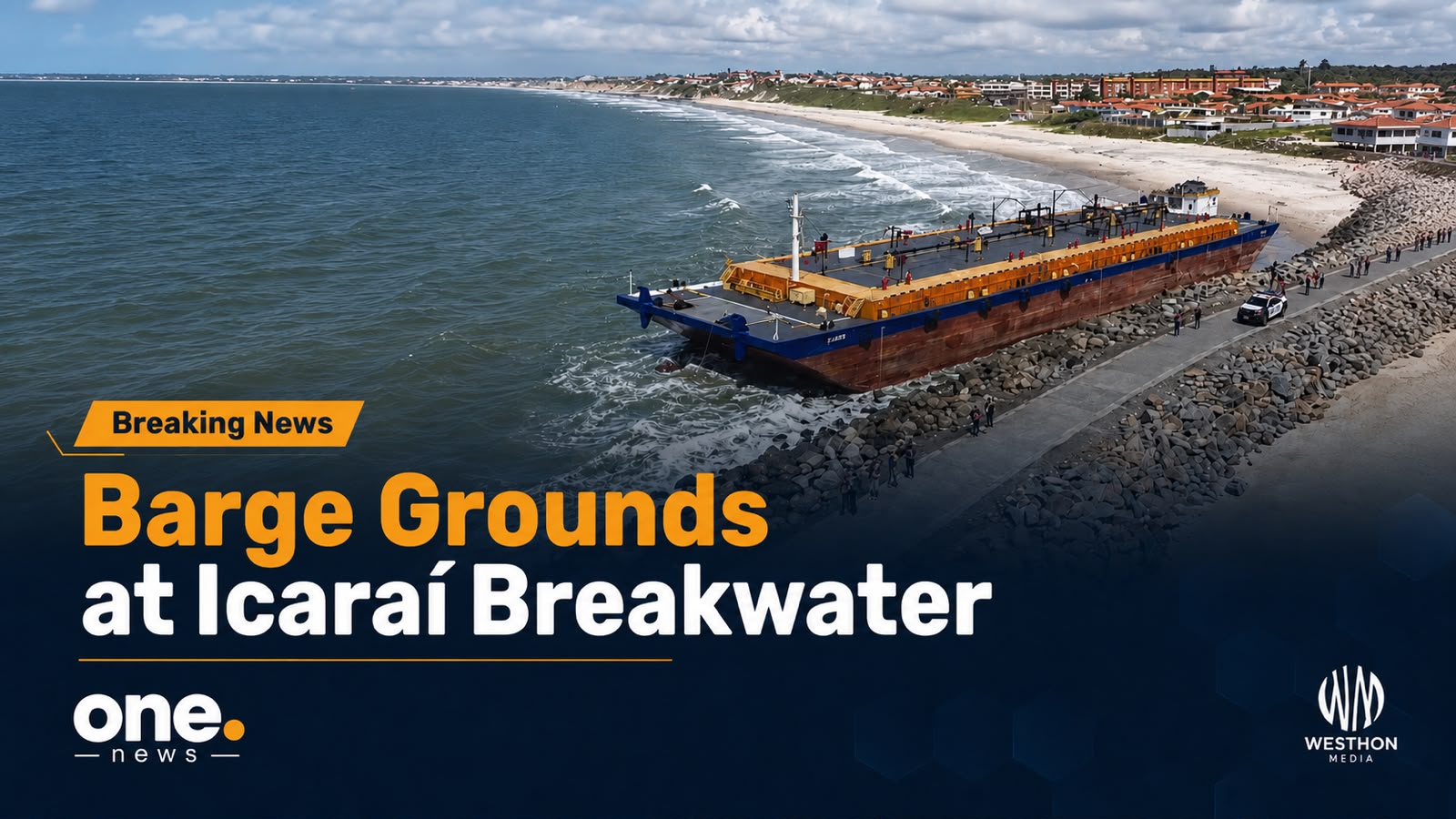
FLU IPÊ barge remains grounded on Ceará coast after tow separation
The barge FLU IPÊ remained grounded at the Icaraí breakwater in Caucaia, Ceará, on Tuesday evening after separating from its towing system during an offshore tow.
The operation was being conducted by the tug SN Caraíva. Sulnorte, the company responsible for the tow, said the barge drifted after the separation and subsequently grounded at the breakwater.
The cause of the incident has not yet been established. Reports that the towing line broke have not been confirmed by either Sulnorte or the Brazilian Navy.
The barge was empty and uncrewed at the time of the incident. No injuries, oil spill or environmental damage were reported.
The Ceará Port Captaincy inspected the site and will open an Administrative Inquiry into Navigation Accidents and Facts to determine the causes, circumstances and responsibilities. The initial deadline for completion is 90 days.
Sulnorte said technical and operational teams were mobilized to monitor the barge and prepare its removal, subject to tide, weather and safety conditions. Despite preparations to begin the operation on Tuesday, FLU IPÊ remained grounded at the latest update [see update above].
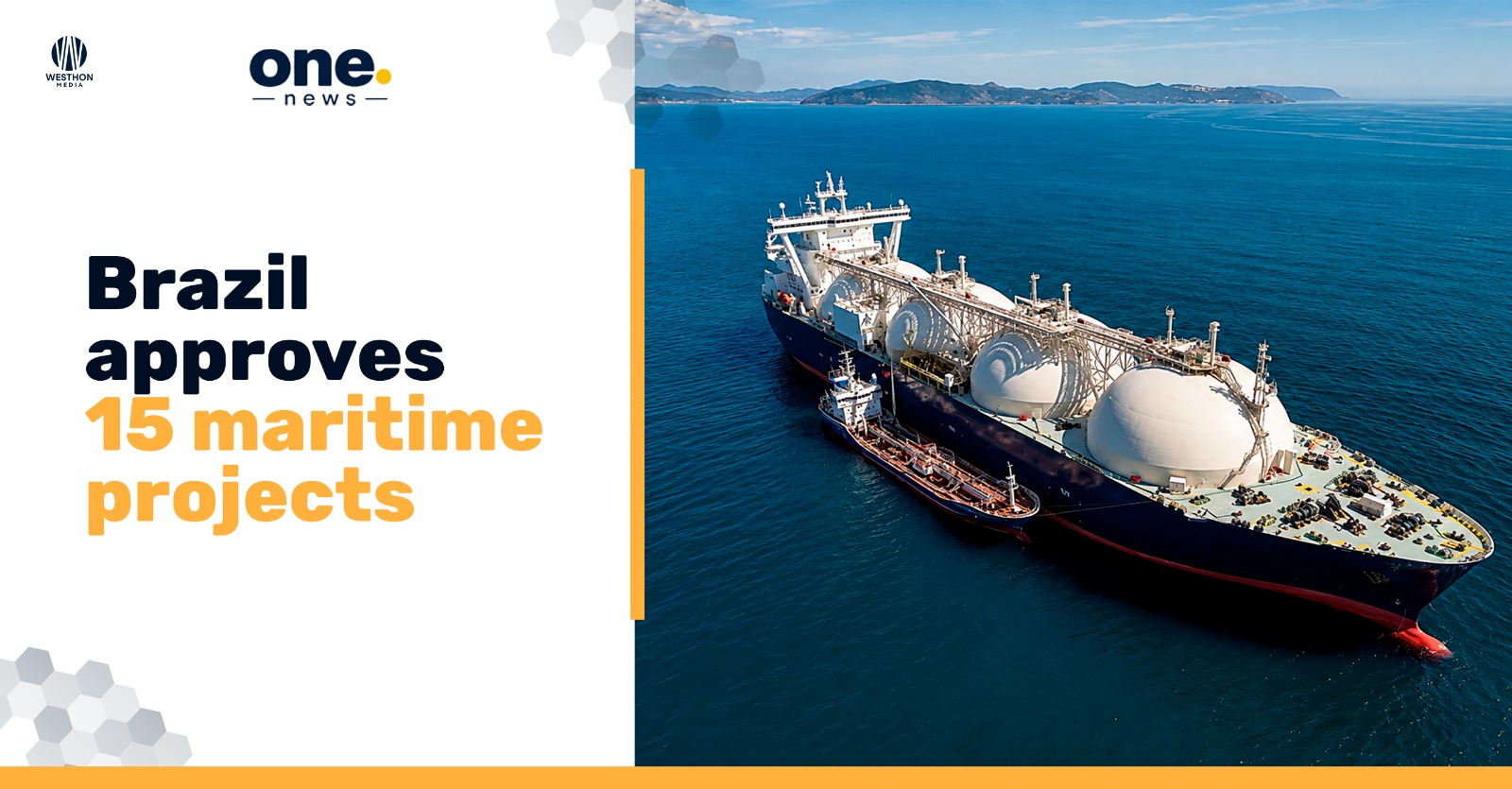
The Brazilian Merchant Marine Fund’s Board of Directors (CDFMM) approved 15 projects focused on shipbuilding, vessel modernization and repair, as well as port infrastructure, during its 63rd Ordinary Meeting. Highlights include Petrobras’ plan to build five LPG carriers, Emgepron’s project to construct three 500-ton patrol vessels (NPa500BR), and Bahia Mineração’s (Bamin) Porto Sul private terminal in Ilhéus, Bahia.
The portfolio also includes inland navigation, offshore support, ship repair and logistics infrastructure projects across ten Brazilian states. The Ministry of Ports and Airports did not disclose the value of the approved investments.
As our editorial activities continue to grow, all offshore news, market analysis and industry coverage previously published through WSB Advisors will now be shared by One Energy News.
This evolution allows each brand to focus on its core mission.
One Energy News becomes our dedicated editorial platform, committed to delivering independent offshore journalism, market intelligence and industry insights.
WSB Advisors remains focused on shipbroking, commercial advisory and connecting opportunities across the offshore market.
To continue following WSB Advisors, please visit: WSB Advisors
Thank you for being part of this journey. Welcome to: One Energy News.
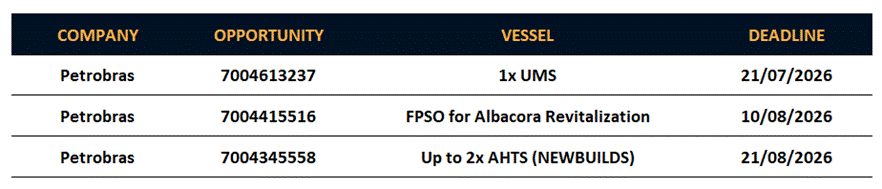
WSB is pleased to provide an update on the current long-term tenders that are open to offer.
Open tenders:
What has changed?
Petrobras 2x AHTS newbuilding: Opportunity 7004345558 new deadline August 21st, 2026;
Petrobras FPSO for Albacora Rev: Opportunity 7004415516 new deadline August 10th, 2026.
What else is happening?
Birthday Cake!Atlantic Star has completed its Karoon contract and is now at Mauá Shipyard mobilizing for a decommissioning project starting in about 12 months.
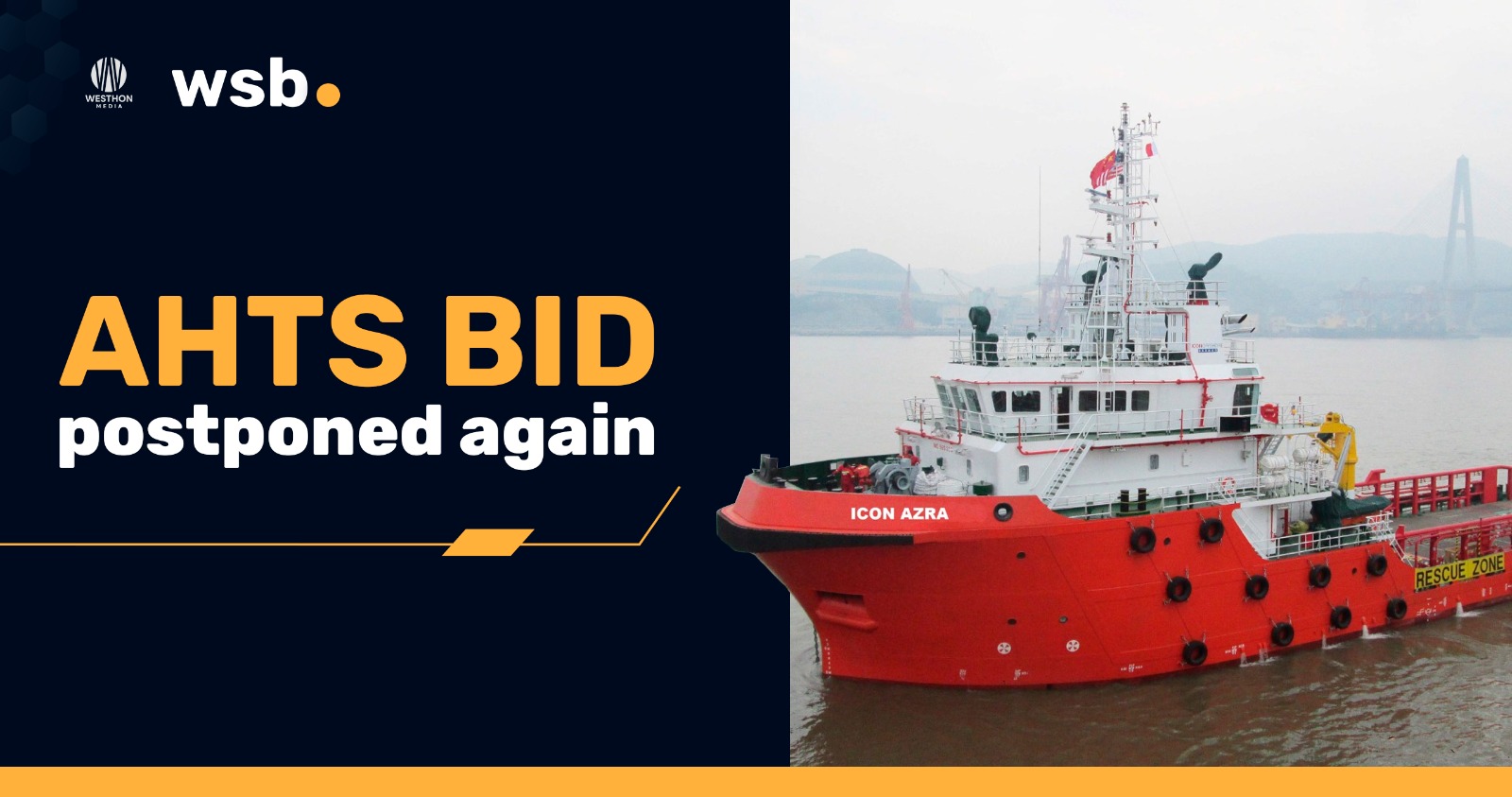
Will it be cancelled? After four previous extensions, the bid for the construction of two new AHTSs has been extended once again. Is it due to a lack of bidders? A shortage of shipyards capable of delivering the project? Or are local yards still unable to meet the local content requirements set out in the tender? More info w/ WSB.
More SOVs in sight: REM Wind is preparing to commence its accommodation support contract with Petrobras.
Petrobras extends AHTS tender deadline to August 21Petrobras has extended the submission deadline for its newbuild AHTS tender, with bids now due on August 21. This is the fourth postponement since late May.
Petrobras has not disclosed the reason for the latest extension. Several shipowners have requested additional time to meet the financing documentation required under Addendum K, with the bank Comfort Letter once again at the center of the issue. Petrobras considered the requests but is not expected to remove the requirement.
After such a prolonged process and repeated extensions, the possibility of cancellation can no longer be ignored, although Petrobras has given no indication that this is currently under consideration.
At this point, the focus is no longer on the deadline itself. What happens when bidding closes will say far more about the market than another extension ever could.
The dispute surrounding Capital Marítima has exposed a question that reaches far beyond one company: whether Brazil’s maritime policy is preserving not only vessels and jobs, but also the entrepreneurs, intellectual capital and industrial capability required to sustain a genuinely national shipping industry
For generations, Brazilian shipping was shaped by companies closely identified with their founders: Wilson Sons; CBO under the Fischer family; São Miguel and Bravante under Marcelino and Renato Nascimento following their father; Comte Matos and William, Astromaritima; Camorim; and, more recently, OceanPact and Posidonia. Despite different histories and business models, they accumulated something more important than vessels alone: Brazilian entrepreneurial, technical and institutional capital.
Operating in Brazil required knowledge of Petrobras and international oil companies, shipyards, banks, ANTAQ, the Navy, unions, crews and repeated market cycles. Mobilisation failures, vessel downtime, financial crises and regulatory changes produced experience that remained within the country. This intangible capital, commercial credibility, engineering judgement, institutional memory and operational discipline, is difficult to value, but it is what distinguishes an established shipowner from a newly incorporated vehicle that merely controls a fleet.
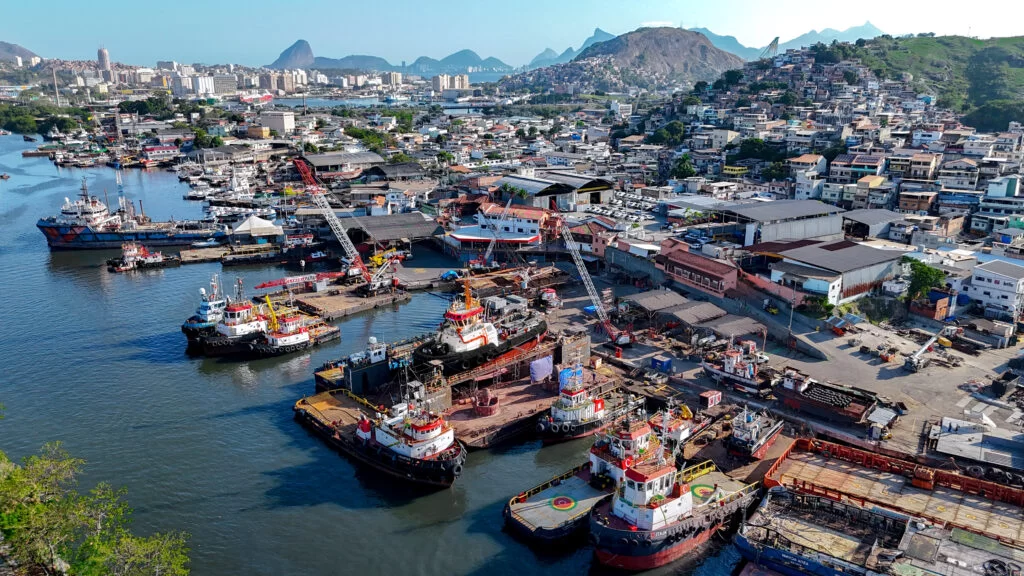
Camorim shipyard, at Niterói (RJ) (Source: Camorim)
Over the past two decades, the Brazilian market has changed, drastically. International investors, foreign shipping groups and private equity have expanded, while Brazilian operators have increasingly been acquired or integrated into structures spanning several jurisdictions. More sophisticated financing and ownership arrangements are not inherently negative. Shipping depends on global capital, technology and expertise, and Brazil should continue to welcome international organized and transparent participation.
The strategic question is whether the country is also preserving its capacity to create and strengthen Brazilian shipowners, and reserving due care to investigating the foreign entities involved. A nation can finance vessels, generate contracts and maintain employment while gradually transferring decision-making, intellectual property, commercial relationships and accumulated expertise abroad. Ships may continue to fly the Brazilian flag even as the industry’s economic and intellectual substance migrates elsewhere.
Capital Marítima offers a visible example of this broader issue, not because foreign ownership necessarily causes poor governance, but because the dispute has shown how uncertainty over control, authority, assets and responsibility can quickly affect employees, clients, suppliers, vessels and commercial relationships built over years.
A dispute that escaped the boardroom
Capital Marítima developed from Embrareb, a Brazilian company associated with entrepreneur Plínio Calenzo, and later came to include Constance Maritime, incorporated in Monrovia, Liberia, alongside interests commercially associated with the Capital Offshore name. What might ordinarily have remained a dispute over shares, management and corporate authority soon reached the company’s workforce, commercial counterparties and vessel operations.
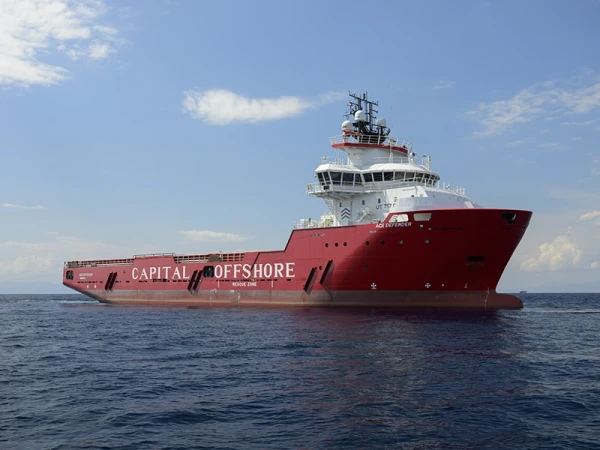
Negotiations with shore-based employees have progressed since One Energy first reported on the dispute, and some workers indicated their willingness to accept a settlement proposed by the company. At the time of publication, however, the agreements had not yet been formally executed by the administration. The immediate tensions may have eased, but the company’s institutional position remains unsettled. Further, the technical challenges surrounding the ACE Defender with Petrobras and the Brazilian Navy have come to a halt.
The situation became more serious in labour proceedings involving the ACE Defender, when the court ordered the arrest of the vessel after considering the risk that a future judgment might be difficult to enforce, particularly in light of the assets available in Brazil and the opacity attributed to the corporate structure supporting the operation. Petrobras, as the recipient of the vessel’s services, was also instructed to make a judicial deposit up to the value claimed.
The arrest does not constitute a final finding of liability. It does, however, reveal a practical concern: when a vessel operates in Brazil but ownership, management, employment, financing, guarantees and material assets are distributed abroad, the reach of Brazilian jurisdiction may be less secure than the obligations created within the country. The same weakness that may prevent an employee from recovering a legitimate indemnity can affect suppliers, creditors and commercial partners attempting to enforce guarantees or contractual rights against foreign group assets.
The corporate dispute has also entered arbitration. After being informed that an emergency arbitrator had been appointed, the 7th Corporate Court of Rio de Janeiro suspended an Extraordinary Shareholders’ Meeting intended to consider claims against shareholders and administrators. The judge concluded that prudence required avoiding further escalation until the appropriate arbitral forum had been established and prospectively set aside the effects of any resolution adopted in breach of the order, which was followed by the arbitrator.
The decision neither settles the control dispute nor invalidates every act of the administration currently in place. It confirms, however, that the company’s governance remains contested and subject to interim measures while arbitration proceeds.
The sequence bears some of the characteristics of an aggressive takeover: provisional authority is obtained, operational and commercial channels are occupied rapidly, and practical consequences emerge well before the legal dispute can be finally resolved. Whether this was a deliberate strategy in the Capital case is for the courts and the arbitral tribunal to determine. What is already evident is that those assuming control appear not to have anticipated the commercial damage caused by acting before authority, representation and stakeholder relationships had been stabilized.
A more experienced maritime transition would ordinarily seek to preserve continuity while the shareholder dispute proceeded in parallel. Instead, relationships and opportunities developed over years were exposed to immediate disruption. One Energy has confirmed that a major international client requested documentary confirmation of the authority of Capital Marítima’s current controllers on an ongoing competitive process. The required confirmation was not produced within the requested timeframe, and negotiations involving offers that had already reached the award stage were terminated.
That episode shows how quickly provisional corporate power can destroy permanent commercial value. Often clients cannot wait for arbitration. They must secure tonnage, preserve schedules and manage risk, and they will usually move to another option when representation or vessel availability cannot be confirmed.
What Brazil loses when it loses a shipowner
The significance of the Capital case extends beyond the dispute itself. It brings into view the internationalisation not only of capital and control, but also of industrial knowledge, commercial intelligence and entrepreneurial capability.
Brazilian maritime policy has historically concentrated on tangible assets: domestic construction, Brazilian-flag tonnage, REB registration, local content and financing through the Merchant Marine Fund. These instruments remain important, but ships alone do not create shipowners.
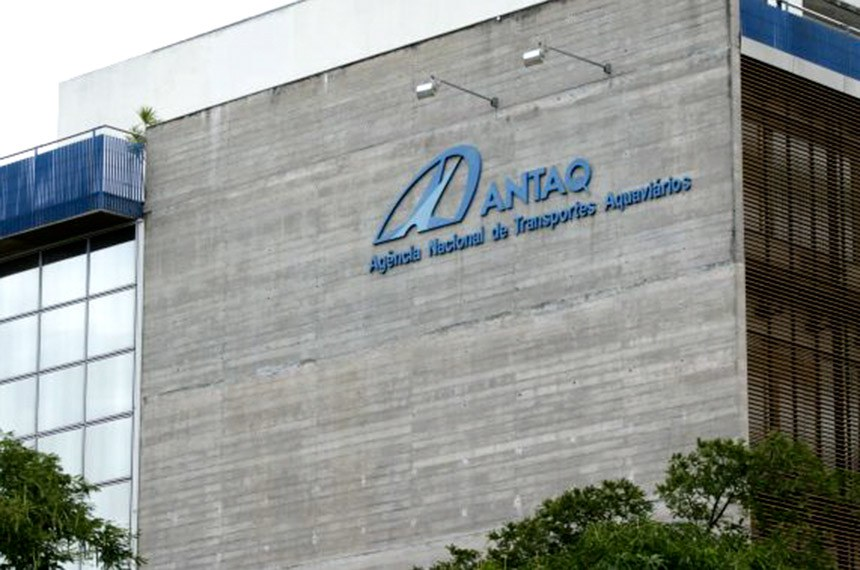
ANTAQ headquarter (Source: Courtesy)
A maritime company depends on accumulated capital, access to charterers, regulatory knowledge, engineering capability, financial expertise, experienced management and the ability to survive long periods of weak markets. This capability resides in people, systems, relationships and judgement, and it takes years to develop.
Every contract performed in Brazil produces knowledge. Vessel data is collected, maintenance systems are refined, crews gain experience, engineering solutions are developed and commercial teams learn how particular clients assess risk. The strategic question is who retains and monetises that knowledge.
When a Brazilian operator is absorbed into an international group, its legal entity may remain in the country while procurement, engineering, financial strategy, operational data and client relationships become centralised abroad. Brazilian workers continue to perform the activity, but the higher-value capability created by their experience may no longer accumulate within a Brazilian enterprise.
This transformation is rarely dramatic. It occurs through acquisitions, management agreements and the gradual migration of strategic functions. The country continues to host vessels and crews while losing the capacity to create companies that control technology, capital and international expansion. Losing a shipowner can therefore mean losing an ecosystem of knowledge assembled over an entire generation.
The unequal cost of building a shipowner
The imbalance becomes clearer when the conditions faced by Brazilian entrepreneurs are compared with those available to international competitors. Local companies operate with expensive capital, volatile exchange rates, complex taxation, demanding collateral requirements and recurrent regulatory and judicial uncertainty. Offshore assets require substantial investment, while the revenue supporting them depends on contracts that may be delayed, contested or terminated.
International groups often enter Brazil with access to deeper capital markets, export-credit agencies, established banking relationships and fleets capable of spreading risk across several regions. They may use cash flow generated elsewhere to acquire Brazilian companies or assets precisely when local operators are financially vulnerable.
Competition therefore takes place not only between companies, but between national industrial ecosystems.
When a foreign group acquires a Brazilian operator, it may gain approved-vendor status, licences, local registrations, trained personnel, regulatory knowledge and access to commercial relationships developed over many years, notwithstanding the extremely competitive financing mechanisms available – while they can present foreign guarantees. The Brazilian entrepreneur often created these assets under far less favourable financial conditions.
The result is unlikely to be the disappearance of maritime activity from Brazil. The market is too attractive. The quieter consequence is that Brazilian entrepreneurs may increasingly become minority partners, local representatives or service providers within structures financed and controlled elsewhere. Brazil preserves the operations while losing more of their economic ownership.
That outcome should not be blamed on foreign investors, who are acting,most of the time, rationally. It is principally a policy question. Other countries support the international expansion of their maritime companies through finance, guarantees, taxation and coordinated industrial policies. The absence of comparable support in Brazil is itself a choice, and it generally favours those arriving with the strongest backing.
Partnership requires substance
Brazil does not need to choose between domestic entrepreneurship and foreign investment. It needs partnerships that strengthen both. International groups can bring scale, technology, financial discipline and improved operating standards, but the local side should not be reduced to providing licences, market access and execution while the strategic value is accumulated elsewhere.
A country should defend its own entrepreneurs in partnership with the world; it should not merely defend the world’s entrepreneurs through partnerships with its own.
This does not justify protecting inefficient companies simply because they are Brazilian. Public support should require transparency, sound governance, safety, investment and the creation of lasting domestic capability. Nor should foreign-controlled groups be presumed less committed to Brazil, unless they really are. The relevant distinction is not nationality alone, but economic substance, accountability and contribution to the local industrial base.
Brazil should aim not only to host international shipowners, but also to create Brazilian companies capable of becoming international shipowners themselves.
Financing companies, not only ships
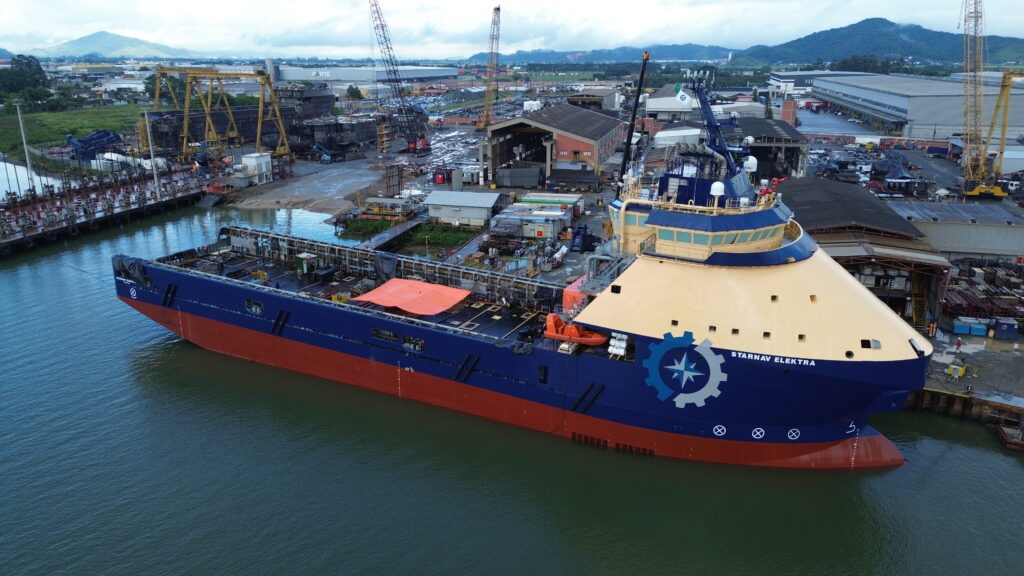
Starnav is a Brazilian shipping company (EBN) owned by the Chilean Detroit Group (Source: Starnav/Courtesy)
For decades, Brazilian maritime policy treated the construction and financing of vessels as its central challenge. The logic was reasonable: domestic orders would create employment, engineering capability and an industrial supply chain. But financing a vessel does not necessarily create a sustainable shipowner. Maybe it better benefits an existing and capitalized one, and not local.
The company must also possess working capital, commercial strength, governance and the balance sheet required to absorb delays, cost overruns, technical failures and periods without revenue. A vessel depreciates; a successful shipowner can accumulate value through credibility, systems, knowledge and access to progressively better financing.
The most valuable outcome of public support should therefore be an enterprise capable of ordering its next vessel with less dependence on the same support. Brazil should measure not only how many ships were delivered, but how many stronger, more transparent and internationally competitive companies were created. And to start, they must created from zero.
That requires policy instruments directed at the enterprise itself: competitive capital, guarantees, governance standards, technology, data, management development and support for international expansion. Shipbuilding and entrepreneurial formation should be parts of the same strategy.
What should count as a Brazilian shipping company?
The transformation of the sector also raises a regulatory question. The current definition of a Brazilian Shipping Company places considerable weight on incorporation, authorisation, flag, registration and tonnage. Those criteria remain relevant, but they may no longer be sufficient measures of national economic substance.
A company may be incorporated in Brazil, employ Brazilian crews and operate Brazilian-flagged vessels while its decision-making, guarantees, intellectual property and strategic assets remain abroad. Another may receive foreign capital while retaining management, technical capability, assets and reinvestment substantially in Brazil. Formally similar companies may therefore contribute very differently to national development and present different levels of accountability before Brazilian jurisdiction.
A modern framework should not rely on crude ownership restrictions. It could instead consider transparency of ultimate ownership and everything in-between, the location of effective management, the availability of assets and guarantees in Brazil, the authority of local administration, reinvestment, professional training, research and development, and the participation of Brazilian entrepreneurs in economic decision-making.
The purpose would not be to exclude internationally controlled companies, but to align access to public support, strategic protections and preferential financing with verifiable economic substance.
Capital Marítima does not answer this debate, and its dispute should not be used to generalise about every foreign-linked operator. It does, however, show how quickly uncertainty over place, control, authority and assets can affect workers, courts, clients and commercial partners, and how an aggressive transition under provisional authority can destroy value before the underlying legal dispute reaches a final outcome.
More than a maritime market
Brazil must decide what it expects from maritime policy. If the objective is merely to ensure the availability of vessels, international capital can provide them whenever demand and contract terms justify the investment. Sort of what is happening now with larger demand and the ageing fleet. If the country also wants to preserve national industrial capability, its policies must support companies that retain technical knowledge, financial substance, commercial intelligence and effective decision-making in Brazil.
This does not require protectionism. It requires incentives and standards that distinguish between structures that merely use Brazilian registrations, contracts and flag arrangements and those that build durable companies, skills and accountability within the country.
The Capital Marítima case does not resolve this question, but it illustrates the cost of ignoring it. When control, assets, guarantees and authority are distributed across jurisdictions, a shareholder dispute can quickly affect vessels, employees, clients, suppliers and contracts. Formal Brazilian status alone does not ensure operational continuity or effective accountability.
Brazilian policy has spent decades addressing how ships should be financed. Its next challenge is to create competitive shipowners capable of attracting international capital, retaining industrial knowledge, answering effectively to Brazilian jurisdiction and expanding beyond the domestic market. That is the practical distinction between remaining a maritime industry and becoming merely a maritime market.
Editor’s note: One Energy has sought comments and documentary clarification from Capital Marítima, Constance Maritime and representatives associated with the administration currently in place. The publication remains open to further documents, clarification and the exercise of the right of reply. Interim court orders, labour claims and arbitral proceedings do not constitute final findings of liability, and all persons and companies mentioned remain entitled to due process and a full opportunity to present their position.