Tag: Astromaritima

  • Special WSB – Por onde anda? Astro Tupi

    Special WSB – Por onde anda? Astro Tupi

    Where is she now? — Atlas Z (ex-Astro Tupi): One Vessel, Two Structures

    By WSB Advisors

    Much like the recent case of Astro CMT Matos—reborn as Seastar Virtus while raising unresolved questions around overlapping commercial and registry positioning—another case involving Astromaritima – em Recuperação Judicial now comes into focus.

    This time, the vessel is the former Astro Tupi.
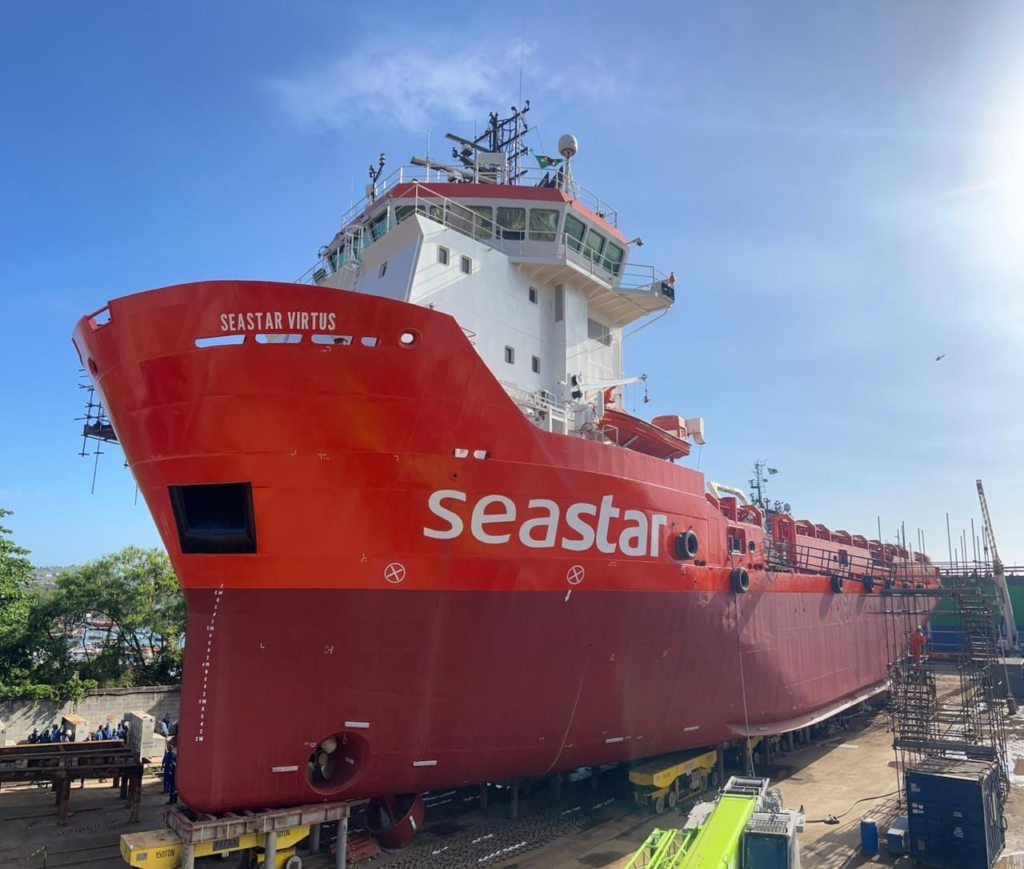
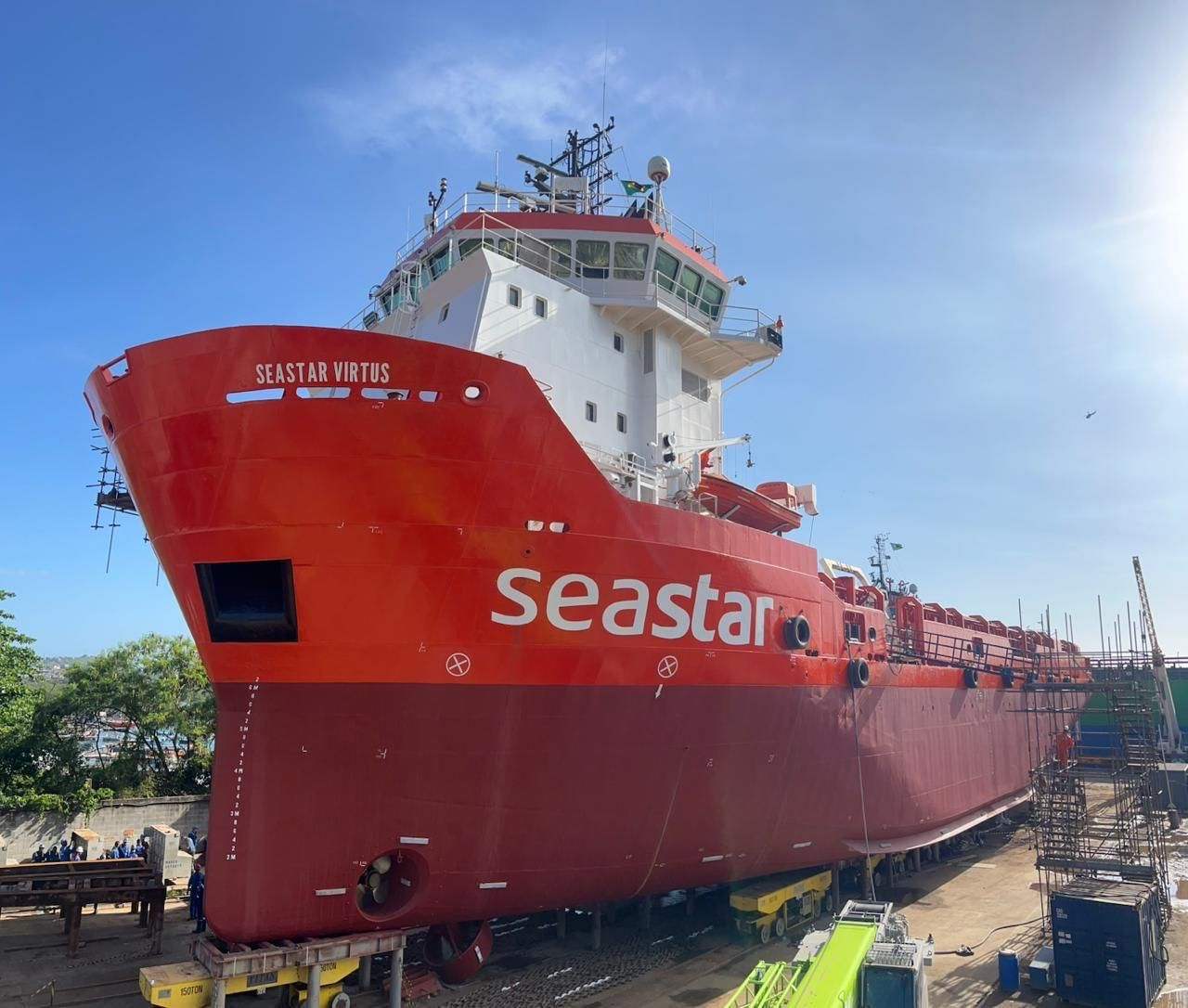
    Seastar Virtus
    Seastar Virtus (Source: Seastar)

    Now formally registered as Atlas Z, the vessel appears active. Market information indicates that she is being operated in Petrobras service as an OSRV through Galáxia Marítima S.A. At the same time, ANTAQ records show a time charter structure for the vessel starting in October 2025 registered in favor of Galáxia Navegação, a different company within the same group.

    At the same time, however, Atlas Z is also presented as the sole vessel supporting the EBN structure of Lagoa Offshore (MCT Group). ANTAQ granted Lagoa Offshore its authorization to operate as an EBN in September 2025, in a process that, by its nature, presupposes the availability and operational control of the supporting vessel.

    From a structural standpoint, the situation raises immediate questions.

    Public records indicate that Atlas Z is tied to a Petrobras-linked time charter structure registered under Galáxia Navegação, while market information places the vessel in Petrobras service through Galáxia Marítima, and fleet records simultaneously associate the same vessel with Lagoa Offshore, with Astromaritima – em Recuperação Judicial remaining as owner. These are not alternative interpretations—they are parallel records.

    This is where the inconsistency becomes difficult to reconcile.

    If Lagoa Offshore is the disponent owner under a bareboat charter from Astromaritima – em Recuperação Judicial, it would not typically be able to relinquish operational control of its sole vessel while maintaining the basis of its EBN authorization. Conversely, if Lagoa Offshore has time-chartered the vessel into a structure connected to the Galáxia group, such arrangement would still need to align with Petrobras’ contractual framework, which generally requires that the contracted party retains full operational control, without subcontracting of the core service.

    The picture becomes even less straightforward when the documented chain itself does not fully converge: the ANTAQ charter registration points to Galáxia Navegação, while the Petrobras operational context points to Galáxia Marítima.

    The timeline adds further complexity.

    The authorization of Lagoa Offshore as an EBN in September 2025 is closely followed by the commencement of the Petrobras-linked charter in October 2025 under Galáxia Navegação, while the vessel is understood to be operating for Petrobras through Galáxia Marítima. This sequencing does not readily support a straightforward contractual chain originating from Lagoa Offshore.

    At this stage, two interpretations emerge.

    Either Lagoa Offshore is not, in practice, the operator of the vessel despite supporting its EBN structure, or the operational reality differs from the contractual appearance presented across the regulatory and commercial records.
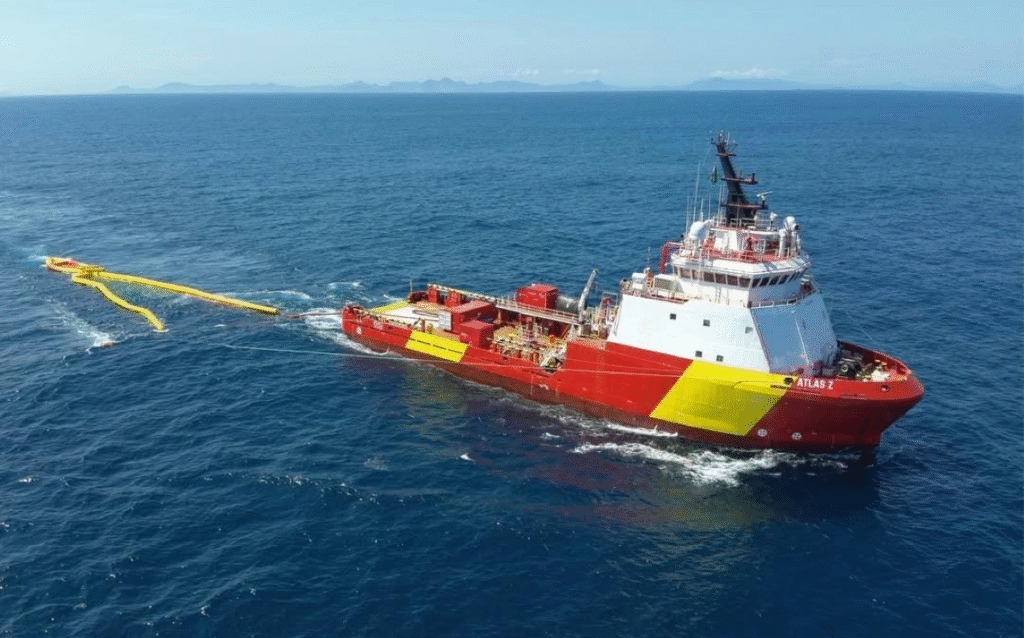
    Atlas Z
    Atlas Z (Source: Galáxia)

    In either case, the alignment between registry, contract and operation remains unclear.

    Astromaritima – em Recuperação Judicial, when asked about the vessel’s ownership, operation and contractual structure, stated that “Astro Tupi” remains an asset of the company and is inserted in a regular structure, without clarifying who operates it, under which contract, or why it already appears, in other contexts, as Atlas Z.

    MCT has not yet responded to our inquiries.
    We were unable to reach Galáxia.

    As in other recent cases, the asset is visible, active and commercially engaged.
    But structure, in offshore, is not a detail.
    And one vessel cannot serve two masters.
  • Por onde anda? Milan Tide — The Resurrection (and the Registry Puzzle)

    Por onde anda? Milan Tide — The Resurrection (and the Registry Puzzle)

    By WSB Advisors

    The return of Milan Tide, now Seastar Virtus, should have been a straightforward story: a well-built PSV, revived, reintroduced and ready to operate again. It turns out the story is not quite that simple.

    Following our publication, Astromarítima Navegação S.A. – em Recuperação Judicial approached us demanding the rectification of a specific point: according to them, the vessel was not sold to Seastar, but rather placed under a bareboat charter agreement.

    Here, the space is duly given, and the clarification made public.

    However, context matters. The interpretation adopted in our original article was not speculative. It was grounded in publicly available signals, including Seastar’s own communication referring to Seastar Virtus as “our vessel, baptized Seastar Virtus”—language that, in any market, reasonably implies control consistent with ownership or quasi-ownership structures.

    If the structure is indeed a bareboat charter, the natural question is: where is this reflected?

    The answer, at least for now, is that it is not.

    A verification with ANTAQ introduces a different layer to the story. The vessel—still referenced as CMT Matos and legally tied to Astromarítima Navegação S.A. – em Recuperação Judicial according to their statement—appears, in parallel, to be featured under a bareboat charter to Oceanica, forming part of its registered fleet and contributing to its tonnage and REB framework.

    This raises a straightforward, but unavoidable question.

    If Seastar has, for months, been the charterer of the same vessel under a bareboat charter agreement with Astromarítima Navegação S.A. – em Recuperação Judicial, how is it that the very same unit is also chartered—and formally registered—as part of Oceanica’s fleet?

    Different names, same steel.

    A vessel cannot, in practical and regulatory terms, be subject to two concurrent bareboat structures serving distinct operators, particularly when such arrangements underpin fleet composition and REB-linked tonnage rights.

    We remain open to receiving any documentation that reconciles these elements, and will continue to examine this and similar cases, as the situation raises a broader question as to how such structures are being implemented in practice—and whether they are consistent with the applicable regulatory framework.

    When approached, ANTAQ did not deny the underlying information, but opted not to take a definitive position, noting that a conclusive answer would require further analysis and consolidation of data.

  • Por onde anda? Astro Parati & Astro Garoupa

    Por onde anda? Astro Parati & Astro Garoupa


    Launched in 1987 at Estaleiro Ilha S.A. (EISA), Astro Parati and Astro Garoupa belong to an early generation of Brazilian-built offshore support vessels. With steel hulls of approximately 66 meters, they once operated in a period when Brazil’s offshore industry was still consolidating its logistics, regulatory frameworks and governance standards.

    Over the decades, the evolution of market cycles, combined with prolonged inactivity and weak asset stewardship, left a visible mark on both vessels. Their current condition reflects how unmanaged lay-up and the absence of structured governance can lead to irreversible outcomes for offshore assets.

    Today, both vessels remain at Ilha do Governador, at the former EISA yard where they were built. They are no longer operational assets, but deteriorated hulls in an advanced state of decay. Publicly available imagery and technical observations indicate extensive corrosion, perforated steel plating and compromised watertight integrity — conditions consistent with many years of unmanaged lay-up and absence of preservation measures.

    An auction process was, in fact, initiated and formally carried forward, with reference values reportedly around BRL 700,000 per unit. However, the process was not concluded, reflecting limited market appetite and the technical reality of the assets. While the vessels remain formally recorded in public registries — including ANTAQ and the Tribunal Marítimo — their operational certificates expired long ago and were never renewed. For many years, they have lacked valid class, statutory certification and authorization for commercial service.

    This regulatory limbo does not equate to neutrality. The prolonged state of abandonment, combined with their physical condition, raises legitimate concerns not only regarding asset integrity but also potential environmental exposure. Aging hulls, left without oversight in a sensitive coastal area, represent a risk that extends beyond balance sheets and ownership records.

    Astro Parati and Astro Garoupa thus stand as physical reminders of how governance gaps, shipyard insolvency and years of inaction can converge into a single outcome: vessels that remain present in form, yet long absent from Brazil’s offshore fleet in substance.

    Every Thursday, a new “Por onde anda?” — stay tuned.