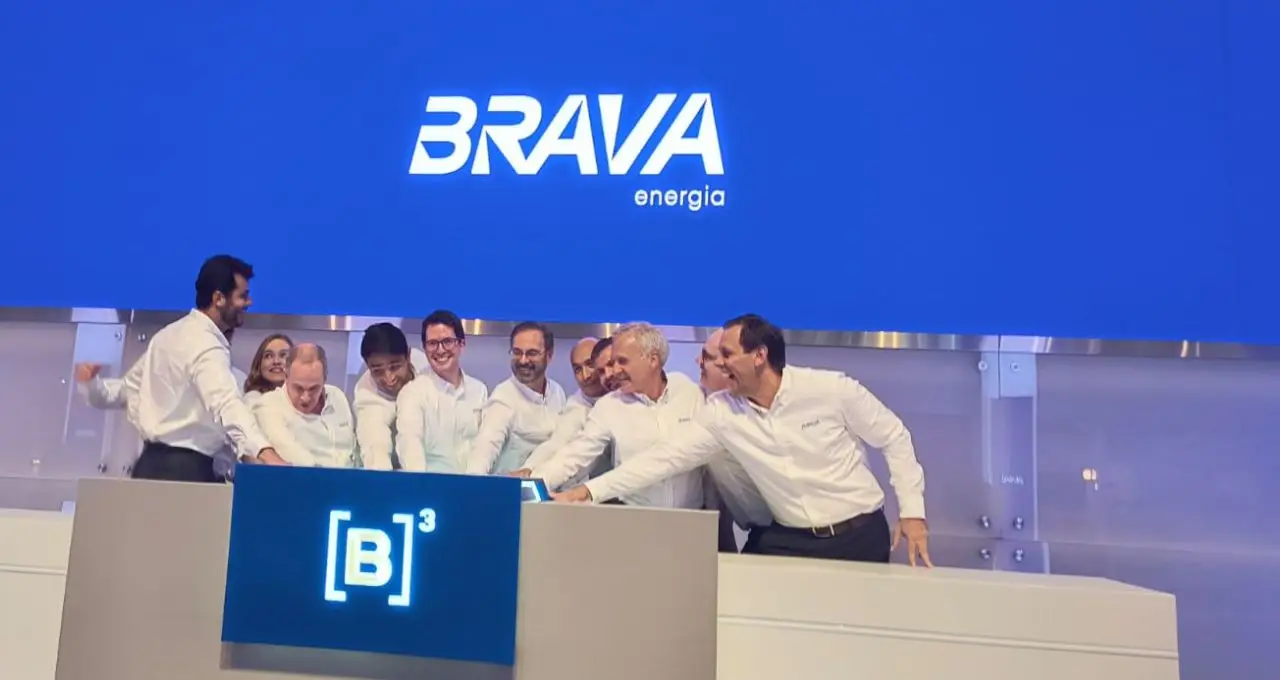
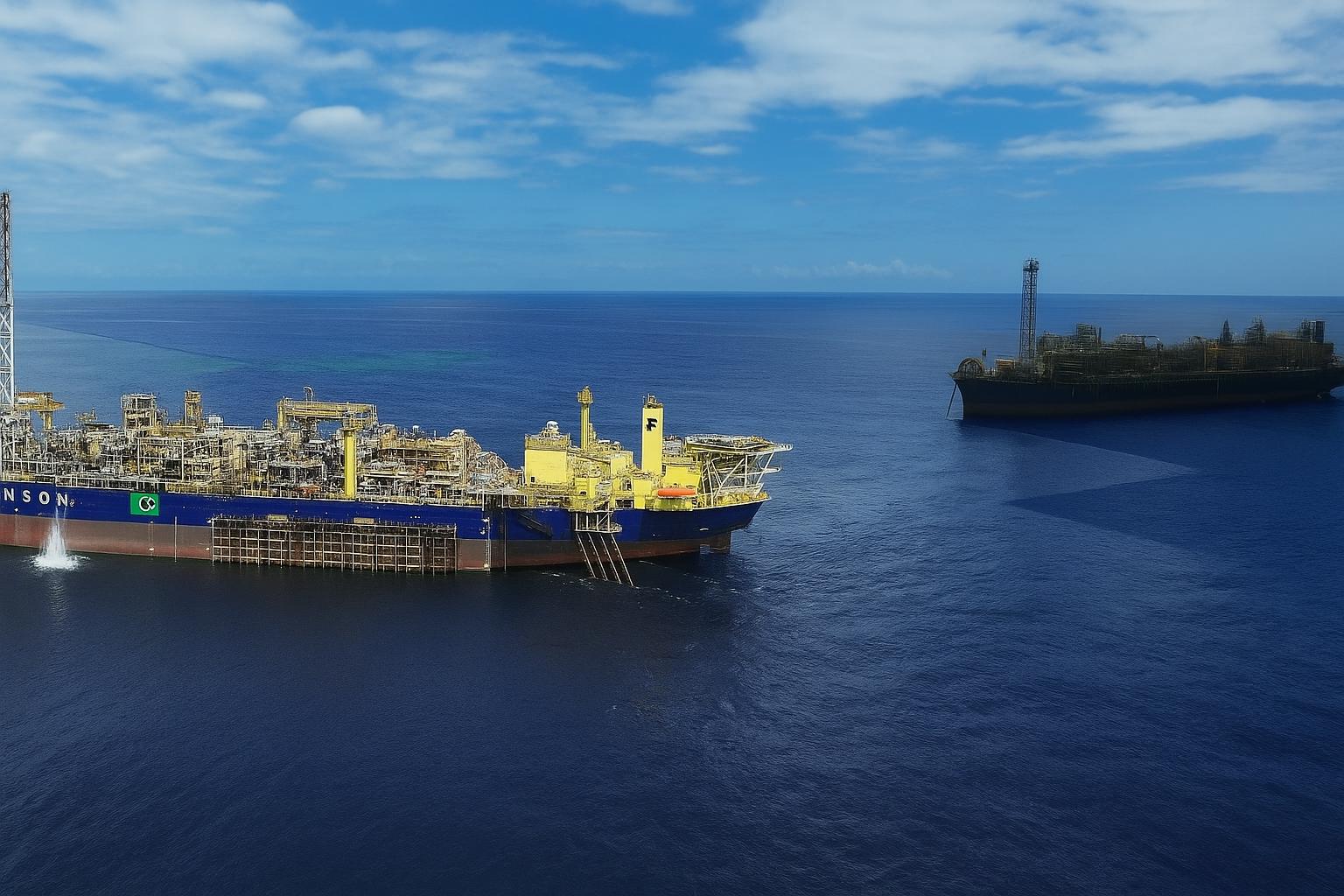
Brava Energia has secured approval from the remaining bondholders required for the acquisition of its controlling stake by Ecopetrol Investimentos do Brasil, satisfying one of the precedent key conditions precedent established under the public tender offer launched by the Colombian energy company. With bondholder consent now in place, the transaction moves closer to completion, subject to the remaining regulatory approvals and contractual requirements.
According to the company, holders of debentures issued by the former 3R Petroleum and former Enauta approved the prior consent required for the change of control. The resolutions were approved during meetings held on June 8 and, together with a previous authorization obtained from holders of another Enauta debt issuance, fully satisfy the debt-related condition precedent outlined in the offer documents.
The approval was considered a significant milestone for the transaction, as the change of control could have triggered early-maturity provisions in certain debt instruments issued by the company. With bondholders granting their consent, that potential hurdle has been removed, substantially reducing execution risk for the deal.
The tendered offer was launched by Ecopetrol as part of its strategy to expand its presence in Brazil’s oil and gas sector. The Colombian state-controlled company had previously announced the acquisition of a significant stake in Brava Energia and is now seeking to consolidate a controlling position through the ongoing transaction.
If completed, the acquisition will further strengthen Ecopetrol’s presence in one of Latin America’s most important offshore oil and gas markets, increasing its exposure to Brazilian offshore production assets and enhancing its regional portfolio.
The transaction remains subject to the fulfillment of the remaining conditions established in the offer documents, including applicable regulatory approvals and the successful completion of the share acquisition process.
Around 30,000 professionals from the offshore sector are gathered in Houston for the 2026 edition of the Offshore Technology Conference (OTC) 2026, which features a strong presence of Brazilian companies and institutions.
At the opening of the event on Monday, BRAVA Energia stood out by receiving the OTC Distinguished Achievement Award for Companies for the development of the Atlanta Field, located in Brazil’s Santos Basin. The recognition highlights the project’s technical relevance within the global offshore industry.
The company also took part in the conference’s technical program. Carlos Travassos, joined the panel “Around the World,” addressing the topic “Brazil Offshore Energy in a Nutshell – Next Wave & New Frontiers.” Meanwhile, BRAVA’s Executive Manager Vinícius Passos presented the Atlanta Project during the “Showcases – Largest Worldwide Developments” session, focused on major global industry projects.
ANP – Agência Nacional do Petróleo, Gás Natural e Biocombustíveis, is also attending the event, represented by senior officials. In partnership with PPSA (Pré-Sal Petróleo S/A), the agency hosted a seminar focused on upstream opportunities in Brazil as part of the conference’s side events.
Another highlight of Brazil’s participation is Firjan SENAI, which is holding the first international edition of its Supplier Opportunities Network Program (RdO), in partnership with Sebrae RJ. The initiative brings together companies including Baker Hughes, Hanwha Ocean, and SLB, alongside participation from Petrobras, Transpetro – Petrobras Transporte S. A., and Radix.
OTC 2026 also features the Brazil Pavilion, coordinated by ONIP, bringing together national companies and institutions to promote Brazilian products and services in the international market.
The Westhon Group is also present at the event. Alvaro Antunes, CEO of Intcom Solutions, is among participants in parallel industry discussions in Houston, including a roundtable on contractor oversight in industrial operations.
Note: Participant figures are based on industry estimates. Panel titles are not specified to ensure editorial accuracy.
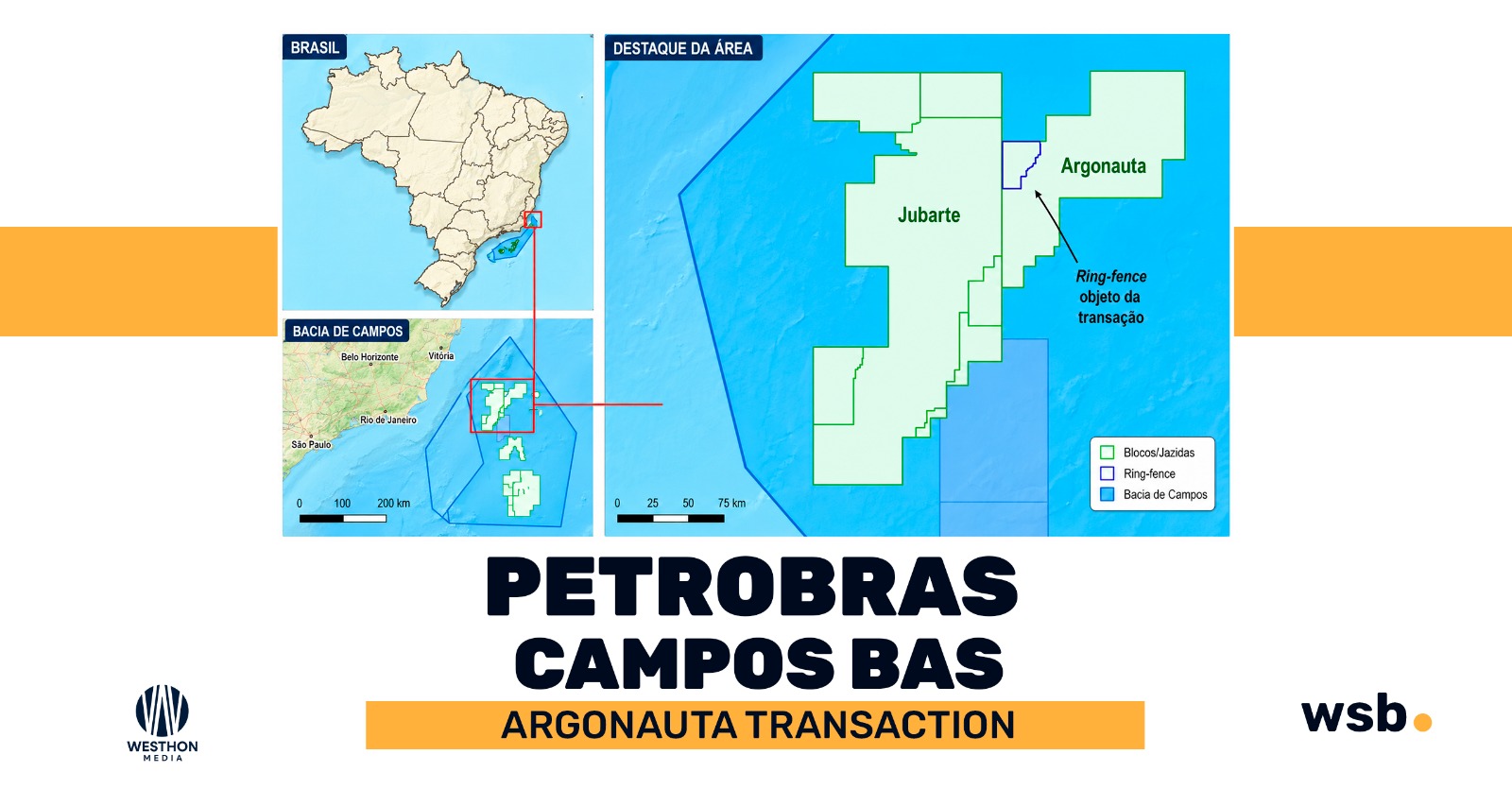
Petrobras announced an agreement to acquire 100% of a ring-fence portion of the Argonauta Field, in the Campos Basin, currently held by Shell, ONGC and Brava.
The transaction involves a portion of Argonauta linked to 0.86% of the shared Jubarte pre-salt reservoir. The total consideration will be R$700 million plus US$150 million, subject to contractual adjustments and closing conditions.
Once completed, Petrobras will hold 98.11% of the Jubarte Shared Reservoir, while the Brazilian government, represented by PPSA, will retain 1.89% related to the extension of the reservoir into non-contracted areas.
More than a portfolio adjustment, the deal points to a broader strategy: Petrobras is consolidating control over profitable producing assets in the Campos Basin, simplifying governance and reinforcing its position in Brazil’s oldest offshore producing province.
The move follows other recent transactions, including the reacquisition of Petronas’ stake in Tartaruga Verde and Espadarte Module III, and is aligned with the company’s 2026–2030 Business Plan, which prioritizes value maximization in resilient upstream assets.
In a market where new frontier development faces longer licensing cycles and higher execution risk, mature basins with existing infrastructure are gaining renewed strategic relevance.
Campos Basin is no longer just a legacy province. It is becoming a core pillar in Petrobras’ portfolio optimization strategy.
Stay informed on key offshore developments — visit wsb-one.com, our data platform trusted by leading offshore companies.
Brava Energia has started a drilling campaign using Constellation’s Lone Star rig across the Papa-Terra and Atlanta fields.
The campaign includes four wells, with two located in Papa-Terra, in Campos Basin, and two in Atlanta, in Santos Basin, with completion expected by 1Q27.
The rig moved directly into the project after completing its previous contract in Brazil in January 2026, followed by a planned maintenance stop of just over 40 days, including hull cleaning and equipment overhauls.
Drilling activities will take place in Papa-Terra between March and September 2026, followed by well connection and first oil expected in 4Q26. The rig is scheduled to move to Atlanta in October, where operations will support first oil in 2Q27.
The campaign has been structured under an optimized capex allocation, with 65% directed to Atlanta and 35% to Papa-Terra, leveraging existing infrastructure to enhance production efficiency and reduce unit costs.
There is a certain seduction in simple narratives.
Petrobras sold a 50% stake in Tartaruga Verde and the Module III of Espadarte to PETRONAS in 2019 for roughly US$1.2 billion. Six years later, it is buying that same stake back for approximately US$450 million. The conclusion, widely circulated in market commentary, appears self-evident: Petrobras sold high, PETRONAS bought high — and then sold low.
It is a compelling story. It is also, on closer inspection, fundamentally misleading.
What appears to be a case of value destruction is, in reality, a case of value extraction — and a useful lens through which to understand how capital has actually been deployed in Brazil’s upstream sector.
The first source of confusion lies in the numbers themselves. The US$1.2 billion headline in 2019 incorporated economic adjustments, including cash flows generated between the effective date and closing, implying a lower underlying asset valuation. The repurchase price today is likewise subject to interim performance adjustments. Even after normalising for these effects, however, PETRONAS is exiting at a lower nominal price than it entered.
But upstream economics are not determined at entry or exit alone. They are determined in the years in between — in the conversion of reserves into cash.
When PETRONAS acquired its stake, Tartaruga Verde was at a particularly attractive point in its lifecycle. Capital expenditure had largely been deployed, production was near peak, and the asset was transitioning into a cash-generative phase. For a non-operating partner, this is precisely where value tends to concentrate.
Over the following years, that positioning proved advantageous. Production remained resilient in the early period, oil prices recovered sharply post-pandemic, and the asset delivered exposure to offshore barrels without incremental capital burden. In effect, PETRONAS did not simply acquire reserves in the ground, but barrels already in motion — and monetised them at favourable points in the cycle.
By the time of exit, the picture had shifted. Production had declined, the asset had matured, and the remaining reserves offered a less intense near-term cash profile. To focus on the exit price without accounting for the cash extracted along the way is to miss the central economic logic of the transaction.
Our analysis suggests that PETRONAS likely recovered its initial investment through cumulative cash flows over the holding period. The exit price, therefore, should be seen not as the return itself, but as what remained after the return had already been realised. This is closer in nature to a private equity-style strategy: enter post-development, harvest cash during a favourable cycle, and exit before the steeper phase of decline. Such strategies are not designed to maximise terminal value, but to optimise internal rate of return — and on that measure, the transaction stands out.
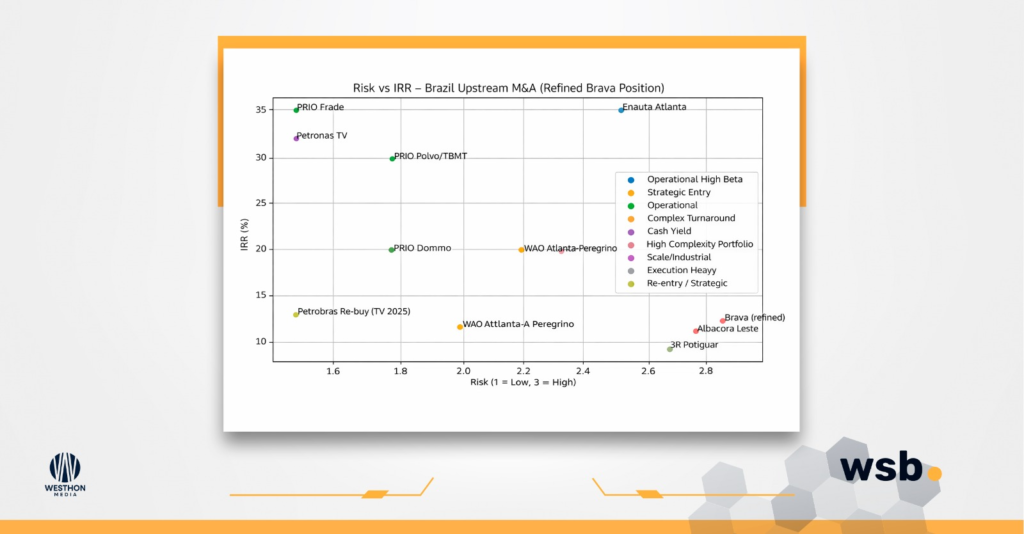
Placing this deal within the broader Brazilian M&A landscape reinforces the point. Mapping transactions across execution risk and expected returns reveals a wide dispersion of outcomes. A small subset of deals — typically driven by timing or targeted operational intervention — cluster in the high-return, controlled-risk quadrant. PETRONAS’ investment in Tartaruga Verde fits squarely within this group. Others, driven by scale or consolidation, tend to deliver more institutional returns, while more complex portfolios — often involving operational integration or technical challenges — carry higher risk without necessarily offering proportionate upside.
Within this framework, Petrobras’ re-entry sits in a different category altogether. The implied returns are more moderate, but the rationale is not primarily financial arbitrage. Rather, it reflects a strategic decision to consolidate control over a producing asset in which the company is already operator, simplifying governance and potentially unlocking operational synergies across its portfolio.
This distinction is essential. PETRONAS approached the asset as an investor, optimising for cash yield and timing. Petrobras is approaching it as an operator and long-term holder, optimising for control and integration. The same barrels can support different valuations depending on the strategy applied to them.
More broadly, the transaction exemplifies a recurring feature of the Brazilian upstream market: asset quality alone does not determine outcomes. Several of the most successful deals in recent years have involved mature or technically complex fields. What differentiates performance is not geology, but execution — and, in some cases, simply timing. The same asset, under different operators or strategies, can produce materially different returns.
Viewed in this light, the Petrobras–PETRONAS sequence is less a contradiction than a transition. In 2019, Petrobras divested a non-core stake to optimise its balance sheet, while PETRONAS entered to capture yield. In 2025, those roles have effectively reversed: PETRONAS exits after harvesting value, and Petrobras re-enters to reinforce its core portfolio. Both decisions are internally consistent. The perceived asymmetry arises only when they are judged through the same lens.
The broader lesson is straightforward, if often overlooked. In upstream oil and gas, value is rarely created at a single point in time. It is created along the production curve — through timing, execution, and strategic alignment.
For those focused solely on headline prices, the Petrobras–PETRONAS deal may appear puzzling. For those looking at the full economic cycle, it is something else entirely:
A well-executed trade on one side, and a strategic repositioning on the other.
What else?
“Coming soon…
I’ve seen a number of takes suggesting that PETRONAS “lost money” on this deal — buying high and selling low.
The reality is quite the opposite.
When you properly unpack the cash flows, timing, and production profile, this turns out to be one of the most efficient upstream trades executed in Brazil in recent years.
Following this divestment, PETRONAS would rank 1 in my Brazil oil and gas deal league table — not despite the exit price, but because of it.
As for Petrobras, the narrative is more nuanced.
Selling at ~US$1.2 billion and re-entering at a fraction of that does not, in itself, define value creation or destruction. The economics sit beneath the headline numbers — and the strategic rationale is far more complex than the surface suggests.
More to come.”, reflects Alexandre Vilela, CEO of WSB Advisors.
BRAVA has announced that its subsidiary 3R Petroleum Offshore was authorized to proceed with the transfer of a 37.5% interest in the Campo de Papa-Terra consortium previously held by Nova Técnica Energy Ltda..
The authorization was issued on 15 February 2026 as part of ongoing arbitration between the parties. The decision allows the company to initiate formal steps required for the transfer, including regulatory filings with ANP, and other authorities.
The participation transfer remains reversible until a final arbitration ruling is issued, and the 37.5% stake cannot be sold or transferred to third parties during the process.
The dispute originated in May 2024 following proceedings initiated by 3R Offshore related to contractual obligations within the Papa-Terra joint operating agreement.
Stay informed on key offshore developments — visit wsb-one.com, our data platform trusted by leading offshore companies.
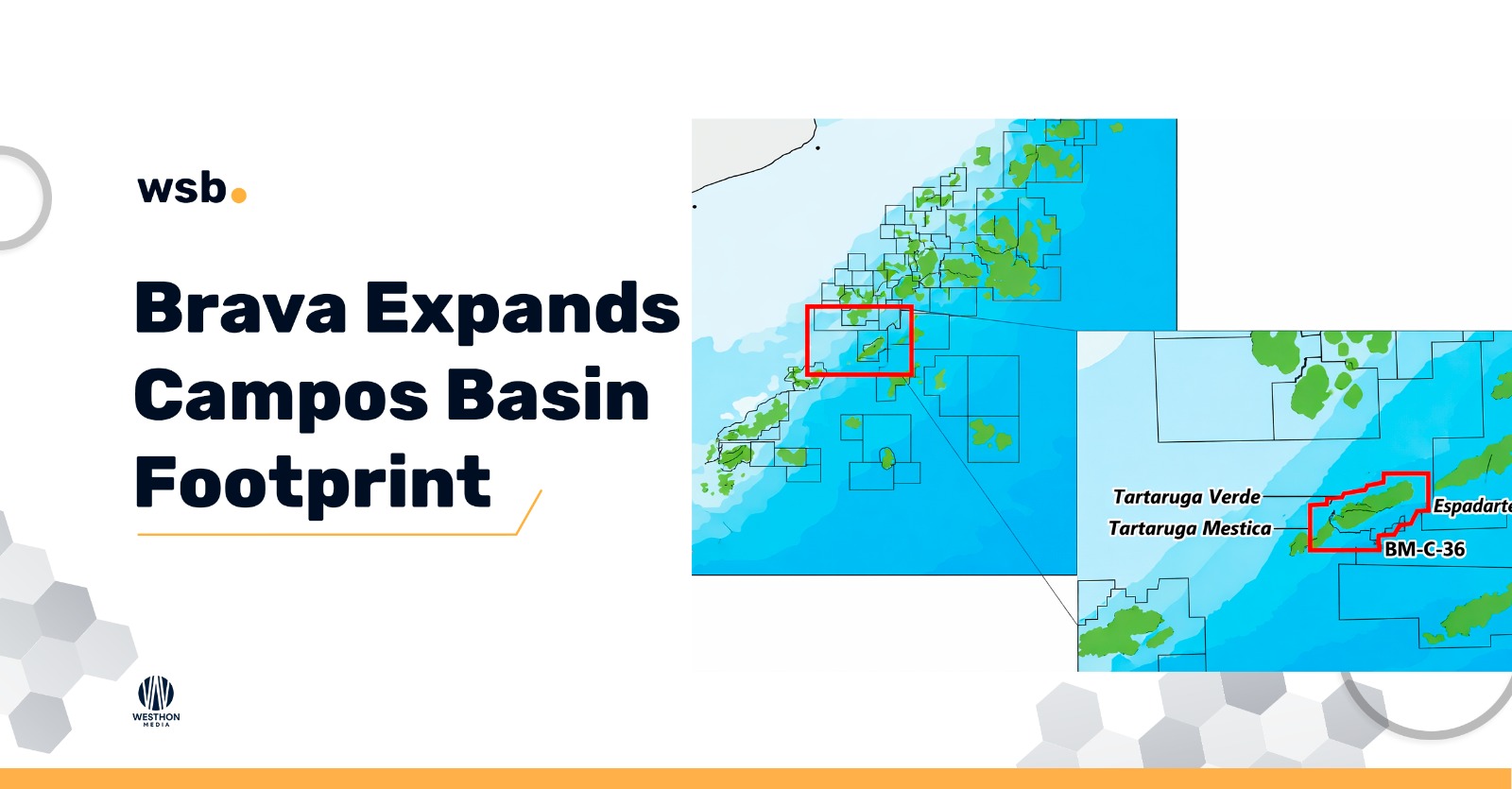
Brazil’s Brava Energia has announced a significant expansion of its upstream footprint with the acquisition of 50% stakes in the Tartaruga Verde field and Espadarte Module III from Malaysia’s Petronas, in a transaction valued at approximately US$450 million. The deal marks a strategic step in the company’s long-term value creation strategy and portfolio repositioning.
The transaction covers Petronas’ equity interests in both offshore assets, located in the Campos Basin, which together delivered an average production of approximately 55.6 thousand barrels of oil equivalent per day in 2025. The remaining 50% stakes in both assets continue to be held by Petrobras, which remains as operator.
According to Brava Energia, the acquisition aligns with its revised portfolio strategy and disciplined capital allocation framework, focused on risk-adjusted returns, diversification, and sustainable value creation. Richard Kovacs, who is set to assume the role of CEO on February 1, highlighted that the assets offer immediate cash generation while strengthening the company’s production and reserves base.
The move positions Brava Energia to leverage established offshore infrastructure while expanding its presence in Brazil’s most mature and prolific offshore basin. It also reflects ongoing consolidation dynamics in the Brazilian upstream sector, as independent energy companies pursue scale, asset quality, and operational resilience amid evolving market conditions.
Brava Energia announced that its Board of Directors accepted the resignation of CEO Décio Oddone as part of a planned succession process. Oddone will remain in office until January 31 to ensure an orderly transition. Richard Kovacs was appointed Chief Executive Officer effective February 1, stepping down from his role as Chairman of the Board while remaining a board member.
Alexandre Cruz was elected as the new Chairman. According to the company, the changes aim to preserve strategic continuity and reinforce governance as Brava advances its long-term operational agenda.
BRAVA Energia closed August with an average production of 92,400 boed, up 1.6% from July and marking its second consecutive monthly record since the merger of Enauta and 3R Petroleum. The Atlanta field stood out, reaching its highest production level to date with 30,065 bbl/d.
TechnipFMC signed two contracts with Petrobras to supply subsea flexible pipes from its Porto do Açu facility. The first, valued between USD 250–500 million, covers risers for gas injection in the Santos Basin pre-salt. The second, worth between USD 75–250 million, includes risers and flowlines for the Campos Basin.
Fugro secured two three-year contracts with Constellation to provide ROV services for inspection, intervention and subsea surveys. Operations will start this quarter in the Campos Basin with the drillship Tidal Action and expand to the Equatorial Margin in 2026 with the Amaralina Star.
Oceaneering closed multiple Petrobras contracts for Subsea Robotics services, totalling around USD 180 million over four years, with scope covering inspection, maintenance, repair, FPSO tie-ins and decommissioning. Its Norwegian subsidiary also signed a structural maintenance contract with Equinor, running until 2027 with possible extensions, covering both onshore and offshore facilities.
Stay informed on key offshore developments — visit wsb-one.com, our data platform trusted by leading offshore companies.
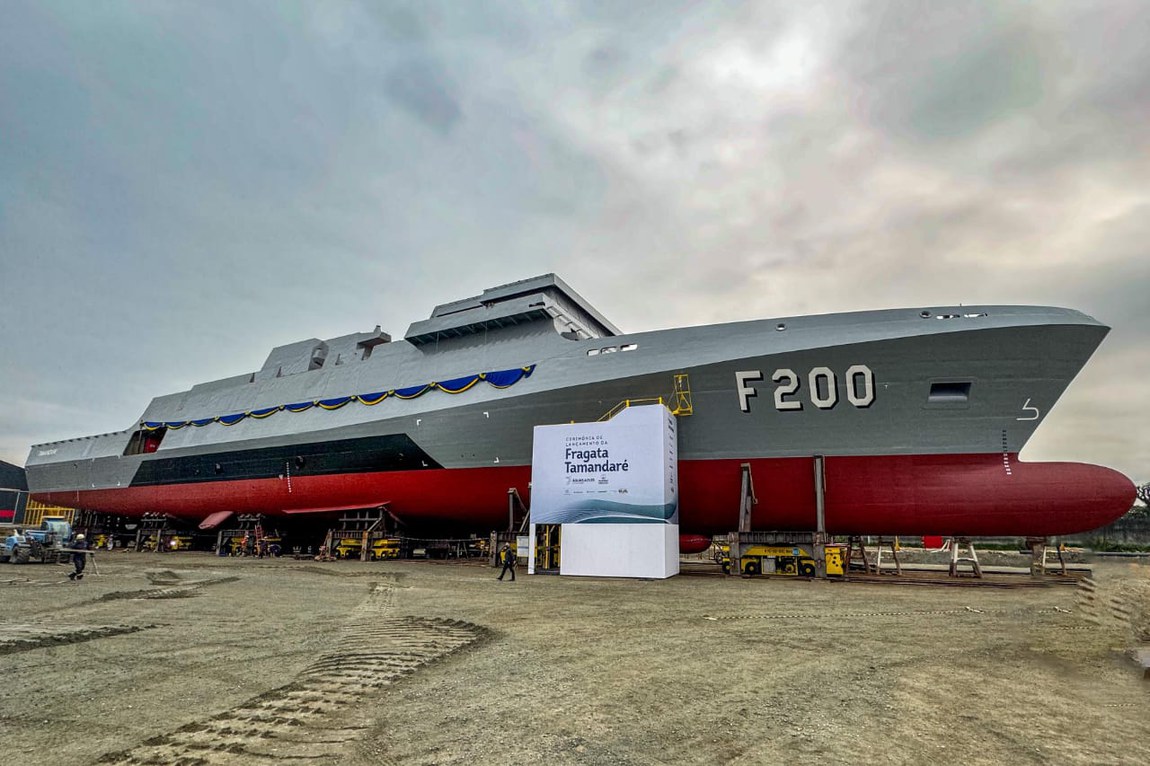
The Brazilian Navy’s Tamandaré frigate (F-200), the first of its new class, has begun sea trials focusing on systems performance and navigability, with delivery expected in December.
In the shipbuilding sector, South Korea’s Hanwha Ocean is advancing plans to establish a shipyard in Niterói, aiming to strengthen its offshore presence, meet local content requirements and position itself for upcoming Petrobras projects.
Meanwhile, Seagems has successfully completed the BRAVA Project in the Santos Basin, connecting new wells to the FPSO Atlanta. The company now operates exclusively for Petrobras under contracts totaling USD 1.8 billion.
Finally, Petrobras and Ibama have scheduled the Pre-Operational Assessment for August 24 in block FZA-M-59, the final step before a potential drilling license is granted for exploration in the Foz do Amazonas.
Stay informed on key offshore developments — visit wsb-one.com, our data platform trusted by leading offshore companies.
BRAVA has completed, earlier than planned, the full and final settlement of FPSO Atlanta receivables with Yinson Offshore. The transaction totalled approximately US$ 260 million including US$ 4.5 million paid upfront in July 2025 and now the balance plus interest. Brava projects a positive impact on operating cash flow exceeding US$ 40 million (present value) over the next three years. The move forms a strategic component of its ongoing liability management efforts aimed at reducing leverage and optimizing capital structure.
Transpetro has become the first Brazilian company to carry out ultrasonic inspections of tanker cargo tanks using drone-mounted technology. Certified by the American Bureau of Shipping (ABS), this inspection method was applied to the tanker João Cândido, marking a major milestone in digital asset integrity and operational safety in Brazil’s maritime sector.
Axess Group has secured a regulatory compliance contract with Seatrium for six Petrobras-bound FPSOs: P78, P80, P82, P83, P84, and P85. Axess will oversee adherence to Brazil’s technical and legal standards throughout the construction phase in Singapore having started with the P 78, already underway en route to Brazil.
This week, Brazil’s energy sector has taken another decisive step toward growth and diversification with key announcements involving upstream, downstream and subsea segments.
McDermott has signed a “sizeable” contract with BRAVA covering the transportation and installation of flexible pipelines, umbilical and subsea equipment for new wells in the Papa-Terra and Atlanta fields. The agreement also includes pre-commissioning and onshore support services. The contract value ranges between $1 million and $50 million.
Meanwhile, Siemens and Seatrium have been selected to supply the compression systems for Petrobras’ FPSOs P-84 and P-85. The two units, central to Petrobras’ pre-salt expansion strategy, are expected to enter production by 2030. The total value of the supply contract is approximately R$ 2 billion.
Last Friday (4), Petrobras announced a R$ 33 billion investment plan focused on refining and petrochemicals at the Duque de Caxias Refinery (Reduc), in partnership with Braskem. The initiative revives major projects in the downstream segment and includes pilot production of Diesel R and Sustainable Aviation Fuel (SAF), improved integration with the Boaventura Energy Complex and expanded investment in workforce development.
Adding to this, Petrobras is now seeking to attract Chinese investment to support its naval and logistics infrastructure. A memorandum of understanding (MOU) signed in Rio de Janeiro brings together major Chinese firms such as COSCO SHIPPING, Offshore Oil Engineering Co. and China State Shipbuilding, along with Brazilian shipyards including
Estaleiro Mauá S/A, Enseada, Estaleiro Atlântico Sul and Estaleiro EBR (Estaleiros do Brasil Ltda), Petrobras and Transpetro will act as anchor clients with plans to commission 52 vessels and five FPSOs by 2026. The partnership aims to inject capital and technology into Brazil’s shipbuilding industry, aligning with government efforts to reindustrialize the sector after a long period of decline.