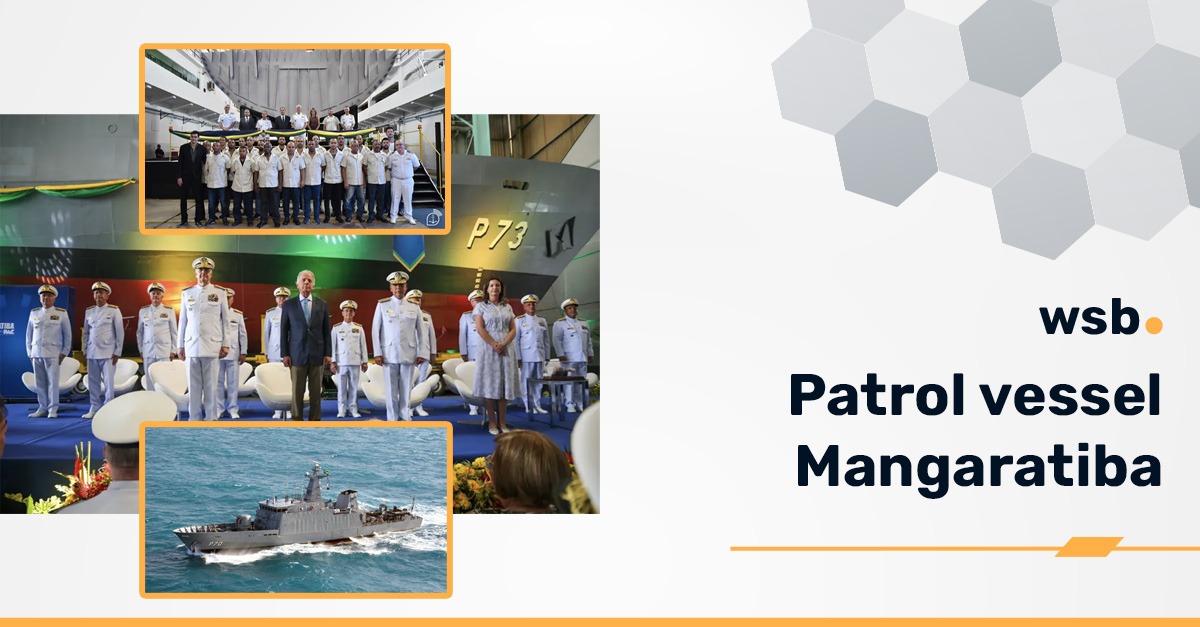
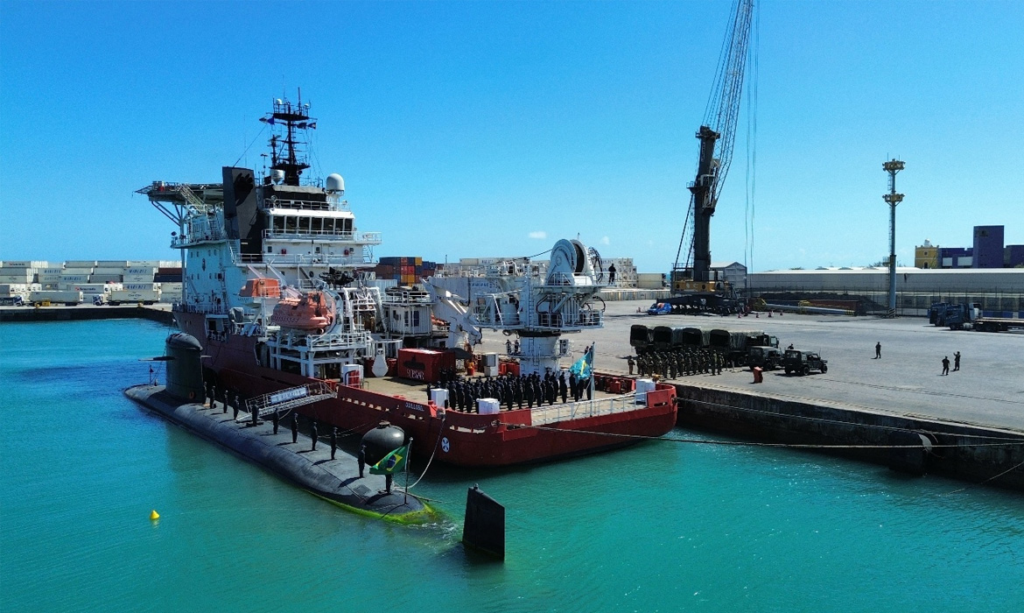
Marinha do Brasil recently held the launching ceremony of the patrol vessel “Mangaratiba” (P73) at the Arsenal de Marinha do Rio de Janeiro (AMRJ). Following the ceremony, the vessel will proceed to the next stages, including harbor trials, sea trials, and weapons trials — preceding its commissioning into operational service. Full incorporation into the fleet is expected in the second half of this year.
Construction of the “Mangaratiba” began at a civilian shipyard and was completed at AMRJ, where structural work was finalized and propulsion, electrical, navigation, communication, and weapons systems were installed. Measuring 54.2 meters in length, the vessel has an endurance of approximately 2,500 nautical miles (around 5,000 kilometers) and can accommodate up to 51 personnel, enabling extended operations in remote areas.
What is a patrol vessel?
It is a small- to medium-sized warship, designed for versatility and agility in coastal, riverine, and jurisdictional waters. Its main roles include maritime law enforcement, search and rescue (SAR) operations, combating illicit activities such as illegal fishing and smuggling, and protecting strategic assets such as offshore oil platforms.“
“Mangaratiba” is the fourth patrol vessel of the Macaé class, following:
• NPa Macaé (P70), commissioned in 2009
• NPa Macau (P71), commissioned in 2010
• NPa Maracanã (P72), commissioned in 2022
The next vessel in this series is the patrol vessel “Miramar” (P74), currently under construction, with launch expected around 2028. Keel laying took place in 2024.
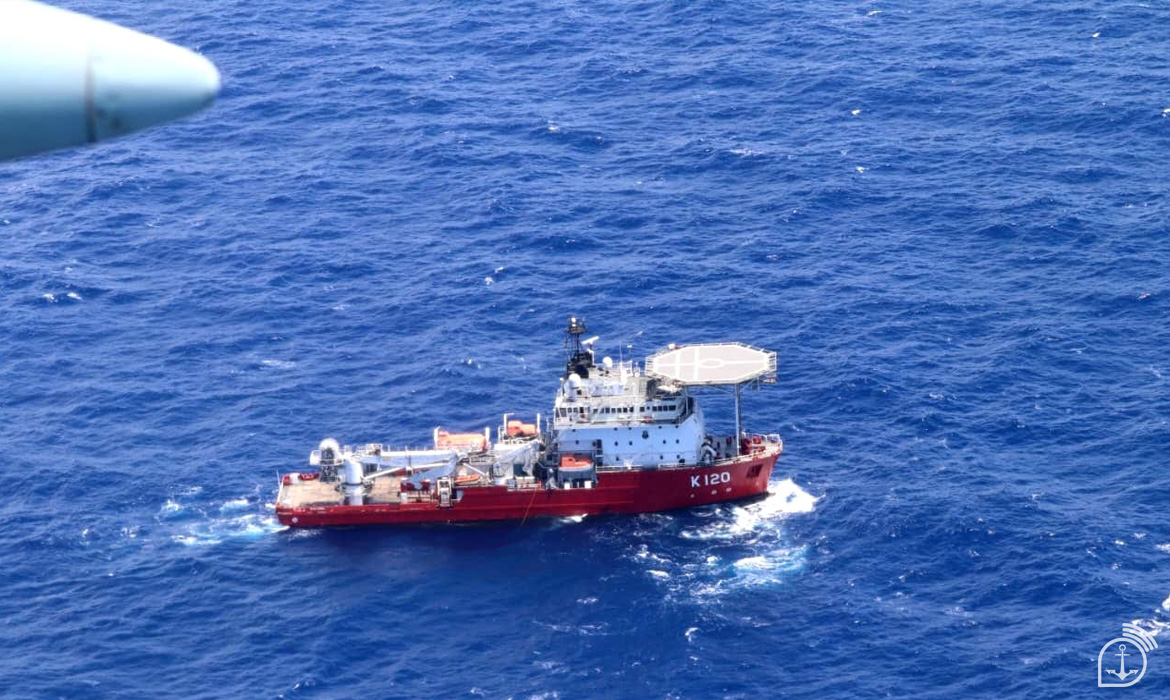
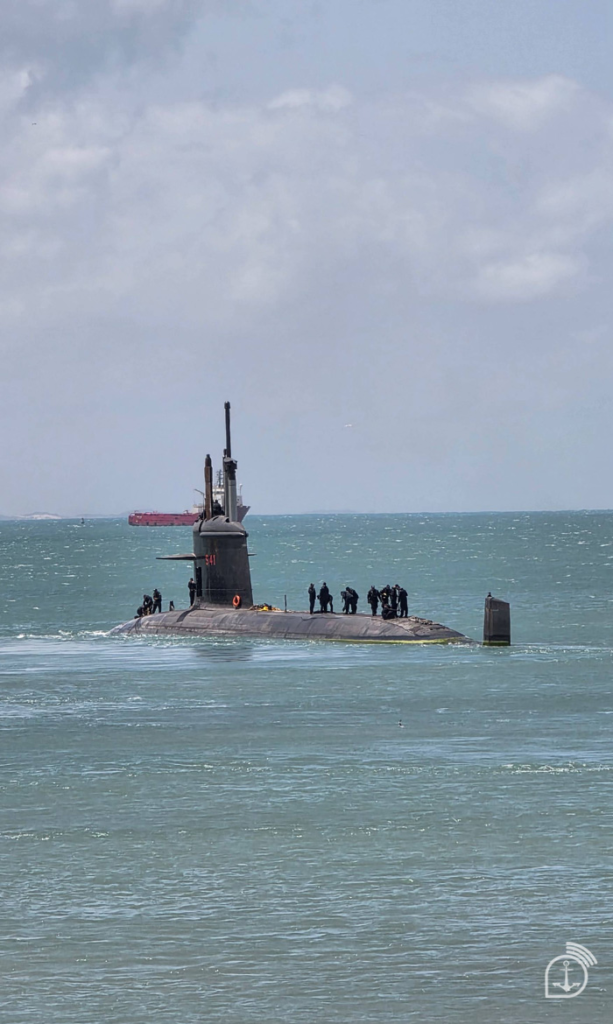
Between 10 and 14 November, the Brazilian Navy carried out the second edition of the Submarine Cable Protection Exercise off the coast of Fortaleza, Ceará. The operation brought together the Armed Forces, public institutions and more than twenty private-sector companies to simulate real scenarios involving threats to submarine cables — a critical infrastructure responsible for nearly all data traffic entering and leaving Brazil.
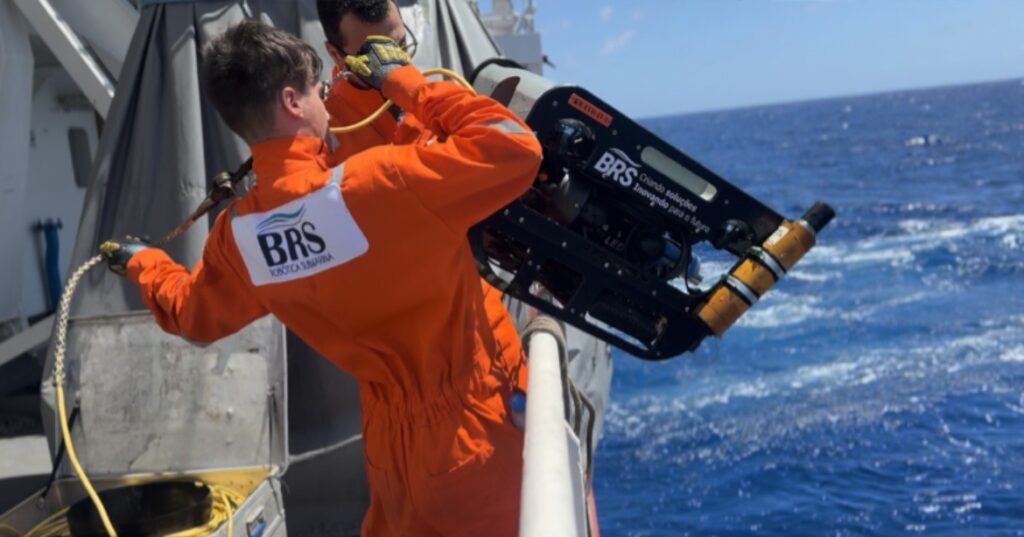
While the Navy coordinated a complex, multi-layered exercise involving naval, aerial and subaquatic assets, one particular national player drew attention for the technological consistency and operational maturity demonstrated throughout the event: BRS Robótica Submarina, a Brazilian company specializing in underwater robotics and inspection services.
Their participation not only illustrated the growing relevance of private-sector technological capabilities in the protection of strategic assets, but also highlighted how national innovation can directly contribute to strengthening Brazil’s sovereignty in the subsea environment.
According to Álano Lamônica, Operations Director at BRS, interviewed by Westhon Media exclusively for this article, the company’s entry into the Naval Cluster of Rio de Janeiro in early 2025 opened the door to a technical dialogue that eventually led to the invitation to participate in the exercise. “Our technological capacity and the alignment of our solutions with naval demands helped consolidate this approach with the Navy through EMGEPRON,” he explains.
Source: BRS Robótica
A National ROV Put to the Test
The exercise simulated an intentional action against one of the submarine cables operated off the coast of Ceará. In this context, the BRS-developed ROV played a central role by identifying, locating and documenting the condition of the cable on the seabed.
“The ROV was deployed to locate the cable and generate visual and sonar evidence of its condition. From there, the Navy employed a wide range of assets — submarines, helicopters and surface vessels — to simulate the interception and inspection of a vessel conducting unauthorized activities,” says Lamônica.
The operation brought together high-level technological, naval and aerial resources, reaffirming the importance of interoperability between the Armed Forces and specialized private-sector companies.
Why the ROV Made a Difference
The system used by BRS incorporates an advanced suite of sensors and a robust operational architecture. Its multibeam sonar and dual 450 MHz side scans allowed rapid seabed mapping and precise identification of the cable, even considering its reduced diameter — a known challenge in real operations.
The multibeam sonar provided real-time forward-looking images with high definition, enabling safe navigation and precise target detection. Meanwhile, the side scan sonar produced detailed acoustic images of the seafloor, ideal for identifying linear structures and anomalies across wider areas.
“The combination of these two systems ensures fast location and safe, precise approach,” highlights Lamônica. He also emphasizes that the equipment was designed and assembled in Brazil, with engineering and integration carried out entirely by the BRS team in Macaé, representing a tangible contribution to national technological autonomy in subsea operations.
Operational Agility, Reliability and National Capacity
One of the greatest strengths of BRS in this exercise was its agility. Under appropriate contractual conditions, the company can mobilize a complete operation in as little as one day for shallow-water scenarios — a crucial capability in real-world incidents involving telecom infrastructure.
Its modular architecture allows deployment from vessels of various sizes, and the team’s field experience provided the confidence and operational discipline required for the simulation. Throughout the exercise, BRS followed established protocols of planning, communication and operational risk management, ensuring a high standard of safety and performance.
Despite the complexity of the joint operation — involving the Navy, Air Force, Federal Police, intelligence agencies and telecom operators — BRS reported no major technical difficulties. The company applied structured search methods, combined with its sensor portfolio, to identify the cable quickly and efficiently.
The Role of Public-Private Collaboration
For BRS, the exercise reaffirmed the relevance of integrating national technological companies into strategic defense scenarios.
“The protection of critical infrastructure cannot be done in isolation. When national companies actively participate, the country gains agility, innovation and an expanded technological reach,” says Lamônica.
He also underscores that the exercise strengthened relationships with operators, regulators and defense agencies, opening room for new projects, studies and technological opportunities to be developed in the coming months.
Submarine Cables as a Pillar of Digital Sovereignty
Brazil operates 17 submarine cable systems that sustain almost all national and international data flow, supporting sectors such as finance, government communications, online services, cloud platforms, industry and logistics.
The physical layer of telecommunications — often overshadowed by cybersecurity discussions — depends heavily on continuous monitoring and rapid response capabilities. In this context, companies capable of operating advanced underwater robotics play an essential role in national resilience.
Looking Ahead: Innovation and Strategic Preparedness
The exercise allowed BRS to identify potential areas for technological improvement, which will be evaluated internally before becoming formal projects. According to the company, the demand for underwater inspection and monitoring is expected to grow significantly in the coming years, driven by the expansion of telecom infrastructure, offshore energy projects, port operations, hydropower facilities and other sensitive environments.
“Our commitment is to keep developing technologies that respond effectively to the challenges of different sectors, strengthening Brazil’s ability to protect and monitor critical underwater environments,” Lamônica concludes.
The 2025 edition of the Submarine Cable Protection Exercise made one point clear: national innovation is not only capable of supporting strategic defense scenarios — it is becoming a decisive component of Brazil’s digital sovereignty.
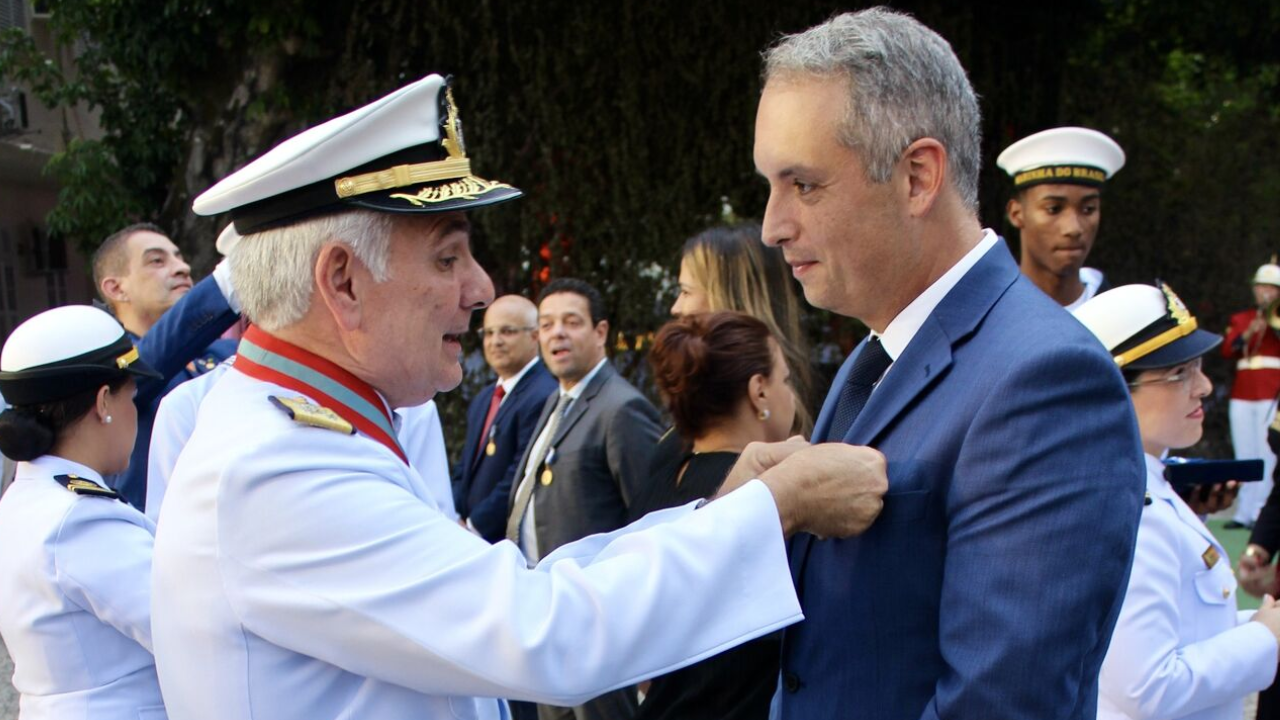
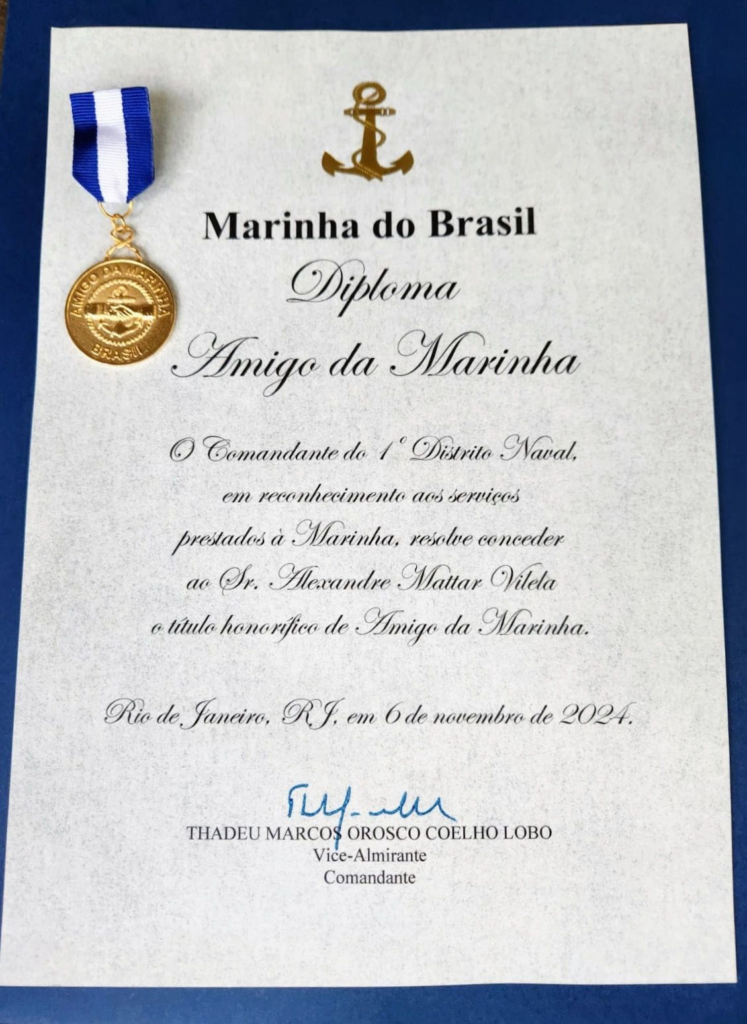
“I am deeply honored to receive the Amigo da Marinha medal, the Invictus Brazilian Navy Marinha do Brasil recognition for services to the Brazilian Navy. This achievement holds special meaning as I reflect on 2024, the year I celebrate 25 years of dedication to the merchant marine.
The journey began humbly when I first walked into Petrobras‘ headquarters to join the cargo shipment control department. Under the guidance of extraordinary mentors, I was granted opportunities to immerse myself in the world of shipping: embarking on tankers, overseeing loading operations, visiting refineries, and even spending time on oil rigs. These formative years awakened the passion for shipping in the grandson of a shipowner, my grandfather Elias Mattar.
Later, Maersk provided me with the incredible MISE program, which I firmly believe to be the best shipping education in the world. My career continued with Shell and culminated in the founding of my own shipbroking firm 14 years ago. Since 2016, with the growth of WSB Advisors, the scope of our operations has expanded into technology, engineering, and beyond.
Recently, my dear friend and business partner Joana Rodrigues helped me realize the impact of this journey—not only on myself but also on the many seafarers and professionals at sea and in land whose livelihoods were touched by the vessels I helped manage, repair, and employ. A lifetime dedicated to the merchant marine has brought a collection of cherished friendships.
This medal also reminds me of the inseparable connection between the merchant marine and the Brazilian Navy. The Brazilian merchant marine has long been a pillar of the nation’s economic strength. From World War II to the present day, merchant seafarers have made incredible sacrifices for the prosperity and sovereignty of Brazil, often with little recognition from society.
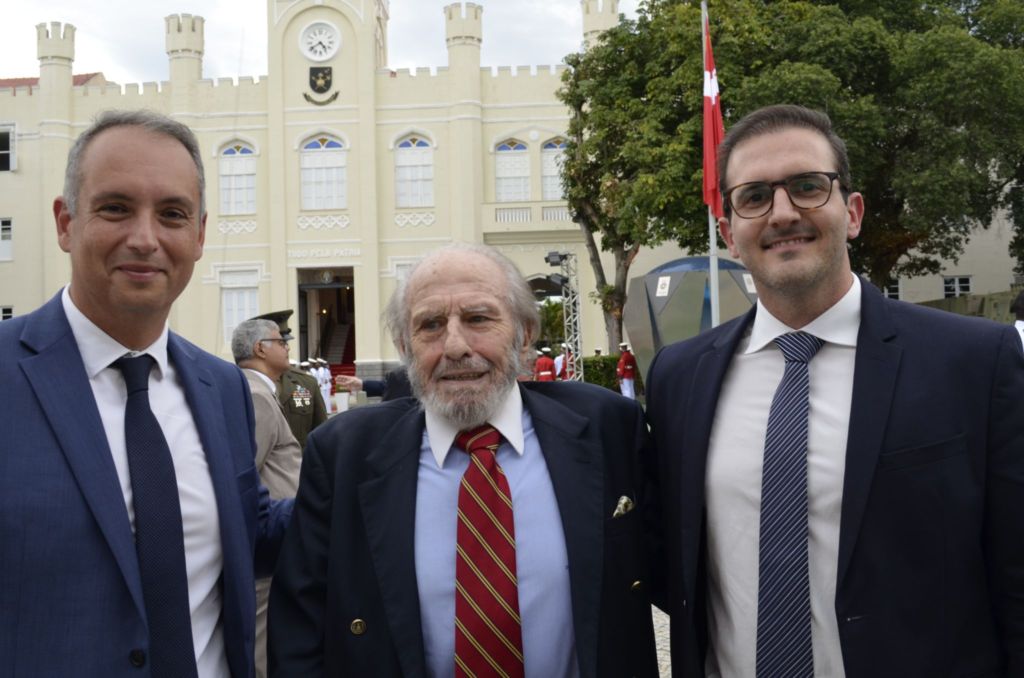
Alexandre with Dalton Schmitt (middle) and Pedro Schlegel, from TSA (Source: Brazilian Navy)
The Navy has always been a cornerstone of this maritime vocation, educating, preparing, and certifying the seafarers who fuel the lifeblood of the nation’s shipping industry. I am immensely proud to contribute to this tradition in my own capacity and to help promote the success of Brazil’s maritime endeavors.
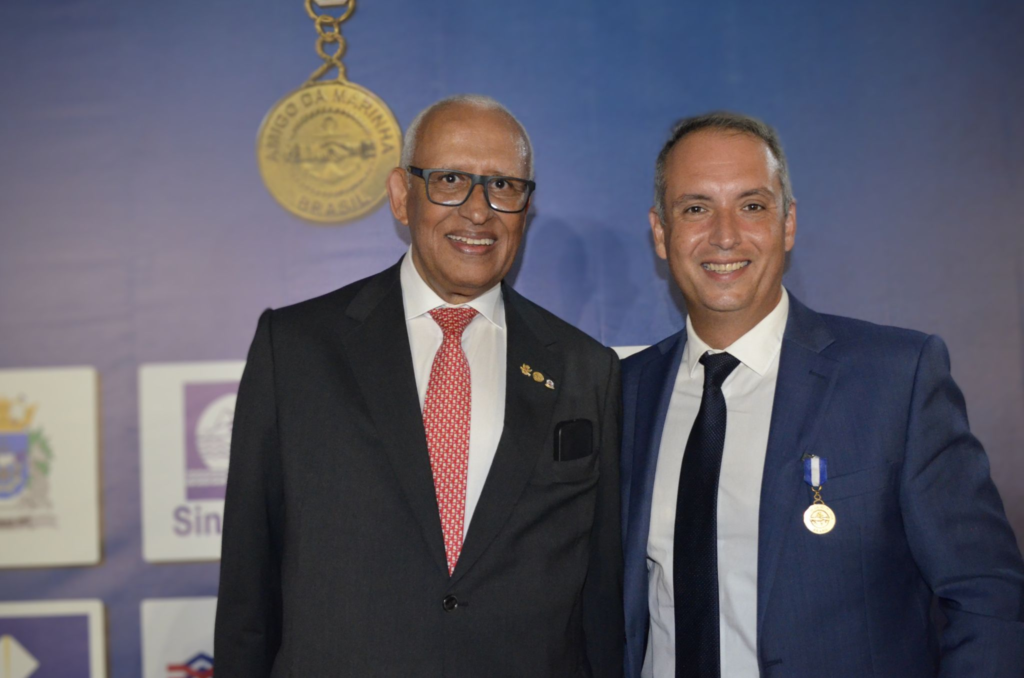
In the photos, I stand proudly alongside my dear friend and inspiration, Dalton Schmitt, who continues to devote his life to shipping and also received the medal this year.
A special mention goes to Mauricio Almeida, who this year celebrates an incredible 50 years of dedication to the industry. Working with Mauricio over the past year has been an honor, and his wisdom and passion for shipping have been invaluable in shaping my ongoing journey.
Alexandre Vilela and Maurício Almeida (Source: Brazilian Navy)
To all who dedicate their lives to the maritime vocation, I salute you. This medal is not just a recognition of my efforts but a testament to the shared mission of strengthening Brazil’s maritime legacy”, says Alexandre Vilela, CEO of WSB Advisors.