Tag: campos basin

  • Wahoo reaches planned Production capacity as PRIO completes well startup production

    Wahoo reaches planned Production capacity as PRIO completes well startup production

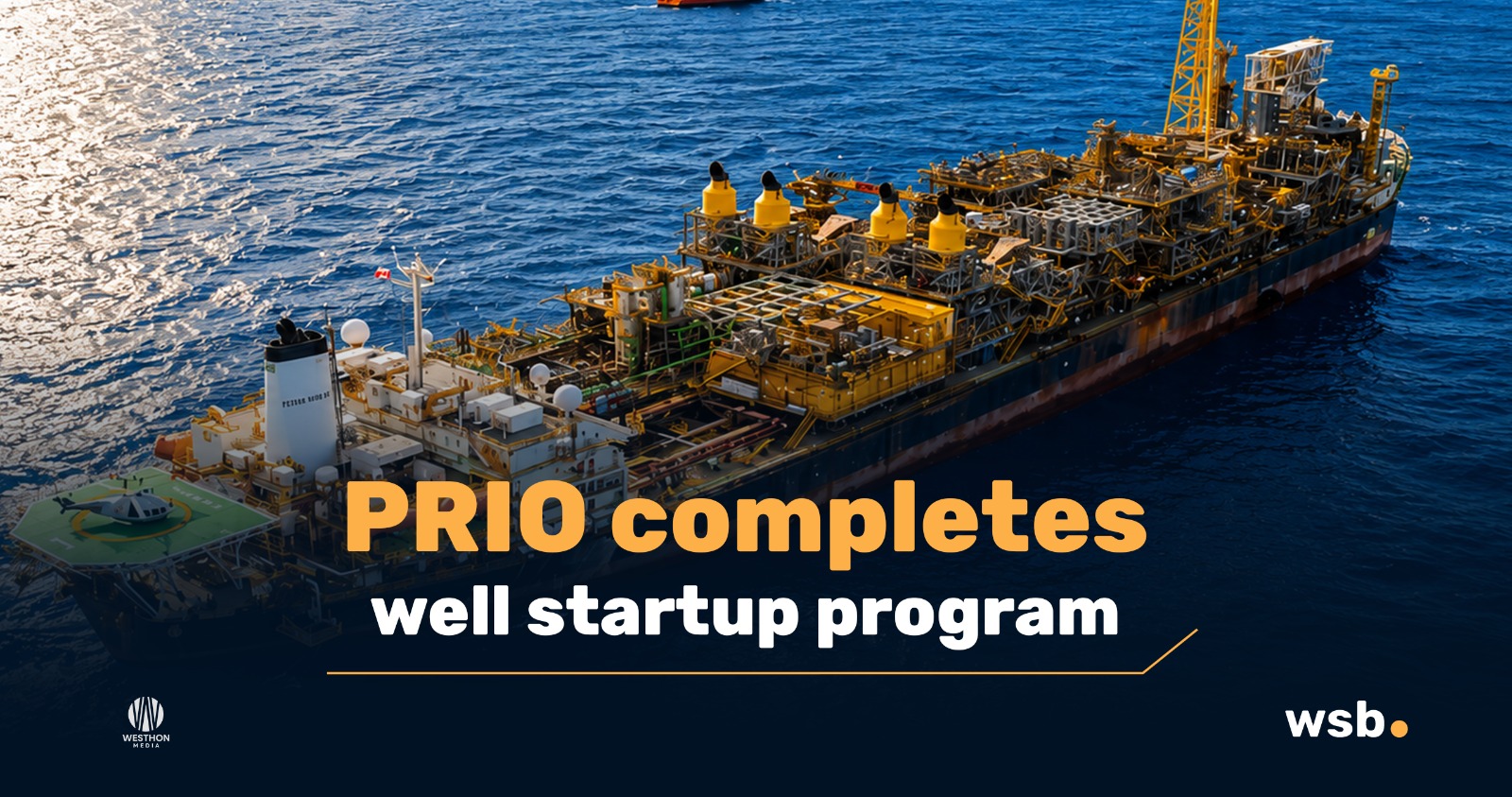
    PRIO announced the completion of the fourth and final producing well planned for the Wahoo Field development, bringing the project to its initial production configuration in Brazil’s Campos Basin.

    With all four wells now online, Wahoo is expected to operate at its planned production capacity of approximately 40,000 barrels of oil per day, with each well contributing around 10,000 barrels per day.

    The development is directly aligned with PRIO’s strategy of increasing production through brownfield projects, subsea tiebacks and operational optimization, rather than relying solely on large-scale greenfield developments.

    Wahoo also strengthens the company’s position in the Campos Basin, where the Valente Cluster, comprising the Frade and Wahoo fields, continues to play an increasingly important role in PRIO’s production portfolio. In May, the cluster averaged approximately 55,600 barrels of oil per day, while the company reported total production of around 164,800 barrels of oil equivalent per day.

    Why it matters
    As mature offshore fields continue to attract investment, projects such as Wahoo demonstrate how infrastructure optimization, subsea integration and brownfield development continue to unlock production growth while extending the productive life of existing offshore assets. The project also reinforces the strategic importance of the Campos Basin, where operational efficiency increasingly plays a central role in Brazil’s offshore production landscape.

    Stay informed on key offshore developments — visit wsb-one.com, our data platform trusted by leading offshore companies.
  • Petrobras reinforces Campos Basin strategy with Argonauta transaction

    Petrobras reinforces Campos Basin strategy with Argonauta transaction

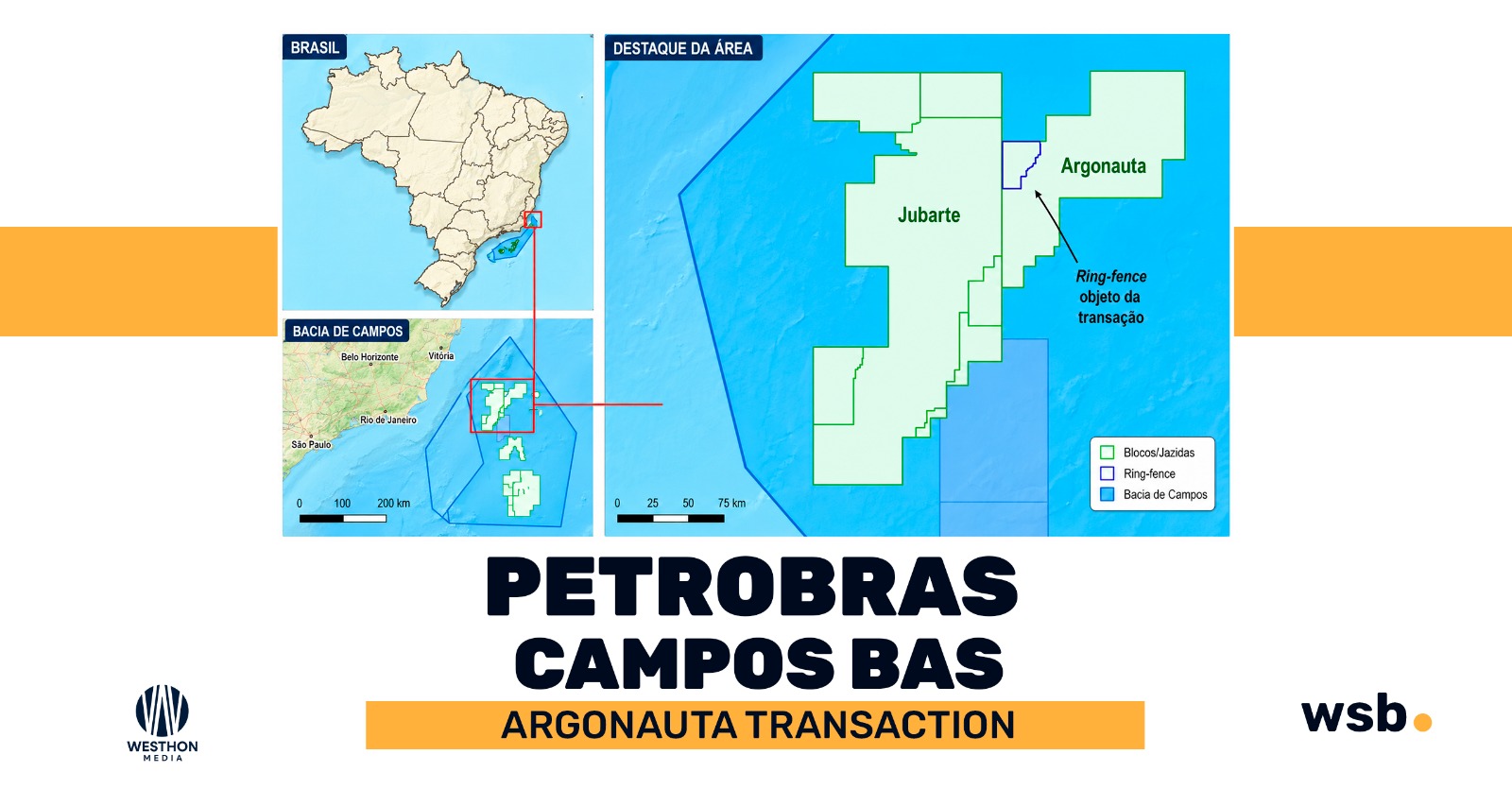
    Petrobras announced an agreement to acquire 100% of a ring-fence portion of the Argonauta Field, in the Campos Basin, currently held by Shell, ONGC and Brava.

    The transaction involves a portion of Argonauta linked to 0.86% of the shared Jubarte pre-salt reservoir. The total consideration will be R$700 million plus US$150 million, subject to contractual adjustments and closing conditions.

    Once completed, Petrobras will hold 98.11% of the Jubarte Shared Reservoir, while the Brazilian government, represented by PPSA, will retain 1.89% related to the extension of the reservoir into non-contracted areas.

    More than a portfolio adjustment, the deal points to a broader strategy: Petrobras is consolidating control over profitable producing assets in the Campos Basin, simplifying governance and reinforcing its position in Brazil’s oldest offshore producing province.

    The move follows other recent transactions, including the reacquisition of Petronas’ stake in Tartaruga Verde and Espadarte Module III, and is aligned with the company’s 2026–2030 Business Plan, which prioritizes value maximization in resilient upstream assets.

    In a market where new frontier development faces longer licensing cycles and higher execution risk, mature basins with existing infrastructure are gaining renewed strategic relevance.

    Campos Basin is no longer just a legacy province. It is becoming a core pillar in Petrobras’ portfolio optimization strategy.

    Stay informed on key offshore developments — visit wsb-one.com, our data platform trusted by leading offshore companies.
  • ANP prepares 23-block auction

    ANP prepares 23-block auction

    Pre-salt gains momentum as ANP expands offering and prepares new auction with 23 blocks

    ANP published on April 6 a new version of the Production Sharing Permanent Offer (OPP) notice, following board approval on March 27 and validation by the Ministry of Mines and Energy (MME).

    The update expands the number of areas available in Brazil’s pre-salt, with 15 new exploratory blocks added to the eight previously offered, bringing the total to 23 blocks available for future OPP cycles.

    All areas are located within the pre-salt polygon, with eight blocks in the Campos Basin and 13 in the Santos Basin — both considered strategic regions for national production.

    The blocks have received joint environmental feasibility assessments from the MME and the Ministry of Environment and Climate Change, allowing them to be included in the offering. Despite updates to technical and economic parameters, bidding rules and contract structures remain unchanged, reinforcing regulatory stability.

    With the publication, the areas are now open to expressions of interest from companies — a prerequisite for launching the 4th OPP cycle. Under this model, bidding rounds are only triggered once companies formally declare interest in specific blocks.

    As one of Brazil’s main licensing mechanisms, the Permanent Offer provides continuous availability of acreage and greater flexibility for companies to assess opportunities. To date, Brazil has held three production-sharing cycles under the OPP framework, consolidating the model as a key tool for attracting investment in the upstream sector.

  • Brava starts drilling campaign

    Brava starts drilling campaign

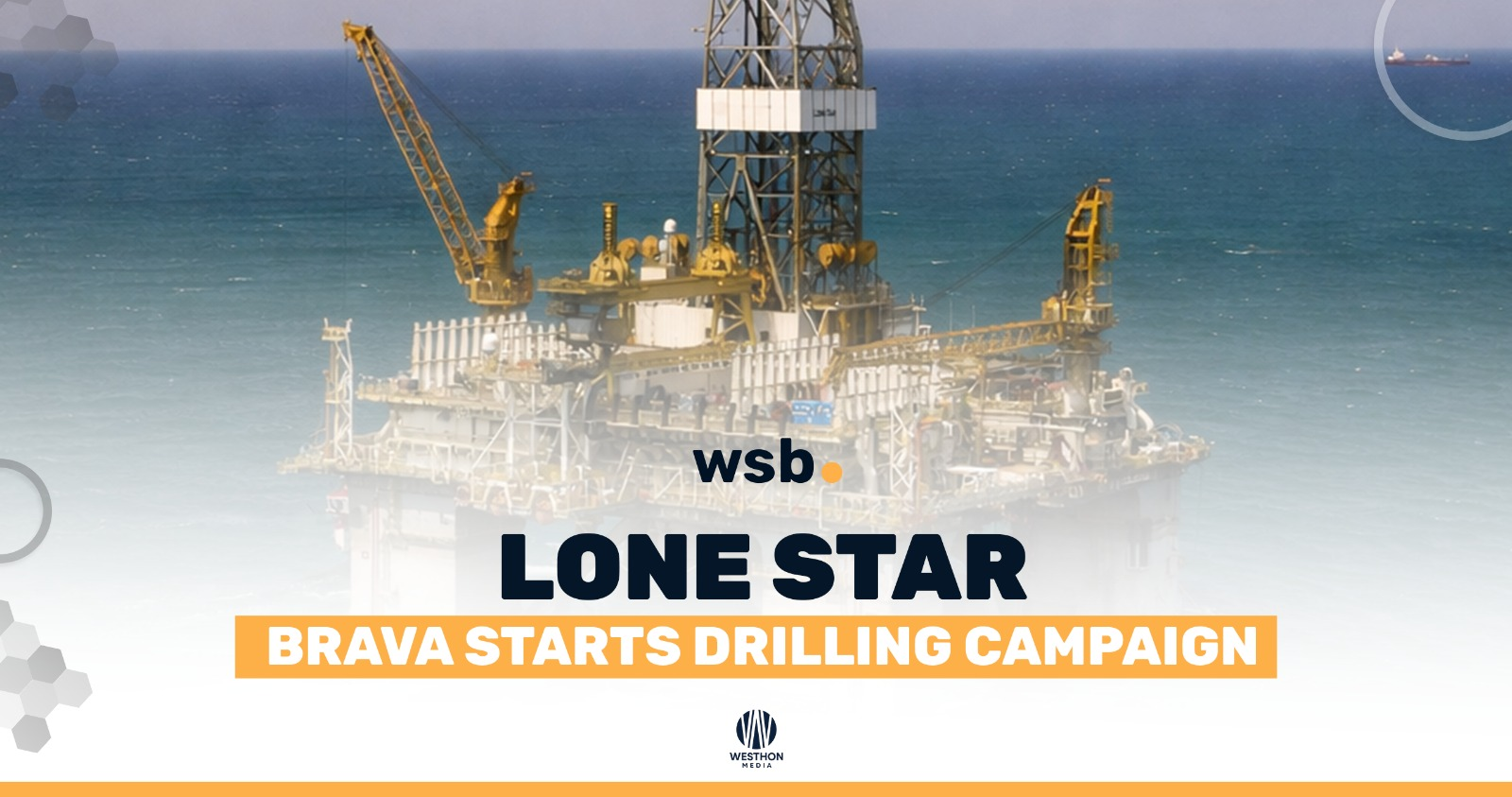
    Brava Energia has started a drilling campaign using Constellation’s Lone Star rig across the Papa-Terra and Atlanta fields.

    The campaign includes four wells, with two located in Papa-Terra, in Campos Basin, and two in Atlanta, in Santos Basin, with completion expected by 1Q27.

    The rig moved directly into the project after completing its previous contract in Brazil in January 2026, followed by a planned maintenance stop of just over 40 days, including hull cleaning and equipment overhauls.

    Drilling activities will take place in Papa-Terra between March and September 2026, followed by well connection and first oil expected in 4Q26. The rig is scheduled to move to Atlanta in October, where operations will support first oil in 2Q27.

    The campaign has been structured under an optimized capex allocation, with 65% directed to Atlanta and 35% to Papa-Terra, leveraging existing infrastructure to enhance production efficiency and reduce unit costs.

  • Equinor starts drilling at Raia offshore gas project

    Equinor starts drilling at Raia offshore gas project

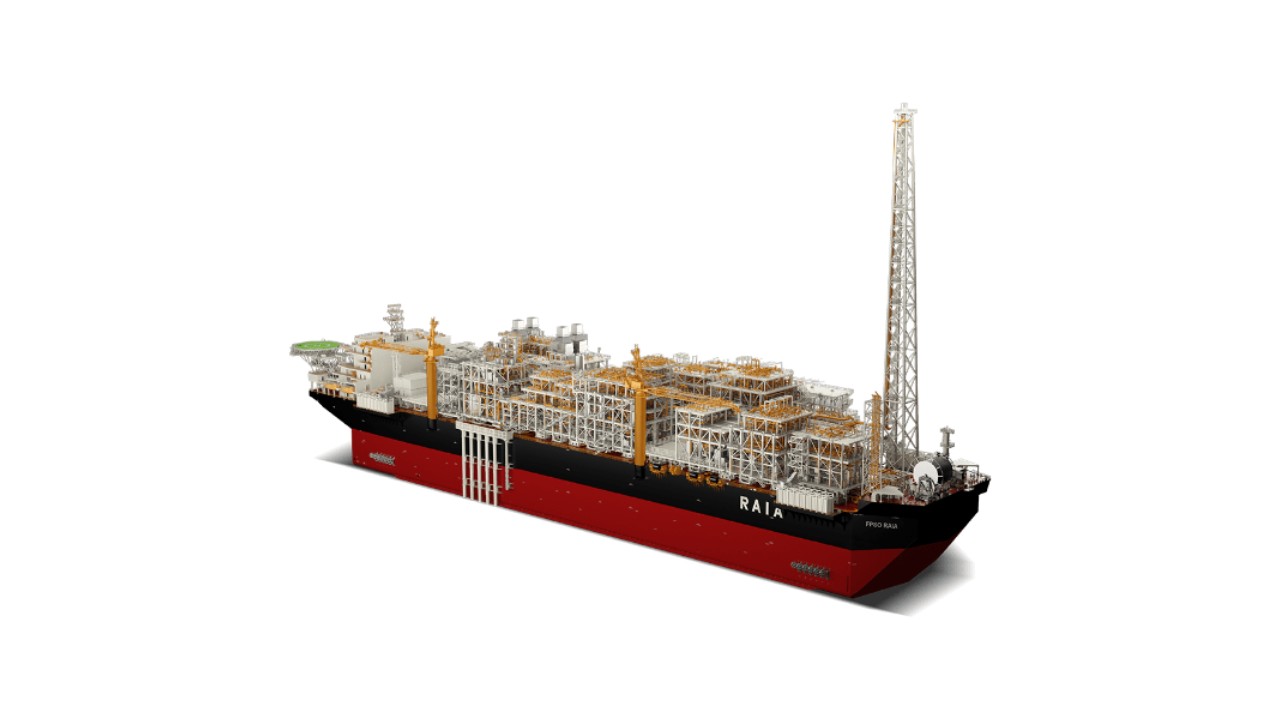
    On March 24, 2026, Equinor initiated drilling activities for the Raia offshore gas project in the Campos Basin. The development, estimated at around US$9 billion, is expected to begin production in 2028, with projected output of approximately 16 million cubic meters of gas per day and 126,000 barrels per day of oil and condensate.

    The project could supply close to 15% of Brazil’s domestic gas demand and marks the transition from project planning to execution phase, reinforcing Equinor’s integrated position across offshore gas and onshore renewables in Brazil.

  • FPSO integration in Campos Basin

    FPSO integration in Campos Basin

    PRIO is evaluating a possible interconnection between the FPSOs serving the Peregrino and Tubarão Martelo fields, following the model applied in the Phoenix Project, which integrated Polvo and Tubarão Martelo to reduce costs and boost operational efficiency. The assessment considers the technical and economic viability of a configuration that would allow optimized processing, injection and flow between units, creating a more integrated hub in the Campos Basin.

    The initiative aims to capture three core effects: lower OPEX through reduced dependence on charters and diesel consumption, extended reservoir life with higher recovery factors, and more efficient asset utilization by balancing load across platforms. Any advancement will depend on confirming pipeline integrity, system compatibility, regulatory requirements and potential environmental licensing needs.

    In the market, the evaluation is interpreted as a natural continuation of the company’s strategy of integrating infrastructure in mature fields, developing more flexible configurations with improved production predictability. The arrangement would reinforce the ongoing trend toward mid-sized hubs in the Campos Basin, lowering unit costs and strengthening operational resilience in the region.

  • Investments coming

    Investments coming

    The ANP (National Oil Agency) reported that investments in the production phase of Brazil’s current oil and gas contracts will total just over R$130 billion in 2024. The Santos Basin will receive the majority of investments: 60.4%, followed by Campos Basin (28.17%) and Sergipe Basin (6.26%). The majority will be allocated to platform works with R$37 billion, followed by line launch activity with R$27.7 billion and well drilling with R$12.4 billion.

    The ANP also highlighted that by 2028 R$514 billion will be invested in the production phase of current contracts for the exploration and production of oil and natural gas in Brazil. Of this total, the Santos basin stand out with 61%, and Campos with 28% of investments. Until then, 4.195 million boed of production are estimated.