Tag: Digital Minds

  • Digital Minds #3

    Digital Minds #3

    The End of Intermediaries… or the Value of Judgment?
    By Fernando Vilela

    Fernando Vilela
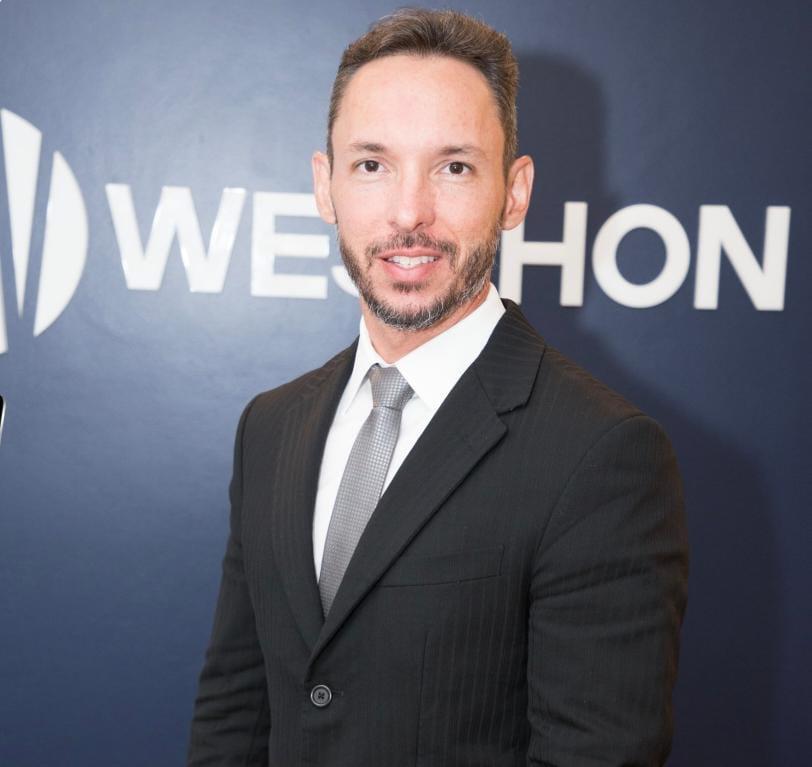
    Fernando Vilela (Source: Klesio Abel/WSB Team)

    The other day, someone called me asking for information. They weren’t a client, weren’t interested in hiring anything, didn’t want a meeting, and certainly weren’t asking for a proposal. They just wanted a piece of information. Then came the questions: a vessel, a contract, a contact, a confirmation.

    Sound familiar?

    We’ve all been on both sides of that conversation, especially because, in our industry, it’s necessary. At some point, we’ve all shut down the computer, ignored the reports, closed a few of the dozens of tabs open in our browser, and decided to call someone.

    And that’s where the contradiction appears.

    Never before have we had so much access to information, and never before have we seen so many people desperately searching for it.

    I’m certain that the person who made that call was carrying more research capability in their pocket than an entire company possessed a few decades ago. Today we have LinkedIn, artificial intelligence, tracking systems, specialized platforms, newsletters, dashboards, and an almost absurd amount of data available just a few clicks away. Depending on your role, there’s a good chance you even subscribe to WSB.One or another industry platform.

    In theory, finding answers has never been easier.

    But, as always, there’s a “but.”

    If information is everywhere, why do we keep looking for people?

    What happened to all those predictions? Face-to-face meetings would disappear. Industry events would become irrelevant. Networking would move entirely online.

    According to the internet’s experts, intermediaries would be replaced by platforms, and artificial intelligence would take care of the rest.

    A logical conclusion?

    Funny.

    Events got bigger, trade shows expanded, airports remain crowded, and we continue receiving invitations to lunch and dinner.

    The reality is that professionals still travel across cities, states, countries, and even oceans to discuss matters that, theoretically, could be resolved in a fifteen-minute video call.

    The problem was never the technology.

    The problem was that we misunderstood where the real value was.

    For a long time, we believed that information was power. And perhaps it was, back when data was scarce and those who had access to it held a significant advantage.

    Today, the challenge is no longer finding information.

    It’s surviving it.

    And, interestingly enough, ending the day with just as many questions as when you started.

    Consider this: a platform can show where a vessel is. It can display contracts, historical data, movements, and market trends. In fact, it should. That’s exactly what data platforms are designed to do. They save time, organize complex markets, and eliminate an enormous amount of work.

    But eventually, every piece of information leads to the same question:

    “Now what?”

    Will that seemingly available vessel actually be available when you need it? Will the contract that’s about to expire really come to an end? Is there an extension negotiation taking place behind the scenes? Is the owner genuinely interested in that opportunity? Are there any operational or technical issues? Does the documentation comply? Does the crew meet the requirements?

    And perhaps the most important question of all:

    Will that client actually close the deal, or will they change their mind three times during the negotiation?

    Because that’s precisely the moment when data stops helping on its own.

    That’s when experience, relationships, and judgment begin to matter.

    Perhaps the market is not witnessing the end of intermediaries.

    Perhaps it’s witnessing the end of professionals whose only role was moving information from one side to the other.

    Technology already does that.

    And it does it better, faster, and cheaper.

    What remains rare is someone capable of interpreting context, anticipating risks, connecting scattered pieces of information, and turning a mountain of data into a practical decision.

    Someone capable of looking at a screen full of information and saying:

    “Ignore 95% of this. What matters is right here.”

    The more data exists, the more valuable judgment becomes.

    And there’s an observation that may be even more important.

    “Deal closed. Contract signed. What’s next?”

    In reality, that’s often when the real work begins.

    That’s when operational adjustments, delays, scope changes, pending documents, questions, problems, and the inevitable surprises that no spreadsheet could ever predict begin to emerge.

    And perhaps that’s the point advocates of disintermediation never fully understood.

    Finding an opportunity has become easier. Closing a contract has become easier too. Making things work afterward remains the hard part.

    And perhaps that’s why the most valuable professionals are not merely those who find opportunities, but those who remain present when those opportunities become responsibilities. They’re the ones who stay involved, answer the phone when problems arise, and help find solutions long after the excitement of the negotiation has faded and the reality of execution has begun.

    Because data helps find answers.

    Experience helps make things work.

    And that may say more about the future of business than any technological prediction of the past decade

    Data Matters
    Data Matters
  • Digital Minds #2

    Digital Minds #2

    The New Luxury: When Time Is Worth More Than a Rolex — and No One Notices

    By Fernando Vilela

    Fernando Vilela
    Fernando Vilela (Source: WSB Team)

    There’s a scene that has become routine in the corporate world. You’ve probably seen it. Maybe you are that guy. The other day, I was sitting at a crowded airport terminal — the kind that smells like bad coffee and collective anxiety — when I noticed an executive cutting across the hall with that fast, purposeful walk of someone who believes he’s saving the world. Suit perfectly fitted, shoes polished, what looked like a Rolex on his wrist — the kind that doesn’t just tell time, it tells people you’ve “made it.” Phone glued to his ear, another screen buzzing in his hand, and then the line, delivered almost automatically: “This week is chaos… I have no time for anything.” — and I just thought: of course.


    What struck me wasn’t the chaos. It was the pride. There was something almost satisfying about it, as if exhaustion itself had become an achievement. That’s exactly what it was: a quiet proof that he was too important to have time.


    For a long time, this is how we learned to recognize success. It came with visible signals — cars, watches, travel, hotels. Things that didn’t need explanation. You just knew.
    Always busy. Always solving. Always putting out fires. Not necessarily in debt, but almost always under pressure, living with the constant feeling that if he stops, something will fall apart. Over time, this stops being a phase and becomes a personality. Chaos becomes necessary, because chaos validates, urgency validates, overload validates. It’s as if someone has to hold the world together — and, of course, that someone always ends up being… you know.

    Source: Pixabay

    The corporate narcissist is still there, but he’s no longer necessarily the most put-together person in the room. A different profile has started to emerge — someone who doesn’t look busy all the time, who doesn’t keep repeating how overloaded they are, and who doesn’t need to prove every five minutes that they’re indispensable. At first, that’s uncomfortable, because it breaks the script. This person doesn’t talk about a packed schedule. They’re simply not available all the time. They train, they sleep, they disappear when needed. And, contrary to what common sense used to suggest — and in some places still does — this doesn’t make them less productive. It makes them less chaotic.


    2026 trends are already reflecting this shift. Reports from Bain & Company and Exame point to luxury moving away from display and into what is now called “quiet luxury”: premium athleisure like Lululemon and On Running, Louis Vuitton spas, curated retreats. Brands have figured out that the ultra-wealthy are spending more on recovery than on possessions. Wellness has become the new Rolex. And in business, this is no longer a trend — it’s a requirement. Regulations like NR-01 now place mental health and fatigue management at the center of operations, because exhausted teams miss checklists, misread data, and turn fatigue into operational risk. Exercise is no longer a hobby — it sharpens focus, reduces errors, and can increase productivity by 20–30%, as recent studies suggest.


    Fitness culture has become the billboard of this new luxury. Not because of aesthetics, but because of what it signals. The person showing up at a high-end gym at 7 a.m., wearing premium gear, isn’t just working out. They’re communicating something much deeper: they control their schedule, they don’t live at the mercy of chaos, they have time. And today, time is rarer than money.


    While many people spend their days reacting, a few are actually designing their days. While many claim they don’t have time, others simply refuse to live without it.
    In the end, this isn’t about money not mattering. It does. Money is what gets you into the game in the first place. But for a long time, we confused having money with looking like we had it. People leveraged themselves to the edge just to display success — watches, cars, lifestyles built more on pressure than on stability. That version still exists, but it’s not the one that lasts.


    Because real wealth doesn’t just show up in what you can buy. It shows up in what you don’t have to prove anymore. The person who truly has money doesn’t need chaos to justify it, doesn’t need to look busy to feel important, and doesn’t need to trade all their time just to sustain the image. They have something much harder to fake: balance — the ability to generate, sustain, and protect, financially, physically, and mentally.
    Because having money and having control are not the same thing. And the second is what determines whether the first actually means anything.


    Time doesn’t show up. Time is imposed. And the people who can impose it usually aren’t the ones trying to look rich. They’re the ones who actually are.