The 19th edition of OneEnergy magazine, published by Westhon Media, features an exclusive interview with Rogério Ibrahim, CEO of Foresea. The issue also highlights Wärtsilä‘s presence in Brazil, along with profiles of Maria Ciriaco and Vanessa Costa, two of Westhon‘s key professionals.
In a period marked by the expansion of offshore activity in Brazil, driven by pre-salt developments, new oil discoveries, and growing discussions surrounding the Equatorial Margin, the drilling segment has once again moved to the forefront of the oil and gas industry. Despite its strategic importance to the offshore chain, drilling remains a topic that is rarely explored in depth within industry discussions. A gap that One.Energy magazine aims to address in this edition of Energy Talks. For the first time, the interview series dedicates an extensive and exclusive conversation to the drilling market in Brazil, covering operational challenges, technological innovation, competitiveness, safety, ESG, and market outlook.
To open this discussion, we spoke with Rogério Ibrahim, CEO of Foresea, one of the leading references in offshore drilling in Brazil. Since the company’s foundation, Ibrahim has led a business that has distinguished itself through operational excellence, the development of pioneering technologies, and the continuous utilization of its entire fleet in a highly competitive market shaped by major international players.
During the interview, the executive discusses groundbreaking projects developed by Foresea, including innovative solutions designed to enable the safe operation of drillships in shallow-water environments. He also addresses the impacts of the current geopolitical landscape on the industry, analyzes the momentum of Brazil’s oil and gas sector, and comments on the challenges of developing new talent for the drilling market. Ibrahim further shares his views on leadership, innovation, and Foresea’s long-term vision, offering a comprehensive perspective on one of the most strategic segments of Brazil’s offshore industry.
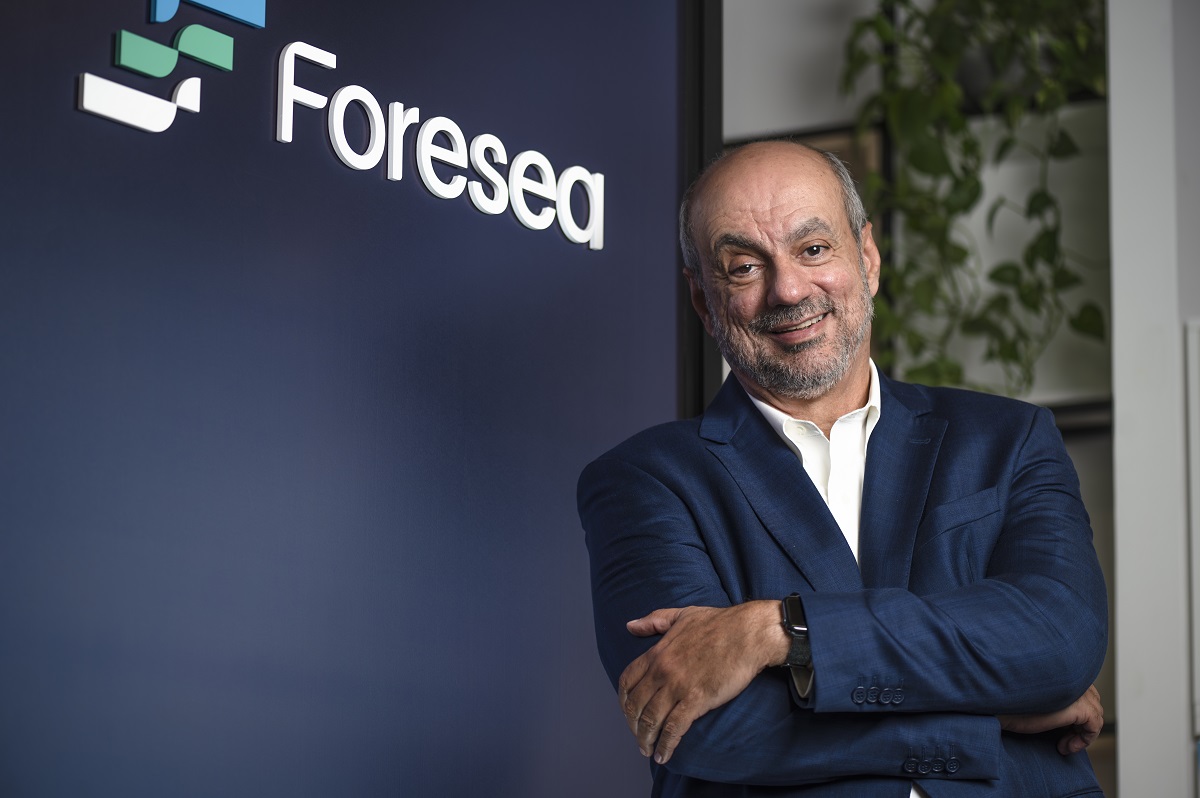
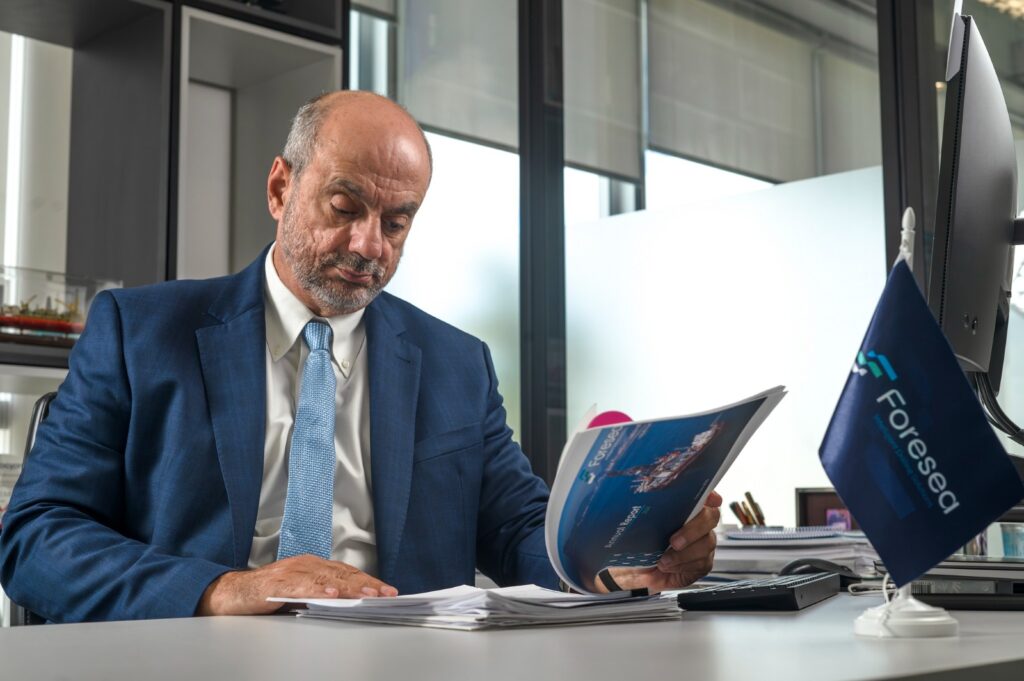
Rogério Ibrahim, Foresea’s CEO (Source: Bruno de Lima/Foresea)
The name “Foresea” combines the concepts of forecasting and the sea. With that in mind, how does this ability to anticipate translate into the company’s strategy?
The name Foresea was intentionally created to combine the idea of forecasting with the sea, reinforcing our ability to anticipate scenarios and adapt in order to deliver the best solutions in the maritime environment. That capability is built, first and foremost, on knowledge. Foresea has teams with more than thirty years of experience in the sector, and that experience translates into accumulated expertise and analytical capability. We are a company focused on solving our clients’ demands through innovation and operational excellence. This is reflected in our knowledge base, our ability to project scenarios, and our capacity to strategically plan our operations.
Still on the topic of competitive scenarios, at the end of last year Foresea announced the development of a new technology that enables deepwater drillships to safely operate in shallow-water wells, with water depths below 400 meters. Could you elaborate on this project and its current stage?
This project is one of several pioneering initiatives developed by our Innovation department. To explain this technology, it is important to first mention an earlier development — the anchored BOP solution, which was pioneered on our semi-submersible rig Norbe VI. This solution combines the BOP anchoring system — the Blowout Preventer being the safety equipment responsible for controlling well pressure — with real-time riser analysis.
This innovation allows dynamically positioned rigs, which are typically deployed in deepwater environments, to also operate in shallow-water wells without requiring anchoring on the seabed, enabling faster operations and reducing environmental impact on the ocean floor. The anchored BOP solution earned Petrobras an international award at OTC Brasil 2023.
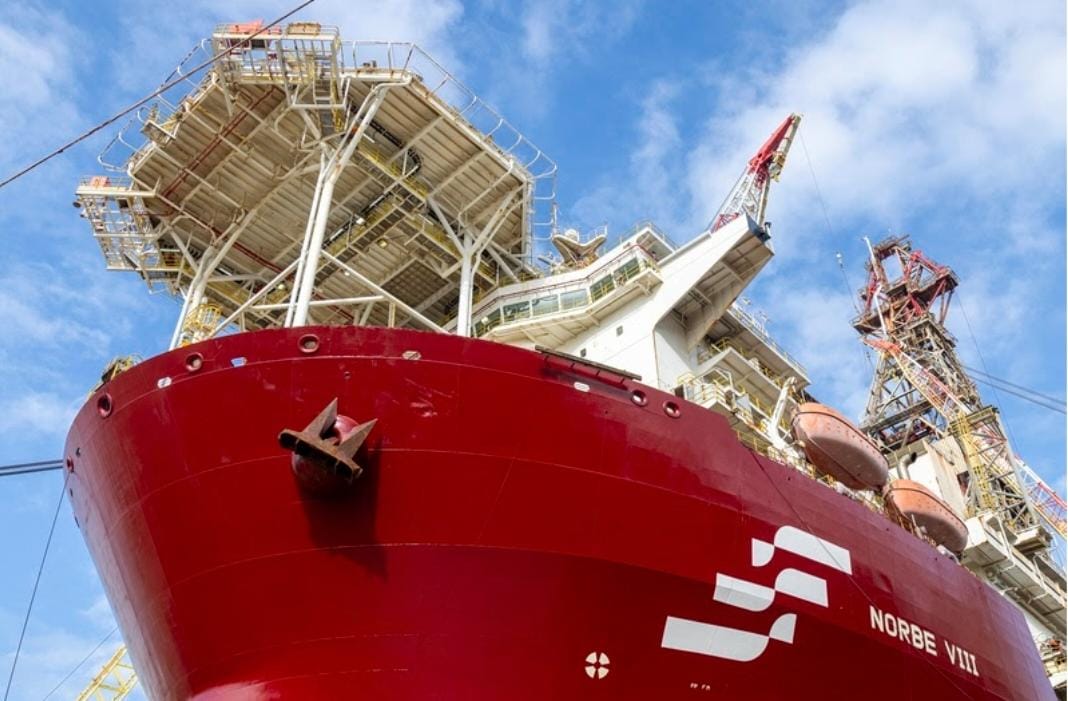
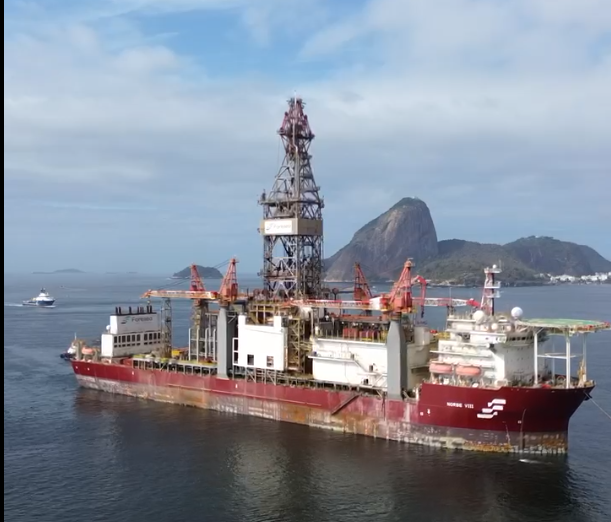
Building on that development, Foresea created a new solution for our drillship Norbe VIII, once again combining an unprecedented set of technologies that enables a dynamically positioned drillship to remain connected to a shallow-water wellhead — in water depths below 400 meters — with a level of precision control and operational safety that currently does not exist anywhere else in the world. This technology is already being installed on the Norbe VIII, which is expected to be ready for shallow-water operations during the first half of 2026.
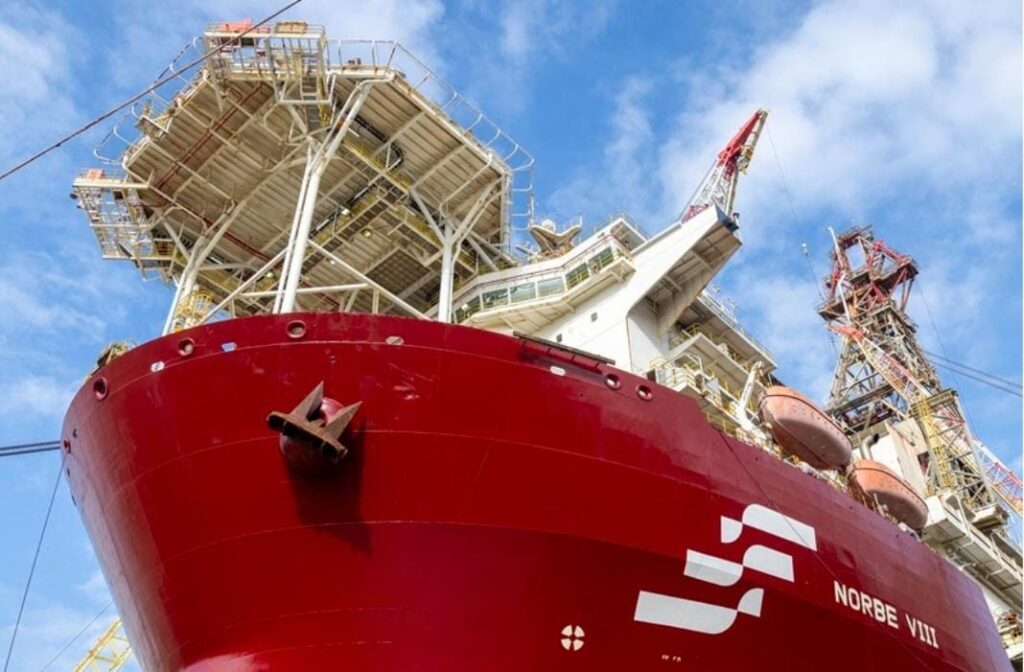
Norbe VIII (Source: Foresea)
Foresea has reportedly kept its entire fleet contracted since its foundation in 2023. What explains this performance?
Yes, we have maintained our entire fleet fully operational over the past years due to the quality of delivery we provide to our clients, always prioritizing safety and operational excellence. Foresea currently holds the best operational performance in the market. We closed 2025 with an average uptime close to 99%, winning Petrobras’ PEO-Sondas — the company’s Operational Excellence Program for drilling rigs — for the fourth consecutive time. This is the most important technical and management evaluation conducted by Petrobras. In addition, during OTC Brasil, we were recognized by Petrobras as the best offshore drilling operator.
Is the expansion of Foresea’s asset portfolio currently under consideration?
We are constantly monitoring the market and remain ready to evaluate any strategic business opportunities for the company. Expanding the size of our fleet is always part of our investment assessments. However, any investment decision must be accompanied by rigorous risk analysis and strong financial discipline, always with the objective of delivering returns to our shareholders without compromising our performance standards. We are not interested in growing simply for the sake of growth.
What supports the slogan “Foresea, market leader”? Which aspects characterize the company as such? And how was it possible to achieve these results in less than three years, in a market with strong international competition?
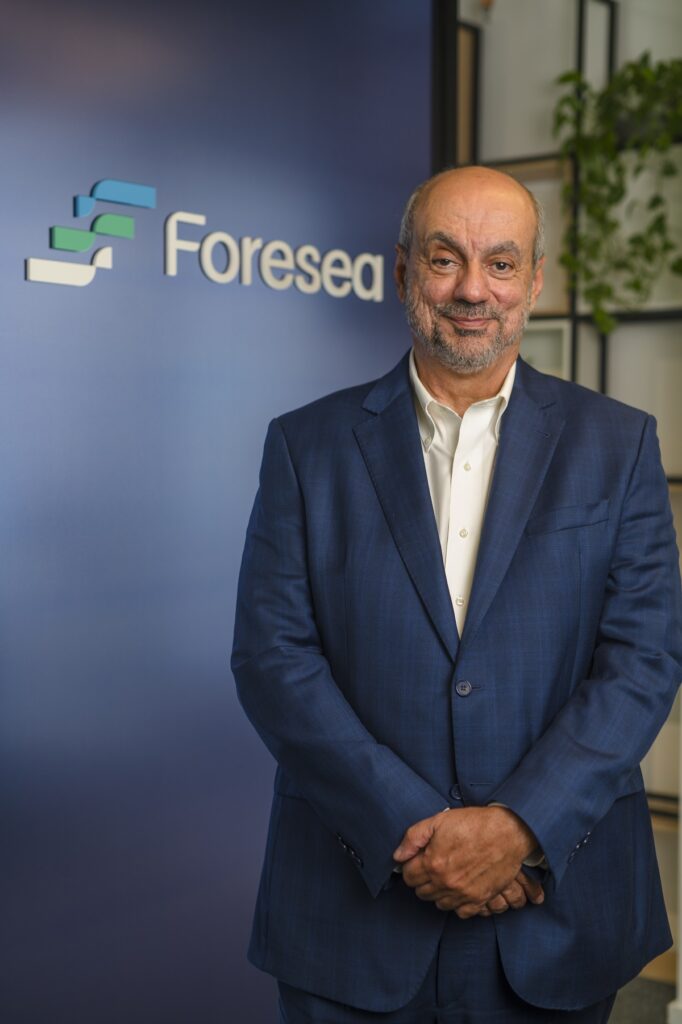
Rogério Ibrahim, Foresea’s CEO (Source: Bruno de Lima/Foresea)
There are several factors that place Foresea in a leadership position within Brazil’s offshore drilling segment. As mentioned, the company has maintained all of its rigs contracted while also expanding operations through the management of third-party rigs. Foresea is also recognized for operational efficiency, with the highest uptime levels in the market and the industry recognitions previously mentioned.
We are also leaders in innovation, introducing groundbreaking technologies to the sector. In addition, we have become a benchmark in sustainability through pioneering socio-environmental initiatives — such as the recycling and reuse of 100% of our waste and investments in improving the quality of public basic education in Macaé — which further reinforce our leadership position within the industry.
In recent months, the offshore industry has been impacted by several developments, including the approval of exploration activities in Brazil’s Equatorial Margin and new oil discoveries. At the same time, geopolitical tensions involving the United States, Iran, and Venezuela continue to affect global oil production and distribution. Do you believe these issues spilling in Foresea in any way?
The entire oil and gas industry closely monitors conflicts in the Middle East and evaluates their direct and indirect impacts on the domestic market. Brazilian oil is increasingly viewed as a secure and cost-competitive alternative. At the same time, we are living through a period of geopolitical uncertainty and elevated risks, which may increase insurance and maritime freight costs, in addition to creating inflationary pressure that affects overall operating expenses.
ESG has become an increasingly relevant topic. How does Foresea incorporate these practices into its strategy and operations?
I will begin with the “S”, the social pillar. Foresea maintains a strong commitment to people. This means ensuring high standards of safety, integrity, physical and mental health, well-being, training, and development for all employees, both onshore and offshore. It also means extending support to partners and local communities, such as Macaé, where we maintain our office and support local development projects.
The “E” (environmental), is embedded both in our day-to-day activities, including waste management and circular economy initiatives already mentioned, and in our research, development, and innovation efforts, which focus on incorporating technologies aimed at reducing emissions and other environmental impacts. I would also highlight that operational efficiency itself contributes to reducing environmental impact.
Finally, regarding governance, we follow strict compliance, integrity, and ethics policies across our business operations, supported by continuous monitoring processes. In addition, our fleet is internationally certified, ensuring quality standards and compliance with global regulations.
Safety is a central pillar in the industry, and Foresea has received several awards in this area. How does the company maintain such high standards in its operations?
Safety culture is embedded in Foresea’s DNA. This means maintaining a permanent and explicit commitment that goes far beyond operational controls and safety monitoring systems. We continuously invest in campaigns and training programs for both employees and contractors, always maintaining a strong focus on safety.
We promote training programs covering national and international regulatory standards, customized courses for accident prevention in critical operations, and safety management initiatives. One example is the use of Observation Cards, through which employees identify and report unsafe conditions or behaviors so corrective actions can be implemented.
More broadly, our Digital Sustainability Program enables the digital completion of health and safety checklists, while our Human Factors Program expands our strategic approach to safety management through a governance model that encourages continuous improvement and operational evolution. Altogether, these initiatives form a robust and highly structured framework that reinforces our safety culture.
Could you also discuss Foresea’s initiatives related to developing new talent? How do you see the market for professionals interested in drilling?
Foresea’s strategy for talent development is based on three pillars: mandatory training, educational incentives, and professional development programs.
Mandatory training is primarily aimed at offshore personnel working onboard drilling rigs and includes compliance with legal requirements and client-specific contractual demands. Educational incentives provide subsidies for employees to pursue language courses, undergraduate and postgraduate programs, and other professional development opportunities within the oil and gas industry.
Our development programs are designed to align company culture and prepare employees for new career challenges across all technical and professional levels. One example is our Offshore Development Program (PDO), which accelerates talent development through supervised offshore assignments for internal professionals and selected candidates from the external market.
We also maintain a Leadership Development Program focused on principles and values, safety and risk management, communication, compliance, and career development. In addition, we created the Drilling Academy to foster knowledge exchange and continuous technical development among teams directly involved in drilling operations.
Could you tell us a little about your professional trajectory before joining Foresea? You worked for major companies such as Odebrecht and Vale. Which lessons and experiences from that period still apply to your current role as CEO of Foresea?
Most of my professional experience has been concentrated in management and planning. I graduated in Civil Engineering from IME, the Military Institute of Engineering, in 1983, and shortly afterward completed a postgraduate degree in Business Administration at Coppead/UFRJ.
I then joined Vale, where I was responsible for Commercial Planning. Later, in 1998, I joined Odebrecht and worked across several areas, including Controllership, Treasury, Projects, and Corporate Finance. That experience gave me broad exposure and eventually led me to CFO positions at several group companies, including Odebrecht Engenharia & Construção, Santo Antônio Energia S.A., Odebrecht Energia, and later Ocyan. When Foresea was established, I assumed the company’s presidency.
I believe that this trajectory within major corporations across strategic sectors of the economy allowed me to develop highly relevant competencies, including financial restructuring, digital transformation, and high-performance team management, all of which contribute directly to my current role leading Foresea.
You have a background in Civil Engineering. How has this technical foundation contributed to your business vision and leadership style in such a complex sector as offshore?
I see Engineering as a discipline that naturally fosters leadership across different sectors because, beyond technical knowledge, it develops structured thinking focused on creating viable solutions for complex challenges.
Engineers are trained to maintain a systemic and strategic perspective, understanding how each part influences the overall result. This is extremely important for decision-making processes.
More specifically, civil engineering provides knowledge related to structures and materials, planning, logistics, cost management, and risk management, all of which are directly connected to offshore operations and business activities.
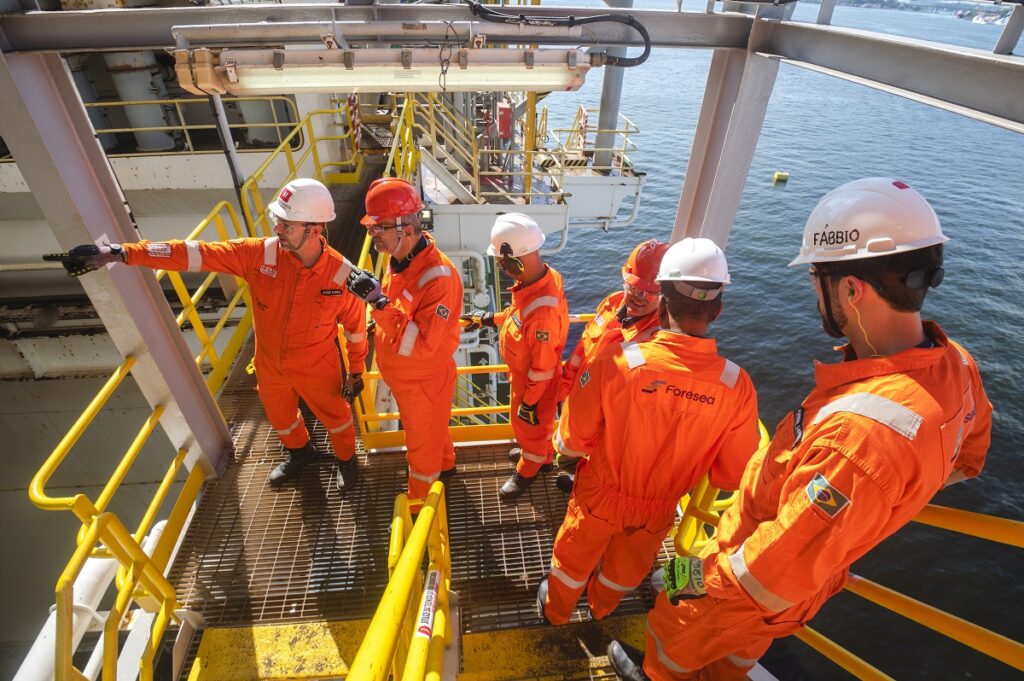
Rogério Ibrahim on a technical drillship inspection (Source: Bruno de Lima/Foresea)
Finally, what is your vision for Foresea over the next five to ten years?
Foresea has very positive long-term prospects for several reasons. First, we believe the Brazilian oil and gas market is currently one of the most attractive in the world. Brazil already represents more than 30% of global demand for offshore drilling contracts and is entering a new growth cycle.
We are confident that Foresea is prepared to play a leading role in this expansion. The investments we are making are aligned with that objective. Our priority is to maintain Foresea’s leadership position within the sector, fully prepared to capture market opportunities while sustaining high operational performance and environmental safety standards.
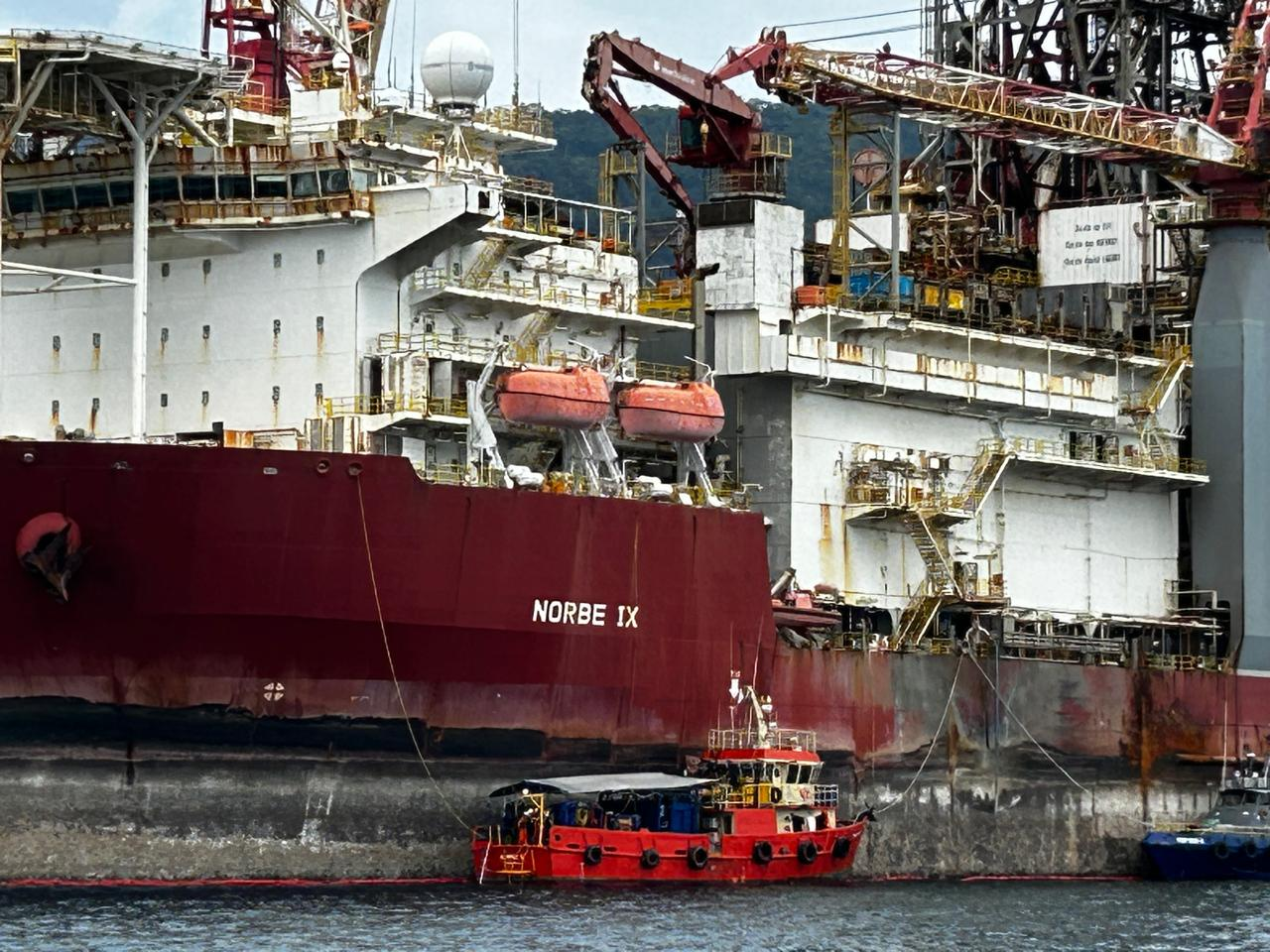
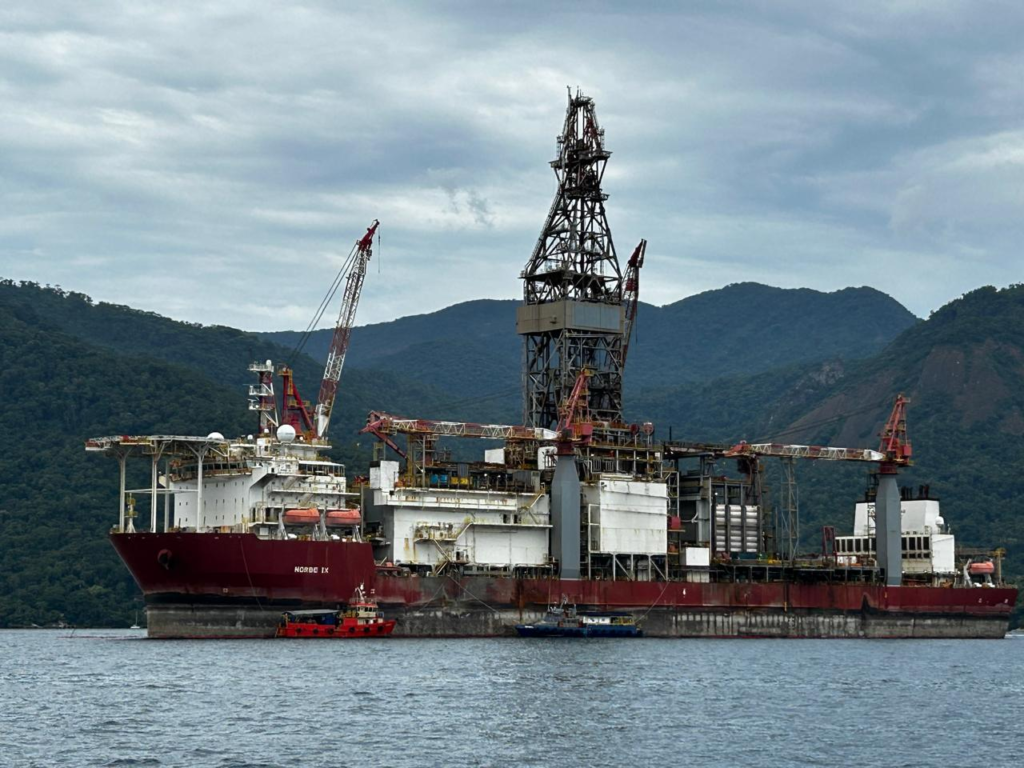
The offshore drilling unit Norbe IX, operated by Foresea, has completed a scheduled maintenance and upgrade campaign following approximately 70 days of work. Most of the activities were carried out with the unit anchored around six nautical miles off Angra dos Reis, in Rio de Janeiro.
The unit departed the anchorage on March 12 and underwent a series of operational tests before being cleared to resume activities. Foresea confirmed that operations under a new three-year contract with Petrobras began on March 30, with the rig deployed in the Santos Basin, supporting developments in the Sépia and Atapu fields.
According to the company, the campaign was conducted as part of a Special Periodic Survey (SPS), including integrity verification, upgrades to critical systems and equipment, and operational improvements aimed at enhancing safety and efficiency. Approximately 1,600 personnel were involved in the works, totaling more than 260,000 man-hours, and the scope also included updates to the unit’s internal layout.
“It is another scheduled stop delivered successfully, the result of a large-scale effort involving hundreds of employees and partners. This level of planning and execution ensures Norbe IX is ready for another three-year campaign, operating without interruptions and within Foresea’s performance standards,” said Heitor Gioppo, COO of Foresea.
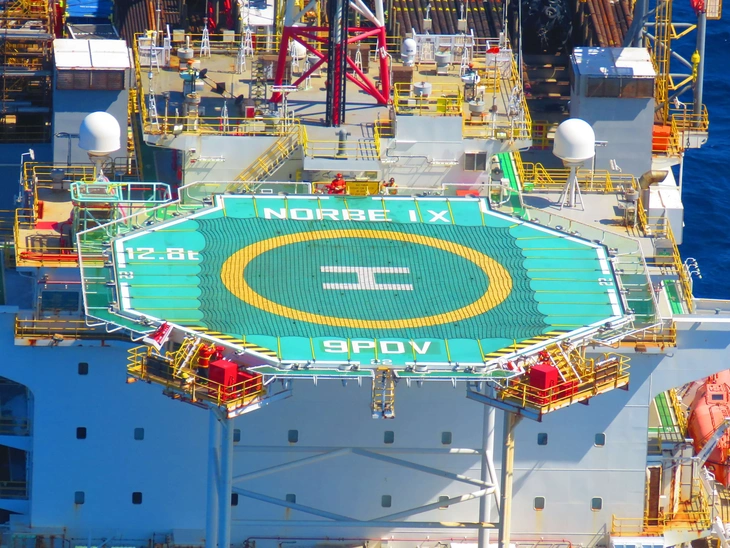
Built in 2011 by Daewoo Shipbuilding & Marine Engineering, the Norbe IX is a sixth-generation ultra-deepwater drilling unit equipped with DP3 dynamic positioning. It is capable of operating in water depths of up to 3,048 meters (10,000 ft) and drilling wells to approximately 12,195 meters (40,000 ft). The unit has accommodation capacity for around 180 personnel and is equipped with a 15,000 psi BOP system.
With this contract, Foresea stated that its fleet remains fully contracted at least through the end of 2026.
With this contract, Foresea stated that its fleet remains fully contracted through at least the end of 2026.
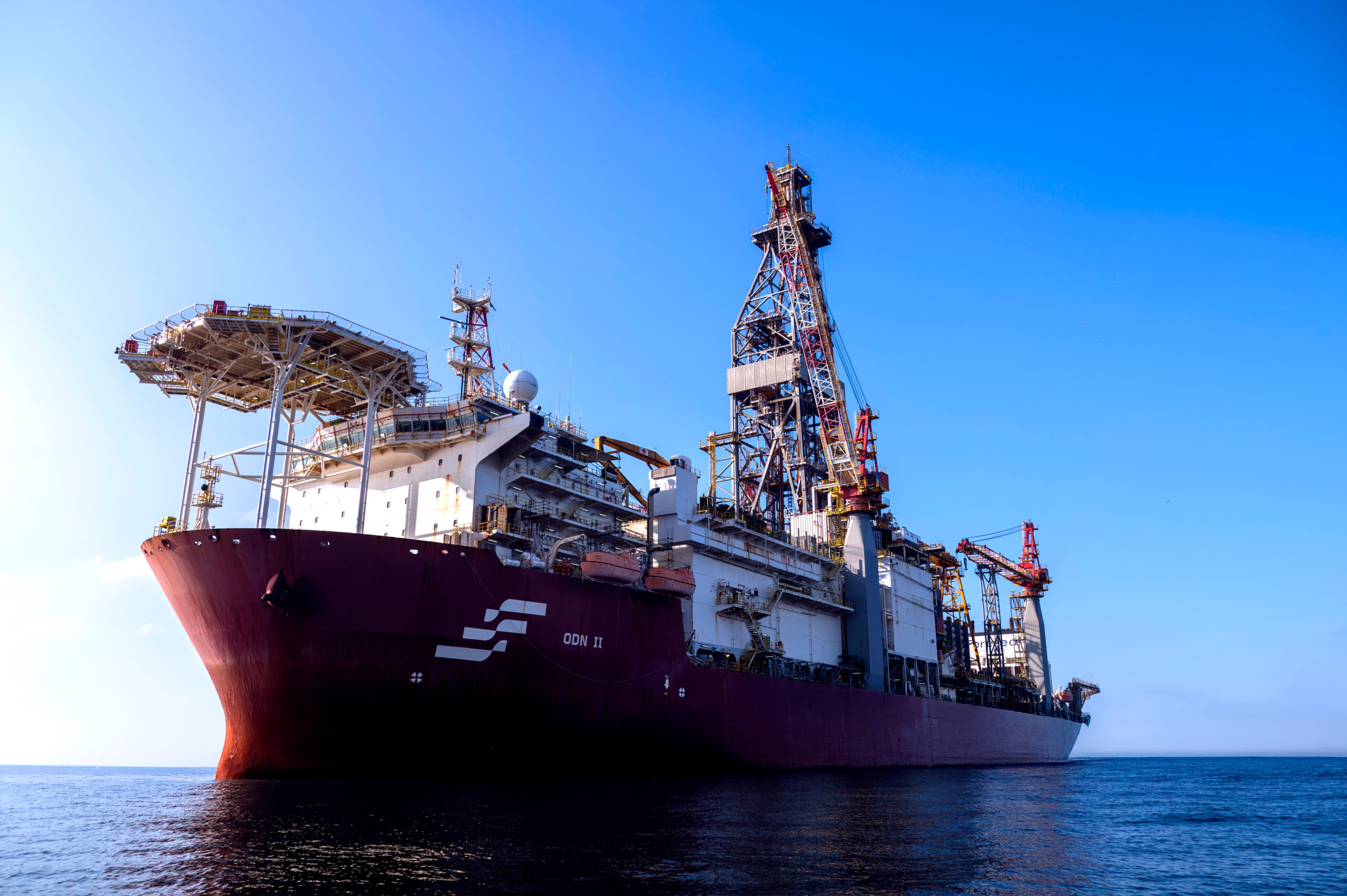
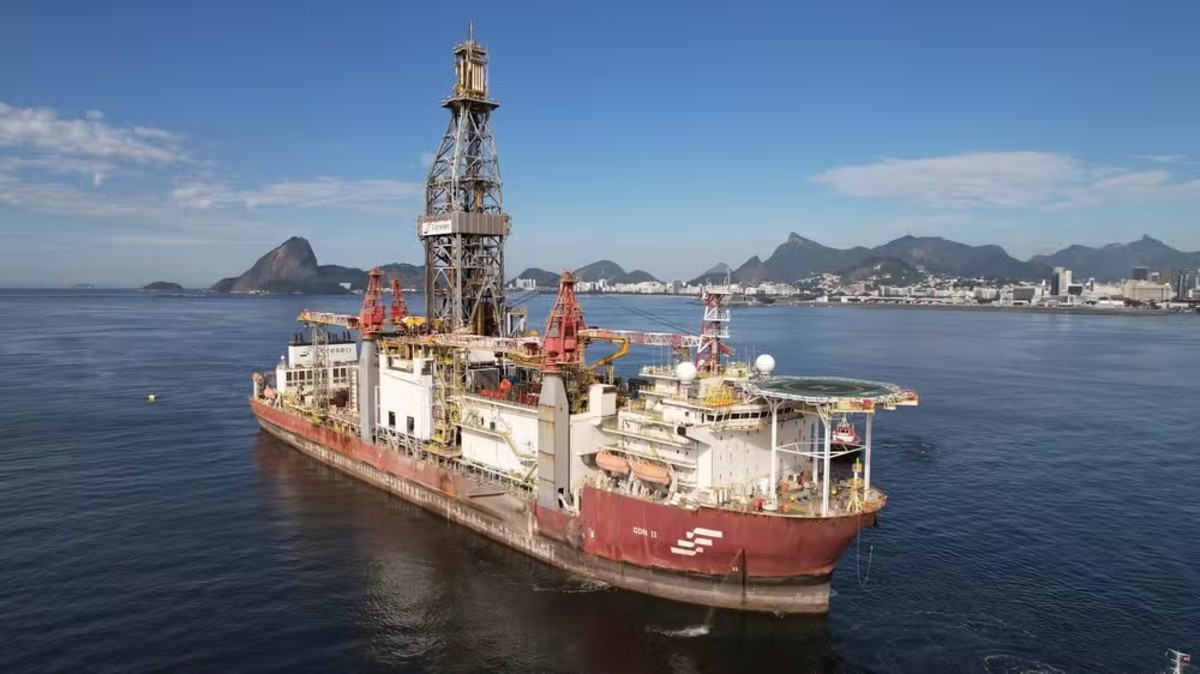
Foresea has secured a long-term contract with Petrobras to operate the drillship ODN I offshore Brazil, adding about $465 million to its backlog. The agreement covers a 1,443-day campaign in the Mero Field, with operations expected to start in 2027 after the unit’s current contract ends.
The deal includes early termination and extension options. The award highlights strong demand for high-spec rigs in Brazil, where Petrobras continues expanding pre-salt developments to support production growth.
The ultra-deepwater drillship Norbe IX has departed its anchorage position off Angra dos Reis, Rio de Janeiro, ahead of the start of a three-year drilling contract valued at approximately US$417 million with Petrobras, according to an official statement released by Foresea. Operations are scheduled to begin in early 2026 in Brazil’s pre-salt province.
The unit had remained approximately 6 nautical miles off Angra dos Reis since early January 2026, undergoing a planned maintenance stop of around 60 days ahead of the upcoming campaign.
Source: Alexandre Vilela/WSB Advisors
Scope of maintenance included:
– Drilling equipment – Thrusters – Diesel generators – BOP system – Fire and gas detection upgrades – DNV class renewal – Piping replacement and general hull painting
Such maintenance windows are typical ahead of new offshore drilling campaigns, ensuring full operational readiness prior to mobilization. Contract highlights
– Operator: Petrobras – Fields: Sépia Field and Itapu Field – Basin: Santos Basin – Term: ~ 3 years – Contract value: ~ US$417 million, including mobilization fees – Start of operations: early 2026
Built in 2011 at Daewoo Shipbuilding & Marine Engineering, Norbe IX is a DP3 dynamically positioned ultra-deepwater drillship designed for high-spec offshore drilling campaigns. The unit is capable of operating in water depths up to 3,048 m (10,000 ft) and drilling wells to approximately 12,195 m (40,000 ft). Accommodation capacity is around 180 personnel, with a 15,000-psi BOP system.
The vessel measures 238 m LOA with a 42 m beam, placing it among the high-spec drillships currently active in Brazil’s ultra-deepwater segment.
With this award, Foresea reported its fleet fully contracted through at least late-2026, reflecting sustained demand for ultra-deepwater drilling capacity supporting Brazil’s expanding pre-salt drilling programs
Petrobras announced on Wednesday night (September 24) that Brazil’s environmental regulator Ibama approved its Pre-Operational Assessment (APO) for exploration in the Equatorial Margin, located in the country’s Northeast. The APO served as a simulation designed to rigorously test Petrobras’ operational capacity while ensuring environmental safeguards.
The approval clears the path for Ibama to soon grant a full exploration license, signaling a potential resolution to years of disputes between the state-controlled company and environmental advocacy groups. However, Ibama conditioned its decision on Petrobras incorporating further adjustments to its wildlife protection plan, expected to be implemented this week, in order to strengthen its response framework and align fully with regional ecological requirements.
In an official statement, Ibama emphasized the robustness of Petrobras’ operational structure and acknowledged the unprecedented nature of the activity, which involved significant logistical challenges, large-scale mobilization of resources and broad analytical scope. The APO was conducted in late August using the drillship NS-42, operated by Foresea, on a well within Block FZA-M-59 off the coast of Amapá.
The Equatorial Margin has been identified as Brazil’s main exploratory frontier, with the potential to generate thousands of jobs, strengthen national energy supply and reduce import dependence. Additional insights on the region, its characteristics and its implications for Brazil’s energy landscape are detailed in the 12th edition of One. Energy, Westhon’s specialized magazine, featuring analysis from Anídio Corrêa, R&D Environment Projects Lead at WSB Advisors.
Stay informed on key offshore developments — visit wsb-one.com, our data platform trusted by leading offshore companies.
Foresea is developing a world-first technology package that will allow deepwater drillships to safely operate in shallow-water wells of less than 400 meters. The initiative, created in partnership with Petrobras and international providers, will debut on the Norbe VIII drillship, with factory tests starting in the second half of 2025.
The solution integrates cutting-edge systems such as TechnipFMC’s Reactive Flex Joint, Kinetic’s K-BOS shear ram and Stress Engineering’s Neosight real-time riser analysis. Together, they reduce stress on wellheads, improve disconnection safety and enable precision operations with minimal seabed impact.
This project follows Foresea’s earlier deployment of anchored BOP technology on Norbe VI and reflects a growing effort to adapt dynamically positioned drillships for shallow-water drilling.
Petrobras began a simulated safety drill on Sunday, August 24th, along the maritime coast and rivers of Oiapoque in the state of Amapá. The exercise is part of the Pre-Operational Assessment (APO), the final stage in the environmental licensing process required for drilling a well in offshore block FZA-M-59, located in the Foz do Amazonas Basin — a key area within the promising Equatorial Margin.
Scheduled to conclude on Friday, August 29th, the drill mobilizes over 400 professionals, helicopters and large-scale vessels, including the drillship NS-42, operated by Foresea. Brazil’s environmental agency, Ibama, is monitoringis the operation assessing the efficiency of equipment, response times, wildlife rescue protocols and communication with authorities.
Petrobras’ performance in this simulation will be a decisive factor in securing the environmental license required to move forward with exploratory drilling, a goal the company has pursued for years amid regulatory challenges. The APO represents a critical milestone not only for Petrobras but also for Brazil’s broader offshore exploration strategy. If successful, it could open a new energy frontier in the Foz do Amazonas Basin, generating opportunities across the supply chain and strengthening Brazil’s position in the global energy market.
Stay informed on key offshore developments — visit wsb-one.com, our data platform trusted by leading offshore companies and our website cms.oneenergynews.com.
At Navalshore, Transpetro CEO Sérgio Bacci has confirmed that the bid for the chartering of eight newbuilding gas carriers will have its packages opened on September 22. This tender is widely considered the most significant Petrobras and Transpetro initiative in 2025, forming part of the Fleet Renewal and Expansion Program that aims to strengthen Brazil’s energy logistics.
In parallel, OceanPact secured four new contracts with Petrobras, Parcel do Bandolim, Parcel das Timbebas, Parcel das Paredes and Parcel dos Reis, with a total value of BRL 3.2 billion. These agreements cover the chartering of RSV vessels over the next four years to support subsea operations with ROVs, including inspection, maintenance and equipment installation.
Frontier exploration also advanced as the Foresea drillship NS-42, chartered by Petrobras, arrived at block FZA-M-59 in deepwater Amapá. The unit will carry out the Pre-Operational Assessment, the final step in the environmental licensing process before drilling. The exercise, monitored by Ibama, will evaluate Petrobras’ compliance with emergency and wildlife protection plans.
Meanwhile, in the Santos Basin, the Búzios field reached a new production milestone by surpassing 900,000 barrels of oil per day. With six production units currently in operation — P-74, P-75, P-76, P-77, FPSO Almirante Barroso, and FPSO Almirante Tamandaré. Búzios is positioned to overtake Tupi as Brazil’s largest producing asset as early as 2025.
Petrobras SDSVs Opportunity 7004370497 with new deadline: Apr 22nd, 2025.
Petrobras hosted a live session to discuss hybrid propulsion for AHTS and RSV newbuild tenders, aiming for cleaner and more efficient fuel alternatives.
Subsea7 issued an AHTS with ROV requirement for Búzios 8. If you want more details, please contact us.
Foresea has formalized a new three-year contract for the drilling vessel Norbe IX (Santos Basin). With this agreement, the entire fleet is now under charter.
Foresea has amended its charter agreement with Petrobras for the Norbe VIII drillship, introducing new technologies and extending operations to shallow waters. The amendment adds USD 70 million to the agreement, including a mobilization fee.
Originally signed in December 2024, the contract covers a firm duration of 1,095 days with an option to renew for an additional term of up to 1,095 days. Currently operating in the Santos Basin, the Norbe VIII is set to undergo equipment and system upgrades, scheduled for completion by December 2025.
These upgrades will improve its operational flexibility across various water depths while enhancing safety and performance, positioning the vessel for broader opportunities in Brazil’s offshore market.
The drillship Norbe VIII, owned by Foresea, has been anchored in Guanabara Bay, between the cities of Rio de Janeiro and Niterói. The vessel is currently undergoing the final stage of a scheduled maintenance that began on August 9 of this year.
Norbe VIII arrived in Rio de Janeiro after spending 28 days in maintenance at a dry dock in Rio Grande do Sul, where it underwent cleaning, painting and general inspection, in a process managed by Ecovix.
WSB reports that the vessel is expected to resume operations in November under a new contract with Petrobras. The last work was in Mero 4, Santos Basin.