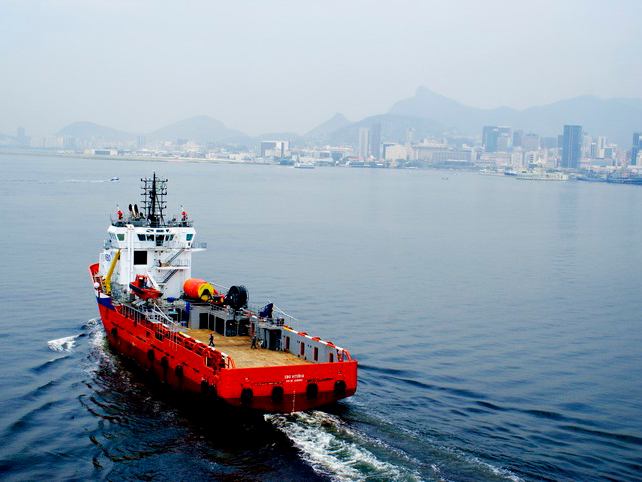
OceanPact has signed an agreement to acquire Dock Brasil, a ship repair and docking yard located in São Gonçalo, Rio de Janeiro.
The transaction remains subject to corporate and legal steps, with completion expected by August 31. The value of the deal was not disclosed.
Dock Brasil said its operations, contracts and client service structure will remain unchanged. Carlos Boeckh, one of the company’s founders, will return as general director.
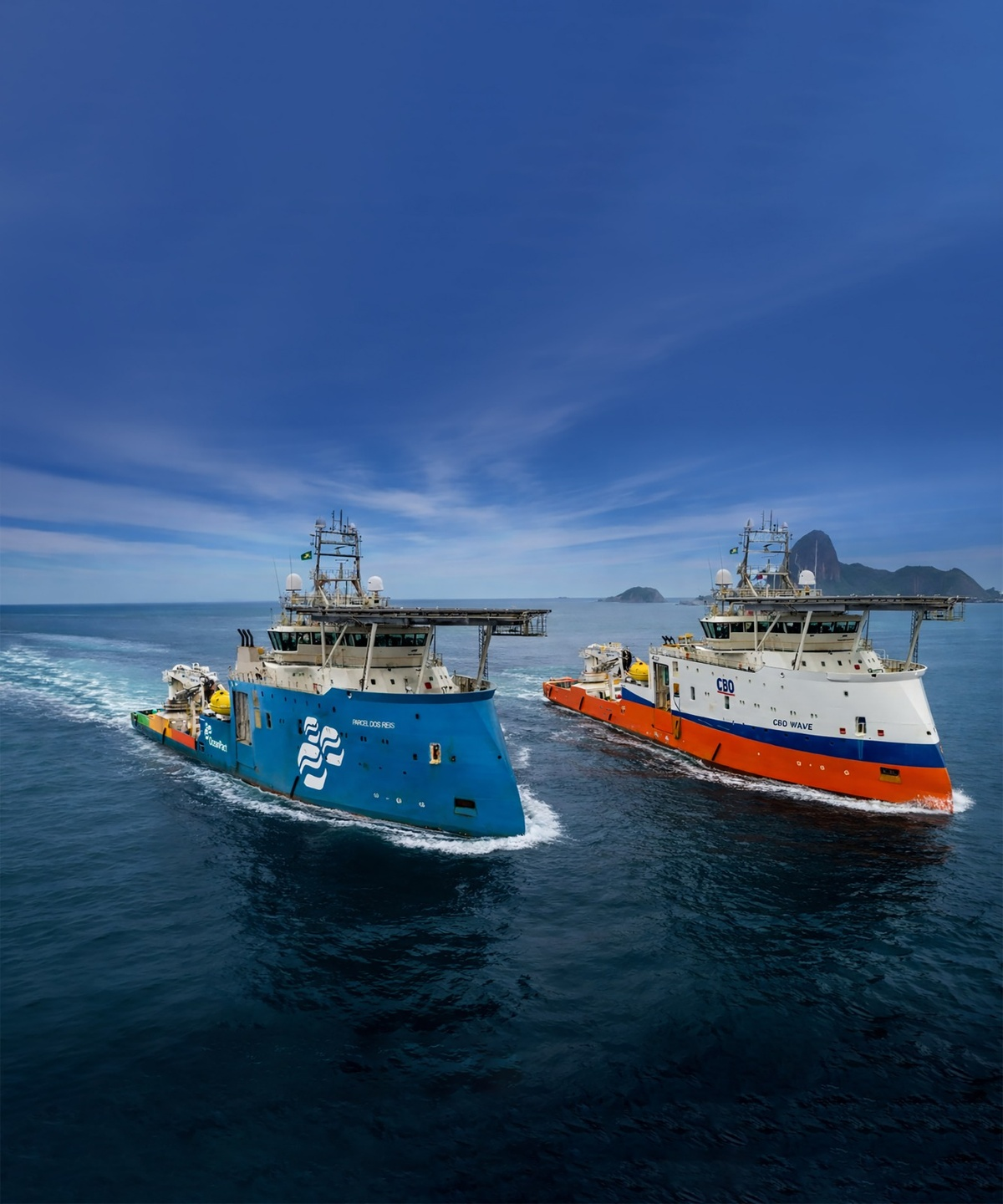
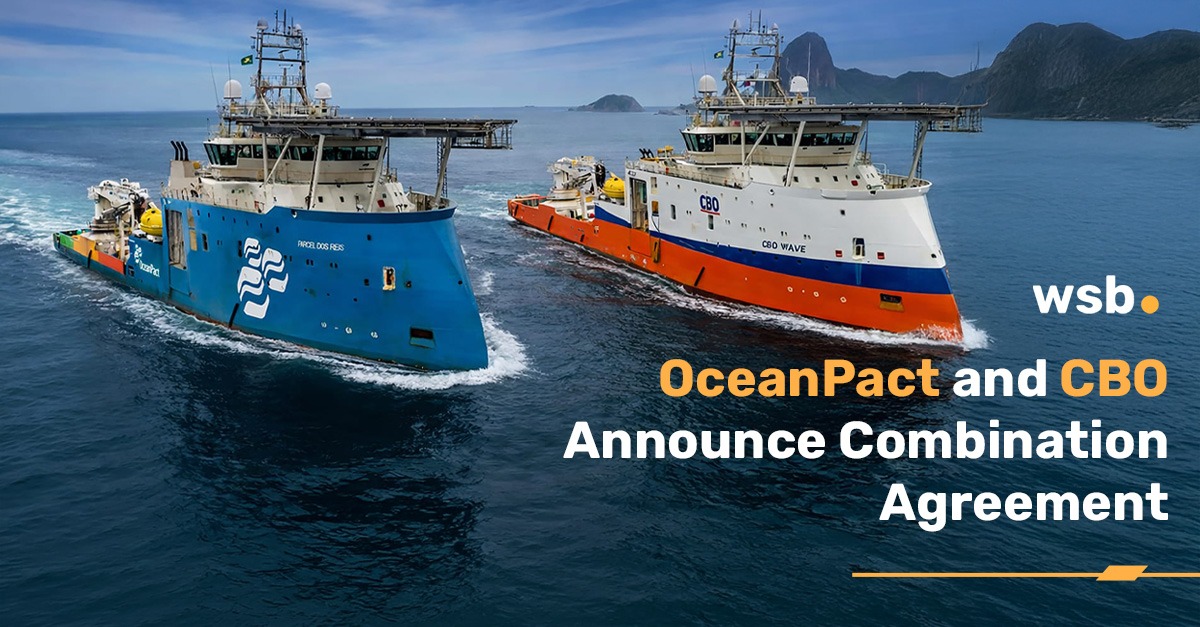
The move comes as OceanPact expands its position in Brazil’s offshore support market following its announced business combination with CBO.
If completed, the acquisition would give OceanPact direct exposure to docking and repair capacity during an active dry-docking cycle in Brazil’s offshore support fleet.
Petrobras has awarded another significant contract as part of its offshore decommissioning strategy, reinforcing the growing pace of activity in one of the Brazilian offshore industry’s fastest-expanding segments.
OceanPact secured the R$443.7 million contract to perform specialized subsea decommissioning services involving the disconnection and recovery of flexible risers and umbilicals associated with the P-18 platform in Marlim Field, Campos Basin. The scope includes subsea inspections, cutting, disconnection and recovery operations using Multipurpose Support Vessels (MPSVs), remotely operated vehicles (ROVs), heavy-lift cranes and other specialized subsea equipment.
The award adds to a series of contracts announced in recent months as Petrobras advances one of the largest offshore decommissioning initiatives currently underway in Brazil. The company’s strategy continues to generate opportunities across multiple segments of the offshore supply chain, including subsea intervention, marine logistics, engineering, heavy offshore construction and environmental services.
As more mature assets reach the end of their operational lives, Brazil’s offshore decommissioning market is becoming an increasingly important business segment rather than simply the final stage of an asset’s lifecycle. The trend is expected to drive long-term demand for specialized vessels, subsea contractors and integrated offshore solutions in the years ahead.
Stay informed on key offshore developments — visit wsb-one.com, our data platform trusted by leading offshore companies.
Consolidation Without Repricing OceanPact–CBO merger
Bigger, But Not Yet Richer The OceanPact–CBO merger and the economics behind the market’s restraint
Brazil’s offshore sector has produced a bigger company. What it has not yet produced is a richer one.
The merger between OceanPact and CBO represents one of the most consequential consolidation moves in the Brazilian offshore services industry in recent years. The combined company will operate a fleet of 73 vessels, generate revenues exceeding R$4 billion annually, and carry a backlog estimated at roughly R$14 billion. By operational standards, the platform that emerges from this combination is substantial, placing the group firmly among the most significant offshore service providers in the Brazilian market.
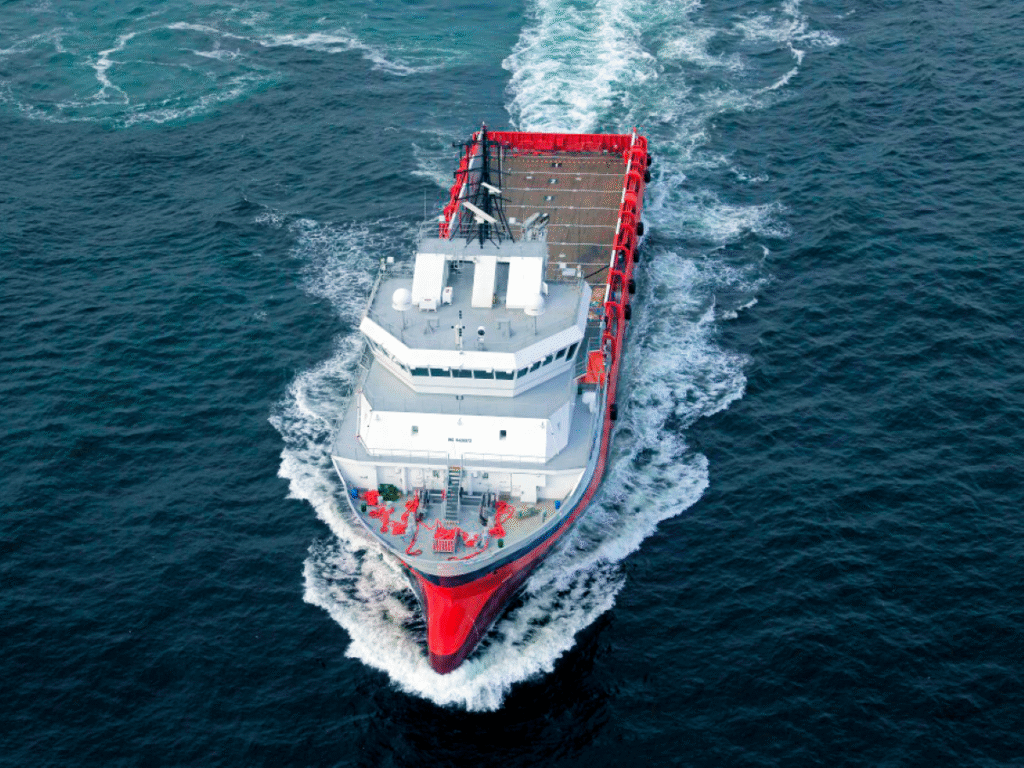
CBO Bianca (Source: CBO)
Yet the reaction of the equity market has been notably restrained. OceanPact’s share price, which had already appreciated in anticipation of consolidation in the sector, has not experienced the type of re-rating that often accompanies transactions of this magnitude. The explanation appears to lie not in the strategic logic of the merger — which is widely understood — but in the underlying economics of the two companies and in the structural realities of the offshore services business.
The valuation multiples that framed the transaction initially appear balanced. Market commentary surrounding the deal points to an implied valuation of roughly 5.3x EV/EBITDA for CBO compared with approximately 4.9x for OceanPact, figures that fall broadly within the range typically observed for offshore support vessel operators. Yet multiples alone rarely capture the deeper dynamics of capital intensity and cash generation that ultimately shape investor perception. Globally, offshore vessel operators seldom sustain valuations far above 6x to 7x EBITDA, even in favorable cycles, precisely because a meaningful portion of operating cash flow must continually be reinvested into fleet maintenance, regulatory upgrades and eventual replacement.
OceanPact’s financial profile prior to the merger already reflected the challenges of operating a diversified offshore services platform. The company’s integrated model — combining environmental response, subsea support and offshore logistics services — requires continuous reinvestment in specialized equipment and operational capabilities. Financial statements for recent periods revealed instances in which capital expenditures exceeded operating cash generation, resulting in negative free cash flow before financing. In a capital-intensive industry, that dynamic inevitably raises questions about long-term cash conversion.
CBO, by contrast, historically demonstrated stronger financial discipline. Its operations remained anchored in the traditional offshore vessel market, where fleet management and contract stability tend to produce more predictable financial outcomes. EBITDA margins near 50%, compared with approximately 30% for OceanPact, reflected both operational efficiency and the relative simplicity of a vessel-centric business model.
The merger therefore combines two companies with distinct financial characteristics. While CBO contributes stronger cash generation from its fleet operations, that discipline alone may not fully offset the capital demands embedded in OceanPact’s integrated services platform. The combined entity inherits broader operational capabilities, but it does not fundamentally alter the capital dynamics that investors have been scrutinizing.
Fleet structure adds another dimension to the equation. Although the merged company commands a larger number of vessels, the transaction does little to change the average age profile of the fleet, which remains in the mid-teen range. Offshore support vessels typically approach the limits of their economic life near thirty years, after which maintenance, propulsion upgrades and regulatory compliance requirements become prohibitive. With an estimated fleet age around 16 to 17 years, roughly half of the combined fleet may approach that threshold within the next decade. Even conservative replacement economics illustrate the scale of the issue. Replacing twenty vessels over time at prices between $30 million and $50 million per unit, typical for modern offshore tonnage, implies a long-term capital requirement approaching $600 million to $1 billion. And building takes time.
Source: Courtesy/CBO + Oceanpact
Neither OceanPact nor CBO has recently pursued a major program of new vessel construction. Fleet expansion in recent years has instead relied primarily on acquisitions of existing tonnage in the secondary market. While this strategy preserves capital in the short term, it also compresses the timeline for fleet renewal and increases dependence on maintenance investment to extend vessel life.
At the same time, the offshore market itself may be evolving in ways that complicate the strategic narrative surrounding integrated service platforms. For much of the past decade, the industry assumed that oil companies would increasingly favor bundled service solutions combining vessels, engineering and subsea operations. Yet the Brazilian market appears to be moving along a somewhat different trajectory. Petrobras has recently taken a more cautious stance toward certain integrated contracting structures. Activities such as pre-laid mooring systems for FPSO installations have increasingly returned to the domain of EPCI contractors or Petrobras’ own engineering resources, while the backbone of offshore logistics continues to rely on the familiar categories of offshore tonnage: PSVs, AHTS vessels, OSRVs, RSVs and PLSVs.
In this sense, the offshore market continues to function largely as a fleet-driven commodity business, where vessel availability, reliability and pricing remain the central competitive variables. That environment tends to reward the financial discipline associated with operators such as Tidewater, whose strategy emphasizes fleet efficiency, controlled capital expenditure and consistent free cash flow generation.
Integrated offshore platforms can certainly succeed, but historically they have done so when accompanied by substantial technological investment, as illustrated by companies such as DOF, which built their position through specialized subsea vessels and significant capital programs. The OceanPact–CBO combination appears to pursue a somewhat different path, expanding operational scope while relying primarily on existing fleet assets rather than embarking on a new generation of specialized vessels.
For investors, the central question therefore becomes less about the logic of consolidation and more about its financial implications. A larger fleet and broader service offering may strengthen commercial positioning, but scale alone does not automatically translate into improved economics. The market is ultimately asking whether the combined company will be able to convert its expanded operational footprint into consistent free cash flow after fleet investment and operational reinvestment.
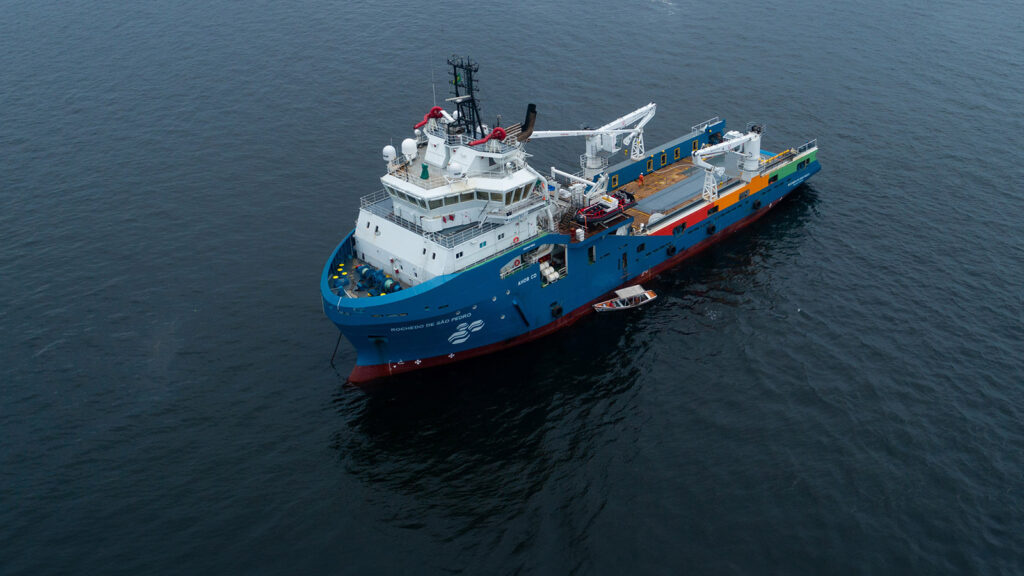
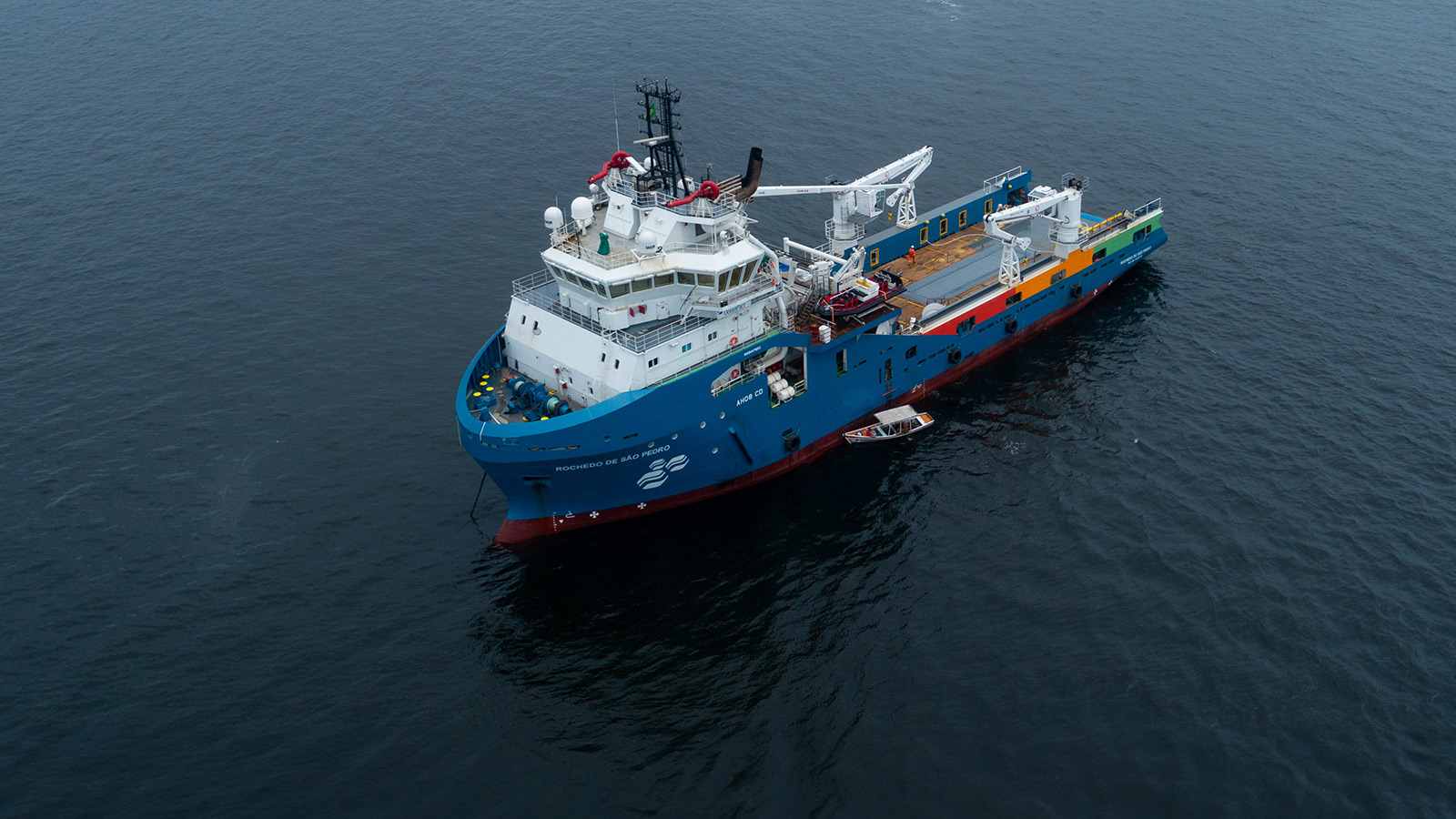
Rochedo de São Pedro (Source: Oceanpact)
Until that question is answered, the market’s restraint may be less a sign of skepticism than a reflection of experience.
In offshore services, larger fleets often signal stronger operational capability. But in the eyes of investors, value is measured less by the number of vessels a company controls than by the cash those vessels ultimately generate.
OceanPact Serviços Marítimos S.A. announced it has signed an Association Agreement to merge with CBO Holding S.A., forming a combined offshore support company with 73 vessels and approximately R$13.6 billion in contracted backlog. OceanPact was advised by Itaú BBA as financial advisor in the transaction, with legal advisors to the parties including Mattos Filho (OceanPact) and Pinheiro Neto Advogados (CBO), as reported by BrazilJournal. The transaction will be implemented through the merger of CBO into OceanPact and remains subject to shareholder approval (March 30, 2026) and clearance from Conselho Administrativo de Defesa Econômica (CADE).
Under the agreed terms, OceanPact will issue 274,551,446 new common shares to CBO shareholders, based on an exchange ratio of 1.9805700858 OceanPact shares per CBO share. Upon closing, former CBO shareholders will hold 57.86% of OceanPact’s total share capital. The exchange ratio was negotiated between the parties with support from external advisors.
CBO contributes a fleet of 45 OSVs (42 owned), including PSVs/ORSVs, RSVs and AHTSs, strengthening fleet scale, rejuvenating average vessel age and expanding operational capabilities. OceanPact expects the combination to enhance cash flow generation, unlock operational synergies and position the company among the leading global offshore support platforms.
The transaction also includes a corporate reorganization to segregate contingent legal claims related to UP Offshore, ensuring any future net proceeds accrue exclusively to OceanPact prior-to-closing shareholders.
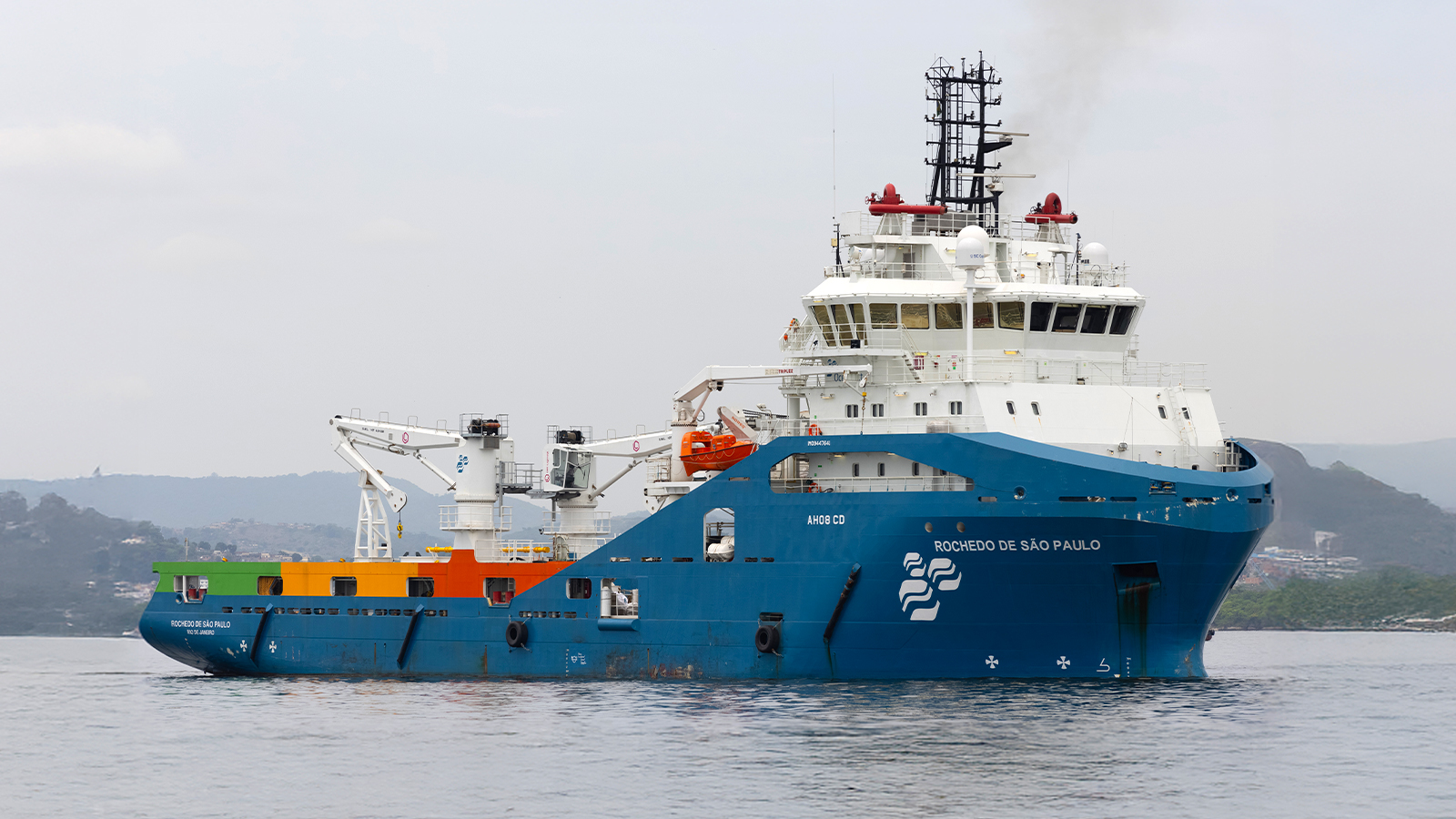
OceanPact has signed a four-year contract with Petrobras, estimated at approximately R$500 million, for the charter of the AHTS vessel Rochedo de São Paulo. The scope of the agreement includes the handling and maintenance of offloading hoses, an activity that is essential to ensuring the continuity, safety, and efficiency of oil transfers between offshore units and shuttle tankers.
In an official statement, the shipowner emphasized that the “signing of the contract strengthens OceanPact’s presence in strategic maritime operations and adds to other important commercial milestones announced throughout 2025.”
In August, the company signed four additional four-year contracts with Petrobras totaling approximately R$3.2 billion for the charter of RSV vessels. The following month, OceanPact announced two further contracts worth more than R$700 million for the provision of marine environmental monitoring services in areas operated by the oil company.
OceanPact has secured a landmark contract worth over BRL 1 billion with Trident Energy to execute an offshore decommissioning campaign in the Campos Basin. Covering subsea infrastructure from platforms P-07, P-12 and P-15, the three-year project, starting in early 2026, will follow the EPRD model, combining engineering, preparation, removal and final disposal. The company will deploy its own RSV fleet and integrate services across subsidiaries to deliver a full-cycle solution with safety, efficiency and sustainability at the core.
At Navalshore, Transpetro CEO Sérgio Bacci has confirmed that the bid for the chartering of eight newbuilding gas carriers will have its packages opened on September 22. This tender is widely considered the most significant Petrobras and Transpetro initiative in 2025, forming part of the Fleet Renewal and Expansion Program that aims to strengthen Brazil’s energy logistics.
In parallel, OceanPact secured four new contracts with Petrobras, Parcel do Bandolim, Parcel das Timbebas, Parcel das Paredes and Parcel dos Reis, with a total value of BRL 3.2 billion. These agreements cover the chartering of RSV vessels over the next four years to support subsea operations with ROVs, including inspection, maintenance and equipment installation.
Frontier exploration also advanced as the Foresea drillship NS-42, chartered by Petrobras, arrived at block FZA-M-59 in deepwater Amapá. The unit will carry out the Pre-Operational Assessment, the final step in the environmental licensing process before drilling. The exercise, monitored by Ibama, will evaluate Petrobras’ compliance with emergency and wildlife protection plans.
Meanwhile, in the Santos Basin, the Búzios field reached a new production milestone by surpassing 900,000 barrels of oil per day. With six production units currently in operation — P-74, P-75, P-76, P-77, FPSO Almirante Barroso, and FPSO Almirante Tamandaré. Búzios is positioned to overtake Tupi as Brazil’s largest producing asset as early as 2025.
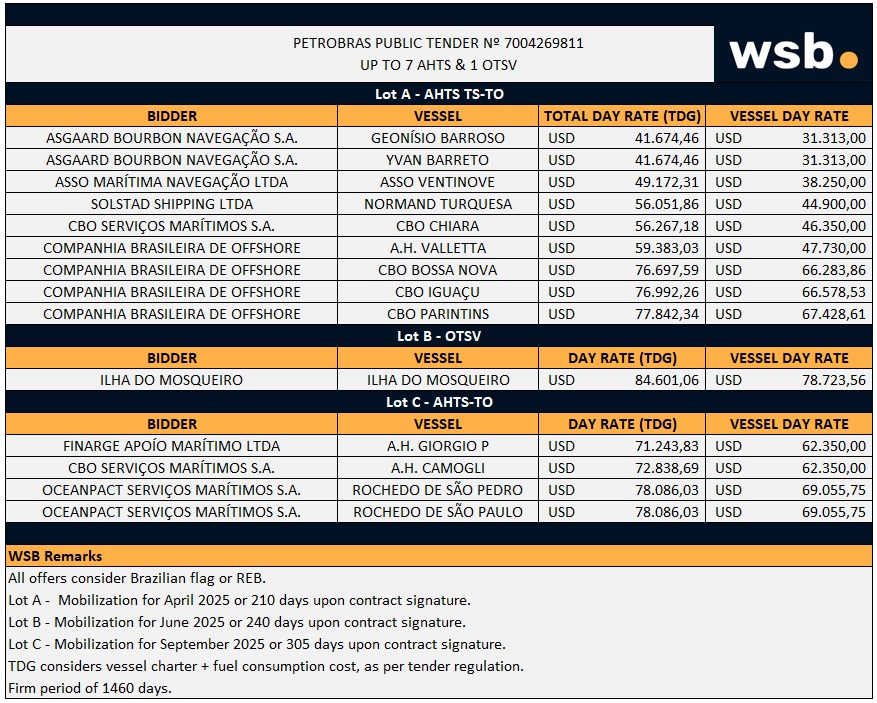
Petrobras closed the AHTS tender, with plans to hire up to 7 AHTSs and one OTSV. The amplitude on rates is worth noting.
TS: Asgaard with AHTSs offered at USD 31k, for comparison below the last OSRV average rates.
Asso Marítima Navegação Ltda (Augusta Offshore S.p.A.) just below USD 40k, with Solstad Offshore ASA and GRUPO CBO – Companhia Brasileira de Offshore in the mid-40s set the marketplace trend for now. CBO offered their largest AHTSs, out-priced for this category.
TO/OTSV: CBO and OceanPact Serviços Marítimos rates are not far apart for similar-sized AHTSs, mid to high USD 60’s. However, compared to the TS rates, they are nearly double and not far from the OTSV rate at USD 78k for a much more complex unit.
Results expertly compiled by the WSB Advisors team, bringing you the latest updates on this significant development.
Petrobras released the preliminary rankings for the vessels registered in their tender to charter up to five OSRVs, which closed last week. Out of the 26 contenders, three were disqualified for incomplete proposals that lacked fuel consumption cost values: Mandrião and Atobá from Wilson Sons and Titan from Asgaard Bourbon Navegação. This company is still competing with two other vessels, yet to be named.
The vessels are ranked by the lowest total daily rate, including fuel costs. Leading the list is OceanPact Serviços Marítimos’s Ilha de Tinharé, followed by Brasbunker’s Mar Limpo III, V, and IV, and Bram’s Campos Contender.
The tender is divided into two lots: Lot A includes 14 vessels, while Lot B comprises 9 vessels. Some vessels, such as the ones from Brasbunker, were offered in both lots.
Petrobras received 6 proposals for the EPRD Congro submerged buoy decommissioning tender. Leading the pack is Oceanpact, potentially poised to win the contract with a slender 10% price advantage over the two contenders getting anywhere closer.
This project presents unique challenges, as the buoy is currently moored submerged under positive pressure. It requires precise disconnection and controlled refloatation—a complex engineering feat. The initial installation 10 years ago was equally demanding, involving torpedo anchors enhanced by additional weight to ensure proper inclination and stability.
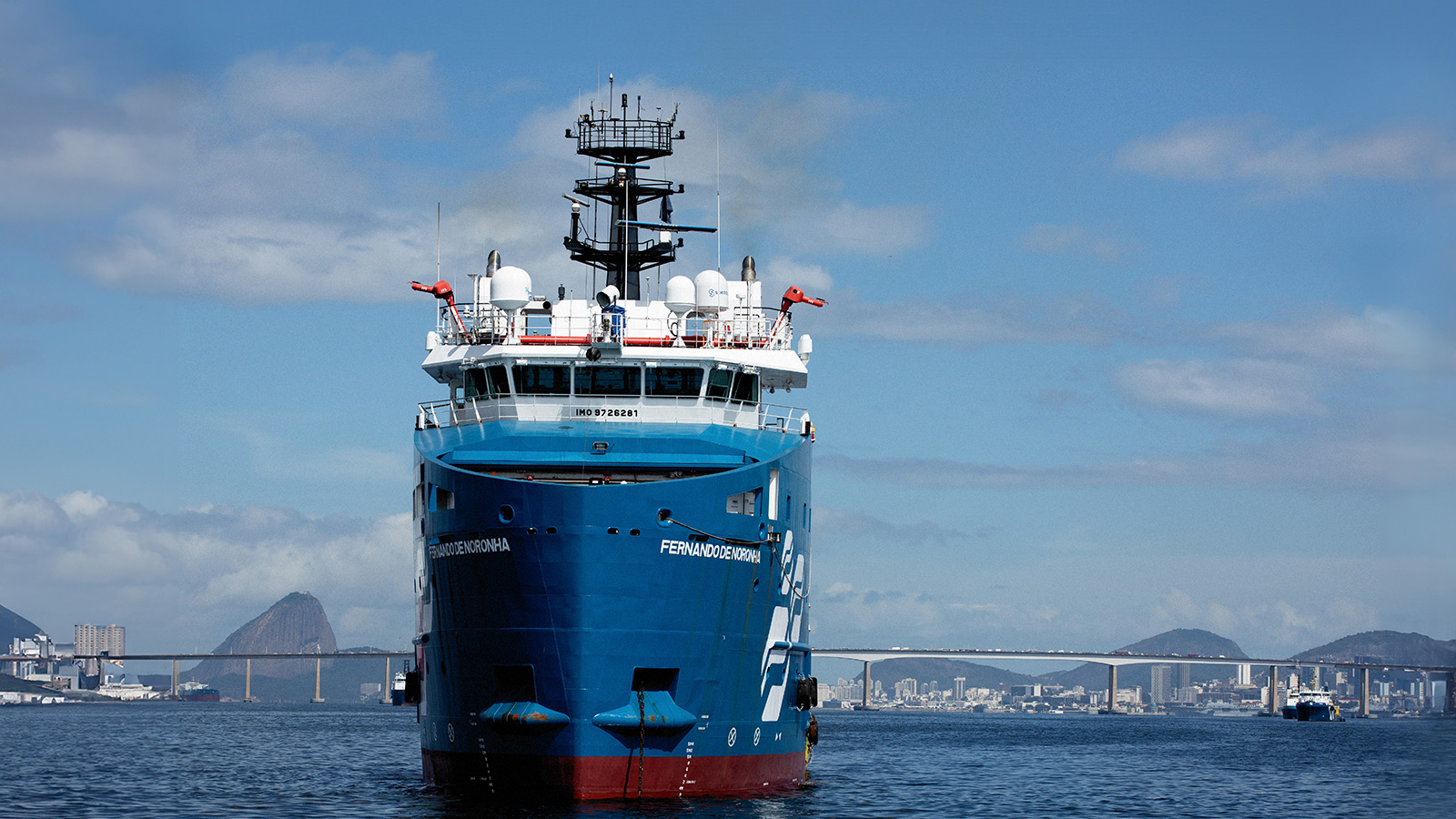
OceanPact signed a new contract with Petrobras for a period of four years to charter three OSRVs for a total value of R$650 million. The vessels Fernando de Noronha, Jim O’Brien and Macaé will be servicing Petrobras in operations off the Brazilian coast in cases of environmental emergencies.
It is the second major movement involving the two companies. At the end of 2023, OceanPact had already signed a R$485 million agreement with Petrobras to provide inspections of FPSOs and semi-submersible platforms until 2026.