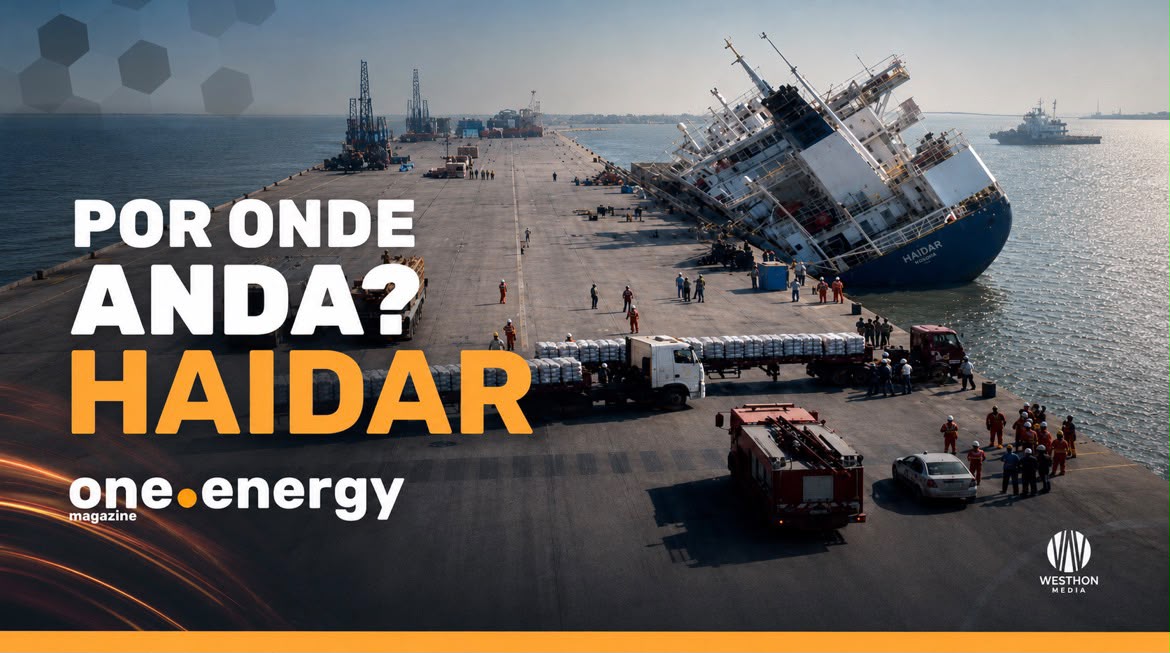
At around 8:45 a.m. on October 6, 2015, the Haidar, moored portside at Pier 302 in the Port of Vila do Conde, Barcarena, Pará, lost stability, listed and eventually sank. On board were nearly 5,000 live cattle bound for Venezuela. Although there were no human casualties, the accident became one of the worst socio-environmental disasters ever recorded in the state of Pará.
Built in 1994, the Haidar (IMO 9083067) sailed under the Lebanese flag and measured 116.96 metres in length, with a gross tonnage of 6,419. Originally built as a containership, the vessel was later converted into a livestock carrier. It was owned by Lebanese shipowner Hussein Ahmad Sleiman, operated by Tamara Shipping, and was carrying cargo belonging to Minerva S/A.
Nearly all of the animals drowned inside the vessel’s livestock pens, while an estimated 700,000 litres of fuel and diesel products spilled into the Pará River, contaminating beaches, aquatic ecosystems and disrupting the daily lives of riverside communities in Barcarena and Abaetetuba. The social impact was severe: beaches remained closed for weeks, local fishing activities declined sharply, and many residents temporarily left their homes for Belém and Abaetetuba to escape the overwhelming odour caused by the decomposition of thousands of animal carcasses.
In 2018, a Conduct Adjustment Agreement (TAC) secured compensation for affected families. However, another oil leak detected months later revealed that residual fuel remained trapped inside the wreck. An attempt to remove the vessel, awarded to Superpesa in 2019 under a BRL 44.6 million contract, also failed to move forward. The company was ultimately fined and suspended by Brazil’s National Department of Transport Infrastructure (DNIT) in 2022 for failing to complete the project. In the United Kingdom, a claim filed by the law firm Pogust Goodhead on behalf of more than 18,000 local residents against Salic (UK) Limited, an investor linked to Minerva, was dismissed in May 2026, not on the merits of the case, but over questions surrounding the legal standing of the claimants’ representation.
Por Onde Anda?
Ten years later, Haidar remains submerged at the same location in the Port of Vila do Conde. In November 2025, Brazil’s Federal Public Prosecutor’s Office (MPF) filed a new civil lawsuit seeking the permanent removal of the wreck, warning that as much as 215,000 litres of oil may still be trapped inside the hull. The MPF argues that the wreck continues to pose environmental risks while restricting port operations in the surrounding berths. While the Federal Court has yet to issue a final decision, Haidar remains on the riverbed, where it has been since October 2015.
During the rapid growth of Brazil’s offshore industry in the 2000s, offshore support vessels became an essential part of the country’s operational backbone.
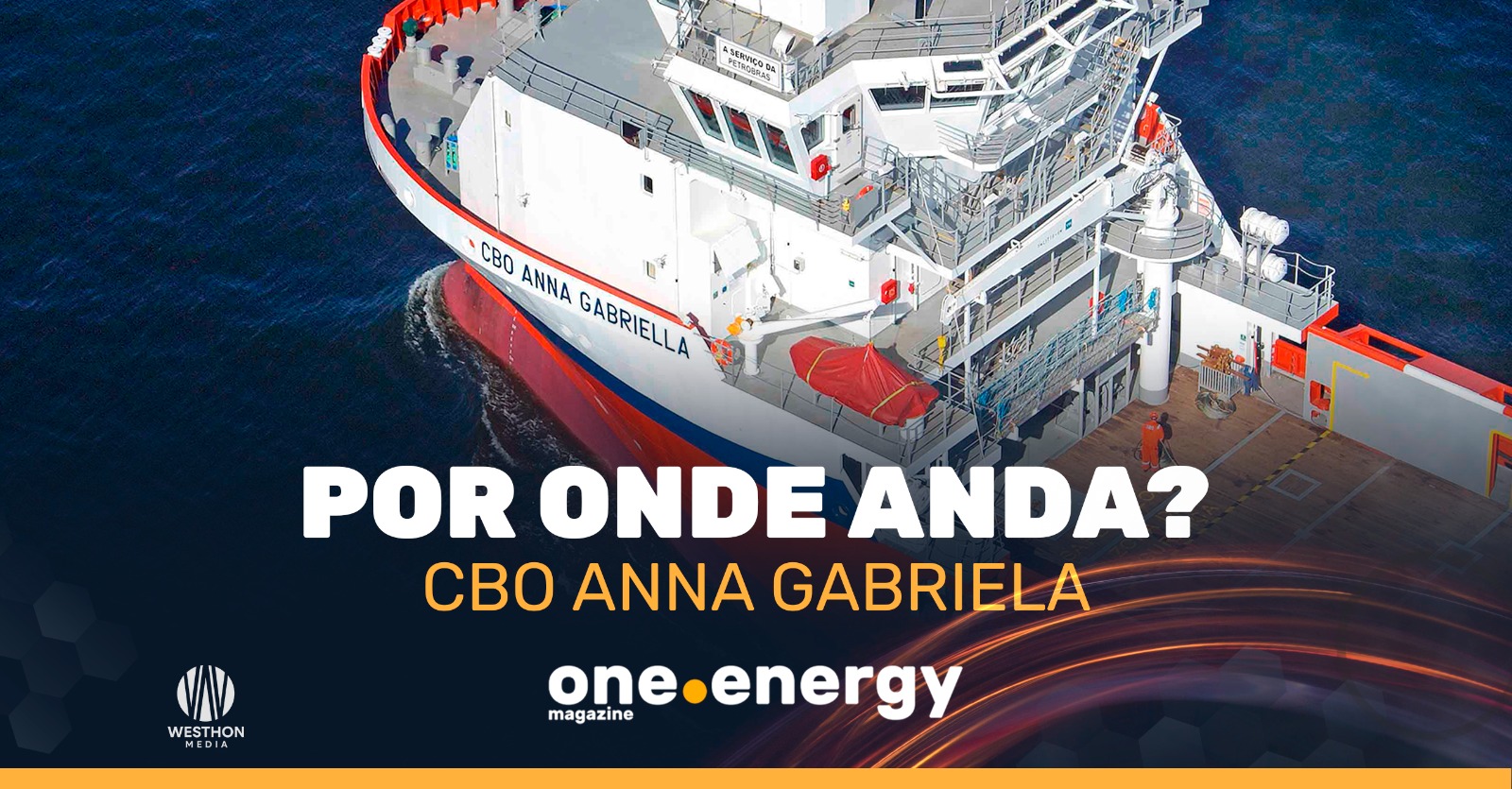
CBO Anna Gabriella was one of them.
Built in 2006 under IMO number 9364306, the vessel emerged during one of the most important expansion periods ever experienced by Brazil’s offshore industry. Constructed at Estaleiro Aliança, joined the Brazilian offshore market at a time when Petrobras operations were expanding rapidly across deepwater fields in the Campos Basin and beyond.
The vessel commenced operations for Petrobras shortly after delivery, becoming part of a generation of offshore support vessels that helped sustain the operational intensity of Brazil’s growing offshore sector.
At approximately 71 meters in length and with the robust profile characteristic of the Ulstein P-series designs, CBO Anna Gabriella was never built to attract headlines.
She was built to work.
And for years, vessels like her became essential links between ports, offshore bases, platforms, and supply chains operating far from the Brazilian coastline. While floating production units often captured public attention, offshore support vessels quietly handled the logistics that made those operations possible.
That is precisely what makes vessels like CBO Anna Gabriella so representative of an important chapter in Brazil’s marine and offshore history.
They were not necessarily the largest vessels offshore. But they were among the most necessary.
Today, however, public AIS activity involving the vessel appears significantly quieter than in previous years. Open vessel tracking platforms indicate limited recent movement, with the vessel still referenced in maritime databases and remaining listed as active and commissioned under the Brazilian flag.
Industry observers suggest the vessel may currently be between contracts after many years supporting offshore operations.
And perhaps that is what makes her story even more interesting.
Because unlike many offshore vessels that completely disappear from records, CBO Anna Gabriella still remains present — carrying with her the memory of a generation of Brazilian-built support vessels that helped sustain one of the largest offshore development cycles in the South Atlantic.
So the question remains.
Where is CBO Anna Gabriella now? Waiting for a new offshore assignment? Preparing for another operational chapter? Or simply resting quietly after years supporting Brazil’s offshore industry far from shore?
For now, the answers remain somewhere between ports, databases, memories, and the constant movement of the offshore world.
But one thing remains certain.
Vessels like CBO Anna Gabriella helped build the operational backbone of Brazil’s offshore industry — even when few people noticed.
A vessel that deserves more respect than speculation
Some vessels become known because they disappear from the radar, change names, lose purpose, or end up as footnotes in the offshore market.
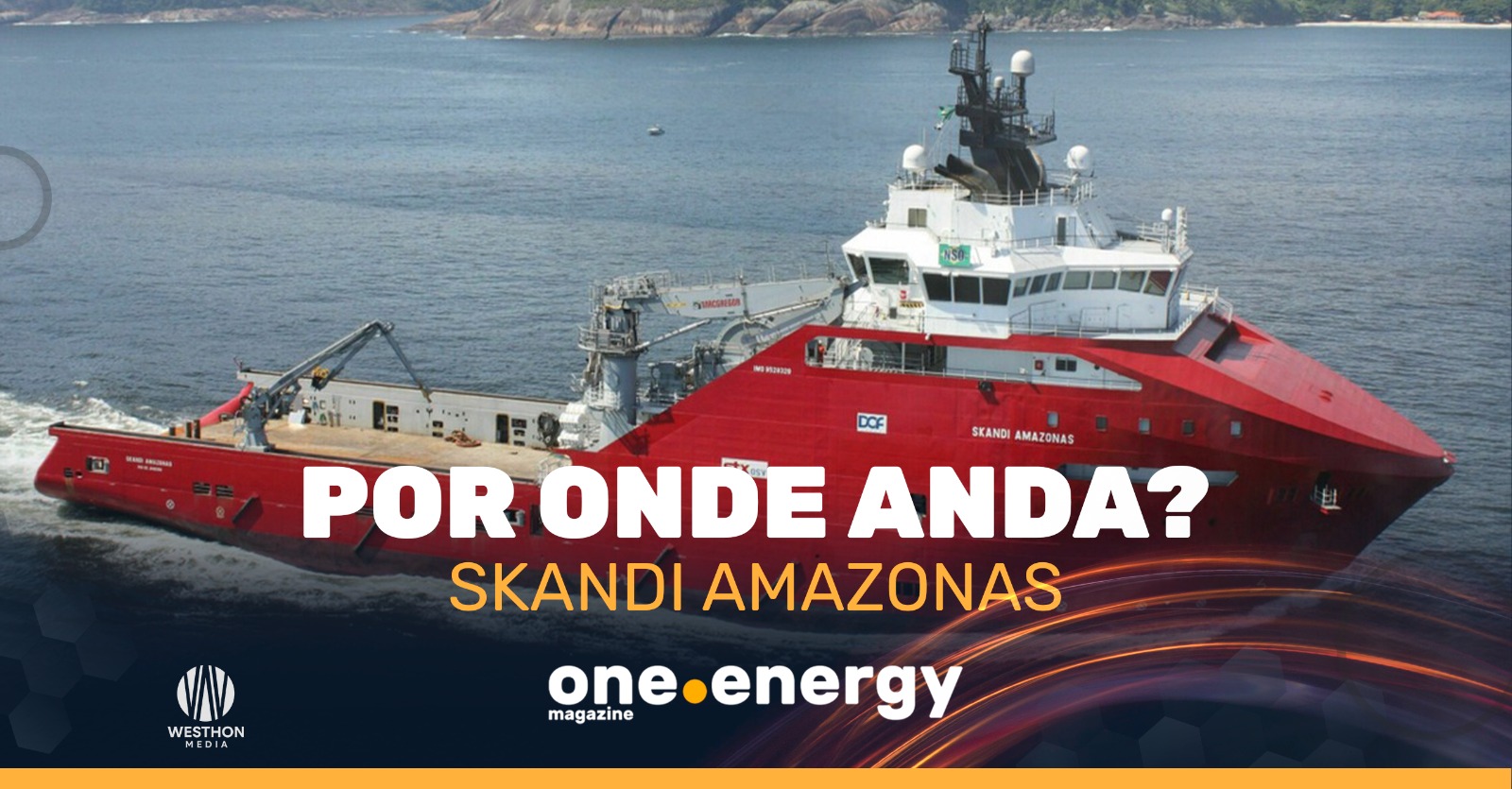
Skandi Amazonas is the opposite.
This is not a story about a forgotten vessel. It is a story about one of the most remarkable offshore support vessels ever built in Brazil — and about a crew that, when faced with a real emergency, did exactly what highly trained seafarers are expected to do.
I have a personal connection with this vessel.
I was there when Skandi Amazonas was built, at the shipyard then known as STX Brazil, on Ilha da Conceição, in Niterói. I worked in the Supply Chain department and was directly involved in procurement, inspections, equipment deliveries, and the complex chain of systems and materials that gradually transformed steel plates into one of the most powerful AHTS vessels ever delivered by a Brazilian yard.
I saw the vessel take shape from the beginning: steel cutting, block assembly, launch, outfitting, commissioning, sea trials, and delivery to DOF Navegação in 2010.
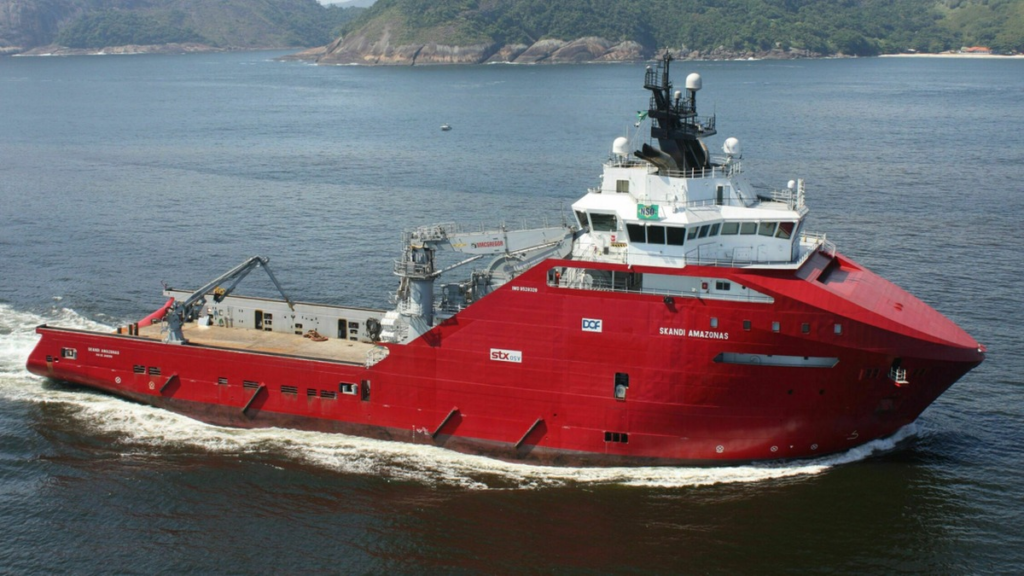
At the time, Skandi Amazonas was a Brazilian shipbuilding milestone. At 95 meters in length, with 300 tons of continuous bollard pull, hybrid diesel-mechanical-electric propulsion, DNV class, and a design developed by STX Norway Design, she was not an ordinary vessel. During trials, she exceeded her own specifications, reaching a maximum bollard pull of 343 tons.
More importantly, she then went to work.
For more than fifteen years, Skandi Amazonas operated in Brazil doing exactly what she was built to do. Quietly, consistently, and under some of the most demanding offshore conditions in the world. In plain language: she became a battle horse.
Then came the incident near Macaé.
The vessel reportedly struck a rocky formation near the Santana Archipelago while approaching the anchorage area. The hull was damaged, water ingress followed, and the situation required immediate decision-making.
Skandi Amazonas (Source: DOF)
That is where the tone of the story should change.
What some people rushed to describe as failure may, in fact, become a case study in emergency response.
The master diverted the vessel to a safer position and executed a controlled grounding maneuver to prevent a worse outcome. Non-essential personnel were evacuated. Essential crew remained on board. There were no reported injuries. No pollution was recorded. The vessel remained under control.
This is not luck. This is training.
And it is precisely here that the public narrative around the incident became unfair.
In the days that followed, social media did what social media usually does: it converted a complex maritime event into simplified outrage. Some used the episode to speak about royalties. Others used it to attack offshore activity. Some tried to turn it into a labor issue. Others treated the image of a grounded vessel as proof of systemic negligence.
That is not serious analysis.
Offshore operations are not risk-free. They never were. Ships are not supposed to hit rocks, just as aircraft are not supposed to encounter runway excursions and cars are not supposed to crash. Yet incidents happen in every serious industry involving machines, weather, human judgment, geography, and operational pressure.
The question is not whether an incident occurred.
The question is what happened after it occurred.
And in this case, what happened after the incident was exactly what should happen: command decision, emergency procedure, evacuation of non-essential personnel, preservation of life, environmental control, technical assessment, and mobilization of support resources.
That is the part many people chose not to see.
The causes still need to be investigated. Was there an issue with charted seabed information? Did tide conditions play a role? Was the vessel returning through the same safe track previously used? Was there a navigational error, a distraction, or a combination of factors? These questions belong to the formal investigation — not to social media tribunals.
Until then, speculation is not expertise.
There is also an important point about DOF.
Anyone who knows the offshore market knows that DOF is not a casual operator. It is one of the most respected names in the sector, with high standards on board, strong safety culture, and a long track record in complex subsea and offshore operations. To use this incident as a shortcut to attack the company, the crew, or the profession says more about the critics than about the facts.
Working offshore is demanding. It requires discipline, competence, and resilience. But it is also a profession supported by rules, training, classification standards, audits, emergency procedures, and a level of operational structure that many land-based activities simply do not have.
Let us be honest: is the controlled evacuation of a well-managed offshore vessel, with trained personnel, support craft, emergency protocols, and no pollution, necessarily more dangerous than a truck driver crossing the Rio–São Paulo Dutra at night? More dangerous than driving through Linha Vermelha? More dangerous than the daily risks people accept without reflection on Brazilian roads?
Risk exists everywhere. The difference is that offshore, risk is managed professionally.
The sea can be dangerous. So can a highway. So can a construction site. So can, frankly, a bathroom shower on the wrong day. The presence of risk does not make an activity reckless. It makes competence essential.
And competence was visible here.
Skandi Amazonas hit a rock. That should not have happened. But once it did, the response protected lives, prevented pollution, and preserved the vessel for recovery and repair.
That matters.
This vessel was proudly built in Brazil. It was a complex project, extremely well executed, and it has served the Brazilian offshore industry for more than a decade and a half. It deserves better than lazy conclusions.
Skandi Amazonas will be assessed, repaired, and returned to service if technically viable. As it should be.
She had no disaster named after her. No inquiry. No memorial. No court case running twenty years later. Just steel. Just sea. Just oil — for decades, in 300 meters of South Atlantic waters.
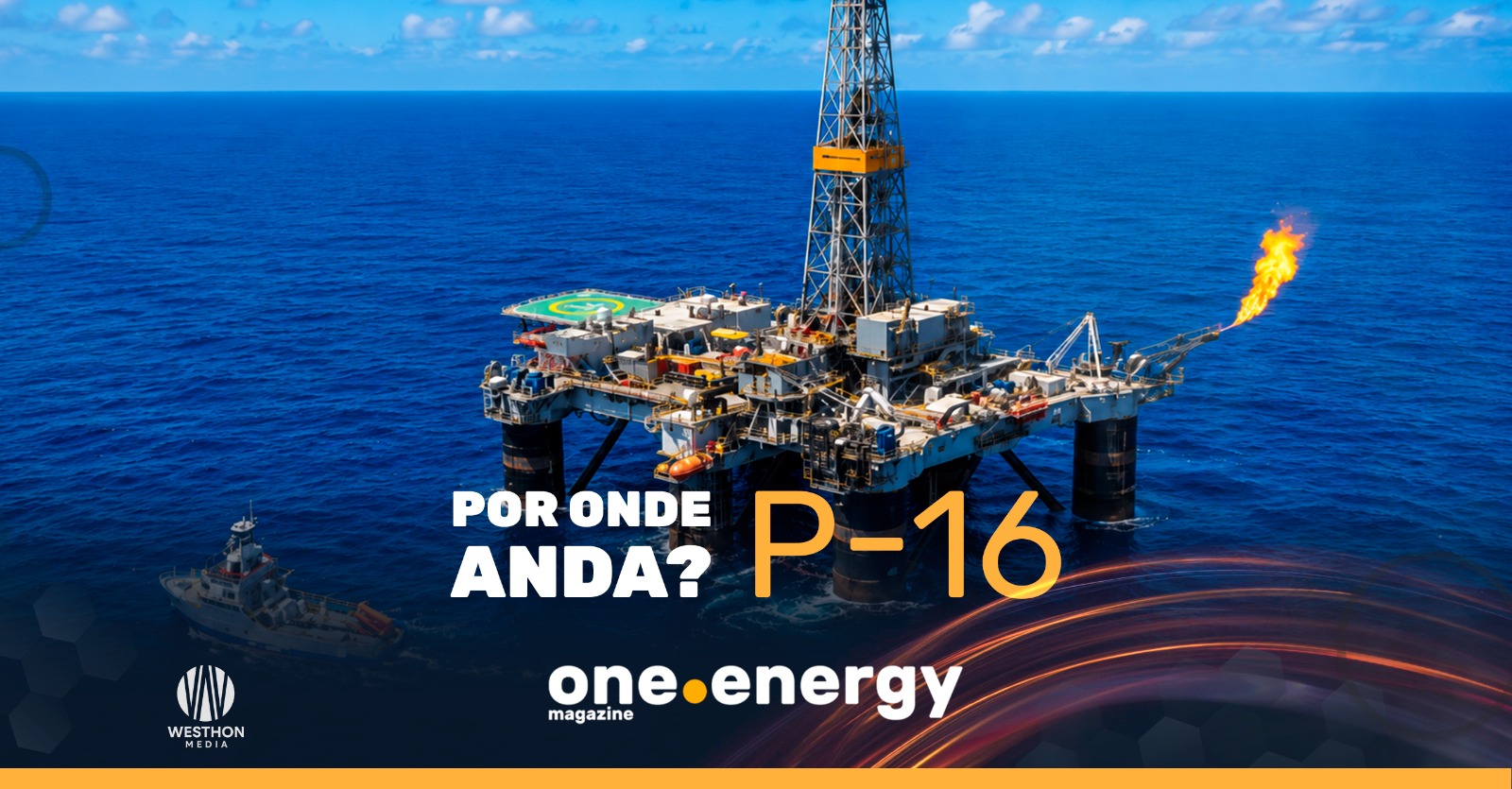
Platform P-16 — Petrobras XVI — was a semi-submersible of the pioneering Roman-numeral generation that quietly built Brazil’s offshore industry. Processing up to 20,000 barrels a day. Displacing 18,000 tonnes of seawater. Floating on two submerged pontoons, anchored to the Campos Basin floor, holding position while the South Atlantic did its worst.
She was a laboratory as much as a platform. Flexible risers tested on her flanks. Subsea manifolds connected below her. Engineering knowledge that would later carry Brazil into 1,500 meters — into 2,000 — into the pre-salt layer that changed global energy.
She didn’t go there. But the engineers who did learned their craft on her.
In 2017, Petrobras auctioned her alongside six sister platforms at the Port of Aratu, Bahia. Seven units. US$ 83.5 million combined. The P-16 left with a new owner, without her name, headed most likely to a breaking yard.
An estimated 10,000 tonnes of steel. Returned to the market. Recycled into other things.
Where is P-16 now?
She isn’t anywhere. She is everywhere steel goes when the sea is done with it.
— WSB Advisors tracks the vessels the industry forgets.