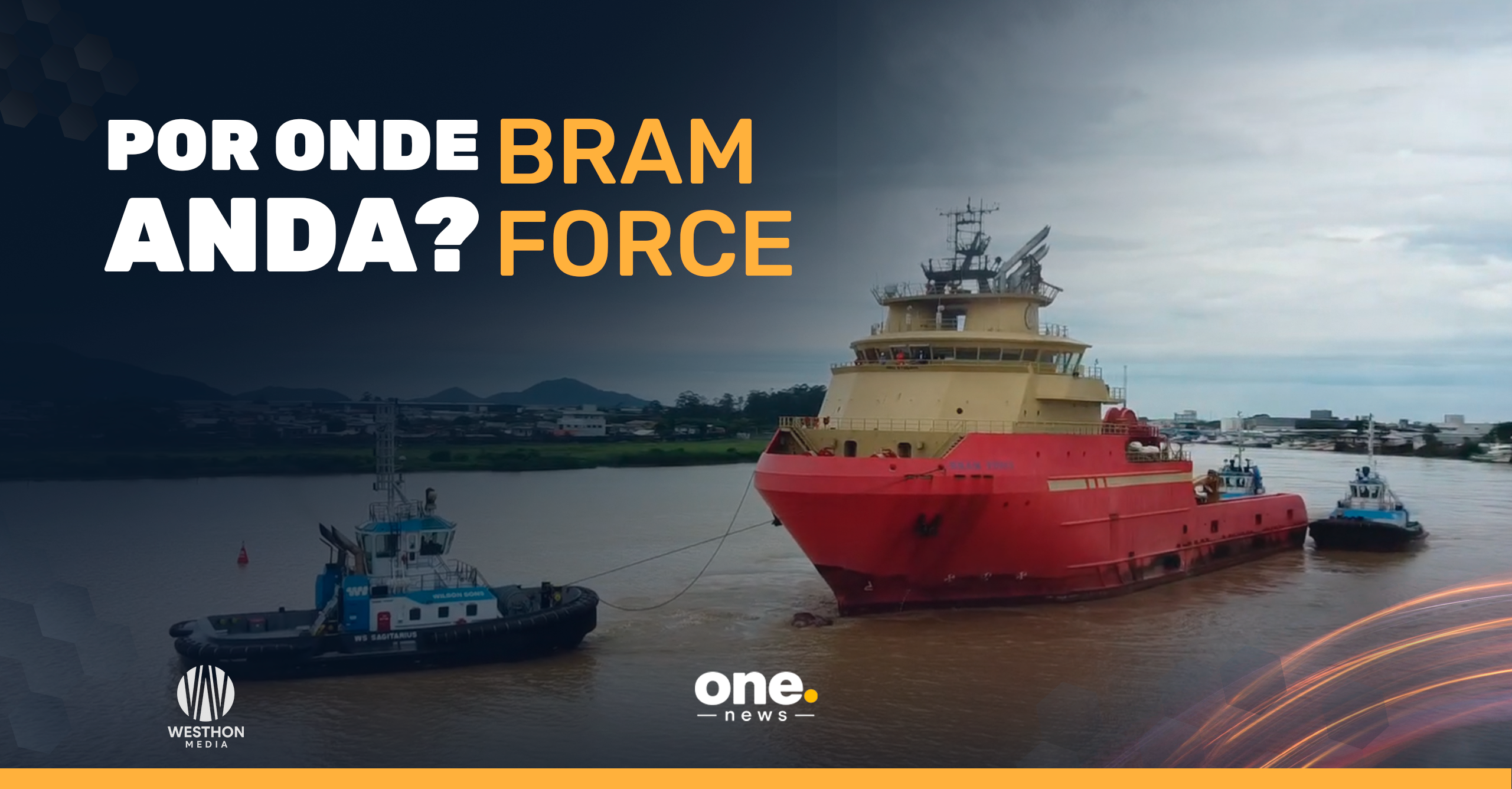
More than a year after suffering a major engine room fire, Bram Force has returned to offshore operations in Brazil, once again working in the Campos Basin.
Delivered by Navship in 2017, the Brazilian-flagged AHTS is part of Bram Offshore, the Brazilian subsidiary of Edison Chouest Offshore.
On 8 January 2025, while operating near Petrobras’ P-37, the vessel experienced an engine room fire. The crew was safely evacuated by a nearby Maersk vessel, firefighting operations lasted approximately 12 hours, and no injuries or pollution were reported.
Following the casualty, the vessel was towed to the Port of Açu, where the Brazilian Navy initiated an Administrative Inquiry. After the extent of the damage was assessed, Bram Force underwent an extensive repair programme at Navship in Itajaí, the same shipyard where she was originally built.
AIS data now confirms that the vessel has resumed offshore service.
For most companies, restoring an offshore support vessel after a major engine room casualty is neither a quick nor an inexpensive decision. Beyond the technical complexity, owners must balance repair costs, downtime, commercial commitments and the long-term value of the asset.
Bram Offshore chose restoration.
The return of Bram Force illustrates a reality often overlooked outside the industry: modern offshore vessels are strategic assets, and in many cases rebuilding them is both technically feasible and commercially justified.
Its return also reflects the work of shipyard teams, class societies, equipment manufacturers, regulators and the vessel’s owner to bring a complex offshore asset safely back into service.
In shipping, success is rarely measured by avoiding every incident. It is measured by how professionally companies respond when incidents occur.
Bram Force is back at work.