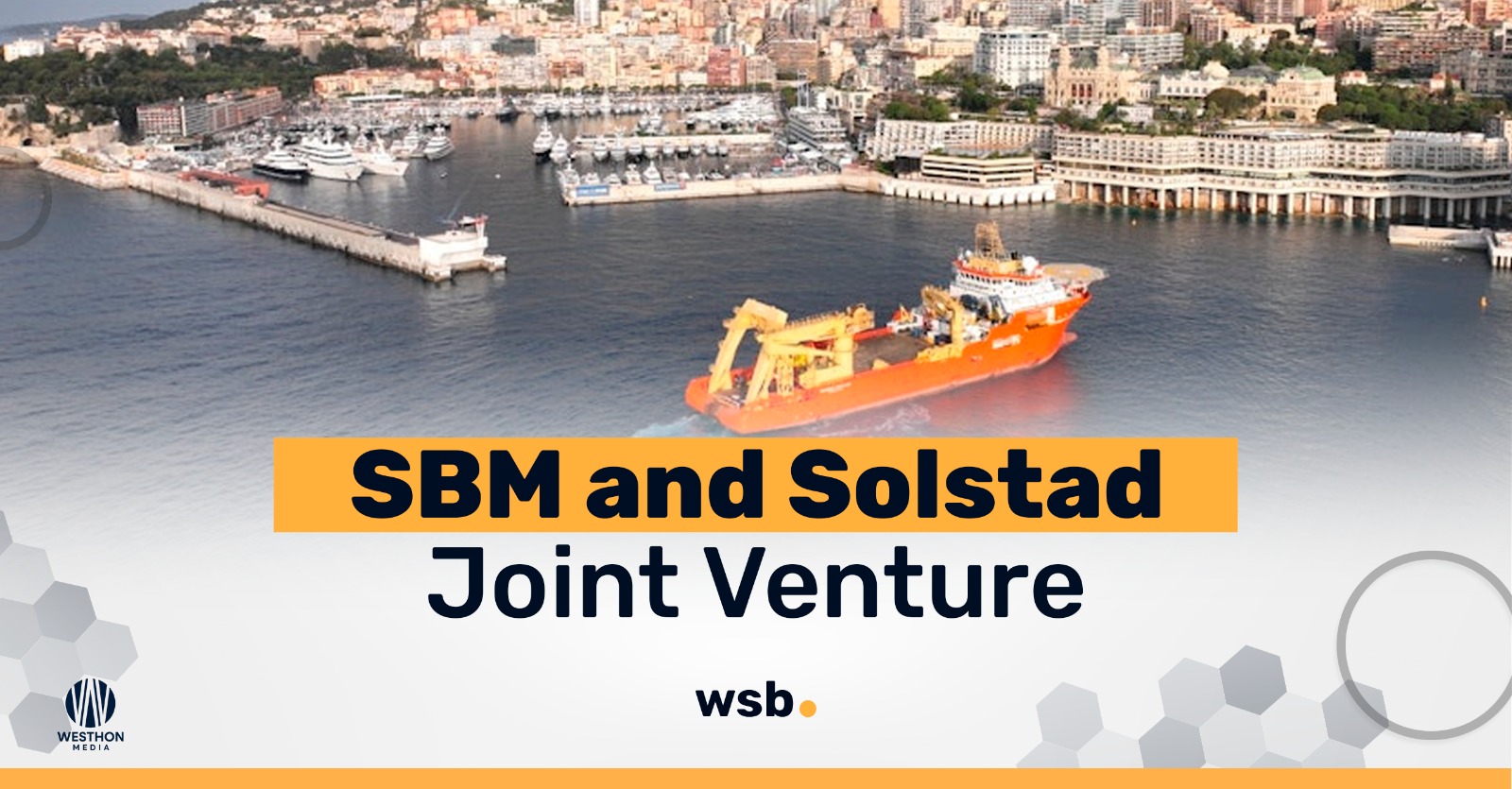
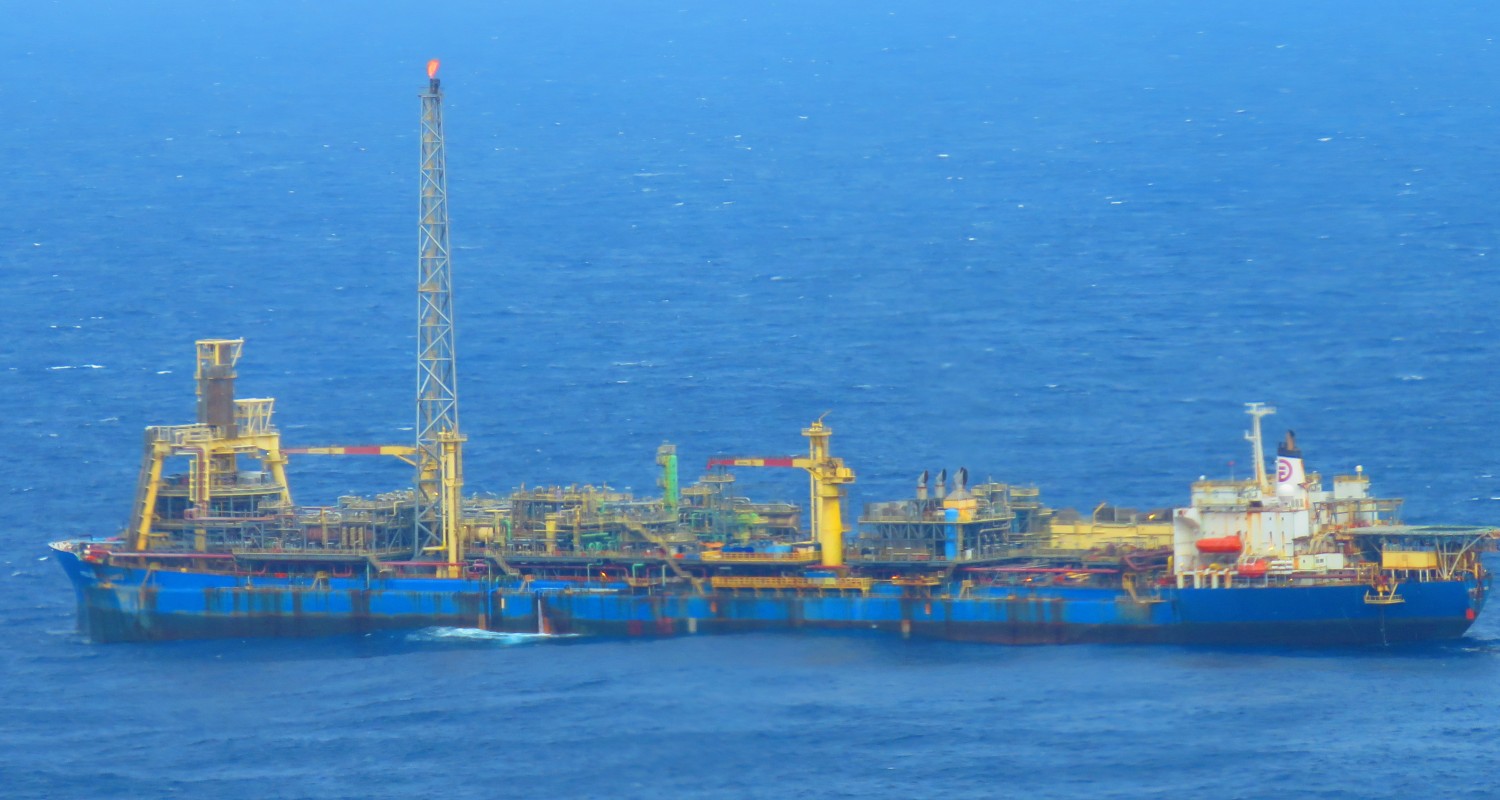
SBM Offshore and Solstad Offshore have formed a joint venture to order a newbuild multi-purpose deepwater installation and construction vessel, with delivery targeted for the first half of 2029.
The vessel will support the installation of ocean infrastructure, including FPSOs, and is designed for operations in both shallow and deepwater environments. The project builds on the long-standing cooperation between SBM and Solstad around the CSV Normand Installer, which has supported SBM’s offshore installation activities for years.
Under the structure, Solstad Offshore will hold 50.1% of the joint venture, while SBM Offshore will own 49.9%. Solstad will act as ship manager and SBM will charter the vessel for its own offshore projects. When not required by SBM, the vessel may be chartered to third parties.
The joint venture has already secured an initial 14-year charter agreement with SBM Offshore, guaranteeing minimum utilization of 270 days per year, with extension options that could add up to 11 additional years.
The selected shipyard has not yet been disclosed.
For Brazil, the announcement is strategically relevant. SBM remains one of the leading FPSO contractors active in the country, with exposure to major offshore developments and future deepwater projects. While no Brazilian assignment has been announced for the vessel, additional installation capacity could support SBM’s global FPSO pipeline, a portfolio in which Brazil continues to play a central role.
Oil price rally driven by conflict in Iran enables full project sanction with two platforms Dutch firm SBM Offshore has won the tender for the construction and operation of the two floating production units (FPSOs) for the Sergipe Deepwater project (SEAP), as confirmed by Petrobras CEO Magda Chambriard during the “CNN Talks” event this Wednesday (April 1). The award of both units — SEAP I and SEAP II — was made possible by the recent upswing in international oil prices, which has improved the project’s economic attractiveness.
“With this increase in oil prices, we are now able to move forward with SEAP I,” Chambriard said, referring to the second platform, whose bankability had been contingent on a more favorable price environment. Brent crude has surged above $100 per barrel in recent weeks, driven by the conflict involving the United States, Israel, and Iran, which led to a partial closure of the Strait of Hormuz — a critical chokepoint through which roughly 20% of the world’s oil supply transits.
Magda Chambriard (Source: Petrobras)
Production capacity and infrastructure
The combined capacity of the two platforms is expected to reach 200,000 barrels of oil per day and 18 million cubic meters of natural gas per day. Each FPSO will be capable of processing up to 120,000 barrels of oil and 12 million cubic meters of gas, with output transported to shore via a pipeline system spanning approximately 128 kilometers (100 km offshore and 28 km onshore).
The SEAP project encompasses seven fields declared commercial by Petrobras in December 2021 — Agulhinha, Agulhinha Oeste, Budião, Budião Noroeste, Budião Sudeste, Cavala, and Palombeta — located within the BM-SEAL-4, BM-SEAL-4A, BM-SEAL-10, and BM-SEAL-11 concessions, roughly 80 kilometers off the coast of Sergipe in the Sergipe-Alagoas Basin.
Brazil’s National Petroleum Agency (ANP) recently approved an extension of the concession contracts, pushing SEAP I’s term to 2055 and SEAP II’s to 2057. The move provides greater regulatory certainty and is expected to increase recoverable oil and gas volumes by 14.5%, according to the regulator.
Project trajectory and market context
Originally slated for startup in 2026, SEAP has undergone two schedule revisions — first to 2028 and later to 2030. The final investment decision (FID) for the first platform, SEAP II, was approved by Petrobras in December 2025 and included in the company’s firm investment portfolio under its 2026–2030 Strategic Plan. SEAP I, meanwhile, had been classified as a “target project,” dependent on favorable market conditions. The tender followed a Build, Operate and Transfer (BOT) model, under which SBM Offshore will construct and operate the units before transferring ownership to Petrobras at the end of the contract term. The company submitted the most competitive technical and commercial bids for both platforms in a process concluded in March.
The recent rise in oil prices — with Brent trading above $100 per barrel since the onset of the Iran conflict in March — proved decisive in securing the economic viability of the second unit. When Petrobras released its strategic plan in November 2025, it outlined total investments of $109 billion, including $81 billion in firm projects and $28 billion in conditional projects. SEAP I was among those contingent on market conditions. Analysts at Bank of America forecast Brent will remain around $100 per barrel throughout 2026, with an annual average of $92.50 — a pricing environment that supports the project’s economics.
SBM Offshore and its footprint in Brazil
SBM Offshore is a longstanding supplier to Petrobras, with nine FPSOs currently operating in Brazilian waters. The company is particularly active in the Santos Basin, supporting pre-salt developments such as Mero, Búzios, and Tupi. The FPSOs Almirante Tamandaré and Alexandre de Gusmão, each with a capacity exceeding 180,000 barrels per day, began operations in 2025 at the Mero field.
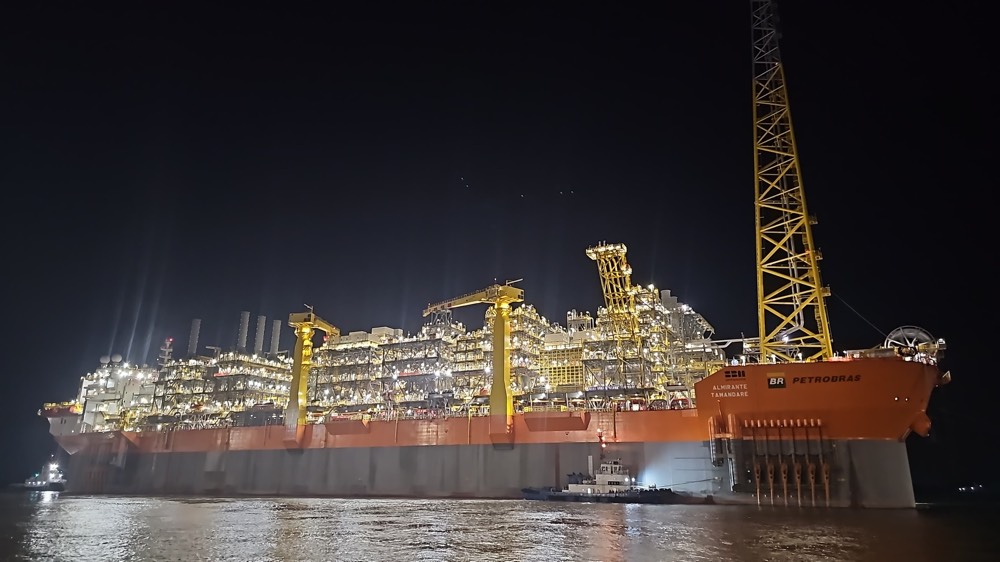
FPSO Almirante Tamandaré (Source: Petrobras)
According to a company statement released in November 2025, the bids for SEAP I and II underscore SBM Offshore’s “leading position in the large and complex FPSO segment.” While competing globally with Asian shipyards, the company maintains approximately 50% of its operations in Brazil, as noted by CEO Øivind Tangen.
Regional impact and outlook
Startup of the SEAP project is scheduled for 2030, with SEAP II expected to come online first, followed by SEAP I roughly one year later. Studies by the Government of Sergipe estimate total investments of $5 billion (approximately BRL 25 billion) and a cumulative impact of up to BRL 37.8 billion on the state’s GDP over the project lifecycle.
The development is considered strategic for expanding Brazil’s domestic natural gas supply, with potential to serve thermoelectric power plants, fertilizer industries, and energy-intensive consumers in the Northeast. Petrobras signed a memorandum of understanding with the Sergipe state government in March to support commercialization of the gas, while the state is actively working to attract industrial consumers that can benefit from the new infrastructure.
The tender for the export gas pipeline is expected to be launched later in 2026, with startup aligned with first production in 2030. With the FPSO contracts now awarded, workstreams related to subsea infrastructure — including production and injection systems to tie back wells to the floating units — are set to move forward. SEAP represents the first new deepwater oil and gas frontier outside the Santos Basin since the pre-salt discoveries, positioning Sergipe as an emerging player in Brazil’s energy sector after decades of production concentrated in mature onshore fields.
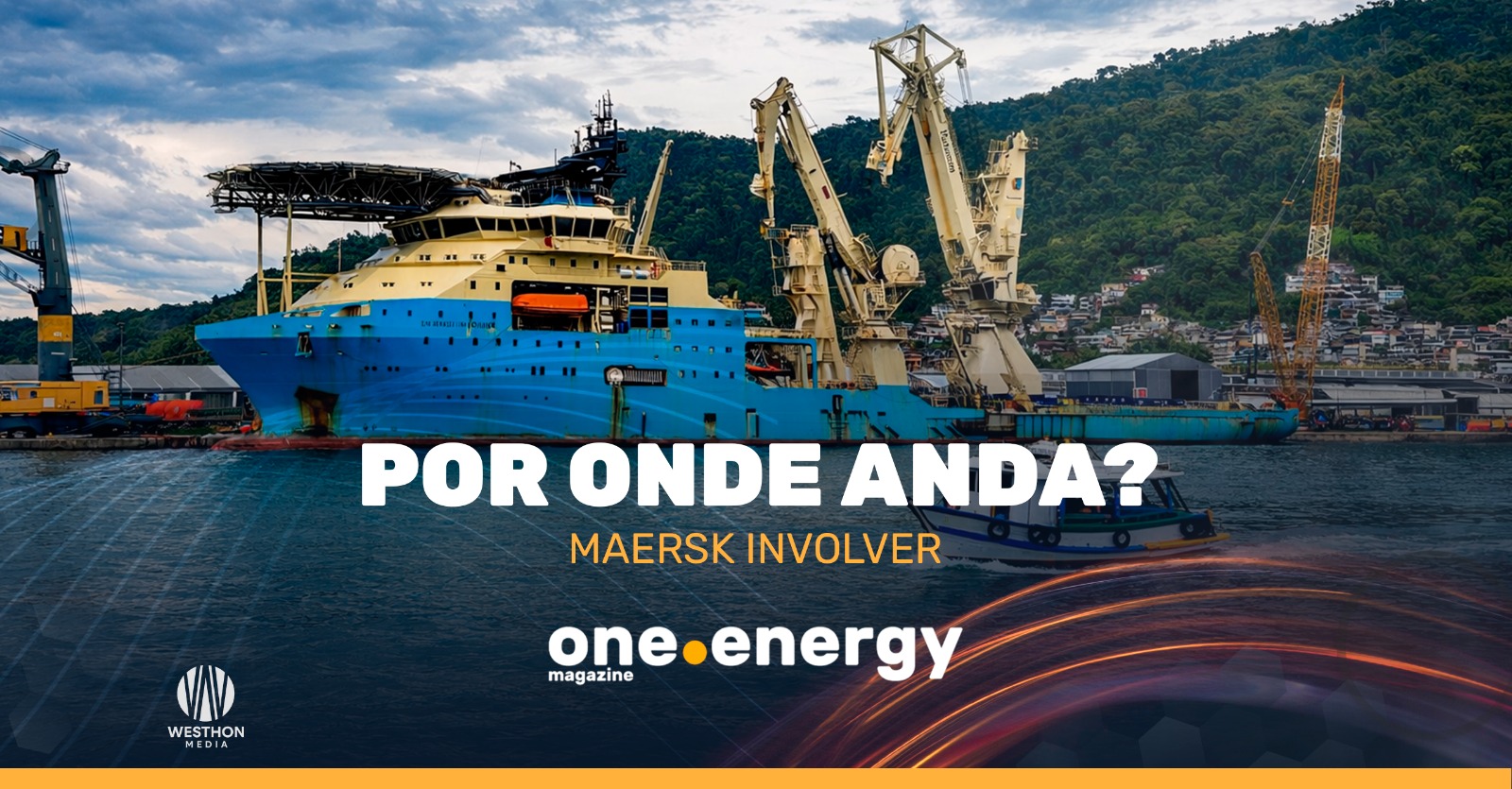
Built in 2007, with an impressive 138 meters LOA, the then Maersk Involver was born under the Danish offshore tradition. A blue hull, robust lines, and a clear purpose: to deliver capacity where conventional logistics cannot reach.
But the sea changes. And so do assets.
On November 1st, 2024, following the completion of the acquisition of Maersk Supply Service by DOF Group ASA, the fleet underwent a visible transformation. Names changed. Colors changed.The soft Danish blue gave way to the distinctive Norwegian red.
Maersk Involver became Skandi Involver.
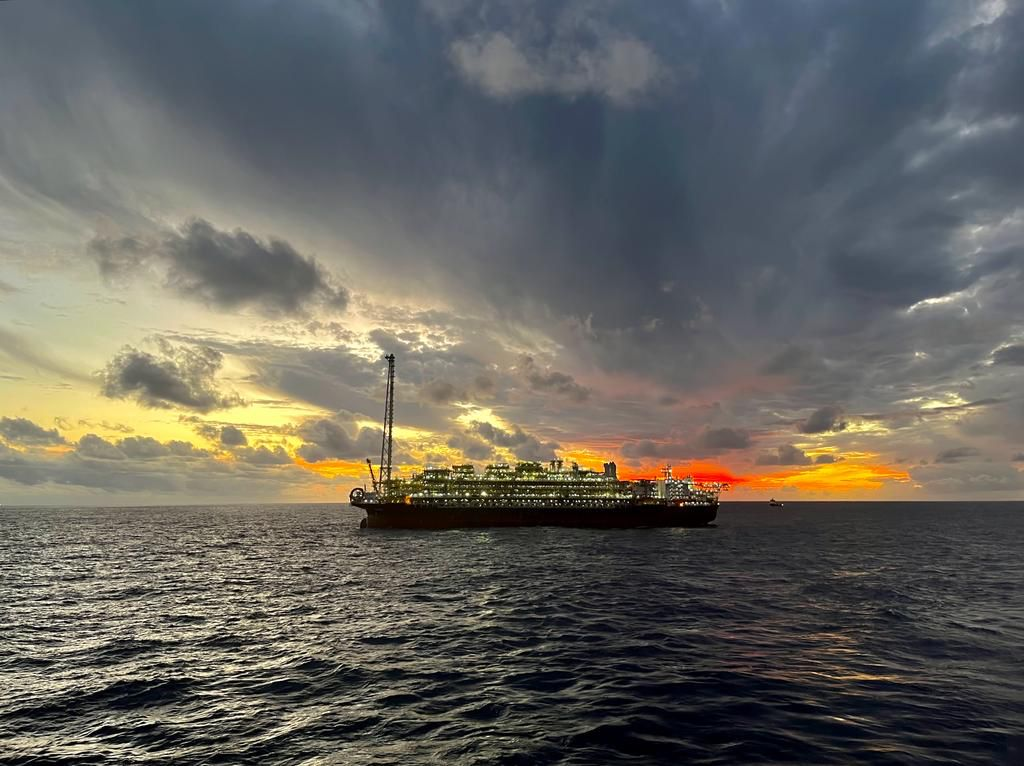
Today, the vessel operates in Brazilian waters under contract with Petrobras, supporting subsea inspection activities. Her recent presence has been associated with the FPSO Sepetiba, operated by SBM Offshore — in Mero Field, one of Brazil’s key production hubs.
But her story did not begin here.
Before Brazil, she had already taken part in subsea campaigns offshore Angola. In the North Sea, she operated as a walk-to-work vessel in Denmark. She has worked in environments where logistics does not tolerate improvisation.
Classified as an MPSV, Skandi Involver occupies a hybrid space in the market. In a country where distance, water depth, and production scale put constant pressure on the logistics chain, onboard capacity stops being a differentiator — it becomes a strategic tool.
Some vessels adapt to survive. Others seem to have been designed for constant adaptation.
And then comes the detail that disrupts the narrative.
After the acquisition, the rule appeared clear: new name, new visual identity. Yet recent records show something intriguing.
👉 Why does she still appear blue?
A transitional delay? Or simply time — which in offshore operations is rarely linear?
In the end, Skandi Involver continues her course — discreet, stable, operational. Too large to be ordinary. Too specialized to be circumstantial.
Every Thursday, a new “Por onde anda?” Stay tuned.
The FPSO Almirante Tamandaré has arrived in Brazil. This unit will be installed in the Búzios field, located in the pre-salt layer of the Santos Basin, with operations managed by Petrobras. Like the Sepetiba, the vessel was built by SBM Offshore.
The FPSO has a production capacity of up to 225,000 barrels of oil equivalent per day and can process 12 million cubic meters of gas daily. She left the CMHI shipyard in China on July 31 and will join five other platforms currently operating in the field: FPSOs P-74, P-75, P-76, P-77, and Almirante Barroso.
SBM Offshore has announced the acquisition of the remaining stake in MISC Group’s FPSO Espírito Santo. With this purchase, SBM will now hold 100% of the shares related to the vessel’s operations.
Currently, the FPSO is chartered to Shell and operates in the Parque das Conchas field in the Campos Basin, with a production capacity of approximately 100,000 boed 1.42 million cubic meters of natural gas per day.