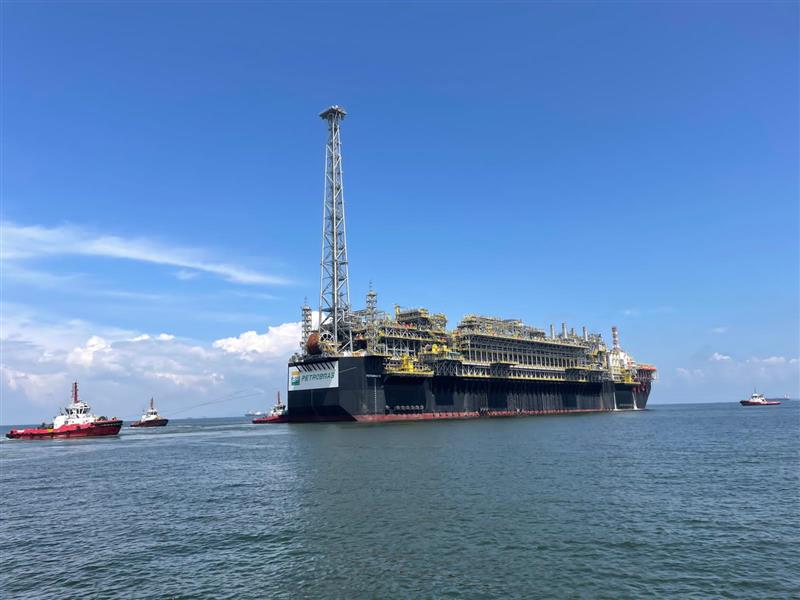
Seatrium confirmed successful first gas injection on FPSO P-78, achieved 61 days after first oil on December 31, 2025.
Unit is installed at Búzios Field in Santos Basin, approximately 180–230 km offshore Rio de Janeiro, and operates for Petrobras.
Key unit specifications:
• Oil production capacity: 180,000 b/d
• Gas processing: 7.2 million m³/d
• Storage capacity: 2 million barrels
• First oil: December 31, 2025
• First gas injection: March 2026
Construction involved module fabrication, integration and commissioning across shipyards in Asia and Brazil, executed in partnership with Petrobras.
FPSO P-78 forms part of new generation of units being delivered by Seatrium for Petrobras. Combined developments are expected to add around 1.3 million b/d to Brazil’s offshore production capacity over coming years.
Tag: Seatrium
-

FPSO P-78 achieves first gas injection at Búzios
-
Offshore highlights
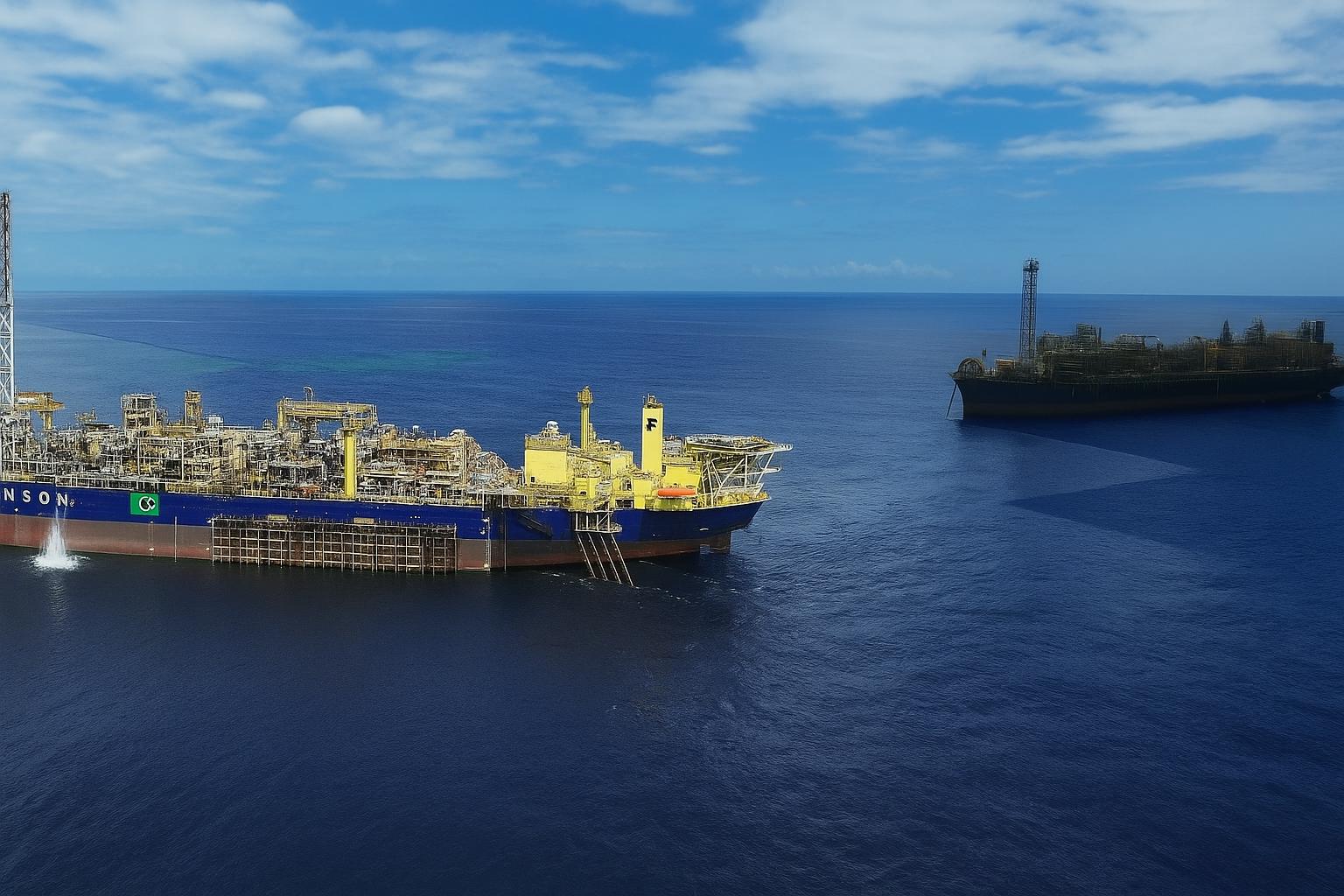
BRAVA has completed, earlier than planned, the full and final settlement of FPSO Atlanta receivables with Yinson Offshore. The transaction totalled approximately US$ 260 million including US$ 4.5 million paid upfront in July 2025 and now the balance plus interest. Brava projects a positive impact on operating cash flow exceeding US$ 40 million (present value) over the next three years. The move forms a strategic component of its ongoing liability management efforts aimed at reducing leverage and optimizing capital structure.
Transpetro has become the first Brazilian company to carry out ultrasonic inspections of tanker cargo tanks using drone-mounted technology. Certified by the American Bureau of Shipping (ABS), this inspection method was applied to the tanker João Cândido, marking a major milestone in digital asset integrity and operational safety in Brazil’s maritime sector.
Axess Group has secured a regulatory compliance contract with Seatrium for six Petrobras-bound FPSOs: P78, P80, P82, P83, P84, and P85. Axess will oversee adherence to Brazil’s technical and legal standards throughout the construction phase in Singapore having started with the P 78, already underway en route to Brazil. -
Petrobras P78 – tunrkey model
Seatrium has officially reinforced that Petrobras contracted the FPSO P-78 under a full turnkey model — a first for the Brazilian operator in FPSO development. While common in the O&G sector, turnkey contracts remain rare for FPSOs, making this case especially notable.
Under this model, the contractor is fully responsible for the entire project lifecycle: engineering, procurement, construction, integration, testing, commissioning and final delivery of a fully operational Floating Production Storage and Offloading unit. Petrobras, as the client, will simply “turn the key” to begin operations.
The FPSO P-78 recently departed Singapore and is en route to Brazil, where it will be installed at the Búzios field in the pre-salt Santos Basin. The platform is scheduled to start production in 2025, with a capacity of up to 180,000 barrels of oil and 7.2 million cubic meters of natural gas per day.
The unit is part of Petrobras’ pre-salt expansion strategy. By the end of 2027, the company expects to deploy four additional FPSOs in the Santos Basin: P-79, P-80, P-82 and P-83.
Discover WSB.One, our proprietary offshore intelligence platform used by top industry players for commercial positioning and strategic decisions.
Follow WSB Advisors on LinkedIn and Instagram for more insights. -
Market News: FPSO, investments and Subsea projects
This week, Brazil’s energy sector has taken another decisive step toward growth and diversification with key announcements involving upstream, downstream and subsea segments.
McDermott has signed a “sizeable” contract with BRAVA covering the transportation and installation of flexible pipelines, umbilical and subsea equipment for new wells in the Papa-Terra and Atlanta fields. The agreement also includes pre-commissioning and onshore support services. The contract value ranges between $1 million and $50 million.
Meanwhile, Siemens and Seatrium have been selected to supply the compression systems for Petrobras’ FPSOs P-84 and P-85. The two units, central to Petrobras’ pre-salt expansion strategy, are expected to enter production by 2030. The total value of the supply contract is approximately R$ 2 billion.
Last Friday (4), Petrobras announced a R$ 33 billion investment plan focused on refining and petrochemicals at the Duque de Caxias Refinery (Reduc), in partnership with Braskem. The initiative revives major projects in the downstream segment and includes pilot production of Diesel R and Sustainable Aviation Fuel (SAF), improved integration with the Boaventura Energy Complex and expanded investment in workforce development.
Adding to this, Petrobras is now seeking to attract Chinese investment to support its naval and logistics infrastructure. A memorandum of understanding (MOU) signed in Rio de Janeiro brings together major Chinese firms such as COSCO SHIPPING, Offshore Oil Engineering Co. and China State Shipbuilding, along with Brazilian shipyards including
Estaleiro Mauá S/A, Enseada, Estaleiro Atlântico Sul and Estaleiro EBR (Estaleiros do Brasil Ltda), Petrobras and Transpetro will act as anchor clients with plans to commission 52 vessels and five FPSOs by 2026. The partnership aims to inject capital and technology into Brazil’s shipbuilding industry, aligning with government efforts to reindustrialize the sector after a long period of decline. -
Offshore Highlights
• Karoon Energy has resumed production at the Baúna Field in the Santos Basin after a 20-day planned maintenance. With the SPS-88 well back online, output increased to approximately 26,500 bopd, exceeding pre-shutdown levels.
• The hull of FPSO P-80 has departed the CIMC Raffles shipyard in China and is now en route to Singapore, where Seatrium will handle the topside module integration. The unit is expected to begin operations in the Búzios Field, pre-salt Santos Basin, in 2027.
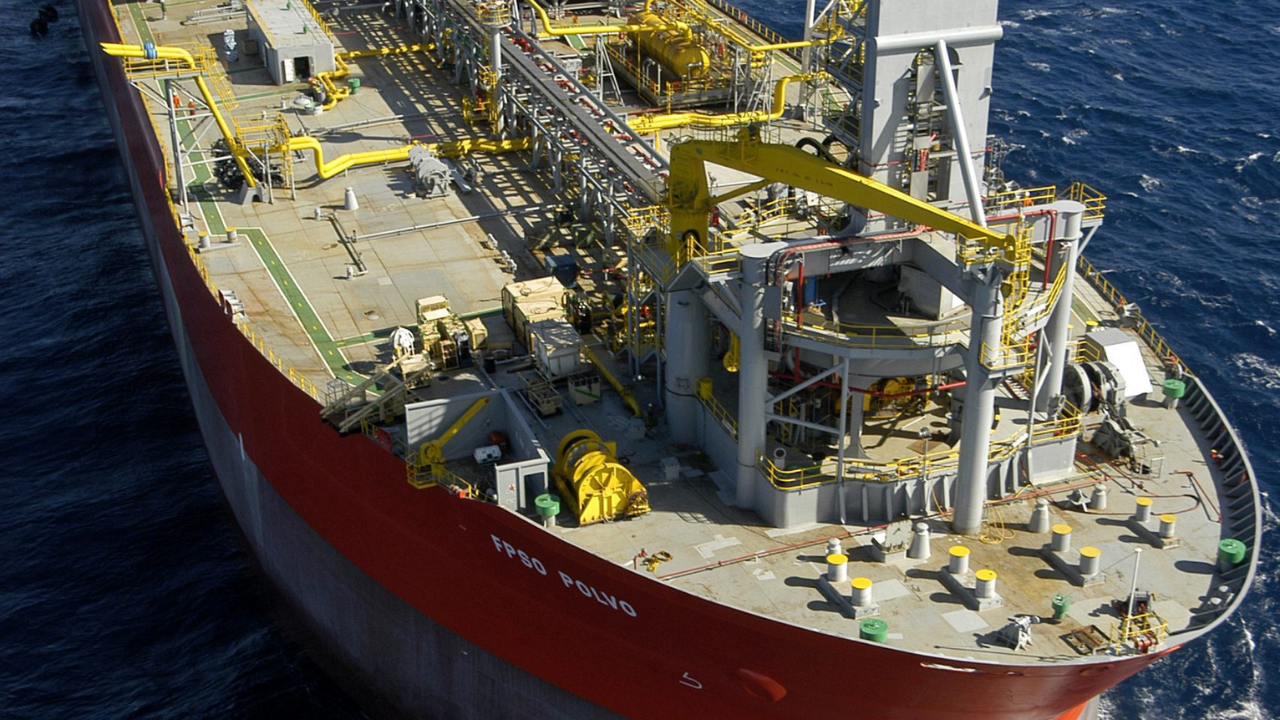
• BW Offshore has reached a settlement with PRIO over the long-standing dispute involving the FPSO Polvo, ongoing since 2021. The Norwegian Owner is due to receive around USD 36 million.