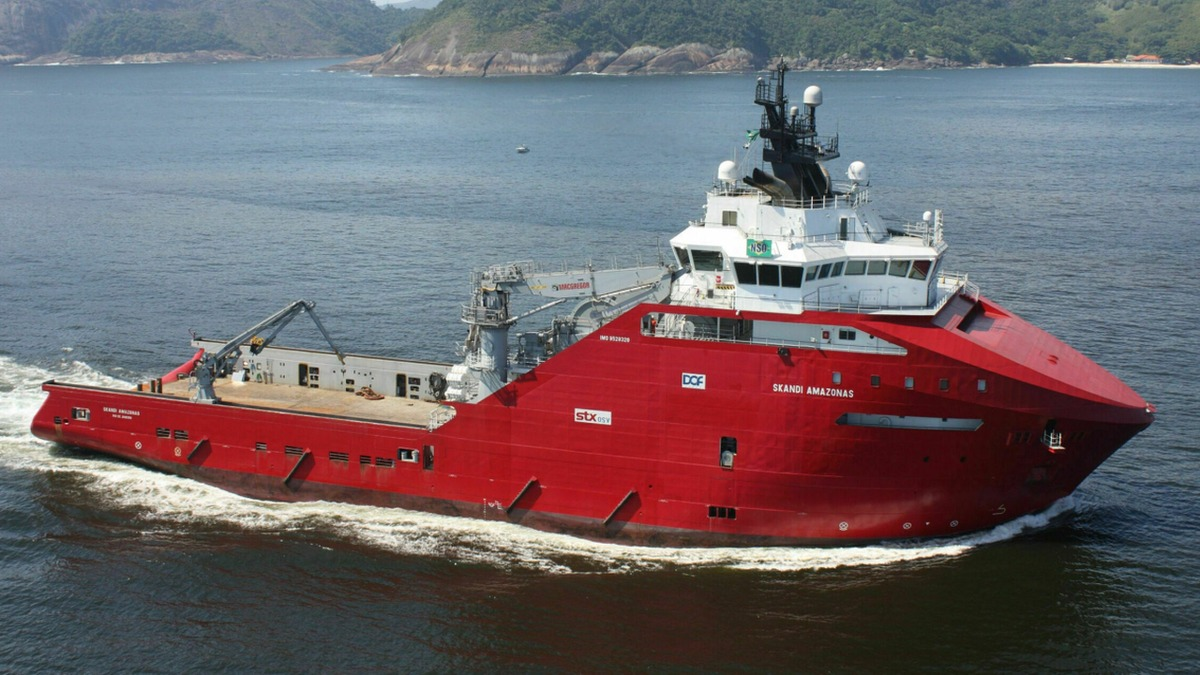
DOF has provided a market update on the two most significant incidents involving its fleet in recent months, confirming the constructive total loss of the AHTS Skandi Amazonas while also outlining the latest developments regarding the electrical incident aboard Skandi Logger.
Regarding Skandi Amazonas, the company confirmed it has declared the vessel a Constructive Total Loss (CTL) following the grounding that occurred on 15 May 2026 off Macaé, Brazil. The incident damaged the hull, allowing water to enter the vessel.
Following an extensive technical assessment, DOF concluded that the estimated cost of rebuilding the vessel exceeds its insured hull and machinery value. As a result, the company will receive a USD 115 million Hull & Machinery insurance payout, bringing market speculation over the vessel’s future to an end.
DOF also provided an update on Skandi Logger, confirming that, during the early hours of Wednesday (22), the vessel experienced an electrical fault resulting in a short circuit, with no open flame, in its main switchboard while operating alongside Petrobras’ P-37 platform in the Marlim Field, Campos Basin.
According to the company, the response was immediate, with support provided to the onboard crew and preparations initiated to release the vessel from the field so that the necessary repairs can be carried out. DOF stated that there were no injuries or environmental impacts. The vessel remains under control while the company continues to monitor the situation and implement the necessary measures to ensure the safety of personnel, the environment and ongoing operations.
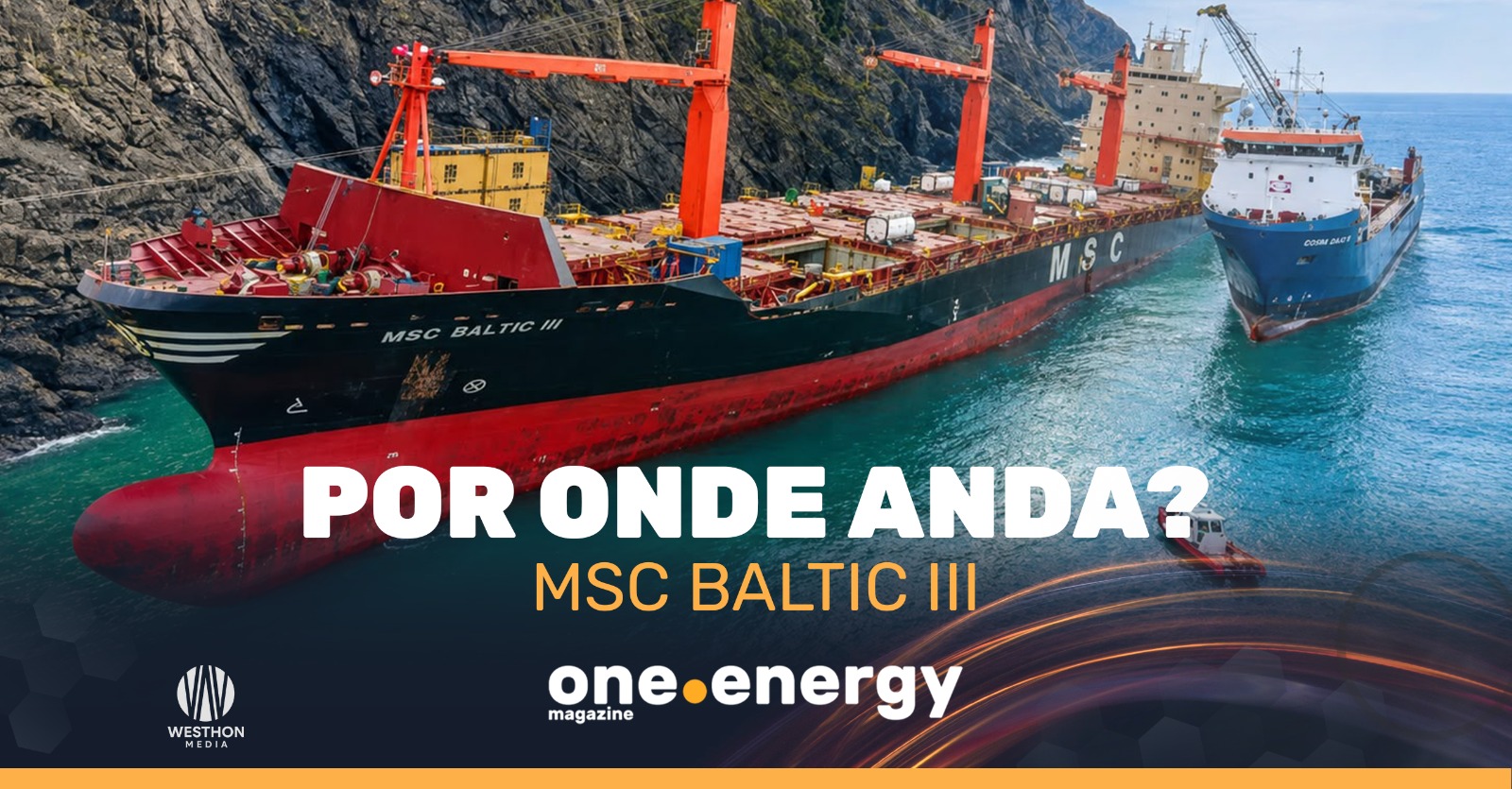
The MSC Baltic III was sailing off the west coast of Newfoundland, Canada, when it reported a loss of power near the entrance to Bay of Islands. Sea and weather conditions were adverse. Unable to secure an anchor, the containership eventually ran aground in the Wild Cove/Cedar Cove area, near Lark Harbour.
There were 20 crew members on board. All were safely airlifted from the vessel.
From that moment, the MSC Baltic III was no longer just another containership in commercial operation. It became one of the most closely monitored maritime cases in Canada.
More than a year later, the vessel is no longer being treated as a simple refloating case. The operation has moved into the wreck removal phase, with deconstruction work being carried out on site, land access being developed, and materials gradually removed from the vessel.
The initial response focused on crew safety, environmental protection, hull assessment, fuel removal and cargo removal. From the early inspections, the situation already pointed to a sensitive operation. There were reports of water ingress in some compartments, signs of structural deformation and a significant portion of the hull resting on the seabed.
As the months passed, the vessel’s condition became the main technical factor in the operation. Updates from the Canadian Coast Guard indicated hull damage, cracks, deformation, access limitations and repeated restrictions caused by sea state, wind, ice and severe weather.
By late February 2025, the Canadian authority indicated that, given the vessel’s condition at that stage, it could not be safely refloated. From then on, the discussion was no longer only about pulling power, buoyancy and emergency response. The case began to involve structural integrity, environmental risk, access logistics and the real feasibility of safe removal.
In 2026, the operation entered a new phase. Resolve Marine was retained as the contractor for the wreck removal stage. By June, the work had already progressed into the deconstruction phase, with increased operational presence on site, improvements to land access to Cedar Cove, construction of an access road down to the beach area and removal of materials from the vessel.
Built in 2003, the MSC Baltic III is a containership of significant size for this type of coastal operation. The vessel is approximately 207 meters long, about 30 meters wide and has a capacity close to 2,500 TEU. These figures help put the challenge into perspective: this is not a small vessel, but a large commercial ship grounded in an exposed area with limited operational access.
This is where the Canadian case becomes relevant to the maritime and offshore markets.
Without drawing a direct comparison, the MSC Baltic III offers a useful reference for situations such as the Skandi Amazonas in Brazil. In grounding cases, time is a technical factor. The longer a hull remains exposed, the greater the influence of sea conditions, weather, structural condition, access, environmental risk and removal feasibility.
Refloating, in these cases, does not depend only on pulling power. It depends on hull integrity, watertight condition, pollution control, weather windows, available logistics and the ability to move the vessel without turning the operation into a greater risk.
A vessel that deserves more respect than speculation
Some vessels become known because they disappear from the radar, change names, lose purpose, or end up as footnotes in the offshore market.
Skandi Amazonas is the opposite.
This is not a story about a forgotten vessel. It is a story about one of the most remarkable offshore support vessels ever built in Brazil — and about a crew that, when faced with a real emergency, did exactly what highly trained seafarers are expected to do.
I have a personal connection with this vessel.
I was there when Skandi Amazonas was built, at the shipyard then known as STX Brazil, on Ilha da Conceição, in Niterói. I worked in the Supply Chain department and was directly involved in procurement, inspections, equipment deliveries, and the complex chain of systems and materials that gradually transformed steel plates into one of the most powerful AHTS vessels ever delivered by a Brazilian yard.
I saw the vessel take shape from the beginning: steel cutting, block assembly, launch, outfitting, commissioning, sea trials, and delivery to DOF Navegação in 2010.
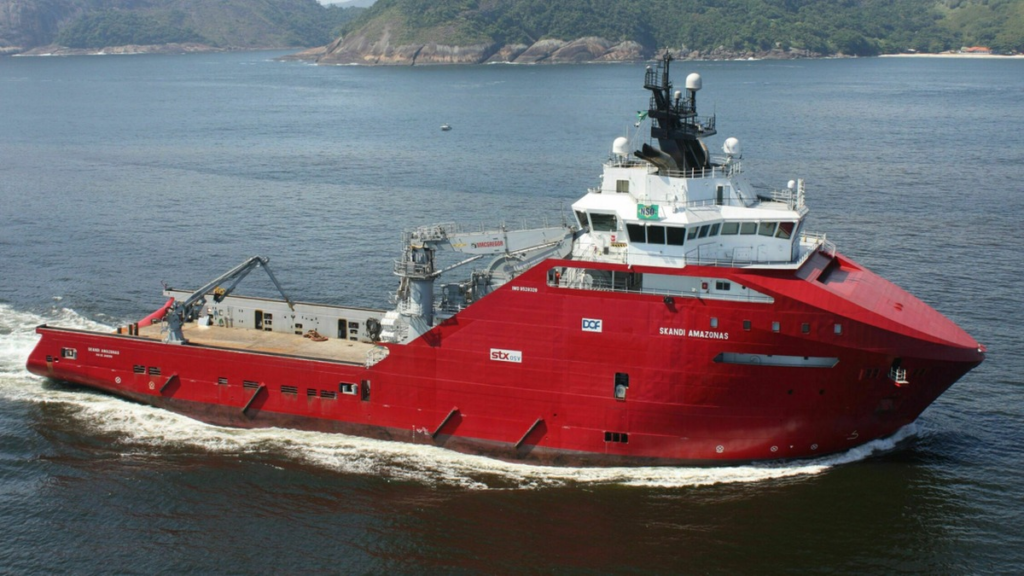
At the time, Skandi Amazonas was a Brazilian shipbuilding milestone. At 95 meters in length, with 300 tons of continuous bollard pull, hybrid diesel-mechanical-electric propulsion, DNV class, and a design developed by STX Norway Design, she was not an ordinary vessel. During trials, she exceeded her own specifications, reaching a maximum bollard pull of 343 tons.
More importantly, she then went to work.
For more than fifteen years, Skandi Amazonas operated in Brazil doing exactly what she was built to do. Quietly, consistently, and under some of the most demanding offshore conditions in the world. In plain language: she became a battle horse.
Then came the incident near Macaé.
The vessel reportedly struck a rocky formation near the Santana Archipelago while approaching the anchorage area. The hull was damaged, water ingress followed, and the situation required immediate decision-making.
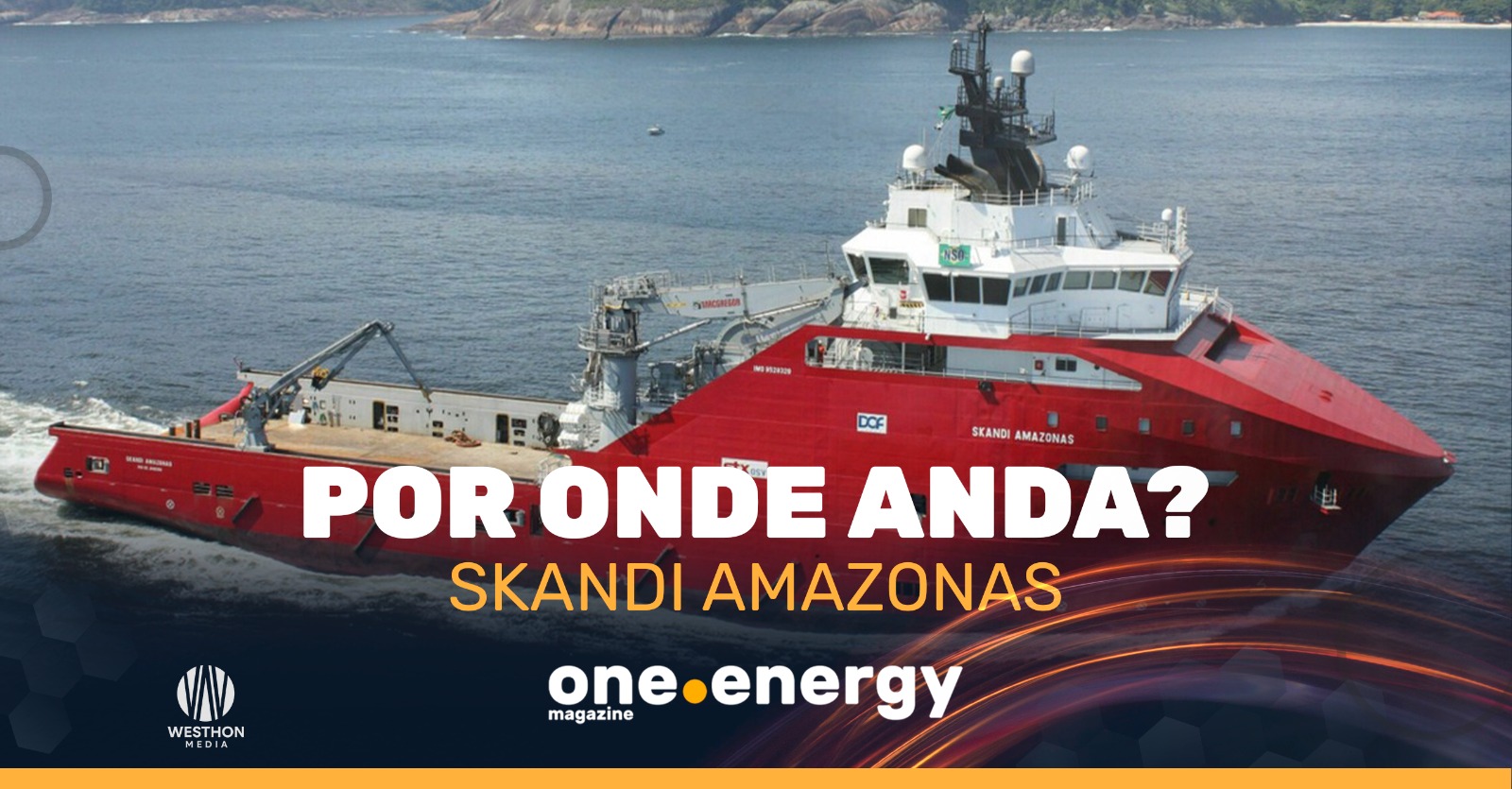
Skandi Amazonas (Source: DOF)
That is where the tone of the story should change.
What some people rushed to describe as failure may, in fact, become a case study in emergency response.
The master diverted the vessel to a safer position and executed a controlled grounding maneuver to prevent a worse outcome. Non-essential personnel were evacuated. Essential crew remained on board. There were no reported injuries. No pollution was recorded. The vessel remained under control.
This is not luck. This is training.
And it is precisely here that the public narrative around the incident became unfair.
In the days that followed, social media did what social media usually does: it converted a complex maritime event into simplified outrage. Some used the episode to speak about royalties. Others used it to attack offshore activity. Some tried to turn it into a labor issue. Others treated the image of a grounded vessel as proof of systemic negligence.
That is not serious analysis.
Offshore operations are not risk-free. They never were. Ships are not supposed to hit rocks, just as aircraft are not supposed to encounter runway excursions and cars are not supposed to crash. Yet incidents happen in every serious industry involving machines, weather, human judgment, geography, and operational pressure.
The question is not whether an incident occurred.
The question is what happened after it occurred.
And in this case, what happened after the incident was exactly what should happen: command decision, emergency procedure, evacuation of non-essential personnel, preservation of life, environmental control, technical assessment, and mobilization of support resources.
That is the part many people chose not to see.
The causes still need to be investigated. Was there an issue with charted seabed information? Did tide conditions play a role? Was the vessel returning through the same safe track previously used? Was there a navigational error, a distraction, or a combination of factors? These questions belong to the formal investigation — not to social media tribunals.
Until then, speculation is not expertise.
There is also an important point about DOF.
Anyone who knows the offshore market knows that DOF is not a casual operator. It is one of the most respected names in the sector, with high standards on board, strong safety culture, and a long track record in complex subsea and offshore operations. To use this incident as a shortcut to attack the company, the crew, or the profession says more about the critics than about the facts.
Working offshore is demanding. It requires discipline, competence, and resilience. But it is also a profession supported by rules, training, classification standards, audits, emergency procedures, and a level of operational structure that many land-based activities simply do not have.
Let us be honest: is the controlled evacuation of a well-managed offshore vessel, with trained personnel, support craft, emergency protocols, and no pollution, necessarily more dangerous than a truck driver crossing the Rio–São Paulo Dutra at night? More dangerous than driving through Linha Vermelha? More dangerous than the daily risks people accept without reflection on Brazilian roads?
Risk exists everywhere. The difference is that offshore, risk is managed professionally.
The sea can be dangerous. So can a highway. So can a construction site. So can, frankly, a bathroom shower on the wrong day. The presence of risk does not make an activity reckless. It makes competence essential.
And competence was visible here.
Skandi Amazonas hit a rock. That should not have happened. But once it did, the response protected lives, prevented pollution, and preserved the vessel for recovery and repair.
That matters.
This vessel was proudly built in Brazil. It was a complex project, extremely well executed, and it has served the Brazilian offshore industry for more than a decade and a half. It deserves better than lazy conclusions.
Skandi Amazonas will be assessed, repaired, and returned to service if technically viable. As it should be.