But when the vessel was finally delivered in 2017, the offshore market was already a very different one, and her identity was also about to change.
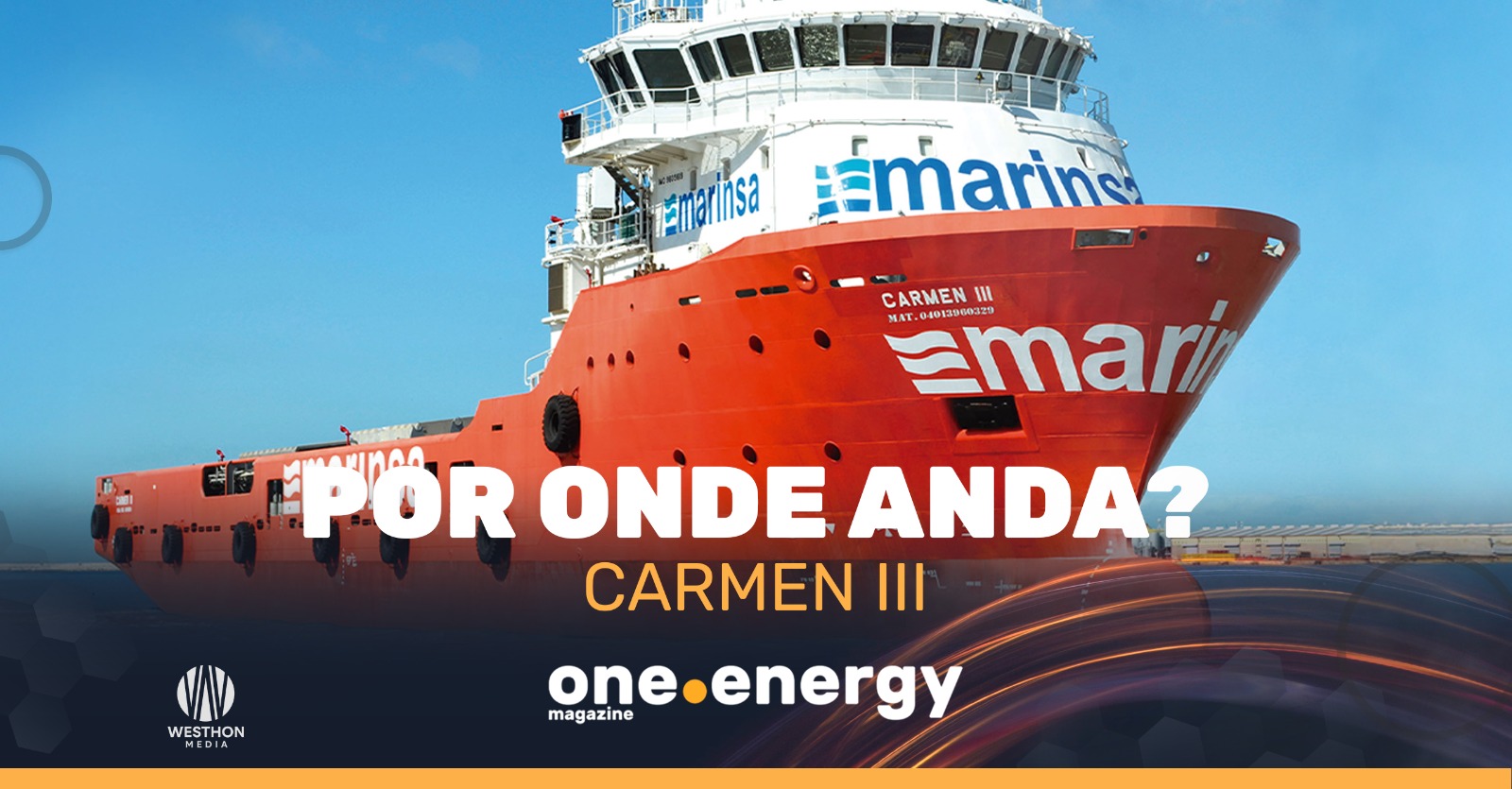
Carmen III began as hull NT8002, part of a four-vessel PSV programme ordered by Tidewater from Drydocks World in 2010.
The series was expected to begin delivery in 2012, but the vessel was not completed until April 2017. By then, offshore activity had contracted, vessel oversupply was pressuring day rates and Tidewater was approaching a financial restructuring under Chapter 11.
The origin of the name Princess Ihuaku is not explained in the public records reviewed. Ihuaku is an Igbo given name commonly translated as “the face of wealth”.
Completed by DDW-PaxOcean, the PSV measured approximately 81.3 metres in length, 16 metres in beam and around 3,200 tonnes of deadweight. She was equipped with DP2 capability, diesel-electric propulsion and approximately 670 square metres of usable deck area.
In the same year, the vessel was acquired by Marinsa, part of Grupo CEMZA. Renamed Carmen, she was placed under the Mexican flag in December 2017 and later became Carmen III.
The vessel found a new role in the Mexican offshore market. But years later, Brazil would present a different challenge.
A difficult entry into Brazil
Marinsa mobilised Carmen III to Brazil for a Petrobras PSV 3000 charter, working locally with Internav.
The vessel reached the Rio de Janeiro area in 2025, but the proposed foreign-flag charter faced blocking requests from Brazilian tonnage during the regulatory circularisation process.
Wilson Sons offered two Brazilian-flagged PSVs: Mandrião and Atobá. ANTAQ ultimately declared the Mandrião blocking firm, while rejecting the Atobá blocking because the vessel did not meet Petrobras’ technical and operational requirements.
The confirmed Mandrião blocking was enough to prevent the foreign-vessel charter from progressing. According to market information reviewed by WSB, the issue could not be resolved, the charter was cancelled and Carmen III returned to Mexico.
Today, under the name Carmen III, the vessel remains officially listed by Marinsa as part of its specialised fleet. She has returned to the Gulf of Mexico, flying the Mexican flag and classified as a DP2 PSV, IMO 9605619.
Carmen III was designed for Tidewater, found a market in Mexico and, years later, discovered that reaching Brazil did not necessarily mean being able to operate.
The episode may not have been Marinsa’s only challenge in Brazil.
Coming next in Por Onde Anda? Lagunero, another vessel from the group with its own difficult chapter in the country.
Discipline Meets Opportunity Tidewater’s move in Brazil and what it reveals about the offshore cycle
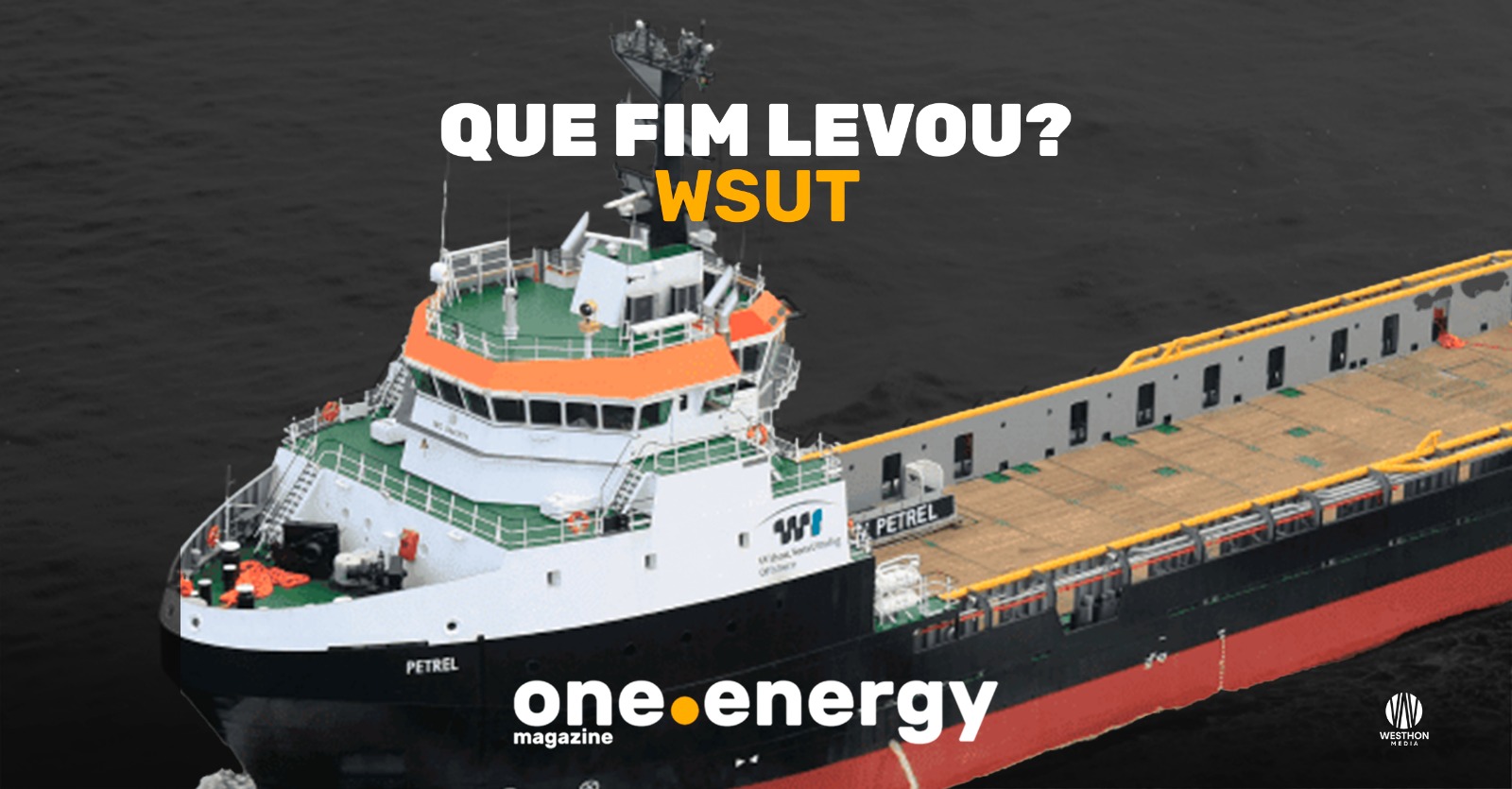
Brazil’s offshore sector has entered a new phase of consolidation. Within days of OceanPact and CBO announcing their combination, Tidewater moved to acquire Wilson Sons Ultratug Offshore (WSUT), a transaction valued at approximately $500 million including debt. The proximity of these announcements is unlikely to be coincidental. Rather, it signals that Brazil has once again become a focal point for offshore capital allocation.
At first glance, the transaction is straightforward. Tidewater is acquiring a fleet of 22 platform supply vessels, the vast majority already operating in Brazilian waters, and in doing so expands its local footprint from a marginal position to a meaningful presence. Yet, as is often the case in offshore shipping, the strategic importance of the deal lies less in the number of vessels than in the economic philosophy behind it.
Tidewater has spent the past several years rebuilding its position through a disciplined and consistent approach to capital allocation. The acquisition of WSUT follows the same pattern established in earlier transactions, including the purchase of PSVs from Solstad, where the company expanded its fleet selectively while preserving balance sheet strength. Even after the WSUT transaction, Tidewater expects to maintain net leverage below 1x, a level that stands out in a sector historically prone to overextension.
The economics of the acquisition appear aligned with that discipline. The WSUT fleet is already integrated into the Petrobras offshore logistics system, providing immediate utilization and revenue visibility. Tidewater has indicated that the business could generate approximately $220 million in annual revenue with margins approaching the high-50% range, figures that fit comfortably within its operating model. Unlike more complex offshore service platforms, Tidewater’s value proposition remains rooted in a relatively simple equation: vessel availability, utilization and day rates.
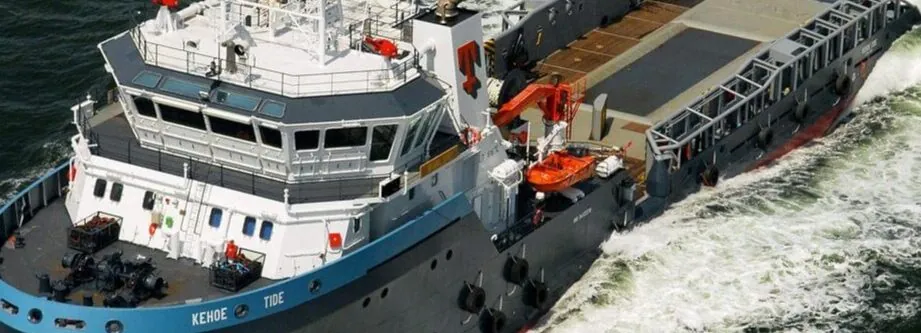
Source: Tidewater
The equity market’s reaction reflects this familiarity. Rather than a sharp repricing, Tidewater’s shares have responded with measured confidence, consistent with investor expectations that the company will continue to expand without abandoning its core principles. In a sector where capital discipline has often been elusive, predictability itself has become a source of value.
The contrast with recent developments in Brazil is notable. While local consolidation has produced larger and more diversified platforms, Tidewater’s entry reinforces a different interpretation of the market. The company is not pursuing integration into subsea or environmental services, nor is it attempting to build a broader offshore services ecosystem. Instead, it is doubling down on what the Brazilian market continues to demand most consistently: reliable offshore tonnage.
That demand profile remains strikingly traditional. Despite years of discussion around integrated service models, Petrobras’ contracting strategy has in several areas moved back toward more conventional structures. Activities once envisioned as bundled service packages have increasingly returned to EPCI contractors or internal capabilities, while day-to-day offshore logistics continues to rely on familiar vessel classes — PSVs, AHTS units and other support vessels that form the backbone of offshore operations.
Tidewater’s strategy aligns closely with that reality. Its fleet, further strengthened by the earlier acquisition of Solstad vessels, is now increasingly positioned toward contracts with international oil companies, providing geographic diversification beyond Brazil. The addition of WSUT enhances its presence in Petrobras’ ecosystem without creating dependence on it, allowing Tidewater to balance exposure between national and international operators.
One of the more telling aspects of Tidewater’s model lies in what happens after acquisition. The company has consistently demonstrated a willingness to dispose of or retire vessels once their economic usefulness declines. This discipline suggests that not all of the vessels acquired through WSUT are intended to remain in the fleet indefinitely. As Petrobras contracts expire, Tidewater will likely evaluate each unit based on expected cash generation relative to maintenance and upgrade costs. Where that equation no longer holds, vessels may simply exit the fleet.
Such an approach reflects a broader principle that has guided Tidewater’s resurgence. Growth is not pursued for its own sake; it is pursued where it can be supported by cash flow. In an industry where aging fleets and deferred maintenance have historically eroded value, this willingness to rationalize assets can be as important as the acquisitions themselves.
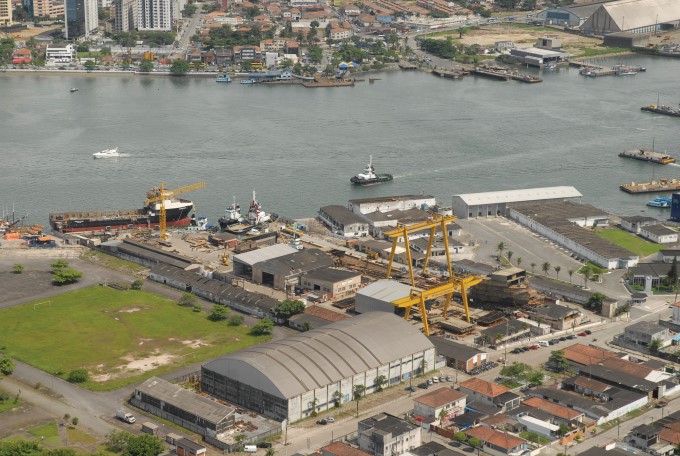
Wilson Sons shipyard (Source: Courtesy)
The timing of the WSUT transaction also offers a broader signal. Coming immediately after a major local consolidation, it demonstrates that Brazil is once again attracting both domestic and international capital. Yet it also highlights that not all capital is being deployed in the same way. Where some players are building integrated platforms, others are reinforcing core fleet positions.
The offshore sector has long oscillated between these two models. Periods of expansion often encourage diversification and operational complexity, while subsequent cycles tend to reward simplicity and financial discipline. Tidewater’s latest move suggests that, at least for now, the latter approach retains strong appeal.
In that sense, the acquisition of WSUT is less about entering Brazil and more about reaffirming a strategy. It reflects a view that, even as the offshore market evolves, its economic fundamentals remain unchanged. Vessels still require capital. Contracts still determine value. And in the end, the companies that succeed are those that manage to convert operational scale into cash without allowing capital intensity to outrun returns.
WSB Offshore Intelligence
A detailed fleet, valuation and contract exposure analysis of the WSUT acquisition — including age profile, Petrobras vs IOC exposure and replacement CAPEX implications — is available to WSB subscribers.
In this edition of One Energy Magazine, you’ll find an exclusive interview with José Eduardo Leal Senior Sales Manager at Kongsberg Maritime, focused on technology and artificial intelligence in the maritime sector.
This issue also features:
An in-depth look at Belov Arembepe
WSB Advisors Norway
Staff announcement
Por onde anda?
Camorim behind the largest light and fireworks show on Earth
Tidewater acquires Wilson Sons, plus more market updates
Perspectives from Fernando Vilela, Alexandre Vilela, Luiz Fernando Priolli and Romulo Bacchiega
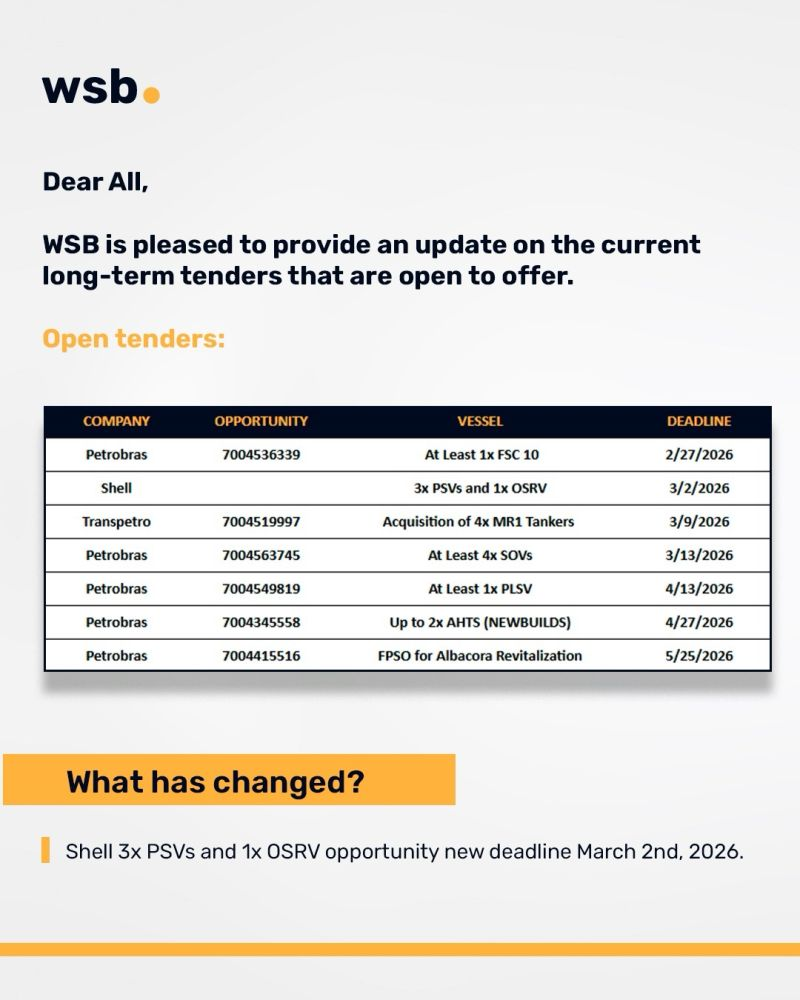
• Shell — 3x PSVs and 1x OSRV opportunity, new deadline March 2nd, 2026
What else is happening?
• Tidewater Inc. announced the acquisition of 100% of Wilson Sons Ultratug Offshore Participações S.A. and Atlantic Offshore Services S.A. in a transaction valued at approximately USD 500 million, reflecting continued consolidation dynamics in Brazil’s PSV segment.
PS: This will not be the last M&A movement in the marine & offshore market in 2026.