Blog

  • Petrobras, Exxon Mobil, and TechnipFMC Raise Concerns to CADE

    Petrobras, Exxon Mobil, and TechnipFMC Raise Concerns to CADE

    The proposed merger between Italy’s Saipem and Norway’s Subsea 7, aimed at creating a new entity in the subsea services sector, is currently under review by Brazil’s Administrative Council for Economic Defense (CADE). Major oil and gas industry players, including Petrobras, Exxon Mobil, and TechnipFMC, have formally submitted documents expressing their concerns regarding the operation.

    According to the Petition from Petróleo Brasileiro S.A. – Petrobras, filed with CADE on September 18, 2025, under process AC No. 08700.008758/2025-77, the Brazilian state-owned company articulates competitive concerns regarding the merger. Petrobras asserts its legitimacy to intervene as an interested third party in the markets for SURF (Subsea Umbilicals, Risers and Flowlines) services in the form of subsea EPCI contracts and the chartering of PLSV (Pipe Laying Support Vessel) vessels. The document indicates that 10 out of the 21 PLV (Pipe Laying Vessels) mapped for Petrobras’s Subsea EPCI services belong to SAIPEM or SUBSEA7, accounting for 47% of the total. Furthermore, out of the 8 active subsea EPCI contracts where Petrobras is the operator, 6 (Mero 3, Mero 4, Búzios 7, Búzios 8, Búzios 9, and Búzios 11) are executed by SAIPEM or SUBSEA7, representing 75% of the portfolio. In the PLSV vessel chartering market, SAIPEM and SUBSEA7 collectively own 11 out of 34 vessels capable of operating in their E&P projects, which constitutes 32%. The submission’s quantitative data, consistent with insights from WSB Advisors and WSB-One.com, points to anticipated price increases in the SURF segments.

    The Petition from Technip Brasil – Engenharia, Instalações e Apoio Marítimo Ltda. (TechnipFMC), filed with CADE on September 18, 2025, within the same process, also sought qualification as an interested third party. Technip Brasil, a competitor to the Applicants, argues that the operation could lead to a reduction in competition, particularly in the SURF and IRMD (Inspection, Repair, Maintenance, and Decommissioning) markets in offshore fields. The document proposes a relevant market definition that differentiates the availability and specialization of vessels for installing rigid and flexible pipes in SURF EPCI projects for Petrobras and for private companies (IOCs and Independent Operators). TechnipFMC highlights that the Combined Entity would control 11 of the 20 vessels available for EPCI projects, representing over 50% of the capacity, and expresses concern regarding the long-term PLSV vessel chartering market for Petrobras.

    The Petition from ExxonMobil Exploração Brasil Ltda., filed with CADE on September 18, 2025, also under AC No. 08700.008758/2025-77, outlines concerns about a reduction in competition within the deep-water rigid pipe installation market. ExxonMobil argues that the market definition presented by the Applicants in the concentration act notification is too broad and does not accurately reflect the realities of deep-water operations. The document details that the Combined Entity would control a significant share of the global fleet of deep-water pipe installation vessels, with specific participation for methods such as J-lay, Reel-lay, and S-lay. The petition emphasizes that vessels with differing capabilities are not substitutable, and the high utilization rates of deep-water installation vessels (nearing 100% in 2025, excluding maintenance time) indicate a structurally constrained capacity and high entry barriers.

    This is not the first instance of Subsea 7 being subject to CADE’s scrutiny in a concentration act. In 2012, the agency approved Concentration Act No. 08700.005165/2012-32, concerning Subsea 7 Inc.’s acquisition of control over the Acergy Group. This precedent underscores CADE’s ongoing role in reviewing consolidation activities within the subsea services sector.

    In a related but distinct market development, the market observed movements concerning the sale of assets involving DOF and Maersk Supply Service. Globally, on November 1, 2024, DOF Group completed the acquisition of Maersk Supply Service A/S. However, Maersk Offshore Wind and Maersk Supply Service’s operations in Brazil were specifically excluded from this global transaction. Consequently, no CADE review was required.

  • Ibama approves assesment for Equatorial Margin

    Ibama approves assesment for Equatorial Margin

    Petrobras announced on Wednesday night (September 24) that Brazil’s environmental regulator Ibama approved its Pre-Operational Assessment (APO) for exploration in the Equatorial Margin, located in the country’s Northeast. The APO served as a simulation designed to rigorously test Petrobras’ operational capacity while ensuring environmental safeguards.

    The approval clears the path for Ibama to soon grant a full exploration license, signaling a potential resolution to years of disputes between the state-controlled company and environmental advocacy groups. However, Ibama conditioned its decision on Petrobras incorporating further adjustments to its wildlife protection plan, expected to be implemented this week, in order to strengthen its response framework and align fully with regional ecological requirements.

    In an official statement, Ibama emphasized the robustness of Petrobras’ operational structure and acknowledged the unprecedented nature of the activity, which involved significant logistical challenges, large-scale mobilization of resources and broad analytical scope. The APO was conducted in late August using the drillship NS-42, operated by Foresea, on a well within Block FZA-M-59 off the coast of Amapá.

    The Equatorial Margin has been identified as Brazil’s main exploratory frontier, with the potential to generate thousands of jobs, strengthen national energy supply and reduce import dependence. Additional insights on the region, its characteristics and its implications for Brazil’s energy landscape are detailed in the 12th edition of One. Energy, Westhon’s specialized magazine, featuring analysis from Anídio Corrêa, R&D Environment Projects Lead at WSB Advisors.

    Stay informed on key offshore developments — visit wsb-one.com, our data platform trusted by leading offshore companies.

  • Brazilian industry sees strategic movements amidst market shifts

    Brazilian industry sees strategic movements amidst market shifts

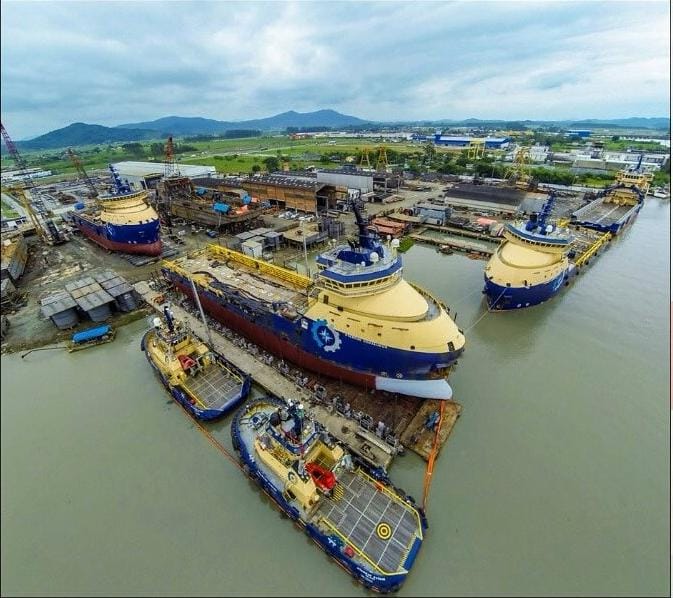
    Following the discussion on Starnav’s significant fleet expansion and ongoing naval construction, the broader Brazilian naval industry continues to demonstrate strategic activity. Starnav’s proactive construction of two PSVs, initiated based on market speculation, showcased an anticipation of fleet aging trends and emerging demand within the Brazilian Offshore Support Vessel (OSV) segment. Concurrently, the state of Santa Catarina has been a focal point for additional industry movements.

    The BNDES has initiated a public selection process for a partner to conduct a technical study on the naval industry, backed by a budget of up to R$8 million. The study’s objective is to formulate policy proposals for the sector, with a focus on aligning with decarbonization goals and the energy transition. This analysis will incorporate national and international experiences, addressing productive, geopolitical, environmental considerations and establish an updated industry database.

    Transpetro has confirmed its support for this initiative. Furthermore, Transpetro recently concluded the proposal submission phase for the construction of eight new gas carriers under its TP-25 program. The tender’s structure included provisions for local content bonuses for Brazilian shipyards and penalties for foreign proposals, directly influencing the equalized results currently under evaluation.

    Stay informed on key offshore developments — visit wsb-one.com, our data platform trusted by leading offshore companies.

  • Starnav expands fleet

    Starnav expands fleet

    The BNDES (Brazilian National Development Bank) has announced a R$2.5 billion financing package for Starnav. This capital injection is designated for the construction of eight new offshore vessels, specifically four PSVs and four OSRVs, at Starnav’s Detroit Brasil shipyard in Itajaí, Santa Catarina.

    Funds are sourced from the Merchant Marine Fund (FMM). These vessels are secured by 12-year charter contracts with Petrobras, providing direct operational mandates. Deliveries are scheduled over 1,820 days, extending until 2030, and the BNDES financing covers approximately 70% of Starnav’s projected total investment of R$2.9 billion.

    WSB Advisors highlights that these four new PSVs will join two other PSVs already in varying stages of construction, one nearing completion and another in initial stages, which were part of an open bid by Petrobras last year.

    With these additions, WSB-One.com reports that Starnav’s fleet will expand significantly. The total of 10 new vessels – comprising four OSRVs, two PSVs currently under construction and four PSVs yet to be built – will increase the fleet by nearly 50%, raising the total from 18 to 28 units. Currently, the shipowner operates 130,981 DWT. In regulatory terms, the company shows 19,422 tons of availability under ANTAQ rules. The available pool today covers 17 national PSVs and one REB-flagged unit.

  • Transpetro Gas Carrier – Prelimiary Results

    Transpetro Gas Carrier – Prelimiary Results

    On September 22, 2025, Transpetro closed the bid opening for eight new gas carriers under the TP-25 program. The tender rules included a local content bonus for Brazilian shipyards and a penalty for foreign proposals, which shaped the equalized results now under review.

    In Lot A (three vessels of 10,000 GT), KIT L.L.C emerged in first place with a proposal of USD 125 million for the trio, equalized at USD 169.6 million. The company’s unit price is nearly 30% below those of traditional Asian yards Zhouzang and Dalian, which followed in second and third place. The only other Brazilian contender, VARD, submitted a bid but was outpriced by a wide margin.

    In Lot B (five vessels incl 14,000 GT), the local builder Ecovix– already awarded four Handy-size tankers earlier this year – took the lead with a USD 415 million proposal, equalized at USD 267.9 million. The outcome was extremely close, with Ecovix edging out three international competitors by a narrow margin in what appears to be a tight draw.

    The evaluation process will now define the allocation of contracts.

    More info to be shortly given by WSB – stay tuned.

  • A Brazilian giant spotted in Angra dos Reis

    A Brazilian giant spotted in Angra dos Reis

    By Alexandre Vilela

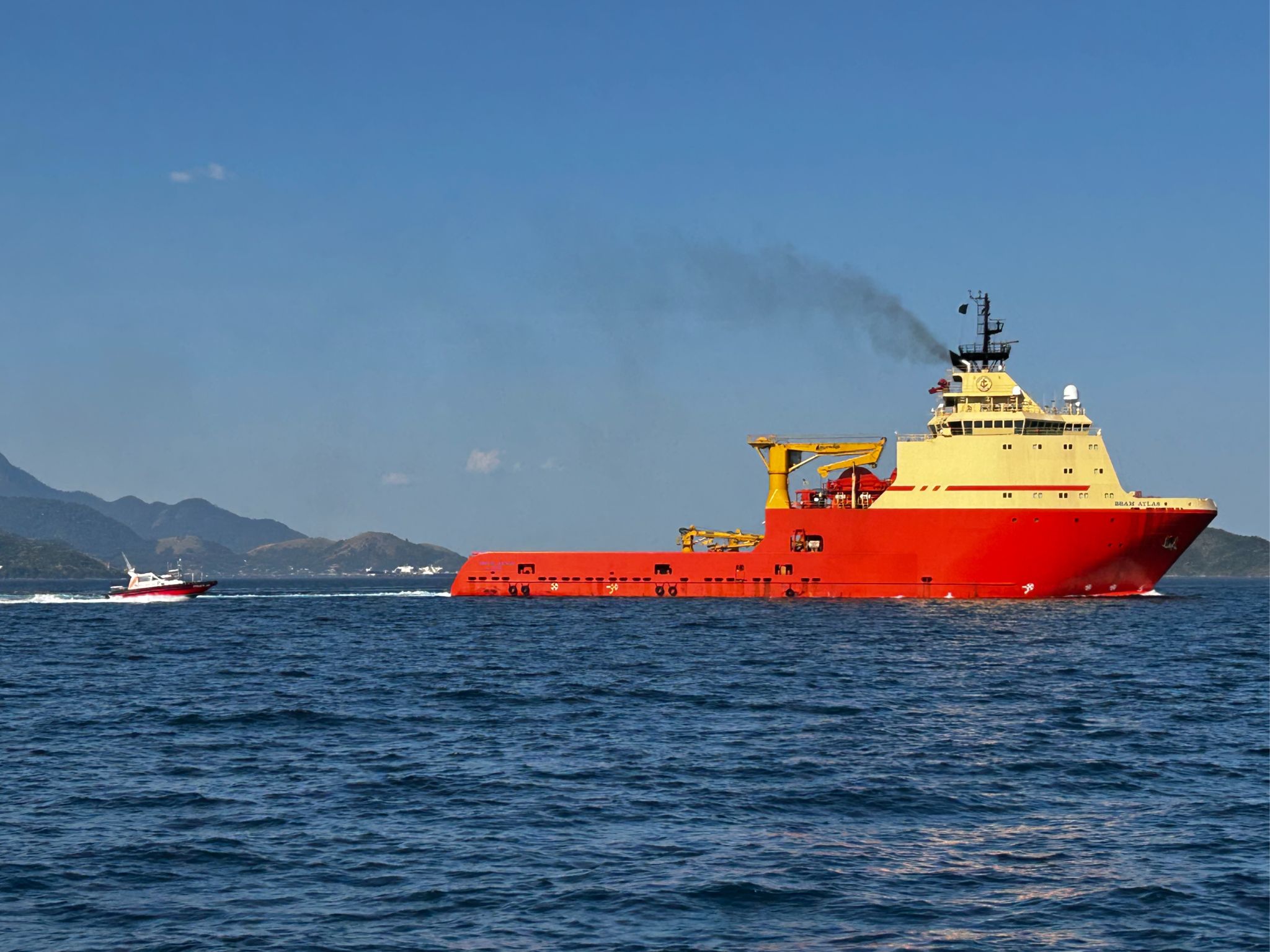
    September 21 – From onboard WSB’s The Becrux, I had the privilege of capturing the AHTS Bram Offshore Bram Atlas as she departed Angra, heading toward Macaé on a brilliant day to close the Winter season.

    Crossing paths with a Chouest vessel is always a special moment — my salute to the Bram Atlas crew and to our friends at Edison Chouest Offshore.

    Built at Estaleiro Navship in Itajai, the Bram Atlas is a prime showcase of Brazilian shipbuilding: powerful, reliable, and built with excellence. Encounters like this remind us of the importance of keeping our industry strong and competitive.

    Discover more about this vessel at wsb-one.com

  • New operation at Roncador field

    New operation at Roncador field

    The drillship Tidal Action has started operations this week in the Roncador field, Campos Basin, under charter with Petrobras. The project was developed in partnership with Hanwha Drilling, which supported the mobilization and acceptance process of the unit.

    As part of the operation’s logistics, WSB Advisors participated in the charter of the PSV Singrar, operated by Bravante, which engaged in fuel supply duties with the Tidal Action during its mobilization.

    Tidal Action is a 7th generation drillship, capable of operating in water depths of up to 3,600 meters and equipped for ultra-deepwater drilling challenges.

    Stay informed on key offshore developments — visit wsb-one.com and our data platform trusted by leading offshore companies.

  • Petrobras Launches First CCS Pilot

    Petrobras Launches First CCS Pilot

    Petrobras has approved the construction of the São Tomé CCS Pilot Project in Macaé (RJ), Brazil’s first integrated carbon capture and storage (CCS) initiative. The project will test technologies to capture, transport and inject up to 100,000 tons of CO₂ annually into a deep saline reservoir over three years starting in 2028, under close monitoring by ANP and INEA.

    By combining offshore expertise with decarbonization strategies, Petrobras aims to validate methodologies that could pave the way for large-scale CCS hubs in the country. The project will also allow regulators to refine and establish procedures for future commercial applications.

    Stay informed on key offshore developments — visit wsb-one.com, our data platform trusted by leading offshore companies.

  • Baker Hughes expands deal with Petrobras

    Baker Hughes expands deal with Petrobras

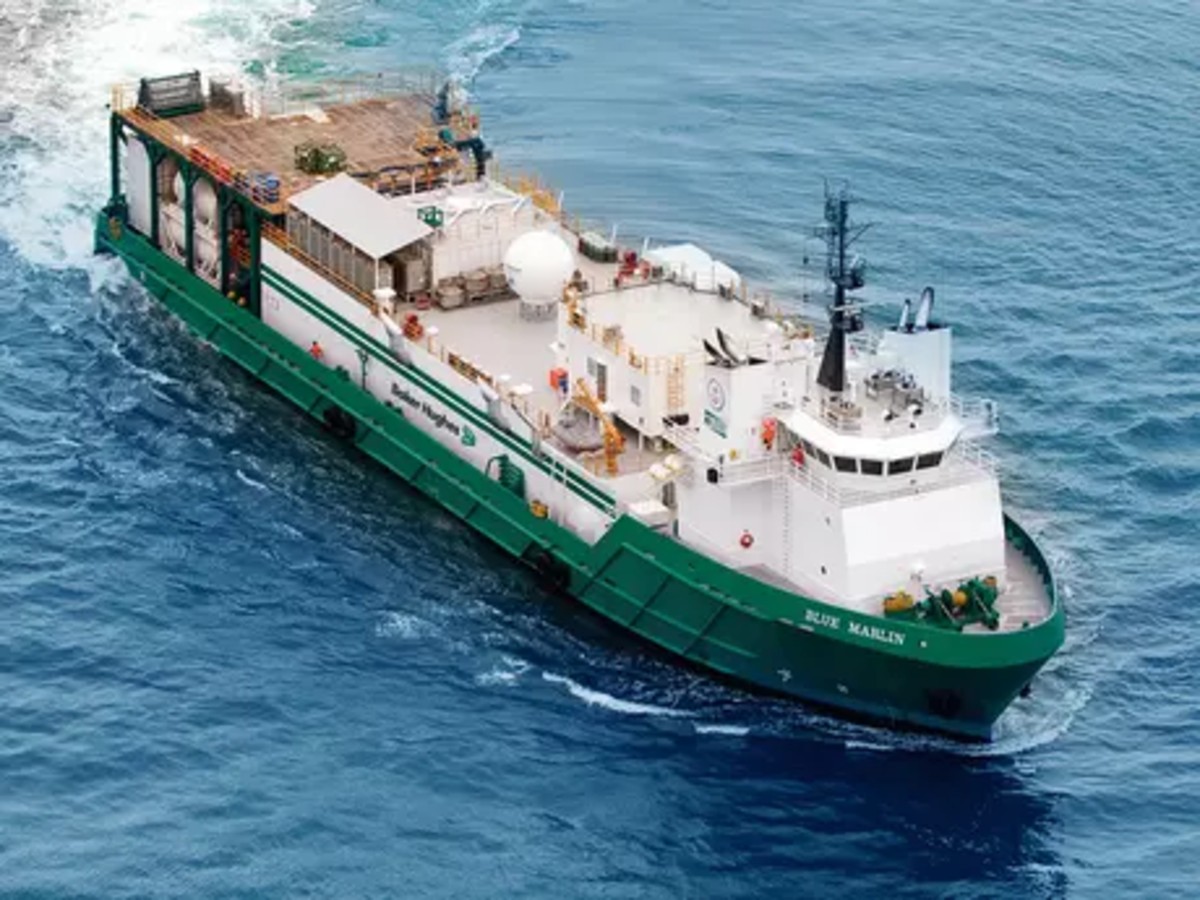
    Baker Hughes has signed a multi-year agreement with Petrobras to expand the use of the stimulation vessels Blue Marlin and Blue Orca in Brazil’s offshore oil and gas production. The contract also covers chemical supply and technical services, with the vessels set to enhance well stimulation in both pre-salt and post-salt fields. Equipped with advanced technology, the vessels are designed to minimize downtime and improve efficiency. Most inputs will be sourced locally, strengthening Brazil’s supply chain and supporting the domestic offshore industry.

  • AHTS bid: new deadline

    AHTS bid: new deadline


    Meanwhile, Petrobras has extended the deadline for its tender to charter at least one OSRV 105 vessel AGAIN (Opportunity 7004492154). The new deadline is this Friday, September 19.

    Stay informed on key offshore developments — visit wsb-one.com, our data platform trusted by leading offshore companies, and learn more about our advisory services at cms.oneenergynews.com.

  • Agreement between Oceanpact and Trident

    Agreement between Oceanpact and Trident


    OceanPact has secured a landmark contract worth over BRL 1 billion with Trident Energy to execute an offshore decommissioning campaign in the Campos Basin. Covering subsea infrastructure from platforms P-07, P-12 and P-15, the three-year project, starting in early 2026, will follow the EPRD model, combining engineering, preparation, removal and final disposal. The company will deploy its own RSV fleet and integrate services across subsidiaries to deliver a full-cycle solution with safety, efficiency and sustainability at the core.

  • Foresea develops new technology

    Foresea develops new technology

    Foresea is developing a world-first technology package that will allow deepwater drillships to safely operate in shallow-water wells of less than 400 meters. The initiative, created in partnership with Petrobras and international providers, will debut on the Norbe VIII drillship, with factory tests starting in the second half of 2025.

    The solution integrates cutting-edge systems such as TechnipFMC’s Reactive Flex Joint, Kinetic’s K-BOS shear ram and Stress Engineering’s Neosight real-time riser analysis. Together, they reduce stress on wellheads, improve disconnection safety and enable precision operations with minimal seabed impact.

    This project follows Foresea’s earlier deployment of anchored BOP technology on Norbe VI and reflects a growing effort to adapt dynamically positioned drillships for shallow-water drilling.