1. Mota-Engil secures R$728 million decommissioning contract with Petrobras
Mota-Engil has signed a new contract with Petrobras worth R$728 million to execute subsea decommissioning services in Campos Basin. The five-year agreement includes engineering, preparation, removal and final disposal of offshore structures, reinforcing ongoing efforts to advance Brazil’s decommissioning agenda.
2. Camorim advances into heavy-lift segment with new Super Derrick Barge
Camorim confirmed the construction of a Super Derrick Barge (Super Cábrea) in partnership with Grupo Tomé, marking a strategic move into larger-scale lifting operations within Brazil’s maritime and offshore support segment. The project involves an investment of R$52 million and will be built at Estaleiro Juruá, in Manaus. The unit is scheduled to enter operation in March 2027.
Technical specifications indicate a lifting capacity of 750 tons, supported by an eight-point anchoring system, positioning the asset to support complex offshore installation, decommissioning and logistics operations.
Although Camorim already operates barges and derrick units, this project represents its first asset at this scale, signaling a step-change in operational capability and market positioning. According to company leadership, the investment is aligned with fleet expansion strategy and aims to increase participation in higher-complexity offshore projects in Brazil.
3. Halliburton signs multibillion unconventional contract with YPF
Halliburton has signed a long-term, exclusive contract with YPF to provide integrated unconventional completion services in Vaca Muerta. Although financial details were not disclosed, the agreement was described as a multibillion-dollar deal, further strengthening Halliburton’s position in Argentina’s shale development.
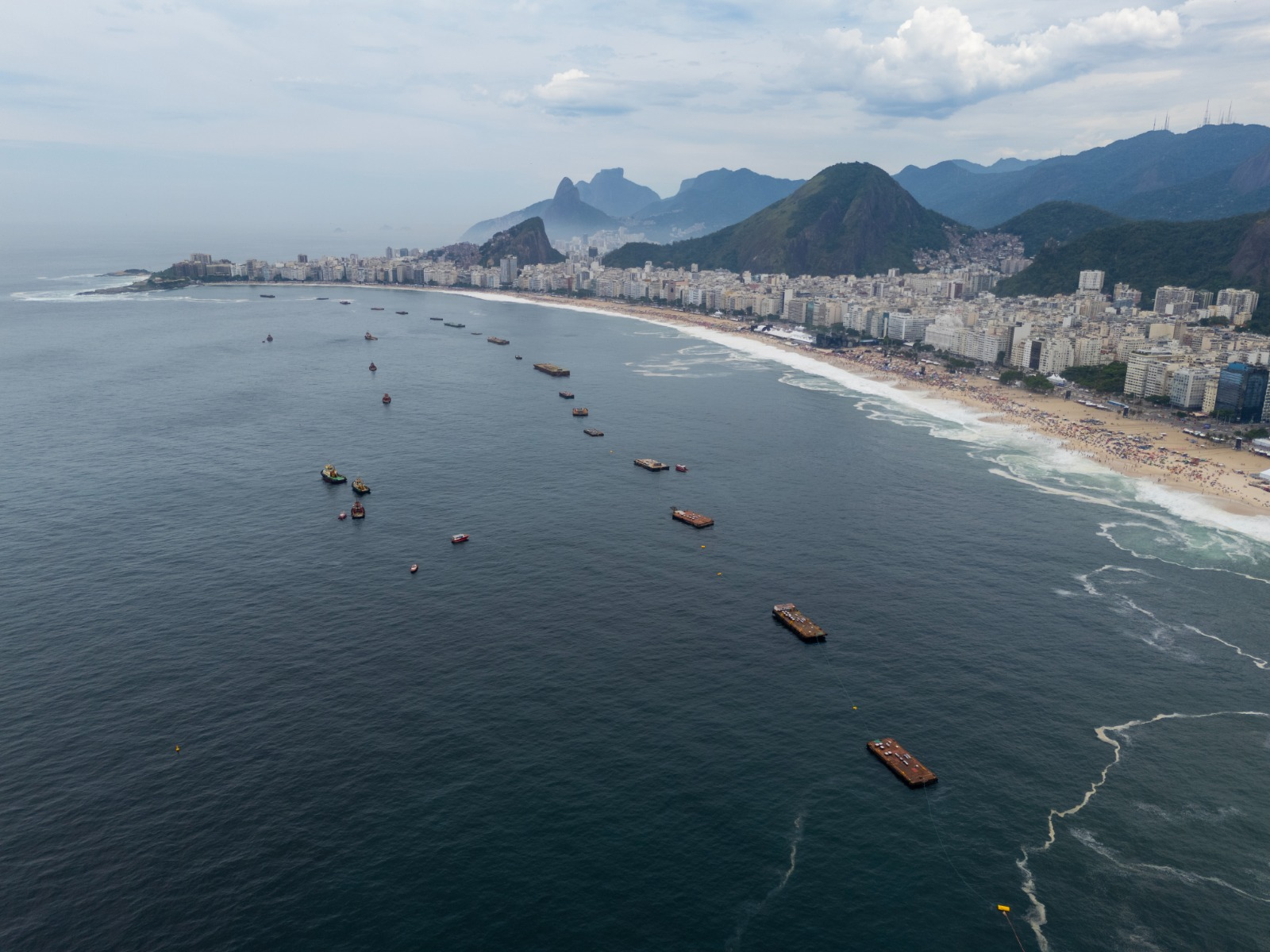
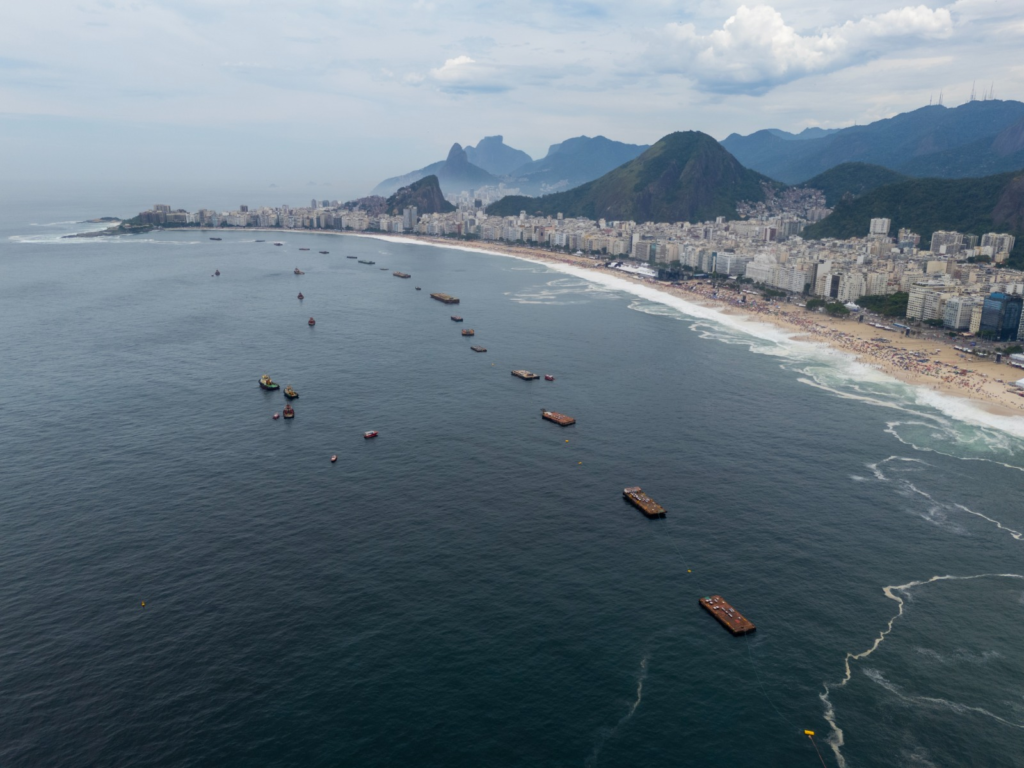
In the last day of 2025, Copacabana’s New Year’s Eve celebration in Rio de Janeiro entered the Guinness Book of Records as the largest in the world. The spectacle held along Brazil’s most iconic beachfront brought together around 2.6 million people and featured Camorim as a key player in the complex fireworks operation.
Responsible for supporting the scale of the event, Camorim led the maritime operation with excellence, mobilizing 150 professionals and 46 vessels — including 19 barges, 14 tugboats, 12 speedboats, and one shear crane. It was the work of hundreds of hands that, year after year, ensures the safety and visual impact that have made Copacabana a global New Year’s Eve reference.
Although Camorim’s operations also extend to other major New Year’s Eve celebrations, it is in Copacabana that the company carries out its most emblematic operation. The transition from 2025 to 2026 featured 12 minutes of fireworks, performances by samba schools, and artists from different musical genres, further elevating the spectacle.
The operation begins long before the countdown
The New Year’s Eve machinery starts turning weeks in advance. On December 20, the barge preparation process was completed at Camorim’s bases. Between December 21 and 25, the fireworks were assembled and organized. On December 28 and 29, the pre-anchoring operation was carried out — an essential stage to ensure the vessels remain securely positioned during the fireworks display.
The official countdown to the New Year began on December 30. From 7:00 p.m. onward, the barges were towed to Copacabana and strategically positioned along the shoreline, in a process that lasted until the morning of December 31. Still on the last daay of the year, Camorim teams monitored the transverse alignment of the barges in relation to the beach, while the Harbor Master’s Office inspected each stage of the operation.
Final authorization for the fireworks display, granted by the Navy at 11:30 p.m. on December 31, depends on weather conditions — a factor that requires heightened attention and immediate response capability. In some years, this clearance is given only in the final minutes, underscoring the importance of experience and trust in the team.
While the public celebrates, the operation continues. A group of ten professionals monitors the entire process on land, and about one hour after the fireworks end, the dismantling process and return of the barges to the company’s bases begins — an operation completed only on the morning of January 1.
More than a spectacle, Copacabana’s New Year’s Eve celebration is the result of planning, technical expertise, and dedication — pillars that Camorim has been upholding for decades on the world’s largest New Year’s stage.
“Many teams have been working in Copacabana for years. Families understand the magnitude of the responsibility. While millions celebrate on the beach, our professionals remain alert, ensuring everything happens with maximum safety.” , says João Guerra, Camorim’s commercial manager.
“We recognize the efforts of our employees. They are true heroes. They work with commitment, responsibility, and care so that this great celebration can take place”, Guerra adds.
About Camorim
Camorim is a 100% Brazilian company with 30 years of experience in the national maritime sector. Considered a 360° hub in the provision of comprehensive logistics and navigation solutions, the corporation employs more than 1,300 people, creating opportunities along the entire Brazilian coast. Among the services offered by the company are port towing, port logistics, and offshore support.
With more than 150 vessels, Camorim operates the most diversified fleet in Brazil, comprising tugboats, LHs, PSVs, AHTSs, OSRVs, cargo barges, water barges, sheerleg cranes, and speedboats (both cargo and passenger).
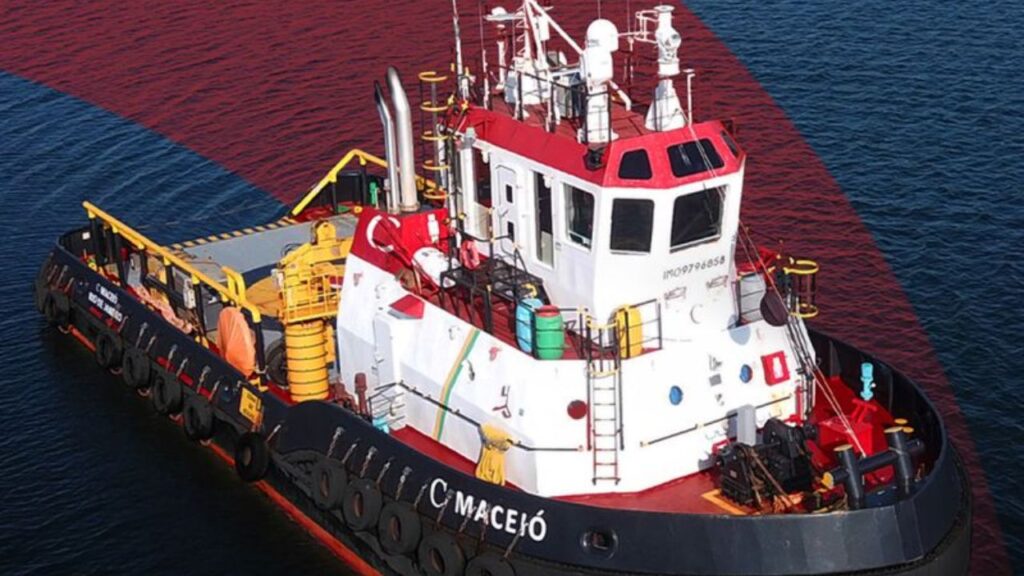
C Maceio (Source: Camorim)
Camorim owns a modern shipyard located on Ilha da Conceição in Niterói, where it operates a Private Use Terminal. In addition, the company has three strategically located operational bases (two in Niterói and one in Vitória, in the state of Espírito Santo), expanding support for maritime operations.
The company also operates in ports located in the states of Rio de Janeiro, São Paulo, Espírito Santo, Paraná, Rio Grande do Sul, Pará, and Maranhão.
In this edition of One Energy Magazine, you’ll find an exclusive interview with José Eduardo Leal Senior Sales Manager at Kongsberg Maritime, focused on technology and artificial intelligence in the maritime sector.
This issue also features:
An in-depth look at Belov Arembepe
WSB Advisors Norway
Staff announcement
Por onde anda?
Camorim behind the largest light and fireworks show on Earth
Tidewater acquires Wilson Sons, plus more market updates
Perspectives from Fernando Vilela, Alexandre Vilela, Luiz Fernando Priolli and Romulo Bacchiega
WSB Advisors invites you to explore the latest edition of One Energy Magazine.
This issue marks the beginning of a new era, with the official arrival of advertisers and recurring columnists who broaden our editorial scope. Alongside in-depth coverage of the naval and offshore sectors, readers will also find thoughtful perspectives on marketing, psychology, technology, and law.
This edition reinforces our commitment to connecting strategic insight with operational excellence across the offshore value chain.
Highlights
• An exclusive interview with José Eduardo Leal, Senior Sales Manager at Kongsberg • Oil companies and theaters: a long-standing connection • Staff Announcement • Where Are They Now? • Camorim Serviços Marítimos behind the largest light and fireworks show on Earth • Belov Arembepe • DOF acquires Wilson Sons, plus more market updates
Fundo da Marinha Mercante (FMM), under Ministry of Ports and Airports, reactivated financing channels this year with the return of Caixa Econômica Federal as an accredited agent. Camorim Serviços Marítimos secured funding for construction of a Brazilian-built support vessel, signalling gradual resumption of national shipbuilding credit flow and renewed alignment between federal financing and offshore-support demand.
This week began with strong momentum in the offshore support vessel market, as three new charter contracts were officially announced.
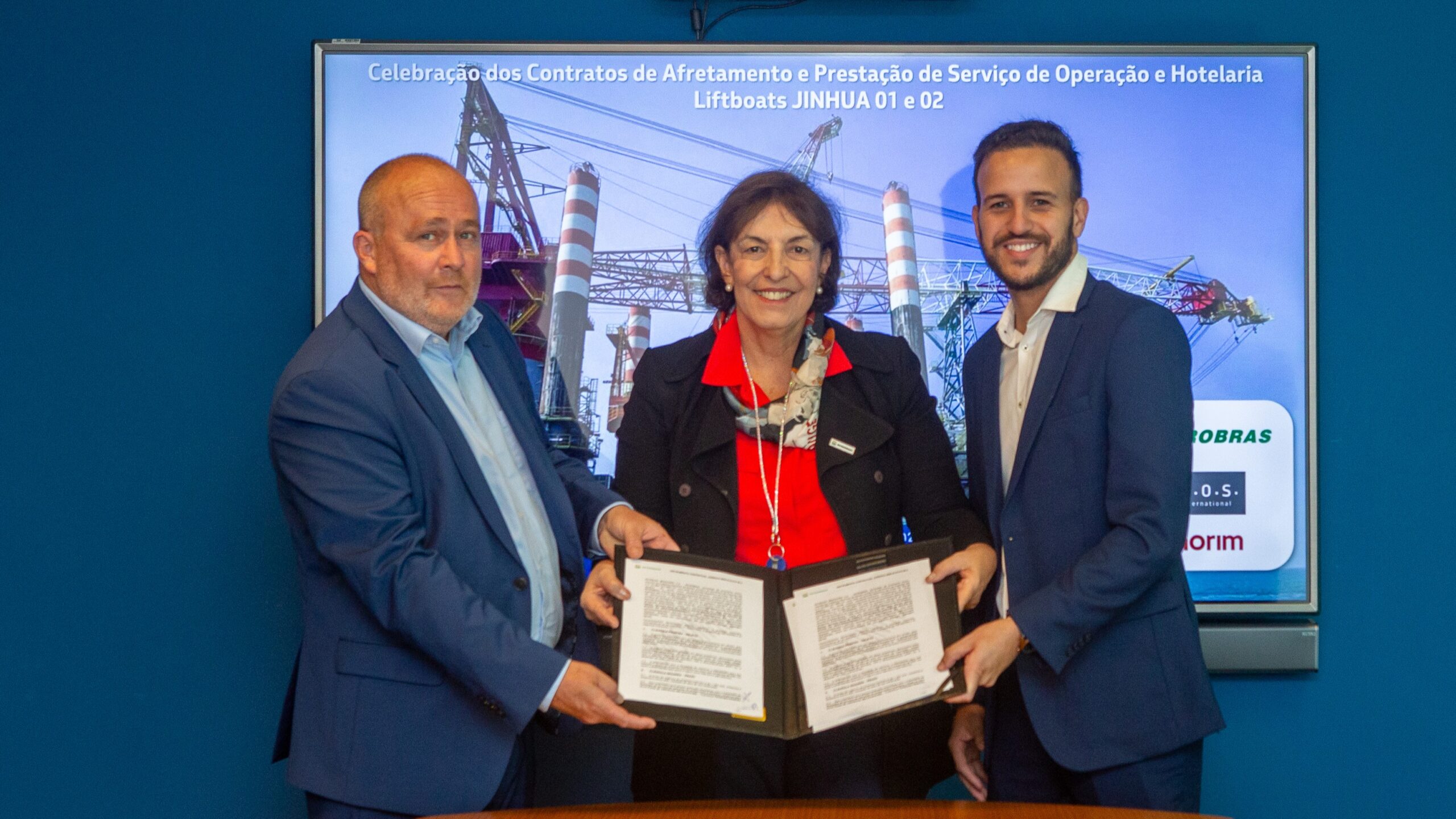
Camorim has signed a BRL 1.2 billion agreement with Petrobras to deploy the liftboats Jin Hua 01 and Jin Hua 02 in partnership with OOS International B.V.
These vessels will support maintenance and readiness campaigns for fixed platforms in the Sergipe-Alagoas and Rio Grande do Norte-Ceará basins. The contract will run for three years, with the official start date yet to be confirmed.
Solstad has secured a four-year charter with Petrobras for the construction support vessel Normand Commander with Petrobras, with operations expected to begin in the first quarter of 2026. The deal is valued at approximately USD 108 million, excluding ROV services.
Also on Monday, DOF announced two new four-year contracts, also with Petrobras, for the AHTS vessels Skandi Fluminense and Skandi Lifter. These awards stem from the same tender processes that recently secured long-term contracts for Skandi Logger, Skandi Iguaçu, Skandi Angra, Skandi Paraty and Skandi Urca.
To stay updated on Brazil’s OSV market and access exclusive project data, reach out to: comercial@cms.oneenergynews.com. Stay informed on key offshore developments — visit www.wsb-one.com, our data platform trusted by leading offshore companies.
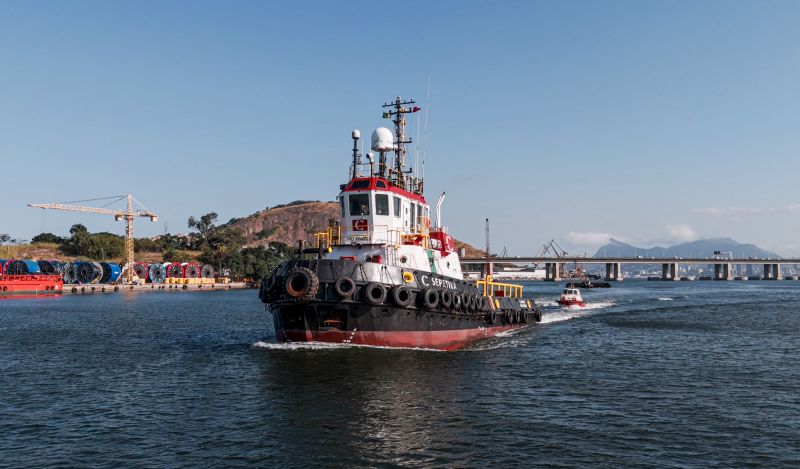
Camorim has kicked off a new multi-year contract with Petrobras for the Line Handler C-Sepetiba. The vessel will remain on standby to support offshore units across the Campos and Espirito Santo Basins, handling emergency response, offload, backload and ship-to-ship operations.
TideWise, the company behind Brazil’s first registered autonomous vessel, the USV Tupan, continues its upward momentum. Following domestic success, Tidewise is now preparing to expand into European markets, marking a key milestone in the internationalization of Brazilian maritime technology.
Meanwhile, Transpetro, a Petrobras subsidiary, has completed a full modernization of communications systems across its fleet of 26 vessels through the PROMAR project. The upgrade brings faster, more stable and unlimited connectivity, significantly improving crew well-being and operational efficiency. With seamless access to internet, seafarers now benefit from video calls, onboard entertainment and telemedicine services.
We’re now just 30 days away from Navalshore 2025, the largest maritime industry fair in Latin America. Scheduled for August 19–21 in Rio de Janeiro, the event will feature 136 exhibitors representing over 400 brands across 10,000m² of expanded space.
Discover WSB. One, our proprietary market intelligence platform used by leading companies in the offshore industry to support decision-making, strategy and commercial positioning.
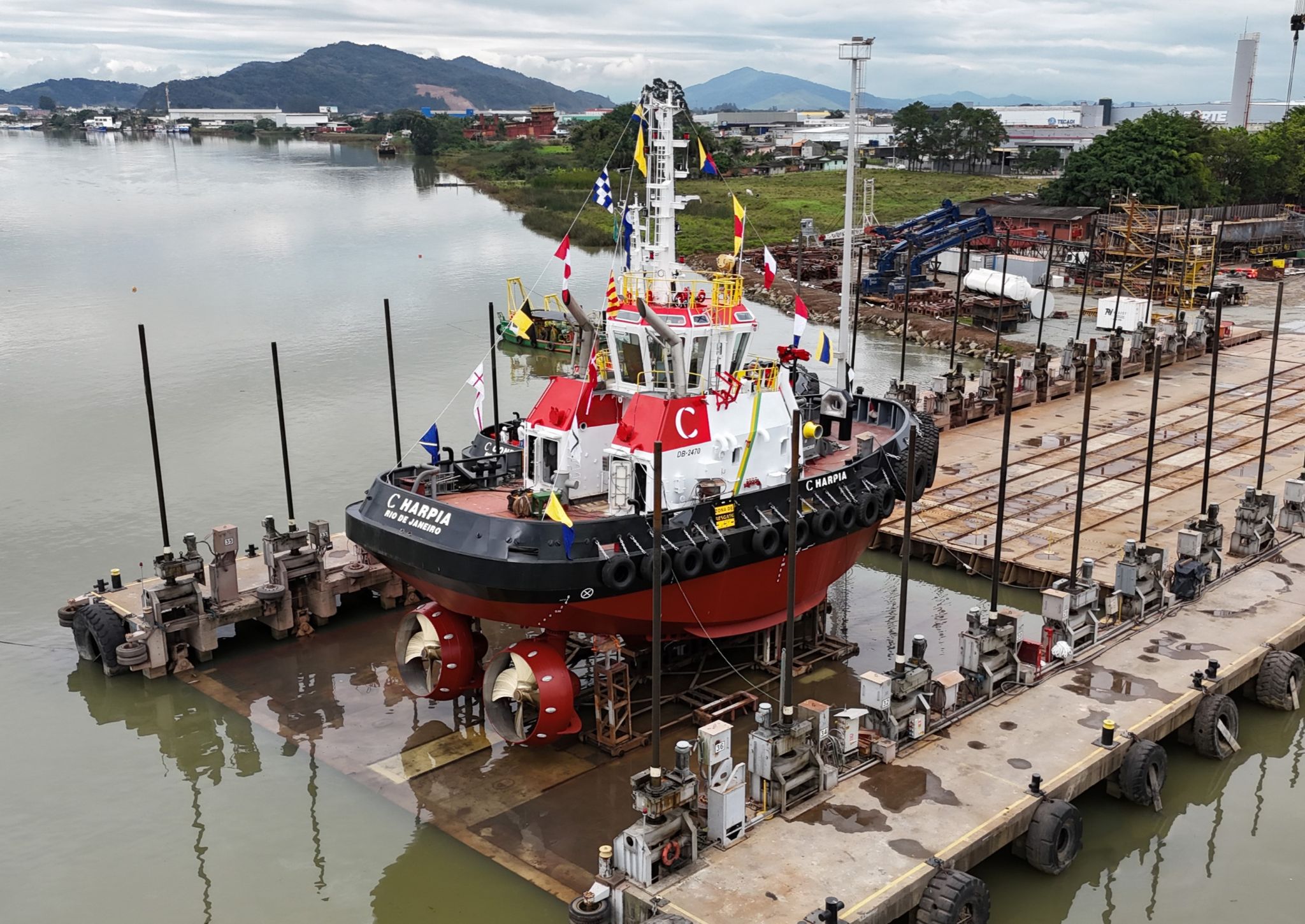
Camorim has celebrated the delivery of its newest vessel, the ASD tug C-Harpia, this week in Itajaí. Built by Detroit Brasil shipyard, C-Harpia is the fifth and final unit in a series of ASD tugs ordered by the company. Each vessel in the series delivers 70 tons of bollard pull, with total investments approaching R$ 200 million.
The first four vessels, C-Falcão, C-Fênix, C-Albatroz and C-Condor, were delivered between late 2024 and early 2025. With this addition, Camorim’s fleet now surpasses 150 vessels, including PSVs, AHTSs, barges, launches, floating docks and LHs, reinforcing its position as one of Brazil’s leading providers of maritime support services.
“The C-Harpia is part of a project that pays tribute to powerful birds, but this vessel has a special meaning. It’s the first to bear the new ‘C’, a symbol of Camorim’s refreshed visual identity, launched as the company celebrated its 30th anniversary in May. In a way, this delivery closes a chapter in our shipbuilding program. At the same time, it marks the beginning of a new era for Camorim,” said Eduardo Adami, Vice President of Camorim.
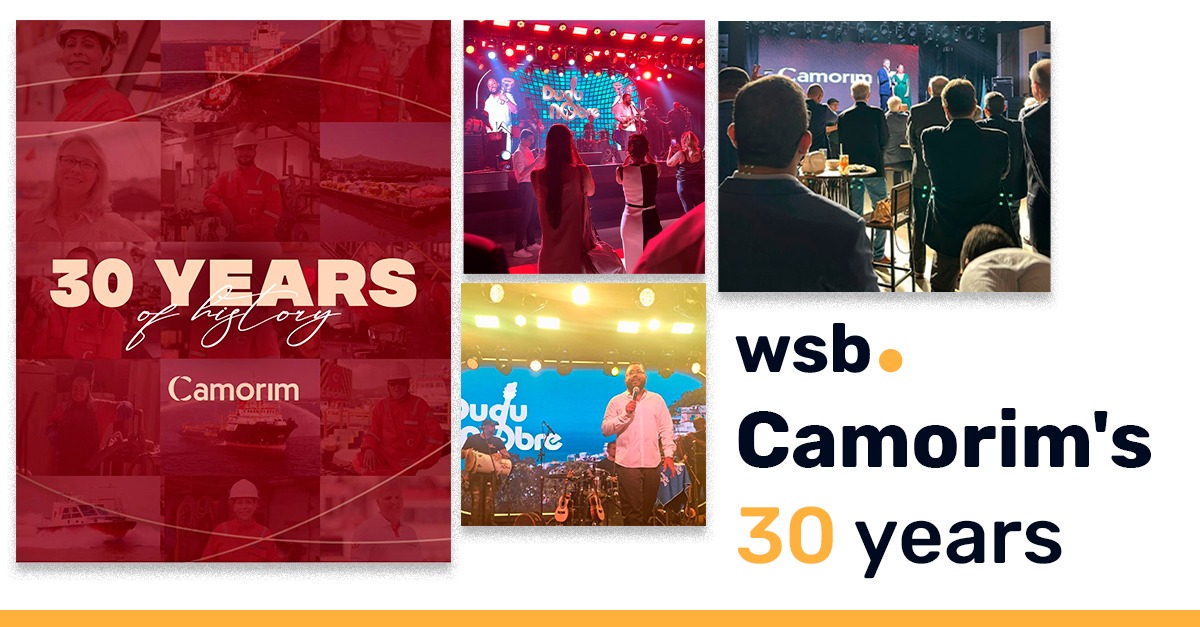
Camorim marked its 30th anniversary yesterday (May 21) with a special event at Espaço Costa Hall, in Rio de Janeiro, bringing together leaders and professionals from across Brazil’s offshore and maritime industries. The evening was filled with celebration and optimism, and featured a vibrant performance by samba icon Dudu Nobre.
The event highlighted Camorim’s impressive trajectory and continued growth. Headquartered in Niterói, the company now operates a fleet of over 150 vessels, including tugboats, PSVs, AHTSs, barges, launches, and LHs, underscoring its leadership and responsiveness to market demands.
WSB Advisors was represented by Raphael Montes, Proposals Manager & Partner, and Pedro Pellegrini, Shipbroker Intern. Beyond celebrating this important milestone, it was also an opportunity to strengthen connections with long-standing partners and key industry stakeholders.
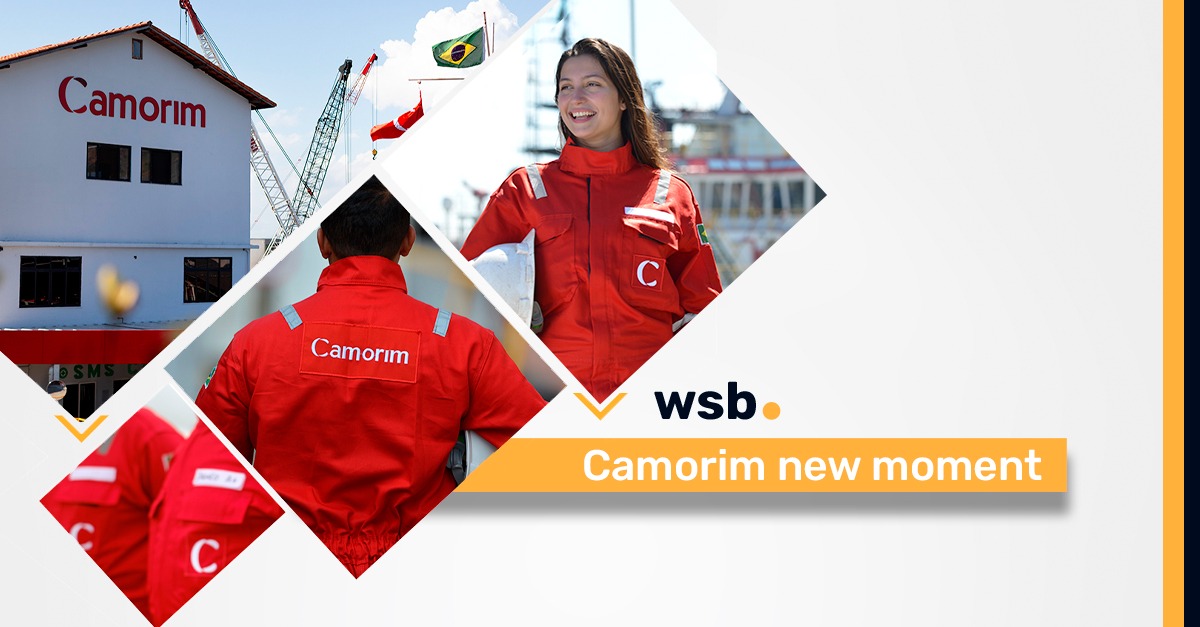
Camorim has unveiled its new visual identity, blending tradition, innovation, and a forward-looking strategy. The rebranding marks the beginning of the company’s 30th anniversary celebrations, which will culminate in May 2025. As one of Brazil’s leading maritime and port support companies, this evolution reflects Camorim’s solid track record and growing influence in the sector.
Headquartered in Niterói, Rio de Janeiro, the company is experiencing rapid expansion, both in fleet size and strategic contracts. Today, Camorim operates a fleet of over 150 vessels, including tugboats, PSVs, AHTSs, barges, launches, and LHs, demonstrating its alignment with market shifts and client demands.
Steered by Carlinhos Camorim and Eduardo Adami, father and son, Camorim stands out for its professionalism and operational excellence. “We believe a brand goes beyond a visual symbol. It represents everything we are, what we’ve built, and, most importantly, where we’re headed. Reaching 30 years with a solid and trustworthy history is a source of pride, and we want this new identity to reflect this moment of celebration and vision,” says Eduardo Adami, Vice President of Camorim.
WSB is proud to support Camorim on its journey through key deals achieved in the last couple of years, from sales and purchase deals to recent fixtures and strategic partnerships with other fellow owners.
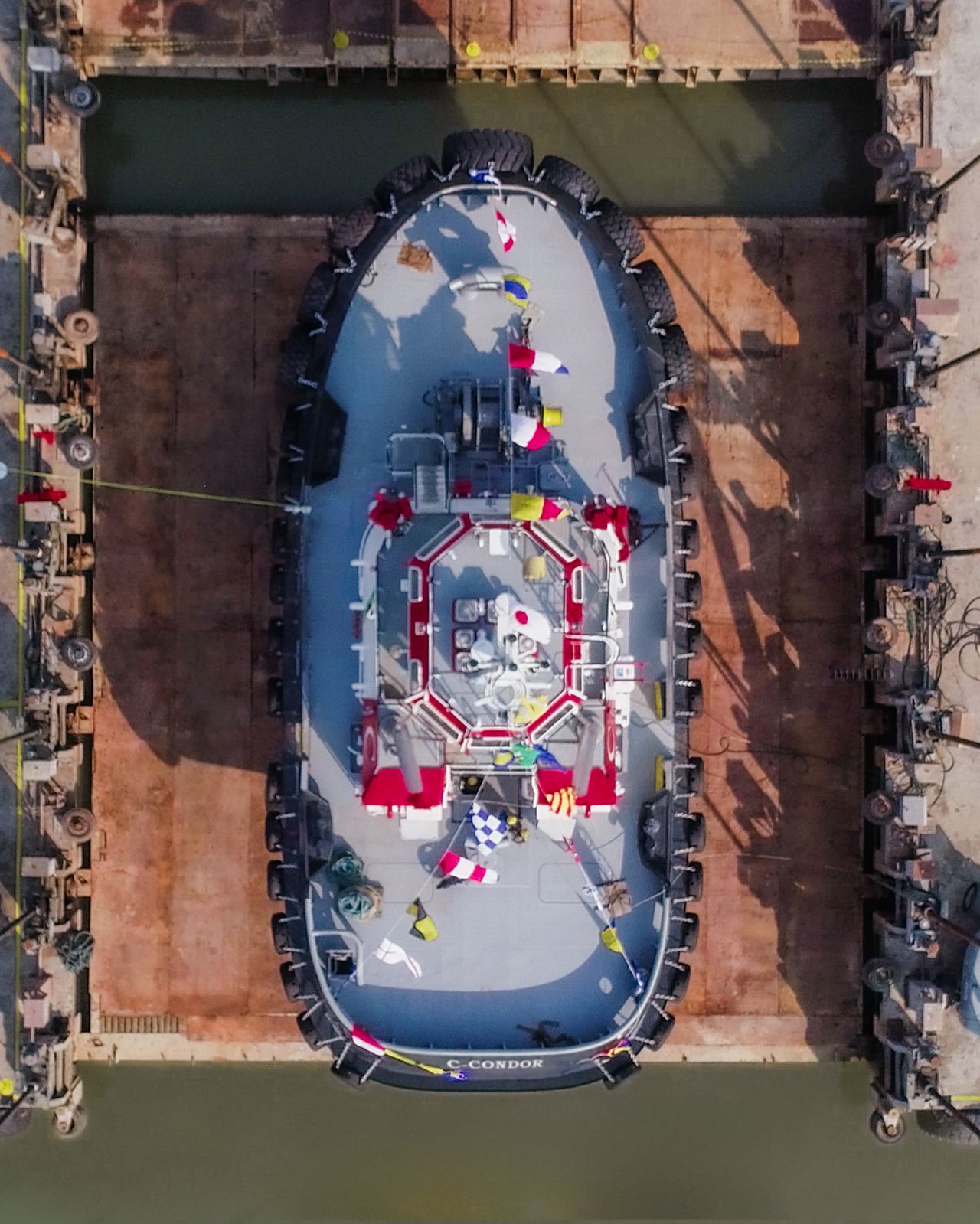
Camorim celebrates the delivery of its newest vessel, the ASD tug C-Condor, handed over last week in Itajaí by Detroit Brasil. This is the fourth vessel in a five-unit series of azimuth stern drive tugs ordered by the company, each boasting 70 tons of bollard pull.
The first three units, C-Falcão, C-Fênix, and C-Albatroz, were delivered between late 2024 and early 2025. The final tug in the series, C-Harpia, is expected later this semester.
With this addition, Camorim’s fleet now exceeds 150 vessels, including PSVs, AHTSs, barges, launches, floating docks, and LHs, reinforcing its position as one of Brazil’s leading maritime support providers.
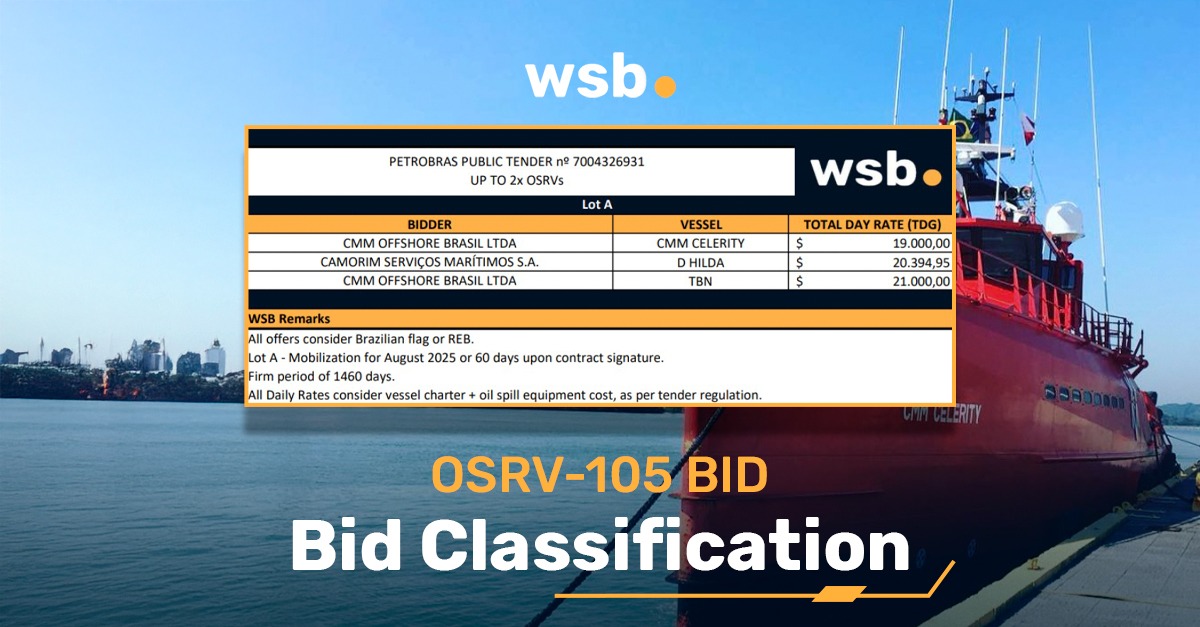
Petrobras has released a classification bid result to charter up to two OSRV-105 vessels for a four-year contract.
Compagnie Maritime Monégasque (CMM) stands out in the process, competing with two vessels, Celerity and TBN. Camorim Serviços Marítimos follows in second place with D Hilda.