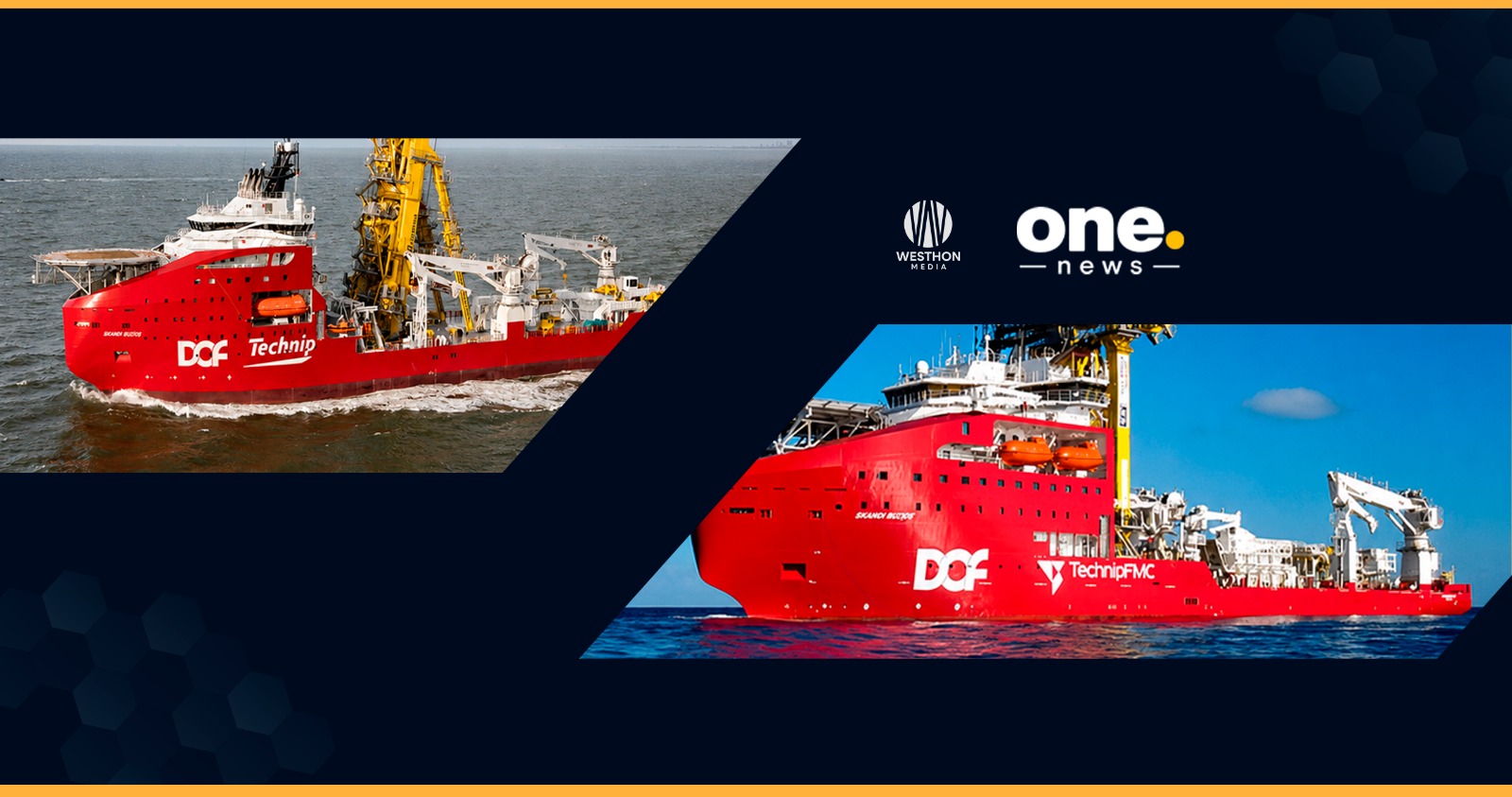
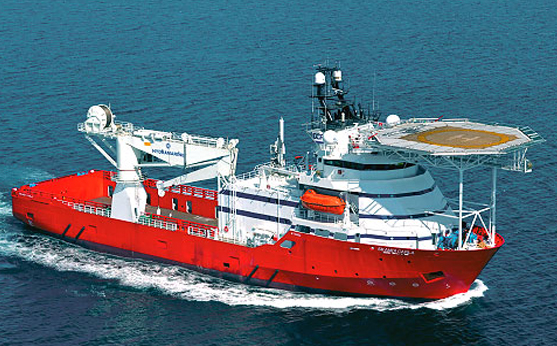
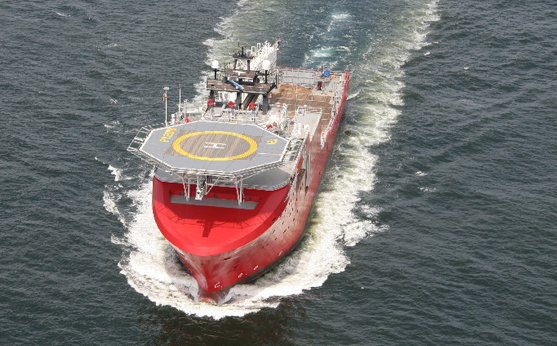
DOF has secured contract extensions with Petrobras for the PLSVs Skandi Búzios and Skandi Recife, keeping both vessels in operation offshore Brazil through January 2028.
Skandi Búzios received a 516-day extension, while Skandi Recife was awarded an additional 550 days. Their existing contracts were previously scheduled to expire in the third quarter of 2026.
The vessels are owned through a joint venture between DOF and TechnipFMC, with each company holding a 50% interest.
Skandi Búzios and Skandi Recife have operated for Petrobras under long-term contracts since 2017 and 2018, respectively. Both are designed for flexible pipelay and umbilical installation in Brazil’s deep and ultra-deep waters.
The extensions maintain two high-capacity PLSVs under contract with Petrobras as subsea activity continues offshore Brazil.
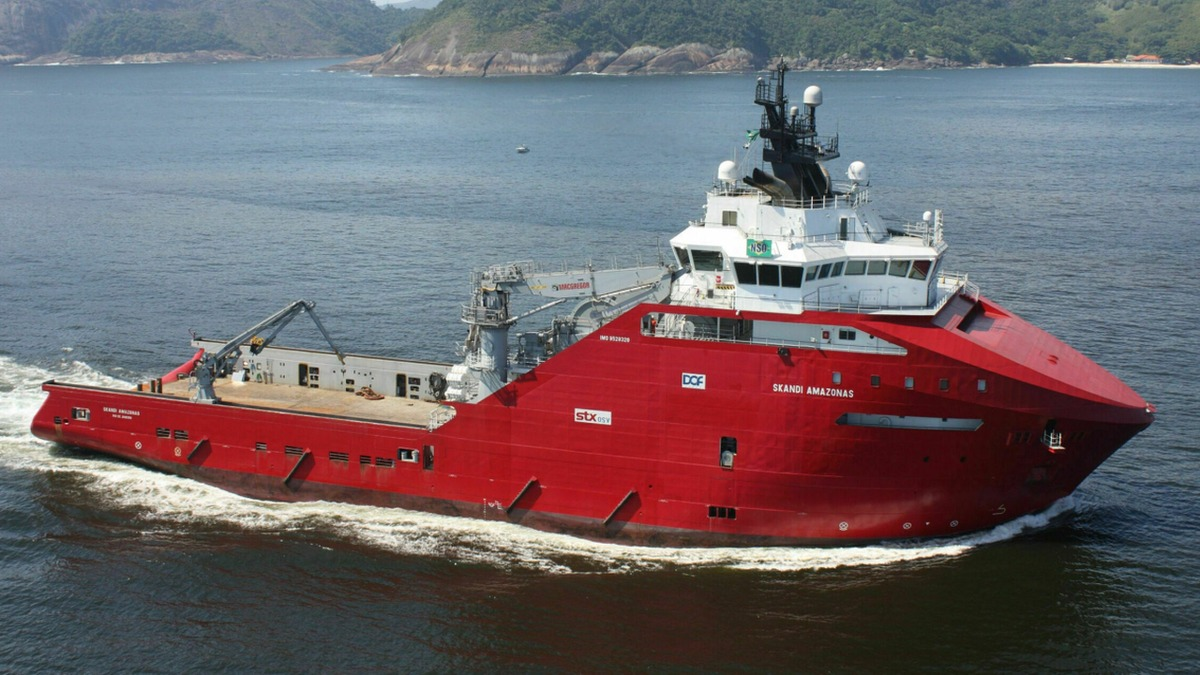
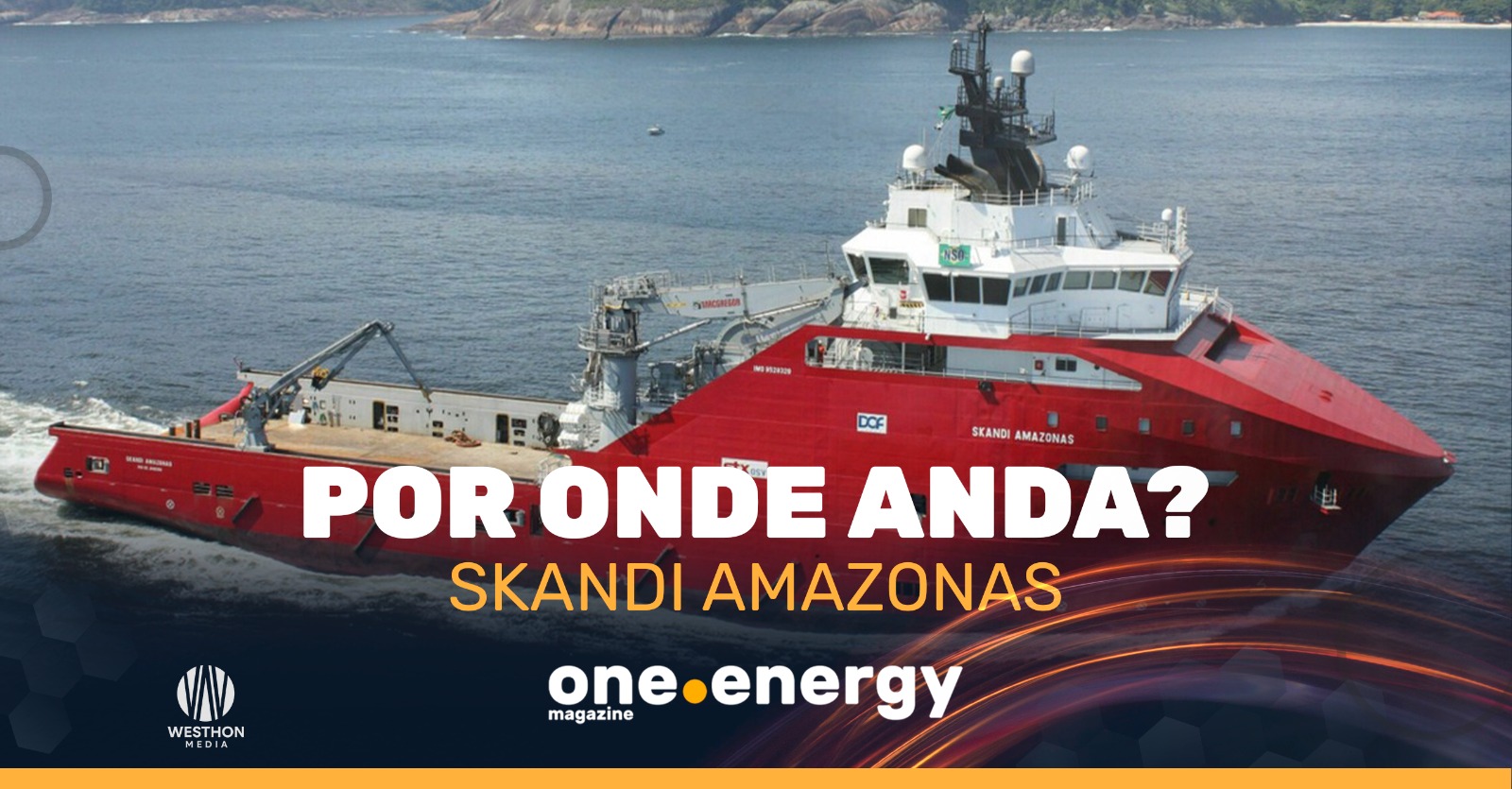
DOF has provided a market update on the two most significant incidents involving its fleet in recent months, confirming the constructive total loss of the AHTS Skandi Amazonas while also outlining the latest developments regarding the electrical incident aboard Skandi Logger.
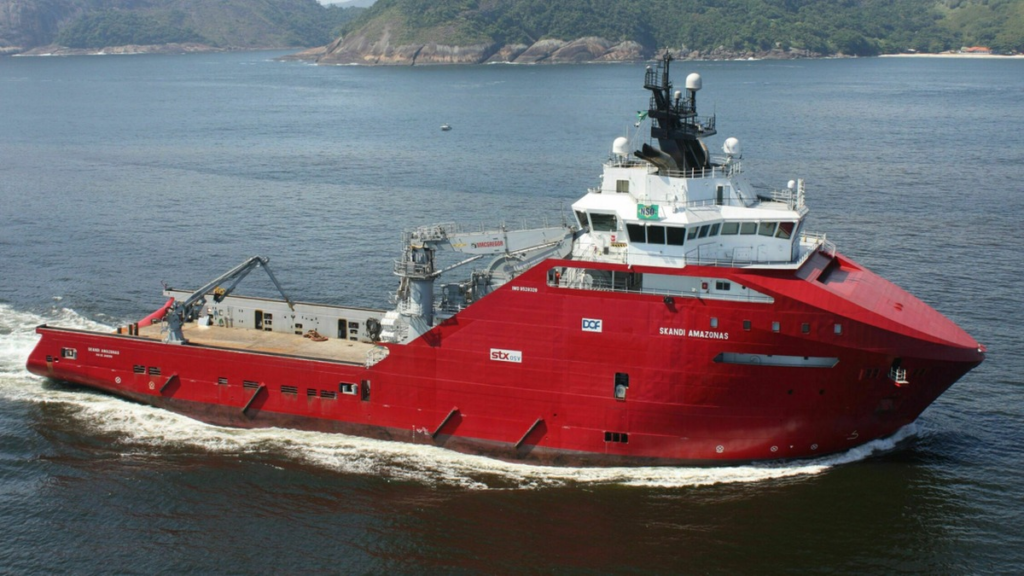
Regarding Skandi Amazonas, the company confirmed it has declared the vessel a Constructive Total Loss (CTL) following the grounding that occurred on 15 May 2026 off Macaé, Brazil. The incident damaged the hull, allowing water to enter the vessel.
Following an extensive technical assessment, DOF concluded that the estimated cost of rebuilding the vessel exceeds its insured hull and machinery value. As a result, the company will receive a USD 115 million Hull & Machinery insurance payout, bringing market speculation over the vessel’s future to an end.
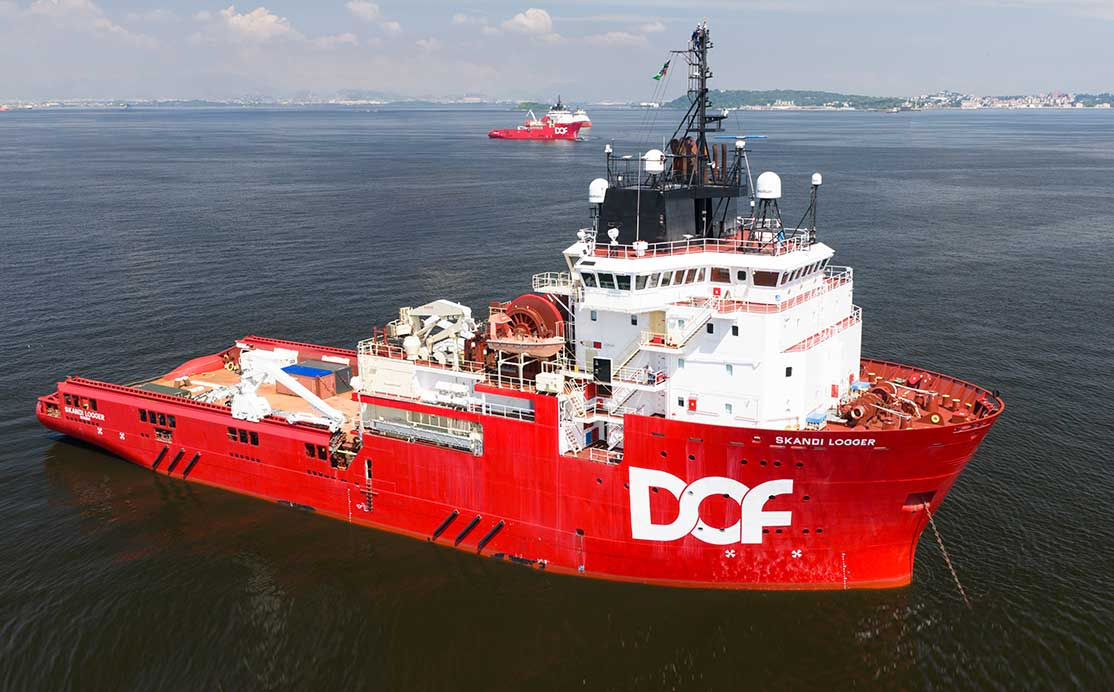
DOF also provided an update on Skandi Logger, confirming that, during the early hours of Wednesday (22), the vessel experienced an electrical fault resulting in a short circuit, with no open flame, in its main switchboard while operating alongside Petrobras’ P-37 platform in the Marlim Field, Campos Basin.
According to the company, the response was immediate, with support provided to the onboard crew and preparations initiated to release the vessel from the field so that the necessary repairs can be carried out. DOF stated that there were no injuries or environmental impacts. The vessel remains under control while the company continues to monitor the situation and implement the necessary measures to ensure the safety of personnel, the environment and ongoing operations.
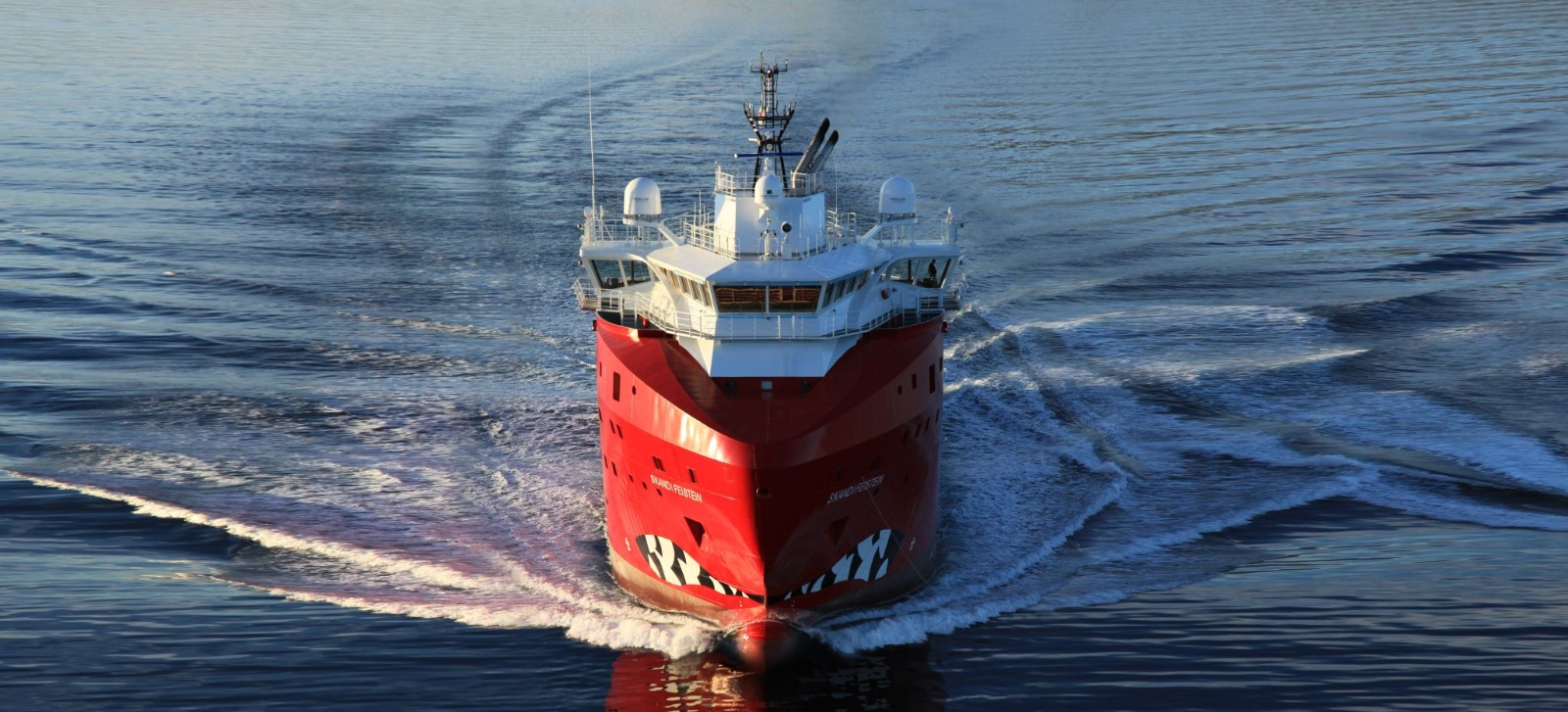
DOF has announced the sale of four Platform Supply Vessels (PSVs), Skandi Mongstad, Skandi Flora, Skandi Feistein and Skandi Kvitsøy, as part of its ongoing fleet optimisation strategy. The vessels will be delivered to their new owners during the third quarter of 2026 while remaining on their existing contracts. The transaction is expected to generate approximately USD 50 million in net cash after repayment of the debt associated with the vessels.
As part of the agreement, DOF will continue to manage the four PSVs and will retain a minority ownership interest in the acquiring company.
At the same time, the company has acquired two new Construction Support Vessels (CSVs) currently under construction at the PaxOcean shipyard in China. Based on the SALT 310 OCV design, the vessels will be equipped with 250-tonne offshore cranes, two work-class ROVs and accommodation for 123 personnel. They are intended for subsea operations, including inspection, maintenance and repair (IMR) campaigns, as well as offshore construction support, with deliveries scheduled for the fourth quarter of 2027 and the first quarter of 2028.
The transaction reflects DOF’s continued strategy of optimising its fleet by reducing exposure to lower-value PSV assets while expanding its subsea capabilities with higher-specification vessels. The move also comes as the company points to a record backlog and sustained demand for offshore services.
Our newsroom has received an audio recording reportedly from the bridge of the Skandi Logger, broadcasting a Mayday distress call and an order to abandon ship near the P-37 platform in the Marlim field. The vessel’s position has been confirmed.
Sources at the scene report that the vessel is already receiving assistance and connected for towing. The situation appears to be under control. At this stage, there is no confirmed information of any injuries or casualties.
In contact with our team, DOF said:
“DOF reports that, in the early hours of Wednesday (22), the Skandi Logger experienced an electrical short circuit, with no open flame, in its main switchboard while operating alongside the P-37 platform in Brazil’s Campos Basin.
The company responded immediately to the incident and is providing full support to the onboard crew, while also coordinating and planning the operation to release the vessel from the field and carry out the necessary repairs.
No injuries were reported among those on board, and, at this time, no environmental impact has been identified.
The vessel remains under control, and DOF continues to monitor the situation while taking all necessary measures to ensure the safety of personnel, the environment, and the operation”
We are seeking further details from Brazilian Navy and will provide updates as information becomes available.
A vessel that deserves more respect than speculation
Some vessels become known because they disappear from the radar, change names, lose purpose, or end up as footnotes in the offshore market.
Skandi Amazonas is the opposite.
This is not a story about a forgotten vessel. It is a story about one of the most remarkable offshore support vessels ever built in Brazil — and about a crew that, when faced with a real emergency, did exactly what highly trained seafarers are expected to do.
I have a personal connection with this vessel.
I was there when Skandi Amazonas was built, at the shipyard then known as STX Brazil, on Ilha da Conceição, in Niterói. I worked in the Supply Chain department and was directly involved in procurement, inspections, equipment deliveries, and the complex chain of systems and materials that gradually transformed steel plates into one of the most powerful AHTS vessels ever delivered by a Brazilian yard.
I saw the vessel take shape from the beginning: steel cutting, block assembly, launch, outfitting, commissioning, sea trials, and delivery to DOF Navegação in 2010.
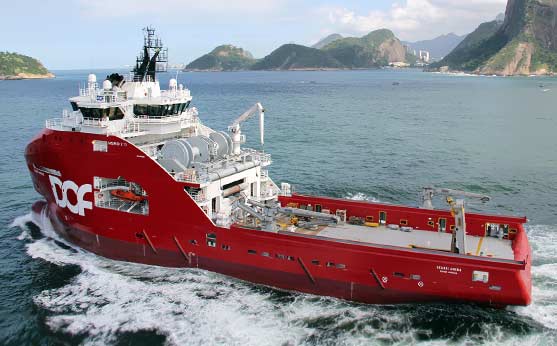
At the time, Skandi Amazonas was a Brazilian shipbuilding milestone. At 95 meters in length, with 300 tons of continuous bollard pull, hybrid diesel-mechanical-electric propulsion, DNV class, and a design developed by STX Norway Design, she was not an ordinary vessel. During trials, she exceeded her own specifications, reaching a maximum bollard pull of 343 tons.
More importantly, she then went to work.
For more than fifteen years, Skandi Amazonas operated in Brazil doing exactly what she was built to do. Quietly, consistently, and under some of the most demanding offshore conditions in the world. In plain language: she became a battle horse.
Then came the incident near Macaé.
The vessel reportedly struck a rocky formation near the Santana Archipelago while approaching the anchorage area. The hull was damaged, water ingress followed, and the situation required immediate decision-making.
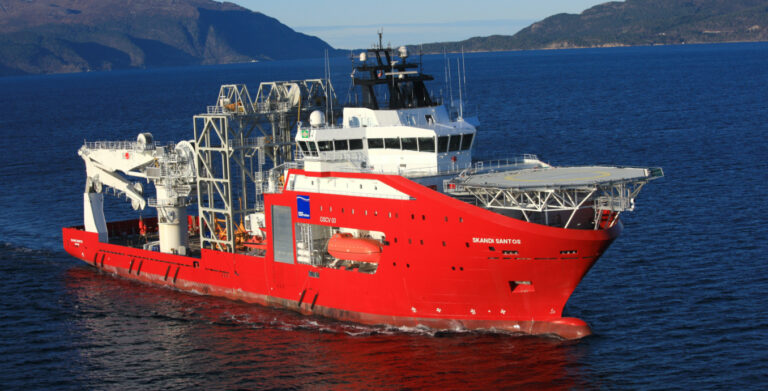
Skandi Amazonas (Source: DOF)
That is where the tone of the story should change.
What some people rushed to describe as failure may, in fact, become a case study in emergency response.
The master diverted the vessel to a safer position and executed a controlled grounding maneuver to prevent a worse outcome. Non-essential personnel were evacuated. Essential crew remained on board. There were no reported injuries. No pollution was recorded. The vessel remained under control.
This is not luck. This is training.
And it is precisely here that the public narrative around the incident became unfair.
In the days that followed, social media did what social media usually does: it converted a complex maritime event into simplified outrage. Some used the episode to speak about royalties. Others used it to attack offshore activity. Some tried to turn it into a labor issue. Others treated the image of a grounded vessel as proof of systemic negligence.
That is not serious analysis.
Offshore operations are not risk-free. They never were. Ships are not supposed to hit rocks, just as aircraft are not supposed to encounter runway excursions and cars are not supposed to crash. Yet incidents happen in every serious industry involving machines, weather, human judgment, geography, and operational pressure.
The question is not whether an incident occurred.
The question is what happened after it occurred.
And in this case, what happened after the incident was exactly what should happen: command decision, emergency procedure, evacuation of non-essential personnel, preservation of life, environmental control, technical assessment, and mobilization of support resources.
That is the part many people chose not to see.
The causes still need to be investigated. Was there an issue with charted seabed information? Did tide conditions play a role? Was the vessel returning through the same safe track previously used? Was there a navigational error, a distraction, or a combination of factors? These questions belong to the formal investigation — not to social media tribunals.
Until then, speculation is not expertise.
There is also an important point about DOF.
Anyone who knows the offshore market knows that DOF is not a casual operator. It is one of the most respected names in the sector, with high standards on board, strong safety culture, and a long track record in complex subsea and offshore operations. To use this incident as a shortcut to attack the company, the crew, or the profession says more about the critics than about the facts.
Working offshore is demanding. It requires discipline, competence, and resilience. But it is also a profession supported by rules, training, classification standards, audits, emergency procedures, and a level of operational structure that many land-based activities simply do not have.
Let us be honest: is the controlled evacuation of a well-managed offshore vessel, with trained personnel, support craft, emergency protocols, and no pollution, necessarily more dangerous than a truck driver crossing the Rio–São Paulo Dutra at night? More dangerous than driving through Linha Vermelha? More dangerous than the daily risks people accept without reflection on Brazilian roads?
Risk exists everywhere. The difference is that offshore, risk is managed professionally.
The sea can be dangerous. So can a highway. So can a construction site. So can, frankly, a bathroom shower on the wrong day. The presence of risk does not make an activity reckless. It makes competence essential.
And competence was visible here.
Skandi Amazonas hit a rock. That should not have happened. But once it did, the response protected lives, prevented pollution, and preserved the vessel for recovery and repair.
That matters.
This vessel was proudly built in Brazil. It was a complex project, extremely well executed, and it has served the Brazilian offshore industry for more than a decade and a half. It deserves better than lazy conclusions.
Skandi Amazonas will be assessed, repaired, and returned to service if technically viable. As it should be.
DOF has signed a four-year contract with Petrobras for the vessel Skandi Commander, with operations scheduled to begin in January 2027. The agreement includes deployment of an Autonomous Underwater Vehicle (AUV) alongside the vessel’s Remote Operated Vehicle (ROV), enhancing subsea inspection, survey and intervention capabilities in offshore operations.
The contract adds to ongoing subsea support awards in Brazil, following multiple tenders secured by DOF in 2025 across AHTS, RSV and PIDF segments, cumulatively exceeding USD 2 billion in backlog.
Skandi Commander’s dual ROV-AUV configuration is expected to support inspection and integrity work across Petrobras’ offshore asset base. Mons Aase, CEO of DOF Group ASA, commented on the year’s achievements in Brazil and referenced a significant portion of the company’s fleet on firm contracts extending beyond 2030.
DOF’s recent disclosure regarding the extension of seven contracts with Petrobras in Brazil deserves attention beyond the headline numbers. Not because the extensions themselves are unexpected, but because they illustrate, with unusual clarity, how timing, regulation and industrial legacy interact in the Brazilian offshore support vessel market.
Few executives are as closely connected to the history of this fleet as Paulo Rolim, Board Member and Advisory Services Lead of WSB Advisors. Paulo witnessed — and actively participated in — the construction of most of these vessels in Brazil, across the successive transitions from Promar’s Aker Yards- to STX- and VARD–, where he ultimately served as COO of VARD Brazil. These vessels are not merely assets on a balance sheet; they are the tangible outcome of a long-term commitment by the Norwegian maritime cluster to Brazilian shipbuilding, technology transfer and local capability development.
That legacy matters today.
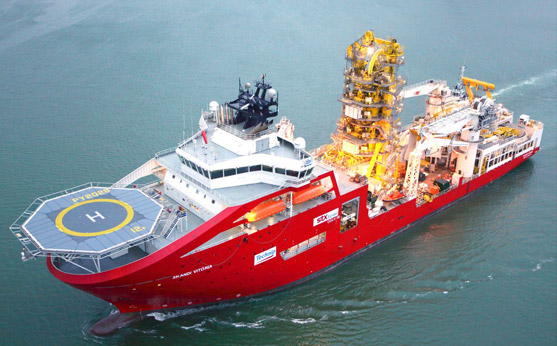
DOF has now confirmed that the five Brazilian-flagged AHTS vessels with ROVs — Skandi Fluminense, Skandi Paraty, Skandi Angra, Skandi Urca and Skandi Iguaçu — will see their existing contracts extended to Q1 2027, while the new four-year contracts signed in 2025 will commence only thereafter, running to 2031. A similar logic applies to the RSVs Skandi Chieftain and Skandi Olympia, whose current contracts are extended through 2026, deferring the start of their new four-year charters to 2027.
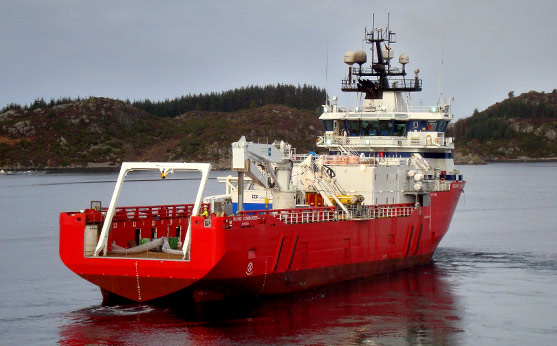
Skandi Angra (Source: DOF Subsea)
From Petrobras’ perspective, this is a rational and economically disciplined outcome. By extending current contracts and postponing the start of new ones negotiated at higher forward rates, Petrobras effectively locks in short-term cost savings, while maintaining uninterrupted access to a fleet that is already proven, compliant and operationally embedded in Brazil. In a market where day rates are structurally improving from the owners’ standpoint, time becomes a valuable negotiating instrument.
From DOF’s standpoint, the trade-off is equally clear. While the deferment delays the uplift in revenues associated with new contracts, it strengthens backlog visibility, adds more than USD 160 million in contracted value, and preserves fleet utilization in one of the company’s most strategically important regions. Balance sheet stability and long-term employment often justify moderation in near-term upside.
There is, however, a deeper structural layer. The AHTSs were built in Brazil, under Brazilian industrial policy frameworks that still shape today’s regulatory environment, and support the re-flag of foreign built tonnage. Whether by commercial preference or regulatory constraint, Brazilian-built and Brazilian-flagged assets retain a privileged — and in some cases unavoidable — position in Petrobras’ fleet planning. This reality reinforces the long-term value of earlier industrial investments, even when market cycles turn. Precisely the vision developed and delivered to DOF by a good friend of ours: Hans Falnes Ellingsen.
In this sense, the announcement is less about extensions and more about the strategic management of time. Petrobras secures operational continuity and postpones cost escalation. DOF extends backlog duration and mitigates risk. And Brazil’s offshore market once again demonstrates that vessels with deep local roots tend to remain relevant far longer than their steel alone would suggest.
At WSB Advisors, we view this episode as a reminder that in Brazil, industrial history, regulation and commercial strategy are inseparable — and that understanding their interaction is often more valuable than simply reading the headline.
• DOF Group extended contracts for three PLSVs — Skandi Vitória, Skandi Niterói, and Skandi Açu — with Petrobras in partnership with TechnipFMC through Q1 2030. The extension adds approximately US$ 100 million to DOF’s Brazilian backlog.
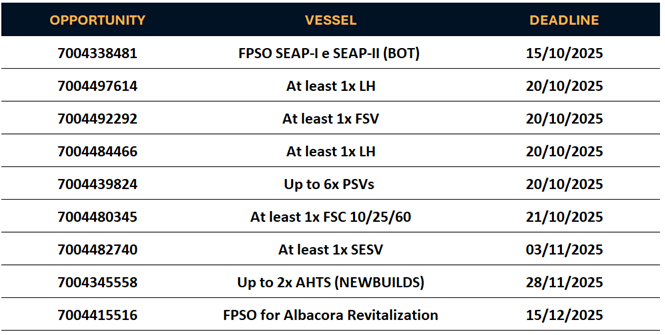
Petrobras At least 1x LH: Opportunity 7004497614 new deadline October 20th, 2025;
Petrobras At least 1x FSV: Opportunity 7004492292 new deadline October 20th, 2025;
Petrobras At least 1x LH: Opportunity 7004484466 new deadline October 20th, 2025;
Petrobras At least 1x FSC 10/25/60: Opportunity 7004480345 new deadline October 21st, 2025.
What else is happening?
DOF secured three short-term contracts with a major operator in the Espírito Santo and Santos Basins.
Geoholm was delivered in mid-September and is supporting mooring operations with one ROV for approximately two weeks.
Skandi Salvador will begin a 10-day charter at the end of September for subsea equipment retrieval and will return in early November for a 60-day charter focused on subsea and well intervention operations using a work-class ROV and subsea crane.
Petrobras nearsdecision to cancel Bid
Vessel owners informed WSB that Petrobras may be close to take a final decision to cancel the current PSV tender, which had already been reduced from 17 to 6 vessels after several reviews to the tender requirements throughout this year.
The move comes as Petrobras rethinks its offshore logistics model and financial strategy, seeking to realign the company’s budget amid rapidly escalating charter costs. As part of this process, Petrobras has already started formally approaching Offshore Vessel owners to discuss discounts on existing contracts, aiming to secure future extension periods and build a more predictable cost structure for its offshore support fleet.
The absence of pre-confirmed Petrobras representatives was noted at OSJ Conference where market analysts and brokers emphasized a tightening supply, growing demand and rising PSV dayrates — all in contrast with Petrobras’ current cautionary stance and WSB’s forecast. How the company recalibrates its position in the months ahead will be different.
WSB continues to monitor Petrobras’ fleet strategy and its broader impact on Brazil’s offshore logistics landscape.
2025 will be a defining year as Brazil moves toward its next federal elections in 2026. Public enterprises, and particularly Magda Chambriard’s Petrobras, will be at the center of attention, as their performance becomes inseparable from both the economic narrative and Brazil’s global energy credibility.
At a time when offshore rates are peaking, Petrobras is moving to reduce expenses, renegotiating existing charter contracts and holding back new commitments.
This cost-containment strategy, while cautious, reflects a broader effort to realign logistics and financial priorities which will define how the company positions itself for the decade ahead.
Few institutions can influence Brazil’s trajectory as profoundly as Petrobras. Lower costs, higher revenues, anticipated production, and a robust yet timely newbuilding program — including Sérgio Bacci’s Transpetro tankers and Petrobras offshore support vessels — are not just corporate goals. They are national levers of growth and competitiveness.
Irrespective of political orientation, these are legitimate instruments of progress, now under Luiz Inácio Lula da Silva administration. When well executed, they strengthen industry, attract global confidence, and reaffirm Brazil’s role in the international energy transition.
Constructive debate and cooperation between the public and private sectors will be key. Because in the end, national progress is built through shared purpose and informed action.
Magda Chambriard (Source: Petrobras)
TP-25
Transpetro has announced the disqualification of IRUS Holding S.A. from Lot B of its ongoing Gas Carrier Newbuild Program (TP-25).
According to the Commission’s official communication, the decision is based on two points of non-compliance with the bidding notice and its addenda:
• Lack of detailed cost breakdowns in the DFP (item 3.2.2 vii);
• Absence of the required Consortium Formation Commitment Term (item 3.2.2 viii).
The appeal phase will open only after publication of the final results of the tender.
With this update, the bidding process for the eight new LPG carriers — a key component of Brazil’s coastal gas logistics plan — moves closer to its conclusion.
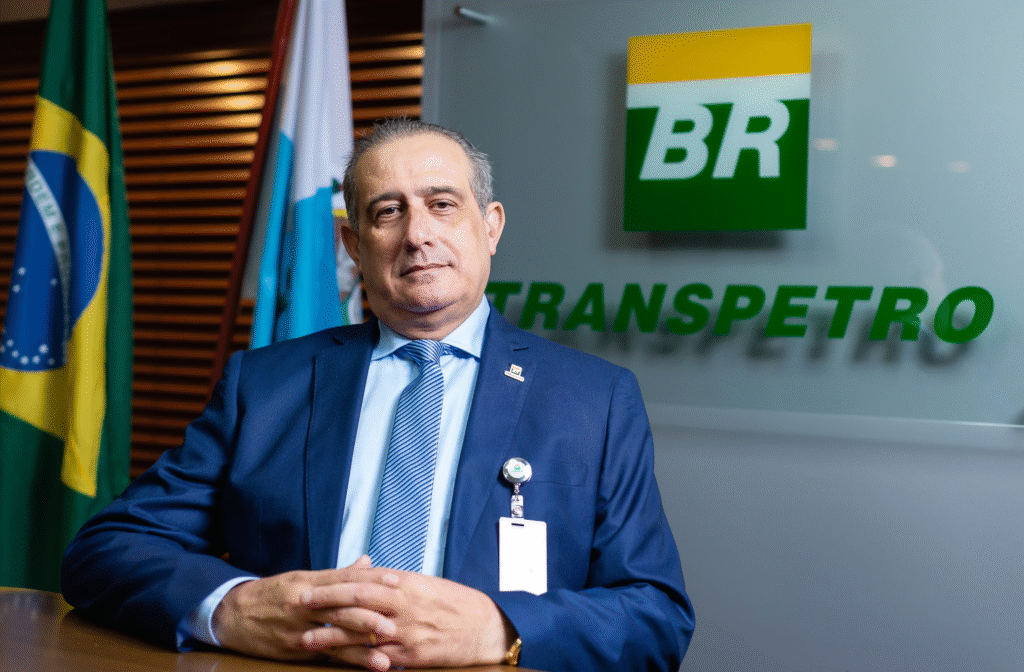
Sergio Bacci (Source: Transpetro)
TP-25 – II
Following WSB’s previous update on the disqualification of one contender from Lot B of Transpetro’s Gas Carrier Newbuild Program (TP-25), the tender has now advanced into its decisive evaluation phase.
With the removal of the previous participant, the evaluation proceeds with a configuration that yields the lowest consolidated value to Petrobras under the current assessment criteria:
Lot A – KIT L.L.C-FZ
Lot B – ECOVIX Construções Oceânicas S.A.
Combined total: USD 491.8 million
The TP-25 program continues to stand as one of Brazil’s most relevant initiatives for fleet renewal and coastal gas logistics, marking an important step in the country’s shipbuilding and energy infrastructure agenda.
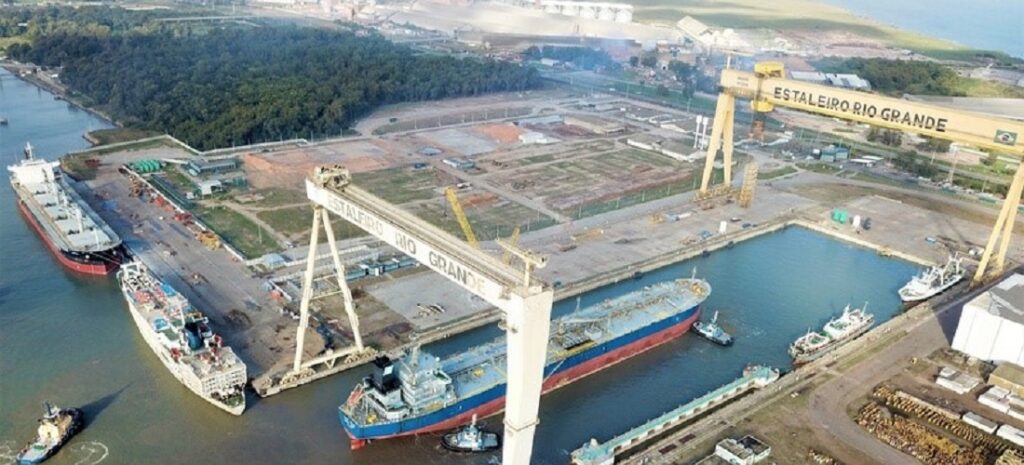
Rio Grande shipyard (Source: Ecovix)
Key Topics
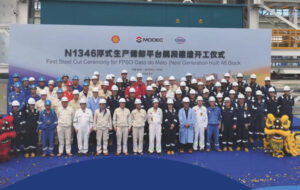
Modec has advanced to a new construction phase of the FPSO Gato do Matofor the Santos Basin pre-salt, carrying out hull block cutting at COSCO Qidong in China after forward block fabrication began earlier this year at Sumitomo in Japan. The unit is planned for installation at roughly 2,000 m water depth, with capacity up to 120,000 bpd and first oil targeted for 2029.
Petrobras completed a pilot import of natural gas produced in the Vaca Muerta (Neuquén Basin), moving about 100,000 cubic meters via existing pipeline routes through Bolivia into Brazil. The transport, carried out under an arrangement with Petrobras Operaciones S.A. (POSA) and Gas Bridge (Pluspetrol), is described as an experimental step that could allow interruptible imports of up to 2 million m³ under the agreement.
President Lula and Petrobras CEO Magda Chambriard visited Bahia and confirmed the start of construction of six PSV-OSRVs for Petrobras at the Enseada shipyard, in a project supervised by CMM. The investment is estimated at R$ 2.58 billion, with delivery scheduled for 2029 and a 12-year operating period for each contract. The project is expected to generate 5,400 jobs and requires at least 40% minimum local content during the construction phase.
steel strike ceremony for the FPSO Gato do Mato (Source: MODEC)
Oil Discovery
Petrobras has reported hydrocarbon findings in the pre-salt of the Campos Basin. The company notified Brazil’s National Petroleum Agency (ANP) about the presence of oil traces in the Água Marinha block, in well 1-BRSA-1401DA-RJS. The well was drilled in July by the drillship Deepwater Aquila at a water depth of 2,601 meters.
The Água Marinha block was awarded in 2022 during the first cycle of the Permanent Production Sharing Offer and the production sharing contract was signed in May 2023. Petrobras operates the block with a 30% stake, alongside TotalEnergies (30%), PETRONAS (20%) and QatarEnergy (20%).
In the Campos Basin, Petrobras has announced plans to double production from the current 500,000 barrels of oil equivalent per day (boed) to 1 million boed by 2035. The company also intends to invest US$ 23 billion by 2029 in its Campos Basin Revitalization Program.
AKOFS secures contract with Petrobras
AKOFS Offshore has secured a new four-year contract with Petrobras for the multipurpose support vessel (MPSV) AKOFS Santos. Built in 2009, the vessel will continue to provide subsea construction and well intervention services for the Brazilian company.
The new contract, valued at approximately USD 246 million, is set to begin in January 2027 following the conclusion of the current agreement Around USD 140 million will be recognized as revenue for AKOFS over the contract period.
Operations will be carried out in partnership with Bravante, which will provide marine support and IKM Subsea, responsible for remotely operated vehicle (ROV) services. With this award, AKOFS’ order backlog has reached about USD 612 million at the end of Q2 2025.
The company currently operates three specialized vessels: AKOFS Santos and Aker Wayfarer, both under contract with Petrobras in Brazil, and AKOFS Seafarer, operating with Equinor in the North Sea.
Petrobras has extended deadlines for multiple offshore opportunities, keeping the Brazilian chartering market active and competitive.
What has changed?
• Petrobras At least 1x LH: Opportunity 7004497614 — new deadline October 20th, 2025 • Petrobras At least 1x FSV: Opportunity 7004492292 — new deadline October 20th, 2025 • Petrobras At least 1x LH: Opportunity 7004484466 — new deadline October 20th, 2025 • Petrobras At least 1x FSC 10/25/60: Opportunity 7004480345 — new deadline October 21st, 2025
What else is happening?
• DOF secured three short-term contracts with a major operator in the Espírito Santo and Santos Basins. • Geoholm Dof was delivered in mid-September and is supporting mooring operations with one ROV for approximately two weeks. • Skandi Salvador will begin a 10-day charter at the end of September for subsea equipment retrieval and will return in early November for a 60-day charter focused on subsea and well intervention operations using a work-class ROV and subsea crane.
Stay informed on key offshore developments — visit wsb-one.com, our data platform trusted by leading offshore companies.
DOF has been awarded three contracts from Petrobras valued at USD 390 million for underwater inspections across the Santos, Campos and Espírito Santo basins. Over 4,000 inspections are planned, with operations beginning in 2026 over a three-year term.
Petrobras At least 1x ORSV 105: Opportunity 7004492154 new deadline September 11th, 2025;
Petrobras At least 1x FSV: Opportunity 7004492292 new deadline September 12th, 2025;
Petrobras At least 1x LH: Opportunity 7004484466 new deadline September 12th, 2025;
Petrobras Up to 17x PSVs : Opportunity 7004439824 new deadline September 12th, 2025;
Petrobras At least 1x FSC 10/25/60: Opportunity 7004480345 new deadline September 12th, 2025;
Petrobras At least 1x LH: Opportunity 7004497614 new deadline September 12th, 2025;
Petrobras Acquisition of 8x GLP TRANSPETRO Vessels: Opportunity 7004344317 new deadline September 22nd, 2025;
Petrobras FPSO for Albacora Revitalization: Opportunity 7004415516 new deadline December 15th, 2025.
What else is happening?
Petrobras secures AKOFS Santos in a four-year firm MPSV charter, with operations set to begin in Q3 2026.
Transpetro will be relaunching the barges tender, now seeking to hire 20 units with bidding expected to open in September.
DOF has announced an amendment to its long-term inspection contract with Petrobras, valued at over USD 50 million, with completion expected by the end of 2025. The vessels Stril Explorer, Geoholm, and Skandi Carla are involved in this contract. In addition, the company has secured a new four-year contract with Petrobras for the Skandi Salvador, which will operate with two ROVs and a subsea crane. The estimated value of this new contract is approximately USD 165 million, with operations scheduled to begin in December.