Tag: offshore

  • Special WSB: Por onde anda? Maersk Involver

    Special WSB: Por onde anda? Maersk Involver


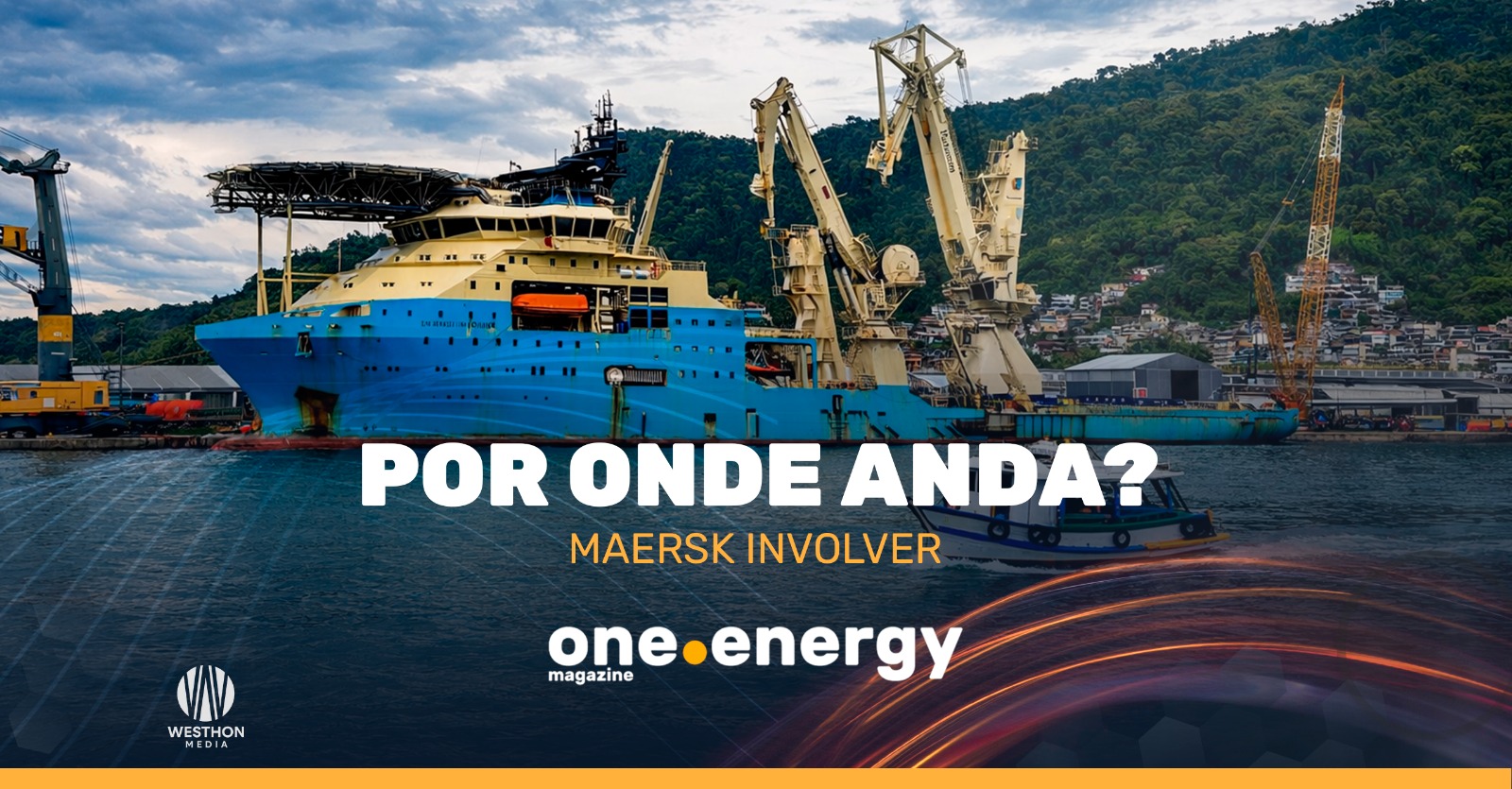
    Built in 2007, with an impressive 138 meters LOA, the then Maersk Involver was born under the Danish offshore tradition. A blue hull, robust lines, and a clear purpose: to deliver capacity where conventional logistics cannot reach.

    But the sea changes. And so do assets.

    On November 1st, 2024, following the completion of the acquisition of Maersk Supply Service by DOF Group ASA, the fleet underwent a visible transformation.
    Names changed.
    Colors changed.The soft Danish blue gave way to the distinctive Norwegian red.

    Maersk Involver became Skandi Involver.

    Today, the vessel operates in Brazilian waters under contract with Petrobras, supporting subsea inspection activities. Her recent presence has been associated with the FPSO Sepetiba, operated by SBM Offshore — in Mero Field, one of Brazil’s key production hubs.

    But her story did not begin here.

    Before Brazil, she had already taken part in subsea campaigns offshore Angola.
    In the North Sea, she operated as a walk-to-work vessel in Denmark.
    She has worked in environments where logistics does not tolerate improvisation.

    Classified as an MPSV, Skandi Involver occupies a hybrid space in the market. In a country where distance, water depth, and production scale put constant pressure on the logistics chain, onboard capacity stops being a differentiator — it becomes a strategic tool.

    Some vessels adapt to survive.
    Others seem to have been designed for constant adaptation.

    And then comes the detail that disrupts the narrative.

    After the acquisition, the rule appeared clear: new name, new visual identity.
    Yet recent records show something intriguing.

    👉 Why does she still appear blue?

    A transitional delay? Or simply time — which in offshore operations is rarely linear?

    In the end, Skandi Involver continues her course — discreet, stable, operational.
    Too large to be ordinary.
    Too specialized to be circumstantial.

    Every Thursday, a new “Por onde anda?”
    Stay tuned.

  • BRAVA moves forward in Papa-Terra

    BRAVA moves forward in Papa-Terra

    BRAVA has announced that its subsidiary 3R Petroleum Offshore was authorized to proceed with the transfer of a 37.5% interest in the Campo de Papa-Terra consortium previously held by Nova Técnica Energy Ltda..

    The authorization was issued on 15 February 2026 as part of ongoing arbitration between the parties. The decision allows the company to initiate formal steps required for the transfer, including regulatory filings with ANP, and other authorities.

    The participation transfer remains reversible until a final arbitration ruling is issued, and the 37.5% stake cannot be sold or transferred to third parties during the process.

    The dispute originated in May 2024 following proceedings initiated by 3R Offshore related to contractual obligations within the Papa-Terra joint operating agreement.

    Stay informed on key offshore developments — visit wsb-one.com, our data platform trusted by leading offshore companies.

  • Open Tenders & More

    Open Tenders & More

    Dear All,

    WSB is pleased to provide an update on the current long-term tenders that are open to offer.

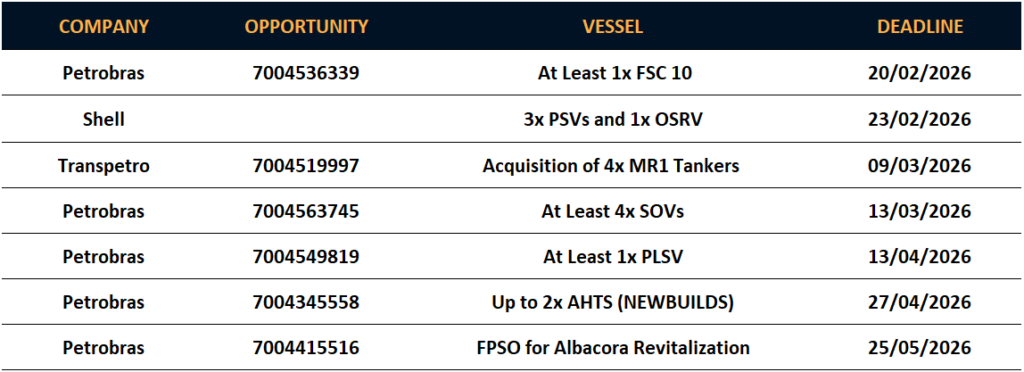
    Open tenders:

    What has changed?

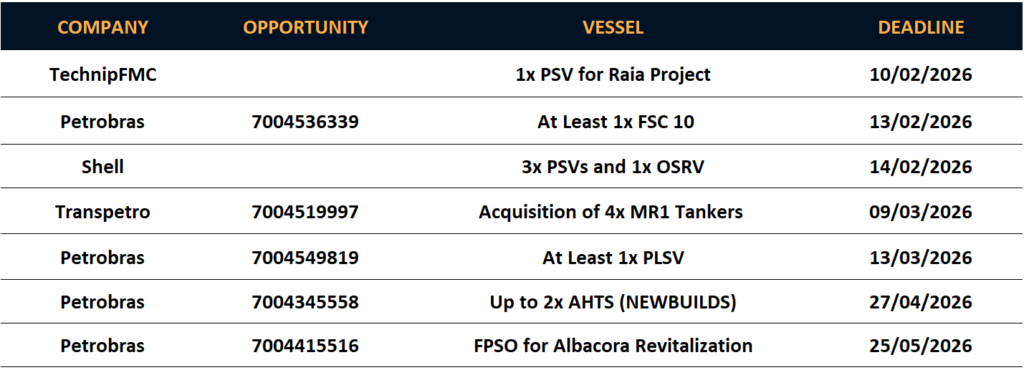
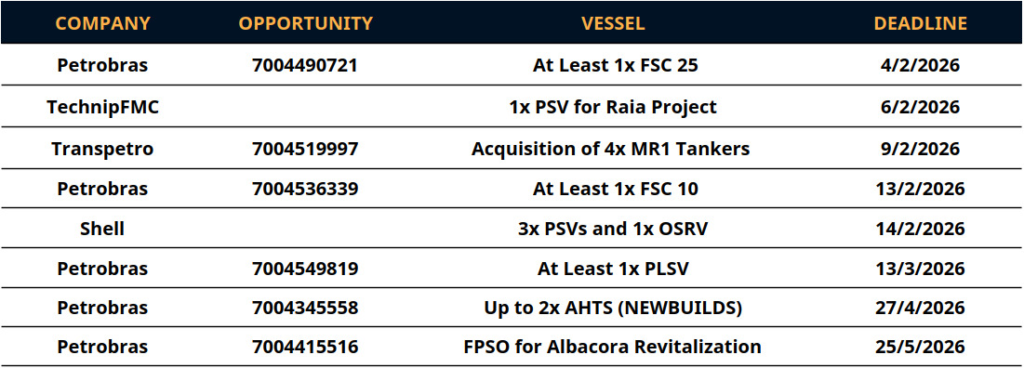
    • Petrobras At Least 1x FSC 10: Opportunity 7004536339 new deadline February 20th, 2026.
    • Petrobras At Least 4x SOVs: Opportunity 7004563745 released February 12th, 2026.

    What else is happening?

    • Brazilian O&G market remains quiet as Carnival takes over! 🎉🎊
      As celebrations continue, we’ll be ready to set sail with fresh updates soon. Stay tuned!
  • What are your plans for Carnival?

    What are your plans for Carnival?

    While the market slows down, data keeps moving. And in the offshore industry, those who control structured information control decision-making power.

    WSB Advisors offers WSB-One, the most comprehensive offshore database platform in South America. Real-time information on vessels, contracts, availability, and technical specifications — transformed into strategic intelligence for companies operating in oil & gas and renewable energy.

    This is not just about following the market. It’s about anticipating movements, identifying opportunities, and competing with an edge in a sector where timing and information make all the difference.

    With WSB-One, you gain access to:

    * Integrated and cross-referenced data on nearly 600 vessels
    * Detailed information on OSVs, drilling rigs, and FPSOs
    * Full technical specifications
    * Daily updated vessel availability
    * Chartering activity and contract duration monitoring
    * Ongoing requirements tracking
    * Market positioning and competitor visibility
    * On-time offshore market news
    * Interactive graphics for faster and clearer analysis
    * Dedicated analysts ensuring continuous updates and reliable intelligence

    The offshore market doesn’t take a break.

    Are you keeping up?

    Stay informed on key offshore developments — visit wsb-one.com, our data platform trusted by leading offshore companies.

  • Merger: Transocean and Valaris

    Merger: Transocean and Valaris

    Swiss-based Transocean confirmed market speculation this week by announcing the acquisition of rival Valaris in a transaction valued at approximately US$ 5.8 billion. Under the proposed structure, Transocean shareholders will hold around 53% of the combined company, with Valaris shareholders owning the remaining 47%, resulting in a pro forma enterprise value close to US$ 17 billion.

    Once completed, the deal will create the world’s largest publicly traded offshore drilling contractor, with a combined fleet of 73 rigs, including 33 drillships, nine semisubmersibles and 31 jack-up rigs, as well as an estimated US$ 10 billion order backlog. The transaction remains subject to regulatory and shareholder approvals.

    What’s next?

    The combination is expected to expand exposure to key offshore basins globally and unlock more than US$ 200 million in identified cost synergies, on top of Transocean’s ongoing cost-reduction initiatives. Management expects these gains to strengthen cash flow generation, accelerate deleveraging and enhance financial flexibility, at a time when demand for high-specification offshore drilling units remains firm across major deepwater markets.

    And what does this mean for Brazil?

    Brazil continues to rank among the most strategic deepwater markets for the combined company. Both contractors already operate critical assets in the country, including Deepwater Corcovado and Valaris DS-4, reinforcing local exposure to Petrobras’ long-term offshore development plans.

    At the same time, the merger further concentrates the supply side of the ultra-deepwater drilling market. While greater scale and financial strength may support operational efficiency and fleet investment, fewer global players with high-specification rigs could reshape competitive dynamics in future tenders, particularly in markets such as Brazil where demand remains structurally strong.

    Stay informed on key offshore developments — visit wsb-onecom, our data platform trusted by leading offshore companies.

  • Open Tenders & More

    Open Tenders & More

    Dear All,

    WSB is pleased to provide an update on the current long-term tenders that are open to offer.


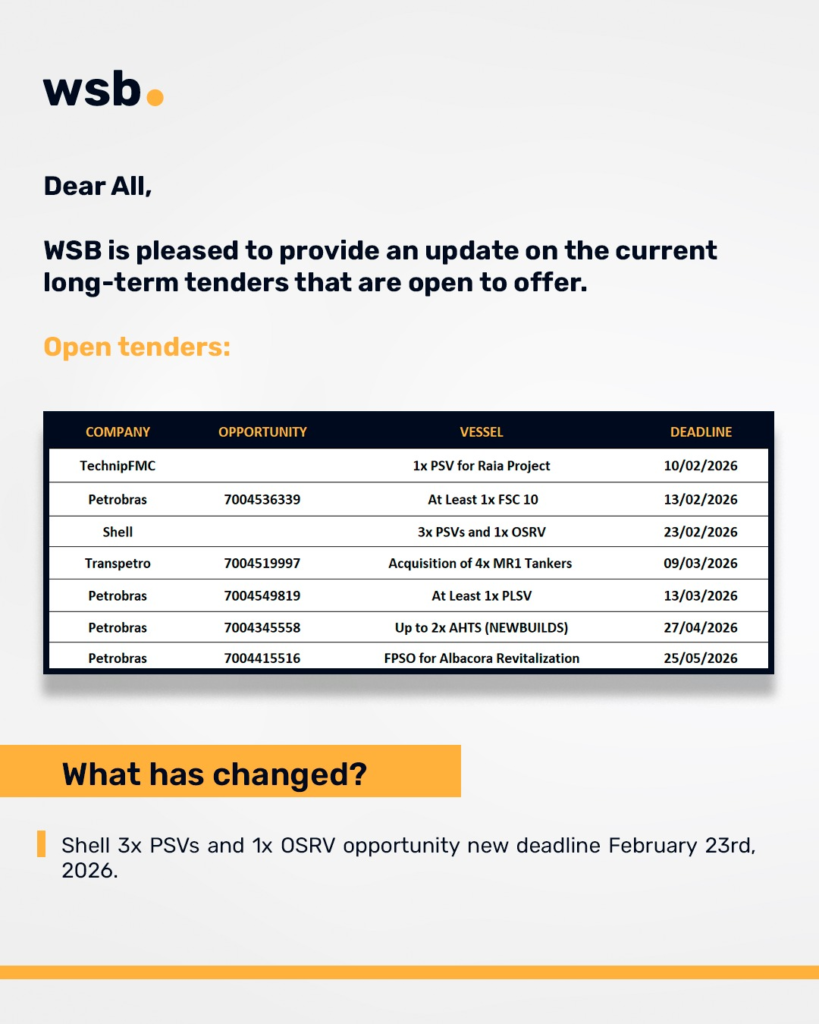
    Open tenders: What has changed?

    Shell 3x PSVs and 1x OSRV opportunity new deadline February 23rd, 2026.

    Stay informed on key offshore developments — visit wsb-one.com, our data platform trusted by leading offshore companies.

  • Open tenders & More

    Open tenders & More

    Dear All,

    WSB is pleased to provide an update on the current long-term tenders that are open to offer.

    Open tenders:

    What has changed?

    • Petrobras Acquisition of 4x MR1 Tankers: Opportunity 7004519997 new deadline March 9th, 2026.
    • Technip 1x PSV for Raia Project new deadline February 10th, 2026.

    What else is happening?

    • Petrobras announced a partial annulment of the bidding process for the 6 SOVS tender (7004478234) due to technical and budgetary adjustments. The tender has been returned to the proposal stage, with revised documentation and a new submission timeline.
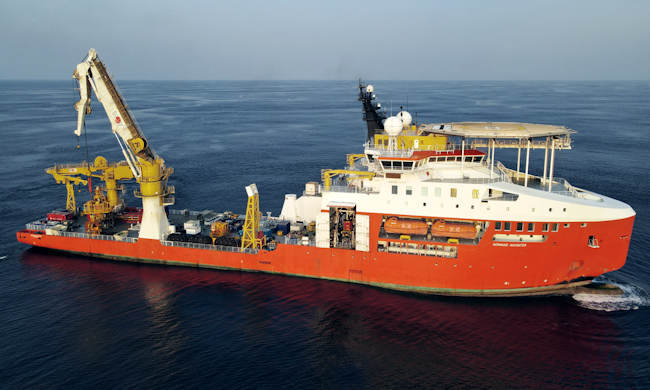
    • Solstad Maritime signed a Letter of Intent with an international subsea contractor for the CSV Normand Navigator,securing a 450-day contract starting in Q2 2026, supported by two work-class ROVs.
  • Special WSB: Por onde anda – Asso Ventisette

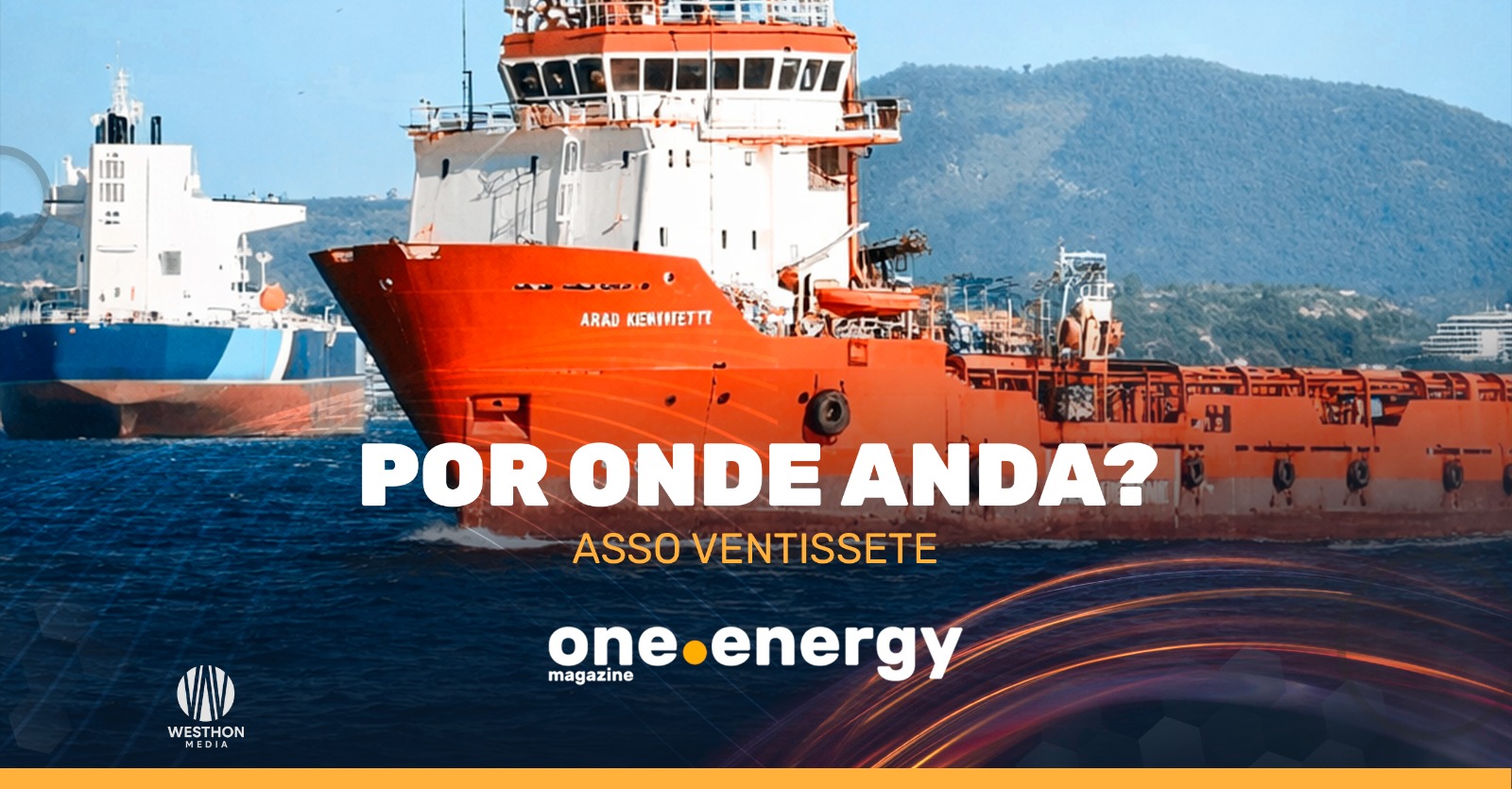
    Special WSB: Por onde anda – Asso Ventisette


    Versatility was never an exception for a PSV — it has always been part of the design.
    And increasingly, part of the challenge!

    What Asso Ventisette reveals is not a rule being broken, but a natural market filter: not every PSV can sustain extended operational roles outside the “script” over long cycles. Some step in. Very few remain.

    Built in 2007 at the former Aker Promar shipyard in Niterói, Asso Ventisette is based on the UT 755L design and classified as a PSV 3000, positioning herself within the mid-size segment that for many years formed the backbone of Brazil’s offshore logistics. With approximately 71.9 meters in length, 16 meters of beam and deadweight around 3,200 tonnes, the vessel offers about 685 m² of deck area and a cargo profile conceived for continuous offshore support rather than highly customized, single-purpose missions.

    Propulsion is provided by two Wärtsilä main engines, allowing speeds close to 14.5 knots. Dynamic positioning capability and FiFi1 notation expand operational scope, but these specifications alone do not explain the vessel’s differentiated trajectory.

    For more than four years, Asso Ventisette operated in continuous campaigns supporting shallow water diving operations for Petrobras, in cooperation with Belov. Without presenting herself as a dedicated SDSV, the vessel sustained this operational profile over a prolonged cycle — something that, in practice, few PSVs manage to achieve without compromising availability, cost efficiency, or reliability.

    The discussion here is not about typology, but about operational endurance. Extended offshore roles demand more than deck space and certificates; they require stable performance, disciplined maintenance, and operational trust built over time. Many PSVs can take on broader scopes. Few can remain there — and Asso Ventisette stands out precisely for that reason.

    So, where is she now?
    Based on market intelligence and WSB-One data, Asso Ventisette has been positioned in active employment within the PSV segment, with visibility for new contractual windows following the conclusion of the shallow diving support campaign. Vessel movement records indicate consistent offshore support activity, with operational presence in the Búzios and Roncador areas — environments where the PSV 3000 profile remains in demand by operators and logistics contract integrators.

    Sometimes, the difference between being employed or laid up is not on the spec sheet — it is how long a vessel can keep performing once the scope stops being purely theoretical.

    Every Thursday, a new “Por onde anda?” — stay tuned.

    Stay informed on key offshore and marine market developments — visit wsb-one.com

  • Breaking News

    Breaking News

    1. MODEC signs strategic LoI for offshore SOFC power generation system

    MODEC signed a Strategic Letter of Intent on 29 January 2026 with Eld Energy and Delta Electronics to jointly develop a solid oxide fuel cell (SOFC) power generation system for offshore and maritime applications. The agreement covers development of a 120 kW SOFC prototype module designed for FPSO integration, with onshore testing scheduled for 2027. According to the companies, the initiative targets higher energy efficiency and material reductions in greenhouse gas emissions from offshore operations.

    2. Brazil reaches record oil and gas production in 2025

    Brazil’s average oil and natural gas production reached a record 4.897 million barrels of oil equivalent per day in 2025, representing a 13.3% increase compared to 2024. Oil output averaged 3.77 million barrels per day, while natural gas production reached 179 million cubic meters per day, both historic highs.
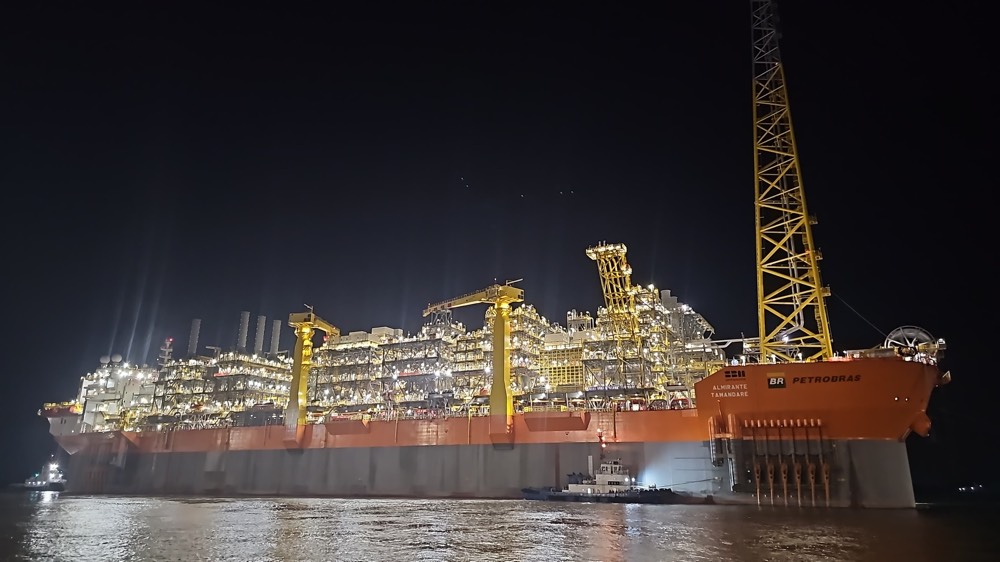
    Pre-salt fields accounted for nearly 80% of total national production during the year. In December, production totaled 5.237 million boe/d, led by the Tupi field and FPSOs Almirante Tamandaré and Guanabara.

    Stay informed on key offshore developments — visit wsb-one.com, our data platform trusted by leading offshore companies.

  • MR1 bid postponed

    MR1 bid postponed

    At the request of shipyards, Transpetro has postponed the deadline for submitting bids for the tender to acquire four MR1 tanker vessels. The new deadline has been set for March 9, exactly one month after the original closing date. The bidding process has been open since November and initially granted 90 days for bidders to submit their proposals.

    The tender covers the construction of four MR1 tankers, each with a 40,000 DWT capacity, intended for the transportation clean petroleum products along the Brazilian coast. Shipyards will be required to deliver the vessels within 33 months after contract signing. According to Transpetro, the ships will incorporate advanced technologies aimed at improving energy efficiency and reducing greenhouse gas emissions.

    Contract signing is expected to take place in the third quarter of this year (July–September).

    This bidding round follows previous tenders for 18 barges and 18 pushers, as well as four LR1 tankers, reinforcing Petrobras’ long-term logistics strategy and the ongoing revival of Brazil’s shipbuilding industry. Recently, Transpetro held an exclusive supplier event in Rio de Janeiro, where technical guidelines for the project were presented.

  • Open Tenders & More

    Open Tenders & More

    Dear All,

    WSB is pleased to provide an update on the current long-term tenders that are open to offer.

    Open tenders:

    What has changed?

    • Petrobras Al least 1x FSC 10: Opportunity 7004536339 has postponed until March 13rd, 2026.

    What else is happening?

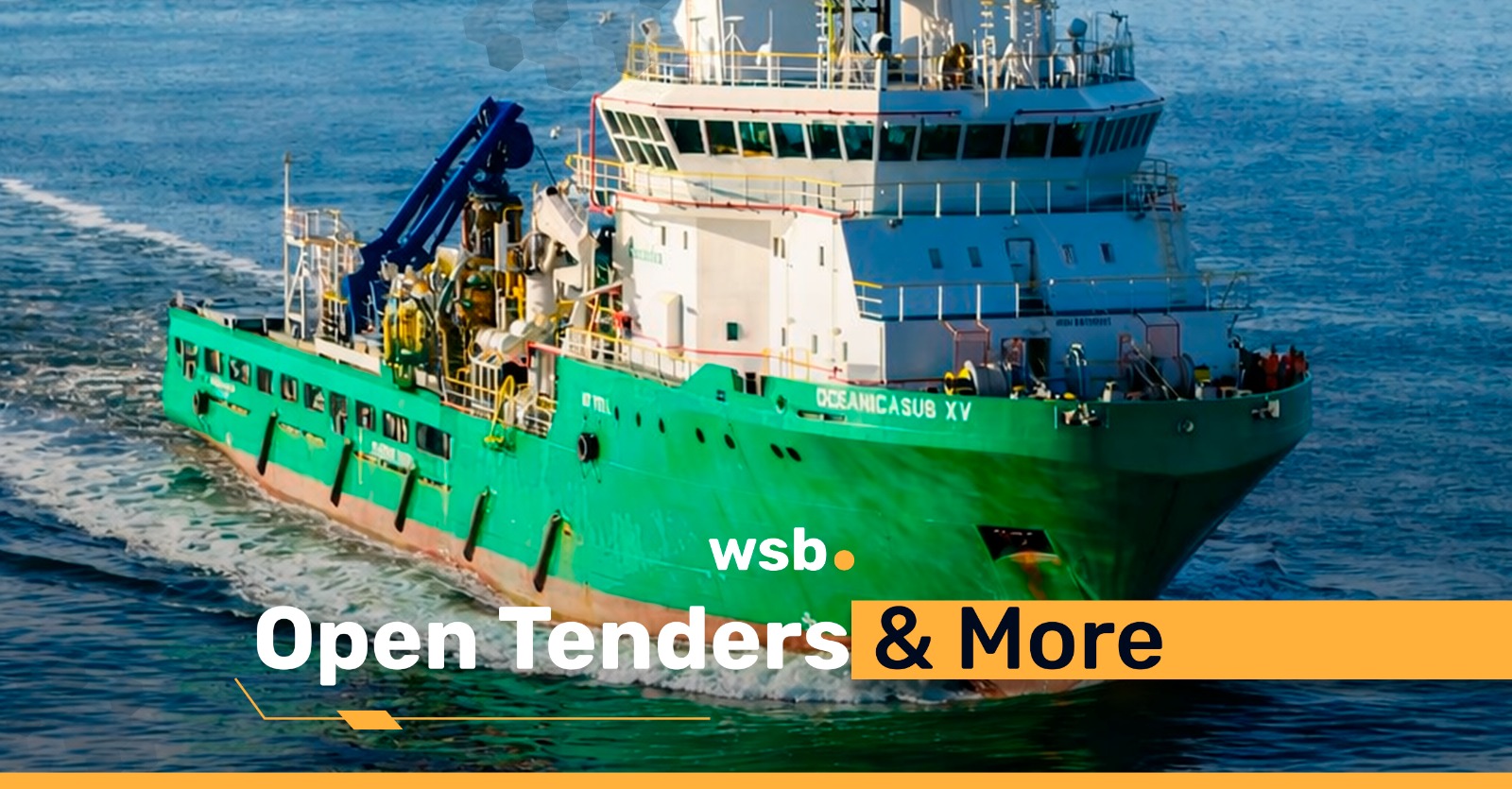
    • OceanicaSub XV (ex-Far Scimitar) has commenced a firm 4-year contract with Petrobras, with additional extension options.
    • Wilson Sons delivered the WS Halcyon yesterday in Rio de Janeiro, the first of a new series of three high-powered 2312 class tugboats built at its Guarujá shipyard, featuring 70 tonnes of bollard pull.
  • Brazil and Panama sign landmark agreement to develop a Green Maritime Corridor

    Brazil and Panama sign landmark agreement to develop a Green Maritime Corridor

    Agreement aims to accelerate the energy transition of maritime transport, focusing on sustainable fuels and logistics innovation

    Brazil and Panama announced last Wednesday (January 28) the signing of a strategic agreement to develop studies for the creation of a Green Maritime Corridor between the two countries. The initiative is intended to promote the use of sustainable fuels in shipping and to advance the decarbonization of one of the most important logistics routes in the hemisphere.

    The agreement, formalized at the conclusion of the Brazilian government’s official mission to Panama, is structured around four key pillars of cooperation: competitiveness and new trade routes, decarbonization of maritime transport, technological modernization through the use of artificial intelligence and Big Data, and workforce training and capacity building for the sector.

    The route between Brazil and the Panama Canal handles an average of 5.8 million tonnes of cargo per year, standing out as one of the most relevant corridors in international maritime logistics. The commitment aligns both countries with global greenhouse gas reduction targets and with the broader energy transition agenda of the maritime sector.

    In Brazil, this movement is already supported by regulatory and operational initiatives. A survey conducted by the National Waterway Transportation Agency (Antaq) shows that at least five Brazilian ports currently offer incentives for vessels with a lower carbon footprint: Itaqui (MA), the Pecém Private Use Terminal (CE), Paranaguá (PR), Santos (SP), and the Açu Private Use Terminal (RJ).

    The agreement also positions Brazil at the forefront of the maritime energy transition agenda in Latin America. Globally, maritime transport accounts for approximately 3% of total greenhouse gas emissions, underscoring the strategic importance of initiatives such as green corridors to decarbonize ocean shipping and support the achievement of net-zero emissions targets by 2050.

    Stay informed on key offshore developments — visit wsb-one.com, our data platform trusted by leading offshore companies.

    #EnergyTransition #GreenMaritimeCorridor #MaritimeTransport #Decarbonization #SustainableFuels #MarineIndustry #Shipping #PortInfrastructure #BlueEconomy #Offshore #Logistics #Brazil #Panama #WSBAdvisors #WesthonMedia