Capital Marítima has announced a new contract with Petrobras, marking a significant step forward in the company’s expansion within Brazil’s offshore support market. The agreement involves the vessel Ace Defender, a Platform Supply Vessel (PSV) that will now join Petrobras’ operations under a time charter contract with a fully integrated crew package.
Headquartered in Barra da Tijuca, Capital Marítima operates in the offshore marine sector with a portfolio focused on vessel ownership and operations, offshore and port support services, coastal shipping, Ship-to-Ship (STS) operations, and the development of integrated marine solutions for Brazil’s energy industry.
Under the time charter agreement, the Ace Defender will be delivered fully crewed and ready for immediate deployment, strengthening Petrobras’ operational capabilities in the offshore marine support segment. The vessel will become part of the fleet dedicated to the logistical support of deepwater and ultra-deepwater operations, a market segment experiencing continued growth amid rising demand for specialized marine services in the oil and gas industry.
The new contract represents an important milestone for the company and highlights the growing participation of qualified Brazilian shipowners in supporting Petrobras’ offshore operations, further reinforcing the expansion of the country’s maritime industry.
WSB Advisors will continue monitoring Capital Marítima’s development as the company further consolidates its position within Brazil’s offshore support vessel market.
She had no disaster named after her. No inquiry. No memorial. No court case running twenty years later. Just steel. Just sea. Just oil — for decades, in 300 meters of South Atlantic waters.
Platform P-16 — Petrobras XVI — was a semi-submersible of the pioneering Roman-numeral generation that quietly built Brazil’s offshore industry. Processing up to 20,000 barrels a day. Displacing 18,000 tonnes of seawater. Floating on two submerged pontoons, anchored to the Campos Basin floor, holding position while the South Atlantic did its worst.
She was a laboratory as much as a platform. Flexible risers tested on her flanks. Subsea manifolds connected below her. Engineering knowledge that would later carry Brazil into 1,500 meters — into 2,000 — into the pre-salt layer that changed global energy.
She didn’t go there. But the engineers who did learned their craft on her.
In 2017, Petrobras auctioned her alongside six sister platforms at the Port of Aratu, Bahia. Seven units. US$ 83.5 million combined. The P-16 left with a new owner, without her name, headed most likely to a breaking yard.
An estimated 10,000 tonnes of steel. Returned to the market. Recycled into other things.
Where is P-16 now?
She isn’t anywhere. She is everywhere steel goes when the sea is done with it.
— WSB Advisors tracks the vessels the industry forgets.
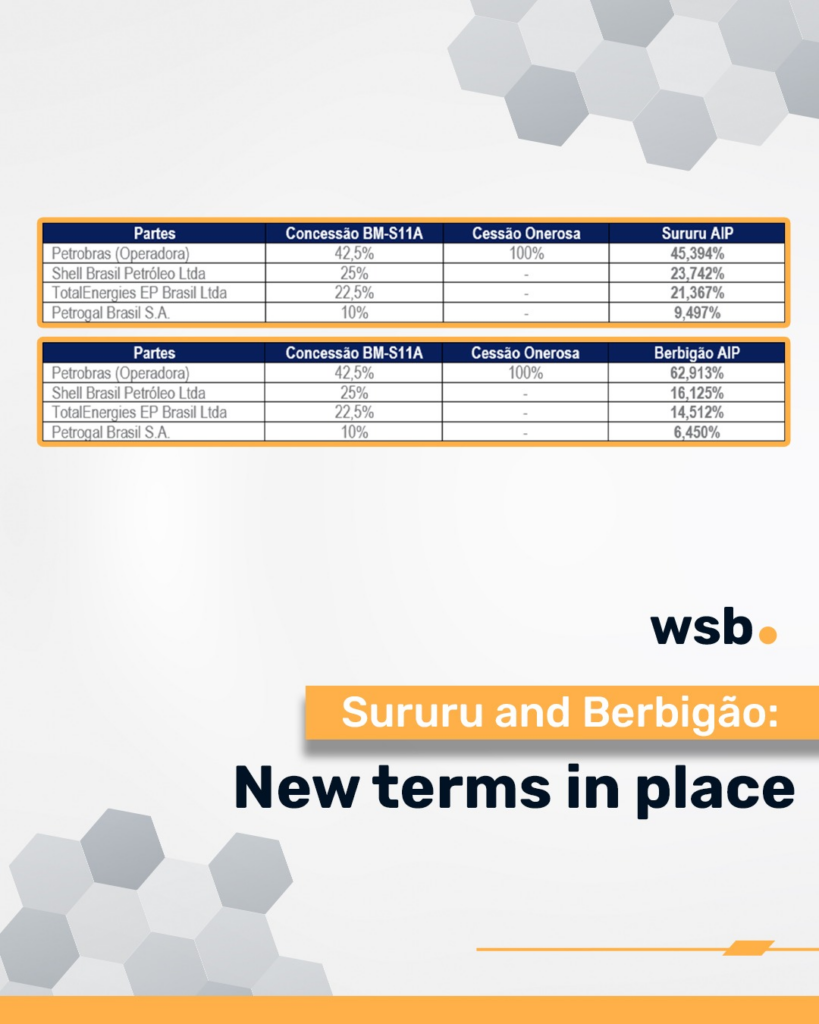
Petrobras has reported that it has been informed by Brazil’s National Agency of Petroleum, Natural Gas and Biofuels (ANP) of the approval of the Production Individualization Agreements (AIPs) for the shared Sururu and Berbigão reservoirs, located in the pre-salt layer of Santos Basin. According to the company, the agreements entered into force on May 1.
The AIPs formalize the understanding between Petrobras, the Federal Government and partners Shell, TotalEnergies and Petrogal for the joint development of the areas. The shared reservoirs involve the BM-S-11A concession contract and the transfer-of-rights contract, the latter fully held by Petrobras.
Under the approved terms, the Sururu reservoir will have the following stakes: 45.394% for Petrobras, 23.742% for Shell, 21.367% for TotalEnergies and 9.497% for Petrogal. In Berbigão, Petrobras will hold 62.913%, followed by Shell with 16.125%, TotalEnergies with 14.512% and Petrogal with 6.45%.
Both reservoirs have been producing since 2019 through the FPSO P-68, which has a processing capacity of up to 150,000 barrels of oil per day. The AIPs define each company’s participation and establish the rules governing the joint development and production of oil and natural gas in the shared reservoirs.
The approval follows years of regulatory discussions involving the unification of the reservoirs, after ANP determined the shared development of the areas. The consortium partially challenged aspects of the process, which also led to international arbitration proceedings related to the fields’ development structure.
Production individualization agreements are required when reservoirs extend beyond the boundaries of contracted areas, in accordance with ANP regulations. Financial compensation related to costs incurred and revenues associated with volumes produced prior to the agreements entering into force will still be negotiated among the companies involved.
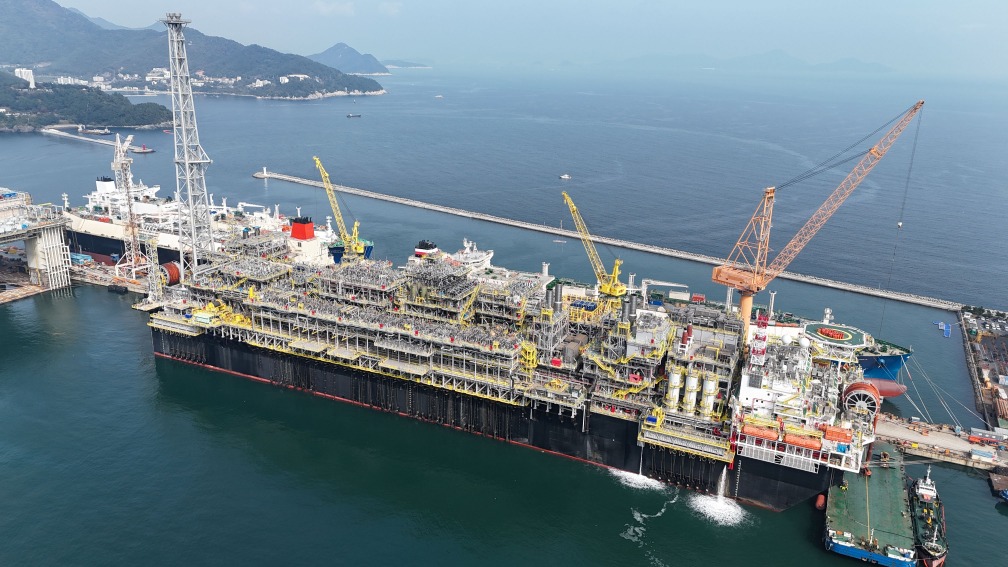
Petrobras began oil production from the FPSO P-79 on May 1, marking an early start compared to the schedule outlined in the company’s latest Business Plan (2026–2030).
P-79 is operating in the Búzios Field, Santos Basin. The unit has the capacity to produce up to 180,000 barrels of oil per day and compress 7.2 million cubic meters of gas. With its start-up, the field’s installed production capacity reaches around 1.3 million barrels per day.
The vessel arrived from the Hanwha Ocean shipyard in February and measures approximately 345 meters in length.
The FPSO is part of the Búzios 8 Development Project, which includes 14 wells — eight producers and six injectors — equipped with intelligent completion systems. The unit is connected through rigid pipelines for production, injection, and gas export, as well as flexible lines for service support.
P-79 is the eighth FPSO in operation in Búzios, currently Brazil’s largest producing field, which surpassed 1 million barrels per day in 2025. Discovered in 2010, the field is located around 180 km offshore, in water depths exceeding 2,000 meters.
Magda Chambriard, CEO of Petrobras, has been elected chair of the board of Braskem, following recent changes in the company’s ownership structure.
The appointment comes amid the ongoing transition of control previously held by Novonor, marking a new phase in Braskem’s governance.
Petrobras holds approximately 47% of voting shares and 36.1% of total capital in Braskem, positioning itself as a key shareholder in the company. Chambriard’s election reinforces Petrobras’ role in the company’s strategic direction at a time of broader restructuring.
The move reflects a shift toward greater influence over governance without changes in equity participation, as Petrobras continues to reassess its position across the downstream and petrochemical segments.
Stay informed on key offshore developments — visit wsb-one.com, our data platform trusted by leading offshore companies.
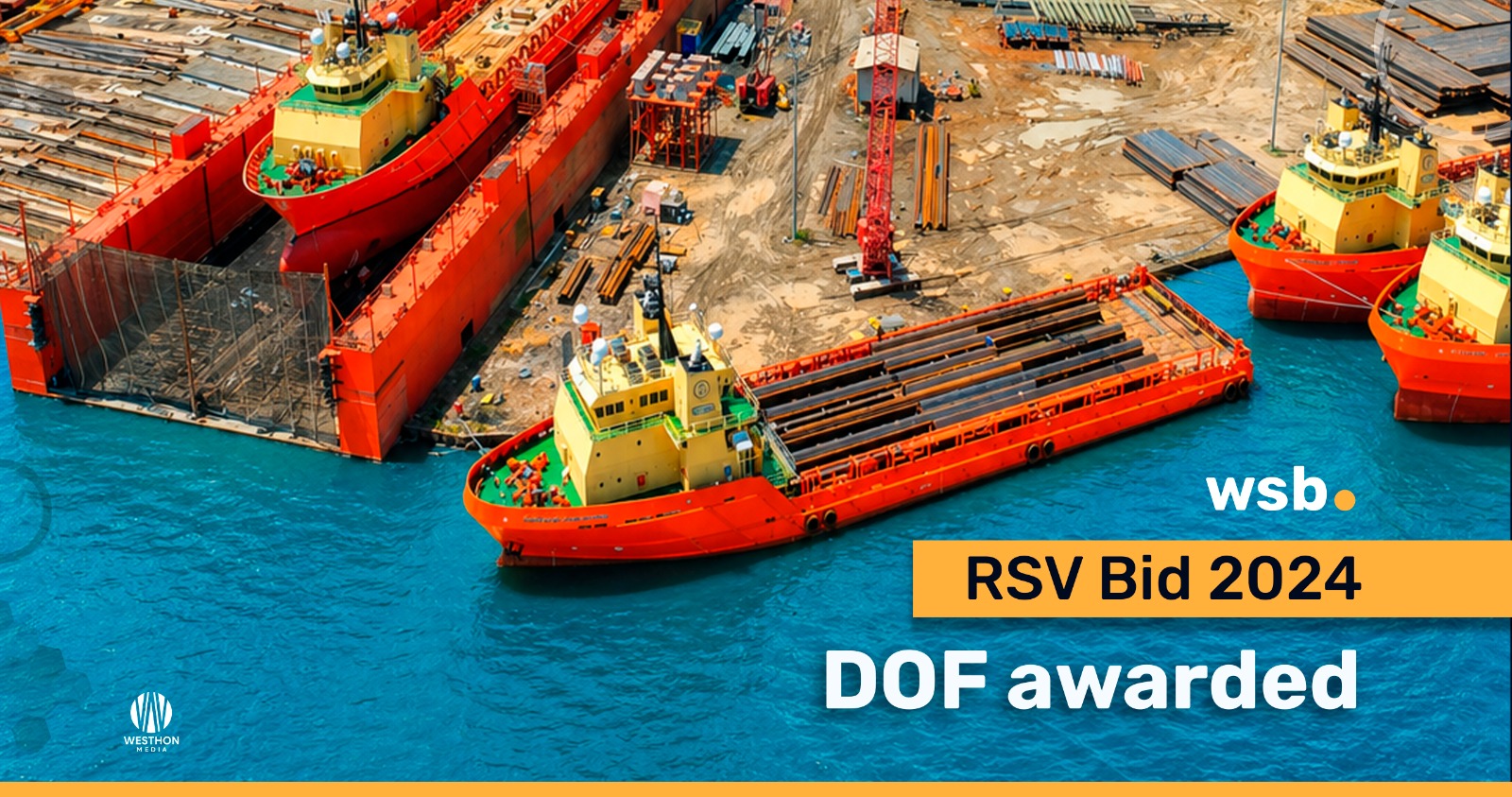
Petrobras awarded this week four RSV-type vessels to DOF under bid 7004319394, launched in 2024. The contracts have a 12-year term and total more than R$11.05 billion, with an estimated day rate of around US$116,364 per vessel.
The vessels will be built at the Navship shipyard.
In addition, the same yard will also be responsible for four other vessels under this tender, which were already awarded last year to Bram Offshore, at a day rate of US$108,990 per vessel.
Petrobras has completed the tieback of the Búzios 90 well, a step that enables first oil from the P-79 platform in the Búzios field, in the Santos Basin. The unit will have the capacity to produce up to 180,000 barrels of oil per day and compress 7.2 million cubic meters of gas, becoming the eighth platform operating in the field. Start-up now depends only on approval from the Agência Nacional do Petróleo (ANP).
According to the company’s CEO, Magda Chambriard, the platform is ready to begin operations once regulatory clearance is granted. She highlighted the complexity of the work, which involved around 1,300 hours and the installation of 15 km of flexible and rigid lines, as well as umbilicals. The Búzios 90 well is expected to produce about 50,000 barrels per day.
Located about 180 km off the coast of Rio de Janeiro in ultra-deep waters, P-79 is part of the Búzios 8 project, which includes 14 wells — eight producers and six injectors — as well as a gas export pipeline connected to the Rota 3 system.
The tieback campaign was carried out alongside anchoring operations and involved 11 vessels, both owned and contracted. According to the company, the main challenges were managing simultaneous activities on the FPSO and in the subsea environment, as well as logistical constraints.
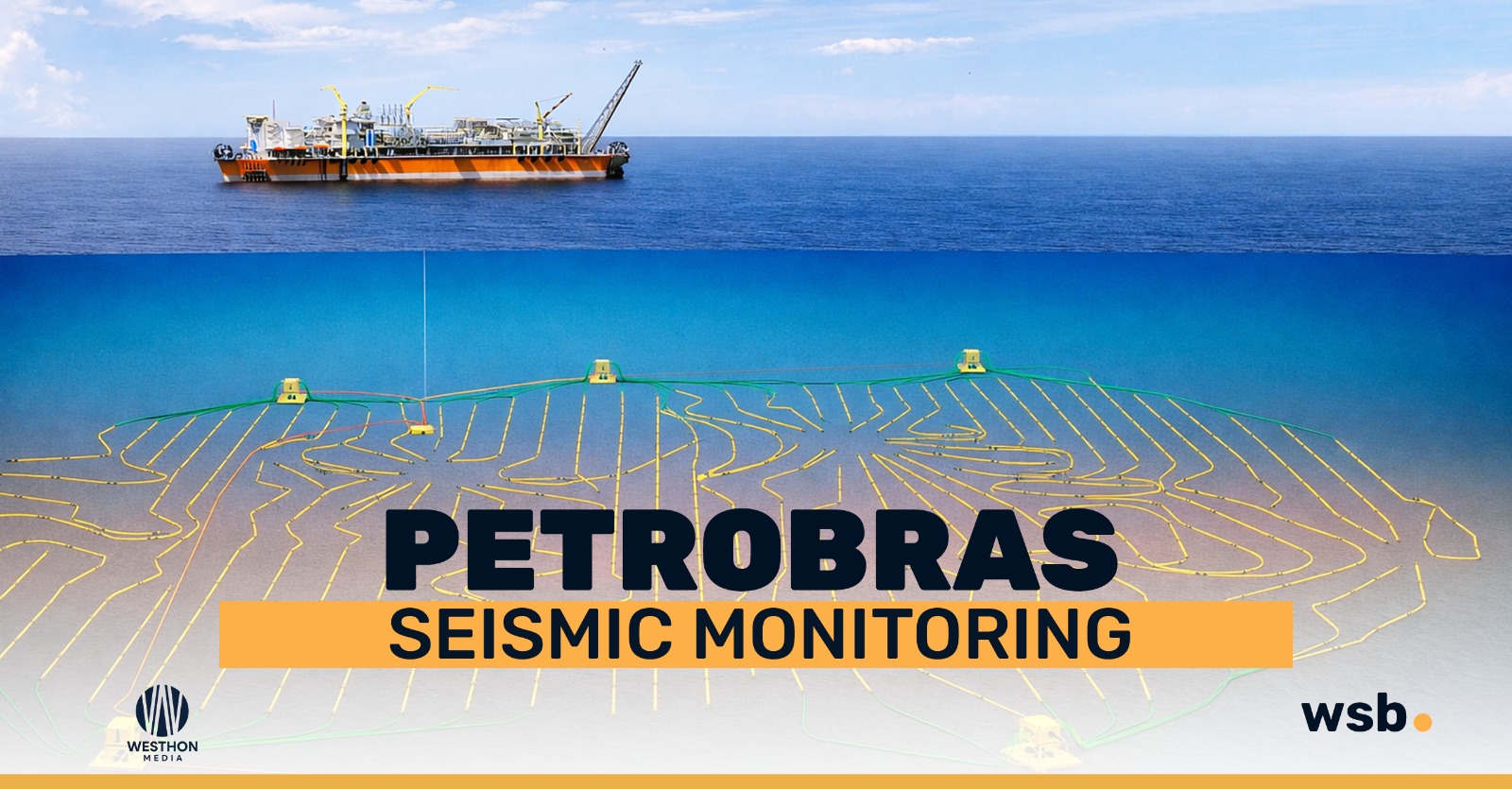
Petrobras has advanced the world’s largest permanent seismic monitoring project at the Mero field, in Brazil’s Santos Basin. The initiative, backed by approximately US$450 million in investments, completed its first phase in March 2026 and is now moving into a key stage, with first data acquisition expected in the second quarter.
More than 460 km of seabed cables have already been installed, covering an area of 222 km². The system will monitor production activities at FPSOs Guanabara (Mero 1) and Sepetiba (Mero 2), helping Petrobras and its partners track reservoir behavior in real time.
A second phase is planned to add another 316 km of cables, with completion expected in 2027, expanding the monitoring network across the field.
The project is centered on Mero, one of Brazil’s leading pre-salt assets, which was producing more than 680,000 barrels per day as of January 2026.
More than a new investment announcement, this marks a relevant execution milestone: the project has moved from installation into the operational data phase, with direct implications for reservoir management and recovery efficiency.
WSB is pleased to provide an update on the current long-term tenders that are open to offer.
Open tenders:
New deadlines were released across ongoing Petrobras opportunities. Below are the latest changes monitored by WSB Advisors.
What has changed?
Petrobras — Up to 4x SOVs: Opportunity 7004563745, new deadline April 10th, 2026 • Petrobras — FPSO for Albacora Revitalization: Opportunity 7004415516, new deadline July 6th, 2026
What else is happening?
Subsea7 signed a supermajor contract, exceeding USD 1.25 billion, with Petrobras for the development of the Sépia 2 field in the Santos Basin pre-salt, located approximately 280 km offshore Rio de Janeiro. The scope includes engineering, procurement, fabrication, installation and pre-commissioning of subsea systems for 17 wells, as well as a gas export line. Project management and engineering activities are set to start immediately, with offshore operations scheduled from 2029.
Stay informed on key offshore developments — visit wsb-one.com, our data platform trusted by leading offshore companies.
Constellation Oil Services announced on April 1, 2026, that it has secured contract extensions with Petrobras for three offshore drilling rigs, adding approximately $1.1 billion to its backlog and reinforcing long-term revenue visibility.
The agreements cover the Brava Star, Gold Star and Alpha Star units and represent a multi-year extension of contracted operations. As a result, Constellation’s total backlog increases to around $2.8 billion, with coverage extending through 2030.
The most significant extension was awarded to the drillship Brava Star, which secured a four-year extension through December 2030, valued at approximately $569 million. The unit will continue operating in the Búzios field, in the Santos Basin, and will undergo technological upgrades, including the implementation of managed pressure drilling (MPD) systems starting in 2027.
Meanwhile, the semi-submersible rigs Gold Star and Alpha Star, both built in 2009, were awarded extensions of approximately two years and ten months, keeping them contracted through 2028. The extensions add roughly $266 million and $300 million to the backlog, respectively, and include expanded scopes such as integrated riser services and support for well intervention and decommissioning activities.
All contracts will commence immediately after the expiration of the current terms, ensuring operational continuity for the units. The agreements also include the implementation of new safety-focused technologies on the drill floor, particularly for the Brava Star and Alpha Star units.
Oil price rally driven by conflict in Iran enables full project sanction with two platforms Dutch firm SBM Offshore has won the tender for the construction and operation of the two floating production units (FPSOs) for the Sergipe Deepwater project (SEAP), as confirmed by Petrobras CEO Magda Chambriard during the “CNN Talks” event this Wednesday (April 1). The award of both units — SEAP I and SEAP II — was made possible by the recent upswing in international oil prices, which has improved the project’s economic attractiveness.
“With this increase in oil prices, we are now able to move forward with SEAP I,” Chambriard said, referring to the second platform, whose bankability had been contingent on a more favorable price environment. Brent crude has surged above $100 per barrel in recent weeks, driven by the conflict involving the United States, Israel, and Iran, which led to a partial closure of the Strait of Hormuz — a critical chokepoint through which roughly 20% of the world’s oil supply transits.
Magda Chambriard (Source: Petrobras)
Production capacity and infrastructure
The combined capacity of the two platforms is expected to reach 200,000 barrels of oil per day and 18 million cubic meters of natural gas per day. Each FPSO will be capable of processing up to 120,000 barrels of oil and 12 million cubic meters of gas, with output transported to shore via a pipeline system spanning approximately 128 kilometers (100 km offshore and 28 km onshore).
The SEAP project encompasses seven fields declared commercial by Petrobras in December 2021 — Agulhinha, Agulhinha Oeste, Budião, Budião Noroeste, Budião Sudeste, Cavala, and Palombeta — located within the BM-SEAL-4, BM-SEAL-4A, BM-SEAL-10, and BM-SEAL-11 concessions, roughly 80 kilometers off the coast of Sergipe in the Sergipe-Alagoas Basin.
Brazil’s National Petroleum Agency (ANP) recently approved an extension of the concession contracts, pushing SEAP I’s term to 2055 and SEAP II’s to 2057. The move provides greater regulatory certainty and is expected to increase recoverable oil and gas volumes by 14.5%, according to the regulator.
Project trajectory and market context
Originally slated for startup in 2026, SEAP has undergone two schedule revisions — first to 2028 and later to 2030. The final investment decision (FID) for the first platform, SEAP II, was approved by Petrobras in December 2025 and included in the company’s firm investment portfolio under its 2026–2030 Strategic Plan. SEAP I, meanwhile, had been classified as a “target project,” dependent on favorable market conditions. The tender followed a Build, Operate and Transfer (BOT) model, under which SBM Offshore will construct and operate the units before transferring ownership to Petrobras at the end of the contract term. The company submitted the most competitive technical and commercial bids for both platforms in a process concluded in March.
The recent rise in oil prices — with Brent trading above $100 per barrel since the onset of the Iran conflict in March — proved decisive in securing the economic viability of the second unit. When Petrobras released its strategic plan in November 2025, it outlined total investments of $109 billion, including $81 billion in firm projects and $28 billion in conditional projects. SEAP I was among those contingent on market conditions. Analysts at Bank of America forecast Brent will remain around $100 per barrel throughout 2026, with an annual average of $92.50 — a pricing environment that supports the project’s economics.
SBM Offshore and its footprint in Brazil
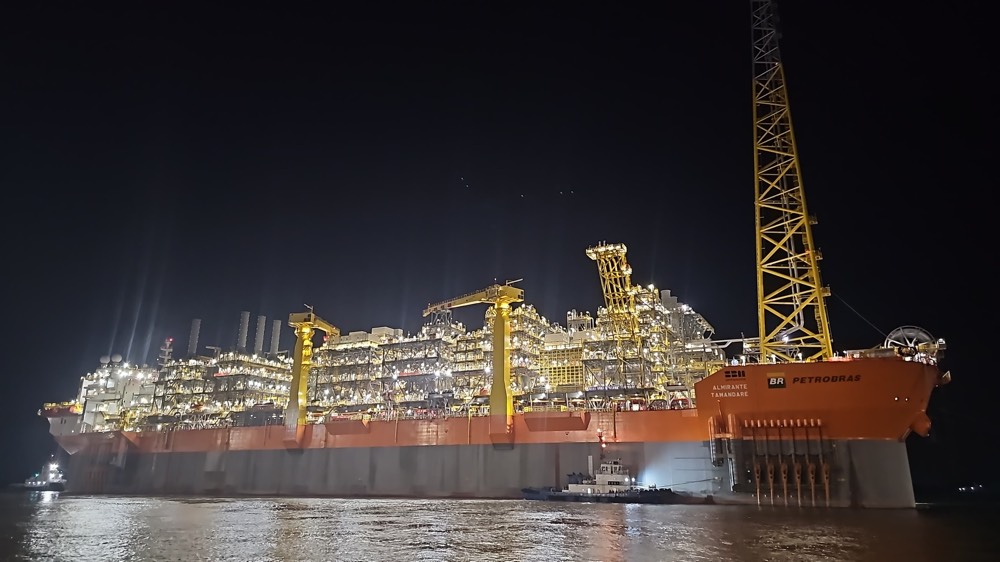
SBM Offshore is a longstanding supplier to Petrobras, with nine FPSOs currently operating in Brazilian waters. The company is particularly active in the Santos Basin, supporting pre-salt developments such as Mero, Búzios, and Tupi. The FPSOs Almirante Tamandaré and Alexandre de Gusmão, each with a capacity exceeding 180,000 barrels per day, began operations in 2025 at the Mero field.
FPSO Almirante Tamandaré (Source: Petrobras)
According to a company statement released in November 2025, the bids for SEAP I and II underscore SBM Offshore’s “leading position in the large and complex FPSO segment.” While competing globally with Asian shipyards, the company maintains approximately 50% of its operations in Brazil, as noted by CEO Øivind Tangen.
Regional impact and outlook
Startup of the SEAP project is scheduled for 2030, with SEAP II expected to come online first, followed by SEAP I roughly one year later. Studies by the Government of Sergipe estimate total investments of $5 billion (approximately BRL 25 billion) and a cumulative impact of up to BRL 37.8 billion on the state’s GDP over the project lifecycle.
The development is considered strategic for expanding Brazil’s domestic natural gas supply, with potential to serve thermoelectric power plants, fertilizer industries, and energy-intensive consumers in the Northeast. Petrobras signed a memorandum of understanding with the Sergipe state government in March to support commercialization of the gas, while the state is actively working to attract industrial consumers that can benefit from the new infrastructure.
The tender for the export gas pipeline is expected to be launched later in 2026, with startup aligned with first production in 2030. With the FPSO contracts now awarded, workstreams related to subsea infrastructure — including production and injection systems to tie back wells to the floating units — are set to move forward. SEAP represents the first new deepwater oil and gas frontier outside the Santos Basin since the pre-salt discoveries, positioning Sergipe as an emerging player in Brazil’s energy sector after decades of production concentrated in mature onshore fields.
Belov has signed eight contracts with Petrobras totaling R$ 2.7 billion for the operation of SDSV (Shallow Diving Support Vessel) vessels.
The four-year contracts cover four vessels: Belov Humaitá, Belov Amaralina, Cidade de Ouro Preto and the newbuild Belov Arembepe.
The vessels will support inspection, repair and maintenance activities on Petrobras offshore platforms, with contract start-ups scheduled in phases between 2H26 and 2H27.
The award strengthens fleet utilization and provides medium-term visibility, while supporting Belov’s expansion with the addition of Belov Arembepe, expected to be delivered in 2H27.