Foresea signed a new contract with Petrobras to charter the 6th generation Norbe VIII drillship. The agreement will be valid for three years and worth US$450 million. The vessel has a water depth of up to 3.000 meters, capable of drilling wells of up to 12.195 meters.The new contract shows the company’s strength in the Brazilian market as all five vessels in Foresea´s fleet are chartered out. A few days
ago, in fact, the company announced a semi–annual profit of almost US$100 million.
Author: Rafael Bortoloti
-

new charter for Foresea
-

petrobras is back again
Petrobras hit the market once again with more simultaneous tenders to charter OSVs to their fleet. Three new opportunities for PSVs, AHTS and OSRVs are out, this time with a twist. Not only the Petrobras disclosed the number of vessels they intend to hire from each tender (up to 20 PSVs, 12 OSRVs and 1 AHTS), but for the first time in a couple of years they also revealed their infamous “indicative budget” within tender documents, which is the basis for every hiring negotiation they go through. The daily rates Petrobras is expecting to receive in such opportunities are around USD 31k for OSRVs, USD 48k
for the AHTS and ranging from USD 26k to USD 44K depending on the size and scope of work, for PSVs. Petrobras will qualify offers based on the most competitive price disregarding anything above these thresholds. Delivery for all vessels is expected to take place between February and May 2024 and
the deadline to submit offers is October 10, subject to changes. Brazilian or REB vessels
as well as foreign flagged candidates will be considered for all oportunities. -

totalenergies tender
Last week, TotalEnergies received offers for the two tenders they had released in the market back in early August 2023. One of the tenders sought to charter an AHTS vessel whilst the other up to 3 PSVs. These tenders aimed to contest the position of all the vessels currently operating in TotalEnergies’ fleet which are exactly 3 PSVs and 1 AHTS, operating in both production and exploratory duties. Amongst the 3 PSVs, one of them was offered a 5-year firm contract and one other, shorter duration contracts which indicates that after Total is done with their drilling campaigns, their idea might be to reduce the fleet and maintain only one PSV with ROV in support duties and one AHTS to assist offloading operations.
-

DS-15 chartered to BP
Valaris announced that it signed a contract to charter the DS-15 drillship to BP. The contract will is for a 80 days period between March and May 2024 with the drilling of a well. The daily rate is US$410,000 without mobilization payments nor any additional services, totalling at least 33 million in the final work.Since 2021, the ship has been operating for TotalEnergies with a contract that goes until December. After that, it will be in service for Petronas until February. After working for BP, the ship will then return to TotalEnergies, with a contract until September next year.
-
Petrobras signs contract
Petrobras announced it has signed a contract with Porto do Açu, located in São João da Barra, north coast of Rio de Janeiro state. The contract, worth US$9.8 billion, will provide support for the sustainable decommissioning of 26 platforms across three years to the oil company. The agreement indicates the use of docks while the production units are being decommissioned, until the final disposal of them is ascertained in accordance with ASG best practices (green recycling and sustainability). The Port will also provide support services to the units, electricity, among others.
-

FPSO Sepetiba in Brazil
The FPSO Sepetiba arrived in Brazil and will proceed to Mero field, in Santos Basin. The vessel has the capacity to produce up to180.000 boed, 12 million cubic meters of gas and a storage capacity of1.400.000 barrels of oil. The production is expected to begin in the lastquarter of 2023. It was built in China by SBM and left the country in June. Now, it will undergo inspections in Angra dos Reis before sailing to Mero and start production. The vessel is chartered by Petrobras and is the second definitive FPSO to be installed in Mero field, out of a total of four. Together, they will have a total production capacity ofup to 720.000 boed. The Mero field is operated by Petrobras (38.6%) inpartnership with Shell (19.3%), TotalEnergies (19.3%), CNPC (9.65%), CNOOC (9.65%) and PPSA (3.5%).
-

enauta restart production?
Enauta informed they´ve resumed planning the return to production in Atlanta field, in the post-salt Santos Basin, in October. The initial expectation was to restart the process in September. however, the company stopped production in July after failures in the electrical components of the submarine pumping equipment, discovered during a scheduled stop for maintenance of the FPSO Petrojarl I. In August, commissioning and testing of new components were made. The first oil from the new platform is scheduled for mid-2024. This month, Enauta expects to complete the last producing well of the set of six wells set planned for Phase I in Atlanta and will start mooring the FPSO Atlanta.
-
tenders are postponed
Following the previous postponement of the AHTS tender to September 25th, last week Petrobras also opted to extend the deadline to present offers for both the SDSV and RSV tenders. Both opportunities will now receive offers by October 2nd, granting 2-week and 1-week extensions for the SDSV and RSV tenders, respectively. All three bids fall under the same Petrobras management (US-SUB) so it makes sense that if one opportunity is postponed, the others are too. This is the second time Petrobras is postponing these tenders. Therefore unless they still have many clarifications to provide, it´s unlikely the deadlines will change yet again.
-
petrobras new plans
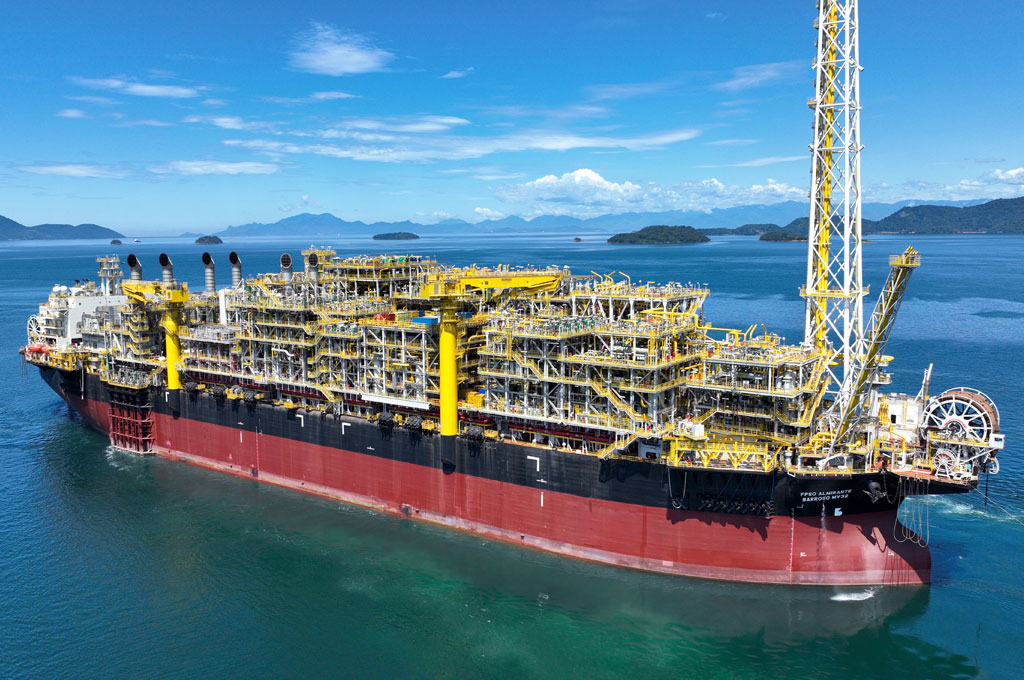
Petrobras plans to install 11 new platforms to produce in the pre-salt by 2027. With the new projects and the units already in operation, the estimate is that the company will produce 3.1 million boed within four years, of which 2.4 million in the pre-salt. As for production with partners, the company intends to produce 3.6 million boed this year. Since december, the company has already put into production two new pre-salt systems: The P-71, in Itapu field, and FPSO Almirante Barroso in Búzios field, and wants to start operating the third one, with FPSO Sepetiba in Mero field, until the end of this year. In a statement, Petrobras announced that it has reserved US$64 billion for investments by 2027, being 67% destined to the pre-salt.
-
FPSO interdicted
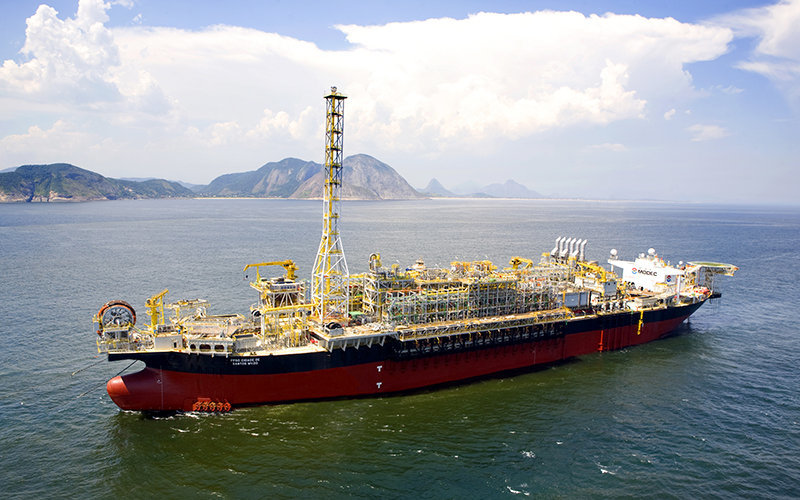
The National Petroleum Agency (ANP) interdicted the FPSO Cidade de Santos, located in the Uruguá and Tambaú field, in Santos Basin. The decision comes after the agency’s inspectors found “critical deviations” in the vessel’s installations, such as degradation in the pipes and in the fire detection system. The vessel will be interdicted until maintenance is done. The FPSO was near to start decommissioning. The unit went into operation in July 2010 and was expected to close operations in January. The verification was done between the end of August and the beginning of September.The FPSO belongs to MODEC, chartered to Petrobras and is located 160 km off the coast of the State of Rio de Janeiro in a water depth of 1,300 meters. It has the capacity to process 35.000 boed.
-
petrobras RFI
Petrobras released a new RFI to screen the market for several vessels on medium to long term basis. The RFI was split into two questionnaires: the first one foreseeing possible demands for PSV, OSRV and AHTS-TS/TO between 2025-2026. Among the information required by Petrobras are mobilization windows for both Brazilian and Foreign flagged vessels within the desired period of 2025-2026, an ideal contract duration for each type of vessel, differentiating between Brazilian and foreign flags and the best validity terms proposal for upcoming tenders. As to the second form, it expects to have answers specifically for 4500 Multipurpose PSVs, OSRVs and RSV with 2 WROVs and Cranes ranging between 100-150T.
Within the questions raised by Petrobras, attention must be drawn to the ones asking how many vessels of these 3 categories are already built in Brazil, what is the average age of each one of the types and an ideal timeframe vs. contract duration that would be attractive enough to build more vessels such as these in Brazil. It appears the current OSV market scenario is becoming clear to Petrobras, mainly if the last tender results are taken into consideration. The questions brought up in this RFI show what is most likely Petrobras’ concerns with an ageing Brazilian built fleet, high utilization levels for core fleet vessels and lack of incentives for more newbuildings in the country.
All of the points are much valid, considering that even Petrobras have not been able to keep up with their own chartering demands based only on existing Brazilian flagged vessels, and the risk to bring foreign flags for a 4-year contract that could easily turn into a 1-year only due to CAA blockings still seems to be something foreign Owners are not willing to go through. The RFI is open for answers until September 6th, 2023 and only technical/availability information will be gathered from the process, as pricing is not allowed for such enquiries at Petrobras.
-
record in production
The National Oil and Gas Agency (ANP) disclosed its Monthly Bulleting with the national production consolidated data showing that Brazil broke the records, in July, in the total production (both oil and gas) as well as the pre-salt´s. The country produced an overall total 4,482 million boed. Interestingly, the previous record was from the previous month, June: 4.324 million. In addition, there was also a record in isolated production of oil and gas, with 3,513 million boed and 154,076 million cubic meters per day, respectively.