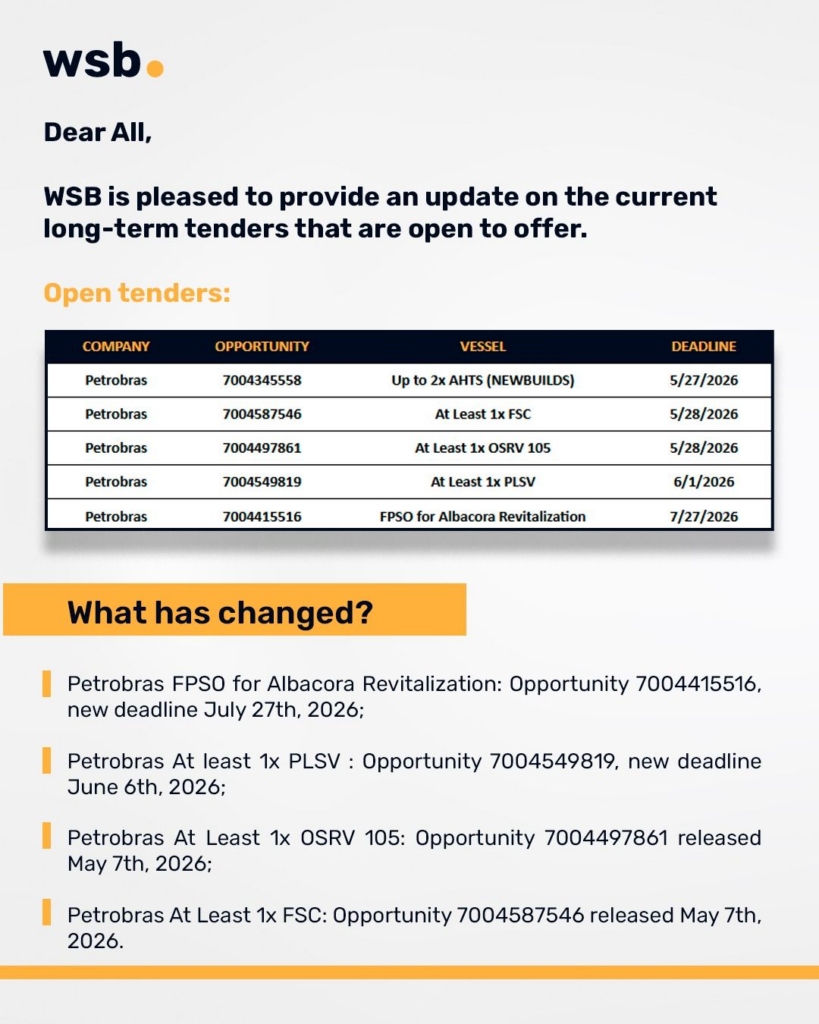
WSB is pleased to provide an update on the current long-term tenders that are open to offer.
New deadlines and opportunities were released across ongoing Petrobras tenders. Below are the latest changes monitored by WSB Advisors.
What has changed?
* Petrobras — FPSO for Albacora Revitalization: Opportunity 7004415516, new deadline July 27th, 2026 * Petrobras — At least 1x PLSV: Opportunity 7004549819, new deadline June 6th, 2026 * Petrobras — At least 1x OSRV 105: Opportunity 7004497861, released May 7th, 2026 * Petrobras — At least 1x FSC: Opportunity 7004587546, released May 7th, 2026
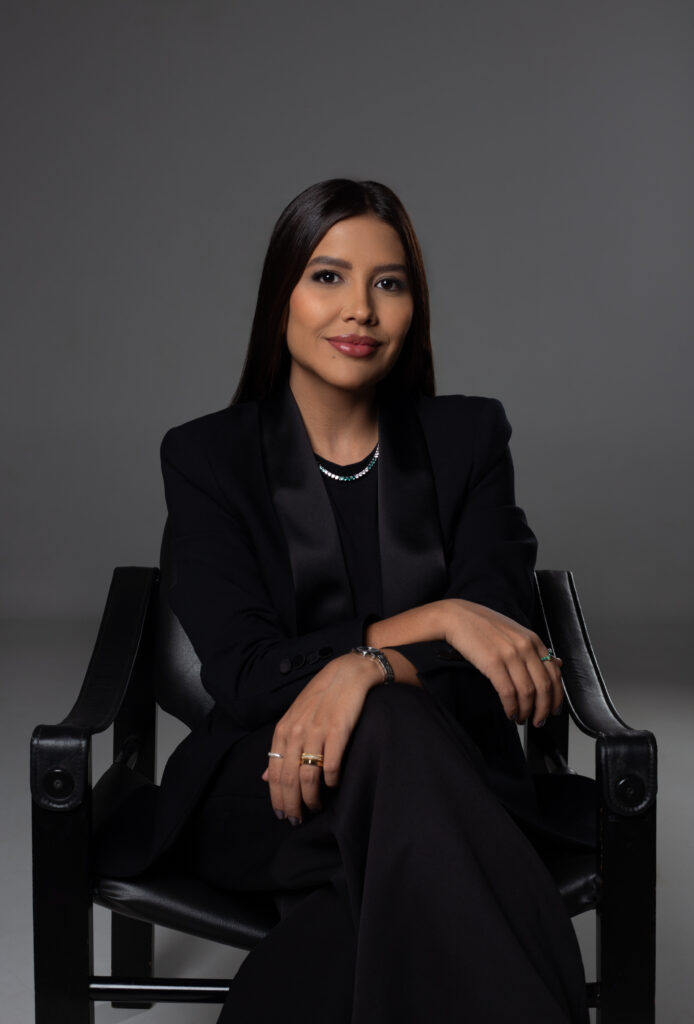
In this edition of Energy Talks, we had the pleasure of speaking with Amanda Durante. At just 28 years old, she proudly says she turned not being hired at Itaú Unibanco into the driving force to not only change industries, but also to become an entrepreneur and inspire other women.
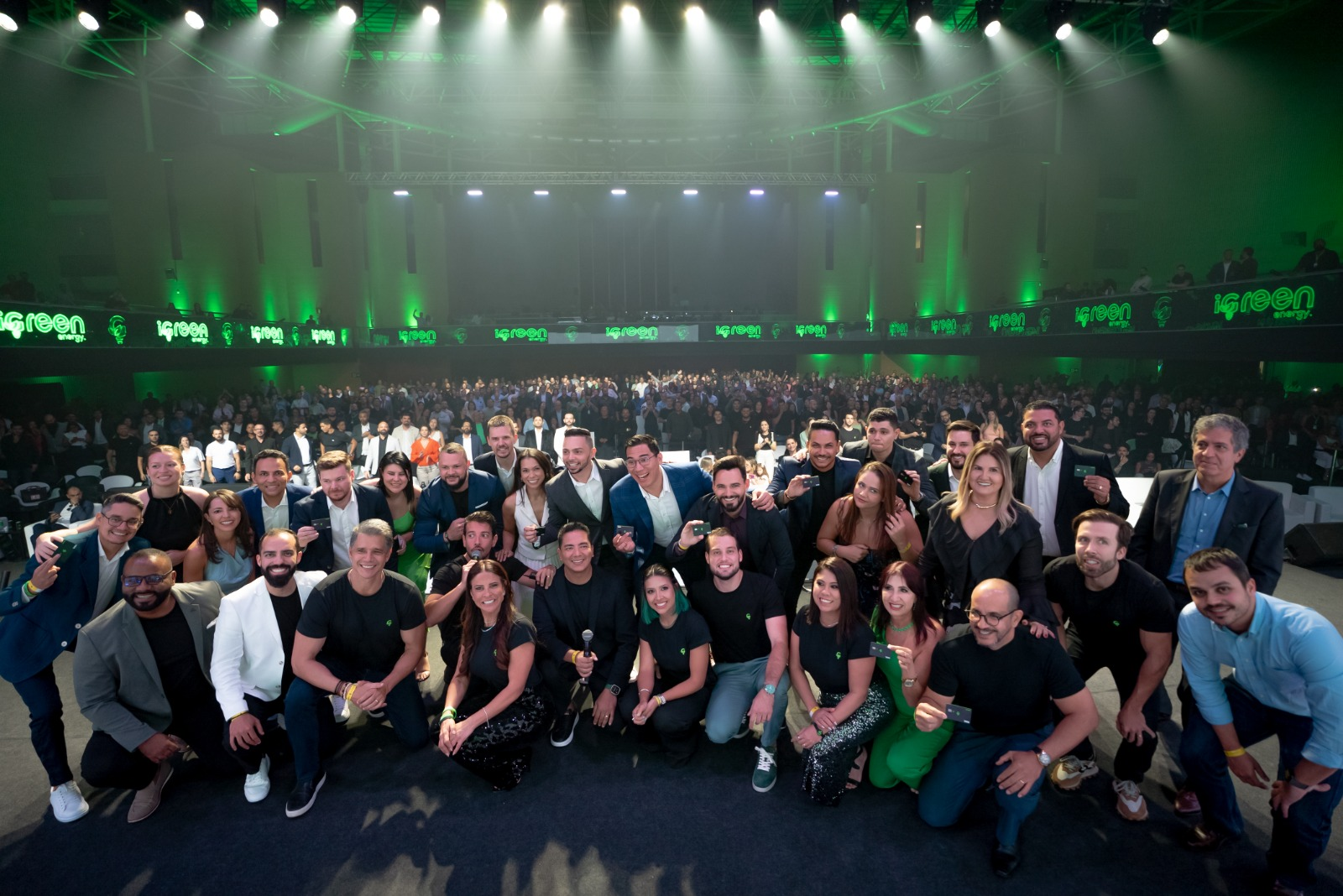
With support from her brother and husband, she founded iGreen Energy. Established in 2021 and headquartered in Uberlândia, the company was created with the mission of democratizing access to clean and renewable energy. It connects members to solar plants without the need for installation or upfront investment, generating immediate savings on electricity bills. With more than 500,000 members across over 20 states, the company offers significant compensation to its network of licensed partners and contributes to reducing CO₂ emissions and building a more sustainable future.
Under her leadership, iGreen has grown with thousands of salespeople and hundreds of thousands of sustainable energy subscribers. The company’s name came from the idea of connecting energy producers and consumers, much like delivery platforms connect restaurants and customers. Her work was recognized when she was named to the prestigious Forbes Under 30 list in the “Business & Industry” category in 2025.
Tell us a bit about your personal and professional journey and how it influenced not only the creation of iGreen, but also the professional you are today
I grew up in an entrepreneurial household. No one had a traditional corporate job, and I was never pressured to go to college or follow a specific path. I was always encouraged to be creative and take care of my own responsibilities. One situation that really marked me was that my mother NEVER did a school assignment for me, not even with me. She would always say, “You are the student, so you have to do it!” My projects were always the ugliest in the class, but she would look at them and say, “It’s the most beautiful one, because you made it!” And that’s how I grew up.
I studied Business Administration and entered the job market as an intern at Itaú, but I wasn’t hired because, according to them, I wasn’t creative. That’s when I started looking for new opportunities and discovered the solar energy sector. I began as a salesperson, earning only commissions. I grew within the company, took on multiple roles, and eventually had the idea to invite my brother to help with sales. We talked and decided to create a business model. The owner of the company I worked for didn’t like the idea. So my brother Thiago and I left and founded iGreen.
Amanda Durante (Source: Private Collection)
2) Your entry into the job market had a turning point after your experience at Itaú Unibanco. How did that episode shape your entrepreneurial vision?
I learned a lot there. I learned how to sell and how to chase targets. But I also realized that it wasn’t what I wanted for my life—it lacked purpose. Even so, because of the money, I tried to get hired. And that’s when they told me I wasn’t creative. That hurt a lot. And it was exactly that moment that made me realize I needed to work with purpose. I found that purpose in renewable energy.
3) It’s impossible to talk about you without mentioning your presence on the Forbes Under 30 list in 2025. What does that recognition represent in your journey?
To me, it’s a seal that we’re on the right path! Being on Forbes had always been a dream, and when I applied, I thought, “Well, I still have three years to try again,” because I never imagined I would be selected on the first attempt. It was surprising and very rewarding, because it confirms what we already knew: we are building something great.
4) You lead a company in a sector historically dominated by large players and often by men. What was it like to build authority and space in this environment?
In almost every meeting, I’m the only woman and the youngest person, but I’ve never cared about that. I’ve never felt inferior because of it. I believe authority is built through results. So I deliver results. It doesn’t matter whether I’m a woman or a man—what matters is whether I’m generating results.
Throughout your journey as a founder, what were the most decisive challenges in scaling the business? Who supported you? And what did you learn from them?
There have been and still are many daily challenges, but I believe the first “no’s” I received were the hardest. Even so, we never stopped because of them. My husband, Calebe, has always supported me a lot. My brother and business partner always reminded me: “Amanda, we are a company of faith. So let’s believe until the end.” Believing that everything works for our good allows us to work with peace, knowing that God takes care of everything for us.
iGreen was created with the goal of democratizing access to clean energy. What is still missing for this to happen on a large scale in Brazil?
We’ve already achieved major progress. Looking back, when I started working in energy, Brazil’s electricity matrix had only 1.2% solar. iGreen was founded in 2021, and now, in 2026, solar has already surpassed 22%. That’s huge.
For large-scale democratization, I believe we still need two key developments: building plants in regions that still lack access, and opening up the free energy market, where everyone will be able to choose their energy provider.
iGreen Energy (Source: Courtesy)
The shared generation model has grown rapidly. What are the main regulatory and market barriers to its expansion today?
What slows things down the most today is uncertainty in the sector. Things change constantly, new signals emerge, and nothing is decided clearly. But the security we have lies in Law 14,300, and we will continue to grow while waiting for the opening of the free market.
How do you see the impact of recent regulatory changes in Brazil’s solar energy sector?
I believe there is currently no negative impact—quite the opposite. We continue to grow while others wait for concrete answers. We are convinced that the electricity sector will only evolve, following the example of countries that have already advanced toward opening the free market. So I see no negative impact, only positive ones, accelerating this transition—and we will be ready for it.
Do Brazilian consumers already understand the value of solar energy, or are we still in a phase of awareness and education?
Unfortunately, we are still in the awareness phase. Brazilian consumers are still very tied to traditional utilities, regardless of their shortcomings. There is still a lot of fear about trusting a new solution. But we remain committed to this mission: through our licensed partners, we educate consumers one by one, door to door, with personalized service, bringing satisfaction and efficiency to the end user—our members.
Looking at the next five years, what is your vision for the future of solar energy and distributed generation in the country?
We are on a very strong growth curve. Every month, 90,000 new members start receiving clean, renewable energy through iGreen, which is equivalent to more than 22 million kWh. If since 2019 we have gone from 1.2% to 22% solar share in the energy matrix, I believe that in five years we can double that percentage and make solar the main energy source in Brazil.
The energy transition is a global topic. Where is Brazil well positioned, and where does it still need to evolve?
Brazil is very well positioned. With 22% of the matrix being solar and more than 50% made up of renewables overall, we are already a renewable-majority country, which is a major step in the energy transition. However, what needs to change is the mindset that solar is only for the wealthy. This holds back growth, because 80% of our members are individuals who consume up to 300 kWh—people who see solar as a real opportunity to save money. Until the right people understand this, we will continue to lose time.
In an international scenario marked by conflicts involving oil, do you believe this tends to accelerate the search for renewable sources, especially solar?
Absolutely. We are already seeing this in practice: panel prices have dropped, and the sector has been growing rapidly because of it.
Sustainability also involves social impact. How do you see the role of renewable energy in inclusion and economic development?
iGreen has already generated more than 25 million reais in savings for our members—money that goes back into Brazilians’ pockets—while providing clean energy. We have also avoided more than 20,000 tons of CO₂ emissions. I’m sure sustainability has greatly contributed to inclusion and economic development.
If you could implement one structural change in Brazil’s electricity sector today, what would it be and why?
I would invest in modernizing the energy transmission infrastructure. One of the biggest complaints today is that the grid cannot handle the volume of energy being injected. Instead of slowing down solar energy expansion, what needs to happen is a structural reform in transmission. We cannot limit generation because infrastructure hasn’t kept up.
Artemis II (Source: NASA)
Missions like Artemis II have reignited global interest in innovation. Do you believe initiatives like this can also inspire advances in new energy sources?
Absolutely. Elon Musk, for example, is an investor in renewable energy, and missions like this highlight the importance of global change. I believe they encourage innovation and progress. When the world decides to move in a certain direction, the effects are felt across all sectors, including energy.
The 18th edition of One Energy Magazine brings different perspectives on energy, offshore and global markets, including an interview with Amanda Durante, CEO of iGreen Energy Oficial, one of Brazil’s leading solar energy companies, as well as Luis Fernando Priolli’s reflections on water and ongoing tensions in the Middle East.
• Starnav Elektra in detail • WSB Advisors Feelings • Industry news • Alvaro Antunes: the strategist transforming innovation into global impact • Por Onde Anda? — Comandante Airton • Columns
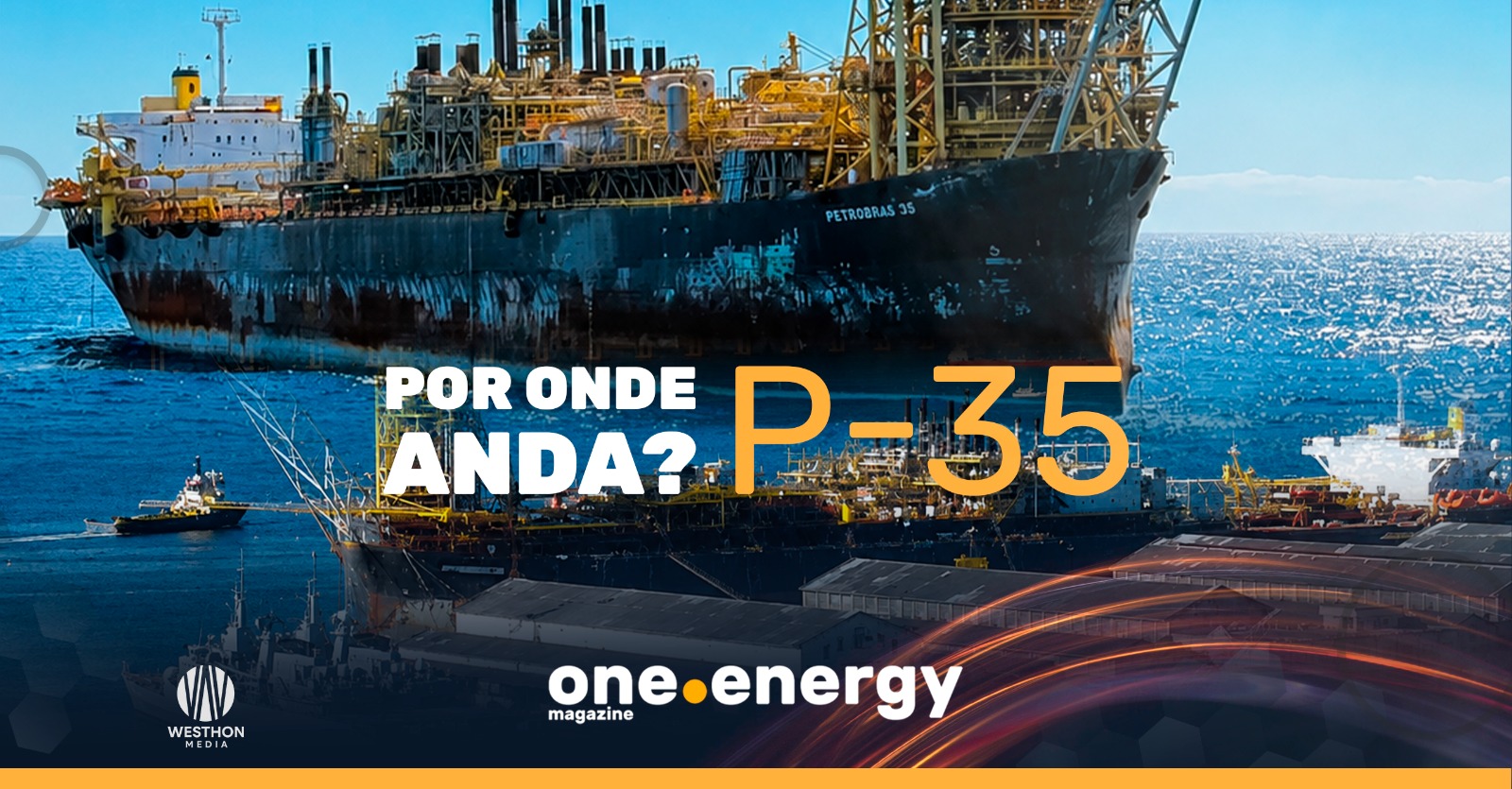
There are offshore units that operate quietly… And there are those that, even in silence, define an era.
P-35 was one of them.
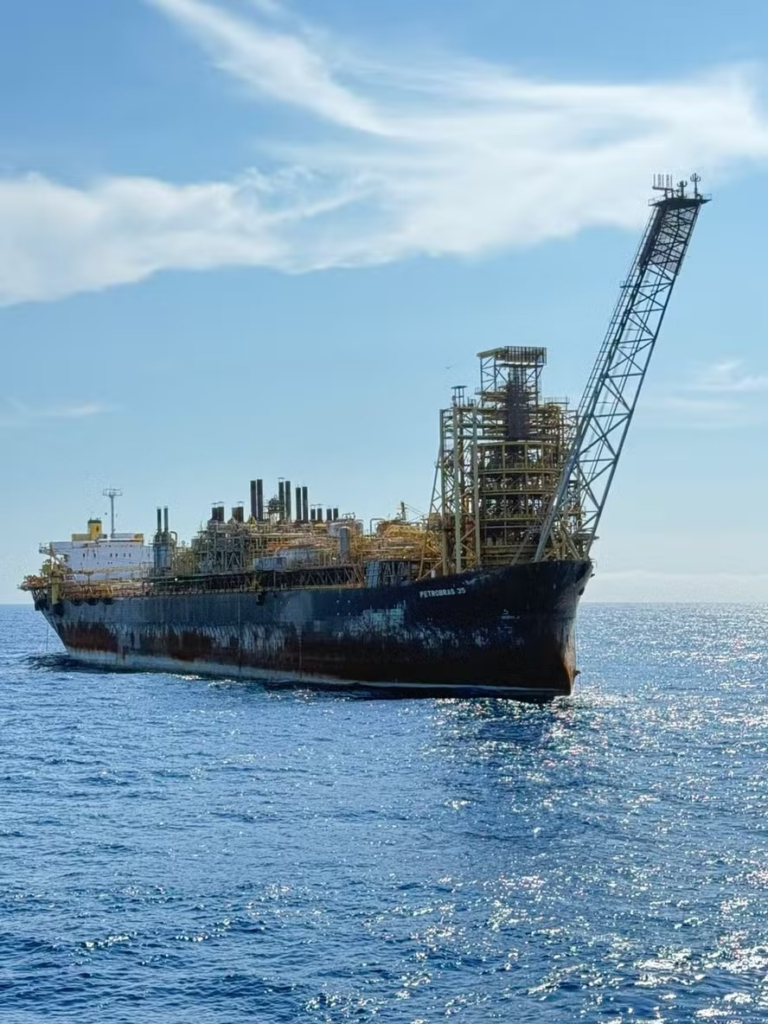
For years, far beyond the horizon, she remained anchored in the Campos Basin, transforming crude from deep waters into one of Brazil’s most strategic assets: energy.
Today, after more than two decades in operation, she no longer produces.
Now deactivated from offshore production by Petrobras, the platform leaves behind more than steel and systems.
It leaves a question.
But also a story still worth revisiting.
From Tanker to Offshore Giant
Before becoming one of Brazil’s early FPSOs, the platform had a different life.
Originally built in Japan in 1974 as the tanker José Bonifácio, the vessel was converted into an FPSO in 1999 as part of Petrobras’ strategy to accelerate deepwater production through adapted floating systems.
At that moment, the conversion of tankers into FPSOs was becoming a strategic solution for rapidly expanding offshore production capacity in Brazil.
It was a pivotal moment — not only for the vessel, but for Brazil’s offshore trajectory.
A Pillar of Marlim
Shortly after conversion, P-35 was installed in Marlim Field in 1999, one of the most important assets in the Campos Basin.
At the time, Marlim was one of the most important offshore developments in the world and a central part of Brazilian offshore production expansion during the late 1990s and early 2000s.
From that point forward, she became exactly what the offshore industry values most:
Reliable. Consistent. Essential.
For more than two decades, the platform operated with little visibility outside the industry — but with enormous impact within it.
Its numbers help explain her scale:
Production capacity: approximately 130,000–135,000 barrels of oil per day Storage capacity: close to 1 million barrels Operational water depth: approximately 850 meters Operational life: more than 20 years connected to offshore production
Over time, she processed volumes difficult even to fully comprehend — quietly supporting part of Brazil’s production during critical phases of offshore expansion.
P-35 belonged to the first major generation of Brazilian FPSOs that helped transform offshore production in the Campos Basin and consolidate Brazil as a global reference in deepwater offshore operations — long before pre-salt became dominant.
P-35 (Source: Courtesy)
The Quiet Exit
Her departure, much like her operation, happened without spectacle.
In 2024, Petrobras ended production operations of the platform within the broader Marlim revitalization program, while studies related to possible reuse and redevelopment continue under evaluation.
And even after the end of her operational life, P-35 has not completely disappeared.
Which means she may not yet have reached her final destination.
Where Is She Now?
At WSB Advisors, our connection with the sea is not abstract.
It is daily. It is visible. It is intentional.
From our offices, overlooking one of Brazil’s busiest marine corridors, we monitor in real time the movement of vessels that shape the industry we cover.
It is no coincidence.
The choice of where we work reflects what we do.
And sometimes, the offshore world comes closer than expected.
Right in front of us.
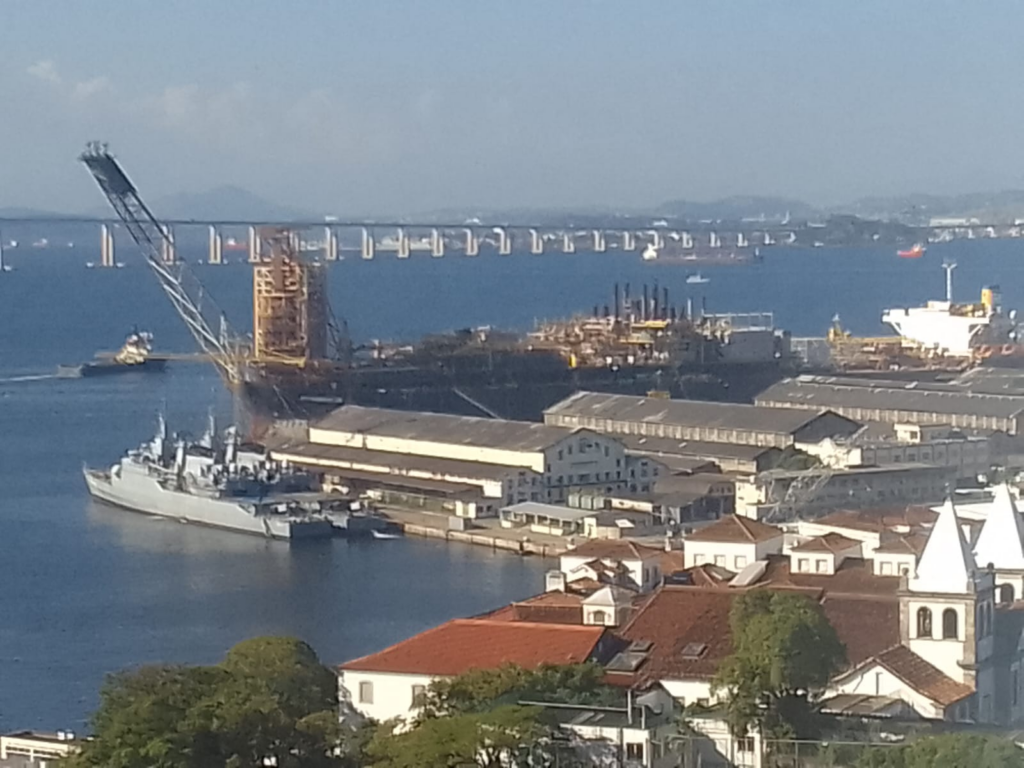
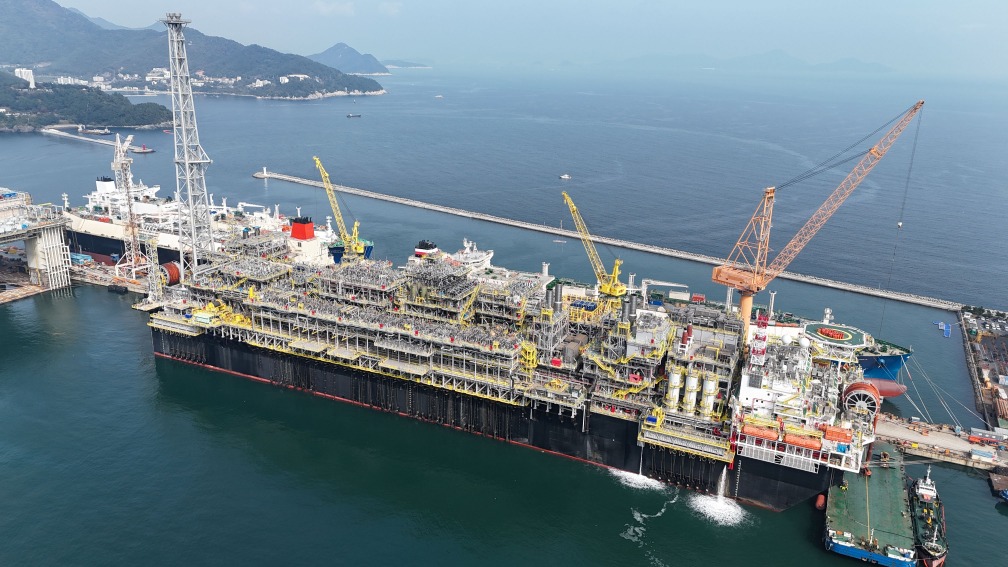
FPSO P-35 (Source: Daniel Buckley/WSB Advisors)
This week, the image above — captured from WSB Advisors’ office on Avenida Rio Branco, downtown Rio de Janeiro — shows her currently positioned alongside the Navy’s berth, a silent giant that no longer operates, but remains very much present.
There is something symbolic about that.
A platform that once operated hundreds of kilometers offshore…
Now resting within sight.
A reminder that, in this industry, even the largest assets eventually return — not to the spotlight, but to observation.
From a distance. From the shore. From our windows.
For years, she existed almost exclusively offshore, outside public visibility. Seeing the platform positioned close to the coastline today creates an unusual contrast for those familiar with her operational history.
And perhaps that is exactly what still makes P-35 draw attention even after leaving production.
And perhaps, for the first time, we can answer the question:
Where is P-35 today?
For now — right before our eyes.
For our offshore industry, few images explain the passage of time as clearly as this one.
Today we say goodbye to Dalton Schmitt — and celebrate the breadth of his journey and the legacy he leaves behind.
Dalton was present at numerous WSB events and workshops, enriching every gathering with his elegance, generosity, and a rare enthusiasm that naturally connected generations. More than a highly respected expert, he was a true connector of people, ideas, and experiences.
At 81, he remained active by choice, driven by a genuine passion for the maritime industry. Since 2014, he had served as Offshore Business Director at Posidonia, closely following the sector’s evolution. Throughout his distinguished career, he made remarkable contributions: he was co-founder and president of Seamar Serviços de Apoio Marítimo, a pioneer in the offshore support segment in Brazil; he led Astromaritima. for more than 16 years (1997–2014); he served on the boards of ABEAM and Syndarma; and he held a leadership role at Apex Marine Services in Panama for nearly two decades.
He also worked as a Senior Consultant at Asgaard Bourbon and was widely recognized as one of Brazil’s foremost authorities on cabotage. In addition, he contributed as an advisory member to the American Bureau of Shipping (ABS). His academic background included a degree in Business Administration from NYU and executive education in General Management from Pontifícia Universidade Católica do Rio de Janeiro, foundations that supported a career marked by excellence and respect.
More than titles and achievements, Dalton will be remembered for his presence: elegant, curious, and genuinely engaged. Someone who chose to be present, to contribute, and to connect.
His farewell was marked by a moving tribute, with a ship horn salute in Guanabara Bay this Wednesday (May 6), and a tribute held during the traditional ABEAM cocktail reception in Houston, during OTC, symbolic gestures from an industry he helped shape, especially by mentoring many of the executives now leading companies in the sector.
He will be greatly missed. His teachings, his stories, and his spirit will endure.
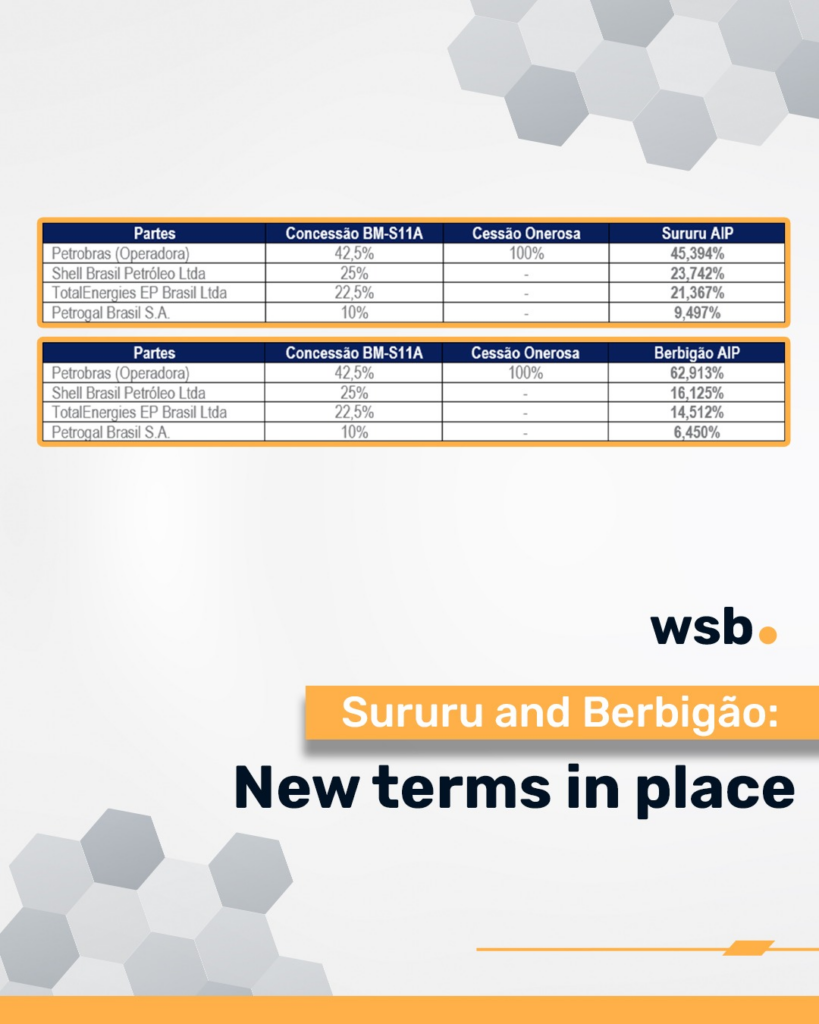
Petrobras has reported that it has been informed by Brazil’s National Agency of Petroleum, Natural Gas and Biofuels (ANP) of the approval of the Production Individualization Agreements (AIPs) for the shared Sururu and Berbigão reservoirs, located in the pre-salt layer of Santos Basin. According to the company, the agreements entered into force on May 1.
The AIPs formalize the understanding between Petrobras, the Federal Government and partners Shell, TotalEnergies and Petrogal for the joint development of the areas. The shared reservoirs involve the BM-S-11A concession contract and the transfer-of-rights contract, the latter fully held by Petrobras.
Under the approved terms, the Sururu reservoir will have the following stakes: 45.394% for Petrobras, 23.742% for Shell, 21.367% for TotalEnergies and 9.497% for Petrogal. In Berbigão, Petrobras will hold 62.913%, followed by Shell with 16.125%, TotalEnergies with 14.512% and Petrogal with 6.45%.
Both reservoirs have been producing since 2019 through the FPSO P-68, which has a processing capacity of up to 150,000 barrels of oil per day. The AIPs define each company’s participation and establish the rules governing the joint development and production of oil and natural gas in the shared reservoirs.
The approval follows years of regulatory discussions involving the unification of the reservoirs, after ANP determined the shared development of the areas. The consortium partially challenged aspects of the process, which also led to international arbitration proceedings related to the fields’ development structure.
Production individualization agreements are required when reservoirs extend beyond the boundaries of contracted areas, in accordance with ANP regulations. Financial compensation related to costs incurred and revenues associated with volumes produced prior to the agreements entering into force will still be negotiated among the companies involved.
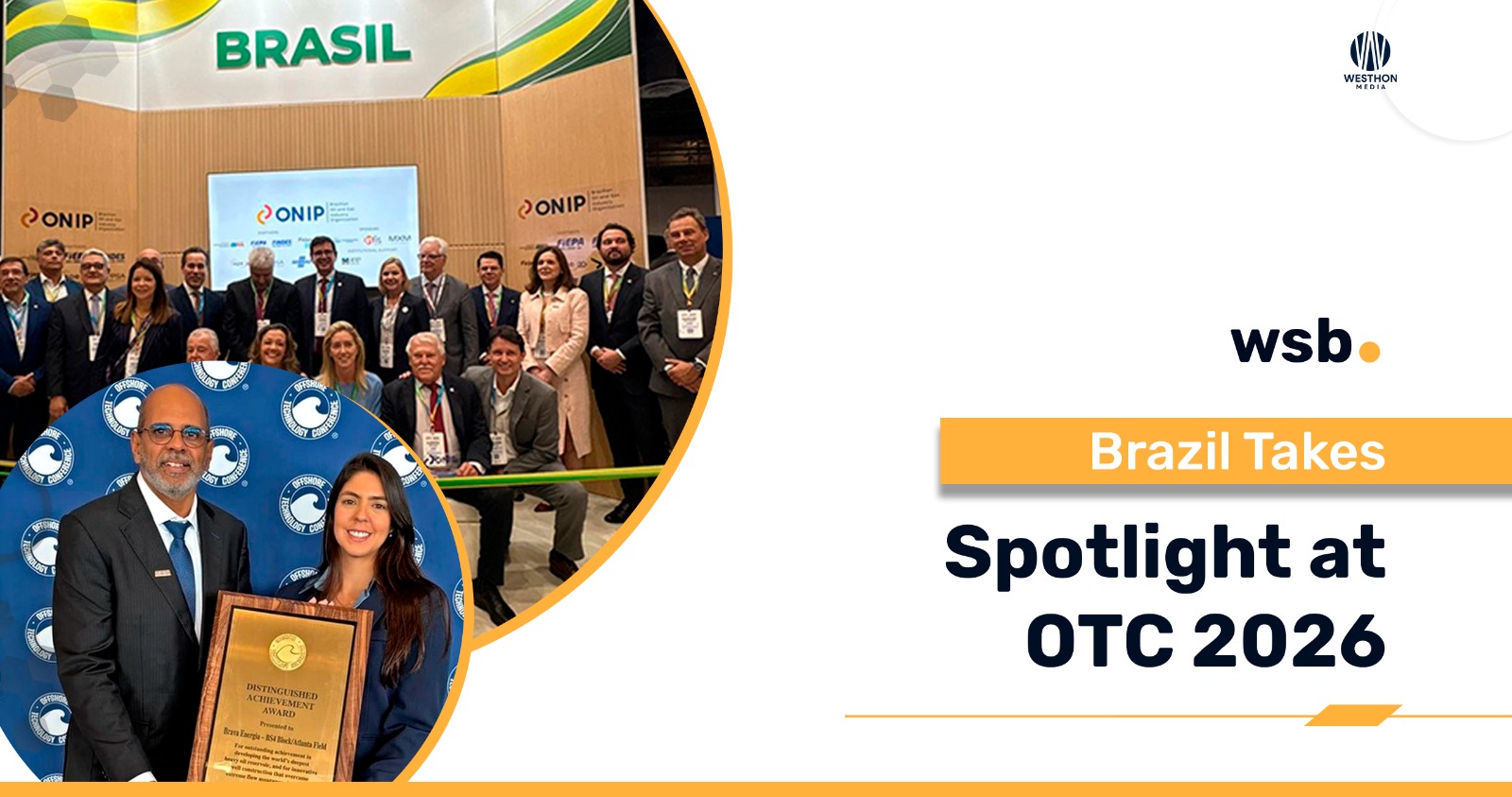
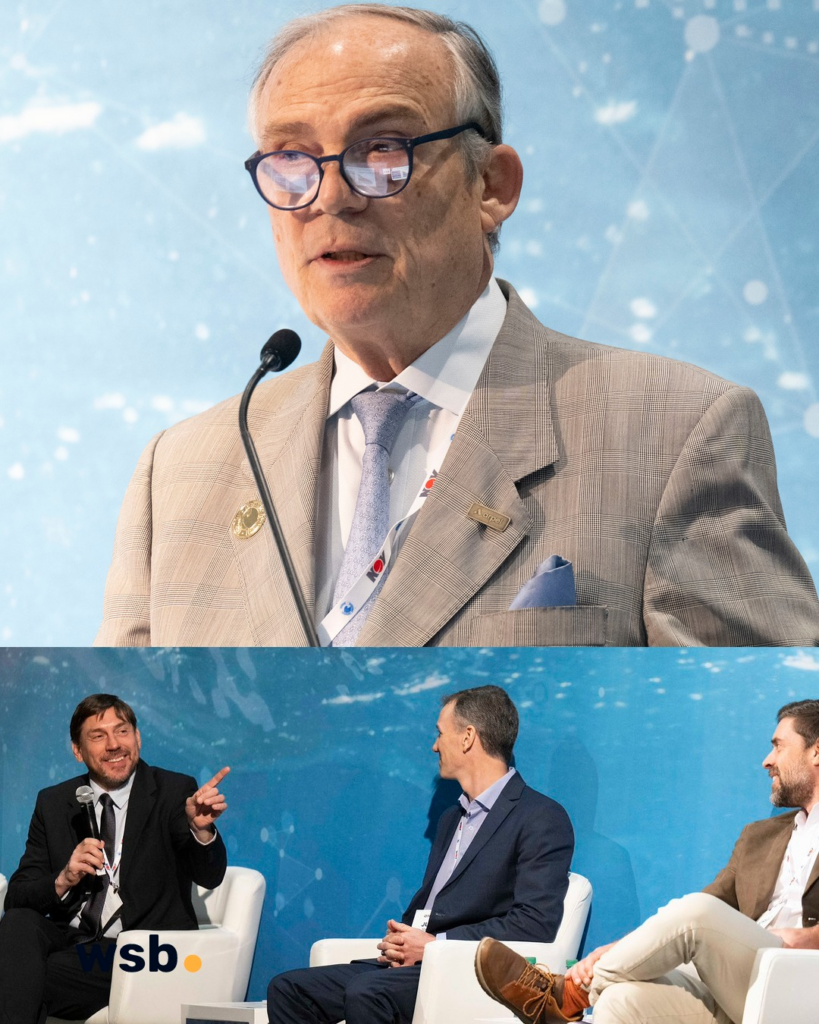
Around 30,000 professionals from the offshore sector are gathered in Houston for the 2026 edition of the Offshore Technology Conference (OTC) 2026, which features a strong presence of Brazilian companies and institutions.
At the opening of the event on Monday, BRAVA Energia stood out by receiving the OTC Distinguished Achievement Award for Companies for the development of the Atlanta Field, located in Brazil’s Santos Basin. The recognition highlights the project’s technical relevance within the global offshore industry.
The company also took part in the conference’s technical program. Carlos Travassos, joined the panel “Around the World,” addressing the topic “Brazil Offshore Energy in a Nutshell – Next Wave & New Frontiers.” Meanwhile, BRAVA’s Executive Manager Vinícius Passos presented the Atlanta Project during the “Showcases – Largest Worldwide Developments” session, focused on major global industry projects.
ANP – Agência Nacional do Petróleo, Gás Natural e Biocombustíveis, is also attending the event, represented by senior officials. In partnership with PPSA (Pré-Sal Petróleo S/A), the agency hosted a seminar focused on upstream opportunities in Brazil as part of the conference’s side events.
Another highlight of Brazil’s participation is Firjan SENAI, which is holding the first international edition of its Supplier Opportunities Network Program (RdO), in partnership with Sebrae RJ. The initiative brings together companies including Baker Hughes, Hanwha Ocean, and SLB, alongside participation from Petrobras, Transpetro – Petrobras Transporte S. A., and Radix.
OTC 2026 also features the Brazil Pavilion, coordinated by ONIP, bringing together national companies and institutions to promote Brazilian products and services in the international market.
The Westhon Group is also present at the event. Alvaro Antunes, CEO of Intcom Solutions, is among participants in parallel industry discussions in Houston, including a roundtable on contractor oversight in industrial operations.
Note: Participant figures are based on industry estimates. Panel titles are not specified to ensure editorial accuracy.
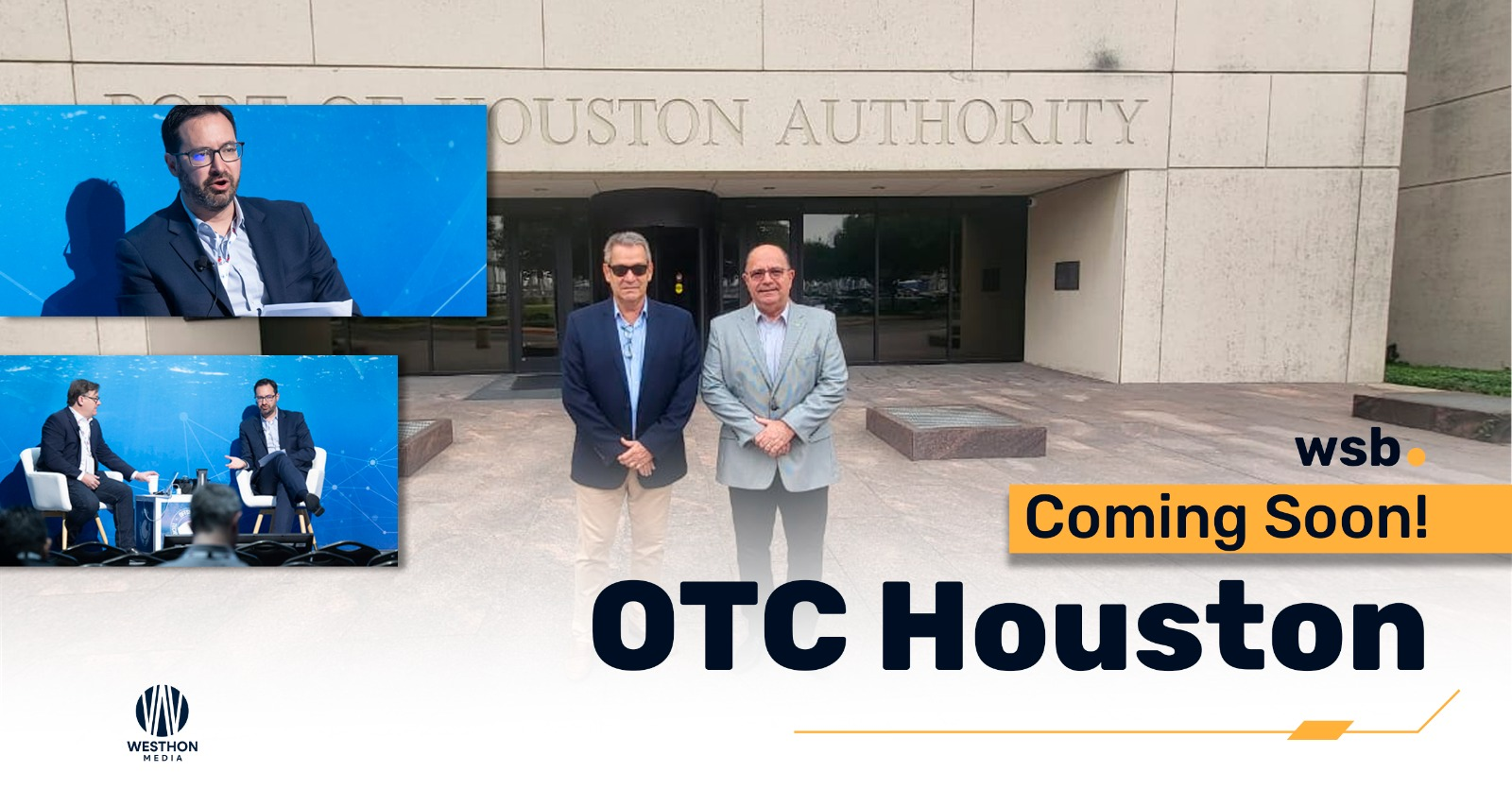
The offshore industry is set to convene at the Offshore Technology Conference (OTC) 2026, scheduled to take place from May 4 to 7 in Houston.
Established in 1969, OTC remains one of the largest global gatherings in the offshore sector, typically attracting more than 30,000 professionals. The event’s agenda is expected to focus on topics such as offshore innovation, energy transition and operational efficiency.
WSB Advisors will be represented at the conference by Alvaro Antunes, CEO of Intcom and partner of the consultancy.
In addition to participating in the official program, Antunes is expected to attend meetings with industry counterparts in Houston, following the typical pattern of parallel business activity that takes place during OTC.
Editorial note: The images used in this post are from the 2025 edition
Stay informed on key offshore developments — visit wsb-one.com, our data platform trusted by leading offshore companies.
Petrobras began oil production from the FPSO P-79 on May 1, marking an early start compared to the schedule outlined in the company’s latest Business Plan (2026–2030).
P-79 is operating in the Búzios Field, Santos Basin. The unit has the capacity to produce up to 180,000 barrels of oil per day and compress 7.2 million cubic meters of gas. With its start-up, the field’s installed production capacity reaches around 1.3 million barrels per day.
The vessel arrived from the Hanwha Ocean shipyard in February and measures approximately 345 meters in length.
The FPSO is part of the Búzios 8 Development Project, which includes 14 wells — eight producers and six injectors — equipped with intelligent completion systems. The unit is connected through rigid pipelines for production, injection, and gas export, as well as flexible lines for service support.
P-79 is the eighth FPSO in operation in Búzios, currently Brazil’s largest producing field, which surpassed 1 million barrels per day in 2025. Discovered in 2010, the field is located around 180 km offshore, in water depths exceeding 2,000 meters.
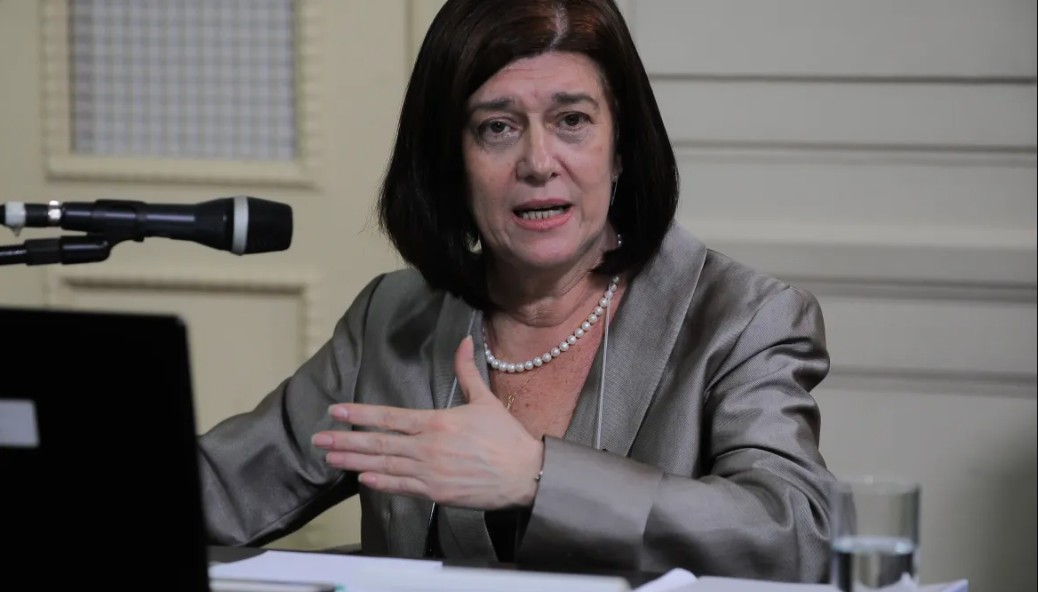
Magda Chambriard, CEO of Petrobras, has been elected chair of the board of Braskem, following recent changes in the company’s ownership structure.
The appointment comes amid the ongoing transition of control previously held by Novonor, marking a new phase in Braskem’s governance.
Petrobras holds approximately 47% of voting shares and 36.1% of total capital in Braskem, positioning itself as a key shareholder in the company. Chambriard’s election reinforces Petrobras’ role in the company’s strategic direction at a time of broader restructuring.
The move reflects a shift toward greater influence over governance without changes in equity participation, as Petrobras continues to reassess its position across the downstream and petrochemical segments.
Stay informed on key offshore developments — visit wsb-one.com, our data platform trusted by leading offshore companies.
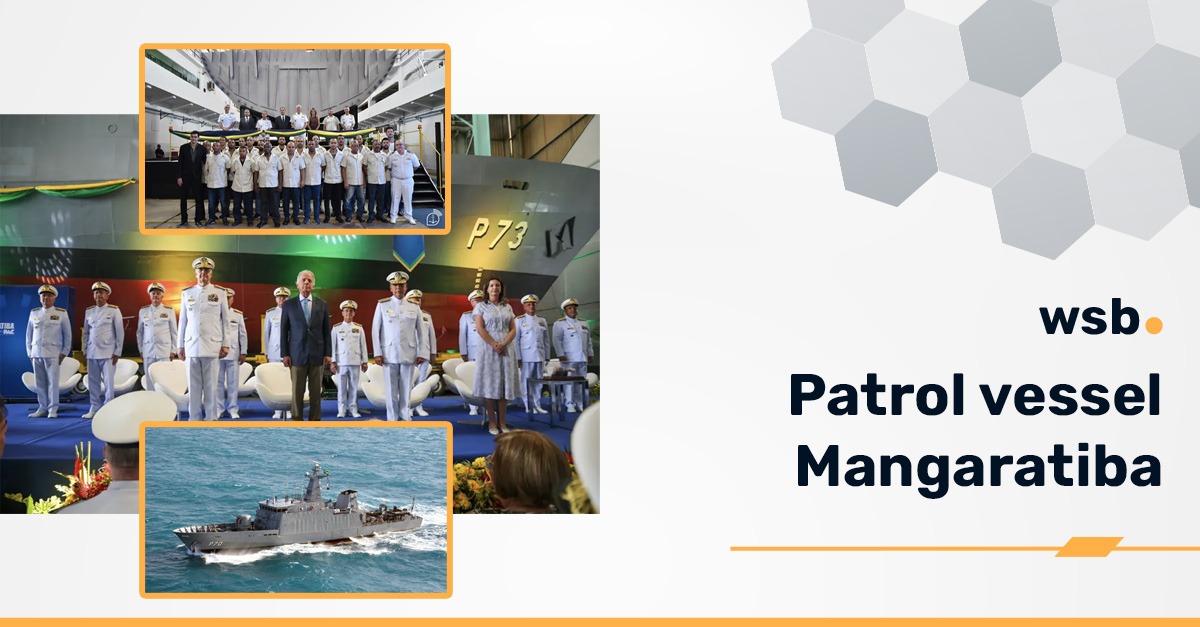
Marinha do Brasil recently held the launching ceremony of the patrol vessel “Mangaratiba” (P73) at the Arsenal de Marinha do Rio de Janeiro (AMRJ). Following the ceremony, the vessel will proceed to the next stages, including harbor trials, sea trials, and weapons trials — preceding its commissioning into operational service. Full incorporation into the fleet is expected in the second half of this year.
Construction of the “Mangaratiba” began at a civilian shipyard and was completed at AMRJ, where structural work was finalized and propulsion, electrical, navigation, communication, and weapons systems were installed. Measuring 54.2 meters in length, the vessel has an endurance of approximately 2,500 nautical miles (around 5,000 kilometers) and can accommodate up to 51 personnel, enabling extended operations in remote areas.
What is a patrol vessel?
It is a small- to medium-sized warship, designed for versatility and agility in coastal, riverine, and jurisdictional waters. Its main roles include maritime law enforcement, search and rescue (SAR) operations, combating illicit activities such as illegal fishing and smuggling, and protecting strategic assets such as offshore oil platforms.“
“Mangaratiba” is the fourth patrol vessel of the Macaé class, following:
• NPa Macaé (P70), commissioned in 2009
• NPa Macau (P71), commissioned in 2010
• NPa Maracanã (P72), commissioned in 2022
The next vessel in this series is the patrol vessel “Miramar” (P74), currently under construction, with launch expected around 2028. Keel laying took place in 2024.
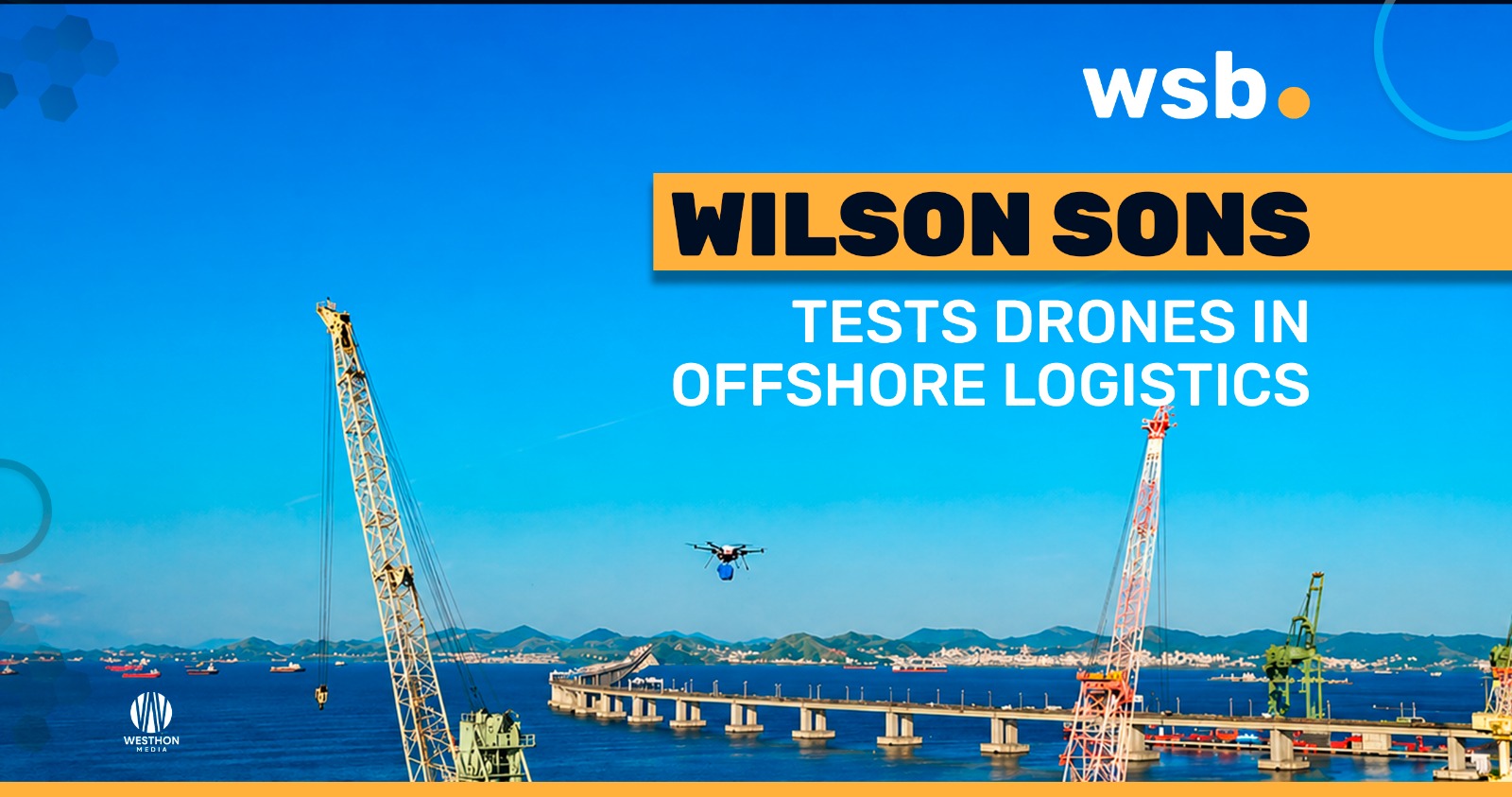
Wilson Sons has started testing the use of drones to deliver and collect documents from offshore support vessels operating in Guanabara Bay, Rio de Janeiro.
The operation is currently in a proof-of-concept phase and uses equipment from Speedbird Aero, with support from the company’s offshore base in Rio. Flights cover distances of approximately eight kilometers, with a duration of up to nine minutes, transporting light payloads.
The initiative follows previous tests conducted at the Port of Salvador and aims to evaluate the technical feasibility of applying drone operations to maritime logistics.
According to the company, the tests were carried out with the necessary authorizations from the National Civil Aviation Agency (ANAC) and the Department of Airspace Control (DECEA).
The scope at this stage remains limited to document transfer, with the objective of assessing operational performance, reliability and integration with existing port and offshore routines.