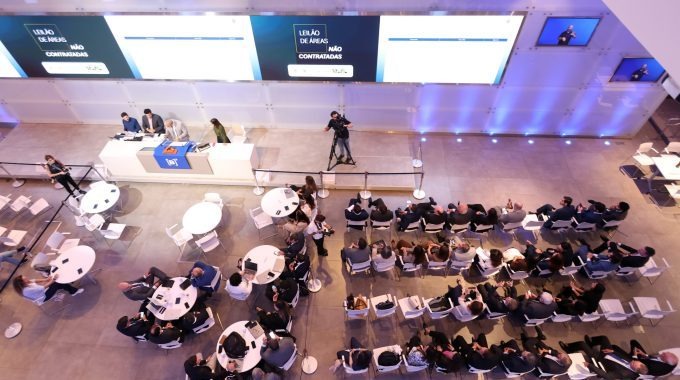
Brazil’s Ministry of Mines and Energy and Pré-Sal Petróleo S.A. signed on March 10 contracts transferring Union rights in non-contracted portions of shared reservoirs in Mero Field and Atapu Field, located in pre-salt of Santos Basin.
Areas were acquired by a consortium formed by Petrobras and Shell in December 2025 auction of non-contracted areas, held at B3.
Key transaction terms:
Total consideration: ~R$ 8.8 billion
Premium over minimum price: R$ 337 million
Union stake transferred: 3.5% in Mero / 0.95% in Atapu
Effective transfer date: March 1, 2027
Until transfer becomes effective, oil and gas production from these areas remains property of Brazilian Union and will continue to be marketed by Pré-Sal Petróleo S.A..
Auction marked first implementation of monetization mechanism based on Production Individualization Agreements (AIPs), allowing government to commercialize participation in non-contracted portions of producing reservoirs.
Mero Field and Atapu Field remain among most productive assets in Brazilian pre-salt, reinforcing strategic importance of Santos Basin in long-term offshore supply outlook.
It was just another ordinary day at Samsung’s semiconductor division in March 2023. An engineer, struggling with a stubborn bug, decided to ask ChatGPT for help. He pasted chunks of the company’s proprietary source code into the tool and, within seconds, received debugging suggestions. Problem solved, work expedited. What he didn’t know was that he had just handed over strategic information from the South Korean giant to OpenAI’s servers. Within 20 days, two similar incidents occurred: one developer optimizing code for sensitive equipment and another transcribing a confidential meeting to automatically generate minutes. Samsung reacted quickly, banning ChatGPT from its network. But the damage was already done.
Samsung’s story isn’t the exception, it’s the rule. The same artificial intelligence tools that promise to revolutionize productivity are becoming silent vehicles for information leakage. And what’s most concerning is that this happens without malice, without hackers, without sophisticated attacks. It happens because an employee, pressed by deadlines, found a quick and convenient solution.
The numbers reveal the scale of the problem. According to a LayerX Security report, approximately 77% of employees have already leaked some type of corporate data while using tools like ChatGPT, Gemini, or Claude. Research conducted by IBM shows that nearly one in five employees regularly pastes company information into generative AI platforms, and more than half of these insertions contain confidential data. This isn’t occasional carelessness. It’s widespread behavior that has become routine.
To understand how this turns into leakage, we need to grasp the nature of these tools. Language models are trained in billions of texts, and that training never really ends. When you input information into public versions of these platforms, your data can be incorporated into the models’ refinement processes. What you typed today might appear as a suggestion to another user tomorrow.
But the risk goes further. There are reverse engineering attacks, where malicious actors use sophisticated techniques to extract information from previous conversations. There’s also legal risk: conversations with AIs can be subpoenaed in lawsuits. Sam Altman, OpenAI’s CEO, has already confirmed that data can be turned over under court order. An American judge ordered the delivery of 20 million ChatGPT conversations in a legal proceeding. Lawyers who used the tool to draft contracts discovered too late that attorney-client privilege may not apply when there’s a digital third party in the conversation.
The impacts on companies are multiple and severe. Operationally, leaking technical specifications or strategies means handing over competitive advantage. Legally, there’s risk of lawsuits for breach of confidentiality, intellectual property violation, and non-compliance with regulations like GDPR and various data protection laws. And perhaps the hardest to quantify: reputational damage. The trust of clients and partners, built over years, can evaporate when leaks become public.
The major challenge isn’t just what employees do with authorized tools, but what they do in the shadows. The phenomenon called “Shadow AI” – unauthorized use of artificial intelligence tools – is spreading. Well-intentioned employees, seeking efficiency, bypass IT policies using their personal accounts on public platforms. Research indicates that 97% of organizations that suffered AI-related leaks didn’t have adequate access controls.
So how do we navigate this dilemma? The solution is not to abandon AI—that would be throwing away one of today’s most powerful tools. The answer lies in intelligent governance.
First, clear usage policies are fundamental. Employees need to understand exactly what can and cannot be shared. This can’t remain buried in a compliance manual. It needs to be part of organizational culture, discussed in onboarding, reinforced in training.
Second, investing in enterprise solutions makes a difference. Platforms like Azure OpenAI, AWS Bedrock, or Google Vertex AI offer contractual guarantees that data won’t be used for training and remain isolated in the company’s environment. For highly sensitive information, local models eliminate external exposure risk. Yes, they cost more, but for certain data, the cost of a leak is infinitely higher.
Third, continuous education. Technology evolves too fast for annual training to suffice. Employees need to understand not just the rules, but the reasons behind them. When people comprehend the real risks, adherence increases naturally.
Finally, DLP (Data Loss Prevention) tools need to evolve for the AI world. Systems that identify when classified information is about to leave the network, that block suspicious uploads, that alert about risky patterns. Technology exists, but few companies have implemented it with generative AI in mind.
Artificial intelligence isn’t the villain in this story. It’s an extraordinary tool that’s redefining productivity, creativity, and innovation. But like any transformative technology, it comes with responsibilities proportional to its power. Companies that treat AI like they treated email in the ’90s”figure it out yourselves” pay the price. Those that invest in governance from the start will reap the benefits without nightmares.
Samsung’s case had an interesting outcome. After the initial scare, the company didn’t simply ban AI. It developed its own internal solution, with character limits per prompt, no internet connection and fully controlled. It transformed error into learning. That might be the most important lesson: in the AI era, the question isn’t whether we should use it, but how to use it intelligently. And intelligence, in this case, means security, governance, and responsibility. Because at the end of the day, no productivity is worth a leak.
There’s a scene that’s becoming increasingly common. Maybe you’ve seen it.
Maybe you’re part of it.
Someone sitting in a public place — airport, waiting room, restaurant, even at home — phone glued to their face, volume all the way up, random videos colliding nonstop. The world around them simply disappears. Someone calls out, something happens, the environment changes — nothing gets through. Reality turns into background noise.
This isn’t just poor digital manners. It’s a symptom.
In recent years, a term started circulating — a bit clumsy, almost funny, but dangerously accurate: brain rot. Something like “cerebral decay.” The Oxford Dictionary decided to formalize the expression in 2024. Not because it became trendy, but because pretending it isn’t happening became impossible.
Brain rot is not a clinical disease. It’s not clinical ADHD either — despite how many people now walk out of doctors’ offices with that label, as if it were something you “catch” after 30 from too many notifications. But the practical effect looks very similar: a brain that is permanently distracted, restless, and dependent on stimulation. A brain trained to jump, not to go deep.
And before anyone says, “this is a younger generation problem,” just look around. The phenomenon is democratic. Teenagers hypnotized by 15-second videos. Adults who can’t read a report without checking their phone five times. Elderly people watching reels at concert-level volume, completely detached from the world around them. Brain rot doesn’t choose age. It chooses habit.
The problem isn’t technology. It never was. The problem is the model of constant stimulation.
Platforms don’t want ten minutes of your deep attention. They want hours of your fragmented attention. Every notification, every like, every “just one more” video activates the same basic circuit: fast, cheap, repeatable dopamine. Instant pleasure, zero effort — and the brain loves that.
Here’s the uncomfortable part: this mechanism is the same one exploited by drugs and gambling. Not in form, but in logic. Unpredictable reward, frequent stimulus, a brief hit of pleasure followed by emptiness. Dopamine doesn’t make moral judgments. It doesn’t care whether it came from alcohol, cocaine, betting, or a video that “nailed” the algorithm. It learns only one thing: it wants more. The difference is that this dealer lives in your pocket — and you still call it entertainment.
The side effects show up later. Focus becomes effort. Long reading feels exhausting. Complex decisions irritate. Deep thinking starts to feel heavy. Not because people became less intelligent, but because they became poorly trained. A brain conditioned to easy stimulation begins to reject anything that demands patience.
Now bring this into the offshore world.
Offshore environments do not forgive distraction. There is no “airplane mode” for wrong decisions, poorly executed checklists, or rushed interpretations of technical data. Concentration isn’t an abstract virtue; it’s a safety requirement. Mental clarity isn’t a luxury; it’s an operational prerequisite.
When professionals spend most of their off-duty time consuming shallow, hyper-fragmented, nonstop content, that doesn’t stay outside the platform or the office. The brain doesn’t separate “free time” from “critical time.” It operates the way it was trained.
The result is silent — and dangerous: less tolerance for long processes, more anxiety for immediate answers, more errors driven by impatience. In a sector where wrong decisions are expensive — in money, assets, and sometimes lives — this isn’t a behavioral detail. It’s risk.
Now think about children.
An adult brain can still, with effort, be retrained. A developing brain has no defense at all. Children and teenagers are being trained from an early age to avoid boredom, frustration, and silence. They grow up without learning how to sustain attention, without developing emotional depth, without building mental resilience. We are raising a hyper-stimulated, cognitively exhausted generation before adulthood even begins.
A curious movement is emerging: people abandoning social media. Deleting accounts. Disappearing. For some, it’s just fatigue. For others, it’s withdrawal — in the literal sense of the word. Is that the solution? For those already deeply addicted, maybe. As with any addiction, restricting access can be the first step. For most people, the challenge is different: relearning how to use technology without being used by it.
The most ironic part is that almost no one notices when this starts. Brain rot doesn’t arrive with sirens. It installs itself slowly, disguised as entertainment, apparent productivity, and “staying informed.” You probably think you’re being productive. Until the day deep thinking becomes rare — and exhausting.
Maybe the real challenge isn’t reducing technology, but relearning how to use it with criteria. Less automatic stimulation. More silence. Less infinite scrolling. More time holding a single idea until the end — even when it takes effort.
Because, in the end, the brain works like any critical offshore system: if you operate only in superficial mode, failure eventually shows up. And it almost never gives advance warning.
The question isn’t whether we’re too connected. That part is already settled.
The question is: what is this connection doing to our ability to think when it actually matters?
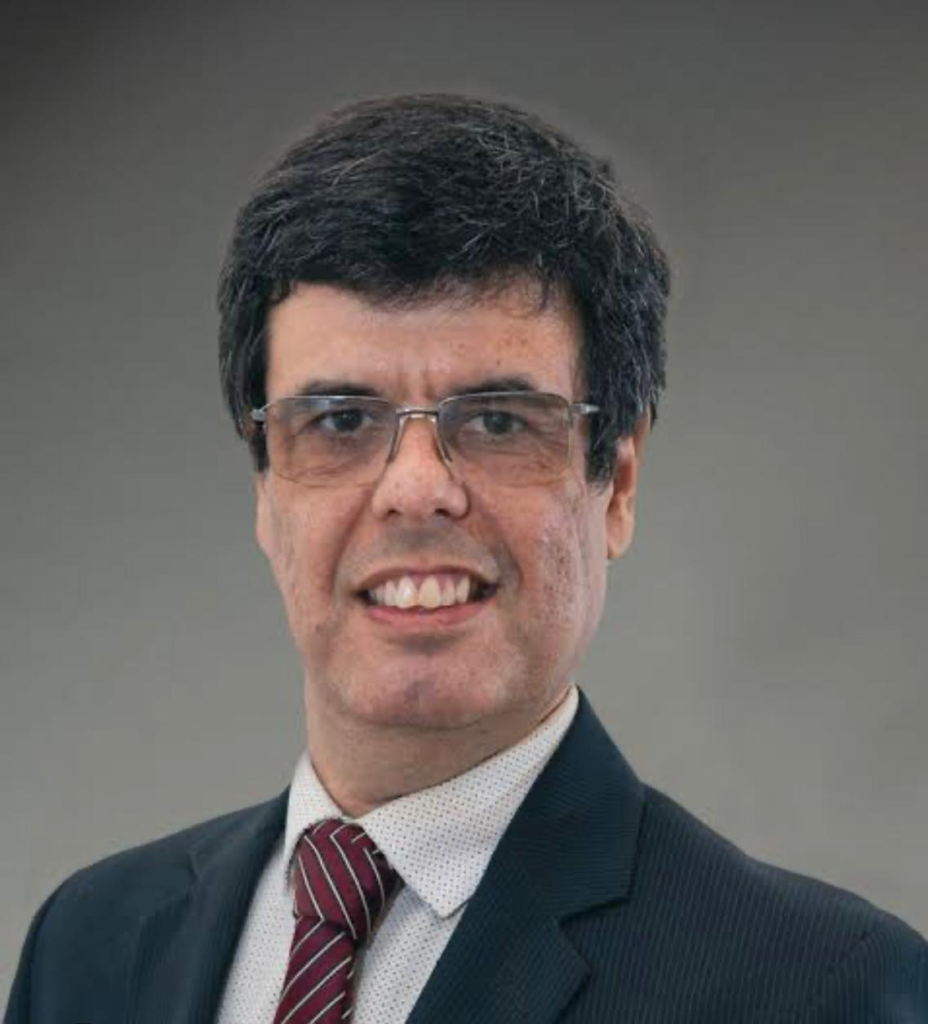
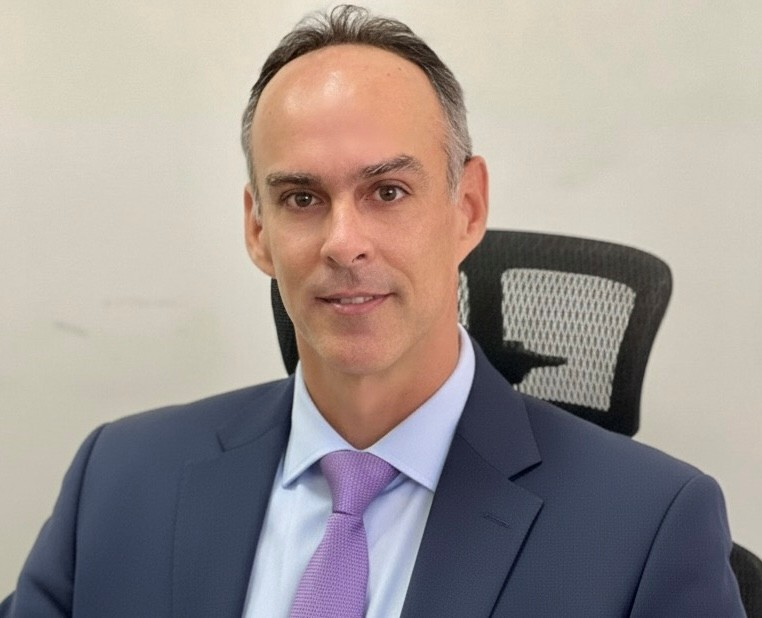
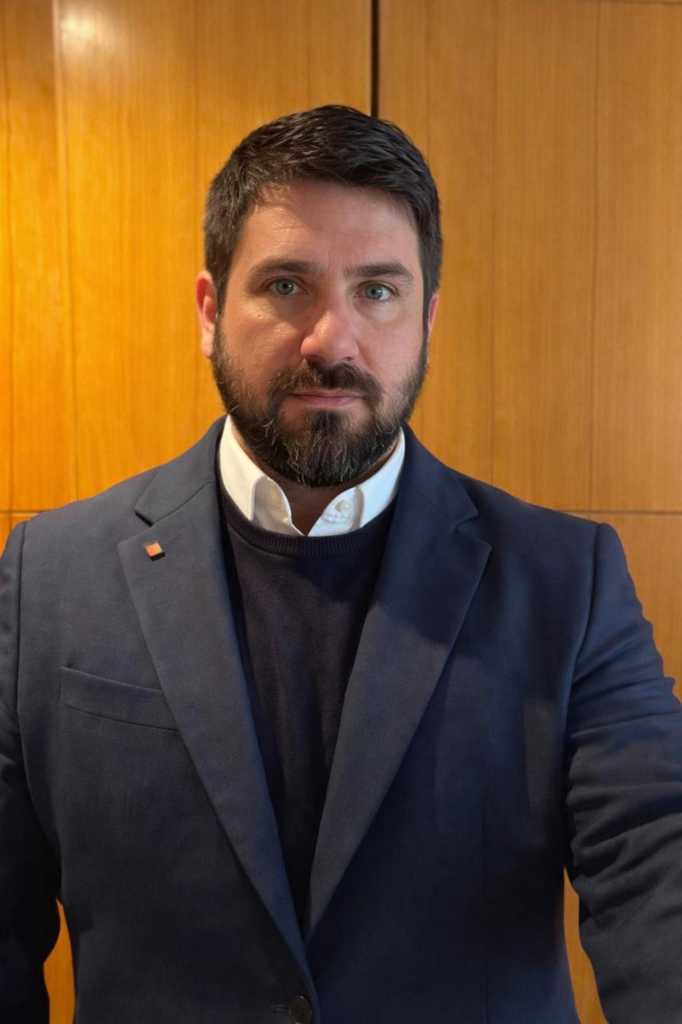
Luis Fernando Priolli (Source: Private Collection)
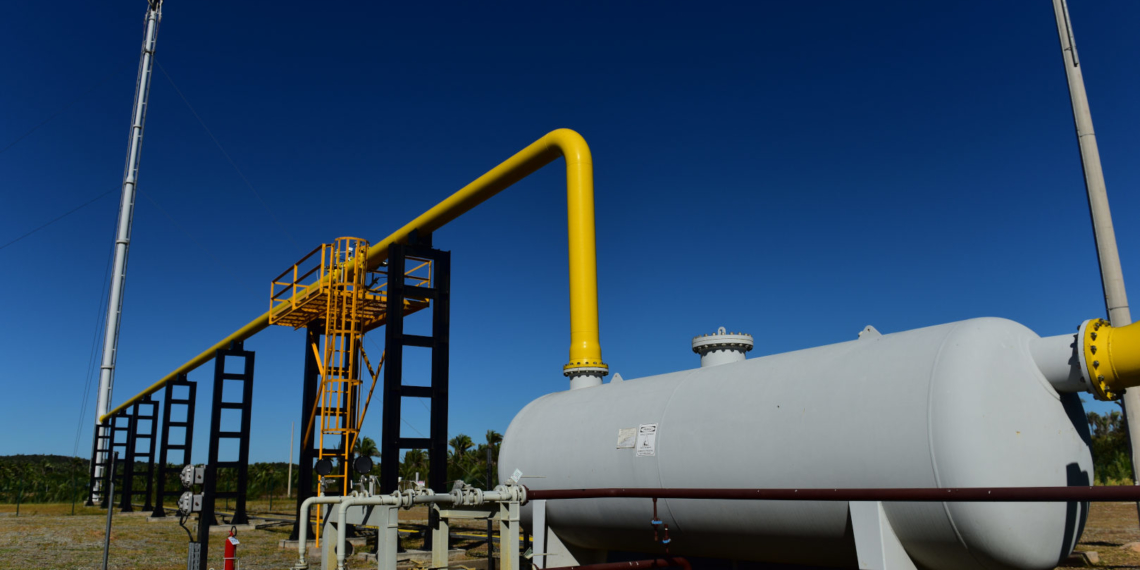
Brazil is at a crucial turning point in defining the rules for the natural gas sector. The National Agency of Petroleum, Natural Gas, and Biofuels (ANP) is currently debating a resolution to establish technical criteria differentiating transmission pipelines from distribution pipelines. While seemingly technical, this discussion directly impacts sector organization, legal certainty for investments, and the future of the national energy matrix.
Natural gas is a strategic transition fuel. It emits fewer pollutants than coal and oil derivatives and offers the flexibility to meet demand peaks and complement renewable sources like solar and wind. Its role is increasingly vital for the stability of the Brazilian electrical system, especially regarding climate change and international pressure for decarbonization.
ANP’s proposal seeks to harmonize rules and bring regulatory clarity, but it does not resolve the root problem. Although it aims to align regulation with the Gas Law (Law No. 14,134/2021), the discussion highlights a larger void: the lack of regulation for Article 25, §2º of the Federal Constitution.
This constitutional provision, amended in 1995, determines that States are responsible for exploring local piped gas services, either directly or through concessions. The amendment sought to grant States autonomy but failed to define precise competencies, creating persistent ambiguities.
The bottom line is that the 1995 constitutional amendment made the issue more confusing. By including the phrase “in accordance with the law,” the amendment delegated regulation to federal legislation that still does not exist.
For exactly three decades, Congress has failed to create this legislation. In this vacuum, state governments created their own laws and regulatory agencies established their own norms. These are merely palliative measures; without a federal law—the only definitive solution—legal insecurity persists, leading to constant judicial challenges against state laws and agency norms.
The lack of regulation generates insecurity on several fronts:
Divergent Interpretations: Some argue States have exclusive competence; others believe federal limits are necessary to avoid conflict with the Union.
Stalled Infrastructure: Multi-billion real projects are exposed to legal risks. Transporters fear investing in pipelines that might be reclassified as state distribution.
Increased Costs: Legal disputes stall contracts, make projects more expensive, and delay essential works for the expansion of the gas network.
An administrative resolution from the ANP is insufficient to pacify the sector. The true solution lies with the National Congress. Only the regulation of Article 25, §2º can unequivocally define the boundaries between Federal and State jurisdiction. This complementary law is what will provide legal certainty and align Brazil with international best practices.
This is not a merely technical debate; it involves significant economic interests for producers, transporters, distributors, and industrial consumers (steel, chemical, and fertilizer sectors). For natural gas to increase national competitiveness, the regulatory framework must be stable and predictable.
Brazil currently faces a contradiction: it recognizes the strategic importance of gas while maintaining a 30-year regulatory impasse. This gap threatens energy security and drives away investment. The time to fill this constitutional void is now. Regulating the Constitution is an indispensable condition for the sustainable expansion of the natural gas market and the future of Brazilian energy policy.
On March 8th, we celebrate International Women’s Day, a date that goes far beyond tribute and invites us to recognize and appreciate the contribution of women across all sectors of society. In the energy and offshore industry, historically dominated by men, female participation has been steadily growing, driven by talent, expertise, and leadership.
Over the past few years, WSB Advisors has had the privilege of giving voice to several professionals who are helping transform this industry through our publications.
Among them is Vanessa Costa, a chemical engineer with an international career in the offshore sector and currently working in business development at Marinsa. In her interview, she highlighted the importance of psychological safety in the workplace and the need to build environments that are fairer and more respectful for all professionals.
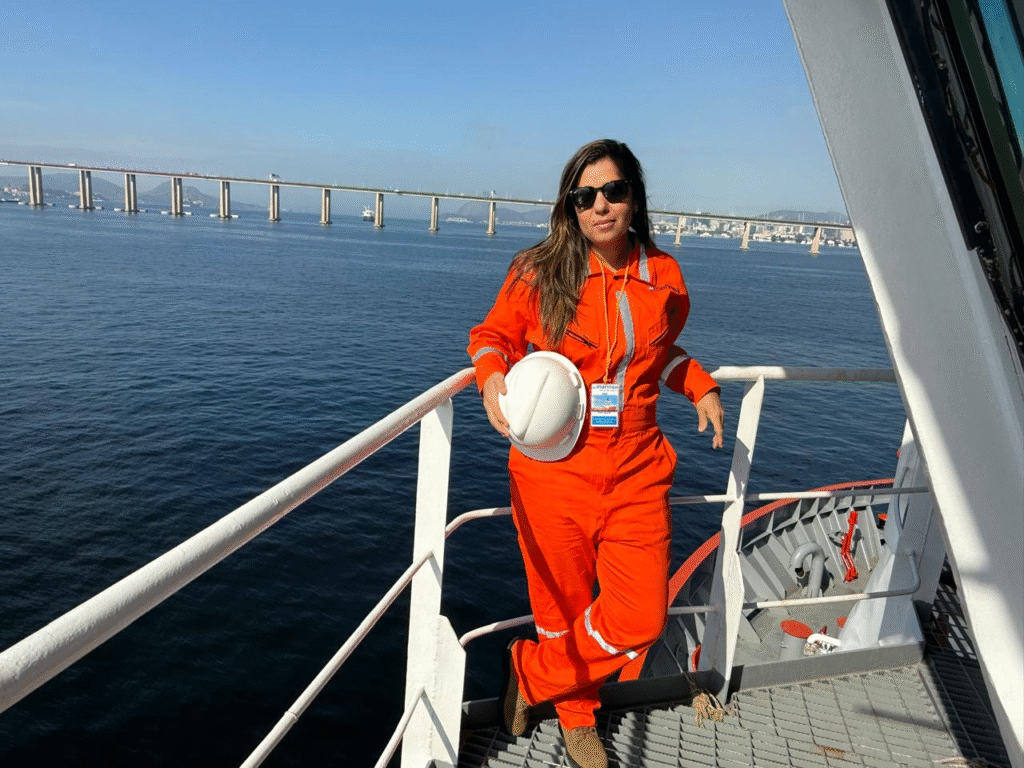
Vanessa Costa (Source: Private Collection)
We also spoke with Fernanda Hille, a naval engineer at Navship, responsible for hydrodynamic optimization projects that have already resulted in tangible reductions in fuel consumption for offshore vessels, contributing to a more efficient and sustainable fleet.
Another inspiring journey is that of Caroline Dias, Commercial Director of Solstad Offshore Brazil. In her interview with One.Energy Magazine, Carol recalled her education at the Merchant Marine Officers School, her time at sea, and the importance of family support and diversity in the corporate environment. She also emphasized the strong growth potential of the offshore sector in the coming years.
Female strength is also present in the stories that inspire the industry itself. Recently, Petrobras platforms were named after remarkable Brazilian women: Maria Quitéria, Anna Nery, and Anita Garibaldi, figures who symbolize courage, pioneering spirit, and leadership.
Women at WSB
Within WSB Advisors itself, the contribution of women is equally essential. Joana Rodrigues, Head of Market Intelligence, created WSB-one which has become the most respected database covering the Brazilian offshore market.
This database also benefits from the dedication of Maria Eduarda Camba, an Intern Shipbroker and International Relations student at UFRJ, who currently manages the platform’s daily updates. Through her careful and consistent work, she ensures that the information remains accurate and up to date, while also being responsible for the weekly monitoring and reporting of vessel tender processes across the market.
Maria Eduarda Camba, Camila Lopes, Vilma Fernandes and Maria Ciriaco
Behind the scenes, other professionals also play a fundamental role in keeping the company running smoothly. Camila Lopes, in finance, contributes with precision and organization that support the company’s operational stability and planning. Alongside her, Vilma Fernandes plays an important role in the financial routines that sustain the firm’s daily activities. In administrative support, Maria Ciriaco provides essential coordination and assistance, helping ensure that the internal structure that supports WSB’s operations functions efficiently.
On this International Women’s Day, WSB Advisors celebrates all the women who help move the energy industry forward — in offices, shipyards, ports, and at sea.
Belov Engenharia began, in February 2026, the construction of Belov Arembepe, its newest SDSV (Shallow Diving Support Vessel). The vessel already enters service with a four-year charter contract signed with Petrobras and is scheduled for delivery in 2027, within a maximum timeframe of 18 months.
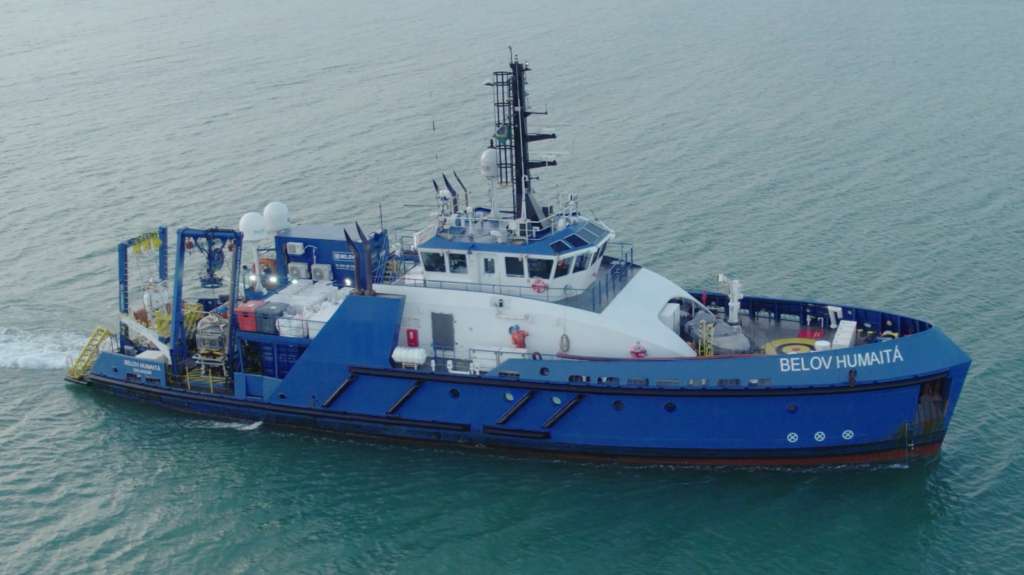
Belov Arembepe is the fourth SDSV in the company’s fleet, being the third built at the Group’s Shipyard and carries the legacy of two well-established projects: Belov Amaralina and Belov Humaitá, delivered in 2020. While it shares the same basic design as these vessels, Belov Arembepe incorporates significant upgrades, resulting directly from lessons learned over years of operating the previous units.
Designed for shallow diving operations and intensive use of ROVs, Belov Arembepe will feature the most advanced onboard technology available on the global market. The vessel adopts power generation and automation architectures focused on energy efficiency, operational redundancy, and high-precision DP2-class dynamic positioning, expanding the range of offshore missions with high safety standards and operational availability.
With an overall length of 40.50 meters, beam of 10.98 meters, gross tonnage of 499 tons, and installed power of 3,200 BHP, Arembepe uses diesel-electric propulsion with waterjets—a combination that has already proven pioneering and highly efficient in Belov’s previous projects.
BELOV: A strong commitment to Bahia
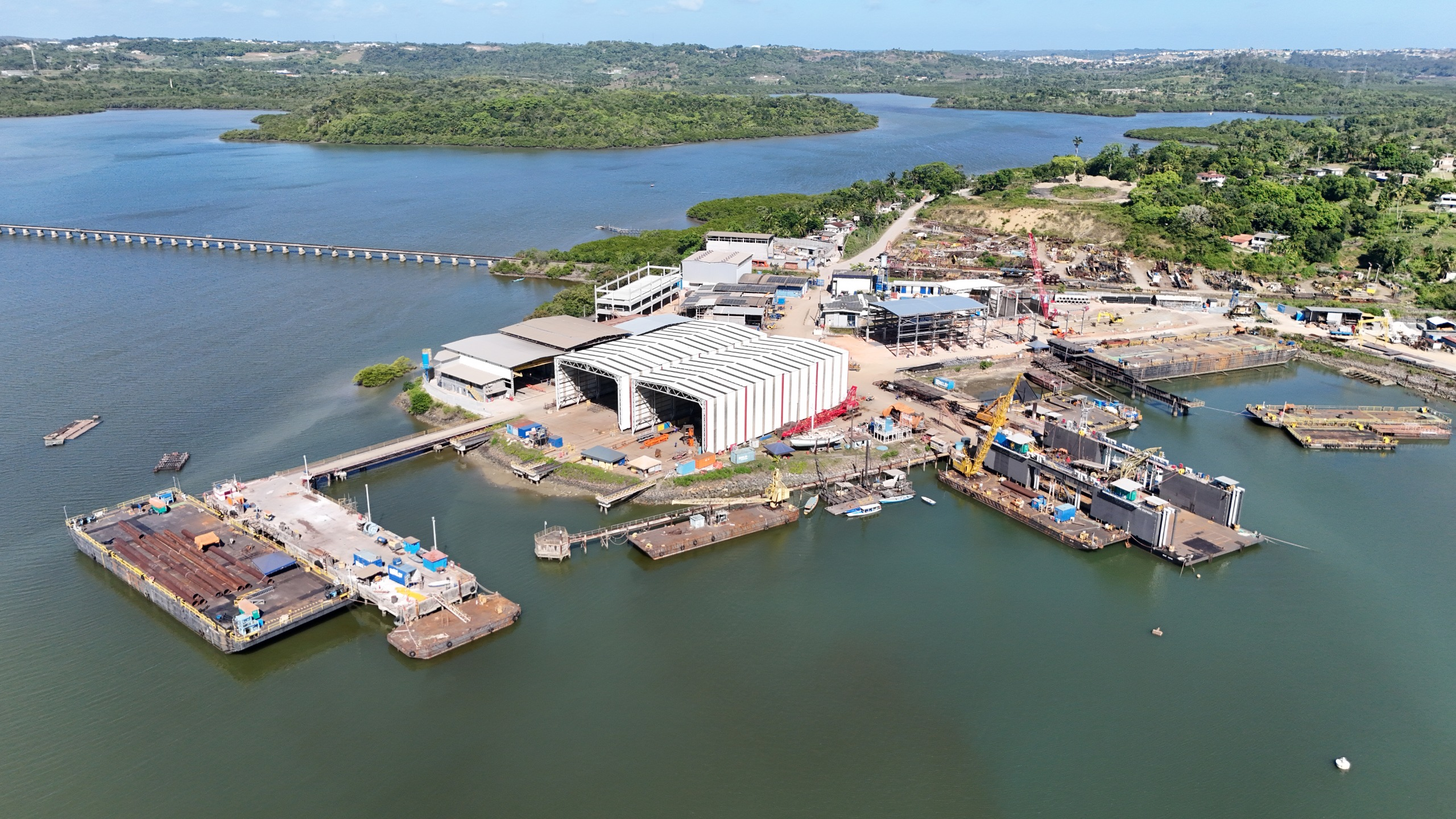
Like Belov Amaralina and Belov Humaitá, Belov Arembepe is being entirely built at Belov Shipyard, located in the sheltered waters of Aratu Bay, within Todos os Santos Bay, Bahia. The shipyard’s strategic location—just 27 km from Salvador International Airport, 31 km from the Port of Aratu, and 9.5 km from highway BR-324—combined with its current production capacity of 5,000 tons per year, allows the company to execute highly complex projects in carbon steel and aluminum, for both newbuildings and ship repairs.
Belov Humaitá (Source: Belov)
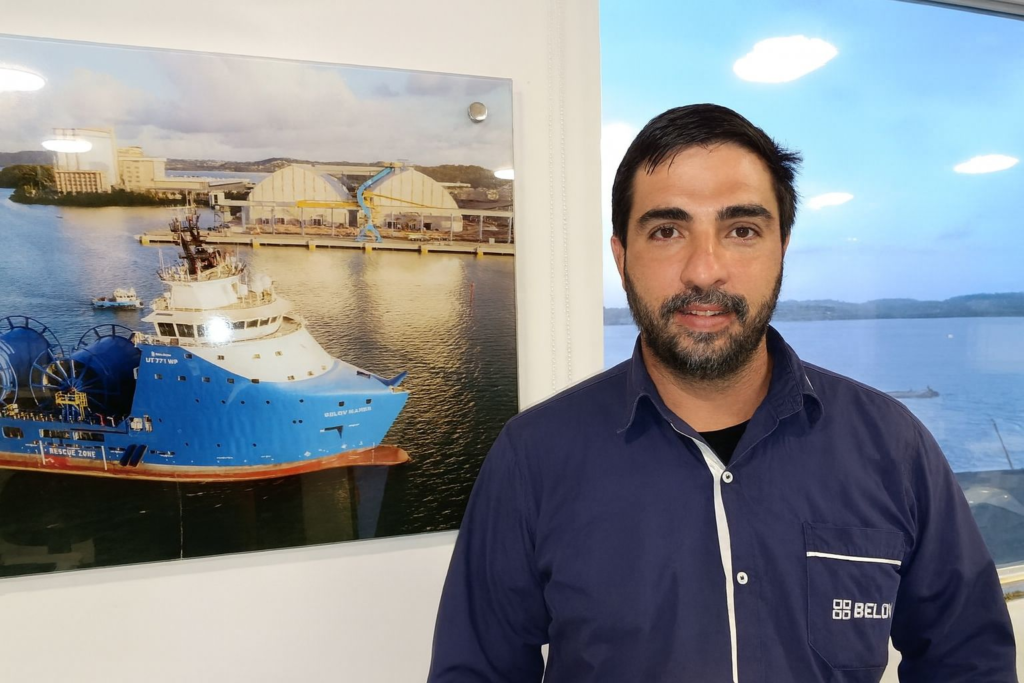
The project has recently secured financing approved by the Merchant Marine Fund (FMM) in the amount of R$ 115 million, reinforcing the role of the Brazilian government in strengthening the national shipbuilding industry. For Guilherme Falcão, Project Manager at Belov Shipyard, the impact goes beyond technology.
“Belov Shipyard reflects the company’s commitment not only to technical excellence, but also to regional development, by fostering jobs and innovation in the sector. Executing a disruptive, highly complex project with strong local content and a high level of technological integration has placed Belov and Bahia at the forefront of naval technology,” the executive comments.
This commitment is already reflected in factual numbers. Since the start of the SDSV projects, approximately 600 direct jobs and more than 3,000 indirect jobs have been generated, during a period when Bahia’s shipbuilding industry was facing a severe downturn. In addition, around 230 direct jobs were created for vessel operations, boosting supplier development and workforce qualification.
Belov’s tradition of naming its vessels after beaches in Bahia reinforces the company’s connection to the state where Aleixo Belov, founder of the company, established himself and concentrated his main assets. This relationship becomes even more relevant given Bahia’s strategic positioning on the Brazilian offshore map, between the Campos and Santos Basins to the south and the Equatorial Margin to the north.
In a scenario where few companies in Brazil build vessels for their own fleets, Belov stands out alongside industry giants. On the eve of completing 45 years, in November 2026, the company reaffirms—through Belov Arembepe—its pioneering vocation and its confidence in the future of the Brazilian shipbuilding industry.
“We are undergoing a phase of expansion and modernization at Belov Shipyard, which will increase our capacity to more than 11,000 tons per year. State-of-the-art infrastructure, combined with robust industrial processes and a highly qualified technical team, will allow us in the coming months to:
Execute multiple projects simultaneously with a high degree of electro-electronic integration and automation;
Position ourselves as one of the leading shipyards in electric and hybrid vessels, as well as complex conversions;
Achieve efficiency gains in cutting, assembly, welding, system integration, and commissioning, with strict compliance to schedules, costs, and class requirements;
Continuously advance in QSMS, productivity, and delivery timelines.
This level of capability consolidates Belov Shipyard’s position as a reference in technologically complex vessels, reinforcing its vocation for delivering highly reliable specialized vessels to the Brazilian offshore, port, and inland waterways markets.”
What was the average construction time for each SDSV?
Guilherme Falcão:
“Each project was executed within the contractual schedule, with the main milestones being contract signing and delivery to the end client: Petrobras. Belov Amaralina and Belov Humaitá were completed in parallel in just 16 months and delivered in the first quarter of 2020, at the peak of the pandemic—representing a milestone in the history of both the shipyard and the national shipbuilding industry.
Belov Arembepe began construction in February 2026 and has a contractual timeframe of 18 months, consolidating Belov’s commitment to strict deadlines and technical requirements, with no cost changes throughout construction.”
How was the financing through the FMM? What were the amounts?
Juracy Vilas-Bôas, Director
Juracy Vilas-Bôas (Source: Belov)
“The projects relied on the essential support of the Merchant Marine Fund (FMM), reaffirming the Brazilian government’s commitment to strengthening the shipbuilding industry. As a reference for the investment value of each DSV (Diving Support Vessel), Belov Arembepe recently had its financing approved by the Fund in the amount of R$ 115 million. This financial support demonstrates institutional confidence in Belov’s governance and management, as well as in the technical capacity and delivery track record of the Shipyard, which have characterized the Group’s performance in the Brazilian naval market.”
Were there any curiosities, challenges, or notable events during construction?
Juracy Vilas-Bôas
“Belov Amaralina and Belov Humaitá represented significant technological milestones on the global naval scene. To build the world’s first diesel-electric vessels equipped with waterjet propulsion and DP2 dynamic positioning, several established suppliers had to modify their products. Basic design companies, propulsion suppliers, engine manufacturers, DP system providers, and others did not have off-the-shelf solutions that fully met our requirements.
Furthermore, integrating national and imported systems from multiple continents—along with all the challenges inherent to pioneering projects—highlighted the high level of engineering involved and Belov’s ability to lead technically demanding projects. This innovation was recognized by The Royal Institution of Naval Architects as the most significant small vessel of 2020, as well as by Work Boat World as the best vessel among all OSVs and DSVs of 2020. Another interesting fact: to launch Belov Amaralina and Belov Humaitá, the shipyard had to build a floating dock in tandem with the vessel construction. Today, this dock is responsible for dry-docking virtually all service vessels operating in Salvador and is essential for launching other shipyard projects.”
In this edition of Energy Talks, we sat down with José Eduardo Leal, a computer engineer graduate of PUC-Campinas, who is currently working as a Senior Sales Manager with the global marine technology company, Kongsberg Maritime (KM).
We began the conversation by exploring the role of technology and artificial intelligence in marine operations, and it naturally expanded to topics such as autonomous navigation, regulation, vessel-to-shore communication, predictive analytics, and the specific challenges of the Brazilian market.
The result is an in-depth discussion of how data, connectivity, and automation are reshaping the present — and the future — of the maritime industry.
José Eduardo Leal (Source: Private Collection)
How has your background in computer engineering contributed to your work in the maritime sector?
I graduated from PUC-Campinas in 2011 with a degree in Computer Engineering, but even before that, it was clear to me that technology would be the driving force behind major societal transformations. In 2010, while still at university, I began my professional journey at a research center in Campinas, working in telecommunications.
In 2013, I was offered a software engineering role at Kongsberg, and spent the next four years working with dynamic positioning (DP) systems. During that period, I worked as a field engineer and helped develop solutions for offloading operations in Brazil, specifically for DPSTs (DP Shuttle Tankers) and for offloading spread-moored FPSOs.
After that, I worked as a DP Surveyor on shuttle tankers, where I gained hands-on onboard experience and deepened my operational understanding. In November 2023, I returned to Kongsberg, where I currently work as Senior Sales Manager. This journey has shown me that in the maritime environment, software, hardware, and operational safety are inseparable; it is not about developing conventional applications, but systems that control the position, heading, and behavior of entire vessels. That requires a much more complex technological approach.
You frequently participate in lectures and workshops with major Brazilian energy logistics companies. What is the focus of these presentations, and how important are these dialogues?
Kongsberg has close and strategic partnerships with energy companies around the globe, including here in Brazil. I’ve specialized in shuttle tankers over the course of my career and have been involved in the development of KM’s specific functionalities for Brazilian offloading operations, so I’ve been able to foster a technical relationship with key operators.
In workshops and lectures, my main focus is on demonstrating how technology can enhance operational safety, particularly in critical operations such as dynamic positioning, offloading, and system integration. I share real operational cases, data insights, and practical examples that illustrate how digital solutions, automation, and data analytics can reduce risk and support informed crew decision-making.
This dialogue is extremely valuable. It creates a two-way exchange where we not only present innovations but also gain operational feedback that helps refine our technologies to better meet the realities of offshore operations.
José Eduardo Leal (Source: Private Collection)
What are the industry’s main technological challenges today related to artificial intelligence and automation?
Without a doubt, the biggest challenge is regulation. Technology development is advancing rapidly- Often outpacing the frameworks needed to govern it. The pace of progress in artificial intelligence, remote navigation, and autonomous vessel operations is being tempered by the regulatory requirements, class rules, and the necessary adaptation of maritime authorities.
This is understandably a cautious process. We are dealing with highly sensitive operations involving human safety, environmental protection and high-value assets. For example, KM, has been working with remote and autonomous navigation for years, but broad adoption depends on regulatory alignment and stakeholder confidence.
At the same time, the direction of travel for the industry is clear. Automation offers tangible benefits: reduced operational risk, lower exposure to human error, improved energy efficiency, and in many cases, better quality of life for professionals. Shore-based operational centers can enable crews and operators to work remotely while maintaining safe and efficient vessel performance.
Is this regulatory challenge local or global?
It’s a global challenge, but there are regional nuances. Every country has its own rules, authorities, labor laws, and economic interests. ,These different regulatory frameworks add layers of complexity to the advancements of autonomous and remote vessel operations.
Norway, for example, is a few steps ahead. Kongsberg Maritime maintains a close working relationship with the Norwegian maritime authorities and classification societies, such as DNV. The collaboration of stakeholders helps to enable pilot projects and controlled technology testing.
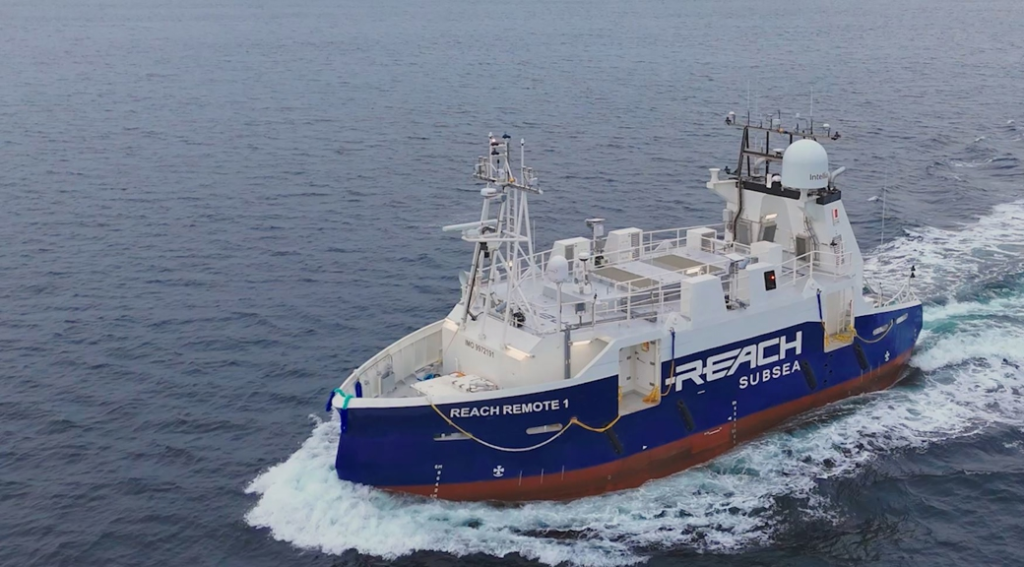
Today, KM is involved in multiple remote and autonomous vessels initiatives. One of the most emblematic examples is Reach Remote 1, a 24-meter Uncrewed Surface Vessel (USV) operating along the Norwegian coast conducting subsea inspections. The vessel navigates autonomously and is remotely operated from an onshore control center. The vessel even carries a remotely operated vehicle for subsea intervention work.
Reach Remote 1 (Source: Kongsberg)
Two vessels in this series have already been delivered, and two additional units are under contract.
Beyond smaller uncrewed platforms, there are also projects underway involving larger vessels equipped with remote and autonomous capabilities. Many of these vessels still operate with onboard crews due to local regulatory requirements– , including in Norway and Sweden\- where remote and autonomous systems function as decision-support tools, strengthening operational safety and redundancy and real-time situational awareness.
Are there social factors involved in this advancement?
Absolutely. In some countries, automation is seen as a solution to an aging population and a shortage of maritime labor. In others, there are concerns about how advanced technologies impact employment opportunities.
Each region has its own variables: taxes, bureaucracy, labor legislation, and public policies. That’s why there is no one-size-fits-all solution. The technology is the same, but its implementation must consider the local context.
And how do you see this scenario in Brazil?
In Brazil, there is not yet a clearly defined regulatory framework for remote or autonomous navigation. Progress will likely come through structured pilot projects led by major industry players, as they have enough operational scale and institutional influence to move within the regulatory and maritime authorities.
There are also important partnerships in place with Brazilian universities, alongside ongoing research and feasibility studies. However, most of these initiatives remain at an early stage, but what can be said is that the technological potential is significant- even if the pathway to large-scale implementation will require time, regulatory maturations, and continued industry collaboration
José Eduardo Leal (Source: Private Collection)
Speaking of applied technology, what are Kongsberg’s main differentiators today?
One of KM’s key differentiators is our ability to collect, integrate, and interpret operational data at scale. There are vessels operating in Brazil and around the world with our Condition Monitoring System (CMS), which enables continuous real-time insight into asset performance.
The system uses sensors installed on critical equipment- such as thrusters- to monitor vibration, temperature, and other operational parameters. By combining this data acquisition capability with our deep product knowledge and engineering expertise, we can interpret performance patterns and anticipate failures before they occur.
This allows operators to move from reactive maintenance to proactive, predictive strategies- anticipating potential failures before they occur, reducing unplanned downtime and ultimately improve vessel safety, reliability, and lifecycle efficiency.
Is this directly connected to concepts such as RUL and predictive maintenance?
Exactly. The concept of Remaining Useful Life (RUL) is at the core of this strategy. Based on the collected data, we can estimate a component’s remaining lifespan and guide operational decisions with much greater accuracy.
Tell us a bit more about RUL…
RUL tool predicts the remaining useful life of azimuth thruster components through a digital model connected to the physical equipment. It uses sensors and real-time data, analyzed in the cloud, to monitor conditions and performance throughout the lifecycle.
The system supports more efficient maintenance decisions, reducing unexpected failures and operational risks. Benefits include optimized maintenance planning, better spare parts management, and extended thruster lifetime. In addition, it contributes to increased safety, sustainability, and readiness for remote operations.
This type of solution is already deployed across multiple regions worldwide and is a clear example of how well-used data generates real value for operators.
Moving to the most anticipated topic: how is artificial intelligence used today at Kongsberg?
Artificial intelligence is already embedded across multiple solutions at Kongsberg, primarily driven by the scale and quality of operational data we work with—always with shipowner authorization and strict data governance. At KM, we talk about shaping the maritime future through our commitment to continuous innovation, research and development, and sustainability. We have an extremely broad portfolio. In fact, on many vessels, we supply and integrate the majority of the onboard systems- everything short of the engines.
This allows us to have a unique, holistic view of vessel behavior. The greater the level of system integration and, the stronger the data synergy, the more accurate operational insights we can deliver to our clients.
Today, we use artificial intelligence in areas like trend analysis, alarm pattern recognition, and operational indicators. While small deviations in equipment behavior may go unnoticed in day-to-day operations, AI algorithms can detect subtle patterns that indicate emerging issues- such as, overheating risks or performance degradation- well before they become problems.
A practical example of this application?
An important example is ASOG (Activity Specific Operating Guidelines). In Brazil, this document is mandatory and defines the safe operational limits of a vessel for specific activities.
Traditionally, ASOG is a static, paper-based document that the operator must consult and interpret. By applying AI to the real-time operational data, we can transform this framework into a dynamic decision-support tool. Instead of relying solely on manual interpretations, operators receive automated, real-time guidance on whether the vessel is operating within green, yellow, or red safety zones.
This dramatically reduces the cognitive workload on the bridge while strengthening situational awareness and operational safety. It’s automation improving human decision-making.
What are the differences between IoT, AI, and data prediction?
The three concepts are closely related but operate at different layers of the digital ecosystem.
The Internet of Things (IoT) is fundamentally about connectivity. It enables onboard equipment and vessel systems to be connected and provides the ability to access, monitor, and in some cases, remotely interact with them from shore.
Data prediction builds on this connected environment. By collecting large volumes of operational data and analyzing them through advanced analytics, you can identify patterns, trends, and performance deviations. The greater the volume of data, the more accurate and reliable the predictive model becomes.
Artificial intelligence is a step further. Rather than simply analyzing data, AI systems process information autonomously- learning from patterns, generating insights, and issuing alerts or recommendations without direct human intervention. In practice, it’s the difference between having data analyzed by a team and having an intelligent system continuously learning from the data to support operational decision-making.
How do you see AI in the maritime industry over the next 5, 10, or 20 years?
Safe autonomous navigation is just the tip of the iceberg — and also among the most complex challenges we face. We already see autonomous cars on the roads, but in a maritime environment, the variables and complexity is far greater.
Even so, AI is already present in virtually all ship systems. What’s interesting is that many technologies are shared across industries: sensors used in aviation, for example, are also applied to vessels.
The potential is enormous, and we are still only at the beginning.
Do these technologies represent a threat or an opportunity for workers in the sector?
I see them as tools to add value, not as replacements for people. Many high-risk operations can — and, arguably, should — be performed remotely. In my view, remote operation is even simpler to implement than fully autonomous operation.
At the same time, it is essential for professionals to continuously enhance their skills. Regardless of education, position, or industry, the ability to embrace change and adapt to new technology is an invaluable asset.
Finally, what advice would you give to those who want to pursue a career in the technological naval sector?
The naval sector demands resilience. It’s hardly ever an easy environment, especially onboard. But it is an extremely open market for those who are willing to learn. I joined without deep knowledge of dynamic positioning systems, and Kongsberg invested in my training and supported my development. What I have learned is that showing interest, staying curious, and being open to evolve makes all the difference.
Thank you very much, Leal! It was a truly enriching conversation for all of us.
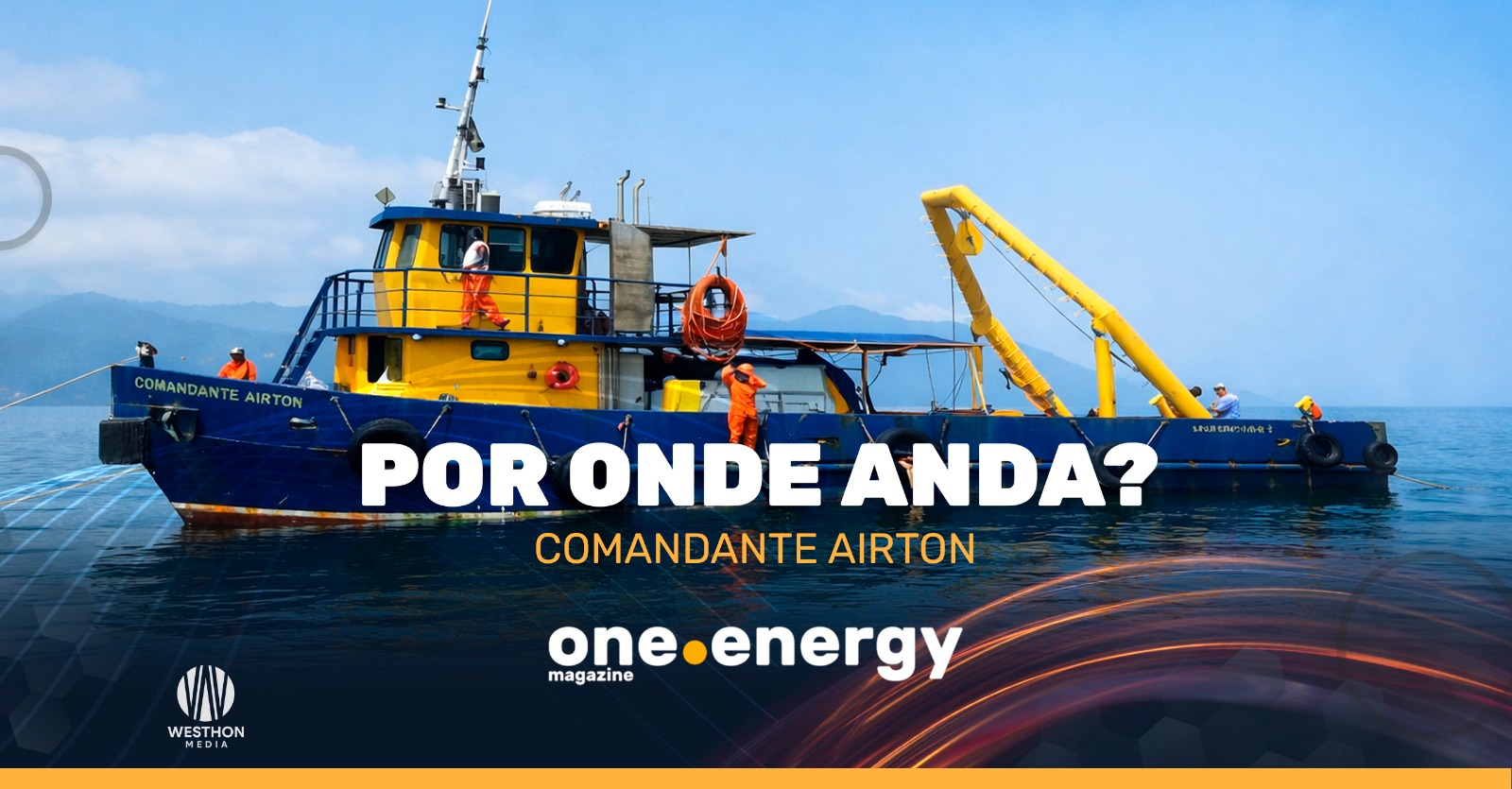
Comandante Airton was built in 2014. Steel hull. Twin Scania DSI 12 engines. 18.75 metres in overall length (LOA). Designed from the outset for one purpose: heavy-duty work. Not to impress. Not to be the largest in the fleet. To work.
“This vessel is a phenomenon. It never breaks down. Perhaps the secret lies in the fact that it is always moving, always working. Just as the human body seizes up when sedentary, so does she. It is a source of pride for all of us,” says Diego Venturini, Commercial Director and partner at Umi San.
Classified as a tugboat, she operates offshore with a 15-day endurance, a cruising speed of 10 knots, and a 15-tonne lifting capacity through a stern A-frame that makes her surprisingly versatile for an asset of her size. The vessel is one of UMI SAN’s flagships — a company specialising in coastal navigation.
Registered under the Brazilian flag, MMSI 710005126, Comandante Airton currently operates within UMI SAN’s fleet, supporting maritime operations that include buoy installation and maintenance, diving activities, hydrographic surveys, and the towage of barges and submerged structures.
Certified by the DPC for diving operations under NORMAM 222. Equipped with a hyperbaric chamber and an onboard real-time data processing workstation.
A small vessel. A complete operational package.
But the story of Comandante Airton does not begin with the vessel. It begins with the man.
Who was Comandante Airton?
In 1999, Comandante Airton A. Rodrigues — freshly retired from the Brazilian Navy — decided not simply to leave the sea behind. He founded UMI SAN, a company whose name carries both a language and a purpose: umi, meaning “sea,” and san, meaning “master” in Japanese, combined with the acronym SAN — Serviços de Apoio à Navegação (Navigation Support Services).
In 2019, Comandante Airton Rodrigues passed away. In 2021, the vessel was incorporated into the fleet. The company he built kept sailing. The projects continue.
“This was the first vessel in Brazil to carry out a rock-breaking operation using diamond wire cutting, without the use of explosives,” says Venturini. The operation took place in Itaguaí, where legislation prohibited the removal of underwater rock formations through blasting.
And the fleet gained a name that was no longer merely operational.
Some vessels are given a simple name. Others are given one with weight, with history, with the quiet responsibility of representing something greater than steel and engines.
Comandante Airton is the second kind.
Every Thursday, a new Where Are They Now? — stay tuned.
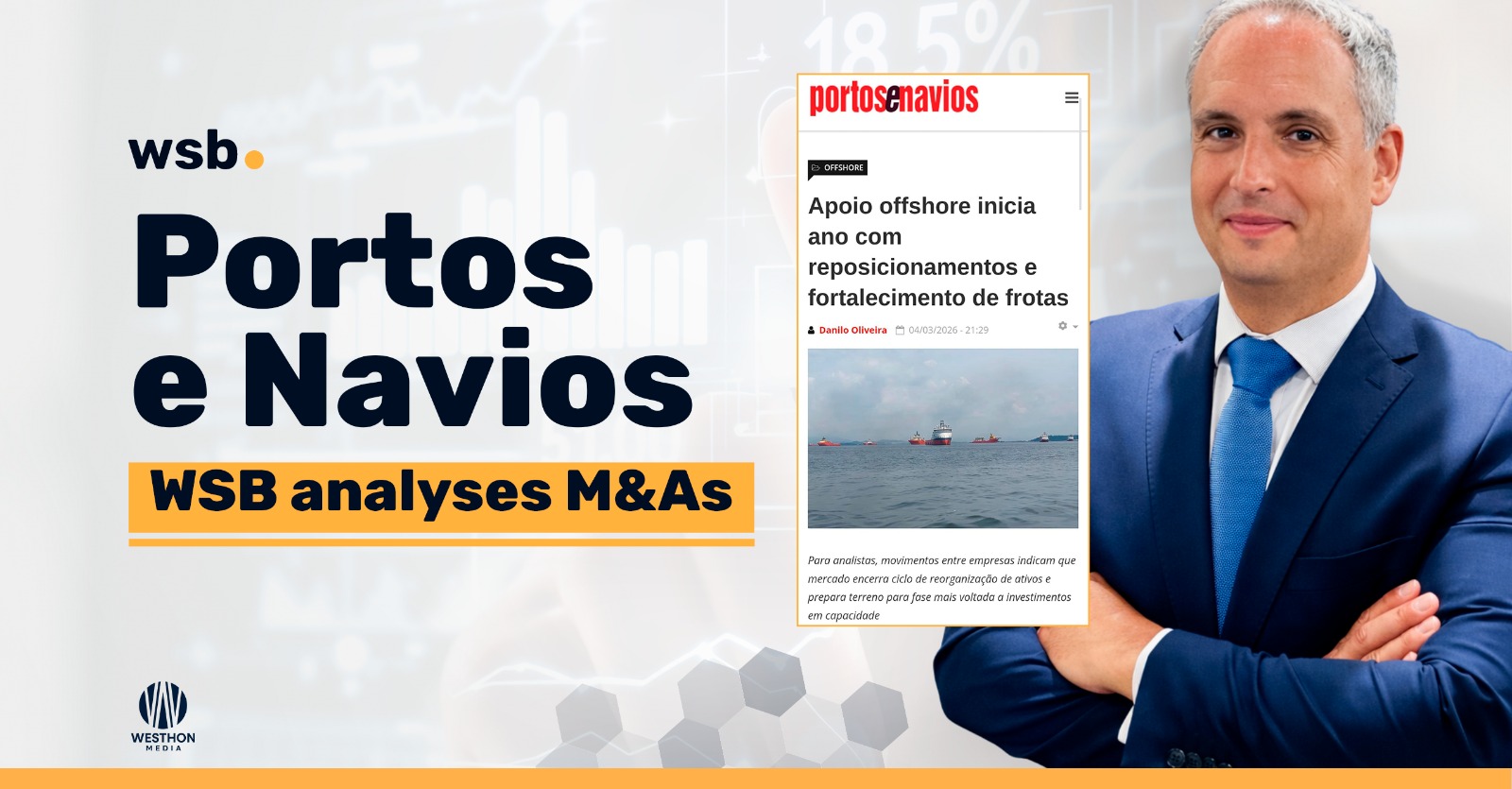
Alexandre Vilela, CEO of WSB Advisors, was interviewed this week by Portos e Navios, analyzing the three transactions that impacted most the offshore market in 2026: Tidewater / WS Ultratug Offshore, OceanPact Serviços Marítimos / Companhia Brasileira de Offshore (CBO), and ASM Maritime / Maersk Supply Service Brasil. In the conversation, he detailed the strategic factors behind these moves and what they indicate for the future of the offshore support vessel market in Brazil.
According to Vilela, the merger between OceanPact and CBO had long been anticipated by the market and is part of a global consolidation cycle that began after the 2014–2016 oil crisis. Major international groups such as DOF Group and Solstad Offshore have also undergone significant fleet and corporate restructuring processes in recent years. In Brazil, however, such movements tend to occur with some delay, due to regulatory characteristics and the prevalence of long-term contracts.
For the executive, current signals suggest the sector is now moving into a new phase. More than mergers, the next cycle is expected to be marked by fleet renewal and expansion, driven by the ageing of offshore vessels. With a global average fleet age between 15 and 17 years — and even higher in some Brazilian segments — the stage appears set for new investments, including the possible entry of new players into the national market.
“The offshore sector has undergone more than forty consolidation transactions in recent years, something unprecedented since the 2014 crisis,” Vilela says.
Throughout 2025, we shared — here and across our social media channels — the inauguration of transfer of Westhon Headquarters to Teresópolis, a mountain city located approximately 100 km from our WSB office in Rio de Janeiro. Now, it is time to officially introduce WSB Norway, also launched last year in Kristiansand, a strategic city in Southern Norway.
Situated in one of the most iconic hubs of the global offshore industry, the new unit strengthens WSB’s presence in the North Sea and enhances its ability to connect European and Asian shipowners with operational demands originating from Brazil. This move positions WSB as the first genuinely Brazilian offshore shipbroking firm to establish its own structure in Norway, reinforcing its role as a bridge between complementary markets.
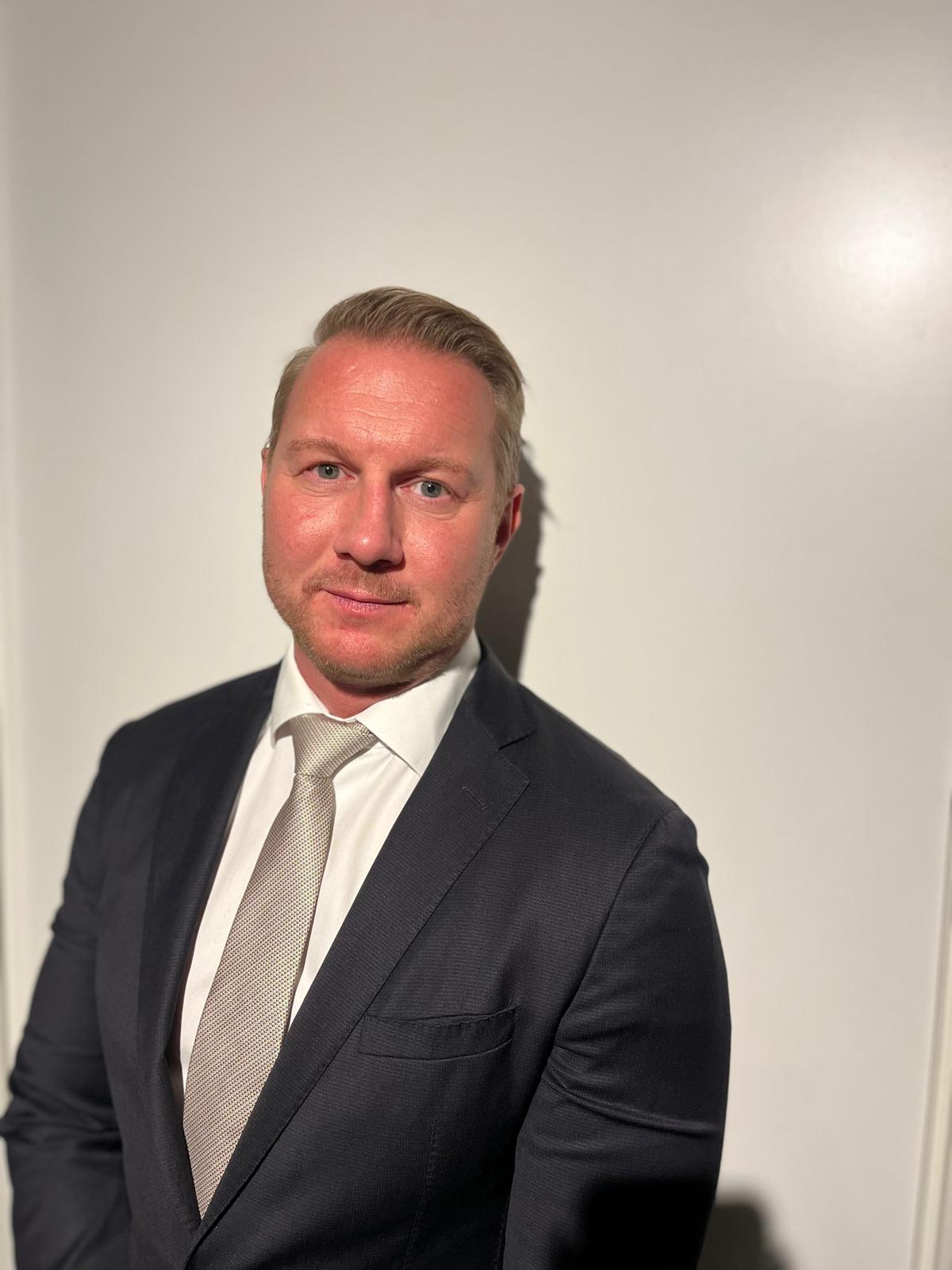
Sølve Høyrem, the Leader behind WSB Norway
At the helm of WSB Norway is the experienced and multifaceted broker Sølve Høyrem. With more than 25 years of dedicated shipbroking experience in the Norwegian market, he has built a distinctive and resilient career path. Over the years, he played a central role in the continuity and development of Westshore following the passing of Erik Stalemo, further strengthening his standing within the offshore brokerage community.
“I have always focused on building long-term relationships based on trust and performance. In shipping, consistency and credibility are everything,” Høyrem says.
One of the most significant milestones in his career was the financial turnaround and growth of Westshore, a shipbroking company he joined in 2002, when its annual revenue was approximately USD 400,000. After taking on the role of Managing Director in 2007, he led a growth cycle that increased revenue to USD 9 million the following year — a leap that cemented Westshore’s position in the market and reinforced his reputation within the industry.
The invitation to lead WSB Norway came from Alexandre Vilela, CEO of WSB Advisors. Their professional paths first crossed at Westshore, when Høyrem invited Vilela in 2010 to open the local Westshore office. That early gesture of trust marked the beginning of a long-standing professional relationship. Years later, the collaboration evolved and ultimately culminated in the consolidation of WSB Advisors in 2016 — a dynamic that reflects a simple principle: trust once given returns in kind.
Alexandre Vilela (Source: WSB Team)
“From the very beginning, our cooperation was both enjoyable and highly successful. We built a strong professional relationship based on trust, market insight, and a shared commitment to delivering value to our clients. As part of this new chapter, I am establishing WSB Norway,” he adds.
Among Sølve’s key challenges is expanding the international client portfolio, bringing new partners closer to the Brazilian operation — with several offers already presented and certain business secured. Another strategic objective is to establish a healthy and recurring revenue stream in Norway, laying solid foundations for future expansion.
“I look forward to strengthening these international connections and creating new opportunities across these key markets,” he states.
WSB Advisors and Norway: a consolidated relationship
Kristiansand is a city that breathes offshore — a characteristic shared by Norway as a whole. The country is home to some of the leading companies in the maritime and energy industries, including Equinor, DOF, BW Offshore, NOV, and Solstad.
WSB Advisors’ connection with the Norwegian market, however, goes far beyond the opening of the new office. One.Energy magazine has a broad reach in the country and has established itself as one of the leading international offshore publications among Norwegian readers.
In 2025, members of the WSB Brazil team attended Nor-Shipping, held in Lillestrøm, near Oslo, alongside Sølve Høyrem. Regarded as one of the most prestigious events in the global maritime industry, the latest edition marked its 60th anniversary, attracting more than 60,000 visitors from 104 countries.
WSB team at Nor-Shipping (Source: WSB Team)
Sølve highlights an important distinction in market dynamics:
“In Norway, the spot market is highly developed and very active, with strong broker involvement. This is a characteristic of a mature offshore market, where brokers play an integrated role between owners and charterers. Brazil, even after a challenging decade for the industry, has seen increasing broker activity — a sign that the market is evolving and becoming more structured,” Høyrem explains.
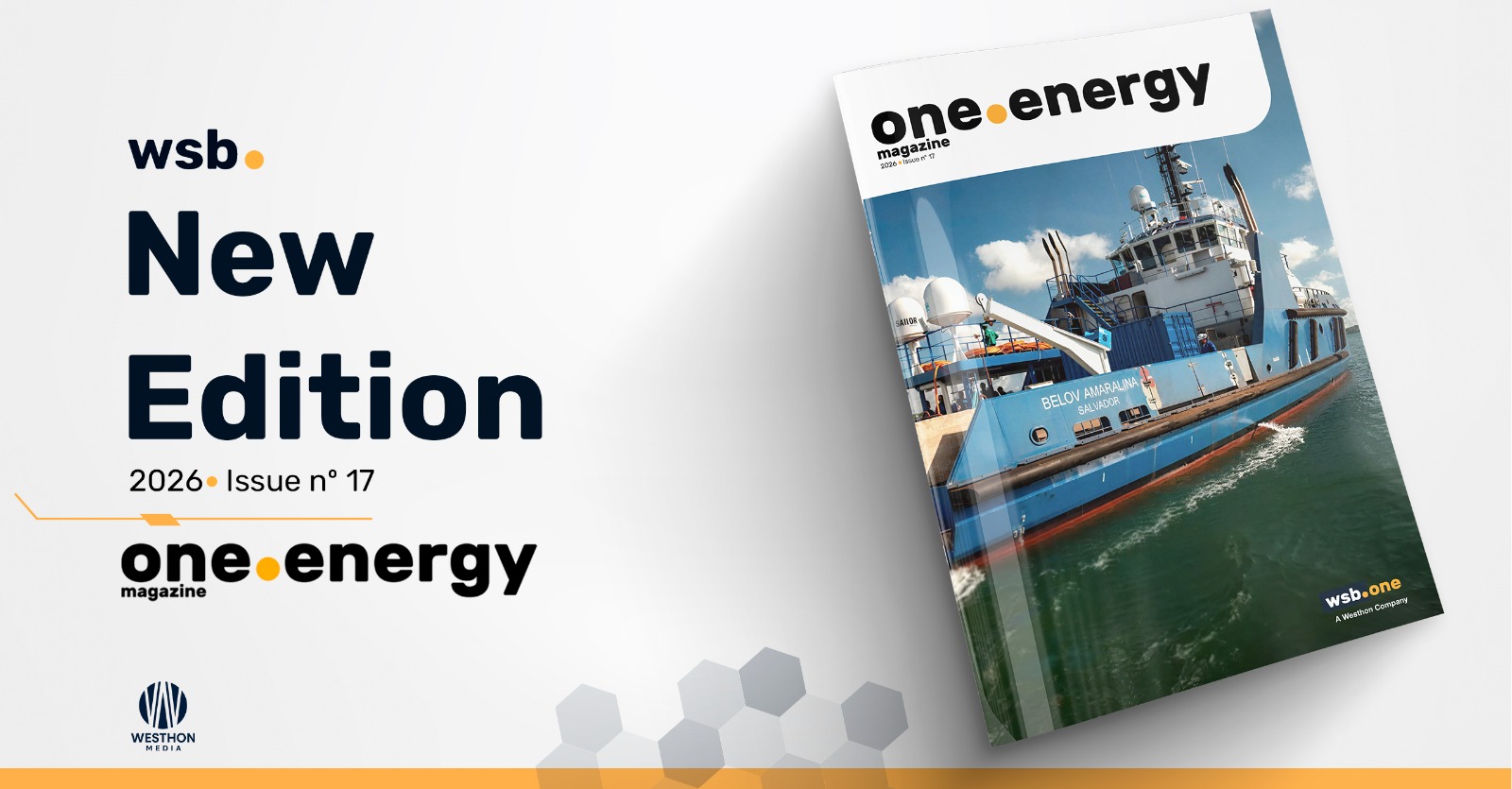
In this edition of One Energy Magazine, you’ll find an exclusive interview with José Eduardo Leal Senior Sales Manager at Kongsberg Maritime, focused on technology and artificial intelligence in the maritime sector.
This issue also features:
An in-depth look at Belov Arembepe
WSB Advisors Norway
Staff announcement
Por onde anda?
Camorim behind the largest light and fireworks show on Earth
Tidewater acquires Wilson Sons, plus more market updates
Perspectives from Fernando Vilela, Alexandre Vilela, Luiz Fernando Priolli and Romulo Bacchiega