WSB is pleased to provide an update on the current long-term tenders that are open to offer.
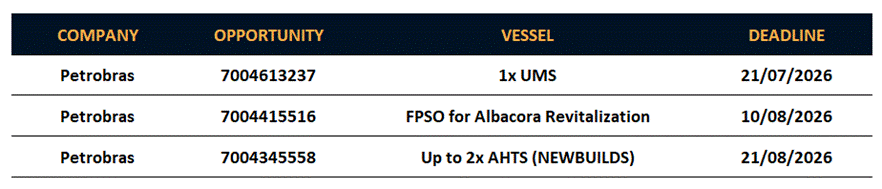
Open tenders:
What has changed?
Petrobras 2x AHTS newbuilding: Opportunity 7004345558 new deadline August 21st, 2026;
Petrobras FPSO for Albacora Rev: Opportunity 7004415516 new deadline August 10th, 2026.
What else is happening?
Birthday Cake!Atlantic Star has completed its Karoon contract and is now at Mauá Shipyard mobilizing for a decommissioning project starting in about 12 months.
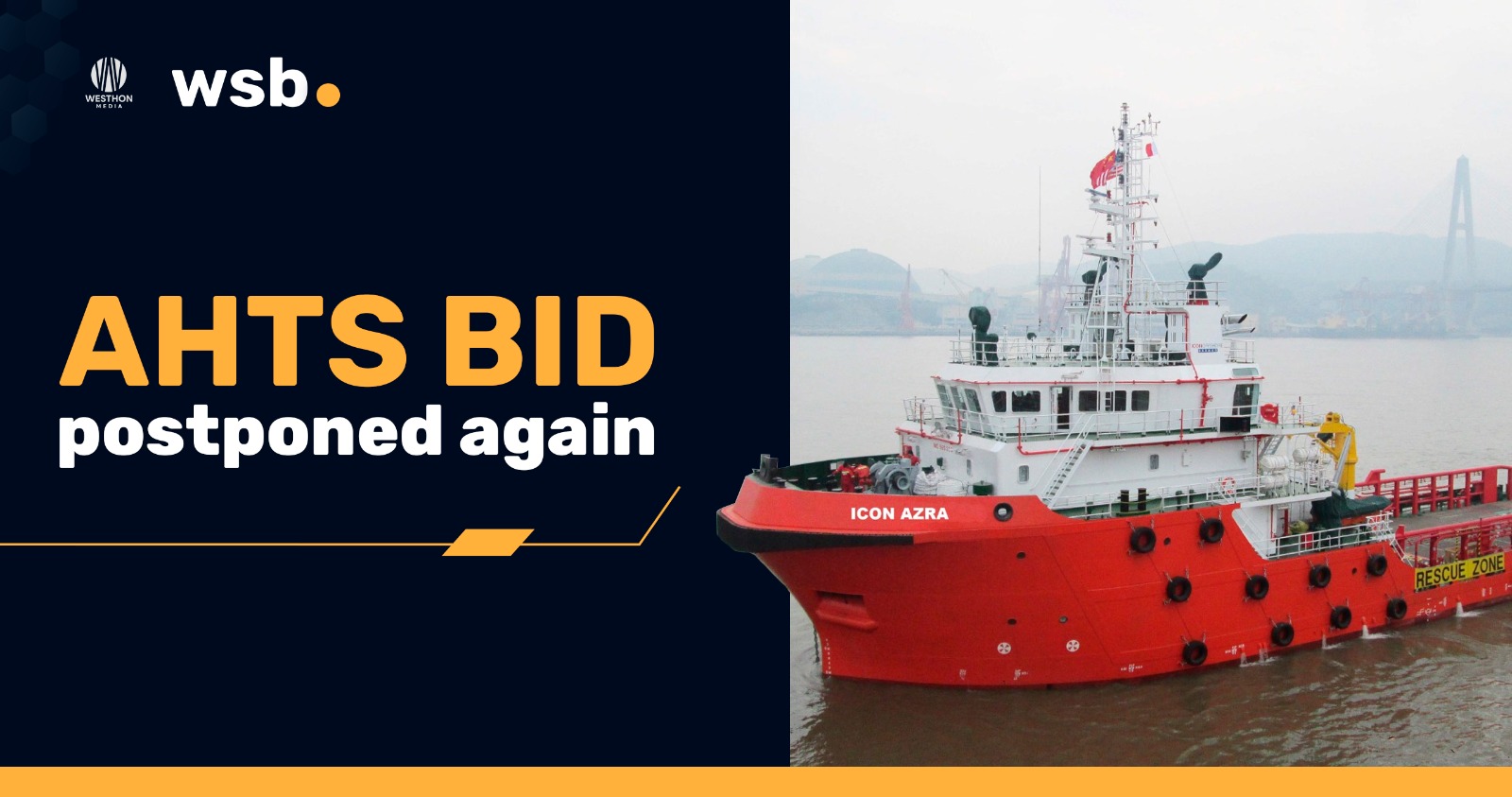
Will it be cancelled? After four previous extensions, the bid for the construction of two new AHTSs has been extended once again. Is it due to a lack of bidders? A shortage of shipyards capable of delivering the project? Or are local yards still unable to meet the local content requirements set out in the tender? More info w/ WSB.
More SOVs in sight: REM Wind is preparing to commence its accommodation support contract with Petrobras.
Petrobras extends AHTS tender deadline to August 21Petrobras has extended the submission deadline for its newbuild AHTS tender, with bids now due on August 21. This is the fourth postponement since late May.
Petrobras has not disclosed the reason for the latest extension. Several shipowners have requested additional time to meet the financing documentation required under Addendum K, with the bank Comfort Letter once again at the center of the issue. Petrobras considered the requests but is not expected to remove the requirement.
After such a prolonged process and repeated extensions, the possibility of cancellation can no longer be ignored, although Petrobras has given no indication that this is currently under consideration.
At this point, the focus is no longer on the deadline itself. What happens when bidding closes will say far more about the market than another extension ever could.
The dispute surrounding Capital Marítima has exposed a question that reaches far beyond one company: whether Brazil’s maritime policy is preserving not only vessels and jobs, but also the entrepreneurs, intellectual capital and industrial capability required to sustain a genuinely national shipping industry
For generations, Brazilian shipping was shaped by companies closely identified with their founders: Wilson Sons; CBO under the Fischer family; São Miguel and Bravante under Marcelino and Renato Nascimento following their father; Comte Matos and William, Astromaritima; Camorim; and, more recently, OceanPact and Posidonia. Despite different histories and business models, they accumulated something more important than vessels alone: Brazilian entrepreneurial, technical and institutional capital.
Operating in Brazil required knowledge of Petrobras and international oil companies, shipyards, banks, ANTAQ, the Navy, unions, crews and repeated market cycles. Mobilisation failures, vessel downtime, financial crises and regulatory changes produced experience that remained within the country. This intangible capital, commercial credibility, engineering judgement, institutional memory and operational discipline, is difficult to value, but it is what distinguishes an established shipowner from a newly incorporated vehicle that merely controls a fleet.
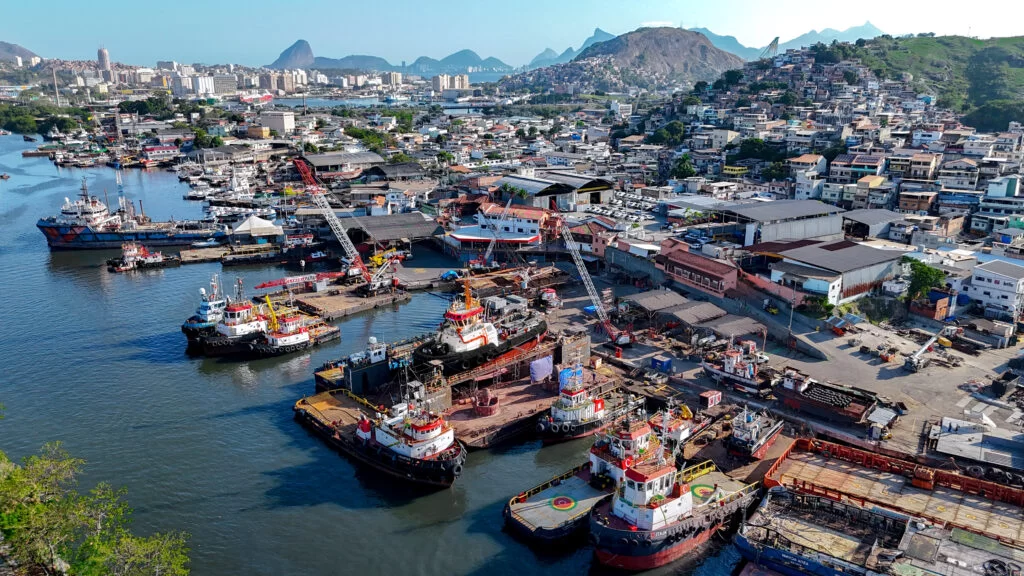
Camorim shipyard, at Niterói (RJ) (Source: Camorim)
Over the past two decades, the Brazilian market has changed, drastically. International investors, foreign shipping groups and private equity have expanded, while Brazilian operators have increasingly been acquired or integrated into structures spanning several jurisdictions. More sophisticated financing and ownership arrangements are not inherently negative. Shipping depends on global capital, technology and expertise, and Brazil should continue to welcome international organized and transparent participation.
The strategic question is whether the country is also preserving its capacity to create and strengthen Brazilian shipowners, and reserving due care to investigating the foreign entities involved. A nation can finance vessels, generate contracts and maintain employment while gradually transferring decision-making, intellectual property, commercial relationships and accumulated expertise abroad. Ships may continue to fly the Brazilian flag even as the industry’s economic and intellectual substance migrates elsewhere.
Capital Marítima offers a visible example of this broader issue, not because foreign ownership necessarily causes poor governance, but because the dispute has shown how uncertainty over control, authority, assets and responsibility can quickly affect employees, clients, suppliers, vessels and commercial relationships built over years.
A dispute that escaped the boardroom
Capital Marítima developed from Embrareb, a Brazilian company associated with entrepreneur Plínio Calenzo, and later came to include Constance Maritime, incorporated in Monrovia, Liberia, alongside interests commercially associated with the Capital Offshore name. What might ordinarily have remained a dispute over shares, management and corporate authority soon reached the company’s workforce, commercial counterparties and vessel operations.
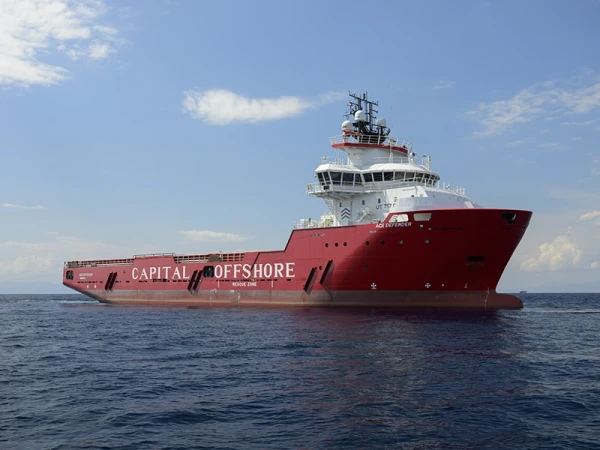
Negotiations with shore-based employees have progressed since One Energy first reported on the dispute, and some workers indicated their willingness to accept a settlement proposed by the company. At the time of publication, however, the agreements had not yet been formally executed by the administration. The immediate tensions may have eased, but the company’s institutional position remains unsettled. Further, the technical challenges surrounding the ACE Defender with Petrobras and the Brazilian Navy have come to a halt.
The situation became more serious in labour proceedings involving the ACE Defender, when the court ordered the arrest of the vessel after considering the risk that a future judgment might be difficult to enforce, particularly in light of the assets available in Brazil and the opacity attributed to the corporate structure supporting the operation. Petrobras, as the recipient of the vessel’s services, was also instructed to make a judicial deposit up to the value claimed.
The arrest does not constitute a final finding of liability. It does, however, reveal a practical concern: when a vessel operates in Brazil but ownership, management, employment, financing, guarantees and material assets are distributed abroad, the reach of Brazilian jurisdiction may be less secure than the obligations created within the country. The same weakness that may prevent an employee from recovering a legitimate indemnity can affect suppliers, creditors and commercial partners attempting to enforce guarantees or contractual rights against foreign group assets.
The corporate dispute has also entered arbitration. After being informed that an emergency arbitrator had been appointed, the 7th Corporate Court of Rio de Janeiro suspended an Extraordinary Shareholders’ Meeting intended to consider claims against shareholders and administrators. The judge concluded that prudence required avoiding further escalation until the appropriate arbitral forum had been established and prospectively set aside the effects of any resolution adopted in breach of the order, which was followed by the arbitrator.
The decision neither settles the control dispute nor invalidates every act of the administration currently in place. It confirms, however, that the company’s governance remains contested and subject to interim measures while arbitration proceeds.
The sequence bears some of the characteristics of an aggressive takeover: provisional authority is obtained, operational and commercial channels are occupied rapidly, and practical consequences emerge well before the legal dispute can be finally resolved. Whether this was a deliberate strategy in the Capital case is for the courts and the arbitral tribunal to determine. What is already evident is that those assuming control appear not to have anticipated the commercial damage caused by acting before authority, representation and stakeholder relationships had been stabilized.
A more experienced maritime transition would ordinarily seek to preserve continuity while the shareholder dispute proceeded in parallel. Instead, relationships and opportunities developed over years were exposed to immediate disruption. One Energy has confirmed that a major international client requested documentary confirmation of the authority of Capital Marítima’s current controllers on an ongoing competitive process. The required confirmation was not produced within the requested timeframe, and negotiations involving offers that had already reached the award stage were terminated.
That episode shows how quickly provisional corporate power can destroy permanent commercial value. Often clients cannot wait for arbitration. They must secure tonnage, preserve schedules and manage risk, and they will usually move to another option when representation or vessel availability cannot be confirmed.
What Brazil loses when it loses a shipowner
The significance of the Capital case extends beyond the dispute itself. It brings into view the internationalisation not only of capital and control, but also of industrial knowledge, commercial intelligence and entrepreneurial capability.
Brazilian maritime policy has historically concentrated on tangible assets: domestic construction, Brazilian-flag tonnage, REB registration, local content and financing through the Merchant Marine Fund. These instruments remain important, but ships alone do not create shipowners.
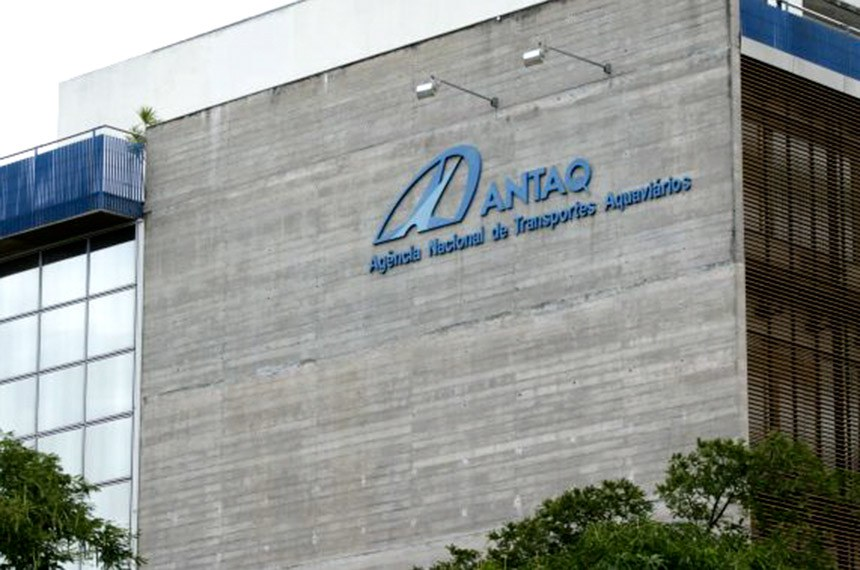
ANTAQ headquarter (Source: Courtesy)
A maritime company depends on accumulated capital, access to charterers, regulatory knowledge, engineering capability, financial expertise, experienced management and the ability to survive long periods of weak markets. This capability resides in people, systems, relationships and judgement, and it takes years to develop.
Every contract performed in Brazil produces knowledge. Vessel data is collected, maintenance systems are refined, crews gain experience, engineering solutions are developed and commercial teams learn how particular clients assess risk. The strategic question is who retains and monetises that knowledge.
When a Brazilian operator is absorbed into an international group, its legal entity may remain in the country while procurement, engineering, financial strategy, operational data and client relationships become centralised abroad. Brazilian workers continue to perform the activity, but the higher-value capability created by their experience may no longer accumulate within a Brazilian enterprise.
This transformation is rarely dramatic. It occurs through acquisitions, management agreements and the gradual migration of strategic functions. The country continues to host vessels and crews while losing the capacity to create companies that control technology, capital and international expansion. Losing a shipowner can therefore mean losing an ecosystem of knowledge assembled over an entire generation.
The unequal cost of building a shipowner
The imbalance becomes clearer when the conditions faced by Brazilian entrepreneurs are compared with those available to international competitors. Local companies operate with expensive capital, volatile exchange rates, complex taxation, demanding collateral requirements and recurrent regulatory and judicial uncertainty. Offshore assets require substantial investment, while the revenue supporting them depends on contracts that may be delayed, contested or terminated.
International groups often enter Brazil with access to deeper capital markets, export-credit agencies, established banking relationships and fleets capable of spreading risk across several regions. They may use cash flow generated elsewhere to acquire Brazilian companies or assets precisely when local operators are financially vulnerable.
Competition therefore takes place not only between companies, but between national industrial ecosystems.
When a foreign group acquires a Brazilian operator, it may gain approved-vendor status, licences, local registrations, trained personnel, regulatory knowledge and access to commercial relationships developed over many years, notwithstanding the extremely competitive financing mechanisms available – while they can present foreign guarantees. The Brazilian entrepreneur often created these assets under far less favourable financial conditions.
The result is unlikely to be the disappearance of maritime activity from Brazil. The market is too attractive. The quieter consequence is that Brazilian entrepreneurs may increasingly become minority partners, local representatives or service providers within structures financed and controlled elsewhere. Brazil preserves the operations while losing more of their economic ownership.
That outcome should not be blamed on foreign investors, who are acting,most of the time, rationally. It is principally a policy question. Other countries support the international expansion of their maritime companies through finance, guarantees, taxation and coordinated industrial policies. The absence of comparable support in Brazil is itself a choice, and it generally favours those arriving with the strongest backing.
Partnership requires substance
Brazil does not need to choose between domestic entrepreneurship and foreign investment. It needs partnerships that strengthen both. International groups can bring scale, technology, financial discipline and improved operating standards, but the local side should not be reduced to providing licences, market access and execution while the strategic value is accumulated elsewhere.
A country should defend its own entrepreneurs in partnership with the world; it should not merely defend the world’s entrepreneurs through partnerships with its own.
This does not justify protecting inefficient companies simply because they are Brazilian. Public support should require transparency, sound governance, safety, investment and the creation of lasting domestic capability. Nor should foreign-controlled groups be presumed less committed to Brazil, unless they really are. The relevant distinction is not nationality alone, but economic substance, accountability and contribution to the local industrial base.
Brazil should aim not only to host international shipowners, but also to create Brazilian companies capable of becoming international shipowners themselves.
Financing companies, not only ships
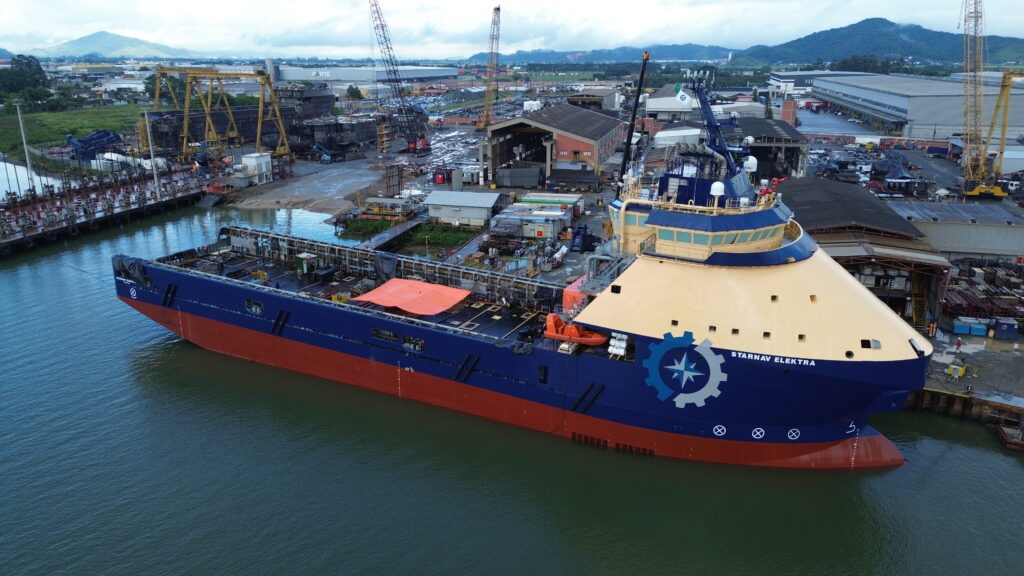
Starnav is a Brazilian shipping company (EBN) owned by the Chilean Detroit Group (Source: Starnav/Courtesy)
For decades, Brazilian maritime policy treated the construction and financing of vessels as its central challenge. The logic was reasonable: domestic orders would create employment, engineering capability and an industrial supply chain. But financing a vessel does not necessarily create a sustainable shipowner. Maybe it better benefits an existing and capitalized one, and not local.
The company must also possess working capital, commercial strength, governance and the balance sheet required to absorb delays, cost overruns, technical failures and periods without revenue. A vessel depreciates; a successful shipowner can accumulate value through credibility, systems, knowledge and access to progressively better financing.
The most valuable outcome of public support should therefore be an enterprise capable of ordering its next vessel with less dependence on the same support. Brazil should measure not only how many ships were delivered, but how many stronger, more transparent and internationally competitive companies were created. And to start, they must created from zero.
That requires policy instruments directed at the enterprise itself: competitive capital, guarantees, governance standards, technology, data, management development and support for international expansion. Shipbuilding and entrepreneurial formation should be parts of the same strategy.
What should count as a Brazilian shipping company?
The transformation of the sector also raises a regulatory question. The current definition of a Brazilian Shipping Company places considerable weight on incorporation, authorisation, flag, registration and tonnage. Those criteria remain relevant, but they may no longer be sufficient measures of national economic substance.
A company may be incorporated in Brazil, employ Brazilian crews and operate Brazilian-flagged vessels while its decision-making, guarantees, intellectual property and strategic assets remain abroad. Another may receive foreign capital while retaining management, technical capability, assets and reinvestment substantially in Brazil. Formally similar companies may therefore contribute very differently to national development and present different levels of accountability before Brazilian jurisdiction.
A modern framework should not rely on crude ownership restrictions. It could instead consider transparency of ultimate ownership and everything in-between, the location of effective management, the availability of assets and guarantees in Brazil, the authority of local administration, reinvestment, professional training, research and development, and the participation of Brazilian entrepreneurs in economic decision-making.
The purpose would not be to exclude internationally controlled companies, but to align access to public support, strategic protections and preferential financing with verifiable economic substance.
Capital Marítima does not answer this debate, and its dispute should not be used to generalise about every foreign-linked operator. It does, however, show how quickly uncertainty over place, control, authority and assets can affect workers, courts, clients and commercial partners, and how an aggressive transition under provisional authority can destroy value before the underlying legal dispute reaches a final outcome.
More than a maritime market
Brazil must decide what it expects from maritime policy. If the objective is merely to ensure the availability of vessels, international capital can provide them whenever demand and contract terms justify the investment. Sort of what is happening now with larger demand and the ageing fleet. If the country also wants to preserve national industrial capability, its policies must support companies that retain technical knowledge, financial substance, commercial intelligence and effective decision-making in Brazil.
This does not require protectionism. It requires incentives and standards that distinguish between structures that merely use Brazilian registrations, contracts and flag arrangements and those that build durable companies, skills and accountability within the country.
The Capital Marítima case does not resolve this question, but it illustrates the cost of ignoring it. When control, assets, guarantees and authority are distributed across jurisdictions, a shareholder dispute can quickly affect vessels, employees, clients, suppliers and contracts. Formal Brazilian status alone does not ensure operational continuity or effective accountability.
Brazilian policy has spent decades addressing how ships should be financed. Its next challenge is to create competitive shipowners capable of attracting international capital, retaining industrial knowledge, answering effectively to Brazilian jurisdiction and expanding beyond the domestic market. That is the practical distinction between remaining a maritime industry and becoming merely a maritime market.
Editor’s note: One Energy has sought comments and documentary clarification from Capital Marítima, Constance Maritime and representatives associated with the administration currently in place. The publication remains open to further documents, clarification and the exercise of the right of reply. Interim court orders, labour claims and arbitral proceedings do not constitute final findings of liability, and all persons and companies mentioned remain entitled to due process and a full opportunity to present their position.
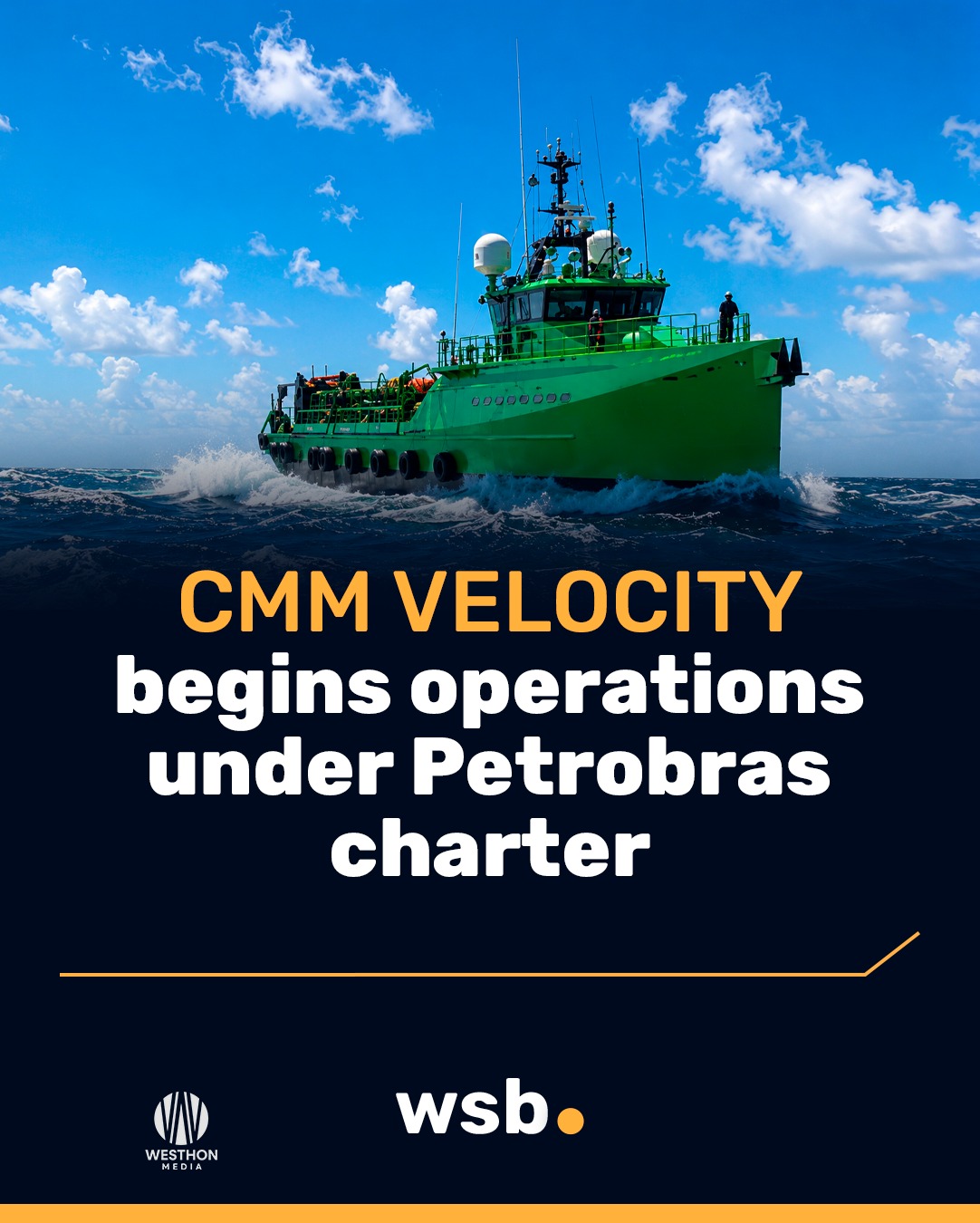
CMM Offshore has announced the start of operations of the FOSRV CMM Velocity under a four-year Petrobras charter, marking the vessel’s return to service following the agreement announced earlier this year.
The CMM Velocity is a Fast Oil Spill Response Vessel dedicated to environmental emergency response and oil spill prevention, supporting Petrobras’ offshore contingency strategy.
The operation will also incorporate drone-based monitoring to strengthen environmental response capabilities, adding another layer of surveillance and operational support to the vessel’s scope.
With the vessel now back in operation, Petrobras expands the availability of dedicated oil spill response assets supporting its offshore activities
Built for high-complexity campaigns and multipurpose support, the high-spec Mexican asset faces its most turbulent period yet, far from the offshore fields she was expected to serve and under judicial custody in Guanabara Bay.
The Vessel
The MPSV Lagunero (IMO 9761736) was delivered in 2018 as one of the modern centerpieces of the Mexican offshore support market. Designed as a high-spec Multipurpose Support Vessel, the 85-meter asset combines offshore support capability with accommodation for up to 197 personnel.
Powered by a diesel-electric propulsion system and equipped with DP2, a 100-ton main crane and accommodation for up to 197 personnel, the vessel was designed for complex offshore campaigns, including floatel operations.
The route to Brazil and the labor crisis
Flying the Mexican flag and managed by the Marinsa group, the vessel crossed the Atlantic intending to support Petrobras’ offshore operations as a floatel. However, the expected campaign never materialized, and the vessel soon became the centre of one of Brazil’s most significant labour and judicial disputes involving an offshore support vessel.
In April 2026, an inspection carried out by Brazil’s Labor Inspection Secretariat revealed that the crew, mostly composed of Mexican nationals, was facing a critical situation of abandonment. The crew had gone more than 90 days without receiving salaries while operating under severe shortages of fuel, food and other essential onboard supplies.
The institutional response was swift. The Regional Labor Prosecutor’s Office of Rio de Janeiro (MPT-RJ) filed an urgent Public Civil Action against Marinsa de México, its Brazilian subsidiary, local partner entities and the international P&I insurer British Marine.
In May 2026, the 23rd Labor Court of Rio de Janeiro issued an injunction ordering the payment of approximately BRL 3.07 million in outstanding wages, alongside the immediate supply of fuel and provisions and the assisted repatriation of the affected crew members.
Today, Lagunero remains moored at Renave Shipyard in Niterói (RJ), where she continues under judicial arrest. Public AIS records continue to place the vessel at the shipyard, with no indication that she has returned to commercial service.
Next thursday, another vessel. Another story. Another chapter of Por Onde Anda?
The semi-submersible Atlantic Star arrived in Guanabara Bay today under tow by the AHTSs Valletta and Xavantes and is expected to berth at Estaleiro Mauá S/A following the completion of its workover campaign for Karoon Energy at the Baúna field.
The timing is significant.
Constellation’s contract with Karoon covered a one-well heavy workover campaign, while Karoon has since confirmed that the intervention on the SPS-92 well was successfully completed, restoring production to approximately 8,600 barrels of oil per day. The Atlantic Star’s arrival at Mauá comes immediately after the conclusion of that campaign, marking the end of its latest operational assignment.
The market is already watching Trident Energy as a possible next destination for the Atlantic Star. While no public contract award has been announced, Constellation Oil Services’s latest investor presentation places two developments side by side: the completion of the Karoon campaign and an open demand from Trident Energy for an anchor-moored drilling unit with start-up expected in 2027. Although the company does not explicitly connect the two, the sequence has naturally attracted the market’s attention.
The movement is public. The context is on WSB.One. Contact us for full access.
Another take-or-pay agreement puts Brazil’s offshore logistics in the spotlight
On July 7, WSB Advisors analyzed the first take-or-pay agreement between Vast Infraestrutura and Petrobras, highlighting the role of long-term contractual structures in Brazil’s crude oil export logistics.
Less than two weeks later, Vast announced the renewal of its take-or-pay agreement with PETRONAS Brasil until the end of 2027.
The two agreements involve different operators, but the same logistics infrastructure and the same contractual model.
Take-or-pay agreements guarantee payment for a minimum contracted capacity regardless of actual throughput. For terminal operators, they provide greater revenue predictability. For oil companies, they secure long-term access to export infrastructure while improving operational planning.
On its own, the PETRONAS renewal is a straightforward commercial announcement. Alongside the agreement signed with Petrobras earlier this month, however, it adds another example of the same contractual model being adopted at the T-Oil terminal.
The two agreements involve different operators but share the same logistics infrastructure and the same commercial structure. Together, they place two separate long-term commitments side by side at a terminal that plays a central role in Brazil’s crude oil export chain.
There is a very common belief about artificial intelligence that goes against everything I learned over the last few months working with data: that what matters is the model.
That the secret is choosing the right LLM, the newest architecture, the most sophisticated fine-tuning.
It is not.
What research has already shown
Andrew Ng, co-founder of Google Brain, former chief scientist at Baidu and professor at Stanford, has been saying this publicly for a few years. In his words: “If 80% of our work is data preparation, then ensuring data quality is the most important work of a machine learning team.”
That is not an opinion. It is a conclusion from someone who built some of the largest AI systems in the world.
A Landing AI experiment makes this even clearer. A company wanted to use computer vision to detect defects in steel plates. The baseline accuracy was 76.2%. An AI team spent two months trying to improve the model. The result: zero improvement. Ng’s team then tried a different approach, focused entirely on the quality of the training data. In two weeks, accuracy went up to 93.1%. Almost 17 percentage points. Without changing a single line of the model.
MIT formalized this approach in a full course: Introduction to Data-Centric AI. The main argument is simple: in the real world, data is not fixed. You can and should engineer your data just as much as you engineer your model.
What I saw happen in practice
Working on the development of WSB.one, a market intelligence platform for the offshore sector, the theory became reality very quickly.
The Brazilian maritime market has a lot of public data: chartering records at ANTAQ, regulatory decisions, vessel movements, corporate structures. All published. Almost nothing connected.
Building scraping pipelines with Python and Django to collect this information was challenging. Many sources were hard to access, each portal with its own behavior, its own structure, its own obstacles. But the real work was not collecting.
A.I (Source: ChatGPT)
It was in turning raw data into something with real quality.
Standardizing vessels names that appear in different forms across different databases. Reconciling corporate entities that are split across records. Identifying when the same information, from different sources, tells contradictory stories. That is the work no model solves on its own, and it determines whether the final result is intelligence or just well-formatted noise.
What this means for those using AI today
If you are implementing AI in your company and the results are not coming, the answer is probably not in changing the model. It is in the data you are feeding it.
A few questions worth asking before any change in architecture:
Is the data consistently formatted, or does each source follow its own logic? Are there inconsistencies between sources that the model is trying and failing to reconcile? Is the data you have representative of the real problem, or is it just the easiest data to collect?
The Data-Centric AI approach does not ask you to ignore the model. It asks you to stop treating data as a detail to be fixed later.
The model is a tool. Data is the raw material. And no tool, no matter how sophisticated, turns bad raw material into a good result.
The Brazilian Supreme Federal Court (STF) held hearings on May 6 and 7 regarding the Direct Actions of Unconstitutionality (ADIs) 4916, 4917, 4920, 4918, and 5038, respectively filed by the Governors of the States of Espírito Santo, Rio de Janeiro, and São Paulo, the Board of Directors of the Legislative Assembly of the State of Rio de Janeiro, and the Brazilian Association of Municipalities with Maritime, River, and Land Oil and Natural Gas Loading and Unloading Terminals (ABRAMT). The cases, reported by Justice Cármen Lúcia, challenge amendments introduced by the Royalties Law (Law No. 12,734/2012).
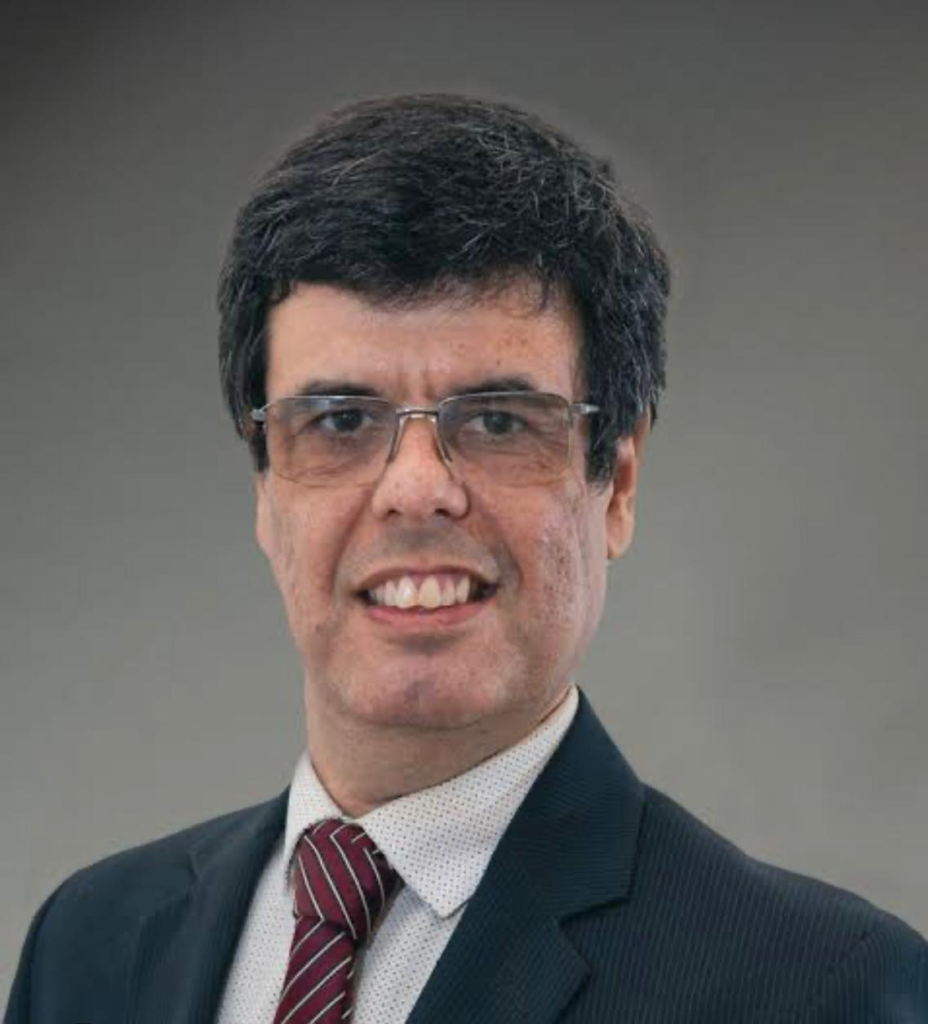
Luis Fernando Priolli (Source: Private Collection)
This law seeks to amend Laws No. 9,478 of August 6, 1997, and No. 12,351 of December 22, 2010, in order to establish new rules for the distribution among the entities of the Federation (Federal Government, States, and Municipalities) of royalties and special participation fees arising from the exploration of oil, natural gas, and other fluid hydrocarbons (“Oil Royalties”), as well as to improve the regulatory framework governing the exploitation of these resources under the production-sharing regime.
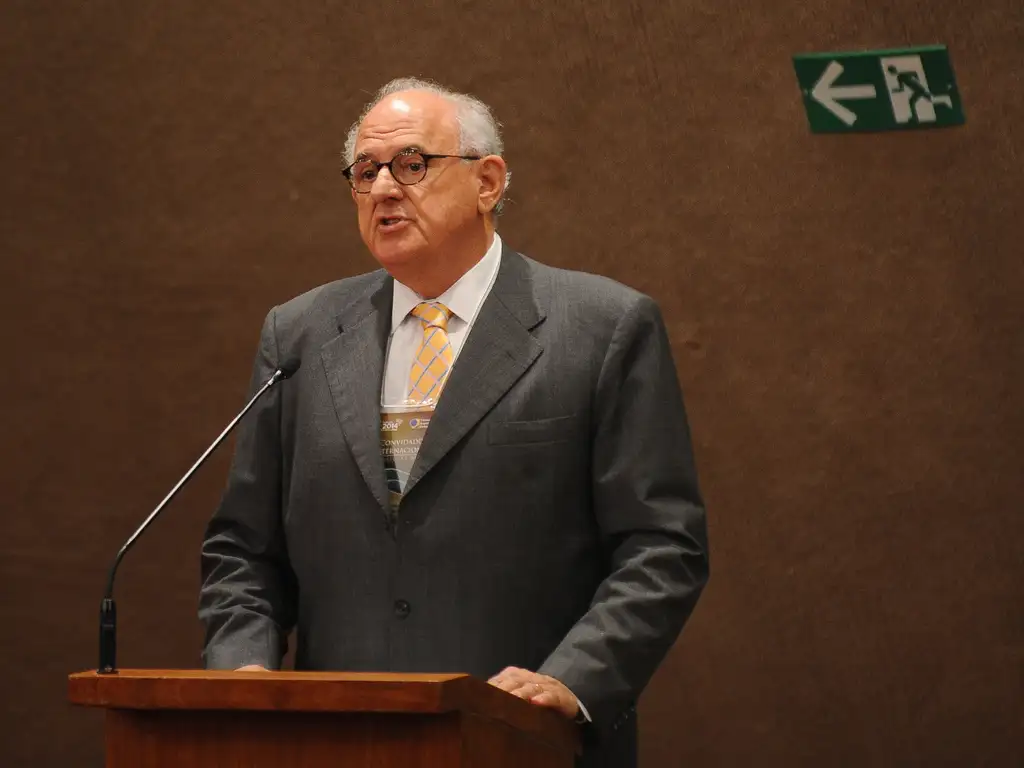
During the 1987–1988 Constitutional Assembly, the constituent legislators established that oil and its derivatives would be subject to a special ICMS tax regime. In other words, ICMS would not be collected in the producing state (at the origin), but rather in the destination state (where consumption occurs), contrary to the general taxation rule.
Since this would clearly cause losses to producing states and municipalities, the 1988 Federal Constitution (“CF/88”) guaranteed financial compensation for exploratory activities to producing states and municipalities, municipalities affected by exploration activities, and municipalities adjacent to offshore production areas, as provided in Article 20, Paragraph 1 of the Constitution, through Oil Royalties and special participation fees on oil and natural gas exploration.
To properly understand the intended purpose of this so-called financial compensation, it is important to analyze the records and debates of the 1987–1988 National Constitutional Assembly, the prevailing interpretation of the STF and constitutional legal doctrine.
Under the general ICMS interstate taxation rule, taxation normally benefits the state of origin. However, in the case of oil and its derivatives, the decision was made to tax consumption at destination (currently Article 155, Paragraph 2, Item X, “b” of the Constitution). This removed revenue from producing states. As a political and financial counterpart, the mechanism provided in Article 20, Paragraph 1 was created.
In the judgment of Writ of Mandamus No. 24,312/DF before the STF, reported by Justice Ellen Gracie on December 19, 2003, Justice Nelson Jobim — who had also served as a constituent federal congressman and played a key technical and political role in drafting the final constitutional text — provided the following historical reconstruction of the negotiations held during the Constitutional Assembly, describing the political agreement concerning ICMS and royalties:
“There was extensive discussion during the Constitutional Assembly as to whether ICMS should be levied at origin or destination. An issue arose involving electricity and oil. Oil-producing and electricity-producing states intended to maintain ICMS collection at origin. São Paulo, naturally, preferred destination taxation because it is a consumer state. The political solution was as follows: ICMS collection was removed from the origin state and financial compensation was created for producing states. That is how Paragraph 1 of Article 20 of the Constitution came into existence.”
In another portion of the same debate, Jobim added:
“It was established that ICMS would not apply to operations involving oil, including lubricants, liquid and gaseous fuels derived therefrom, and electricity destined for other states. In other words, ICMS incidence was removed from origin. Thus, the following solution was adopted: ICMS was removed from origin and states were granted financial compensation for the loss of such revenue.”
And further:
“I am attempting to reconstruct the historical issue of the Constitutional Assembly. This is not federal revenue that the Union is generously transferring to the states; rather, it is revenue originally belonging to the states, as financial compensation for the exploitation within their territories of an asset not subject to ICMS.”
Nelson Jobim (Source: Elza Fiuza/Agência Brasil)
The principal purpose of this constitutional provision was therefore to compensate producing states for the loss of tax revenues caused by destination-based ICMS taxation on oil. However, because the constitutional text also incorporated the idea of “compensation for the impacts and risks of exploration,” it opened the possibility of including environmental, infrastructure, and socioeconomic impacts and risks within its scope.
Thanks to the expression “financial compensation,” it also became legally acceptable to associate royalties with (a) territorial degradation; (b) environmental risks; (c) pressure on public services; and (d) the finite nature of natural resources.
Although the STF did not establish a binding precedent in this judgment stating that royalties exist exclusively to compensate for ICMS revenue losses, the Court formally recognized in MS 24.312 that royalties have the constitutional nature of “participation” or “financial compensation,” and that they originally belong to the beneficiary states and municipalities.
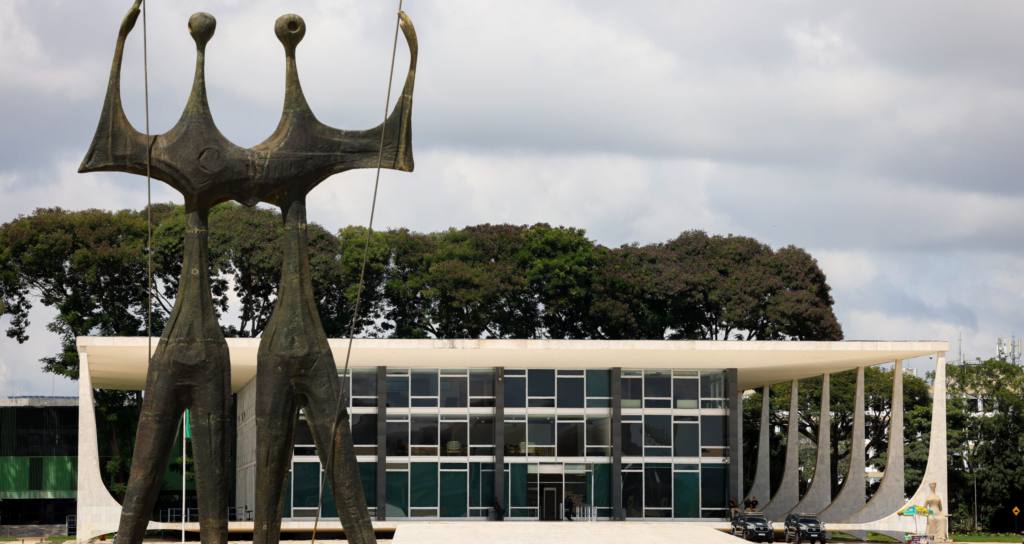
STF (Source: Gustavo Moreno/STF)
The summary of the judgment itself also references another rationale based on compensation for the economic, social, and environmental damages resulting from oil exploration activities.
Historically, therefore, the issue may be summarized as follows:
During the 1988 Constitutional Assembly
The predominant political purpose was to compensate for the loss of ICMS revenue at origin;
Especially for Rio de Janeiro and other producing states.
The constituent debates consolidated the political solution later reflected in:
Article 155, Paragraph 2, Item X, “b”
ICMS on oil and electricity would be levied at destination; and
Article 20, Paragraph 1
Financial compensation/participation for resource exploitation.
It is precisely because of this connection that Justice Jobim stated that “Article 20, Paragraph 1 must be read together with Item X of Article 155.”
In subsequent legal developments
The thesis of compensation for the environmental, economic, and social impacts of exploration activities also became consolidated.
Therefore, royalties today have a dual foundation
A federal-taxation rationale; and
An environmental/economic compensatory rationale.
This point became especially important in later disputes concerning the redistribution of pre-salt oil royalties, when producing states argued that the Constitution had established a specific federal pact in exchange for the loss of ICMS revenues. This understanding supported Justice Cármen Lúcia’s vote declaring unconstitutional the law that altered the rules governing the distribution of oil royalties, on the grounds that Law No. 12,734/2012 went beyond a mere revision of percentages and ultimately disrupted the federal balance by changing which entities are entitled to the financial compensation provided for in the Constitution.
Even before the computers are turned on and activity begins in WSB’s Advisors office in downtown Rio de Janeiro, Maria Ciriaco is already at work. As an Administrative Assistant, she is consistently the first to arrive, helping prepare the environment for another productive day.
Her role, however, extends far beyond organizing spaces. Maria helps create an atmosphere of warmth, care, and well-being that has become part of the company’s identity.
Originally from Nova Russas, a small town in the state of Ceará, Maria left her hometown in 2002. Alongside her family, she traveled nearly 2,500 kilometers to Rio de Janeiro in search of new opportunities. Her story reflects that of thousands of Northeastern Brazilians who built new lives far from home while never losing touch with their roots.
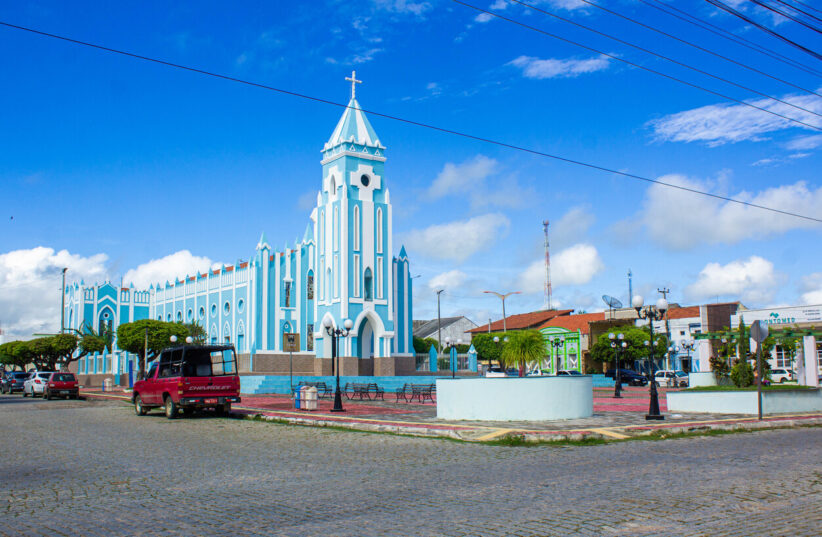
Nova Russas, Maria’s hometown (Source: Courtesy of Nova Russas City Hall)
Now 37 years old, Maria carries with her fond memories of a childhood spent under the care of her grandparents, Francisco and Zulmira. Among games, open spaces, and climbing trees, she discovered a passion that today also contributes to her livelihood.
“I have many memories of Ceará. I was raised by my maternal grandparents. I had a privileged childhood—surrounded by animals, plenty of room to run, and trees to climb. But making cheese and sweets with my grandmother was one of my favorite activities,” Maria recalls.
It was alongside Mrs. Zulmira, in the late 1990s, that Maria first learned about cooking. What began as a family tradition evolved into a skill admired by everyone around her. At WSB, her homemade treats have become part of everyday life. From sandwiches affectionately called internally as “Mac Mary” to cakes and desserts with or without sugar, her recipes help energize meetings, events, and visits from guests.
“I don’t have a favorite type of recipe. I simply enjoy exploring new ones. New challenges motivate me. Beyond being a hobby, cooking represents a life transformation for me. Above all, it is rewarding to see people appreciate and praise the dedication I put into everything I make,” she says.
In 2026, Maria celebrates two years with WSB Advisors. Alongside Camila Lopes and Vilma Fernandes, she contributes to the company’s facilities management, helping oversee workplace organization, visitor reception, employee support, and the infrastructure required for the daily operation of the office and corporate events.
Her professional journey includes experience as a receptionist, waitress, store manager, and sushi woman. Each stage helped develop qualities that define her presence today: attention to detail, a service-oriented mindset, and the ability to make people feel welcome.
The mother of four-year-old Bento, Maria balances her time between work, family, fitness, and leisure. She enjoys watching cartoons with her son while sharing a bowl of popcorn and also follows series such as “The Mentalist”, “Yellowstone”, and “S.W.A.T.”
Maria and Bento (Source: Private Collection)
“I have my challenges and my dreams, such as moving out of a rental home and into a larger house. But when I reflect on my life, I sometimes feel privileged. I have the most important things: health and the energy to wake up every day at 4:30 a.m., exercise, and work.”
At WSB, Maria represents something that is difficult to measure through reports or performance indicators. Her work helps keep everything running smoothly, but her greatest contribution may be her ability to transform simple gestures into meaningful experiences. Whether welcoming a visitor, preparing a cup of coffee, or introducing a new recipe, she turns dedication into a way of caring for people—and that, every day, helps power the company’s energy as well.
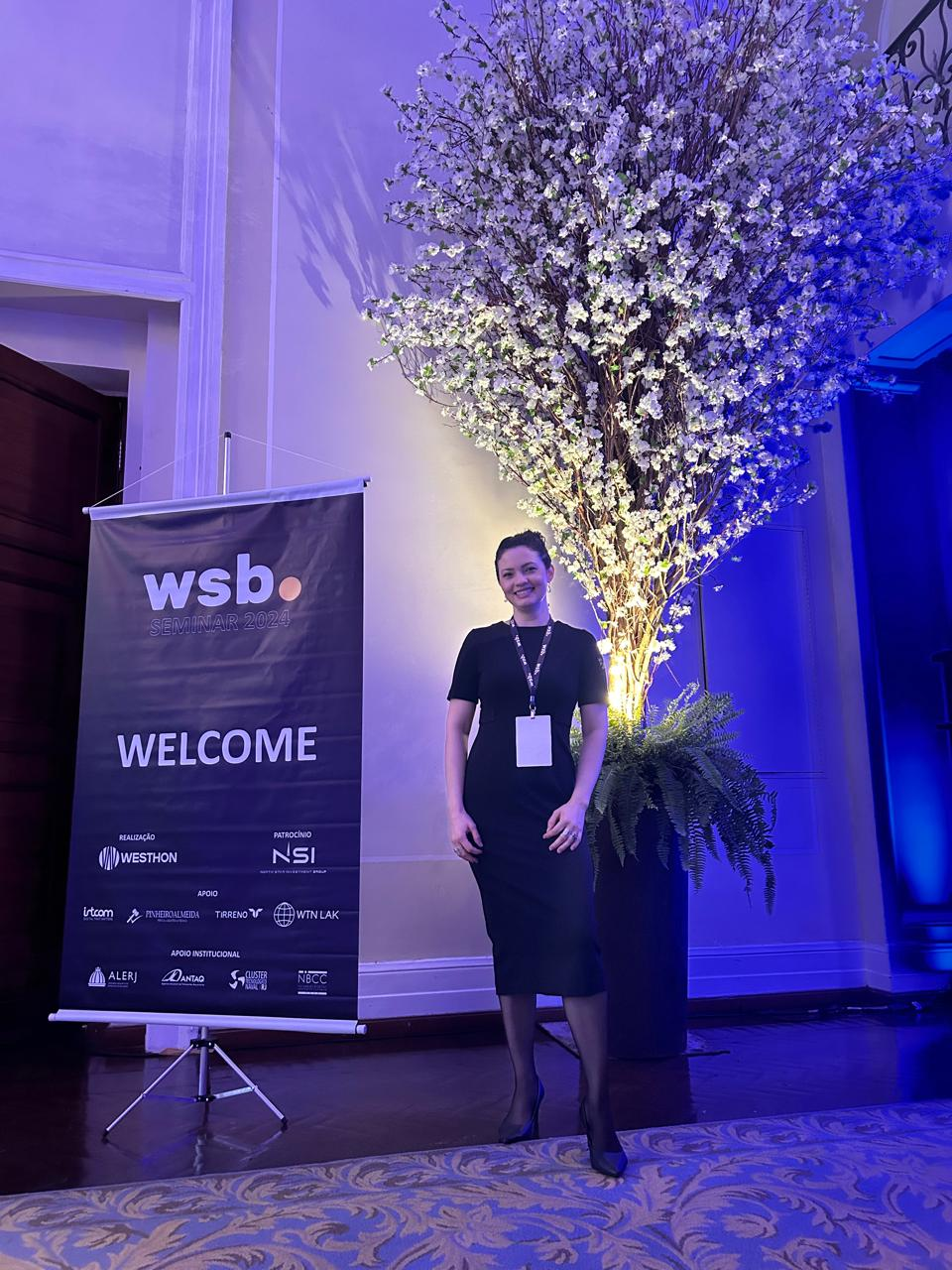
Maria Ciriaco at WSB Seminar 2024 (Source: Klésio Abel)
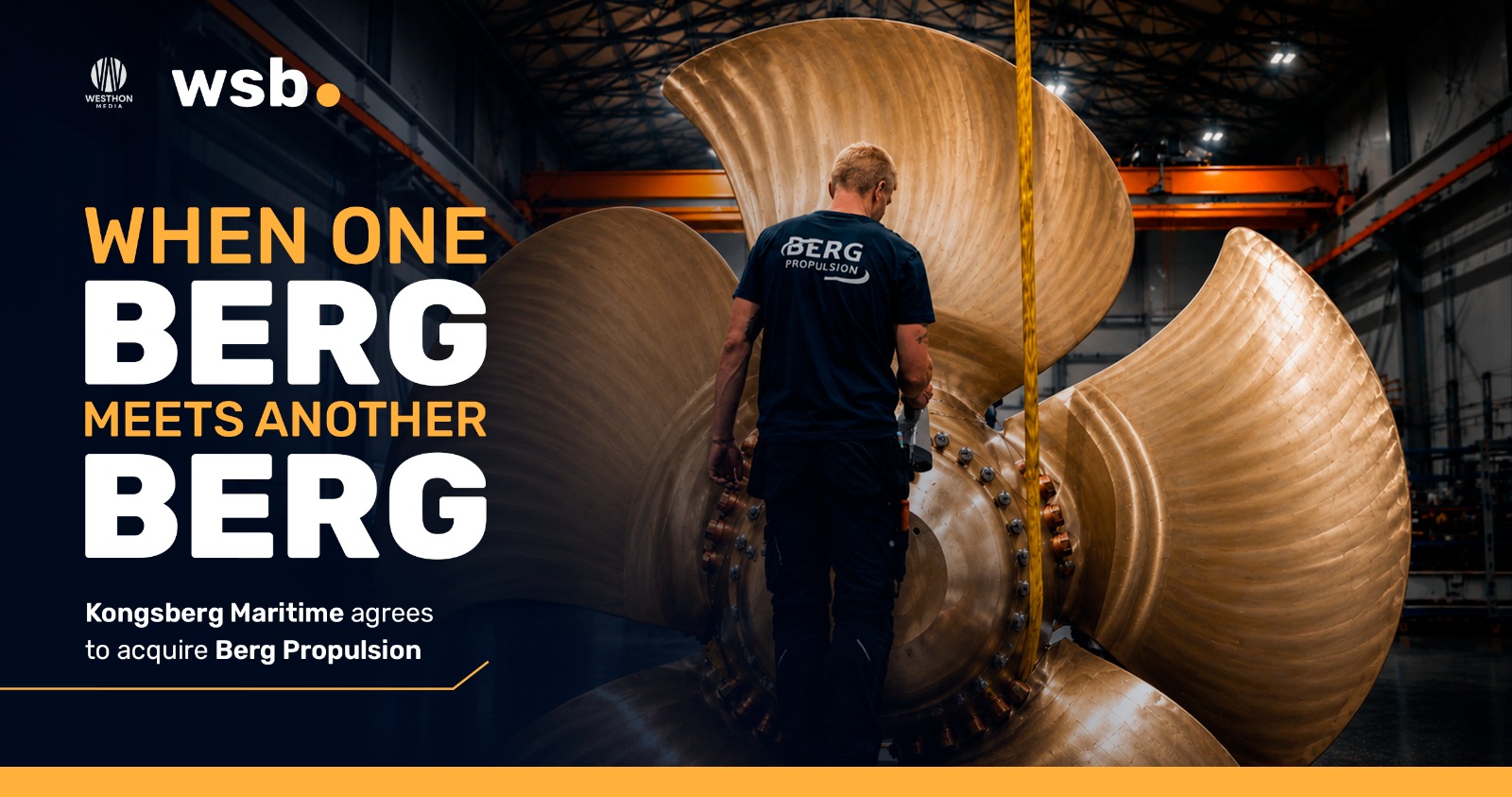
Kongsberg Maritime has announced an agreement to acquire Sweden-based Berg Propulsion, in a move aimed at expanding its integrated propulsion portfolio across a broader range of commercial vessel segments. The deal brings together two propulsion specialists with highly complementary portfolios, combining Kongsberg Maritime’s advanced solutions for high-performance vessels with Berg Propulsion’s established position in merchant vessels, product tankers and other volume ship segments.
According to the company, the acquisition will broaden its ability to deliver complete propulsion and electrical systems while strengthening lifecycle support through a larger global service network. Berg Propulsion is a leading supplier of controllable pitch propellers, thrusters and integrated propulsion systems, with an installed base of approximately 4,000 vessels worldwide.
Following completion, Berg Propulsion will continue operating as a separate brand within Kongsberg Maritime’s Propulsion & Handling division, preserving its existing organization while benefiting from Kongsberg Maritime’s global scale and aftermarket capabilities. The combined portfolio will cover controllable pitch propellers, thrusters, hybrid and electric propulsion systems, and integrated vessel control solutions.
The transaction reflects a broader trend in the maritime industry, where shipowners are increasingly seeking integrated propulsion packages that combine mechanical equipment, electrical systems, automation and lifecycle services. As efficiency, emissions reduction and total cost of ownership become increasingly important investment criteria, equipment suppliers continue expanding their portfolios through strategic acquisitions, broadening their integrated offerings across the vessel lifecycle.
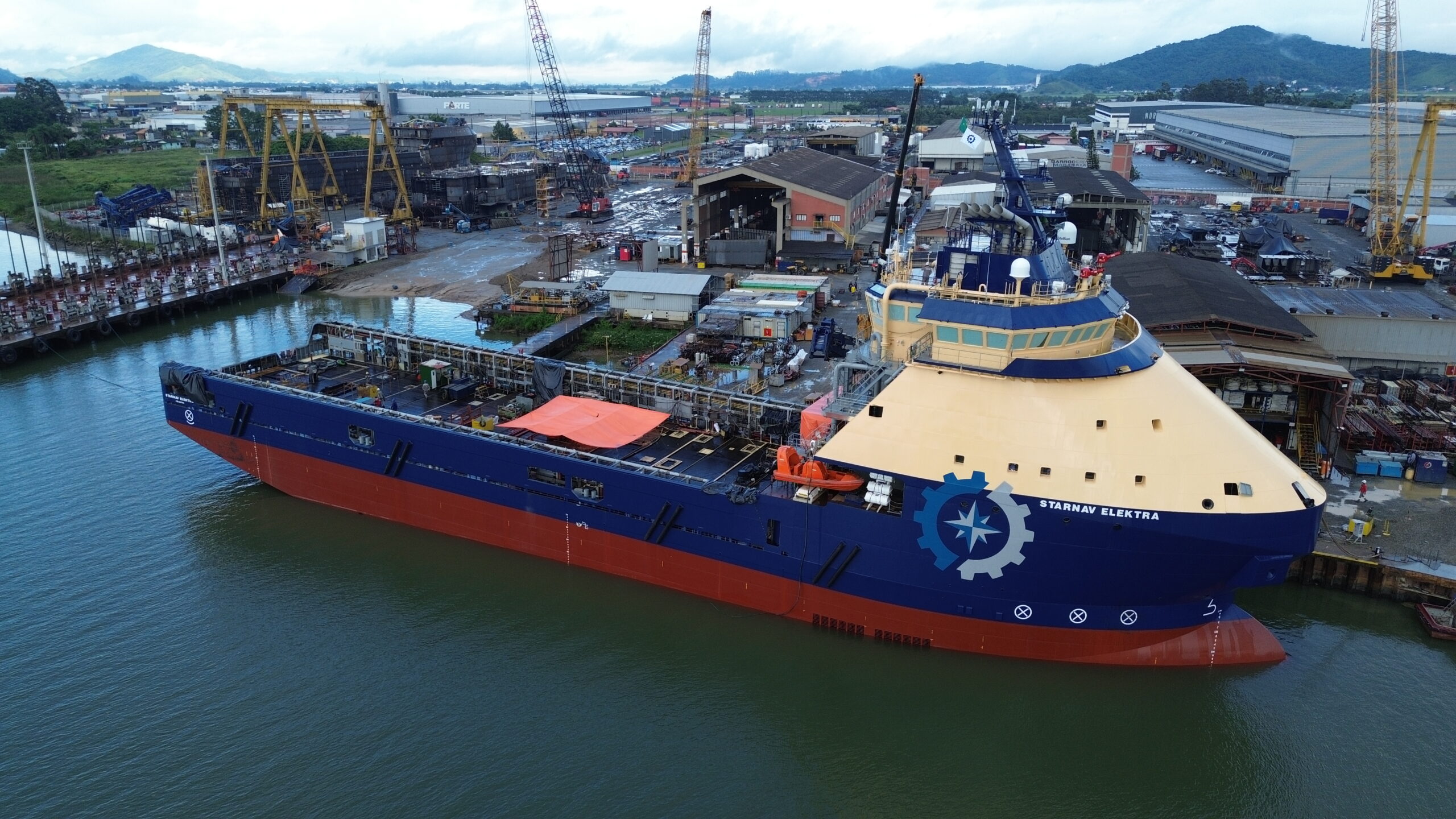
Starnav has signed an agreement with Rolls-Royce to supply 40 mtu 16V 4000 M33S engines for ten new hybrid offshore support vessels contracted by Petrobras. Announced on July 9, 2026, the agreement marks another step in the renewal of Brazil’s offshore support fleet, combining larger vessels, long-term charter contracts and lower-emission technologies for offshore logistics.
The package includes six Platform Supply Vessels (PSVs) and four Oil Spill Response Vessels (OSRVs), supporting Petrobras’ offshore logistics and oil spill response operations under 12-year charter contracts. The vessels will feature hybrid diesel-electric propulsion with integrated battery systems and mtu engines compliant with IMO Tier III standards, reducing NOx emissions while improving fuel efficiency.
The project is expected to reduce greenhouse gas emissions by around 20% compared with Starnav’s current fleet. The reduction reflects not only the adoption of hybrid propulsion but also the combination of modern engines, battery integration and more efficient vessel designs, as offshore operators continue investing in lower-carbon support fleets.
The newbuild program is valued at approximately R$ 2.5 billion, with financing support from Brazil’s Merchant Marine Fund (FMM). The vessels are being built at Detroit Brasil Shipyard and are scheduled to enter service between 2026 and 2028, highlighting the FMM’s continued role in supporting fleet renewal while enabling Petrobras’ long-term charter strategy.
Another notable feature of the program is the increase in vessel deadweight. The new units are expected to offer around 5,500 tonnes of deadweight, compared with approximately 4,500 tonnes across much of Starnav’s existing PSV fleet. Beyond increasing cargo capacity, the larger design offers greater operational flexibility and can improve transport efficiency by carrying more cargo per voyage while benefiting from hybrid propulsion and next-generation engines.
For Rolls-Royce, the agreement further strengthens the presence of its mtu propulsion systems in Brazil’s offshore support market, where fleet renewal is increasingly driven by efficiency and environmental performance requirements. For Starnav, the investment expands a fleet designed to support Petrobras’ offshore operations with modern vessels combining higher cargo capacity, hybrid propulsion and compliance with the latest emissions standards.
Taken together, the project reflects broader trends shaping Brazil’s offshore support market: larger vessels, hybrid propulsion, longer charter periods and continued investment in fleet modernization to meet both operational and environmental requirements. With deliveries scheduled between 2026 and 2028, the new fleet will become part of Petrobras’ long-term offshore support infrastructure.