Author: Rafael Bortoloti

  • Yinson with notable progress

    Yinson with notable progress

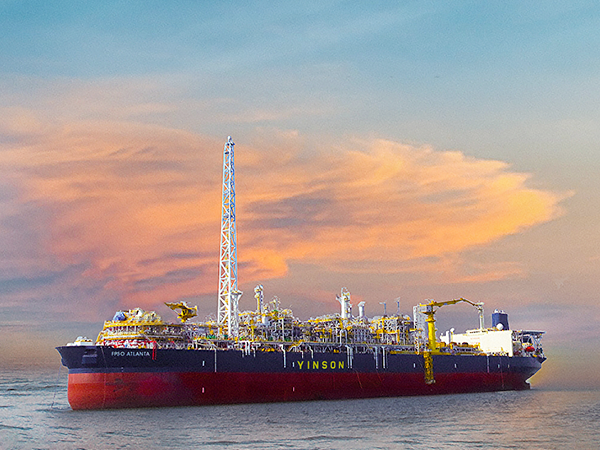
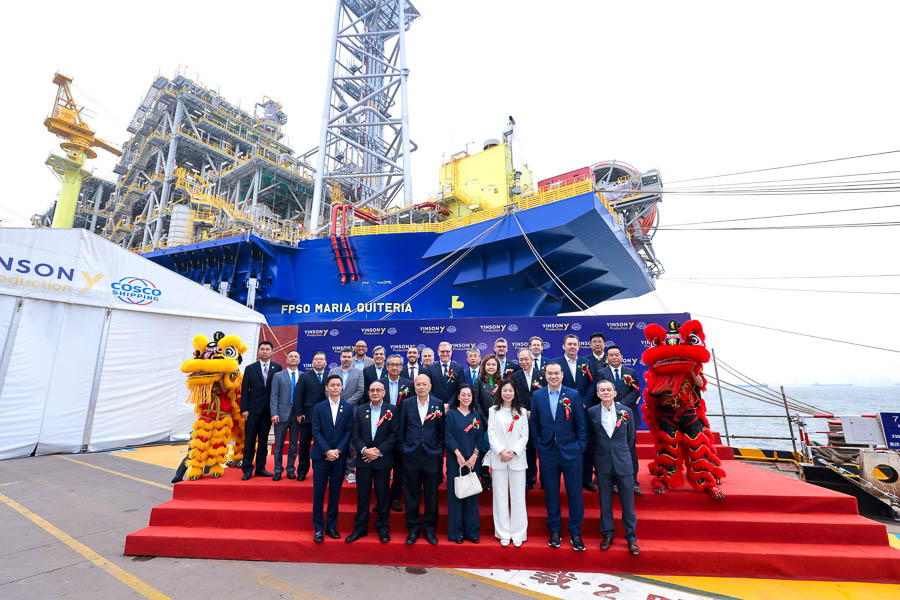
    Yinson Holdings has made notable progress, particularly through its advanced Floating Production Storage and Offloading (FPSO) units. The company has completed FPSO Anna Nery for Petrobras’s Marlim II field and is currently mobilizing FPSO Atlanta for Enauta. A significant milestone was reached with the FPSO Maria Quitéria, which recently had its name-giving ceremony in China. This FPSO is a testament to Yinson’s commitment to environmental sustainability and innovation, destined for the Parque das Baleias – Jubarte field operated by Petrobras.

    FPSO Maria Quitéria stands out for incorporating a unique combination of technological advancements. These include a closed Flare Gas Recovery System (FGRS), co-generation of energy in combined cycle, and an all-electric concept. These features are in line with Yinson’s goal of developing the Zero Emissions FPSO concept, aiming to significantly reduce the environmental impact of offshore production. According to WSB sources, this innovative approach is expected to cut emissions by up to 5 million tons of CO2 throughout FPSO Maria Quiteria’s operational lifecycle.

    Furthermore, Yinson has demonstrated exceptional project management skills by ensuring the FPSO Maria Quitéria is set bound to Brazil by June, advancing its schedule by at least three months. The project cap is estimated between USD 1-1,2 billion.
  • Open tenders update

    Open tenders update

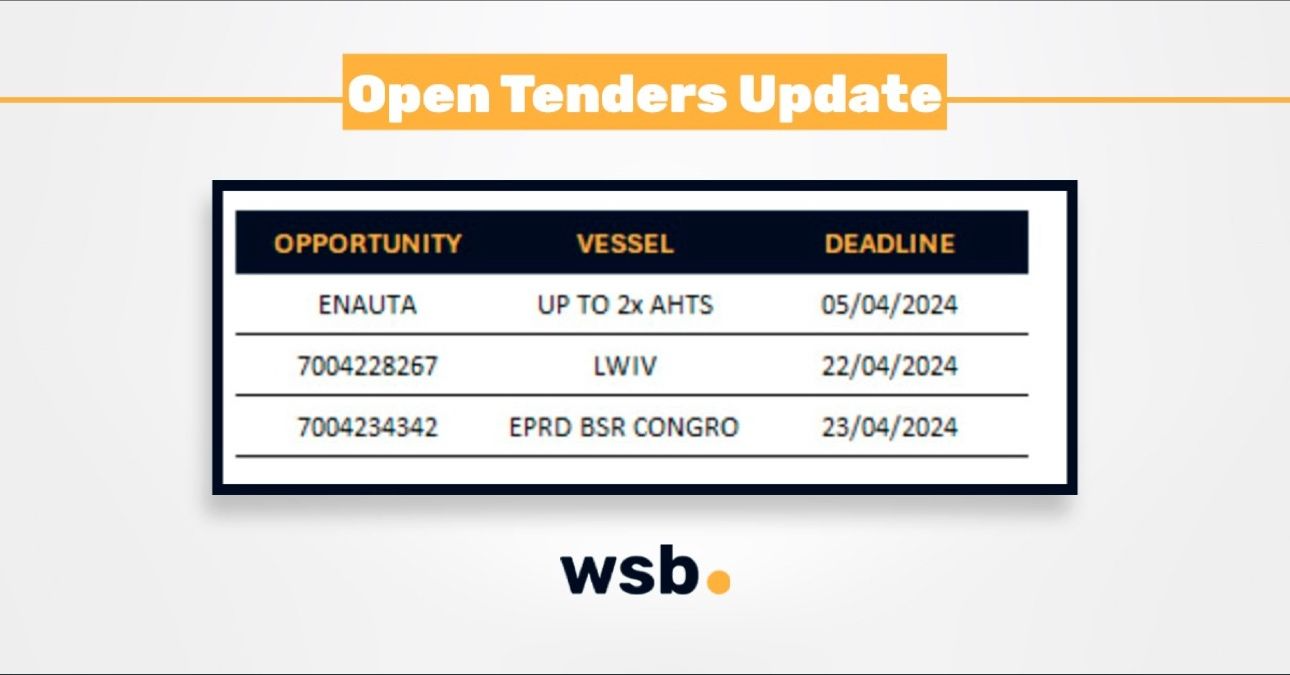
    Enauta PSVs Tender effectively closed for offers last March 26. Enauta AHTSs Tender to close shortly (05/apr). New extensions on Petrobras LWIV and EPDR BSR Congro as in the image. For more information, contact us on comercial@cms.oneenergynews.com

  • MODEC secures FEED for Shell project

    MODEC secures FEED for Shell project

    MODEC secured a contract with Shell for the Front-End Engineering and Design (FEED) of an FPSO for the Gato do Mato block.

    The FPSO will be located in water depths of approximately 2.000 meters, about 250 km off the coast of Brazil. MODEC will also be responsible for designing the hull and all related facilities on the upper part of the FPSO.

    MODEC already delivered 16 FPSOs to Brazil and has another two under construction. The FPSO Gato do Mato will be the second unit delivered directly to Shell by MODEC for operation in Brazil, the other being FPSO Fluminense.

    The FPSO will have a capacity of 90,000 boed and 8.5 million m3 per day of natural gas and able to store 1.6 million barrels of oil.

    The production project foresees 10 wells, four of which are producers, four gas injectors and two seawater injector wells. Shell is the operator of Gato do Mato with a 70% stake in partnership with Ecopetrol (30%).

    “It is important to mention that Shell is still assessing the best solution for the development of Gato do Mato. The Final Investment Decision (FID) is expected to be taken only in 2025. In 2017, the company won the ANP auction and field development plan was scheduled for 2023 however, at the end of 2022 the company decided to postpone the decision”, recalls Omar Darian, Chartering Manager at WSB.

  • Petrobras: Hiring and opportunities for the national industry

    Petrobras: Hiring and opportunities for the national industry

    Petrobras authorized the process of hiring support vessels for exploration and production logistics, with short-term demand: 2025 and 2026.

    The company will also hire new support ships for long-term demands, whose technical specifications will focus on new technological solutions for efficiency and reduction of greenhouse gas emissions.

    Petrobras estimates hiring around 200 ships by 2028, to replace current charters or to increase the current fleet. Of this total, it is estimated that there will be opportunities to build up to 38 new vessels.

    In the first tender, 12 PSV-type support vessels are expected to be contracted. It is also planned to hire cabotage ships, FPSOs, vessels to carry out underwater and well activities, in addition to platform decommissioning activities.

    These opportunities mark the beginning of a series of hirings to meet the company’s Strategic Plan.

    For more information contact: www.cms.oneenergynews.com

  • FMM APPROVES HELP TO BUY FPSO

    FMM APPROVES HELP TO BUY FPSO

    The Merchant Marine Fund (FMM) Board of Directors approved the contribution of BRL 8.56 billion for the construction of two FPSOs: Sergipe Águas Profundas (SEAP) I and Sergipe Águas Profundas II (SEAP II). Both basins are located in the Sergipe-Alagoas Basin (SEAL), approximately 100 km from the coast.

    Last month, we published that Petrobras was facing a hard market to lease FPSOs for SEAL, in view of the increasing costs and the specificities of the GTD for both projects SEAP I and SEAP II.

    Carlos Travassos, Executive Director of Engineering, Technology and Innovation declared two weeks ago that Petrobras has more control over operations with their owned units, but on the other hand, the process is lengthier. Travassos commented on aspects to increase the viability of projects such as the access to the Merchant Marine Fund (FMM), in addition to conversations with private and foreign financial institutions.

    “If we are not successful, we will move on to our own units, operated by Petrobras. The tendency is for an own unit to take more time than a chartered one. There are other challenges, but we would have much more around the process”, said Travassos in a talk with journalists.

    SEAP project should have the capacity to process 120,000 boed each.

    Launched in April 2023, with proposals initially scheduled to be delivered in October, the tender was already postponed three times.

  • FPSO Atlanta on the way

    FPSO Atlanta on the way

    Two important milestones have just been reached on the Atlanta project (Enauta) this month: the flexible risers have embarked on BBC Chartering BBC Greenland with ETA Rio de Janeiro 30th March 2024. These are the last components of the subsea system of the field to depart to field. Conversely the FPSO Atlanta has started her journey to Brazil today and is expected to arrive in early May. After being hooked up and lines pulled in, first oil is expected within August.

  • Atlas floating dock arrived at Açu Port

    Atlas floating dock arrived at Açu Port

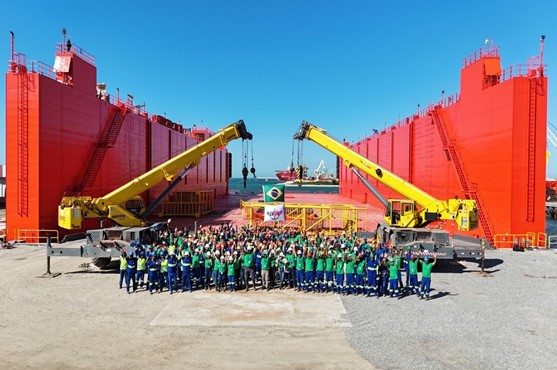
    Coming from Estaleiro Navship shipyard in Navegantes-SC, the Edison Chouest Offshore Atlas floating dock arrived this week at Açu Port, in São João da Barra-RJ. The entire transportation process was completed in about two weeks.

    The structure is 127 meters long, 49 meters wide and 17 meters high and is employed to surface ships above the water level to perform various services including class docking and vessel repairs. In São João da Barra, Bram Offshore has around 200 employees starting operations.

    “With these outstanding dimensions, Atlas’ structure can be used for dry dockings and/or repairs services of large OSVs, including every single vessel in Bram Offshore’s fleet. So, it is very important to the company projects” says Raphael Montes, Proposals Manager at WSB Advisors.

  • WSB visits Asso Ventisette

    WSB visits Asso Ventisette

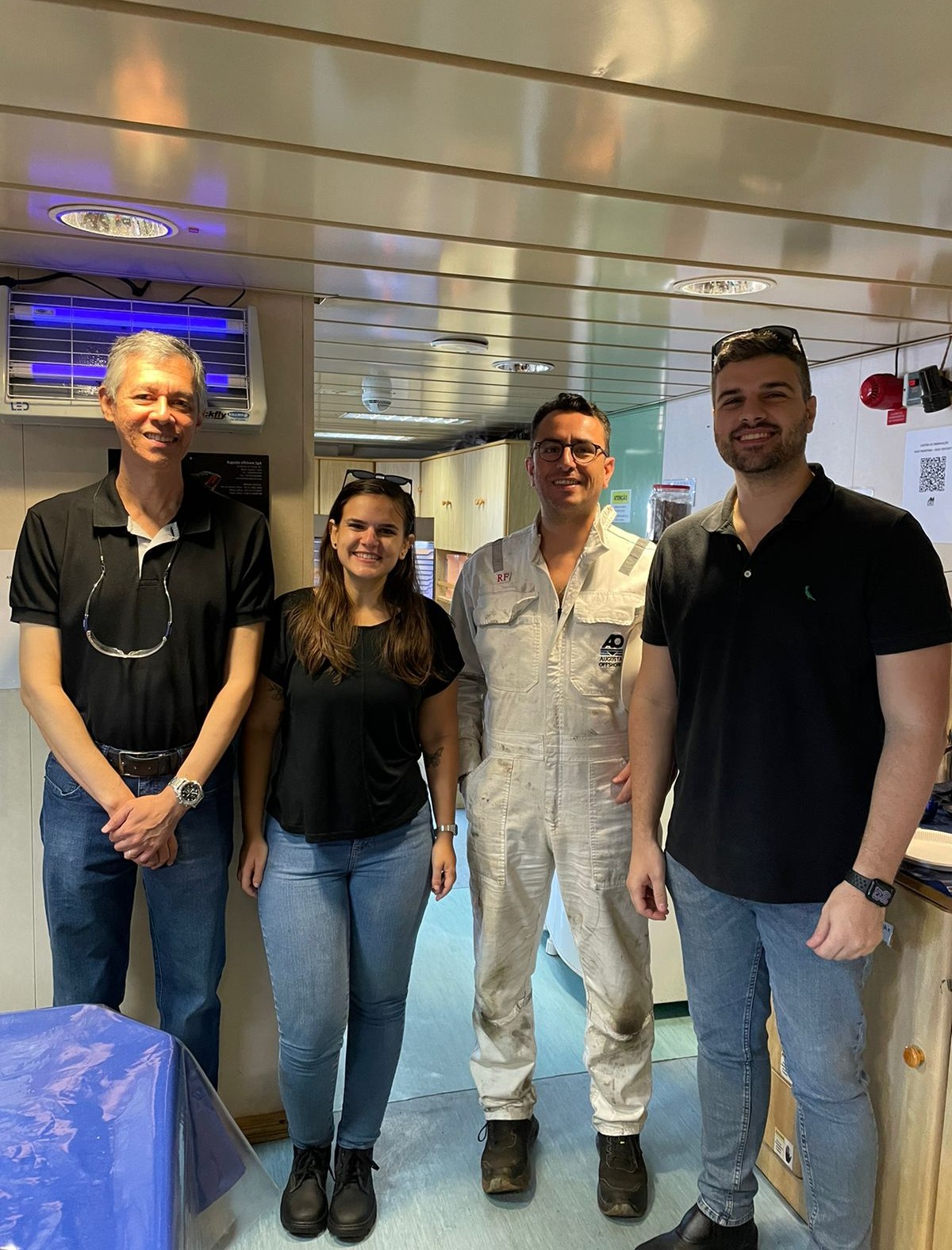
    On this March21st of March Proposals Manager Raphael Montes and Assistant Shipbroker Beatriz Mendes visited with Asso Marítima Navegação Ltda vessel Asso Ventisette. She is berthed alongside Empresa Brasileira de Reparos Navais S.A. RENAVE shipyard for demob from successfully concluded SDSV contract in partnership with Belov Engenharia for Petrobras (5 years duration), in association with WSB Advisors as brokers.

    The vessel will then be docked for her next charter also with our support as brokers PSV3000 General Cargo for 3 years firm plus options. Our special thanks to Eduardo Lima, Domenico Lubrano Lavadera, Giovanni Cinque, Daniele Rossini and all our colleagues at Augusta Offshore S.p.A. for this new milestone.

  • Petrobras: mooring projects

    Petrobras: mooring projects

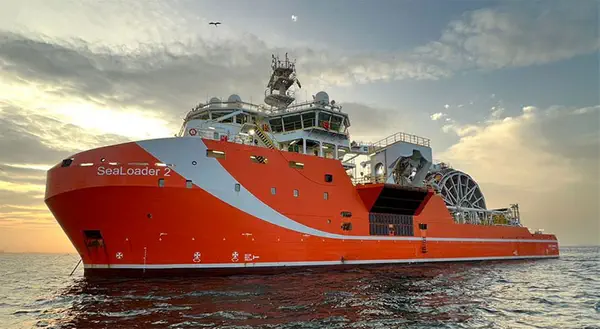
    Petrobras inked a charter contract for the Cargo Transfer Vessel (CTV) SeaLoader 2, a ship owned by Sealoading Holding A/S (a business unit of Mitsui O.S.K. Lines, Ltd., MOL group). The vessel has been operating for Petrobras since 2022 and performed over 30 operations to test the ability to eliminate the need of DP shuttle tankers on tanker offloading operations (a.k.a. tanker lifting).

    The sister ship Sealoader 1 has been operating for TotalEnergies in the field of Lapa.

    The concept of eliminating the DP shuttle tankers could generate positive impact on emissions reduction while eliminating ship-to-ship (sts) transfers. Expectations are of 60% reduction on coastal cargoes while up to 80% reduction could be generated in operations where DP shuttle tankers have to cruise all the way to Uruguai or Argentina. Yes, it happens.

    The spread moored FPSO tanker liftings are performed with DP shuttle tankers with a bow loading system and a load capacity of 1.0 million barrels (approximately).

    However, the CTV concept raises questions, as the constant use of TS (tugs astern of the conventional tanker) which are also required on direct FPSO / tanker conventional mooring, the considerable emissions while the CTV in operation (on DP) and in transit from and to location, the inability for direct mooring of the conventional tanker to the FPSO and the cost of building reflected on the charter rate, fuel consumption port utilization and others.

    WSB Advisors in cooperation with COPPE / UFRJLaboratório de Ondas e Correntes – LOC – PENO/COPPE/UFRJ, based on a concept of WSB’s Mooring and Unloading leader Jairo Araujo, has conceived and presented (in Offshore Technology Conference (OTC)) a project with a alternative solutions.

    “WSB’s proposal is based on the study of new methods and procedures as well as other alternatives that aim to use conventional ships (without DP) of the Suezmax size (or even VLCCs). It also analyzes the possibility of using conventional ships from the reevaluation of the study that directed the use of DP ships at Petrobras. It also verifies the possibility of using monobuoys, technology already established in the market and widely used in West Africa and which uses a series of safety systems. The great advantage of the monobuoy is that it allows the mooring of occasional ships up to the size of VLCC and do not generate atmospheric emissions and other impacts”, says Jairo.

    The WSB study is just as good if applied in recent acquisitions such as PRIO Albacora Leste, 3R Petroleum Papa-Terra, Enauta Atlanta and HR Karoon Brasil Bauna. 

  • AHTS contracts on the move

    AHTS contracts on the move

    Petrobras just released a partial tender result for the AHTS opportunity (July 2023 offers received November). Albeit offers now having expired, Petrobras has only confirmed a duo from DOF/Norskan Offshore Skandi Amazonas (without ROV Lot D1 delivery March or 60 days) and Skandi Rio (with ROV Lot A2 delivery February or 180 days). Several offers are under analysis and “out of demand”, with Petrobras clarifying that the demand can be reviewed (more vessels considered) during the process.

    “With approximately 15 AHTS contracts ending throughout the year, it is amazing that this process is taking so long to finish and that vessels on lots for delivery towards the end of the year offered around USD 60 thousand / day have not been hired and Petrobras lets offers expire.”, says a fellow owner asking us to not disclose his details.

    Indeed, at the virtue of Petrobras fixing PSVs 4500 at nearly USD 50 thousand on the SEP (16 PSVs), risking AHTSs of reliable players offered at the same level or just above being fixed elsewhere when demand is certain raises some eyebrows. More to follow.

  • Petrobras is facing a hard market to lease FPSO’s

    Petrobras is facing a hard market to lease FPSO’s

    Petrobras is facing a hard market to lease FPSOs for Sergipe-Alagoas (SEAL), in view of the increasing costs and the specificities of the GTD for these projects SEAP I and SEAP II. This is the second time Petrobras comes out to market for SEAP I though previously the selection being for BOT (Built-Operate-Transfer), after not having secured suitable offers. The alternative to leasing is for Petrobras to order the units themselves.

    Carlos Travassos, Executive Director of Engineering, Technology and Innovation declared this week that Petrobras has more control over operations with their owned units, but on the other hand, the process is lengthier. Travassos commented on aspects to increase the viability of projects such as the access to the Merchant Marine Fund (FMM), in addition to conversations with private and foreign financial institutions.

    SEAP project should have the capacity to process 120,000 boed each. Launched in April 2023, with proposals initially scheduled to be delivered in October, the tender was already postponed three times.

  • Floating dock on the move

    Floating dock on the move

    Atlas, Edison Chouest Group brand new floating dock for its port facility in Brazil, B-Port, is officially on its way to Açu, after leaving Navship shipyard in Navegantes. Last week, Atlas was towed through Itajaí Açu river to Itajaí Port, concluding phase 1 of 3 of the mobilization.

    It will now be towed from Itajaí Port all the way to the entrance of Açu Port (phase 2) for later berthing at B-Port (phase 3). The schedule to complete the mobilization is by end of March 2024. With outstanding dimensions, Atlas’ structure can be used for dry dockings and/or repairs services of large OSVs, including every single vessel in Bram Offshore’s fleet.