Category: Last News

  • Special WSB – Por onde anda? Astro Tupi

    Special WSB – Por onde anda? Astro Tupi

    Where is she now? — Atlas Z (ex-Astro Tupi): One Vessel, Two Structures

    By WSB Advisors

    Much like the recent case of Astro CMT Matos—reborn as Seastar Virtus while raising unresolved questions around overlapping commercial and registry positioning—another case involving Astromaritima – em Recuperação Judicial now comes into focus.

    This time, the vessel is the former Astro Tupi.
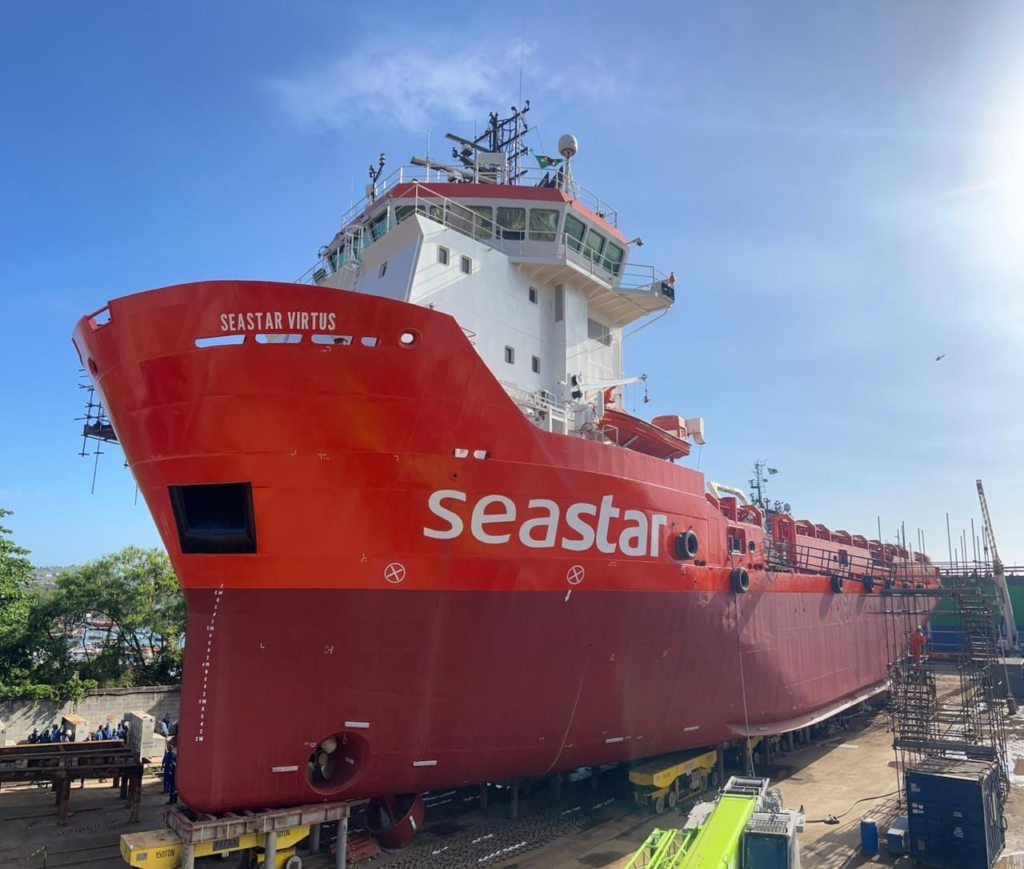
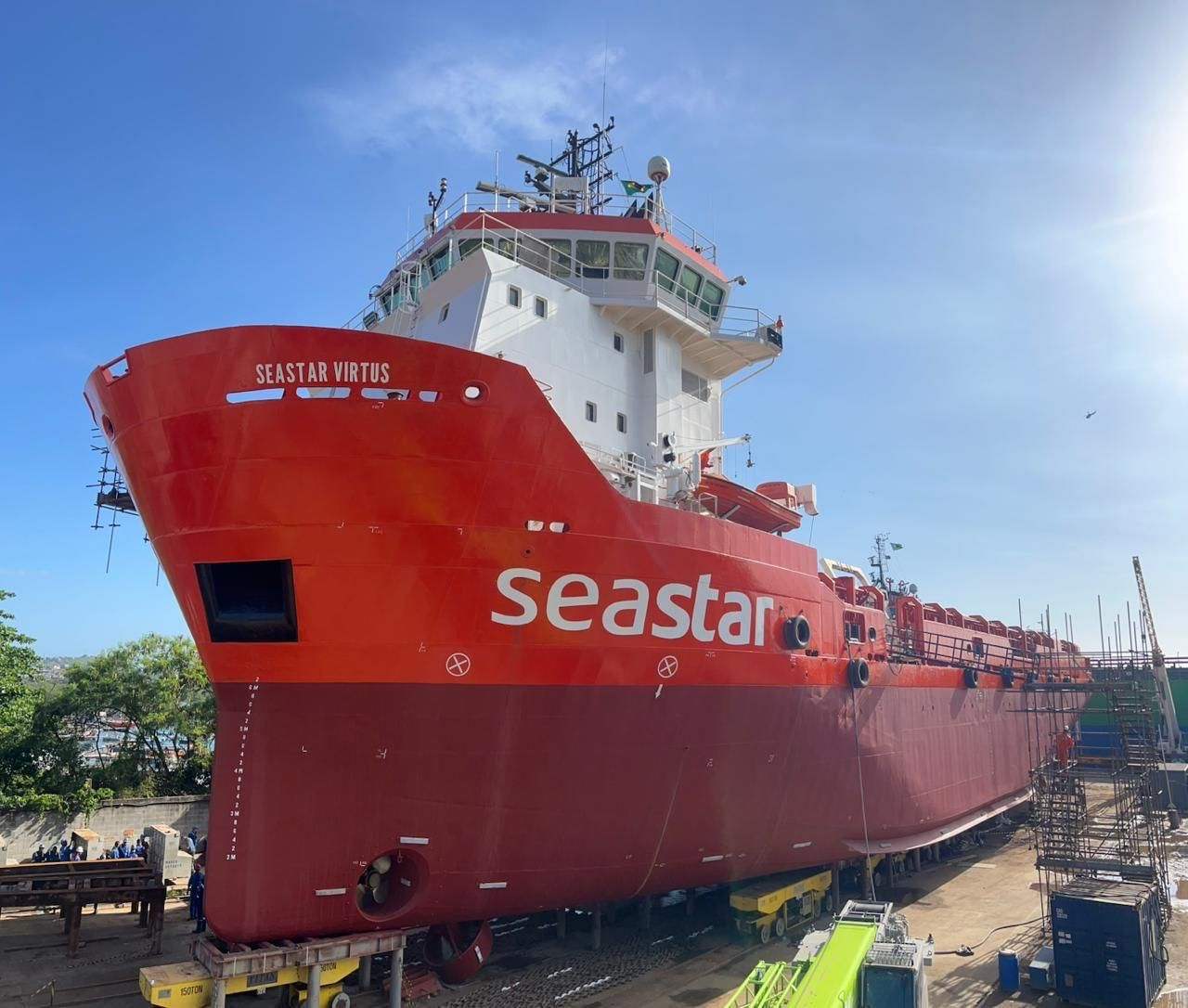
    Seastar Virtus
    Seastar Virtus (Source: Seastar)

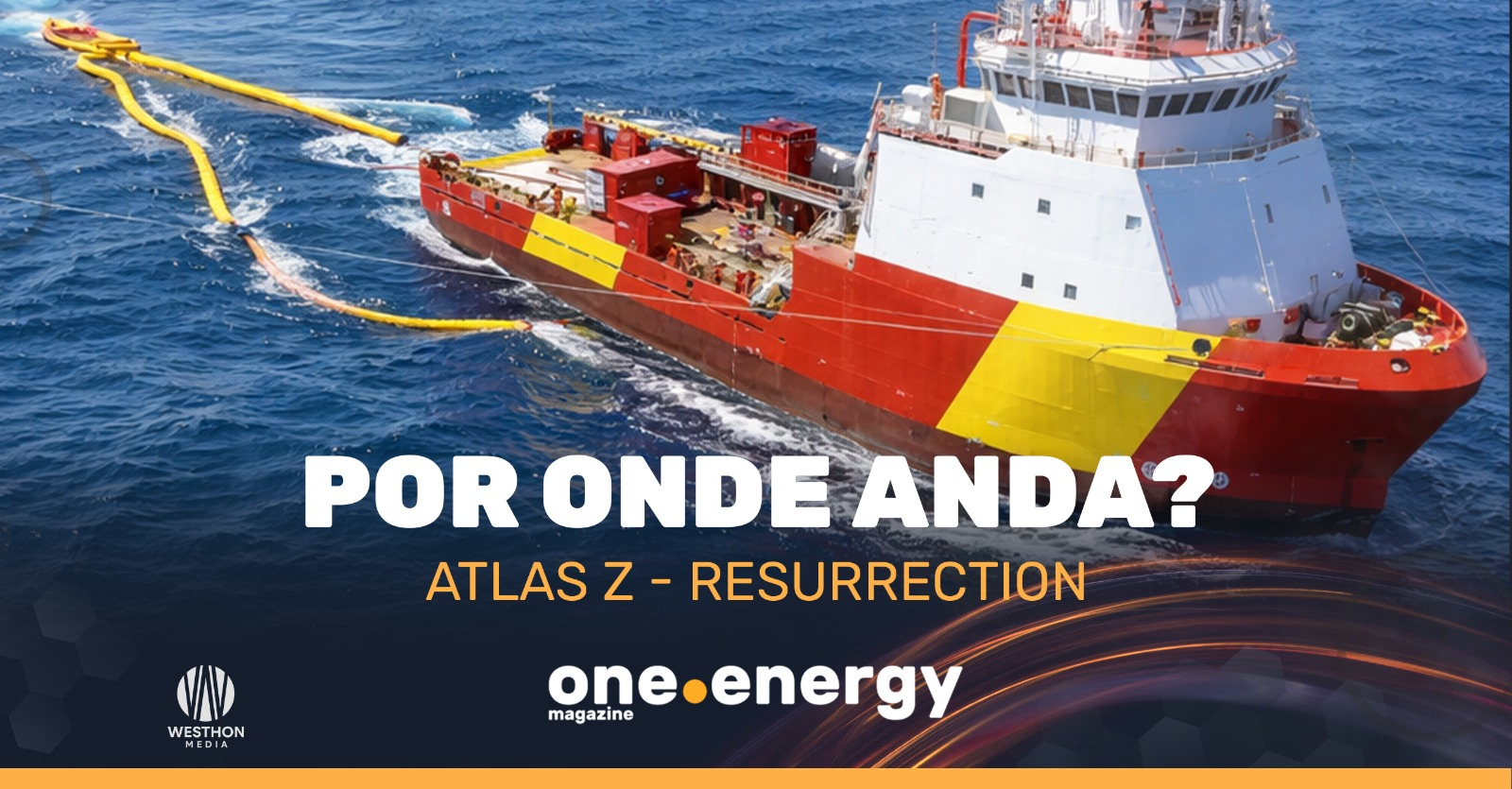
    Now formally registered as Atlas Z, the vessel appears active. Market information indicates that she is being operated in Petrobras service as an OSRV through Galáxia Marítima S.A. At the same time, ANTAQ records show a time charter structure for the vessel starting in October 2025 registered in favor of Galáxia Navegação, a different company within the same group.

    At the same time, however, Atlas Z is also presented as the sole vessel supporting the EBN structure of Lagoa Offshore (MCT Group). ANTAQ granted Lagoa Offshore its authorization to operate as an EBN in September 2025, in a process that, by its nature, presupposes the availability and operational control of the supporting vessel.

    From a structural standpoint, the situation raises immediate questions.

    Public records indicate that Atlas Z is tied to a Petrobras-linked time charter structure registered under Galáxia Navegação, while market information places the vessel in Petrobras service through Galáxia Marítima, and fleet records simultaneously associate the same vessel with Lagoa Offshore, with Astromaritima – em Recuperação Judicial remaining as owner. These are not alternative interpretations—they are parallel records.

    This is where the inconsistency becomes difficult to reconcile.

    If Lagoa Offshore is the disponent owner under a bareboat charter from Astromaritima – em Recuperação Judicial, it would not typically be able to relinquish operational control of its sole vessel while maintaining the basis of its EBN authorization. Conversely, if Lagoa Offshore has time-chartered the vessel into a structure connected to the Galáxia group, such arrangement would still need to align with Petrobras’ contractual framework, which generally requires that the contracted party retains full operational control, without subcontracting of the core service.

    The picture becomes even less straightforward when the documented chain itself does not fully converge: the ANTAQ charter registration points to Galáxia Navegação, while the Petrobras operational context points to Galáxia Marítima.

    The timeline adds further complexity.

    The authorization of Lagoa Offshore as an EBN in September 2025 is closely followed by the commencement of the Petrobras-linked charter in October 2025 under Galáxia Navegação, while the vessel is understood to be operating for Petrobras through Galáxia Marítima. This sequencing does not readily support a straightforward contractual chain originating from Lagoa Offshore.

    At this stage, two interpretations emerge.

    Either Lagoa Offshore is not, in practice, the operator of the vessel despite supporting its EBN structure, or the operational reality differs from the contractual appearance presented across the regulatory and commercial records.
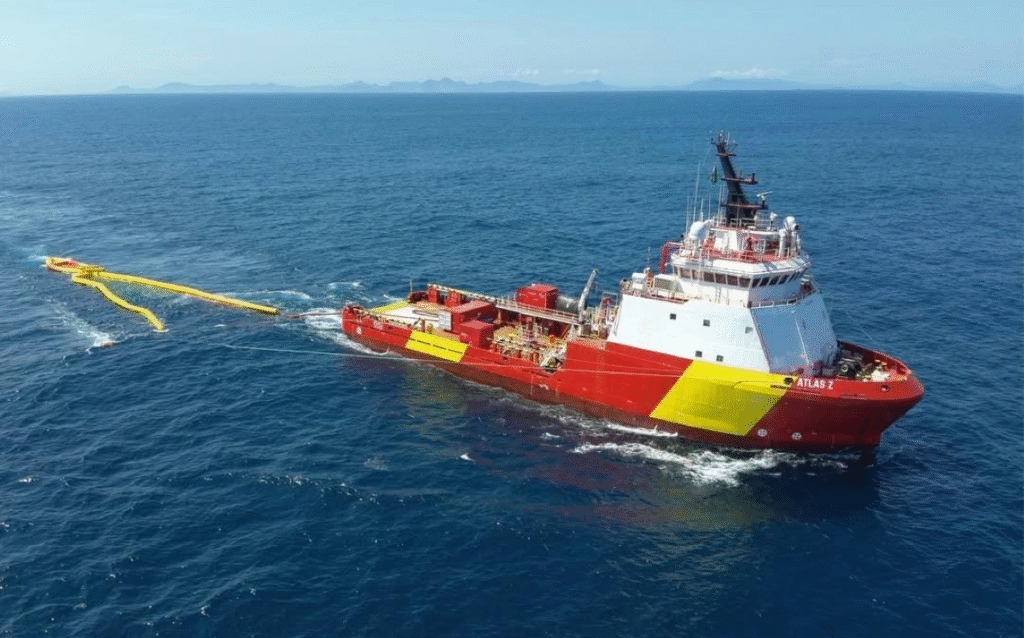
    Atlas Z
    Atlas Z (Source: Galáxia)

    In either case, the alignment between registry, contract and operation remains unclear.

    Astromaritima – em Recuperação Judicial, when asked about the vessel’s ownership, operation and contractual structure, stated that “Astro Tupi” remains an asset of the company and is inserted in a regular structure, without clarifying who operates it, under which contract, or why it already appears, in other contexts, as Atlas Z.

    MCT has not yet responded to our inquiries.
    We were unable to reach Galáxia.

    As in other recent cases, the asset is visible, active and commercially engaged.
    But structure, in offshore, is not a detail.
    And one vessel cannot serve two masters.

  • ODN I at Petrobras

    ODN I at Petrobras

    Foresea has secured a long-term contract with Petrobras to operate the drillship ODN I offshore Brazil, adding about $465 million to its backlog. The agreement covers a 1,443-day campaign in the Mero Field, with operations expected to start in 2027 after the unit’s current contract ends.

    The deal includes early termination and extension options. The award highlights strong demand for high-spec rigs in Brazil, where Petrobras continues expanding pre-salt developments to support production growth.

  • Petrobras: oil discovery

    Petrobras: oil discovery

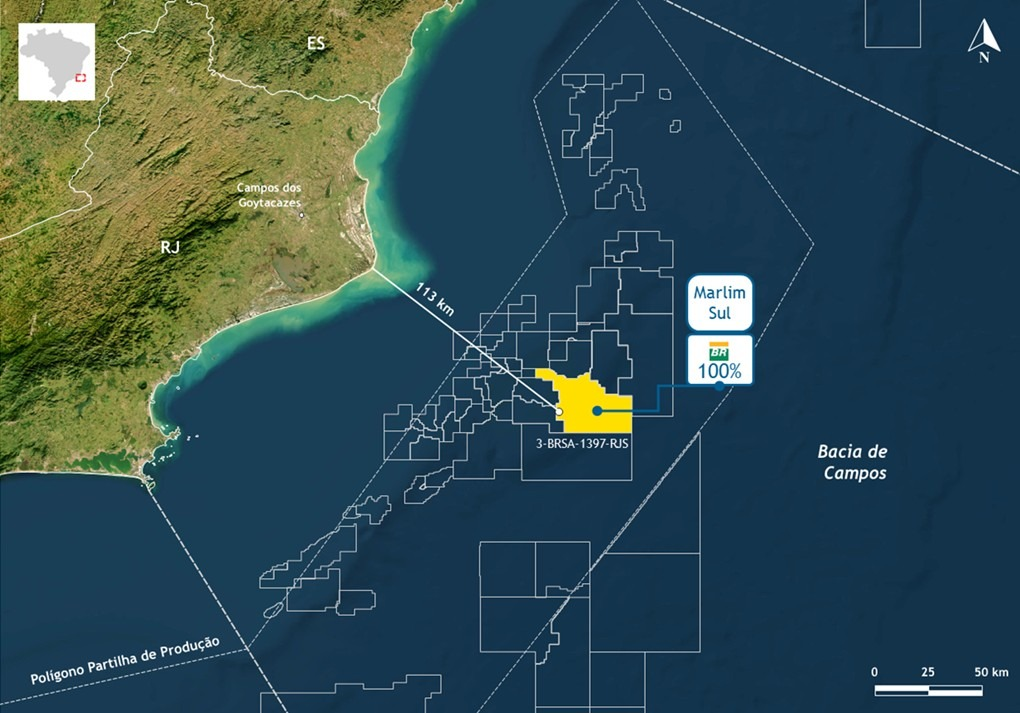
    Petrobras announced a new discovery of high-quality oil in the pre-salt layer of the Campos Basin. The find was made in the Marlim Sul Field, at a well located 113 km off the coast of Campos dos Goytacazes.

    The presence of oil was identified through electric logs and fluid samples. The material will undergo laboratory analysis to assess the area’s potential. The company said drilling was completed safely and with environmental care. Petrobras holds a 100% stake in the field.

  • Brazil’s offshore licensing process has just hit a new level of scrutiny

    Brazil’s offshore licensing process has just hit a new level of scrutiny

    A Federal Court in Angra dos Reis has ordered the suspension of the preliminary environmental license (LP) granted by IBAMA for the “Stage 4” development in the Santos Basin, following a request from the Federal Public Ministry (MPF).

    The injunction is based on the alleged absence of prior consultation with traditional communities, including Indigenous groups, quilombolas and fishermen, as required under International Labour Organization Convention 169.

    The court decision suspends the license until federal authorities present, within 60 days, a consultation plan addressing affected communities.

    Stage 4 involves the potential installation of around 10 production units and the drilling of more than 130 wells in deepwater, with first oil previously expected from 2026. With the suspension in place, Petrobras cannot advance project-related activities tied to the license.

    The case adds to a series of recent legal and regulatory interventions affecting environmental licensing processes in Brazil, particularly in projects with coastal interface and social impact exposure.

    Why it matters

    – Enforcement of consultation requirements under Convention 169
    – Licensing process subject to judicial review
    – Increased scrutiny over environmental and social procedures

    Market impact

    – Potential revision of pre-salt project timelines
    – Greater regulatory and judicial scrutiny risk
    – Higher compliance requirements for offshore operators

  • Equinor starts drilling at Raia offshore gas project

    Equinor starts drilling at Raia offshore gas project

    On March 24, 2026, Equinor initiated drilling activities for the Raia offshore gas project in the Campos Basin. The development, estimated at around US$9 billion, is expected to begin production in 2028, with projected output of approximately 16 million cubic meters of gas per day and 126,000 barrels per day of oil and condensate.

    The project could supply close to 15% of Brazil’s domestic gas demand and marks the transition from project planning to execution phase, reinforcing Equinor’s integrated position across offshore gas and onshore renewables in Brazil.

  • BR Offshore launches foundation stone for new operational base

    BR Offshore launches foundation stone for new operational base

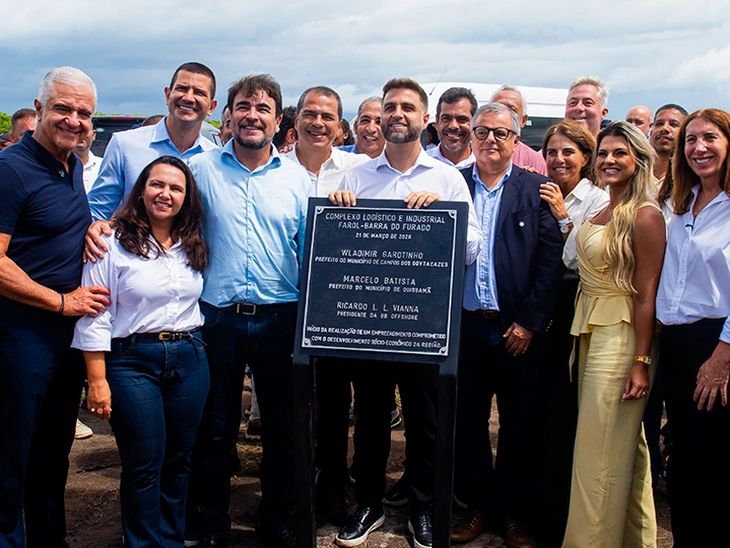
    BR Offshore announced the launch of the foundation stone for a new operational base in Brazil, marking the start of a new infrastructure phase to support offshore operations.
    The development aligns with the company’s expansion strategy in offshore logistics and aims to strengthen operational capacity for ongoing and upcoming campaigns in Brazilian waters.

  • CDFMM extends priority status for Transpetro tanker projects

    CDFMM extends priority status for Transpetro tanker projects

    Brazil’s Merchant Marine Fund Council (CDFMM) approved the extension of priority status for Transpetro tanker construction projects. The resolution was published on March 19, 2026, on an ad referendum basis and will remain valid for 180 days.

    The measure ensures additional time for project structuring and financing access under the FMM framework, supporting fleet renewal and domestic shipbuilding activity.

  • Equinor acquires 230 MW onshore wind project in Brazil

    Equinor acquires 230 MW onshore wind project in Brazil

    Equinor acquired the Esquina do Vento onshore wind complex, with 230 MW of installed capacity, located in Rio Grande do Norte. The asset was purchased from Vestas and is ready for construction, expected to begin in Q2 2026, with commercial operation planned for 2028.

    The project will include 51 wind turbines and an estimated annual generation of around 1 TWh. Development will be led by Rio Energy, with energy commercialization handled by Danske Commodities.

  • Por onde anda? Milan Tide — The Resurrection (and the Registry Puzzle)

    Por onde anda? Milan Tide — The Resurrection (and the Registry Puzzle)

    By WSB Advisors

    The return of Milan Tide, now Seastar Virtus, should have been a straightforward story: a well-built PSV, revived, reintroduced and ready to operate again. It turns out the story is not quite that simple.

    Following our publication, Astromarítima Navegação S.A. – em Recuperação Judicial approached us demanding the rectification of a specific point: according to them, the vessel was not sold to Seastar, but rather placed under a bareboat charter agreement.

    Here, the space is duly given, and the clarification made public.

    However, context matters. The interpretation adopted in our original article was not speculative. It was grounded in publicly available signals, including Seastar’s own communication referring to Seastar Virtus as “our vessel, baptized Seastar Virtus”—language that, in any market, reasonably implies control consistent with ownership or quasi-ownership structures.

    If the structure is indeed a bareboat charter, the natural question is: where is this reflected?

    The answer, at least for now, is that it is not.

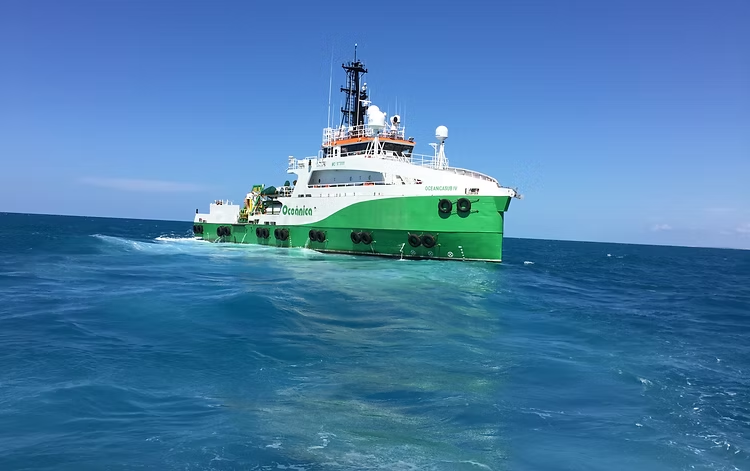
    A verification with ANTAQ introduces a different layer to the story. The vessel—still referenced as CMT Matos and legally tied to Astromarítima Navegação S.A. – em Recuperação Judicial according to their statement—appears, in parallel, to be featured under a bareboat charter to Oceanica, forming part of its registered fleet and contributing to its tonnage and REB framework.

    This raises a straightforward, but unavoidable question.

    If Seastar has, for months, been the charterer of the same vessel under a bareboat charter agreement with Astromarítima Navegação S.A. – em Recuperação Judicial, how is it that the very same unit is also chartered—and formally registered—as part of Oceanica’s fleet?

    Different names, same steel.

    A vessel cannot, in practical and regulatory terms, be subject to two concurrent bareboat structures serving distinct operators, particularly when such arrangements underpin fleet composition and REB-linked tonnage rights.

    We remain open to receiving any documentation that reconciles these elements, and will continue to examine this and similar cases, as the situation raises a broader question as to how such structures are being implemented in practice—and whether they are consistent with the applicable regulatory framework.

    When approached, ANTAQ did not deny the underlying information, but opted not to take a definitive position, noting that a conclusive answer would require further analysis and consolidation of data.

  • Brazil’s FMM approves R$ 6 Billion across Naval and Port Projects

    Brazil’s FMM approves R$ 6 Billion across Naval and Port Projects

    Brazil’s Ministry of Ports and Airports (MPor), through the Merchant Marine Fund Directing Council (CDFMM), approved a package of 13 projects totalling R$ 6 billion in investments at its 62nd Ordinary Meeting, held on March 18. The approved portfolio is expected to generate approximately 2,800 direct jobs and enable 95 projects across the naval and port sectors.

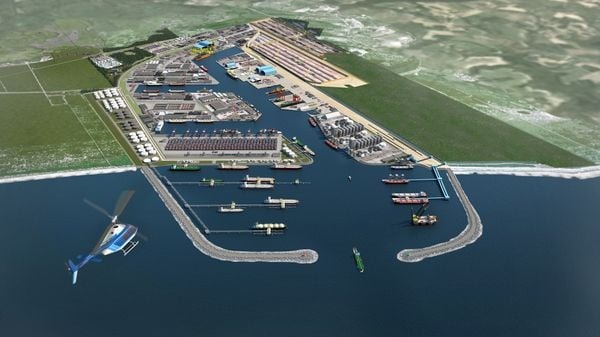
    The two largest projects together account for over R$ 4.3 billion of the total approved. Porto Central, a deep-water port development in the state of Espírito Santo, received approval for R$ 2.18 billion in port infrastructure investment, reinforcing the country’s logistics capacity along the southeastern coast. Close behind, Petrobras secured R$ 2.17 billion for the construction of four vessels designed to carry petroleum derivatives — a move aligned with the company’s strategy to expand its own fleet and reduce exposure to chartering costs. The third largest project was awarded to GDE Transportes, which will receive R$ 380.3 million for the construction of 35 vessels for fuel transportation in Brazil’s North region, where waterway transport is structurally critical to local supply chain operations.

    BNDES (Source: Courtesy)

    Beyond vessel construction, the approved portfolio covers inland navigation, maritime support vessels, and cargo shipping, as well as maintenance, repair and modernisation works at shipyards across several Brazilian states. New project submissions can be presented until April 20, 2026, and approved projects will have up to 450 days — extendable by a further 180 days — to finalise financing agreements with qualified lending institutions, including BNDES, Banco do Brasil, Banco da Amazônia, Banco do Nordeste and Caixa Econômica Federal.

    The 63rd Ordinary Meeting of the CDFMM is scheduled for June 18, 2026. The approval comes amid a consistent acceleration of the Fund: throughout 2025, the FMM approved R$ 31.8 billion spread across more than 700 projects, with projections for 2026 pointing to up to R$ 34 billion in new approvals.

    The scale and pace of FMM approvals in 2026 reflect a deliberate policy shift, one that elevates port and naval infrastructure to a strategic pillar of national competitiveness — rather than treating it merely as a regional development tool. The concentration of over 70% of this latest round in just two projects (Porto Central and Petrobras’ fleet expansion) signals a clear preference for priority investments, which is a coherent approach given the Fund’s leverage potential. However, the success of this agenda will ultimately depend on execution: the sector’s track record of converting approvals into operational vessels and functional port terminals within contractual deadlines remains a legitimate concern — and one the market is watching with a degree of skepticism.

  • Open Tenders and more

    Open Tenders and more

    By Maria Eduarda Camba

    OPEN TENDERS — Market Status Update

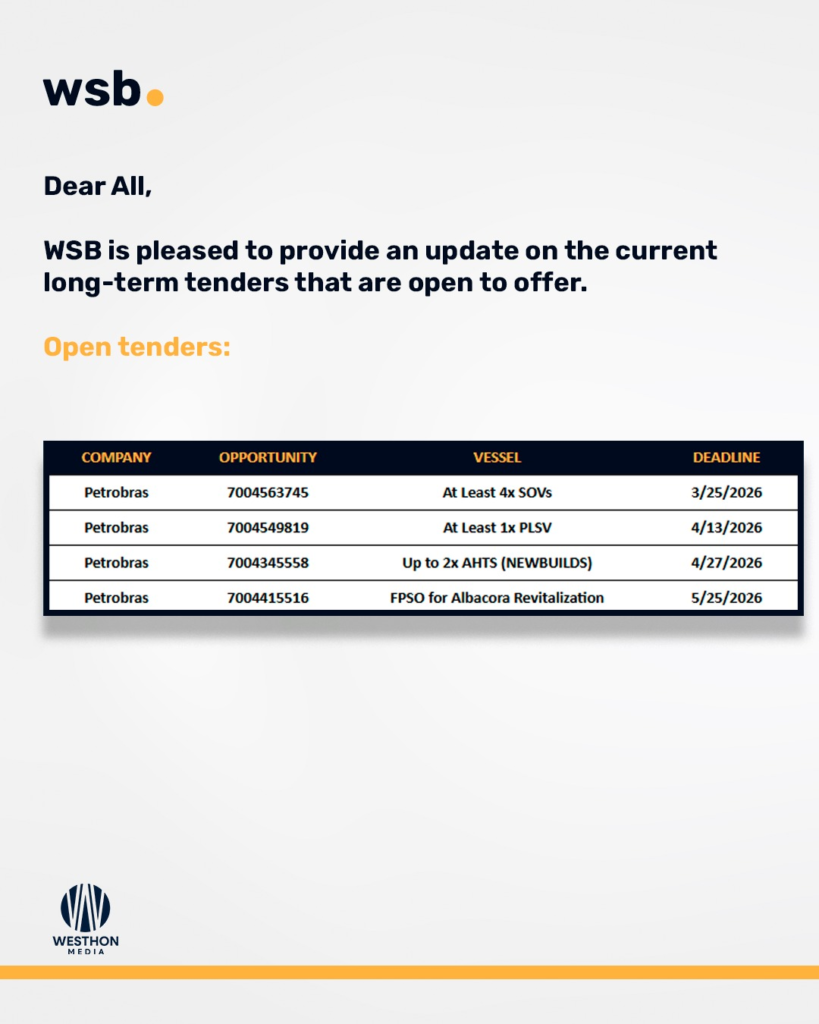
    No changes were recorded across ongoing offshore tenders. Current opportunities remain active under previously disclosed terms and deadlines.

    What has changed?

    – No updates.

    What else is happening?

    Petrobras is monitoring fuel supply dynamics after at least six vessels carrying refined fuels changed destination, as domestic pricing below import parity continues to impact import flows and delay cargo discharge decisions.

    Transpetro – Petrobras Transporte S. A. is expanding its commercial activity beyond Petrobras, securing new contracts with Trafigura and Ipiranga, signaling gradual diversification in Brazil’s shipping market.

    – Petrobras awarded long-term turbomachinery service agreements to Baker Hughes, covering multiple offshore and onshore assets, reinforcing maintenance and reliability strategies across its portfolio.

    – Offshore vessel demand remains supported by recent contract awards, with Oceanica securing multi-year agreements with Petrobras totaling approximately USD 736 million for subsea and support vessel operations.

    – Brazil’s Merchant Marine Fund (FMM) approved approximately BRL 6 billion in new projects across shipbuilding, logistics and port infrastructure, supporting future demand for domestic offshore and maritime assets.

    Edison Chouest Offshore announced a shareholder movement involving its Brazilian operations, signaling continued strategic positioning by international players in Brazil’s offshore support vessel market.

  • WSB Advisors – 10.000 followers on Linkedin

    WSB Advisors – 10.000 followers on Linkedin

    Hitting 10,000 followers is easy.

    Building 10,000 relevant followers — in a niche, technical, and relationship-driven industry — is something else.

    We’ve just passed this milestone on LinkedIn. A fully organic, highly segmented audience, built with consistency and attention to what this market actually values: reliable information, technical depth, and real insight.

    At WSB Advisors, the focus has never been volume. It’s always been quality — of data, of analysis, and of the conversations we help drive across the offshore and maritime sectors.

    This is reflected across everything we do: from Westhon Media and One Energy Magazine to our intelligence platform WSB One.

    We don’t chase headlines.
    We build context.
    Because in this market, DataMatters.

    To everyone who follows and engages with us — thank you. You are part of a network that values substance over noise.

    And if you’re not part of it yet:
    Join us.