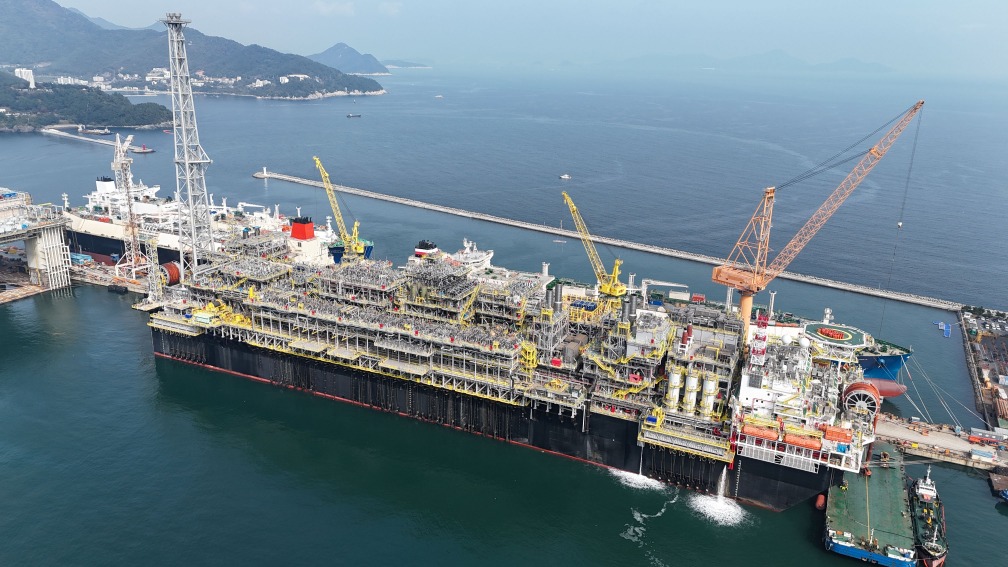
Petrobras has completed the tieback of the Búzios 90 well, a step that enables first oil from the P-79 platform in the Búzios field, in the Santos Basin. The unit will have the capacity to produce up to 180,000 barrels of oil per day and compress 7.2 million cubic meters of gas, becoming the eighth platform operating in the field. Start-up now depends only on approval from the Agência Nacional do Petróleo (ANP).
According to the company’s CEO, Magda Chambriard, the platform is ready to begin operations once regulatory clearance is granted. She highlighted the complexity of the work, which involved around 1,300 hours and the installation of 15 km of flexible and rigid lines, as well as umbilicals. The Búzios 90 well is expected to produce about 50,000 barrels per day.
Located about 180 km off the coast of Rio de Janeiro in ultra-deep waters, P-79 is part of the Búzios 8 project, which includes 14 wells — eight producers and six injectors — as well as a gas export pipeline connected to the Rota 3 system.
The tieback campaign was carried out alongside anchoring operations and involved 11 vessels, both owned and contracted. According to the company, the main challenges were managing simultaneous activities on the FPSO and in the subsea environment, as well as logistical constraints.
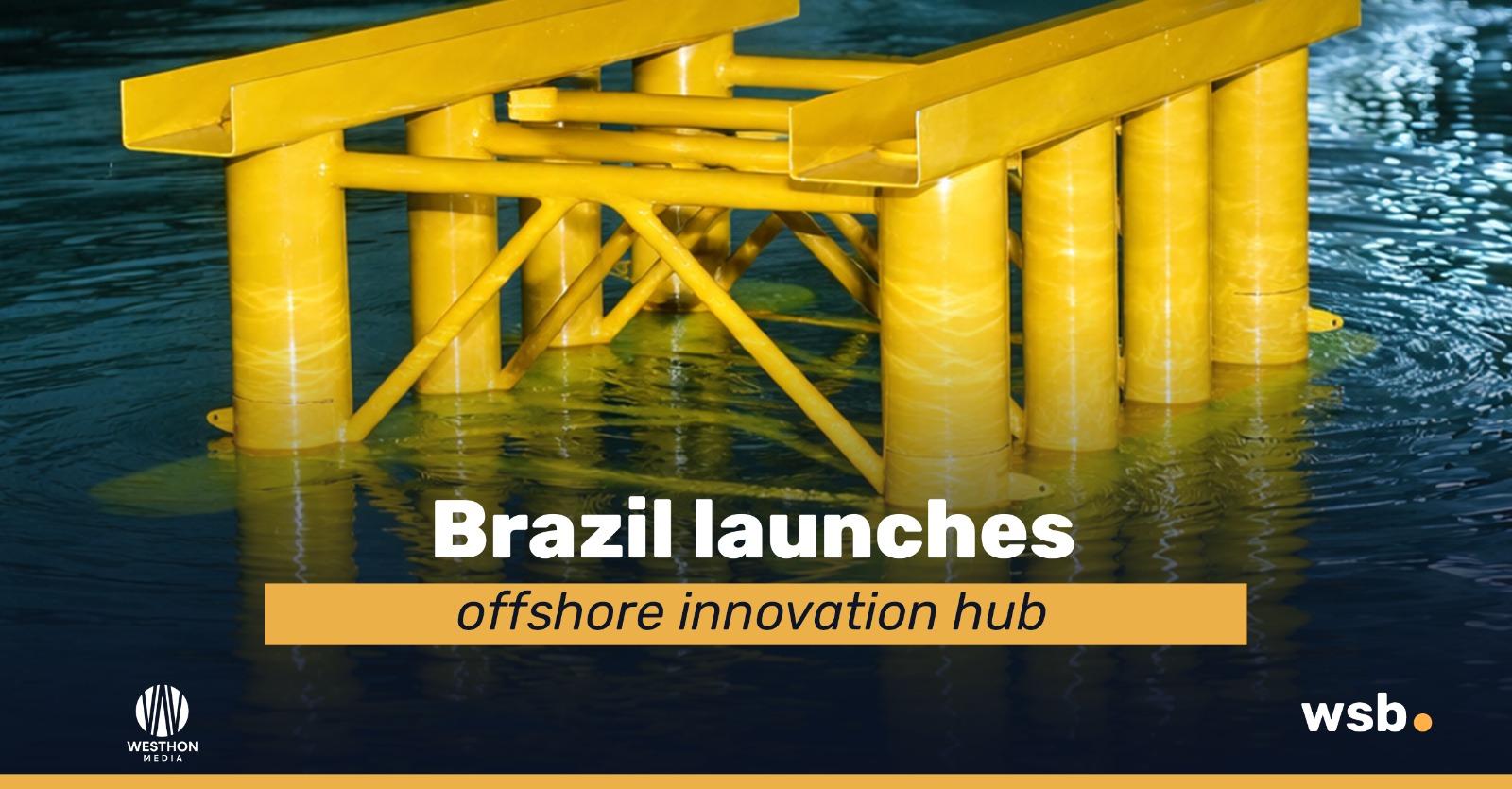
Brazil Launches Offshore and Subsea Innovation Center with R$ 163 Million Investment
USP, IPT, Shell and Fapesp join forces to position Brazil at the forefront of applied research for the offshore sector, with a focus on advanced materials, low-carbon energy and digital transformation.
A Heavyweight Partnership
On 15 April 2026, the Escola Politécnica at the University of São Paulo (USP) hosted the official launch of the Offshore Technology Innovation Centre (OTIC) — a centre dedicated to the development of cutting-edge technologies for the oceanic and subsea environment. The initiative brings together USP, the Institute for Technological Research (IPT), Shell and the São Paulo Research Foundation (Fapesp), forming one of the most significant public-private partnerships ever established for the offshore sector in Brazil. The ceremony also marked the inauguration of four new laboratories associated with the OTIC, all located within the University City campus in São Paulo.
Five Pillars, One Strategic Goal
The OTIC is structured around five technical pillars that guide its operations: Low-Carbon Energy, Digital Transformation, New Materials and Nanotechnology, Safety, Environment and Circular Economy, and New Processes and Operations. The logic underpinning these pillars is straightforward — to accelerate the technological transition of Brazil’s offshore sector by closing the gap between scientific output and the practical demands of industry.
R$ 163 Million and Global Ambitions
The estimated investment over the course of the project stands at approximately R$ 163 million, a figure that reflects the scale of the partners’ ambitions. The stated objective is to position Brazil as an international reference in subsea technologies — an increasingly competitive market as deepwater exploration consolidates its role as a pillar of the global energy mix.
IPT’s Role: Advanced Materials at the Core
IPT’s participation in the OTIC is anchored in the laboratories of its Advanced Materials Unit, operating specifically in the areas of corrosion and protection and lightweight structures — competencies with direct application to the durability and structural integrity challenges that define the offshore environment.
Anderson Correia, IPT’s President and CEO, underscored the institutional significance of the project, noting that the institute’s contribution rests on the expertise of its teams in technology areas that are critical to industry. Sandra Moraes, Director of the Advanced Materials Unit, was more specific in outlining the expected impact: the teams involved play a strategic role in developing solutions for aggressive environments, in the integration of onshore and offshore systems, and in operational efficiency — all central themes for any company operating in Brazil’s pre-salt fields.
Bridging Academia and Industry
The OTIC is being launched at a moment when Brazil’s offshore industry is going through a phase of consolidation and reinvestment. The proximity between applied research laboratories and energy sector operators creates conditions for innovation to reach the market faster and with greater alignment to operational needs.
For the offshore supply chain — shipbuilders, equipment manufacturers, integrity and inspection companies — the centre represents a concrete opportunity to access frontier technological development in partnership with internationally recognised institutions.
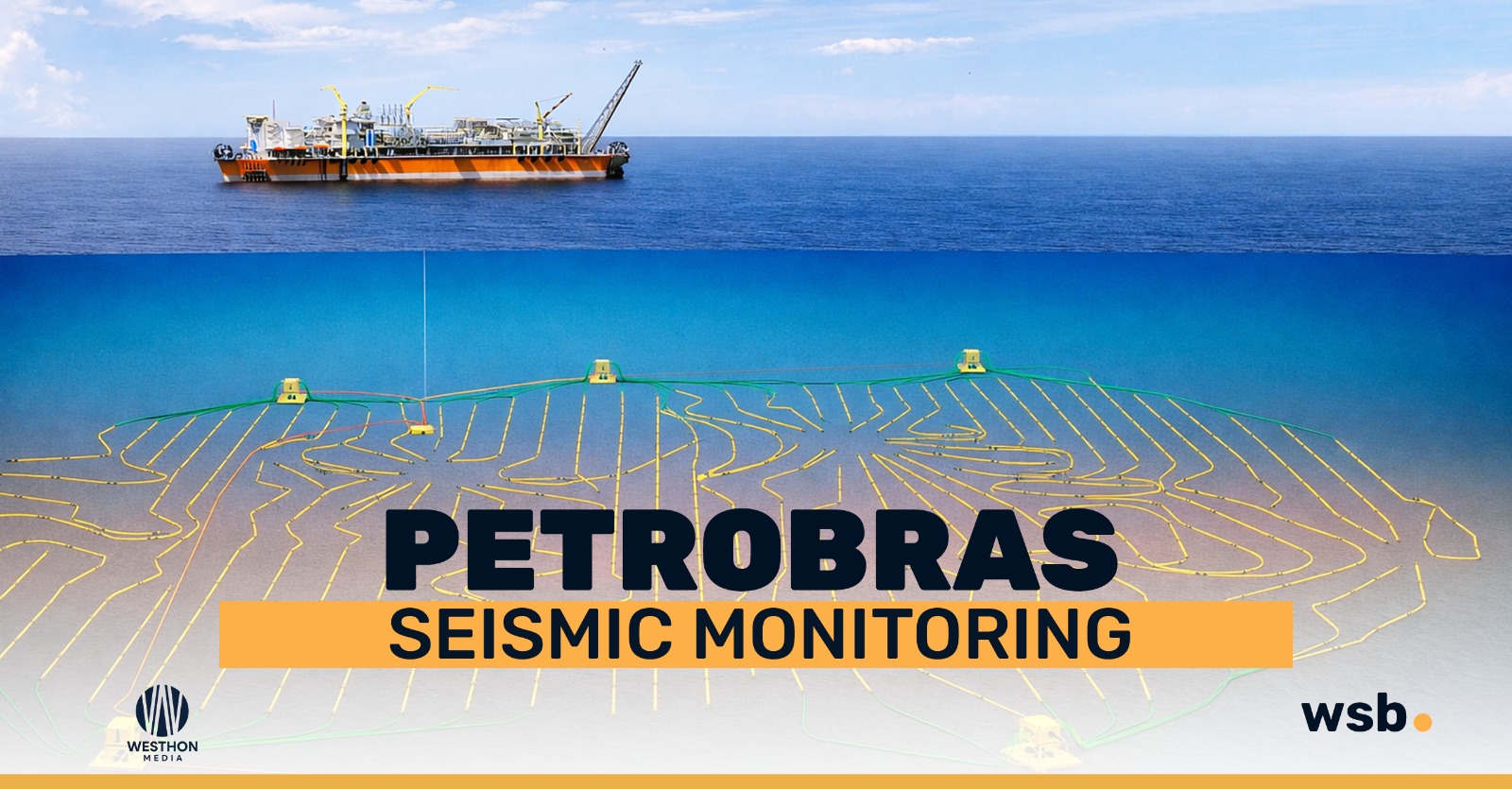
Petrobras has advanced the world’s largest permanent seismic monitoring project at the Mero field, in Brazil’s Santos Basin. The initiative, backed by approximately US$450 million in investments, completed its first phase in March 2026 and is now moving into a key stage, with first data acquisition expected in the second quarter.
More than 460 km of seabed cables have already been installed, covering an area of 222 km². The system will monitor production activities at FPSOs Guanabara (Mero 1) and Sepetiba (Mero 2), helping Petrobras and its partners track reservoir behavior in real time.
A second phase is planned to add another 316 km of cables, with completion expected in 2027, expanding the monitoring network across the field.
The project is centered on Mero, one of Brazil’s leading pre-salt assets, which was producing more than 680,000 barrels per day as of January 2026.
More than a new investment announcement, this marks a relevant execution milestone: the project has moved from installation into the operational data phase, with direct implications for reservoir management and recovery efficiency.
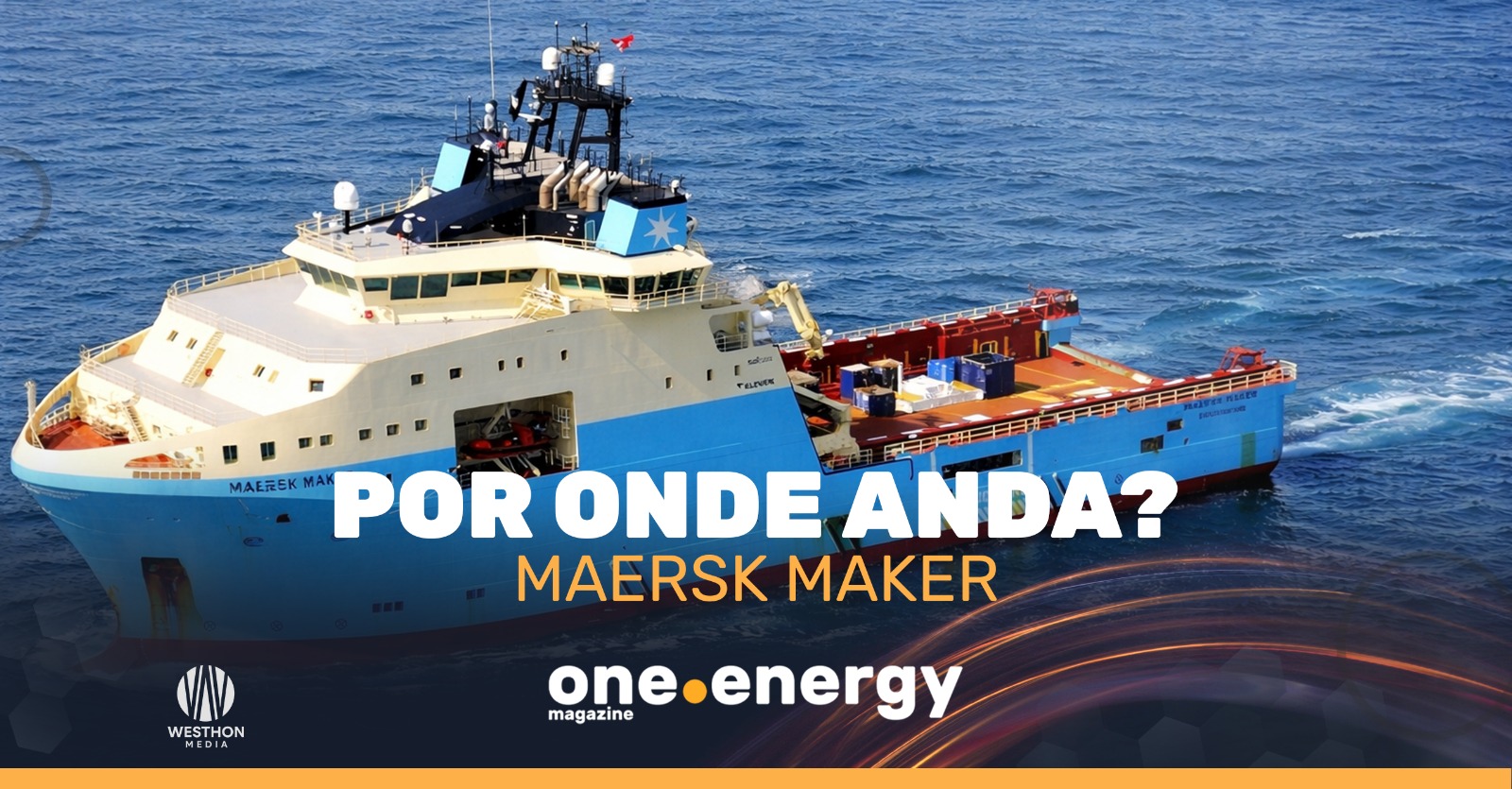
For those who follow Brazil’s offshore support vessel market, Maersk Maker is a familiar name. The vessel has now undergone both a change of identity and a shift in management. So where is she now, and what sits behind this latest move?
Previously tracked by us as an Ice Class 1A AHTS, the vessel has been renamed Tor Viking and has formally joined the fleet of Viking Supply Ships. As of April, her technical and commercial management has also been transferred to Sea1 Offshore.
A Strategic Realignment
This development points to a broader strategic alignment. The vessel was acquired from Maersk by Kistefos AS before being moved into Viking Supply Ships. Looking more closely at the corporate structure, businessman Christen Sveaas holds significant interests in both Viking Supply Ships and Sea1 Offshore. In practice, this places ownership and operation of the vessel within the same wider strategic sphere.
Positioned for Harsh-Environment Demand
This is more than a simple renaming exercise. With approximately 230 tonnes of bollard pull and specifications suited to harsh and icy environments, Tor Viking stands as a relevant asset within a segment that remains highly specialised and commercially demanding. At a time when owners and operators continue to value capable, niche tonnage, the vessel appears well positioned in one of the market’s most competitive arenas.
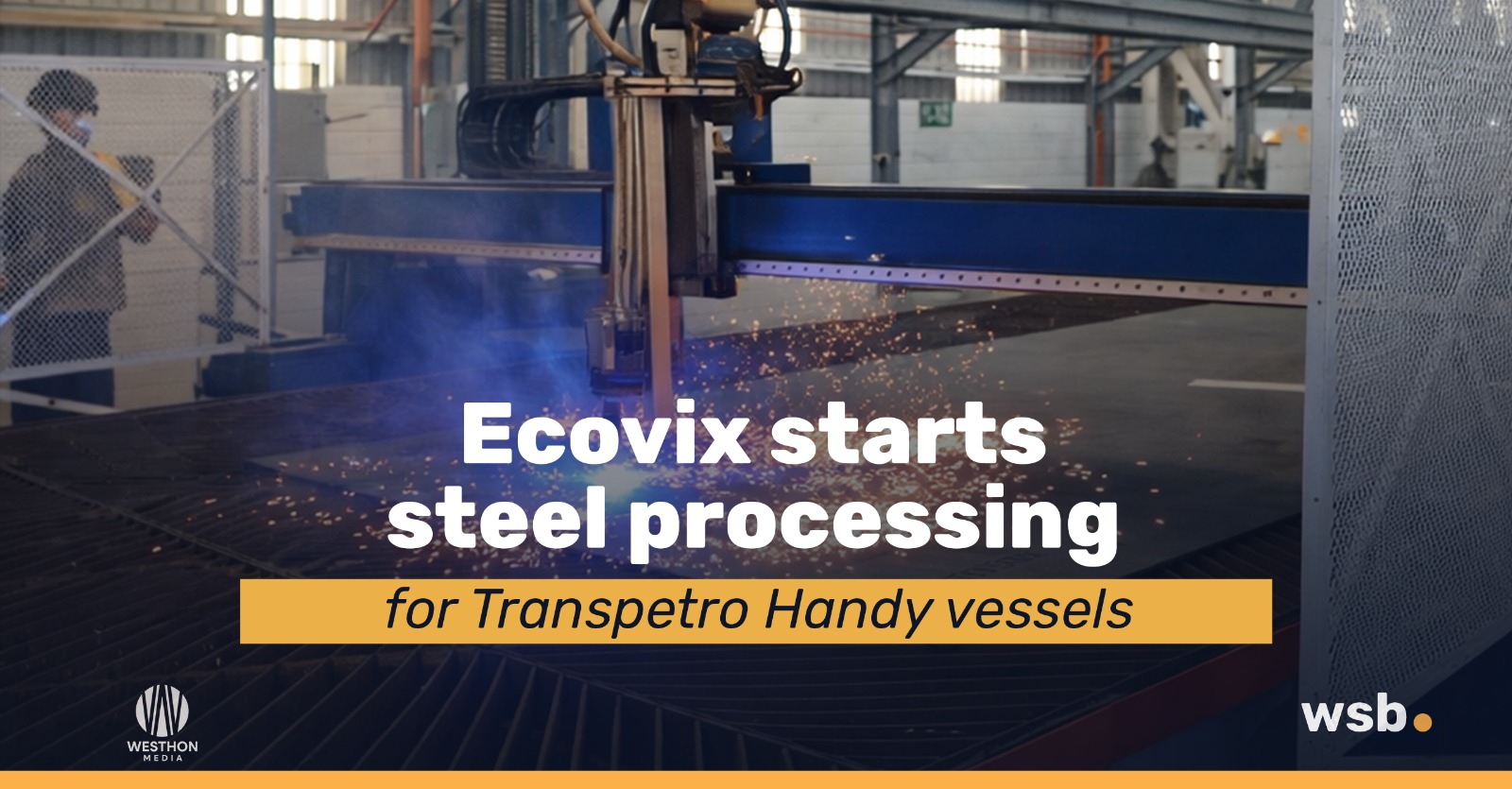
Ecovix has started steel processing for the construction of four Handy tankers contracted by Transpetro, marking the beginning of hull fabrication works at the Rio Grande Shipyard in southern Brazil.
The activity began on April 9, with approximately 100 tonnes of steel already delivered to the yard. Additional deliveries totaling around 11,500 tonnes are expected by June, as the project advances.
The vessels are part of Transpetro’s fleet renewal program and are being built under contracts aimed at expanding and modernizing the company’s logistics capacity. More than 50% of the equipment required for the project has already been procured.
The initial phase of construction is expected to generate new jobs at the shipyard, with around 100 additional workers to be incorporated into the workforce.
Stay informed on key offshore developments — visit wsb-one.com, our data platform trusted by leading offshore companies.
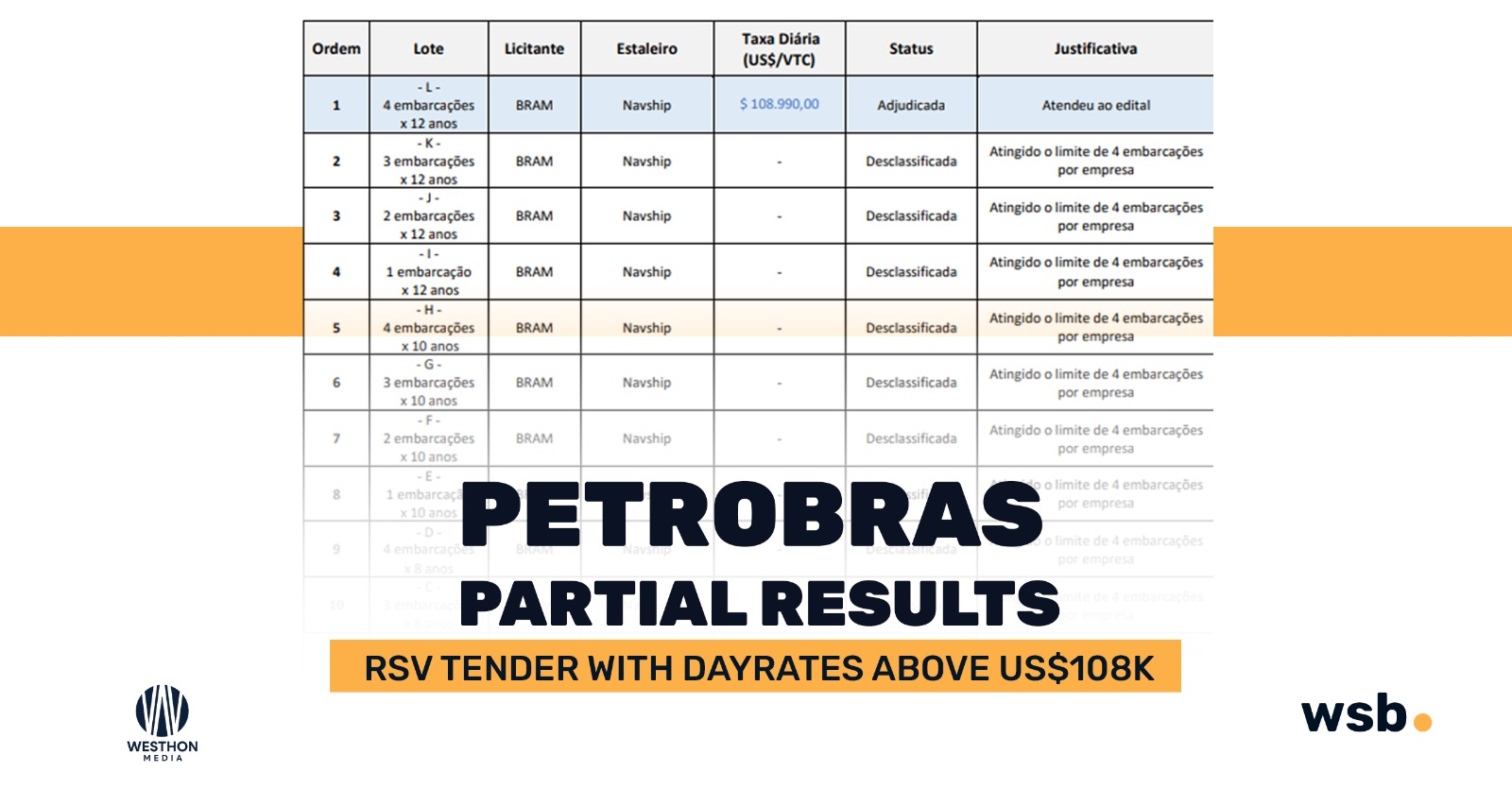
Petrobras released on April 15, 2026 the partial results of tender opportunity 7004319394, related to the chartering of RSV-2024 type vessels.
The tender provides for the contracting of up to 8 vessels, with awards being defined in phases. In this partial result, a proposal submitted by BRAM Offshore in partnership with Navship was adjudicated for 4 vessels under 12-year contracts, at a rate of US$108,990 per day per vessel, considered compliant with tender requirements.
Other proposals from BRAM were disqualified for exceeding the maximum limit of vessels per company, while DOF submitted a classified bid for the same lot at US$116,364 per day, above the leading offer.
Several other participants, including proposals involving shipyards such as Rio Grande and Enseada, were not evaluated for being outside the number of available slots, while bids from Ocyan were disqualified due to lack of a shipyard agreement.
The process is currently in the appeal phase, with a one-business-day deadline for submissions, in accordance with tender rules
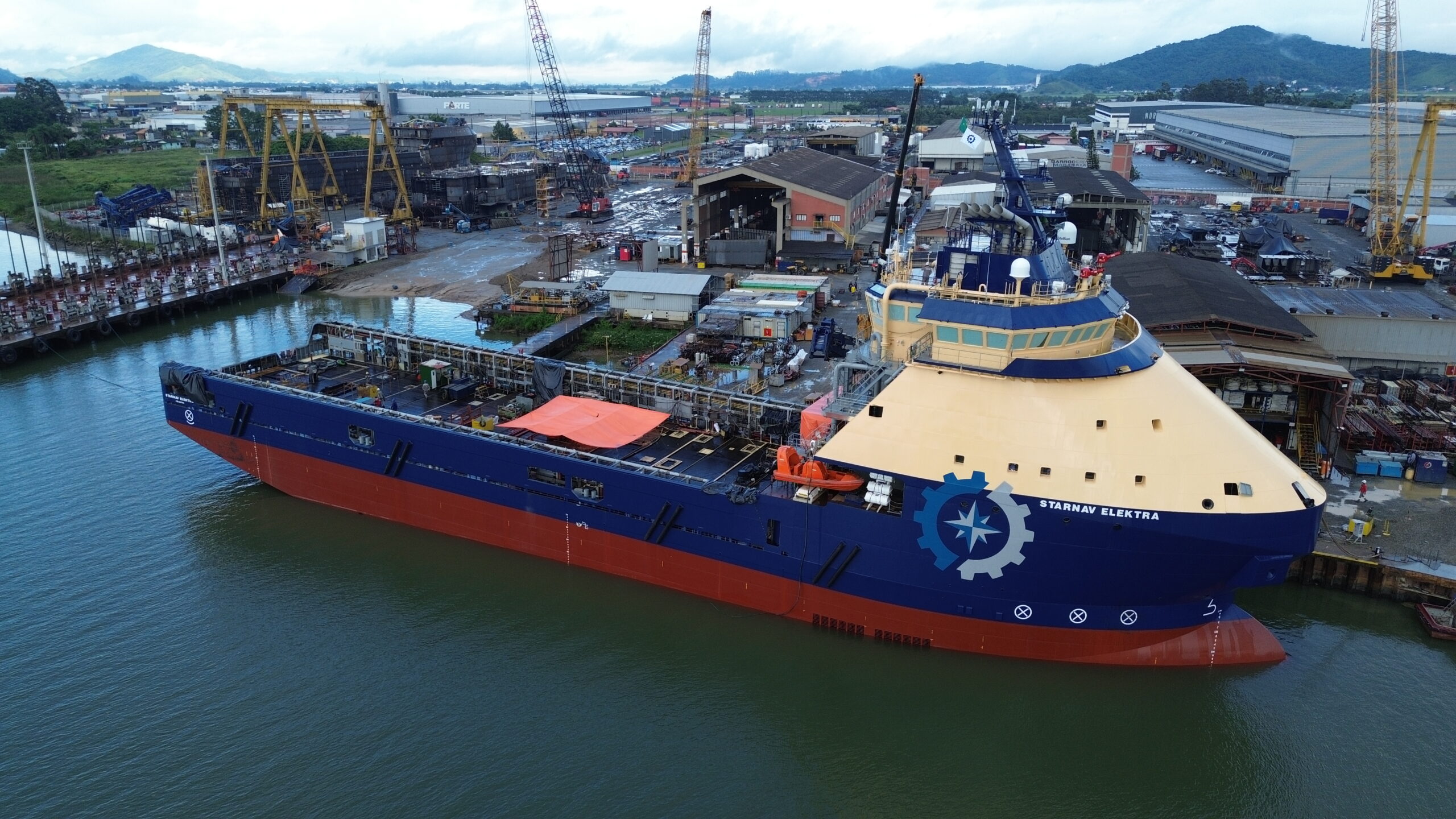
Detroit Brasil shipyard launched, in late March, the Starnav Elektra, a new PSV for Starnav Serviços Marítimos, with delivery scheduled for July 2026. The vessel stands out for its larger dimensions within the fleet, with 5,500 tons of deadweight and 1,000 m² of deck space.
Measuring 92.1 meters in length and 20 meters in beam, it expands the company’s operational capacity. It is equipped with DP2, accommodation for 42 people, and Schottel azimuth propulsion. Its main differentiator is the hybrid system with batteries supplied by WEG. The engines comply with the IMO Tier III standard, featuring an SCR system for emissions reduction.
It also incorporates advanced solutions for energy efficiency and maneuverability. It will be the first hybrid vessel built in Brazil with the Hybrid notation from the American Bureau of Shipping (ABS).
Want to learn more about this vessel? Stay tuned for our next magazine issue.
1. Mota-Engil secures R$728 million decommissioning contract with Petrobras
Mota-Engil has signed a new contract with Petrobras worth R$728 million to execute subsea decommissioning services in Campos Basin. The five-year agreement includes engineering, preparation, removal and final disposal of offshore structures, reinforcing ongoing efforts to advance Brazil’s decommissioning agenda.
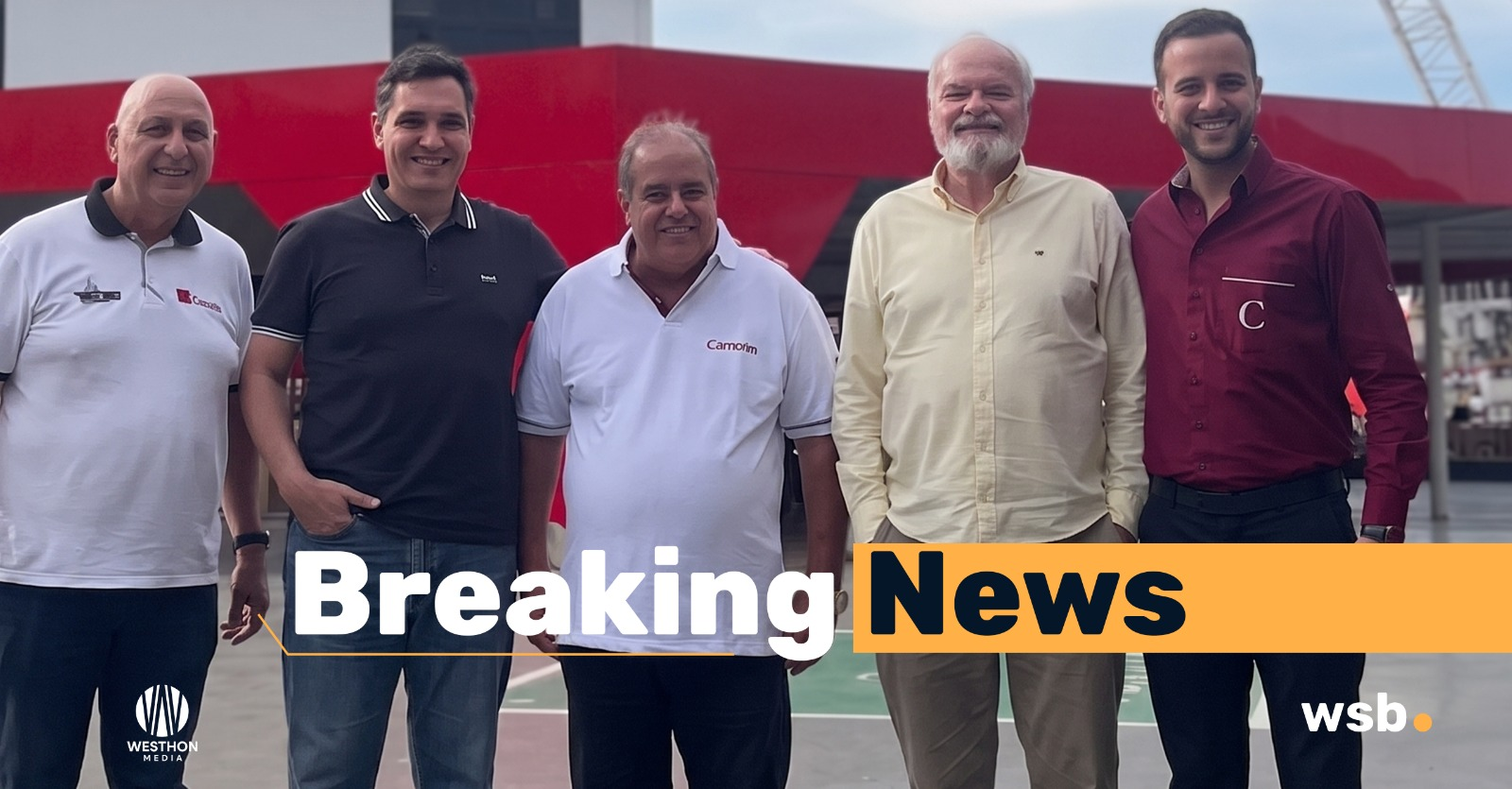
2. Camorim advances into heavy-lift segment with new Super Derrick Barge
Camorim confirmed the construction of a Super Derrick Barge (Super Cábrea) in partnership with Grupo Tomé, marking a strategic move into larger-scale lifting operations within Brazil’s maritime and offshore support segment. The project involves an investment of R$52 million and will be built at Estaleiro Juruá, in Manaus. The unit is scheduled to enter operation in March 2027.
Technical specifications indicate a lifting capacity of 750 tons, supported by an eight-point anchoring system, positioning the asset to support complex offshore installation, decommissioning and logistics operations.
Although Camorim already operates barges and derrick units, this project represents its first asset at this scale, signaling a step-change in operational capability and market positioning. According to company leadership, the investment is aligned with fleet expansion strategy and aims to increase participation in higher-complexity offshore projects in Brazil.
3. Halliburton signs multibillion unconventional contract with YPF
Halliburton has signed a long-term, exclusive contract with YPF to provide integrated unconventional completion services in Vaca Muerta. Although financial details were not disclosed, the agreement was described as a multibillion-dollar deal, further strengthening Halliburton’s position in Argentina’s shale development.
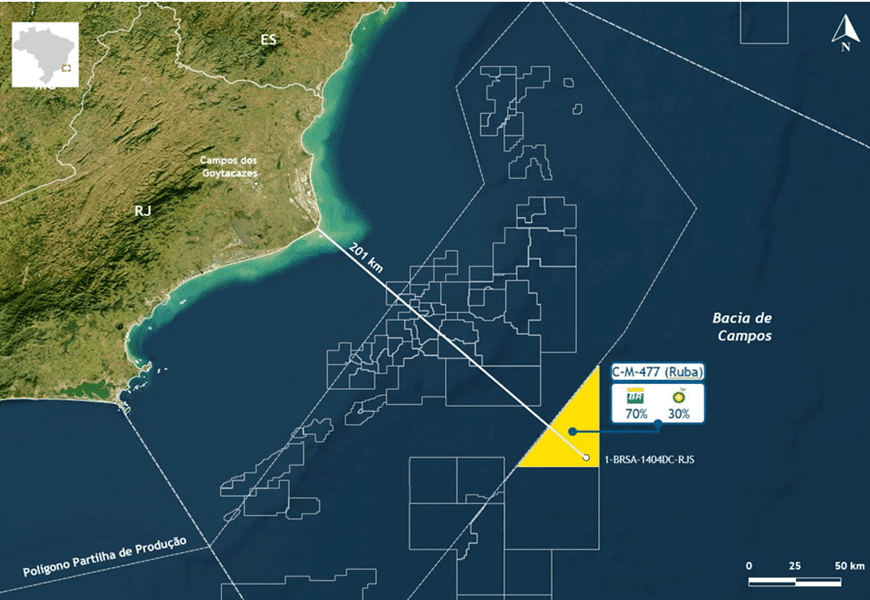
Petrobras has announced this Monday (April 13) a new hydrocarbon discovery in the pre-salt section of the Campos Basin, confirming the presence of hydrocarbons in an exploratory well drilled in the SC-AP4 sector, block C-M-477, located 201 kilometers offshore the state of Rio de Janeiro at a water depth of 2,984 meters.
According to the company, the hydrocarbon-bearing interval was identified through electric logs, gas indications and fluid sampling. The collected samples will now undergo laboratory analysis to characterize the reservoir and fluid conditions, a step that will support the ongoing assessment of the area’s exploratory potential.
The announcement adds to Petrobras’ efforts to replenish reserves in mature offshore areas, with the company maintaining 70% interest in the block alongside BP, which holds the remaining 30%.
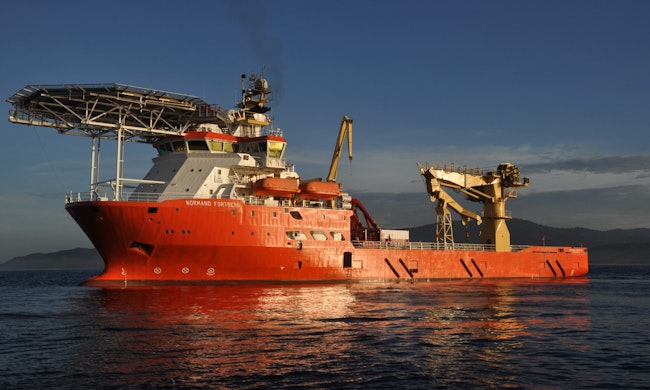
Solstad Offshore announced on April 13 a two-year contract extension with Petrobras for the construction support vessel (CSV) Normand Fortress, starting in July 2026. The gross contract value is estimated at approximately USD 56 million, under a bareboat arrangement. Built in 2006, the vessel will reach 20 years of service in 2026. It has a deadweight of 4,170 tonnes, a beam of 19.7 meters, and operates under the Norwegian flag.
Want more details about this vessel and/or this contract? Subscribe to WSB One.
WSB is pleased to provide an update on the current long-term tenders that are open to offer.
Open tenders:
New deadlines were released across ongoing Petrobras opportunities. Below are the latest changes monitored by WSB Advisors.
What has changed?
Petrobras — Up to 4x SOVs: Opportunity 7004563745, new deadline April 10th, 2026 • Petrobras — FPSO for Albacora Revitalization: Opportunity 7004415516, new deadline July 6th, 2026
What else is happening?
Subsea7 signed a supermajor contract, exceeding USD 1.25 billion, with Petrobras for the development of the Sépia 2 field in the Santos Basin pre-salt, located approximately 280 km offshore Rio de Janeiro. The scope includes engineering, procurement, fabrication, installation and pre-commissioning of subsea systems for 17 wells, as well as a gas export line. Project management and engineering activities are set to start immediately, with offshore operations scheduled from 2029.
Stay informed on key offshore developments — visit wsb-one.com, our data platform trusted by leading offshore companies.
As the market’s primary reference for fleet data—also reflected in our WSB One Database—we are frequently challenged by clients to explain not only where vessels are, but under what structures they remain where they are.
That is precisely what happened following our recent article on Atlas Z. As readers and users looked more closely into the Galáxia fleet, a broader question began to emerge: where is the Brazilian tonnage sustaining the REB eligibility of some of the group’s foreign-built vessels now operating under Brazilian flag?
The issue is not marginal.
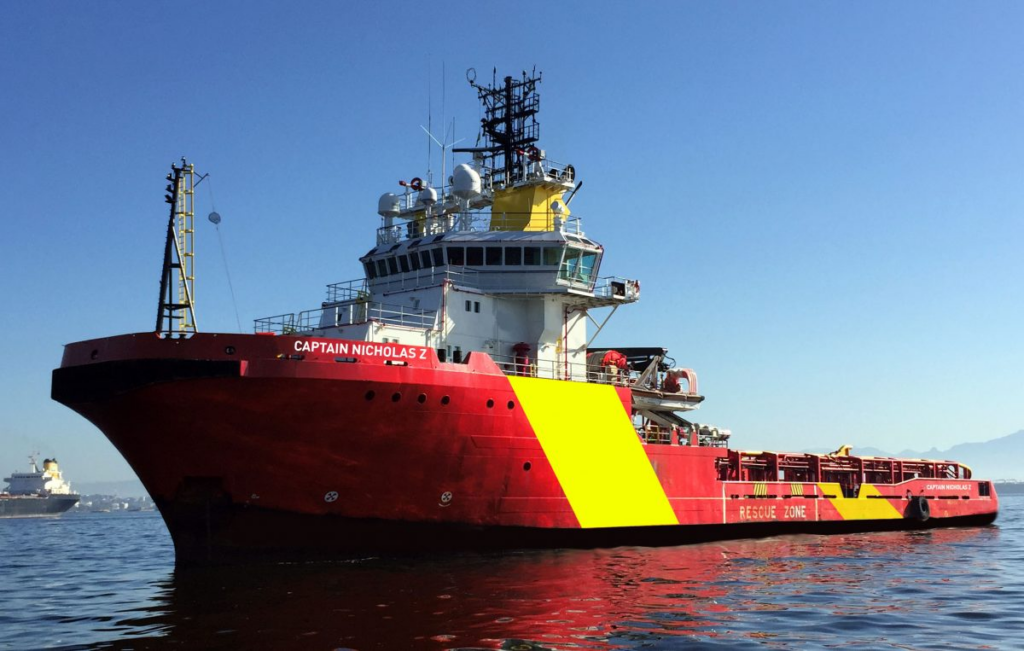
Three vessels originally introduced from abroad and now operating under REB through the Galáxia structure—Captain Nicholas Z, Apollo Z and Theseus Z—appear, at least from publicly available information, to rely on a tonnage base that is difficult to identify with clarity.
The numbers are what make the question unavoidable.
Captain Nicholas Z, with 3,211 tonnes, appears on Galáxia’s own website and in class records, yet is not clearly listed within the publicly visible fleet of either Galáxia Navegação or Galáxia Marítima. Apollo Z and Theseus Z, together representing approximately 4,800 tonnes, do appear linked to Galáxia Marítima. The problem is that Galáxia Marítima, according to official public records, appears to have no local tonnage currently capable of supporting that REB structure.
On the Galáxia Navegação side, the only visible local tonnage appears to be GNL 1015, with approximately 1,800 tonnes. That vessel, although not genuinely Brazilian in origin, became legally valid local tonnage after Galáxia took it over through judicial auction in the aftermath of the Varada case.
Even taking GNL 1015 into account, the structural question remains.
How can Apollo Z and Theseus Z remain under REB if Galáxia Marítima has, for a considerable period, lacked the local tonnage apparently required to sustain that flag structure? And how can Captain Nicholas Z remain under REB through Galáxia Navegação if GNL 1015, as the only visible local-tonnage vessel in that company, does not appear to provide the equivalent tonnage required to support it?
These are not merely theoretical questions.
We have been in contact with the Maritime Court, which confirmed that the condition precedent of equivalent tonnage must be maintained for the vessel to remain eligible under REB. The Court also clarified that any practical action depends on ANTAQ, as regulatory authority, formally informing the Maritime Court that the underlying conditions have been lost.
ANTAQ, for its part, has not yet returned our questions, although it is understood that a process is in its final stages for a definitive decision on the matter.
This is where the issue becomes more significant than a fleet-list discrepancy.
If vessels are able to remain under REB indefinitely until a grace period expires, even after the supporting tonnage has already been lost, then the structure opens room for a potentially unlimited migration of foreign-built tonnage into REB without effective ongoing equivalence. That would not be a minor administrative tolerance, but a material reinterpretation of the rule itself—one that would deserve much clearer visibility from both regulator and Court.
If, on the other hand, due process ultimately confirms that the supporting structure was not validly maintained, the consequences are potentially severe. ANTAQ’s own framework provides for sanctions where regulatory conditions are not preserved.
There is another element worth noting.
Our sources have identified what appears to be a late registration, in ANTAQ, of the charter contract for GNL 1015 by Galáxia Navegação. According to documentation presented by Galáxia itself, that contract was not timely executed to support the initial admission of Captain Nicholas Z into the Galáxia Navegação fleet. ANTAQ itself, in formal correspondence, is understood to have noted that the contract submitted did not cover the vessel’s initial admission period.
That point, if confirmed, would only reinforce the broader concern: not simply whether local tonnage exists today, but whether it existed at the moment it was legally required.
Galáxia could not be reached for comment.
For now, the vessels remain under REB, active and visible in the market.
What remains less visible is the tonnage behind them.