FPSO Alexandre de Gusmão departed China for Brazil to be installed in the Mero Field, Santos Basin, for Petrobras. Production is set to start in 2025.
With a capacity of 180,000 boe/d and 12 million m³ of gas compression per day, the unit will increase Mero’s output by 31%, to a total of 770,000 boe/d.
This is the fourth FPSO delivered to Petrobras in 2024, (Maria Quitéria, Duque de Caxias, and Almirante Tamandaré preceded).
These additions help drive the OSV chartering opportunities.
.
Tag: FPSO
-
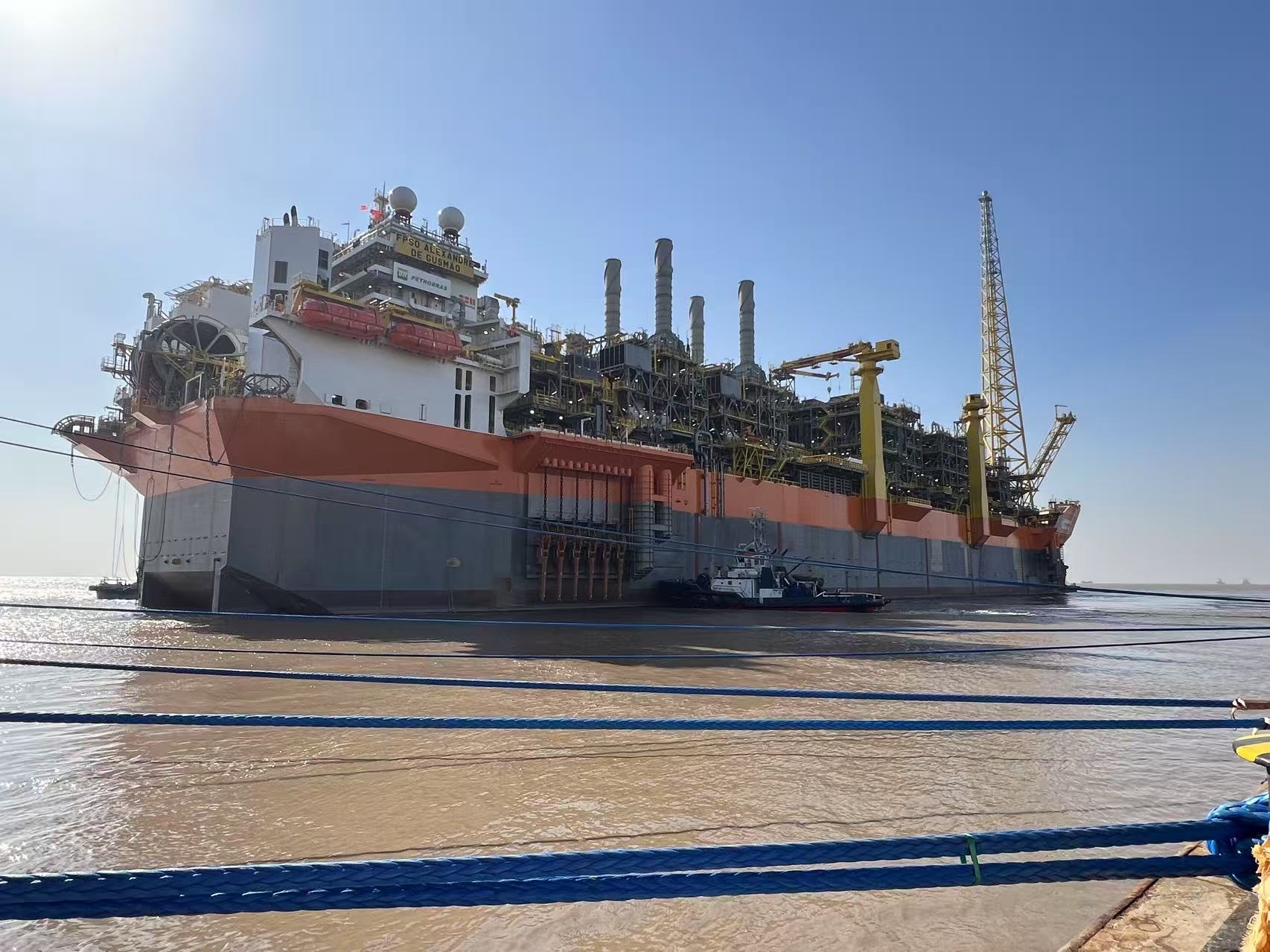
FPSO en route to Brazil
-
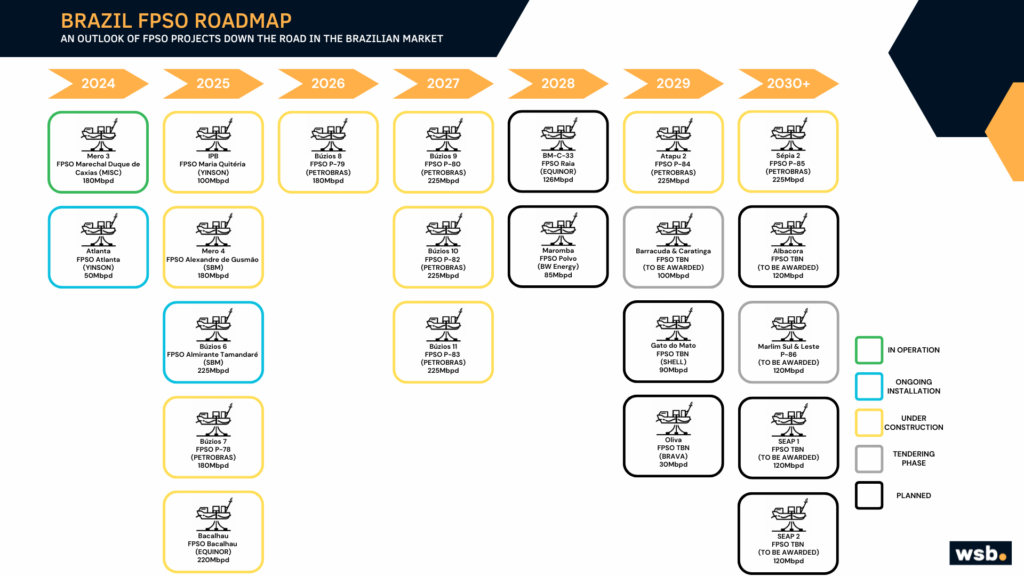
Brazil FPSO roadmap
Unlock the Power of Information with WSB Advisors!
Ever wondered where to find the most comprehensive database in the offshore sector?
Introducing WSB. One – your ultimate resource for integrated and cross-referenced data on vessels, contract durations, technical specifications, and much more.
Experience the convenience of having all this critical information just a few clicks away, right at your fingertips.
Curious to learn more? Reach out to us at commercial@cms.oneenergynews.com
WSB – We Support your Business
-
Petrobras tender update
Earlier this year, in March, WSB Advisors shared insights on Petrobras’s FPSOs SEAP I and II, predicting that securing their own units would be the most probable route, based on statements by Carlos Travassos at the time.
Fast forward through two tender attempts, Petrobras has now returned to the market for the third time with a Build-Operate-Transfer (BOT) model. Under this model, the contractor is tasked with designing, constructing, delivering, and operating the units for a specific period before transferring both the asset and its operations to Petrobras.
What’s new this time? SEAP II is now a firm commitment, while SEAP I has been set as an optional requirement. Petrobras believes the BOT model will tackle two critical aspects: accelerating delivery timelines and optimizing financing, while ultimately reducing operational costs once the units are fully transferred.
Traditionally, chartered units are delivered faster but come with higher costs, while owned units, though more affordable in the long run, often face extended delivery timelines. It will be interesting to see how this BOT approach unfolds for these critical FPSO projects.
-
FPSOs in Brazil: a recap
Renata Baruzzi, Director of Engineering, Technology, and Innovation at Petrobras, confirmed company plans to release bids this year to hire two FPSOs for the Sergipe Águas Profundas project (SEAP 1 and 2), further boosting the FPSO sector in Brazil.
In the past 30 days, several key milestones have been achieved in the segment:
• Naming ceremony of Equinor’s FPSOs Bacalhau and Petrobras’ Alexandre de Gusmão.
• Start of operations of Marechal Duque de Caxias and Maria Quitéria, both for Petrobras.
• Arrival of Almirante Tamandaré FPSO at the Búzios field, with production expected to begin in 2025.
• Sepetiba reached a production peak of 3.49 million boed in less than eight months of installation.The operations of these FPSOs increases the demand for OSVs.
Want to know which types and numbers for the next hires? More than stay tunned you can reach us and benefit from WSB.One data.
-
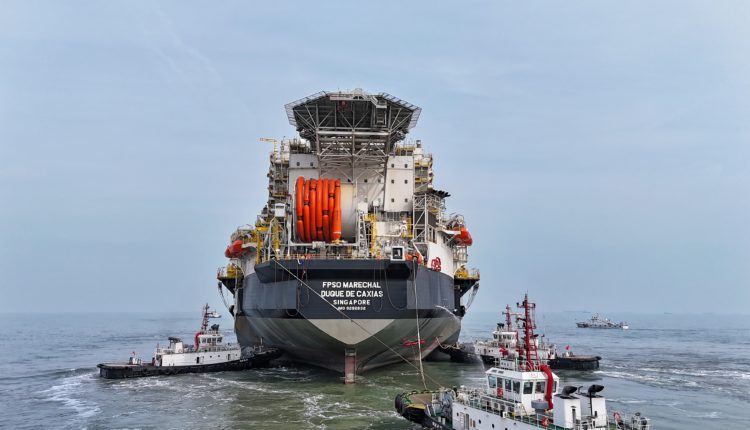
FPSO starts production
The FPSO Marechal Duque de Caxias started production last Wednesday (30). The unit, located in Mero 3, Libra block, in the Santos Basin, has the capacity to produce up to 180,000 boed (barrels of oil equivalent per day) and can compress up to 12 million m³ of gas daily, increasing total field productivity from 410,000 boed to 590,000 boed.
The vessel was built by MISC, departed from China in February, and arrived in Brazil in May. In total, there will be 15 wells, consisting of 8 oil producers and 7 water and gas injectors, connected to the platform via subsea infrastructure.
We at WSB are proud to be part of this milestone. In partnership with major companies like Belov, MISC, and CBO, WSB Advisors played a key role in various stages of the FPSO installation—from chartering offshore support vessels and coordinating complex engineering tasks to facilitating vessel inspections.
“Brokerage and Beyond,” – We are always ready for new challenges.
Want to know more about our involvement in the FPSO Marechal Duque de Caxias project? Read more here.
WSB – We Support your Business -
FPSO in brazilian waters
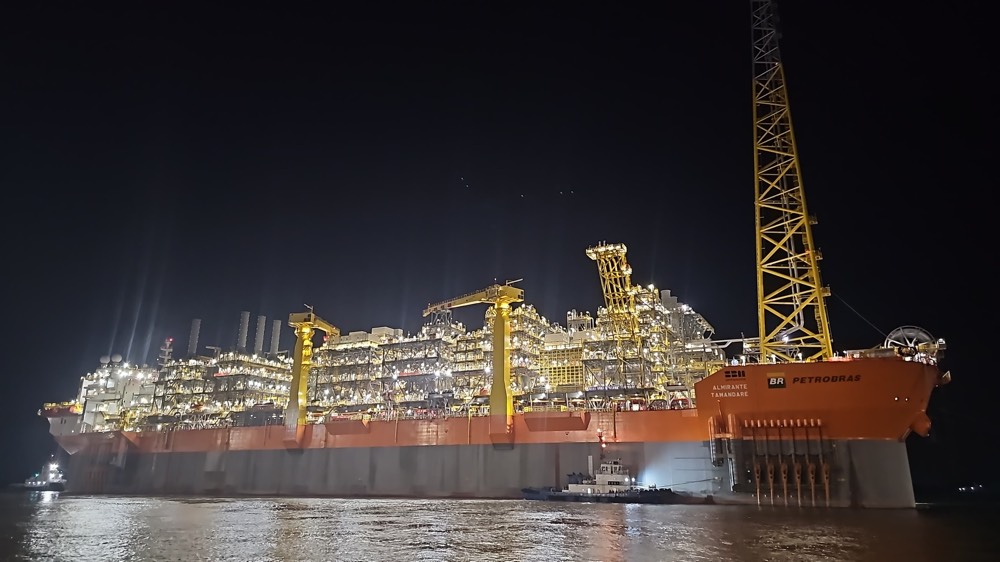
The FPSO Almirante Tamandaré has arrived in Brazil. This unit will be installed in the Búzios field, located in the pre-salt layer of the Santos Basin, with operations managed by Petrobras. Like the Sepetiba, the vessel was built by SBM Offshore.
The FPSO has a production capacity of up to 225,000 barrels of oil equivalent per day and can process 12 million cubic meters of gas daily. She left the CMHI shipyard in China on July 31 and will join five other platforms currently operating in the field: FPSOs P-74, P-75, P-76, P-77, and Almirante Barroso.
-
FPSO with first oil
Petrobras has announced that the FPSO Maria Quitéria produced its first oil on last Tuesday (15), in Jubarte Field, Campos Basin. The vessel has the capacity to produce up to 100.000 boed of crude and can process up to 5 million cubic meters of gas.
Built by Yinson, the FPSO departed from China in May and arrived in Brazil in August, with its first oil production occurring earlier than originally planned, which was expected for 2025.
-
New FPSO in Brazilian waters
The FPSO Maria Quitéria arrived in Brazil last week, ready to boost production at the Jubarte Field in the Parque das Baleias, Campos Basin, by 100,000 boed. Chartered by Petrobras, the vessel has the capacity to process up to 5 million cubic meters of gas per day and inject around 330,000 bpd of water, connected to eight production wells and eight injectors.
Built by Yinson, the FPSO left China in May of this year. The Maria Quitéria is scheduled to start operations by the end of this year, moving up the initial timeline which set its operational start for 2025.
-
FPSO Almirante Tamandaré en route to Brazil
The FPSO Almirante Tamandaré has departed from China en route to Brazil. Built at the CMHI shipyard, the FPSO will operate in the Búzios Field in the Santos Basin and will have the capacity to produce up to 225,000 boed. In March of this year, Petrobras reached a cumulative production of 1 billion barrels of oil in Búzios, with the combined output of five units operating in the field.
This is the third FPSO to leave China for Brazil this year. The Maria Quitéria departed in May and is currently rounding Africa. It is expected to arrive in Brazil in the last quarter of this year.
The Marechal Duque de Caxias left the Asian country in February and has been in Brazil since May, about to commence operations.
Another FPSO in the final adjustment phase is the Atlanta, which left Dubai in March and arrived in Brazil in May, to work for Enauta. -
MODEC: Thirteen FPSOs chartered and two under construction
MODEC has demonstrated resilience and continued leadership in Brazil’s FPSO market despite the conclusion of the Shell Fluminense FPSO contract and Enauta‘s decision not to purchase the Cidade de Santos. The Japanese company remains a dominant force, with a fleet of 13 chartered vessels, as highlighted by WSB.One, most of which are contracted with Petrobras.
MODEC’s FPSOs consistently deliver impressive production figures. In May, FPSO Guanabara, operating in the Mero field in the Santos Basin, achieved outstanding performance with a production of 179,546 barrels of oil and 11.68 million cubic meters of gas, per day. Other noteworthy FPSOs include Cidade de Angra dos Reis and Cidade de Itaguaí, both located in the Tupi field, the largest oil-producing field in Brazil.
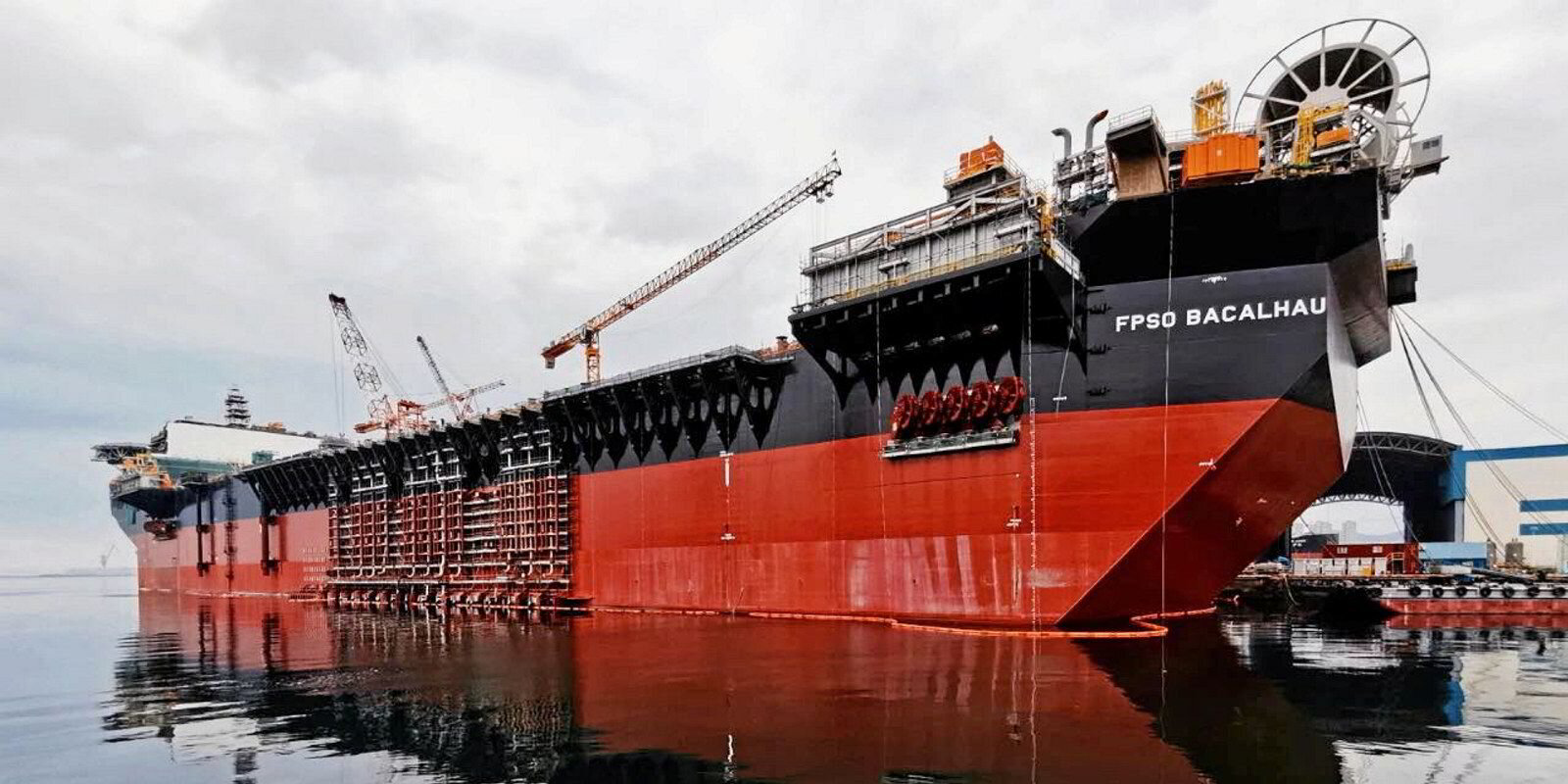
MODEC is further progressing with the construction of the Raia and Bacalhau FPSOs, for Equinor, Campos and Santos Basins, respectively.
MODEC FPSOs in Brazil
– FPSO Anita Garibaldi (Petrobras Marlim field, Campos Basin)
– FPSO Almirante Barroso (Petrobras Búzios field, Santos Basin)
– FPSO Guanabara (Petrobras Mero field, Santos Basin)
– FPSO Carioca (Petrobras Sépia field, Santos Basin)
– FPSO Cidade de Campos dos Goytacazes (Petrobras, Tartaruga Verde and Tartaruga Mestiça, Campos Basin)
– FPSO Cidade de Caraguatatuba (TotalEnergies, Lapa field, Santos Basin)
– FPSO Cidade de Itaguaí (Petrobras, Tupi field, Santos Basin)
– FPSO Cidade de Mangaratiba (Petrobras, Tupi field, Santos Basin)
– FPSO Cidade de São Paulo (Petrobras, Sapinhoá field, Santos Basin)
– FPSO Cidade de Angra dos Reis (Petrobras, Tupi field, Santos Basin)
– FPSO Cidade de Santos (Petrobras, Uruguá-Tambaú field, Santos Basin)
– FPSO Cidade de Macaé (Petrobras, Marlim Sul, Roncador and Marlim Leste fields, Campos Basin)
– FPSO Cidade de Niterói (Petrobras Marlim Leste Field, Campos Basin) -

Special WSB: Big women, big vessels
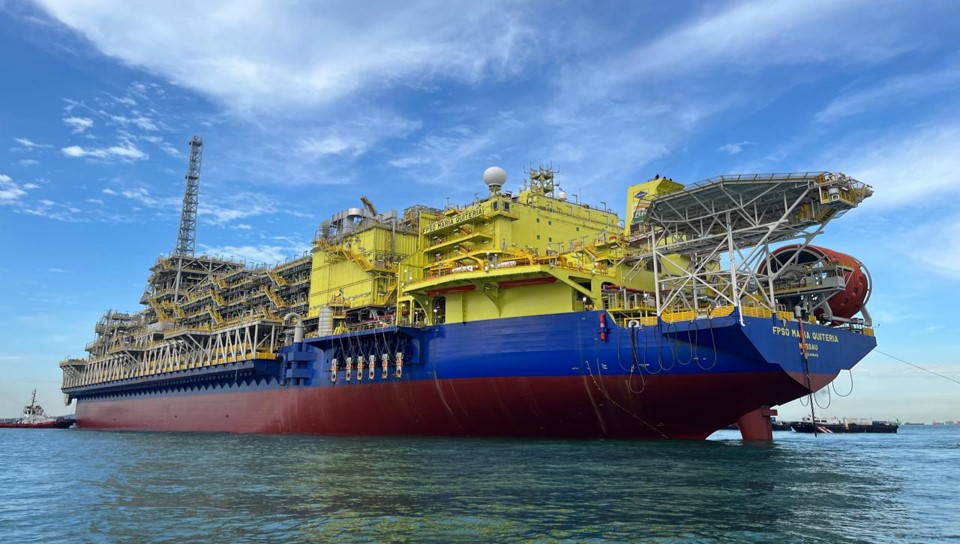
Few people know, but Petrobras is developing a culture for naming its FPSOs with great women. This is the case, for example, of the Floating Production Storage and Offloading Maria Quitéria, which is being built and should begin operating in 2025 at Jubarte field, on the coast of the Brazilian state of Espírito Santo, Campos Basin.
Maria Quitéria was born, lived and died in the state of Bahia where she participated in several clashes that ended with in Brazil’s Independence in Brazil’s Independence from Portugal in 1822. She was the first woman to serve in the National Army, while the official opening for them took place in 1943.
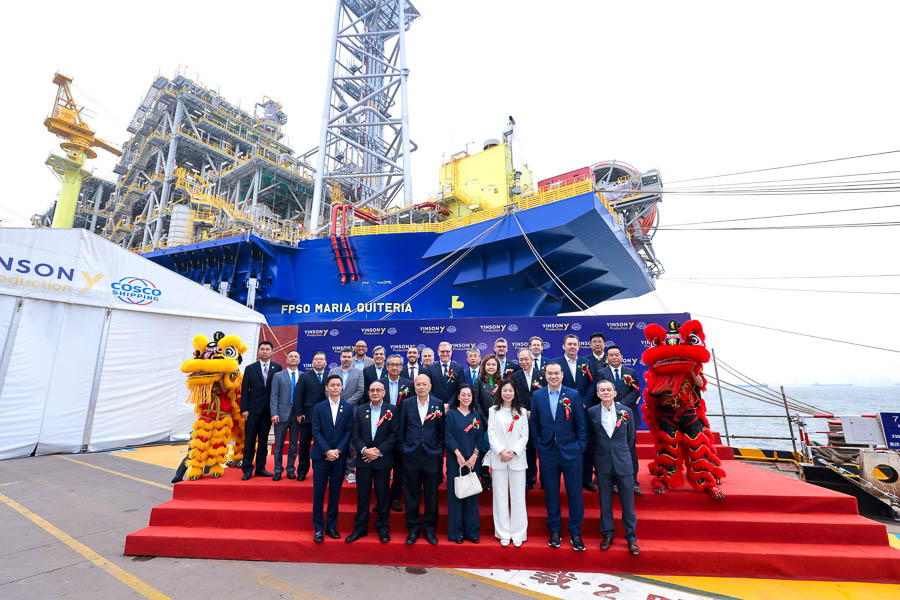
FPSO Maria Quitéria (Source: Yinson) An ex-soldier, Maria Quitéria was born on July 27, 1792, lost her mother at the age of 10 and did not have a good relationship with her stepmother. This made her spend almost the whole day in the streets, learning activities more linked to the male universe, such as shooting and riding a horse.
Statue of Maria Quitéria in Salvador (Source: Joá Souza) Disguise in Army
In 1821, she sneaked out from home, had her hair cut, borrowed men’s clothing and began “calling herself” José de Medeiros. Shortly afterwards, she was discovered and reported by her father but her good work in the Army did not lead to her being expelled from the corporation.
In 1823, she returned to live with her father, who forgave her due to some reasons, including the fact that she was honored by D. Pedro I, one of the symbols of Independence and first (of two) emperors of Brazil, which has been a Republic since 1889. In the last years of her life, Maria Quitéria dedicated herself to her marriage, daughter and her health.
Maria Quitéria died on August 21, 1853, without great tributes. However, recognition came later such as the unveiling of a sculpture of her in Salvador a hundred years later. Still in 1953, the Army tried to get all military units to have a portrait of her.
Since 1996, Maria Quitéria has been the patron saint of the Brazilian Army’s Complementary Staff of Officers. Since 2018, she has been included in the Book of Heroes of the Homeland along with other important names like Anna Nery.
Nurse at war
Anna Nery, in turn, has been named there since 2009, being the first woman to join this list. Like Maria Quitéria, she is a Baiana (a person who was born in the state of Bahia), born in 1814.
Anna Justina Ferreira Nery is considered the pioneer of nursing in Brazil, as well as the Mother of all Brazilians, due to her voluntary action in the Paraguayan War (1864-1870), where this country faced the Triple Alliance (Brazil, Argentina and Uruguay).
As a nurse, Anna Nery treated thousands of soldiers in hospitals in the cities of Assunção, Corrientes and Humaitá. On the other hand, she lost one of her three children, a victim of clashes with the Paraguayans.
The FPSO is working for Petrobras in the Merlin field, which is also in the Campos Basin. There is also Anita Garibaldi. This vessel pays homage to another woman present in the Book of Heroes of the Homeland since 2012.

FPSO Anna Nery (Source: Petrobras) Hero in Brazil and in Italy
Ana Maria de Jesus Ribeiro was born in 1821, one year before Brazilian Independence, in the Brazilian state of Santa Catarina. Anita Garibaldi received the title “Heroine of Two Worlds”, for having participated in several battles both in Brazil and Italy alongside her husband Giuseppe Garibaldi.
They met in 1839 and were very influential, for example, in the unification of the European country. In Brazil, they fought bravely in the Farrapos War, a revolt by the South against the federal government against high taxes. Little by little, the separatist movement gained strength. The conflict lasted ten years (1835-1845) and ended with an agreement between the parties, with the maintenance of the entire national territory unified.

Statue of Anita Garibaldi in Santa Catarina (Source: Educa SC) Anita Garibaldi became known for being a fearless woman with a thirst for freedom and justice. She also participated in fights in other countries such as Uruguay, Austria and France where Giuseppe was born. She died in 1849, pregnant with her fifth child and a victim of typhoid fever.
Her story attracted street names throughout Brazil and even the cities like Anita Garibaldi and Anitápolis, both in Santa Catarina. The heroine also inspired a film, a soap opera and even music from a samba school.
-
WSB update: FPSO Fluminense is underway to MARS
By Alexandre Vilela
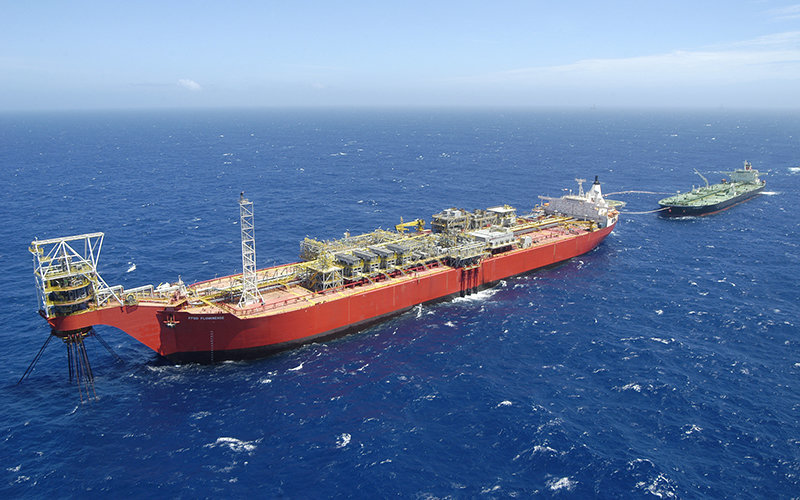
FPSO Fluminense is underway to MARS (Modern American Recycling Services, Inc). in Denmark, after successful disconnection from the Bijupirá & Salema fields concluded earlier this month, with the assistance of Boskalis vessels Falcon and Centre.
The unit is being towed also by Boskalis’ Summit, Glacier and Manta, in a project that counted with a full fleet from the Dutch specialized company.
More on our participation on this project will be shared on our social media and next issue of One Energy Magazine.Stay tuned! WSB Advisors.