Tag: Petrobras

  • Perenco takes the helm

    Perenco takes the helm

    Bagre oil fields, for a sum of $10 million—$1 million upfront and an additional $9 million upon closing. Notably, no contingent payments or adjustments have been disclosed in this transaction.

    Faced with the costly prospect of decommissioning these assets, Petrobras’s decision to offload Cherne and Bagre may seem more like a strategic retreat than a loss. The Brazilian oil giant has demonstrated adeptness in shedding less-central assets, typically resulting in sustainable outcomes for both itself and the acquirers. This isn’t Perenco’s first rodeo either; following their acquisition of the Pargo, Carapeba, and Vermelho fields, they recently integrated an FSO as an alternative to the existing Garoupa infrastructure for production exports.

    Initially put on the market in 2019 (Bank of America as advisors), the Garoupa cluster—which includes the now-sold fields—drew interest from industry players like Trident Energy, Premier Oil, and Perenco. However, a deal failed to materialize by mid-2020, prompting Petrobras to hibernate the fields amid fluctuating production levels, which stood at approximately 4,000 boed/d by Q4 2023. Cherne and Bagre production was ceased in March 2020.

  • Opinion: Petrobras Payment Promisse

    Opinion: Petrobras Payment Promisse

    Renowned as one of the most reliable contracting companies for payment timeliness, Petrobras has announced a strategic update to its payment policies. Under the new plan, the company will settle invoices for maintenance and administrative support within 30 days.

    Alexandre Vilela, CEO of Westhon commented: “Petrobras is reinforcing its commitment to the business community by ensuring prompt payments. This initiative not only secures Petrobras’s position as a leader in the sector but also attracts more suppliers and prompts competitive pricing. This comes at a critical time when many other companies continue to exert pressure on suppliers by extending payment terms to 90 days or more.”

    This announcement is part of a broader initiative by Petrobras to modernize its sourcing processes, incorporating new tools and more flexible rules for supplier approval.

  • Petrobras announces bids for 10 OSRVs and 11 additional PSVs

    Petrobras announces bids for 10 OSRVs and 11 additional PSVs

    At the IBP Summit on naval construction, Petrobras CEO Jean-Paul Prates announced that the oil giant plans to issue a bid for 10 Oil Spill Recovery Vessels (OSRVs) by the end of this year. Additionally, a future bid for 11 Platform Supply Vessels (PSVs) is planned, though the date has yet to be determined. This announcement comes as the company is already in the process of hiring a targeted number of 12 PSVs through an ongoing tender.

  • Petrobras new tenders

    Petrobras new tenders

    After a few months without new bids for chartering OSVs, last week Petrobras opened 2 new bids: one for hiring up to 4 PSVs but in SEP format where proposals and results are not publicly disclosed, and another for hiring up to 3 AHTS-TO. Both bids are for a single lot and have a 4-year contract duration. The last tender for contracting PSVs had been opened at the end of last year and proposals were received in February of this year however, until now, no information has been released about the result nor a forecast of how many vessels will actually be contracted. As for AHTS, the latest bids were for hiring 1x AHTS-TS with results already published, and AHTS-R which closed in November last year but with no final results yet announced

  • Opinion: Equatorial Margin safe in Petrobras hands

    Opinion: Equatorial Margin safe in Petrobras hands

    Petrobras has announced the discovery of oil accumulation in the ultra-deep waters (2,196m) of the Potiguar Basin, a section of the Equatorial Margin that has stirred controversy. This significant find is situated between the states of Ceará and Rio Grande do Norte in the Northeast of Brazil, marking the second discovery within the Basin this year—the first occurring in January roughly 24 kilometers away. Petrobras, serving as the operator for both concessions, maintains a complete ownership stake in each.

    “Petrobras has extensive experience in drilling almost 3,000 wells in deep and ultra-deep-water settings, with a consistent track record of operations devoid of adverse environmental impacts”; Genesio Ramos, Offshore Projects Lead of WSB Advisors, commented on these developments.

    “This discovery arrives amidst a period of political turbulence within Petrobras accentuated by discussions around the potential change of its president, Jean Paul Prates, albeit Ministers Haddad (Economy) and Silveira (Energy) moderating in favor of Prates. The Potiguar Basin discoveries adds a positive note”; Alexandre Vilela, CEO of WSB.

  • OceanPact signs contract with Petrobras

    OceanPact signs contract with Petrobras

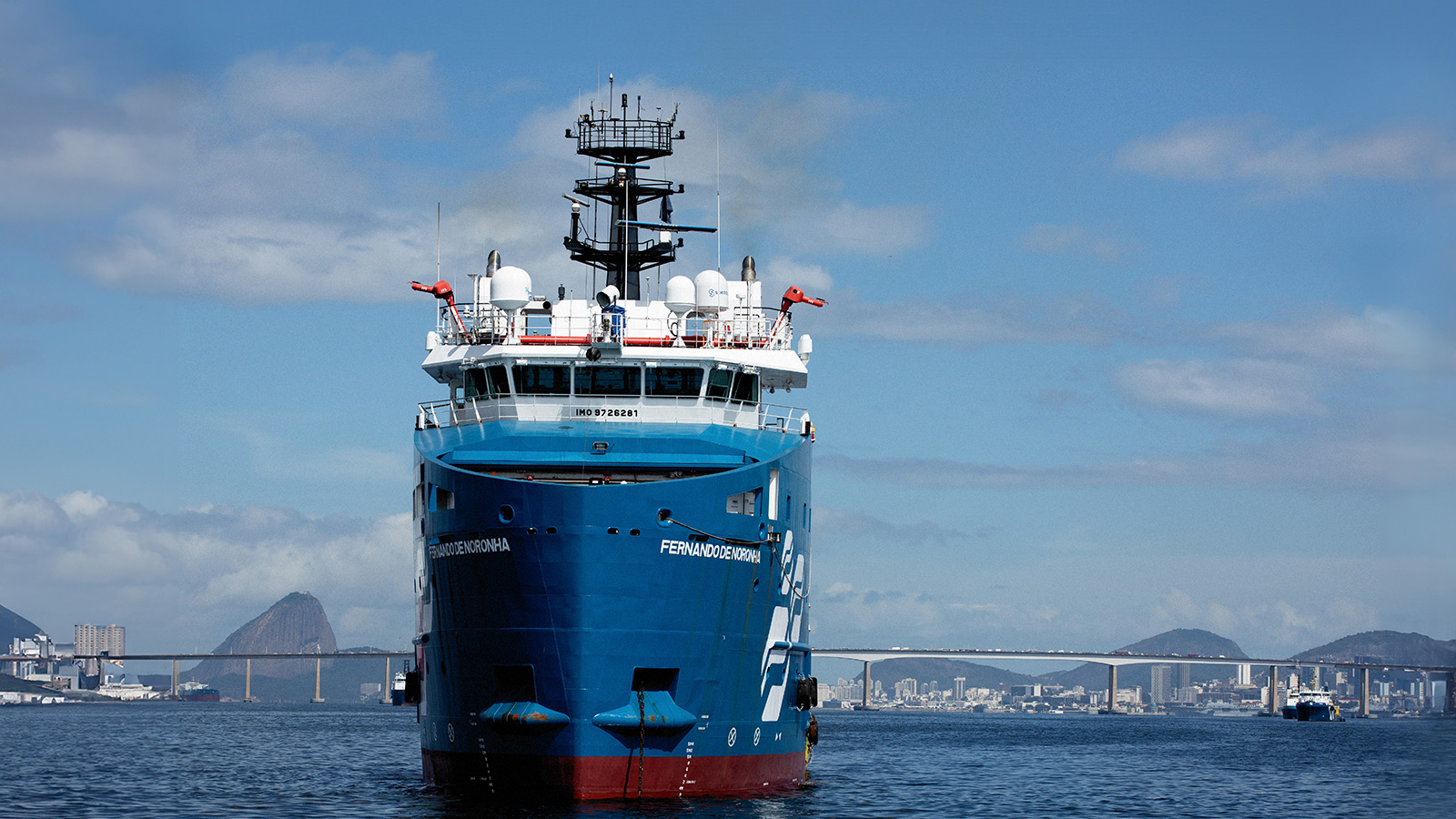
    OceanPact signed a new contract with Petrobras for a period of four years to charter three OSRVs for a total value of R$650 million. The vessels Fernando de Noronha, Jim O’Brien and Macaé will be servicing Petrobras in operations off the Brazilian coast in cases of environmental emergencies.

    It is the second major movement involving the two companies. At the end of 2023, OceanPact had already signed a R$485 million agreement with Petrobras to provide inspections of FPSOs and semi-submersible platforms until 2026.

  • Petrobras: Hiring and opportunities for the national industry

    Petrobras: Hiring and opportunities for the national industry

    Petrobras authorized the process of hiring support vessels for exploration and production logistics, with short-term demand: 2025 and 2026.

    The company will also hire new support ships for long-term demands, whose technical specifications will focus on new technological solutions for efficiency and reduction of greenhouse gas emissions.

    Petrobras estimates hiring around 200 ships by 2028, to replace current charters or to increase the current fleet. Of this total, it is estimated that there will be opportunities to build up to 38 new vessels.

    In the first tender, 12 PSV-type support vessels are expected to be contracted. It is also planned to hire cabotage ships, FPSOs, vessels to carry out underwater and well activities, in addition to platform decommissioning activities.

    These opportunities mark the beginning of a series of hirings to meet the company’s Strategic Plan.

    For more information contact: www.cms.oneenergynews.com

  • FMM APPROVES HELP TO BUY FPSO

    FMM APPROVES HELP TO BUY FPSO

    The Merchant Marine Fund (FMM) Board of Directors approved the contribution of BRL 8.56 billion for the construction of two FPSOs: Sergipe Águas Profundas (SEAP) I and Sergipe Águas Profundas II (SEAP II). Both basins are located in the Sergipe-Alagoas Basin (SEAL), approximately 100 km from the coast.

    Last month, we published that Petrobras was facing a hard market to lease FPSOs for SEAL, in view of the increasing costs and the specificities of the GTD for both projects SEAP I and SEAP II.

    Carlos Travassos, Executive Director of Engineering, Technology and Innovation declared two weeks ago that Petrobras has more control over operations with their owned units, but on the other hand, the process is lengthier. Travassos commented on aspects to increase the viability of projects such as the access to the Merchant Marine Fund (FMM), in addition to conversations with private and foreign financial institutions.

    “If we are not successful, we will move on to our own units, operated by Petrobras. The tendency is for an own unit to take more time than a chartered one. There are other challenges, but we would have much more around the process”, said Travassos in a talk with journalists.

    SEAP project should have the capacity to process 120,000 boed each.

    Launched in April 2023, with proposals initially scheduled to be delivered in October, the tender was already postponed three times.

  • Petrobras: mooring projects

    Petrobras: mooring projects

    Petrobras inked a charter contract for the Cargo Transfer Vessel (CTV) SeaLoader 2, a ship owned by Sealoading Holding A/S (a business unit of Mitsui O.S.K. Lines, Ltd., MOL group). The vessel has been operating for Petrobras since 2022 and performed over 30 operations to test the ability to eliminate the need of DP shuttle tankers on tanker offloading operations (a.k.a. tanker lifting).

    The sister ship Sealoader 1 has been operating for TotalEnergies in the field of Lapa.

    The concept of eliminating the DP shuttle tankers could generate positive impact on emissions reduction while eliminating ship-to-ship (sts) transfers. Expectations are of 60% reduction on coastal cargoes while up to 80% reduction could be generated in operations where DP shuttle tankers have to cruise all the way to Uruguai or Argentina. Yes, it happens.

    The spread moored FPSO tanker liftings are performed with DP shuttle tankers with a bow loading system and a load capacity of 1.0 million barrels (approximately).

    However, the CTV concept raises questions, as the constant use of TS (tugs astern of the conventional tanker) which are also required on direct FPSO / tanker conventional mooring, the considerable emissions while the CTV in operation (on DP) and in transit from and to location, the inability for direct mooring of the conventional tanker to the FPSO and the cost of building reflected on the charter rate, fuel consumption port utilization and others.

    WSB Advisors in cooperation with COPPE / UFRJLaboratório de Ondas e Correntes – LOC – PENO/COPPE/UFRJ, based on a concept of WSB’s Mooring and Unloading leader Jairo Araujo, has conceived and presented (in Offshore Technology Conference (OTC)) a project with a alternative solutions.

    “WSB’s proposal is based on the study of new methods and procedures as well as other alternatives that aim to use conventional ships (without DP) of the Suezmax size (or even VLCCs). It also analyzes the possibility of using conventional ships from the reevaluation of the study that directed the use of DP ships at Petrobras. It also verifies the possibility of using monobuoys, technology already established in the market and widely used in West Africa and which uses a series of safety systems. The great advantage of the monobuoy is that it allows the mooring of occasional ships up to the size of VLCC and do not generate atmospheric emissions and other impacts”, says Jairo.

    The WSB study is just as good if applied in recent acquisitions such as PRIO Albacora Leste, 3R Petroleum Papa-Terra, Enauta Atlanta and HR Karoon Brasil Bauna. 

  • Petrobras is facing a hard market to lease FPSO’s

    Petrobras is facing a hard market to lease FPSO’s

    Petrobras is facing a hard market to lease FPSOs for Sergipe-Alagoas (SEAL), in view of the increasing costs and the specificities of the GTD for these projects SEAP I and SEAP II. This is the second time Petrobras comes out to market for SEAP I though previously the selection being for BOT (Built-Operate-Transfer), after not having secured suitable offers. The alternative to leasing is for Petrobras to order the units themselves.

    Carlos Travassos, Executive Director of Engineering, Technology and Innovation declared this week that Petrobras has more control over operations with their owned units, but on the other hand, the process is lengthier. Travassos commented on aspects to increase the viability of projects such as the access to the Merchant Marine Fund (FMM), in addition to conversations with private and foreign financial institutions.

    SEAP project should have the capacity to process 120,000 boed each. Launched in April 2023, with proposals initially scheduled to be delivered in October, the tender was already postponed three times.

  • Petrobras will hire RSV’s

    Petrobras will hire RSV’s

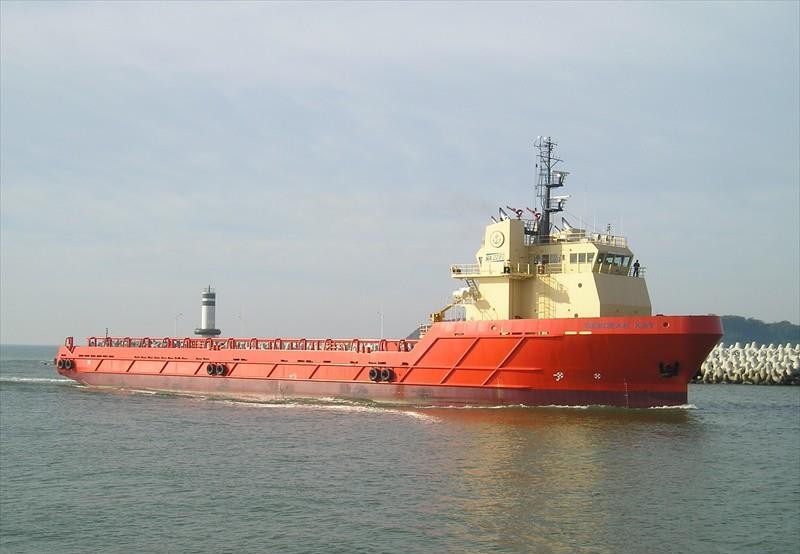
    Petrobras disclosed the partial result for the RSV opportunity for offers received November 2023. So far, 9 Brazilian flagged vessels from Edison Chouest Offshore were qualified: Deborah Kay, Bongo, Paulo Cunha, Wildebeest, Joe Griffin, Santos Service, Bram Spirit, Bram Bravo and Eland, with discounts not over 5%. Once awarded Chouest will secure new commitments for all their RSVs ending contracts with the oil major.

    Incidentally all currently qualified offers from the same bidder in different lots, however the tender process indeed the pre-determined priority order of lots in the tender, with 5 other offers from Solstad Offshore ASA, Oceanica and Fugro still under evaluation by Petrobras. It reflects the responsiveness of bidders, not a preference of Petrobras. 5 vessels have been disqualified due to excessive pricing, whilst 6 others have not been evaluated (out of range), but could be as the process evolves.

  • FPSO departs to Brazil

    FPSO departs to Brazil

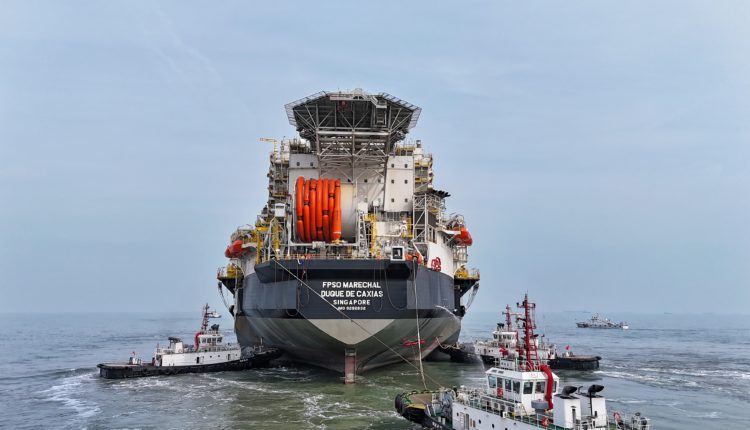
    The FPSO Marechal Duque de Caxias has left China and will come to the Santos Basin, where it will operate in Mero Field, operated by Petrobras which charteres the vessel from MISC. The vessel should begin operations in September and has the capacity to produce up to 180,000 boed and compress up to 12 million cubic meters of gas.

    The unit will be part of Mero’s third definitive production system and will increase the field’s installed production capacity to 590,000 boed. This system provides for the interconnection of 15 wells to the unit, 8 oil producers and 7 water and gas injectors, through a subsea infrastructure consisting of 80 km of rigid production and injection pipelines, 47 km of flexible service pipelines and 44 km of control umbilicals. The FPSO has technologies to reduce emissions, like the CCUS (Carbon Capture, Utilization and Storage), where gas with CO2 is reinjected into the reservoir.

    Mero is the third largest field in Brazil in terms of volume of oil in place, behind Tupi and Búzios, also in the Santos Basin. Petrobras promises to put another unit into operation in Mero next year. In addition to Petrobras (38.6%), the field consortium is operated by Shell (19.3%), TotalEnergies (19.3%), CNOOC (9.65%), CNPC (9.65%) and PPSA (3.5%).