Do you get our updates on your email?
WSB Advisors is pleased to provide an update on the current long-term tenders that are open to offer.
To stay updated on the details and outcomes of these and future bids, follow us on LinkedIn.
However, if you are looking for in-depth information on contracts, historical and current daily rates, contract durations, and charterers — empowering your decisions with unmatched accuracy and depth — Get in touch with our comercial department to have access to WSB. One.
Tag: Shipbroking
-
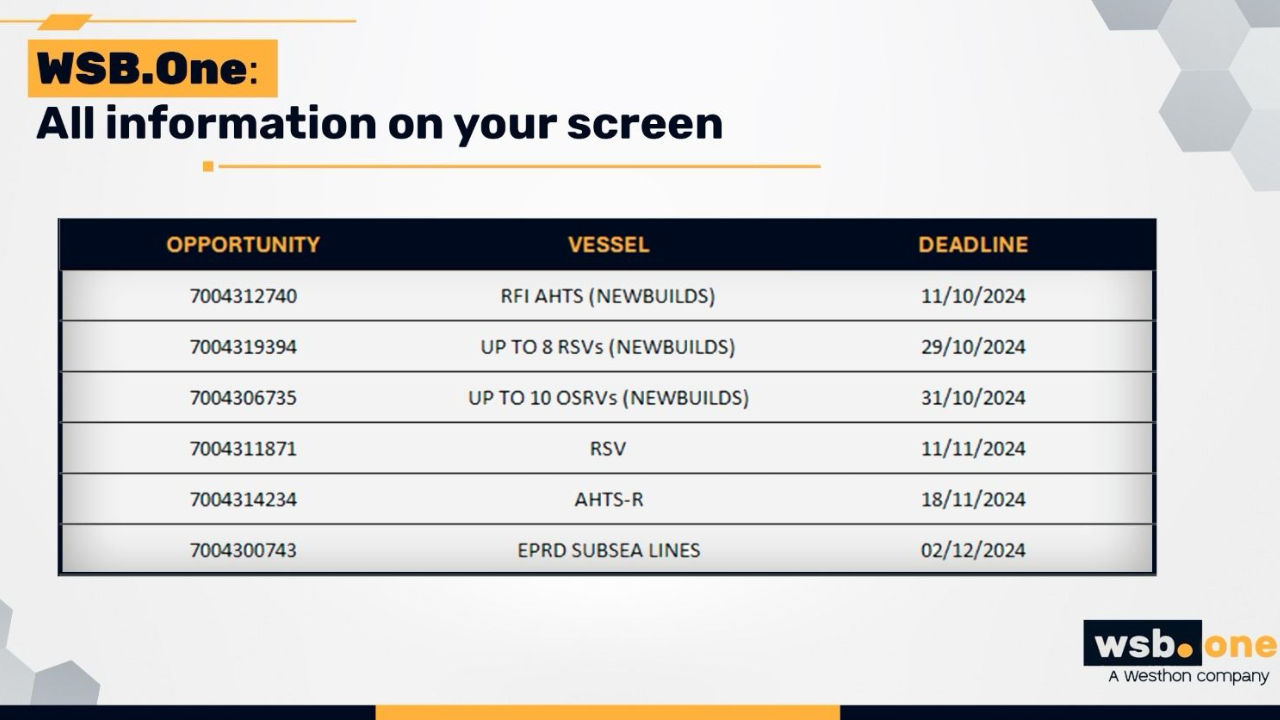
WSB.One: All information on your screen
-
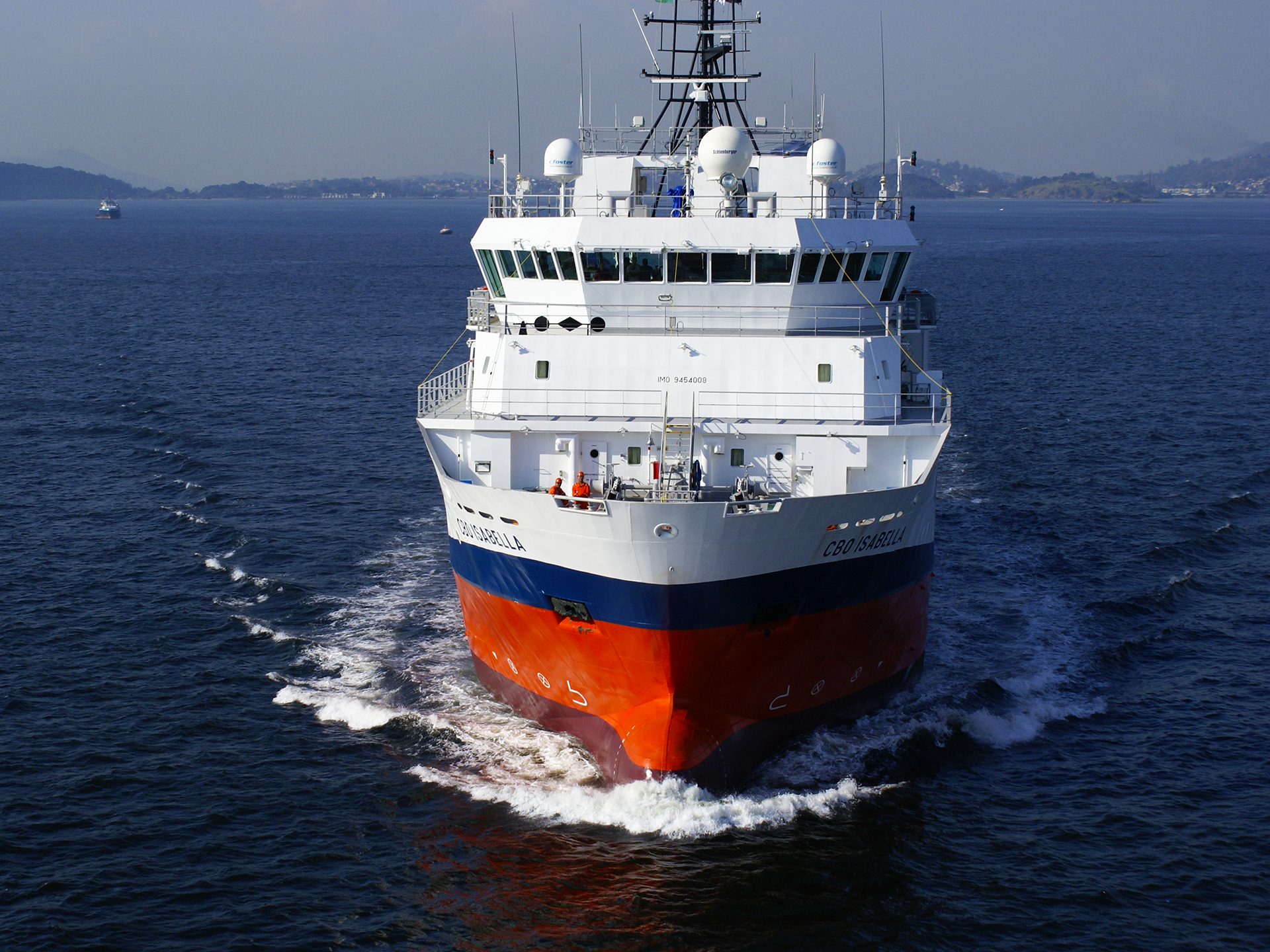
Petrobras with new RSV bid
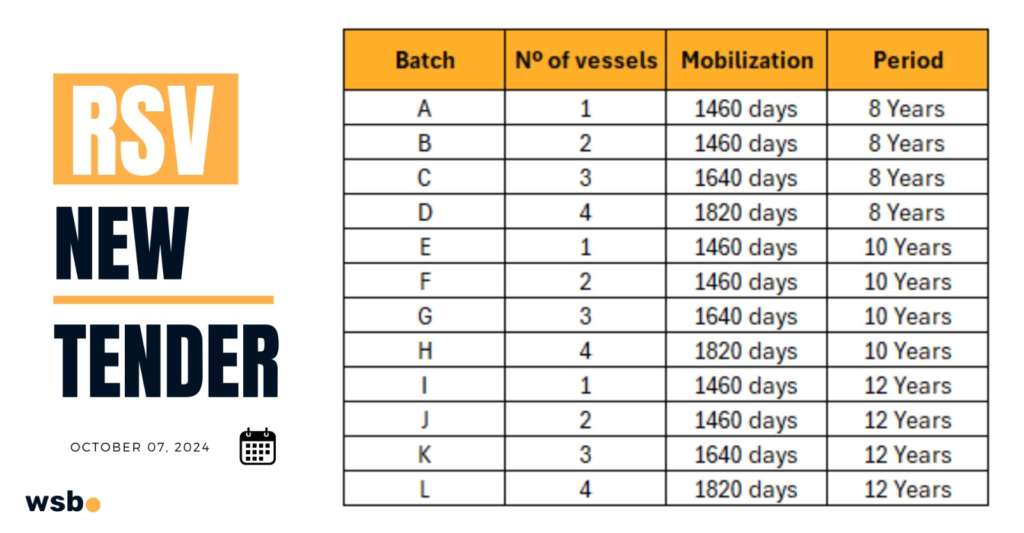
Petrobras has issued a tender for the charter of up to 8 Brazilian flagged newbuild RSVs
Key highlights
1) Maximum vessel awards per Tenderer is 4.
2) The extended mob days for the 3rd and 4th vessels will apply only if all are built in the same yard. 3) Current Deadline: October 29th, 17:00LT Rio de Janeiro, Brazil.Main vessel technical details
Engines running on diesel and ready to run on diesel-ethanol mix with up to 80% ethanol.
1x Bow Tunnel Thruster 1500kW
2x Bow Retractable Azimuth 1200kW
2x Azimuth Main Propellers 2800kW
DP-2 Class Notation
2x WROV | WD 0-3000m | 24h/7
Knuckle boom crane meeting SoW requirementsTo read all details, contact us at comercial@cms.oneenergynews.com
-
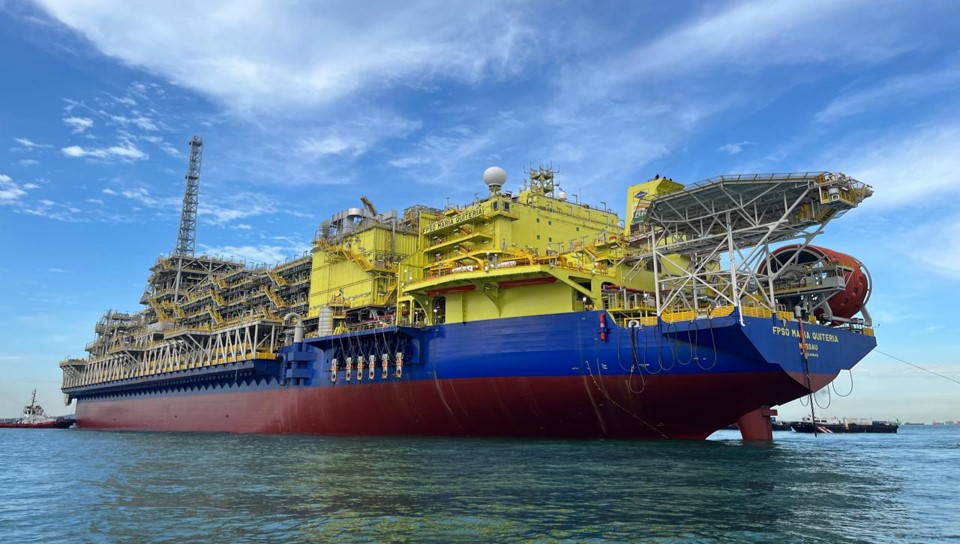
WSB: Oil & Gas Expanding
Brazil’s oil and gas sector is, according to EPE, expected to attract $182 billion in investments by 2030, with production reaching 5.4 million barrels per day, positioning the country as the 5th largest producer globally. As stated by FIRJAN, the Federation of Industries of Rio de Janeiro, this increase will prompt 115,000 jobs in Rio de Janeiro alone, driven by the rising demand and 13 new FPSOs by 2028.
At our recent WSB Seminar, FIRJAN’s Thiago Valejo emphasized the critical role of human capital in supporting this expansion. He also highlighted FIRJAN’s collaboration with Senai and others to expand training programs, ensuring the industry has the skilled workforce needed for the future. At WSB, we strongly advocate for transforming how the industry approaches talent and fully support FIRJAN’s initiatives.
Count on WSB Advisors to guide your business through this exciting new phase!
-
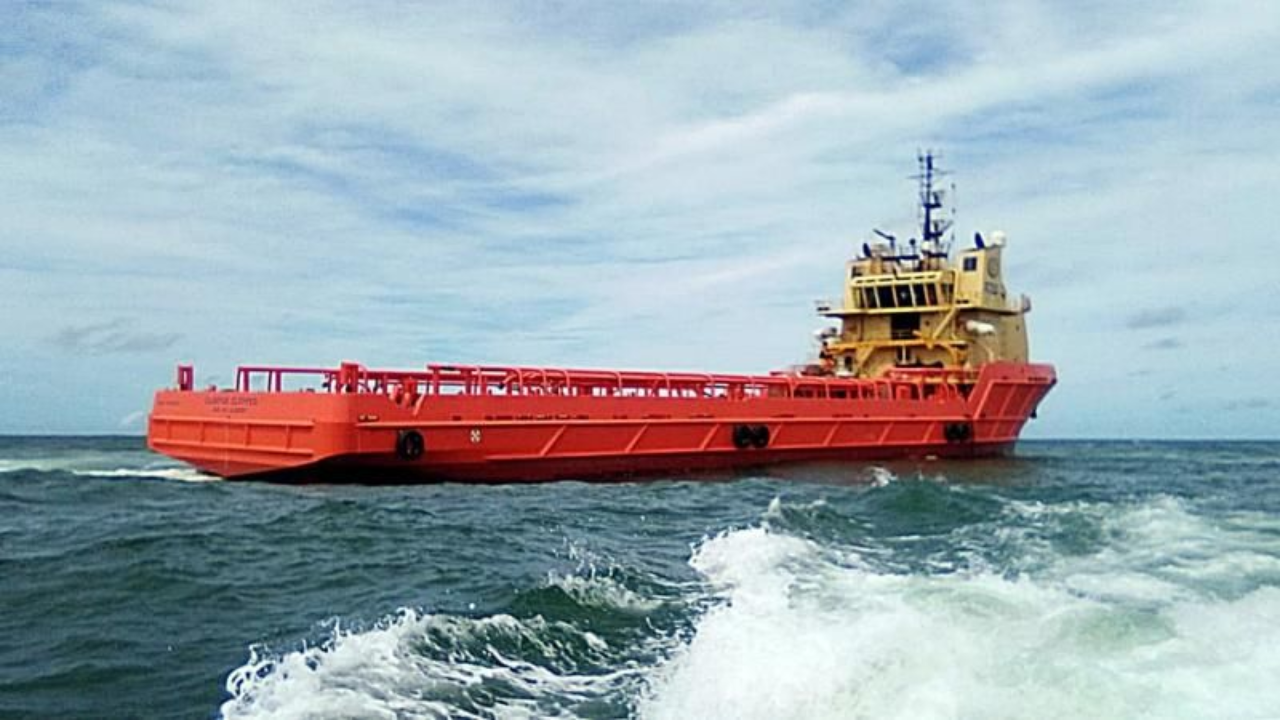
Marine Fuels Market on the Rise in Brazil
The Brazilian marine fuels market is booming! Over the past few years, Bunker One has grown, with new operations and equipment. Meanwhile, Monjasa and local heavyweights Ipiranga, Raízen with a recently deployed new dedicated barge and Vibra (formerly BR Distribuidora) have jumped into the action, showing just how critical this market has become.
With Efen (formerly NFX) leading the way as the first company to deploy dedicated PSVs for Marine Gasoil (MGO) clients directly offshore; and with the growing demand for VLSFO (Very Low Sulphur Fuel Oil) and MGO, all major players are expanding their operations and seeking additional tonnage.
Want to know more? Stay tuned! -
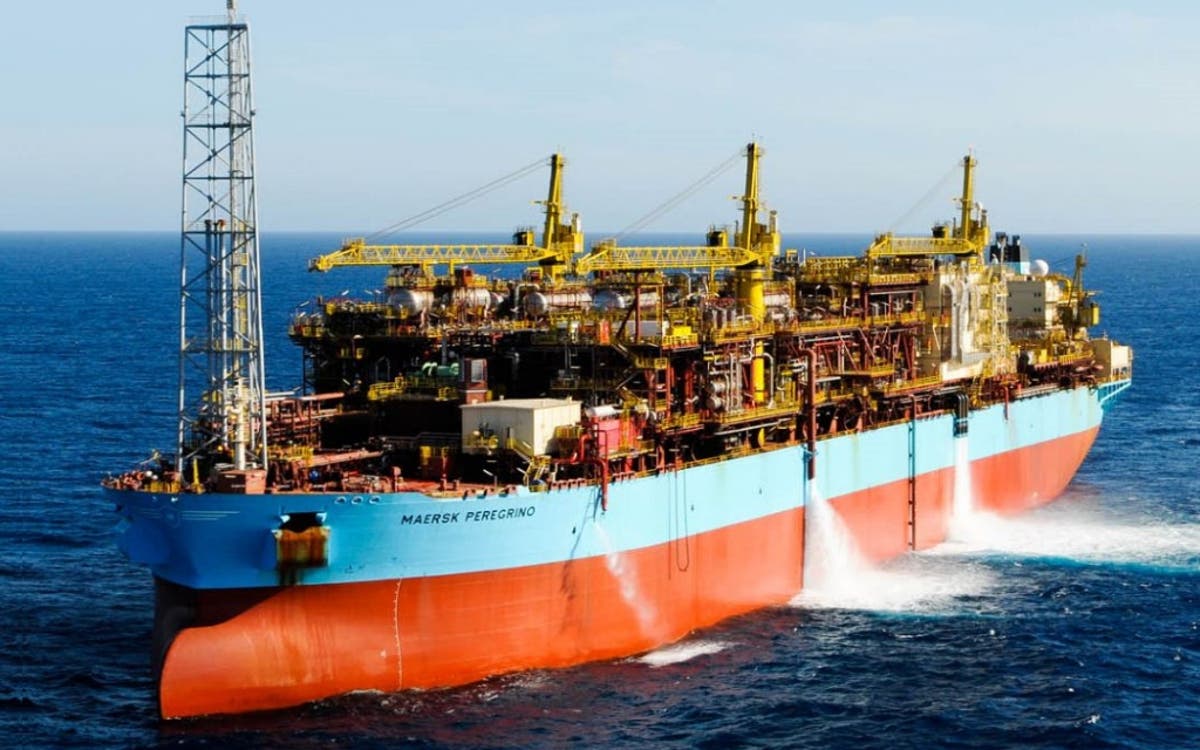
Production news: an update
The ANP (National Agency of Petroleum) has released the Monthly Report on Oil and Natural Gas Production for August 2024. During this period, the total production (oil + natural gas) reached 4.345 million barrels of oil equivalent per day (boed).
Of this total, 3,340 million boed were extracted, reflecting a 3.4% increase compared to the previous month and a 3.5% rise compared to the same month in 2023.
Natural gas production in August was 159,7 million cubic meters per day (m³/d). This figure indicates a 2.7% increase from July, but a decline and 8% compared to August 2023.
-
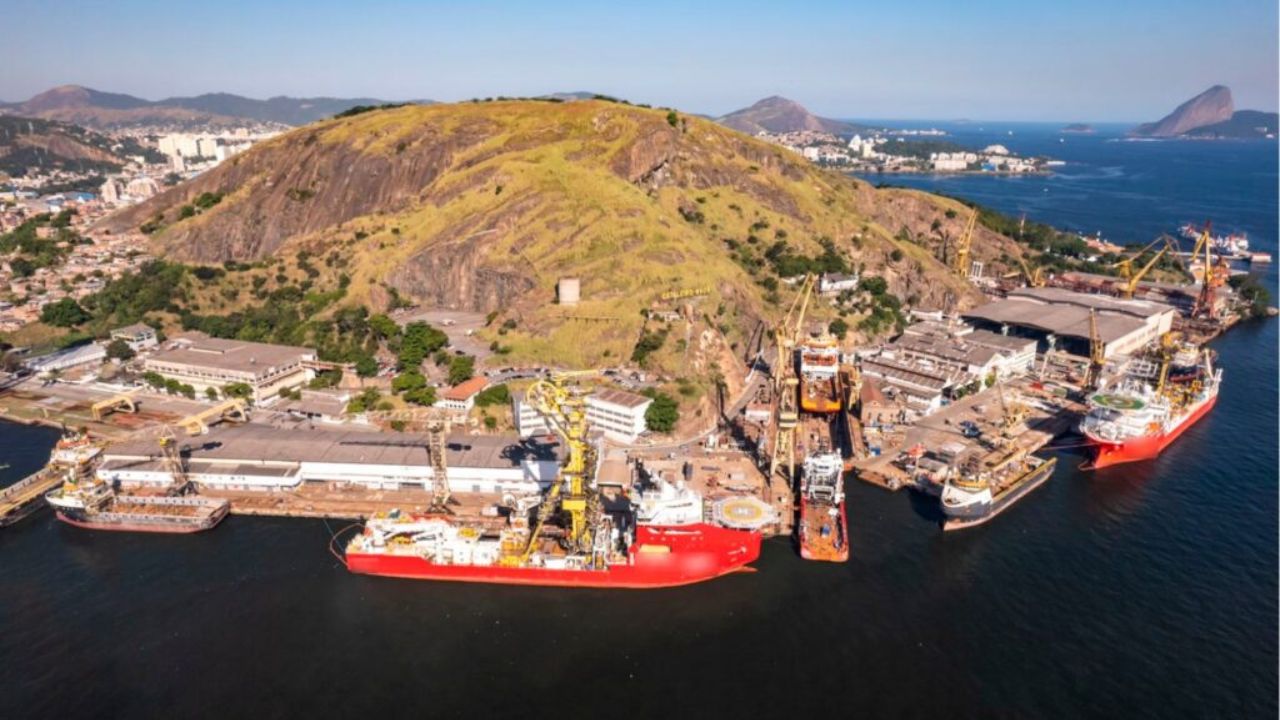
Petrobras with new PSV tender
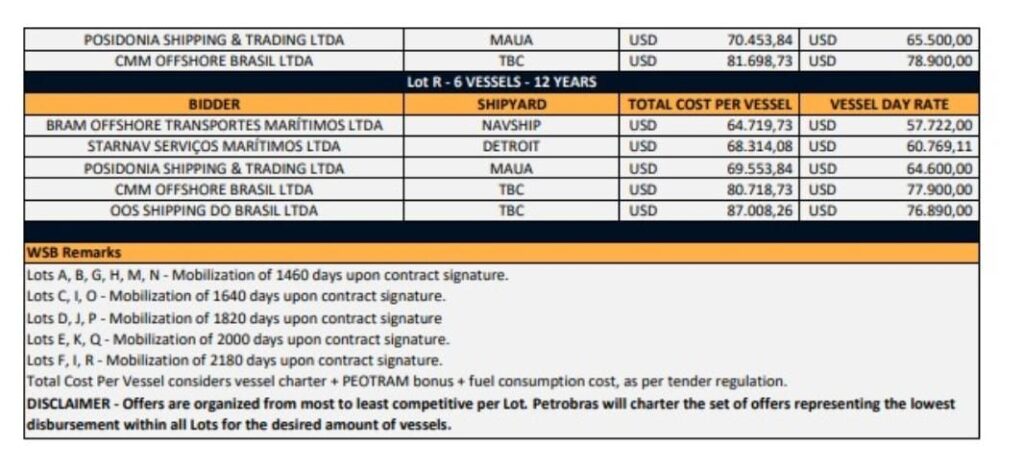
Petrobras PSV New Building Bid Results are Out!
As antecipated, Bram Offshore (Edison Chouest Offshore) and Starnav Serviços Marítimos have delivered the most competitive offers. Notably, Posidonia Shipping was about 10% higher than Bram, but worth highlighting that Posidonia’s bid was the lowest among those not utilizing their own shipyard—well done!
The table below orders the bids from lowest to highest, but remember, Petrobras evaluates based on the total disbursement across all lots for the desired number of vessels.
While negotiations are still pending, the logic suggests we may see 6 vessels from Bram and another 6 from Starnav.For more information, please contact us at comercial@cms.oneenergynews.com
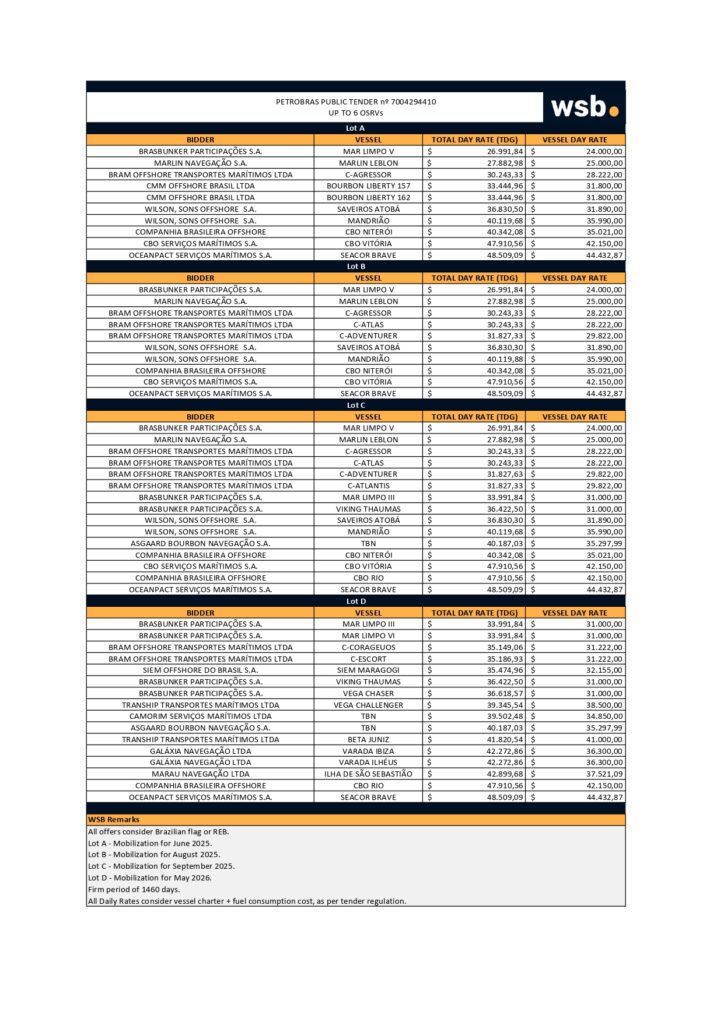
-
New RSV Petrobras tender
By Rafael Bortoloti
Petrobras has opened a tender for the chartering of RSV (ROV Support Vessels) along with specialized technical services. However, the company did not specify how many vessels will be contracted.
The process will result in two contracts: one for the chartering and another for the technical services. Both contracts will have a firm duration of four years with the possibility of extension.
The tender is divided into two lots, covering both Brazilian-flagged and foreign-flagged vessels. There are two different start periods: Group A includes vessels expected to begin operations in December 2025 or within 180 days after the contract is signed, whichever is later. Group B includes vessels scheduled to start in October 2026 or within 360 days after the contract is signed.
Current deadline: October 11, 2024
Petronect Opportunity No.: 7004311871
For more information, please contact us at comercial@cms.oneenergynews.com -
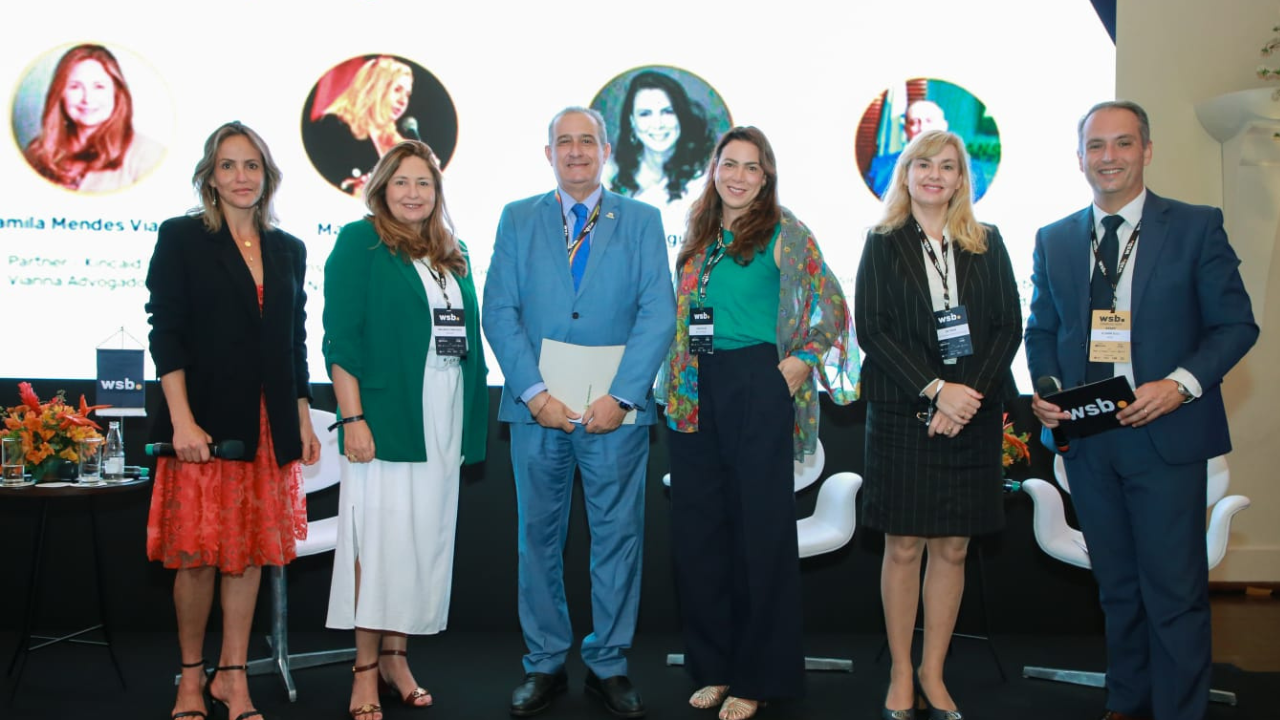
WSB Advisors Seminar Gathers Over 100 Industry Leaders
On September 25th, the iconic Copacabana Palace Hotel in Rio de Janeiro hosted another successful edition of the WSB Advisors Maritime Navigation Seminar, now in its 7th edition. Led by Alexandre Vilela, CEO of WSB Advisors, and Joana Rodrigues, Head of Market Intelligence, the event brought together over 100 guests from the oil, gas, and energy industries, offering an innovative and interactive format. Alexandre and Joana moderated all five seminar panels, adopting a relaxed yet thought-provoking approach, using provocative questions to encourage the panelists to share their views freely and openly.
Opening Focused on Brazil-Norway Relations
The event’s opening featured key industry and diplomatic figures, with a special focus on the growing collaboration between Brazil and Norway. Mai Tonheim, Consul of the Royal Consulate General of Norway in Rio de Janeiro, was the first to speak, highlighting the new cycle of investments from Norwegian companies in Brazil, particularly in the energy transition sector, supported by the Norwegian government’s incentives for related activities.
Following this, Larissa Sigiliano, President of the Norwegian-Brazilian Chamber of Commerce (NBCC), emphasized the significant increase in the operations of NBCC member companies in the oil, gas, and energy sectors and their optimistic outlook for continued growth. Camila Mendes Vianna Cardoso, partner at Kincaid | Mendes Vianna Advogados and former president of NBCC, complemented the discussion by recalling years of legal support provided to Norwegian companies entering the Brazilian market, highlighting the ongoing partnership between the two nations.
Closing the opening session, Sérgio Bacci, President of Transpetro, representing Petrobras President Magda Chambriard, spoke about Petrobras’ new vessel procurement cycle, announcing the order of 26 vessels—22 offshore support vessels and 4 cabotage ships. He expressed his expectation that the next orders will further strengthen the Brazilian shipbuilding industry, particularly benefiting national shipyards, which will play a vital role in this new wave of contracts.
In-Depth Panel Discussions
The first panel, moderated by Alexandre Vilela and Joana Rodrigues, focused on the energy transition and featured Roberta Cox from the Global Wind Energy Council (GWEC), Anídio Correa from WSB Advisors, Daniel Lamassa from Mingyang, and Federal Deputy Eduardo Pazuello, President of the Oil, Gas, and Energy Parliamentary Front (FREPPEGEN). The debate centered on the need for a stronger regulatory framework for offshore wind energy in Brazil and the challenges in speeding up the environmental licensing process, a topic thoroughly discussed by the panelists.
In the second panel, the discussion turned to the shipbuilding industry and its need for revitalization. Alexandre and Joana moderated the exchange of ideas between João Pacheco, Director of SINAVAL and President of ABEEMAR, Rachid Félix from Valor+, Augusto Vedan from ANTAQ, and Wagner Victer, Advisor at Petrobras. The key takeaway from the panel was the importance of protecting Brazil’s shipbuilding industry and the hope that Petrobras’ new vessel orders will serve as a catalyst for more sustainable and consistent growth in the sector.
The third panel addressed the issue of vessel decommissioning, a growing challenge in Brazil, especially in the state of Rio de Janeiro. Alexandre and Joana led the discussion, which included contributions from Jucélia (Tia Ju), State Deputy and President of the ALERJ Commission of Inquiry on vessels, judicial expert Maurício Almeida, Professor Dr. Augusto Moutella from ELERJ, and Admiral Ilqies Barbosa Junior from the Naval Technology Cluster. The panelists unanimously agreed that Brazil will face an unprecedented industrial challenge in the coming years as the country grapples with the increasing demand for new shipbuilding while also addressing the decommissioning of vessels and offshore units.
The fourth panel shifted focus to human capital in the maritime industry, a critical issue for ensuring the sector’s sustainability. Thiago Valejo from FIRJAN, César Castro from Elcano, José Carlos Elias from Altera Infrastructure, and João Queiroz from Intcom shared their insights into the challenges of developing a skilled workforce for the naval sector, emphasizing the need for stronger partnerships between the industry, educational institutions, and the government to meet the sector’s growing demand for qualified professionals.
Data Analysis and Awards Conclude the Event
The fifth and final panel, also moderated by Alexandre and Joana, provided a detailed analysis of market demand and rate predictions for the Brazilian maritime sector. Genésio Ramos, Daniel Buckley, Raphael Montes, and Joana Rodrigues, all from WSB, presented a comprehensive perspective on the immediate need for over 50 vessels to replace foreign-flagged ships and the trends in charter rates. WSB’s predictive capabilities were one of the key highlights, showing how the company had anticipated critical market movements months before they materialized.
To close the seminar, the prestigious WSB Choice Awards were presented, recognizing the companies and professionals who stood out the most in the oil, gas, and energy sectors, with a special emphasis on maritime operations.
After a day of intense discussions, the NBCC hosted a networking dinner, sponsored by WSB Advisors, at the Copacabana Palace. Now in its 9th edition, the networking event is considered one of the most anticipated during Rio de Janeiro’s Energy Week, attracting leaders and executives from various industry sectors.
With another successful edition, WSB Advisors strengthens its role as a thought leader, facilitating strategic discussions on the future of the maritime and energy sectors in Brazil.
WSB Advisors: Data Matters.
-
AHTS tender results
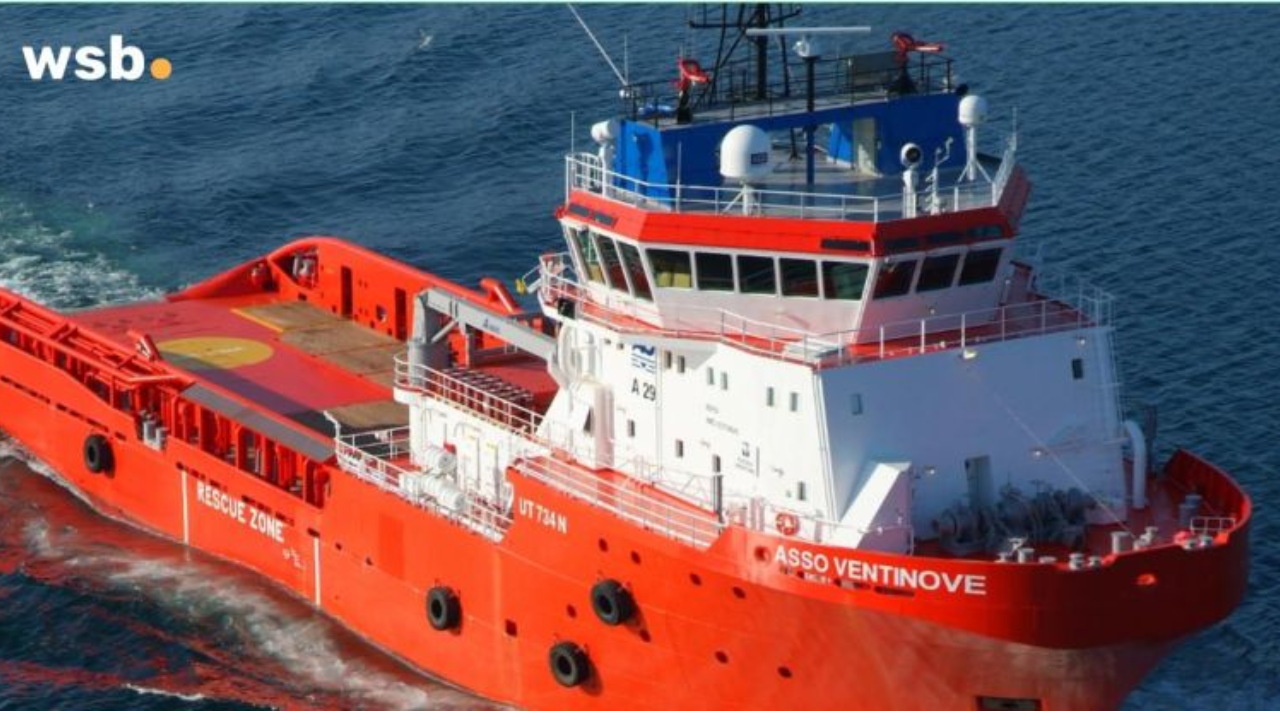
Petrobras has released the approval results for Lote A of the latest AHTS tender. Congratulations to Asgaard Bourbon Navegação for Geonisio Barroso and Yvan Barreto, and to Asso Marítima Navegação and Augusta Offshore for Asso Ventinove on their approval. Way to go!
Nothing like a dynamic market during an agitated ROGe week! -
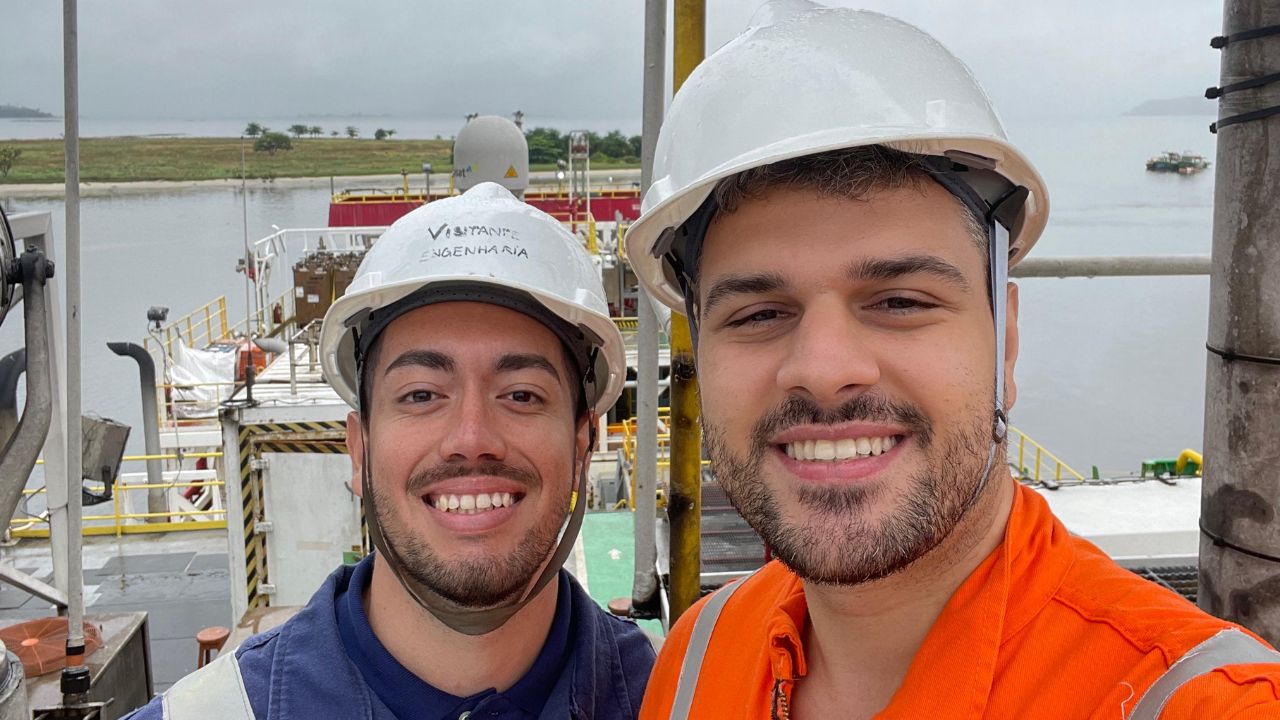
WSB visits shipyard
Raphael Montes (Proposals Manager and Partner) and Pedro Pellegrini (Intern, Market Intelligence) had the privilege of visiting shipyard Estaleiro São Miguel alongside our partners at Grupo Bravante.
Bravante is now taking the helm of marine management and operations for the well stimulation vessel Stim Star Arabian Gulf, owned by Halliburton, as they transition operations from Asgaard Bourbon Navegação .
WSB Advisors is proud to be a strategic partner, supporting Bravante in this significant venture. Wishing the SSAG smooth sailings and success ahead! -
WSB Seminar 2024 Program
08:30 – 09:00h – Welcome Coffee
09:00 – 09:30h – Opening
09:30 – 10:15h
Panel 1: The Future of Offshore Wind in Brazil’s Renewable Energy MatrixTheme: Offshore Wind Energy in Brazil—Is it a Vision or a Reality?
With offshore wind emerging as a key element in Brazil’s energy transition, this panel will explore whether it will become a reality and examine the regulatory and operational challenges ahead.
- Is Offshore Wind in Brazil an inevitable reality or just a distant dream?
What are the main challenges and opportunities driving or hindering its development, and can the current pace of progress keep up with expectations? - Regulatory Challenges: How are environmental and territorial issues navigated in mature offshore wind markets?
Will Brazil’s regulatory framework learn from these precedents, and how long should stakeholders expect to wait for a well-defined, actionable framework? - Oil & Wind: A Synergistic Relationship or Competing Forces?
Why do we see oil companies leading the charge in Brazil’s offshore wind space? Is this the same dynamic observed globally, and how do these industries collaborate operationally?
10:15 – 11:00h
Panel 2: Navigating the Future of Brazil’s Shipbuilding IndustryTheme: Fleet Renewal and Regulatory Challenges in Brazilian Shipbuilding
This session will focus on the pressing need for fleet renewal in Brazil, the challenges facing the dormant shipbuilding industry, and the regulatory issues impacting cabotage, offshore support and port towage.
- How can Brazil’s shipbuilding industry recover from its current dormancy?
What immediate actions are necessary to stimulate fleet renewal and meet the demands of the country’s maritime sectors? - Is the restrictive model of port towage a blueprint for other sectors?
Should this protectionist approach be applied more widely, or does the industry need more flexibility like in cabotage, where foreign tonnage now plays a larger role? - Has the flexibilization of cabotage been a positive step toward addressing Brazil’s transportation capacity crisis?
How can we measure the success of this approach so far, and what lessons from the past two decades of market regulation should guide future decisions? - In the offshore sector, can the cyclical nature of shipbuilding sustain the long-term needs of the industry?
How does the allowance of foreign-flagged vessels impact the local shipbuilding ecosystem, and is this the right balance for a sustainable future?
11:00 – 11:45h
Panel 3: Navigating the End of Offshore Asset and Vessel Life CyclesTheme: Decommissioning, Dismantling, and Disposal of Offshore Assets and Vessels
As Brazil faces a wave of offshore asset retirements, this panel will discuss the regulatory frameworks and processes required to safely decommission, dismantle, and dispose of aging assets and vessels.
- What regulatory frameworks govern the decommissioning and disposal of offshore assets and vessels in Brazil?
Are current policies robust enough to handle the sheer volume of upcoming disposals, and what improvements are needed to ensure safety and compliance? - Decommissioning, dismantling, and disposal: What do these terms really mean?
How can the various stages of an asset’s or vessel’s end-of-life be clearly defined, and why is it crucial for the industry to differentiate between these phases? - How do State, Federal, and Municipal authorizations play a role in this process?
At what points do these governmental bodies intervene, and how do jurisdictional responsibilities affect the efficiency and compliance of decommissioning operations? - How does Brazil’s approach to the disposal of offshore assets and vessels compare to international standards?
What global conventions and frameworks are relevant, and how well-positioned is Brazil to meet international best practices in sustainable asset disposal?
12:45 – 13:15h
WSB Choice awards announcement
Charterer of the year | Oil Company of the year | Owner of the year | EPCI Contractor of the year | Project of the year | Executive of the year | Broker Friendly Owner of the year | Business Partner of the year | Broker of the year13:15 – 14:00h
Panel 4: Addressing the Workforce Challenge in Brazil’s Maritime IndustryTheme: Navigating the Manpower Gaps in Cabotage, Offshore, and Offshore Units
This panel will explore the migration of crew members between cabotage and offshore sectors, the real extent of the workforce shortage, and the steps needed to close the skills gap in Brazil’s maritime industry.
- What drives the migration of crew members from cabotage to offshore and offshore units?
Are better pay, working conditions, or career advancement the key factors, and how does this migration impact workforce availability across these sectors? - Is there truly a shortage of skilled crew members, or is the issue one of specialization and distribution?
If both the industry and unions claim to be right, what are the nuances of this workforce gap, and how can these differing perceptions be reconciled? - What impact does the increasing complexity and specialization of vessels and equipment have on crew demands?
As the industry grows, are training programs and workforce development initiatives keeping pace with the rising need for specialized skills? - How can Brazil ensure a sustainable supply of well-trained maritime professionals to support the recovery of its fleet?
What strategies should be adopted to attract, retain, and upskill crew members, ensuring that all sectors—cabotage, offshore, and offshore units—are sufficiently staffed?
14:00 – 14:30h – Coffee-break
14:30 – 15:45h
Panel 5: Market trends
Theme: The rate tendencies, vessels availability, opex inflation
A dive into the intensive data provided by WSB, with an open discussion with the audience and panelists.
- Is Offshore Wind in Brazil an inevitable reality or just a distant dream?
-
WSB Seminar: An Exclusive and Unmissable Experience!
A unique journey at Copacabana Palace on September 25th, from 9 AM to 5 PM! WSB Advisors presents an exceptional Seminar that will transform your perspective on the offshore sector.
Key Panels Include
– The Future of Offshore Wind in Brazil’s Renewable Energy Matrix
– Navigating the Future of Brazil’s Shipbuilding Industry
– Navigating the End of Offshore Asset and Vessel Life Cycles
– Addressing the Workforce Challenge in Brazil’s Maritime Industry
– Market Trends
Additionally, the event will feature awards and prominent professionals from the offshore industry!
Who would you invite to these discussions?