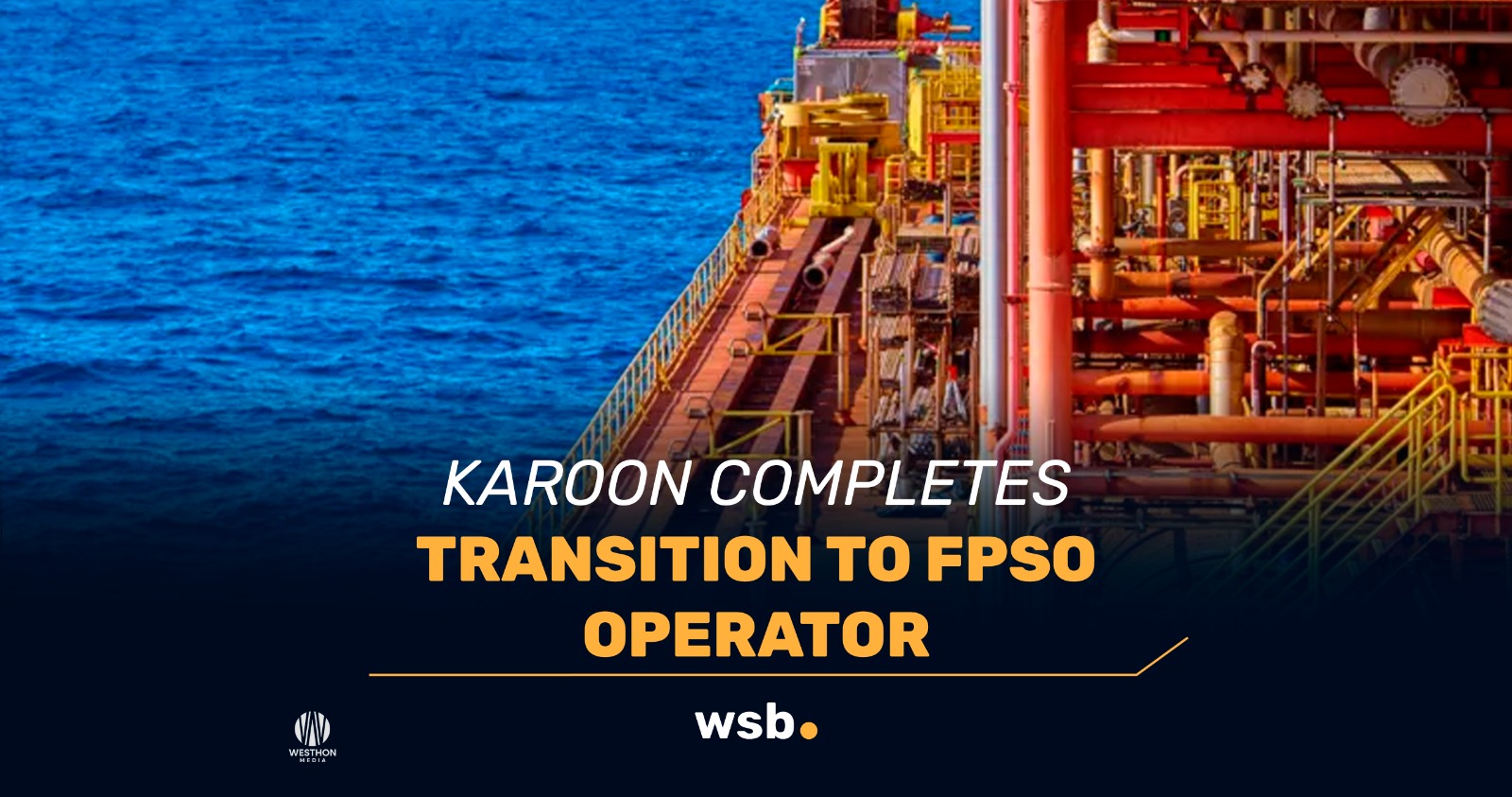
Karoon Energy has completed the transition process and officially assumed operatorship of the Baúna FPSO, formerly known as Cidade de Itajaí, in May.
The company acquired the FPSO from Altera Infrastructure and Ocyan in April 2025 for US$115 million, excluding transaction-related costs. Since then, Karoon and A&O have carried out an extensive transition program covering personnel, contracts, management systems and operational processes.
To support the handover, Karoon recruited personnel, transferred key service agreements and implemented new management systems, while securing all required regulatory approvals in Brazil.
According to the company, the transition was completed without disrupting operations. More than 80% of the existing FPSO workforce remained with the project, helping maintain operational continuity at the Baúna field in the Santos Basin.
CEO and Managing Director Carri Lockhart stated that more than 700 people participated in the company’s strategic initiatives throughout the transition process. She added that assuming operatorship of the FPSO represents an important milestone in Karoon’s evolution into a fully integrated offshore oil and gas operator.
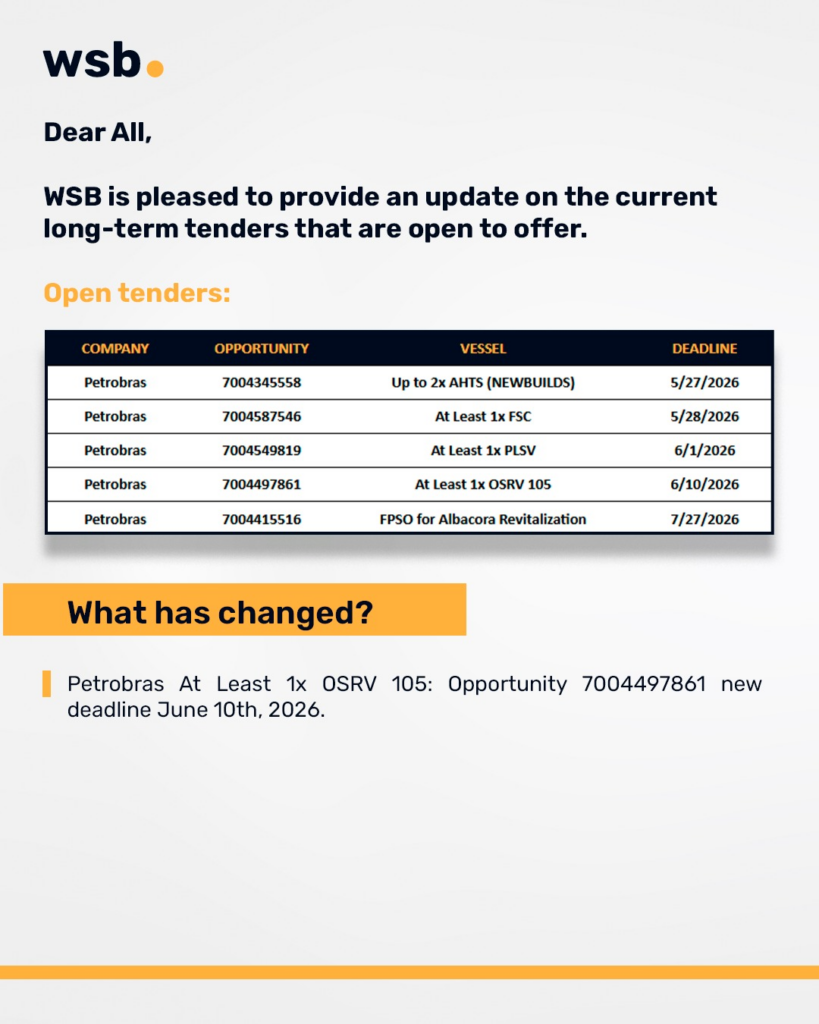
Below is the latest tender activity monitored by WSB Advisors, including new deadlines and recently released opportunities in Brazil’s offshore market.
What has changed?
Petrobras — At least 1x FSC: Opportunity 7004601531, new deadline June 9th, 2026
Petrobras — Up to 2x AHTS: Opportunity 7004345558, new deadline June 16th, 2026
Petrobras — At least 1x PLSV: Opportunity 7004549819, new deadline June 19th, 2026
Stay informed on key offshore developments — visit wsb-one.com, our data platform trusted by leading offshore companies.
During the rapid growth of Brazil’s offshore industry in the 2000s, offshore support vessels became an essential part of the country’s operational backbone.
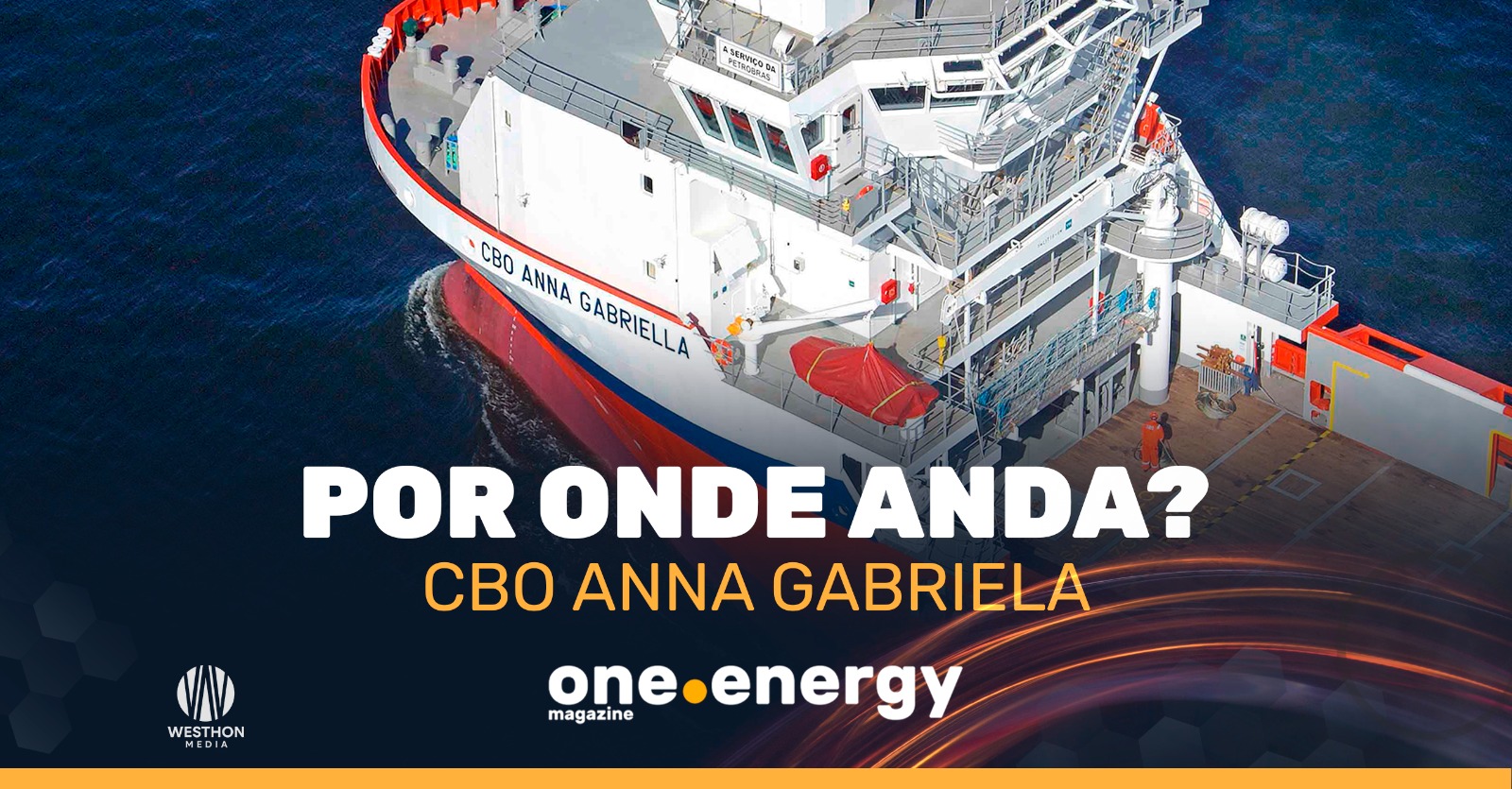
CBO Anna Gabriella was one of them.
Built in 2006 under IMO number 9364306, the vessel emerged during one of the most important expansion periods ever experienced by Brazil’s offshore industry. Constructed at Estaleiro Aliança, joined the Brazilian offshore market at a time when Petrobras operations were expanding rapidly across deepwater fields in the Campos Basin and beyond.
The vessel commenced operations for Petrobras shortly after delivery, becoming part of a generation of offshore support vessels that helped sustain the operational intensity of Brazil’s growing offshore sector.
At approximately 71 meters in length and with the robust profile characteristic of the Ulstein P-series designs, CBO Anna Gabriella was never built to attract headlines.
She was built to work.
And for years, vessels like her became essential links between ports, offshore bases, platforms, and supply chains operating far from the Brazilian coastline. While floating production units often captured public attention, offshore support vessels quietly handled the logistics that made those operations possible.
That is precisely what makes vessels like CBO Anna Gabriella so representative of an important chapter in Brazil’s marine and offshore history.
They were not necessarily the largest vessels offshore. But they were among the most necessary.
Today, however, public AIS activity involving the vessel appears significantly quieter than in previous years. Open vessel tracking platforms indicate limited recent movement, with the vessel still referenced in maritime databases and remaining listed as active and commissioned under the Brazilian flag.
Industry observers suggest the vessel may currently be between contracts after many years supporting offshore operations.
And perhaps that is what makes her story even more interesting.
Because unlike many offshore vessels that completely disappear from records, CBO Anna Gabriella still remains present — carrying with her the memory of a generation of Brazilian-built support vessels that helped sustain one of the largest offshore development cycles in the South Atlantic.
So the question remains.
Where is CBO Anna Gabriella now? Waiting for a new offshore assignment? Preparing for another operational chapter? Or simply resting quietly after years supporting Brazil’s offshore industry far from shore?
For now, the answers remain somewhere between ports, databases, memories, and the constant movement of the offshore world.
But one thing remains certain.
Vessels like CBO Anna Gabriella helped build the operational backbone of Brazil’s offshore industry — even when few people noticed.
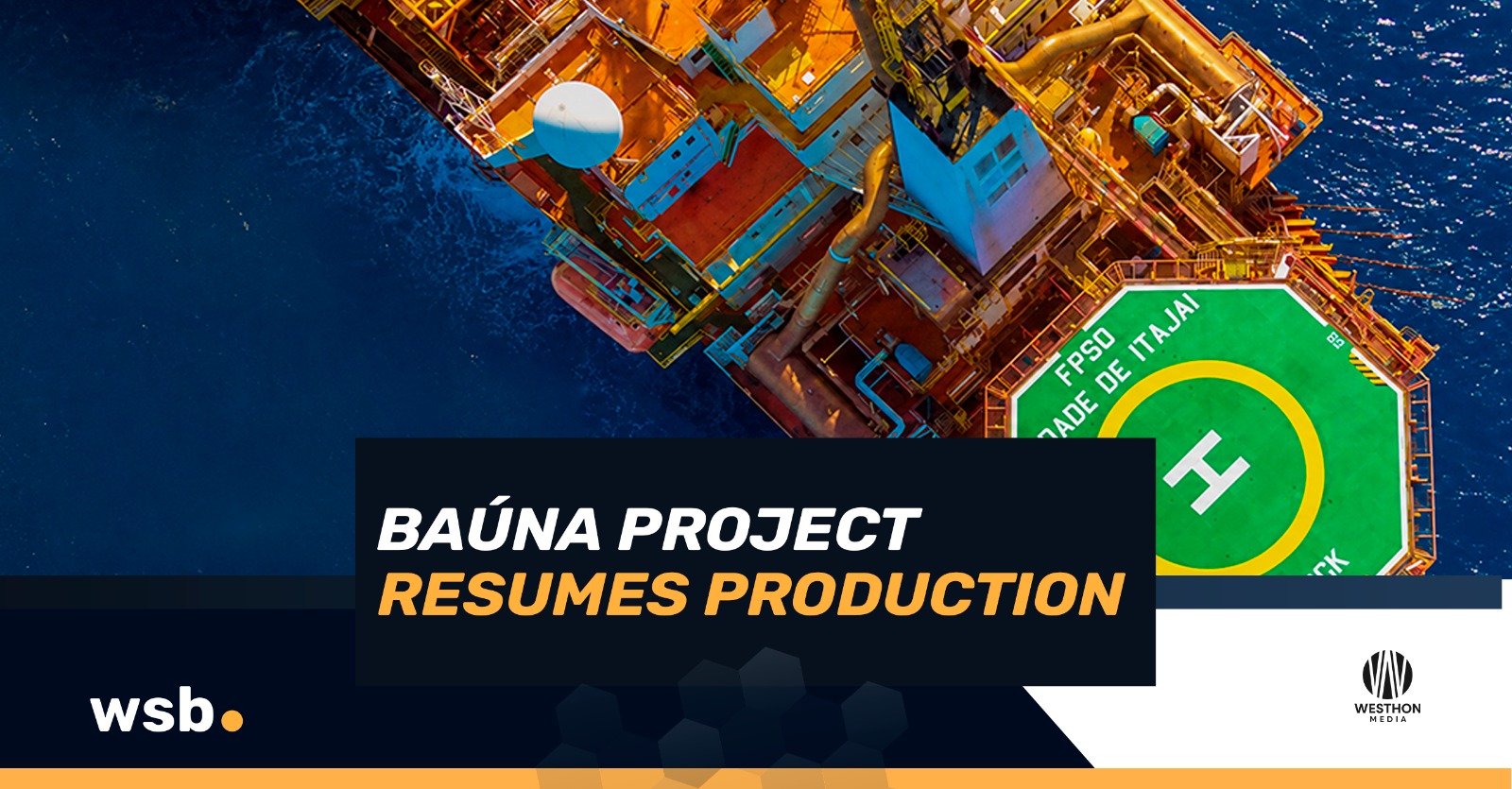
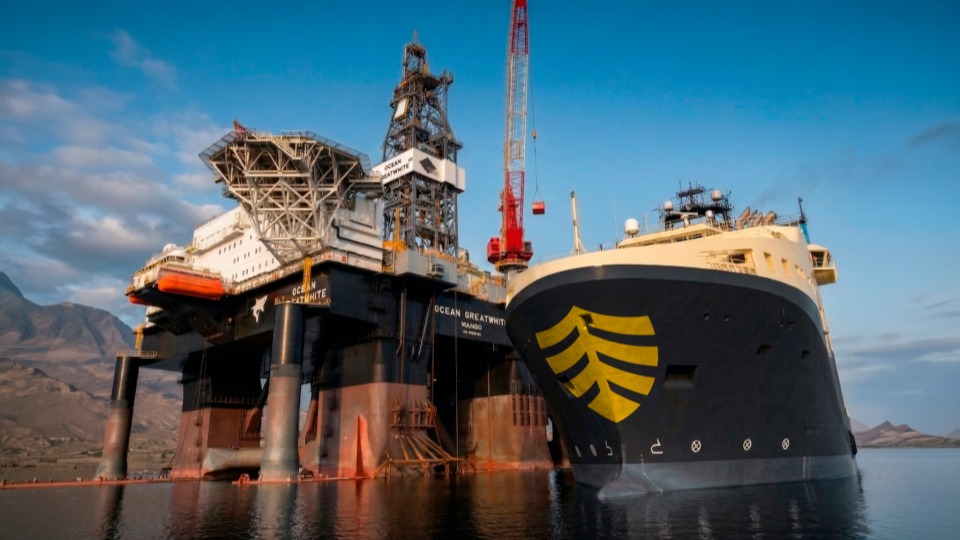
Karoon Energy has resumed production from the Baúna Project in the Santos Basin, offshore Brazil, following completion of a planned 28-day shutdown for maintenance and revitalization activities.
Production resumed on May 13, 2026, after the shutdown began on April 14. Following the ramp-up process, Baúna is currently producing approximately 11,500 barrels of oil per day.
Karoon expects an additional 9,000 to 10,000 barrels of oil per day to return around mid-year, subject to the successful replacement of the Electric Submersible Pump (ESP) in SPS-92 and the recovery and reconnection of the PRA-2 umbilical, scheduled for early Q3 2026.
The maintenance scope included replacement of several piping sections, including parts of the production header system, upgrades to critical systems, and replacement of structural components and fittings. The campaign also included surface treatment, painting activities across several areas, and underwater hull inspections on the FPSO Cidade de Itajaí.
According to Karoon, the shutdown was completed on schedule and is expected to remain within budget. The company also stated that the broader flotel-supported maintenance and revitalization campaign is expected to improve system stability and support FPSO operational efficiency levels between 90% and 95%.
The Baúna field remains one of Karoon Energy’s core producing assets in Brazil’s offshore sector.
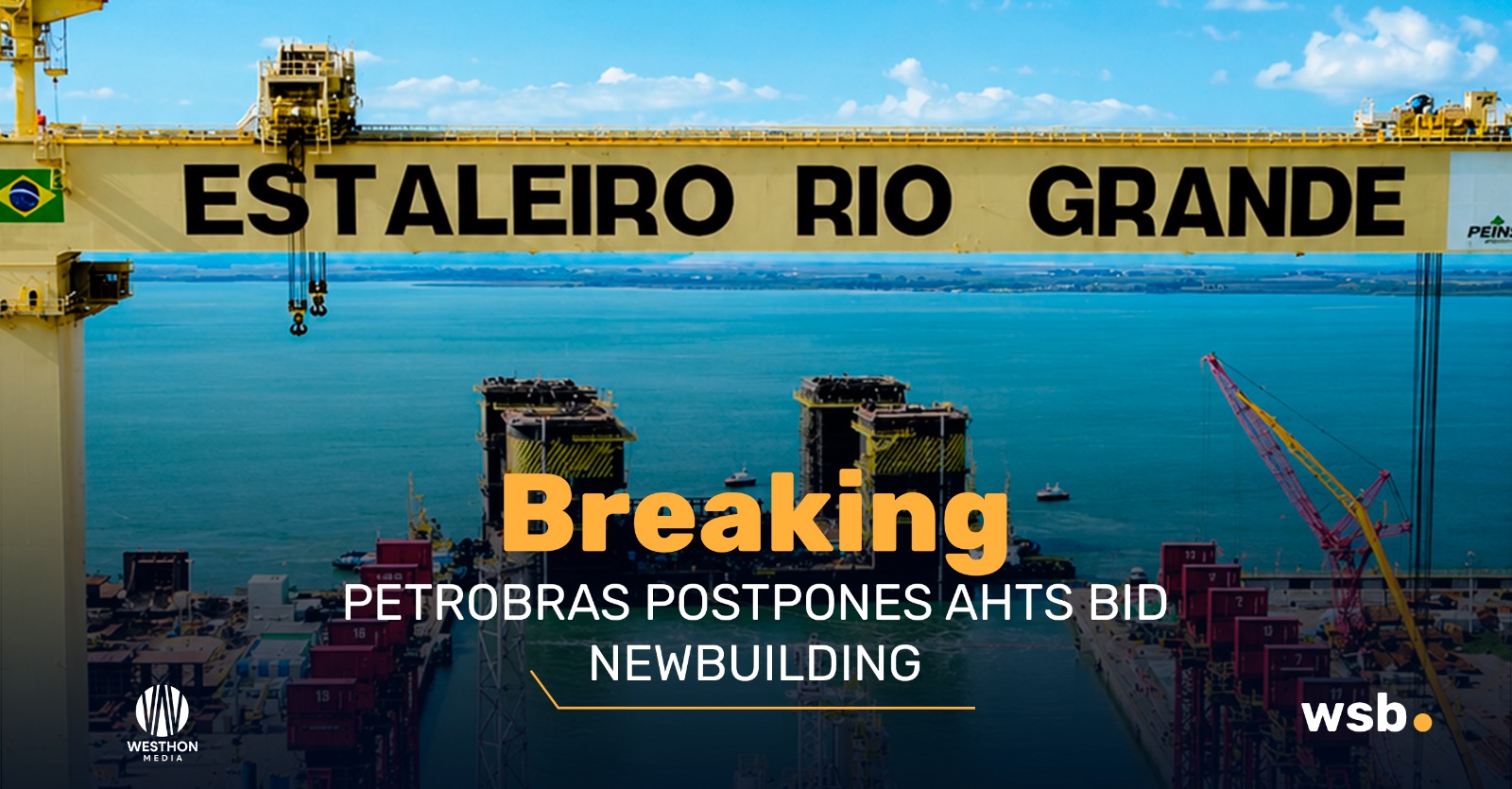
Petrobras has officially postponed the closing date for Opportunity No. 7004345558, related to the chartering of up to two AHTS vessels along with the provision of specialized technical services.
The bid, originally scheduled to close today, May 27, has now been rescheduled to June 16, 2026.
The move further increases market attention surrounding what is widely seen as one of the most significant offshore support vessel tenders in Brazil this year, particularly for the marine support sector and potential newbuild activity within the country’s shipbuilding industry.
WSB Advisors will continue monitoring the next developments related to this opportunity.
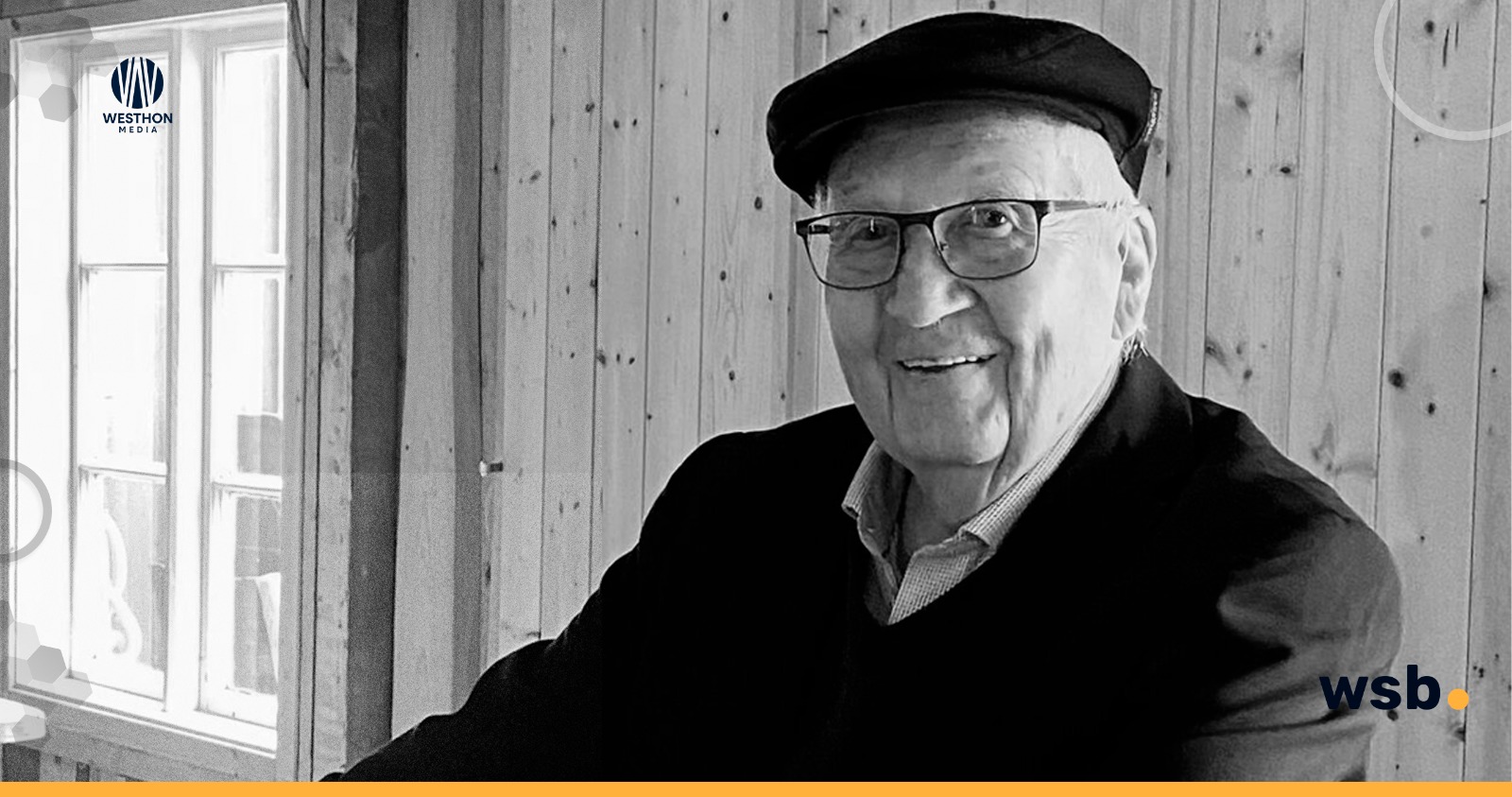
The offshore industry has lost one of its true pioneers.
Johannes Solstad, founder of Solstad Offshore, passed away peacefully at nearly 96 years of age — leaving behind a legacy that helped shape the modern offshore shipping industry.
His life story mirrored the evolution of Norwegian maritime history itself.
From sailing as a chief officer on transatlantic passenger routes between Norway and the United States, to serving as a merchant fleet captain and later founding Solstad Rederi at just 34 years old, Johannes Solstad belonged to a generation that transformed maritime entrepreneurship into global offshore leadership.
As Norway’s offshore era emerged alongside the development of the North Sea oil industry, Solstad became one of the companies that helped define the sector’s operational standards, vessel capabilities, and long-term vision.
What stands out most, however, is not only the scale of the company he built — but the fact that, until very recently, he still maintained a genuine daily interest in vessels, seafarers, operations, and the market itself.
That kind of connection to the industry cannot be manufactured. It comes from a lifetime at sea.
At WSB Advisors, we recognize the importance of figures like Johannes Solstad to the global marine and offshore community. Leaders whose stories became part of the industry’s own history.
Our thoughts are with the Solstad family, friends, and the entire Solstad organization during this moment of loss.
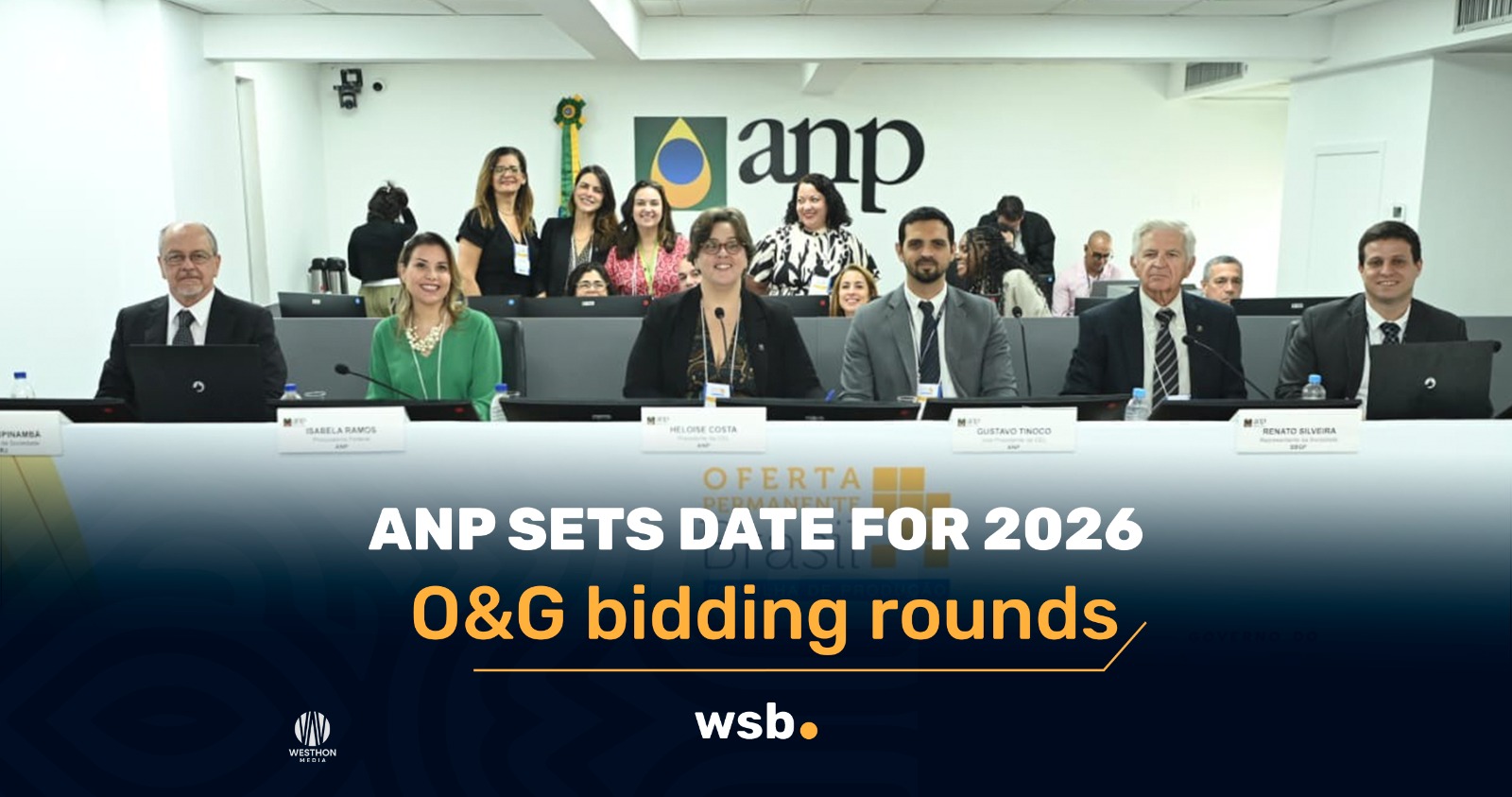
Brazil’s National Agency of Petroleum, Natural Gas and Biofuels (ANP) has scheduled the public bid sessions for the 6th Cycle of the Permanent Concession Offer (OPC) and the 4th Cycle of the Permanent Production Sharing Offer (OPP) for October 7.
Under the concession regime, the upcoming round may include five marginal accumulation areas and 495 exploratory blocks. The production sharing model is expected to include 23 blocks located within Brazil’s pre-salt polygon.
Currently, 36 companies are registered for the OPC and 15 for the OPP. Companies may still apply to participate until June 5.
ANP is expected to announce the sectors and blocks included in both cycles on August 6, while declarations of interest and bid guarantees must be submitted by July 21.
The upcoming rounds reinforce Brazil’s position as one of the world’s most active offshore exploration markets, particularly amid continued interest in deepwater and pre-salt opportunities.
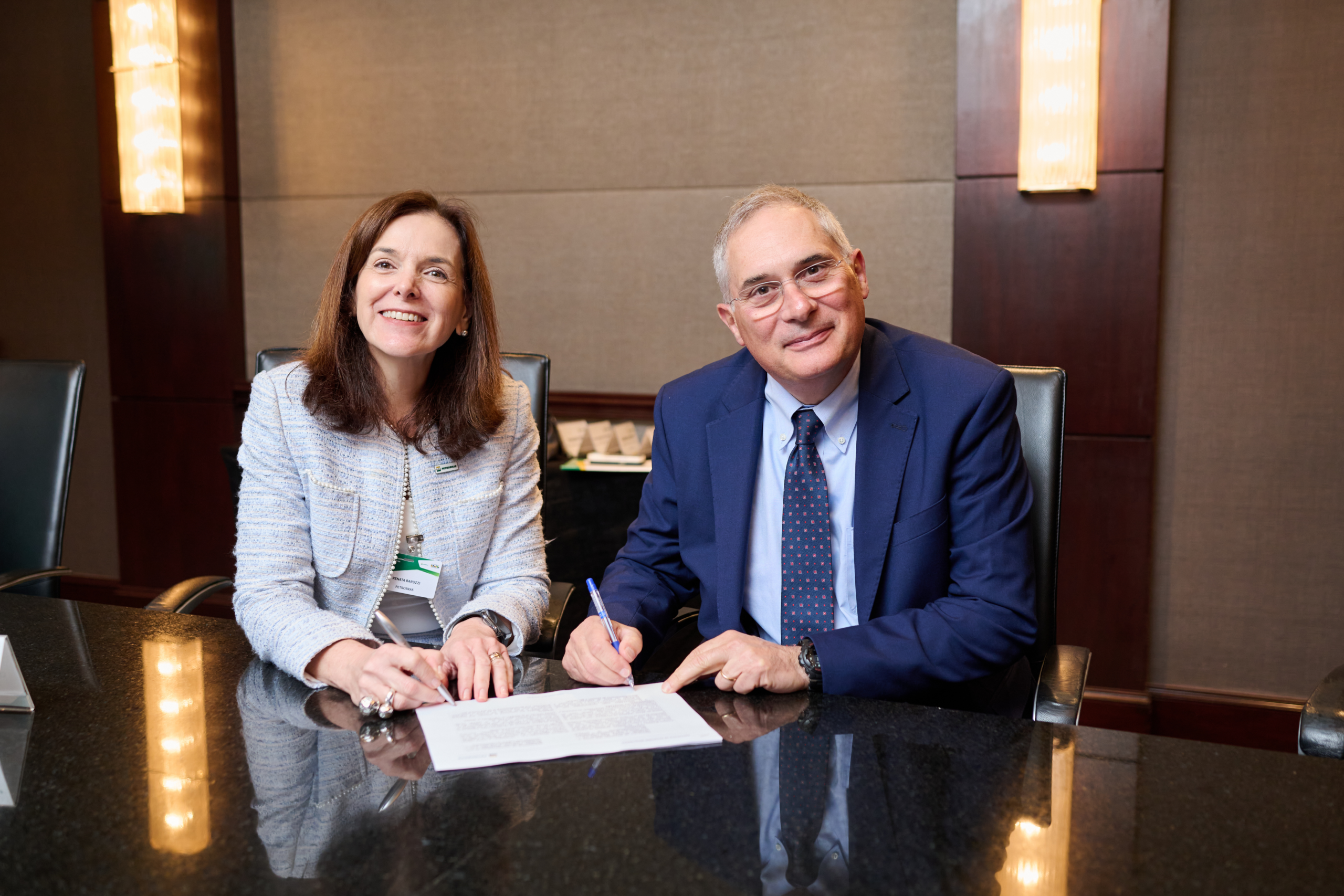
Saipem and Petrobras have signed a one-year Memorandum of Understanding (MoU) to evaluate and potentially develop integrated solutions for decommissioning activities in Brazil. The agreement covers well abandonment and plugging operations, aiming to improve efficiency, sustainability and innovation levels in end-of-life infrastructure activities.
It is important to note that the document is non-binding, meaning that any future developments will depend on additional agreements between the parties. As part of the cooperation, Saipem and Petrobras will also assess partnerships with companies and institutions specialized in decommissioning, as well as the development and implementation of new technologies, methodologies and integrated solutions for this specific segment.
The collaboration also includes the evaluation of logistical and operational alternatives, such as the use of drilling units and vessels, in addition to enhancing existing practices to overcome technical and operational challenges associated with offshore decommissioning activities in Brazil.
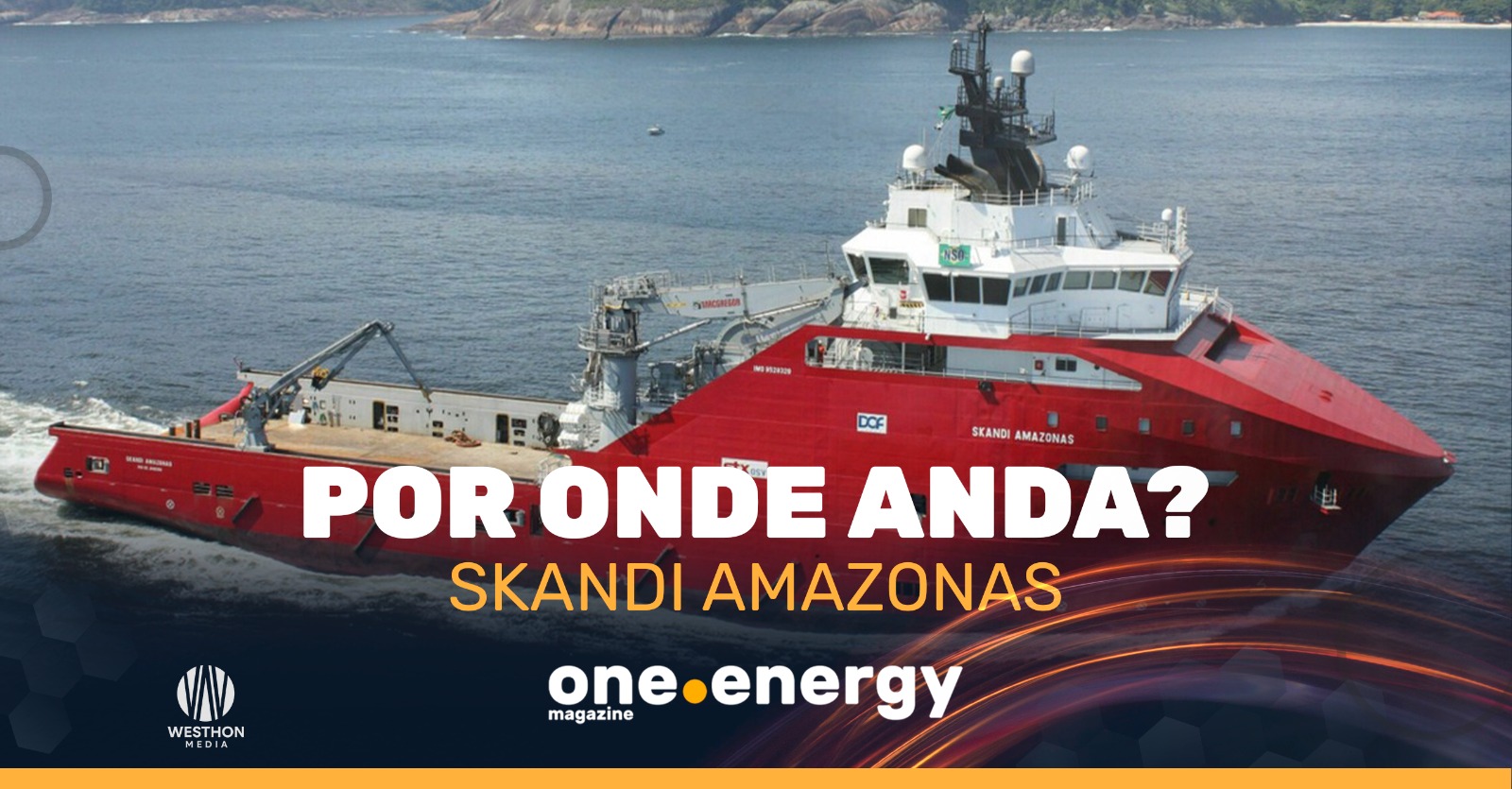
A vessel that deserves more respect than speculation
Some vessels become known because they disappear from the radar, change names, lose purpose, or end up as footnotes in the offshore market.
Skandi Amazonas is the opposite.
This is not a story about a forgotten vessel. It is a story about one of the most remarkable offshore support vessels ever built in Brazil — and about a crew that, when faced with a real emergency, did exactly what highly trained seafarers are expected to do.
I have a personal connection with this vessel.
I was there when Skandi Amazonas was built, at the shipyard then known as STX Brazil, on Ilha da Conceição, in Niterói. I worked in the Supply Chain department and was directly involved in procurement, inspections, equipment deliveries, and the complex chain of systems and materials that gradually transformed steel plates into one of the most powerful AHTS vessels ever delivered by a Brazilian yard.
I saw the vessel take shape from the beginning: steel cutting, block assembly, launch, outfitting, commissioning, sea trials, and delivery to DOF Navegação in 2010.
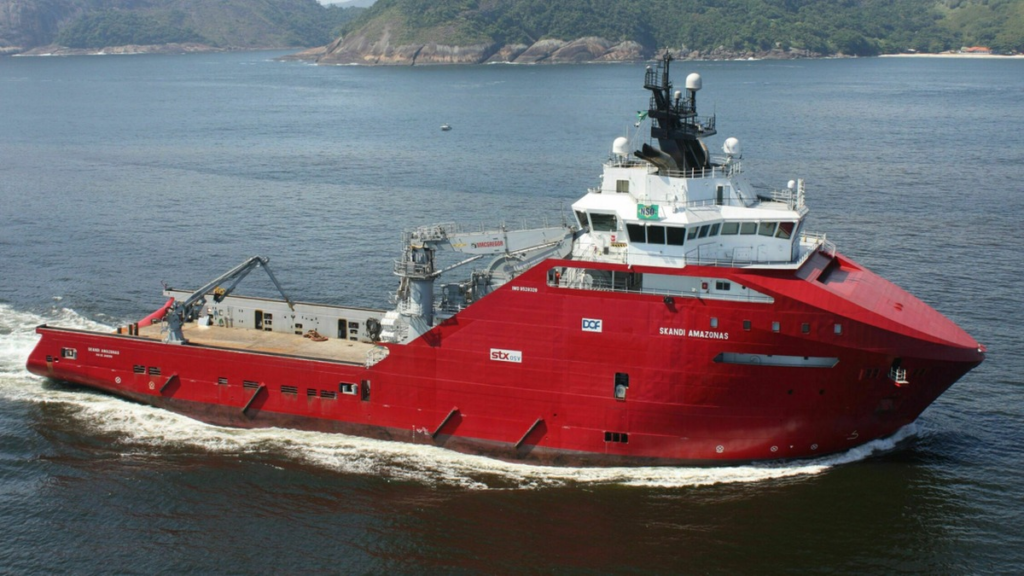
At the time, Skandi Amazonas was a Brazilian shipbuilding milestone. At 95 meters in length, with 300 tons of continuous bollard pull, hybrid diesel-mechanical-electric propulsion, DNV class, and a design developed by STX Norway Design, she was not an ordinary vessel. During trials, she exceeded her own specifications, reaching a maximum bollard pull of 343 tons.
More importantly, she then went to work.
For more than fifteen years, Skandi Amazonas operated in Brazil doing exactly what she was built to do. Quietly, consistently, and under some of the most demanding offshore conditions in the world. In plain language: she became a battle horse.
Then came the incident near Macaé.
The vessel reportedly struck a rocky formation near the Santana Archipelago while approaching the anchorage area. The hull was damaged, water ingress followed, and the situation required immediate decision-making.
Skandi Amazonas (Source: DOF)
That is where the tone of the story should change.
What some people rushed to describe as failure may, in fact, become a case study in emergency response.
The master diverted the vessel to a safer position and executed a controlled grounding maneuver to prevent a worse outcome. Non-essential personnel were evacuated. Essential crew remained on board. There were no reported injuries. No pollution was recorded. The vessel remained under control.
This is not luck. This is training.
And it is precisely here that the public narrative around the incident became unfair.
In the days that followed, social media did what social media usually does: it converted a complex maritime event into simplified outrage. Some used the episode to speak about royalties. Others used it to attack offshore activity. Some tried to turn it into a labor issue. Others treated the image of a grounded vessel as proof of systemic negligence.
That is not serious analysis.
Offshore operations are not risk-free. They never were. Ships are not supposed to hit rocks, just as aircraft are not supposed to encounter runway excursions and cars are not supposed to crash. Yet incidents happen in every serious industry involving machines, weather, human judgment, geography, and operational pressure.
The question is not whether an incident occurred.
The question is what happened after it occurred.
And in this case, what happened after the incident was exactly what should happen: command decision, emergency procedure, evacuation of non-essential personnel, preservation of life, environmental control, technical assessment, and mobilization of support resources.
That is the part many people chose not to see.
The causes still need to be investigated. Was there an issue with charted seabed information? Did tide conditions play a role? Was the vessel returning through the same safe track previously used? Was there a navigational error, a distraction, or a combination of factors? These questions belong to the formal investigation — not to social media tribunals.
Until then, speculation is not expertise.
There is also an important point about DOF.
Anyone who knows the offshore market knows that DOF is not a casual operator. It is one of the most respected names in the sector, with high standards on board, strong safety culture, and a long track record in complex subsea and offshore operations. To use this incident as a shortcut to attack the company, the crew, or the profession says more about the critics than about the facts.
Working offshore is demanding. It requires discipline, competence, and resilience. But it is also a profession supported by rules, training, classification standards, audits, emergency procedures, and a level of operational structure that many land-based activities simply do not have.
Let us be honest: is the controlled evacuation of a well-managed offshore vessel, with trained personnel, support craft, emergency protocols, and no pollution, necessarily more dangerous than a truck driver crossing the Rio–São Paulo Dutra at night? More dangerous than driving through Linha Vermelha? More dangerous than the daily risks people accept without reflection on Brazilian roads?
Risk exists everywhere. The difference is that offshore, risk is managed professionally.
The sea can be dangerous. So can a highway. So can a construction site. So can, frankly, a bathroom shower on the wrong day. The presence of risk does not make an activity reckless. It makes competence essential.
And competence was visible here.
Skandi Amazonas hit a rock. That should not have happened. But once it did, the response protected lives, prevented pollution, and preserved the vessel for recovery and repair.
That matters.
This vessel was proudly built in Brazil. It was a complex project, extremely well executed, and it has served the Brazilian offshore industry for more than a decade and a half. It deserves better than lazy conclusions.
Skandi Amazonas will be assessed, repaired, and returned to service if technically viable. As it should be.
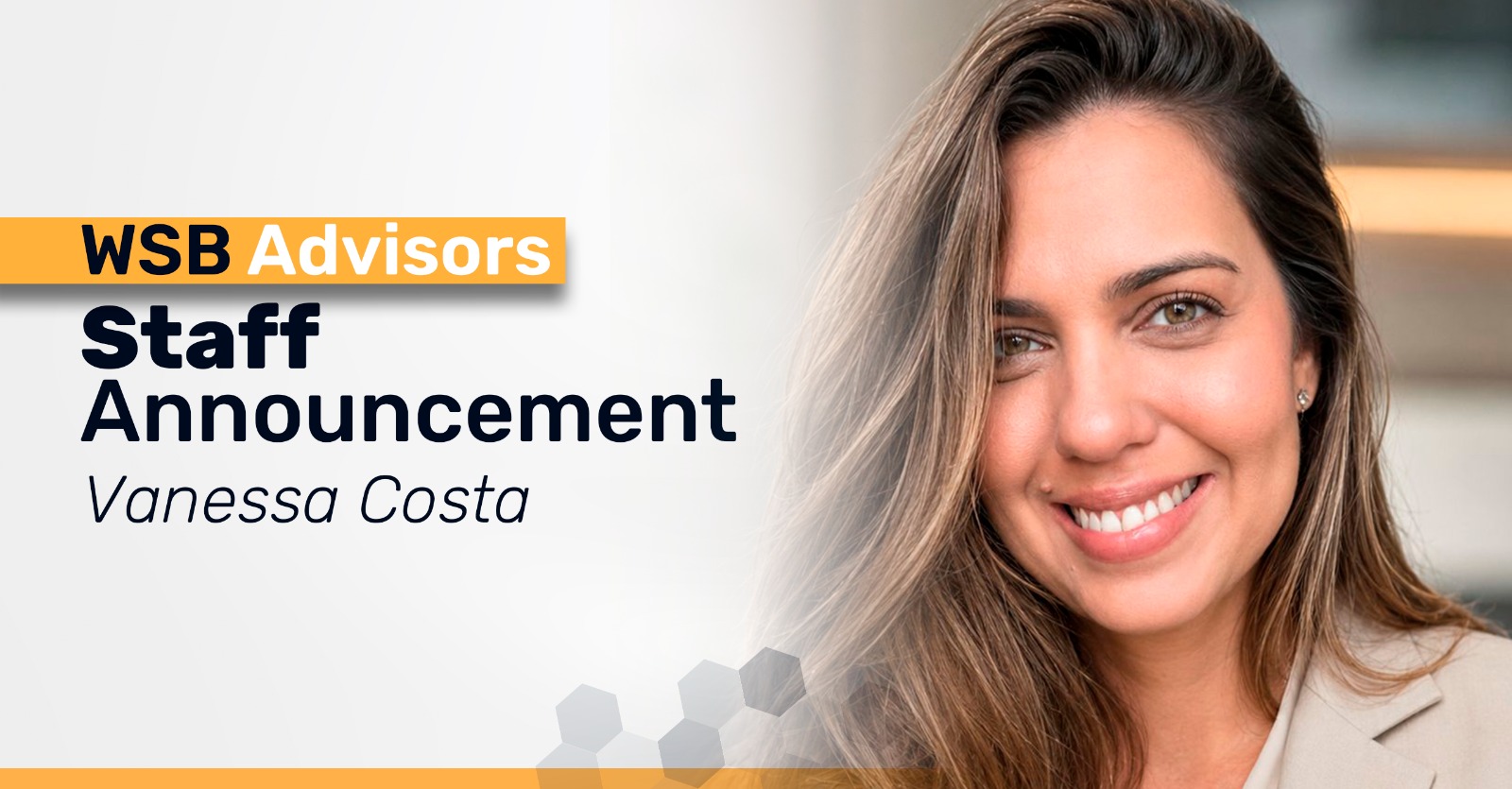
WSB Advisors is pleased to announce the arrival of Vanessa Costa as the company’s new Brokerage & Commercial Strategy Lead. With more than 15 years of experience in the energy and offshore sectors, Vanessa brings a unique combination of technical expertise, commercial vision and international market knowledge.
A Chemical Engineer graduated from PUC-Rio, she built a solid career in the Oil & Gas industry, with extensive experience in business development, commercial strategy and offshore operations across Latin America.
A significant part of her professional journey was built at bp/Castrol, where she held technical and commercial roles across the LATAM region from 2016 to 2024. During this period, Vanessa strengthened relationships with global partners, managed strategic commercial contracts and actively contributed to initiatives focused on ethical leadership, diversity and innovation within the energy sector.
Throughout her career, she also developed expertise in offshore market dynamics, vessel operations, energy transition and international business development, becoming a respected voice within the industry.
At WSB Advisors, Vanessa will focus on expanding brokerage opportunities, strengthening strategic commercial relationships and supporting the company’s continued growth in Brazil and international markets.
In addition, she will reinforce the existing commercial structure, bringing a collaborative approach and strong market intelligence to ongoing and future projects. Her arrival represents another important step in WSB Advisors’ commitment to delivering high-level strategic solutions to the maritime, offshore and energy industries.
She had no disaster named after her. No inquiry. No memorial. No court case running twenty years later. Just steel. Just sea. Just oil — for decades, in 300 meters of South Atlantic waters.
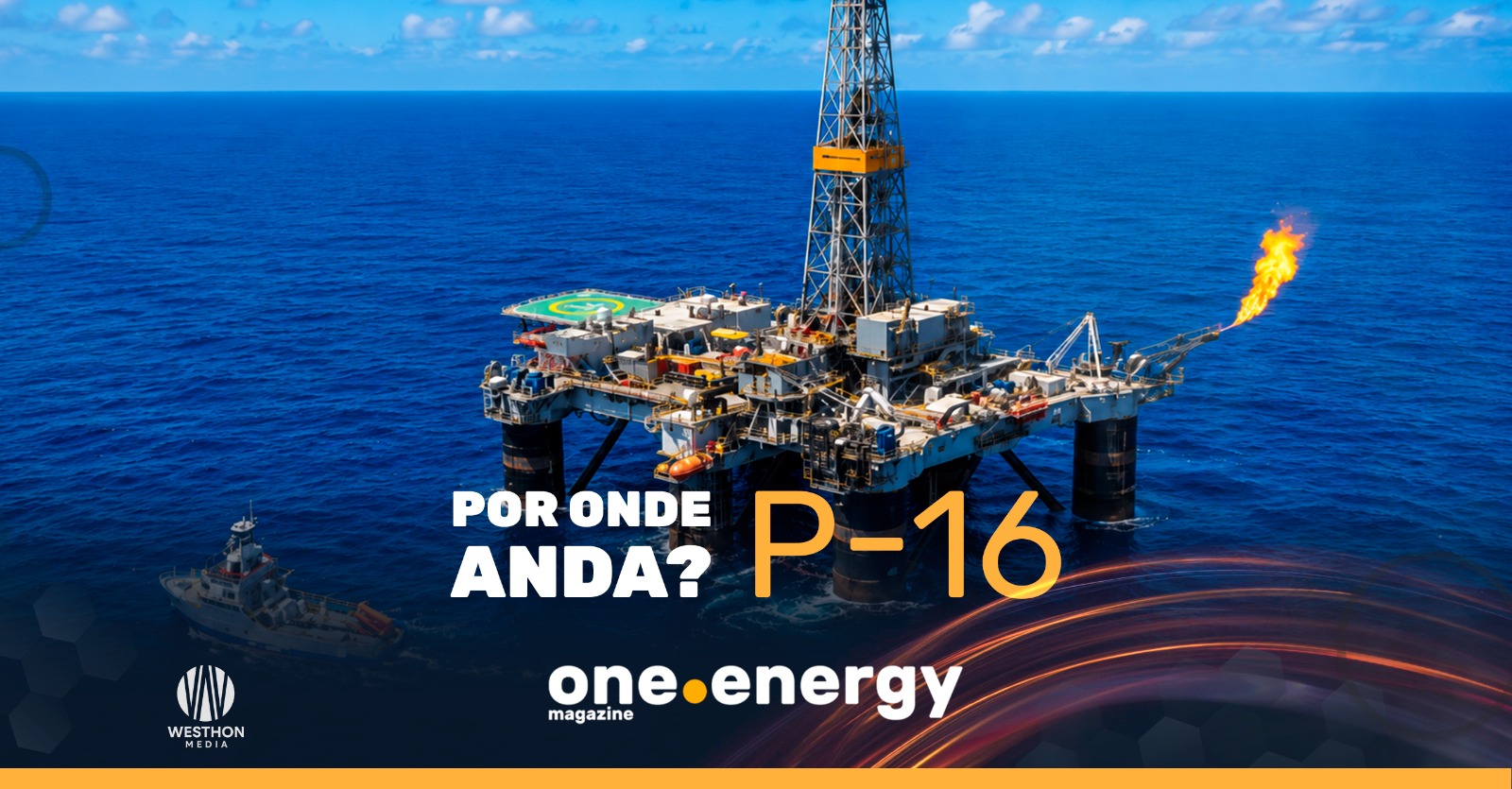
Platform P-16 — Petrobras XVI — was a semi-submersible of the pioneering Roman-numeral generation that quietly built Brazil’s offshore industry. Processing up to 20,000 barrels a day. Displacing 18,000 tonnes of seawater. Floating on two submerged pontoons, anchored to the Campos Basin floor, holding position while the South Atlantic did its worst.
She was a laboratory as much as a platform. Flexible risers tested on her flanks. Subsea manifolds connected below her. Engineering knowledge that would later carry Brazil into 1,500 meters — into 2,000 — into the pre-salt layer that changed global energy.
She didn’t go there. But the engineers who did learned their craft on her.
In 2017, Petrobras auctioned her alongside six sister platforms at the Port of Aratu, Bahia. Seven units. US$ 83.5 million combined. The P-16 left with a new owner, without her name, headed most likely to a breaking yard.
An estimated 10,000 tonnes of steel. Returned to the market. Recycled into other things.
Where is P-16 now?
She isn’t anywhere. She is everywhere steel goes when the sea is done with it.
— WSB Advisors tracks the vessels the industry forgets.