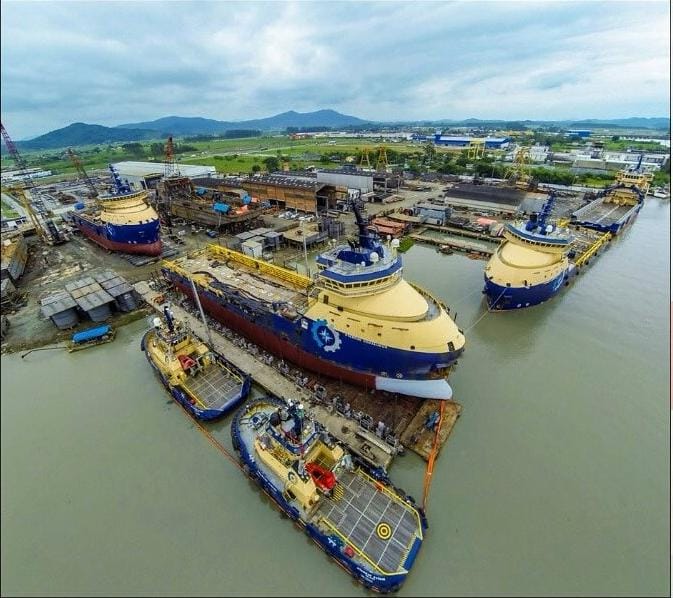
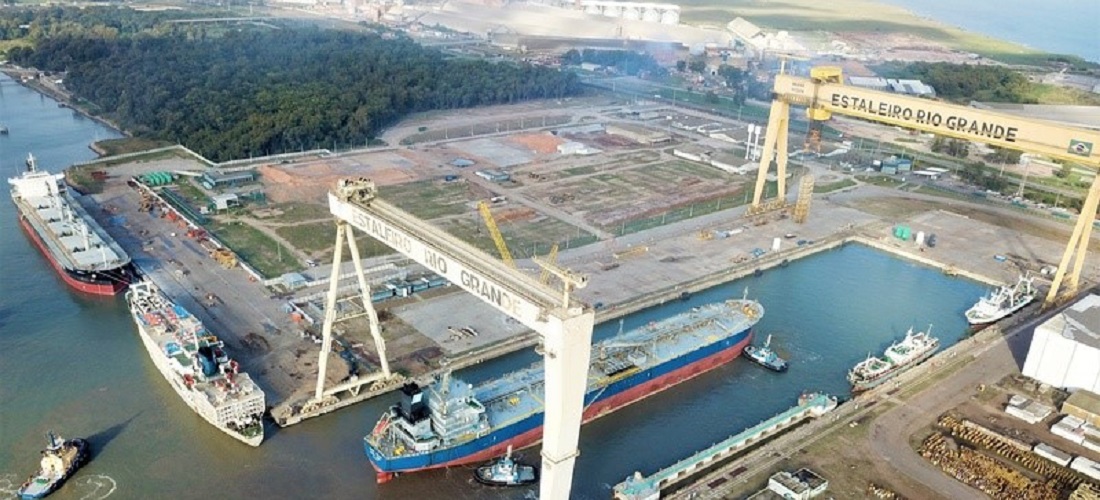
The week took off with exciting news for brazilian shipyards. Petrobras awarded contracts to CMM and Starnav in the bid for the construction and chartering of up to 10 OSRV vessels (Opportunity number 7004306735) with a 5,000t DWT, launched last year.
CMM will oversee the construction of six vessels, to be built at the Enseada shipyard. On the other hand, Starnav will, as expected, utilize Detroit for the fabrication of the remaining four OSRVs.
There are also new developments from Transpetro regarding the tender for the construction and chartering of four handy-size tankers (15-18k DWT).
Curious to learn more? Stay updated through our social media channels.
Petrobras AHTS Tender: Rates Through the Roof – But What’s Next?
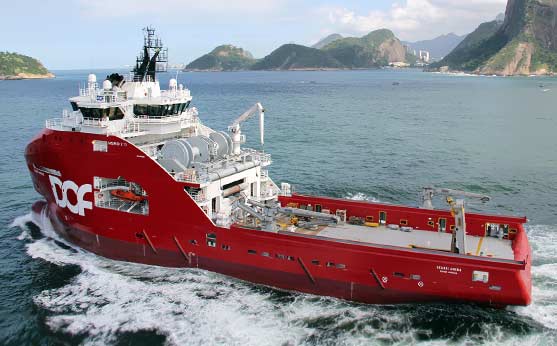
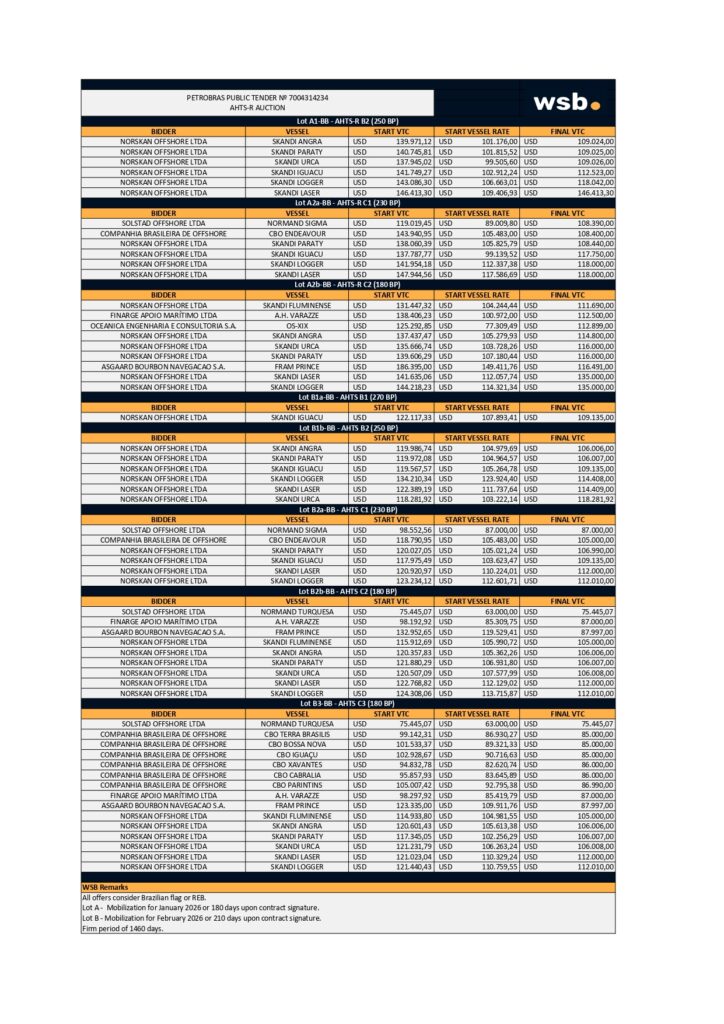
The AHTS market in Brazil is heating up, and Petrobras’ latest tender results have made waves. Featuring 8 categories, or “Lots,” the numbers are staggering:
AHTS-R (with ROV): rates roaring between USD 108k and 118k per day. AHTS (without ROV): day rates stretched from USD 75k (a bold move by Solstad Normand Turquesa) to USD 110k.
Here’s where it gets interesting: back in our Charterers’ Workshop last November, we forecast adjusted day rates for this vessel type to average USD 87k. Fast forward, and the majority of contenders landed exactly there (with a few daring exceptions).
But let’s ask the real question: How many vessels can Petrobras afford to contract before the budget for this tender snaps under the pressure?
NOTE:
On one side, we see owners charging adjusted rates, confident in a tight supply market. On the other, charterers must decide how to maximize resources without breaking the bank.
The stakes are high, and the ripple effects could redefine the offshore support landscape in Brazil. What’s your take—strategic brilliance, market chaos, or a bit of both? Let’s hear your thoughts!
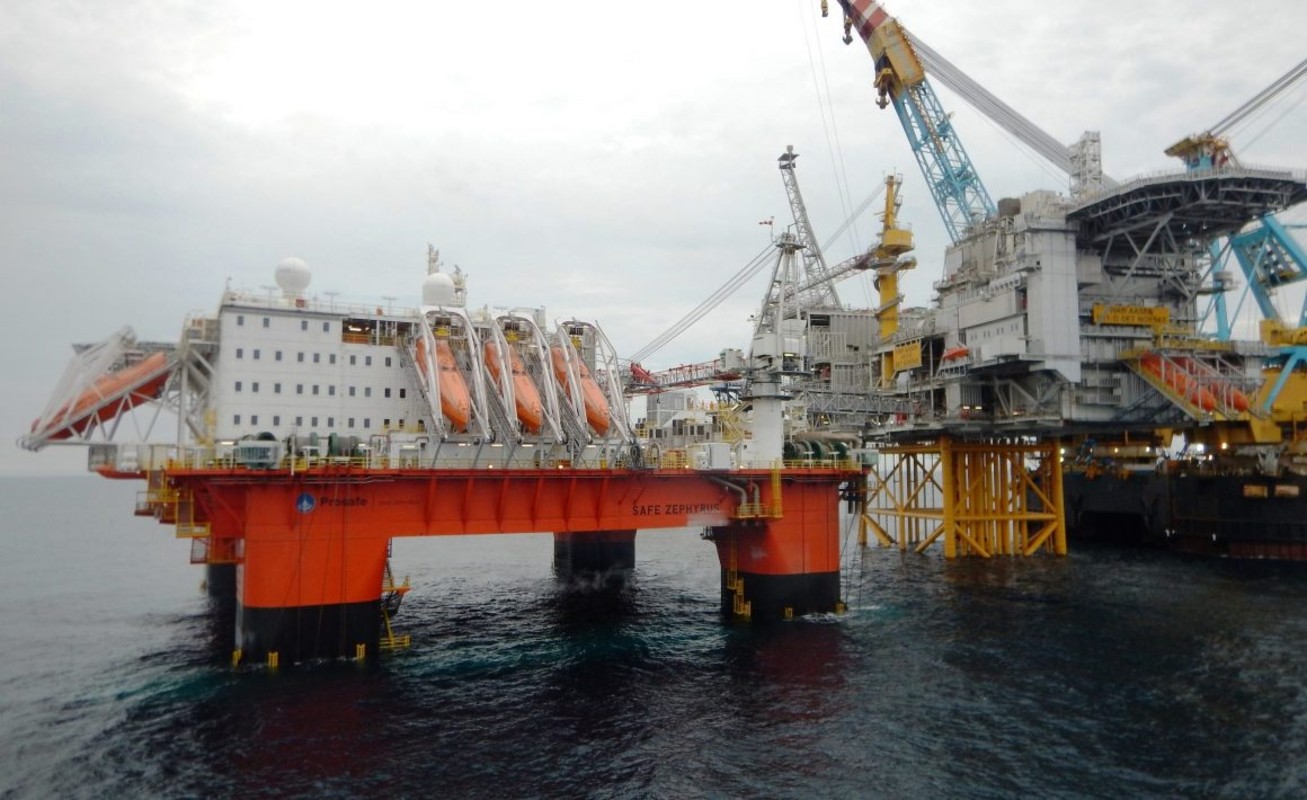
Petrobras and Prosafe have finalized a USD 109.7 million extension to the charter contract for the Safe Zephyrus semi-submersible platform. The vessel delivers essential offshore safety support and maintenance services.
Initially set to conclude in February 2025 after a 650-day term, the contract has been extended by an additional 954 days, now running through September 2027. The agreement also includes an increase in the daily fuel allowance from 20 m³ to 25 m³.
The Safe Zephyrus features advanced capabilities, including a DP-3 dynamic positioning system, a 1,000 m² deck area, two 50-ton cranes, accomodation for 450 persons, and a 12-point mooring arrangement—positioning it as a critical asset for offshore operations.
Cristiano Pinto da Costa, CEO at Shell, revealed that the company will decide by April whether to invest in the Gato do Mato project. Speaking with journalists this week, Costa indicated that the decision is likely to be positive.
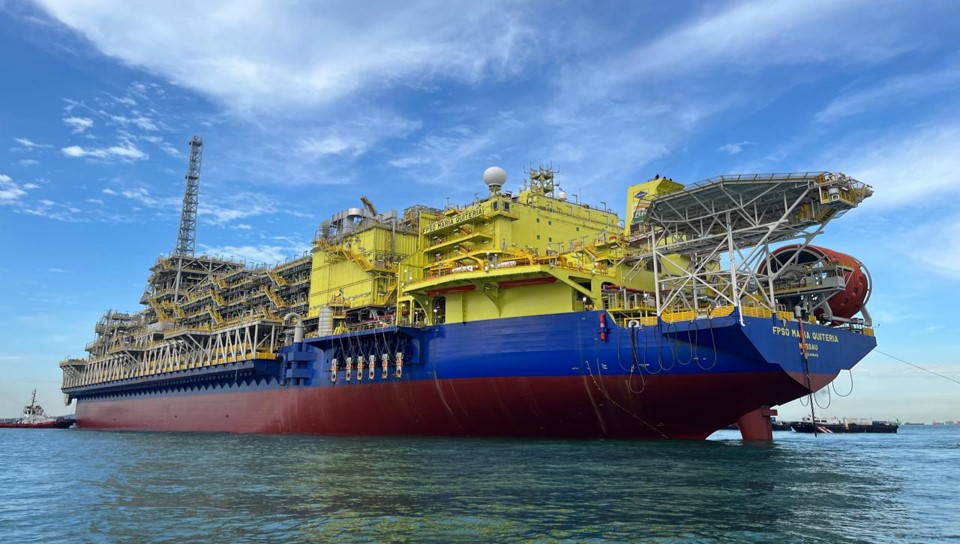
If approved, the FPSO, to be constructed by MODEC will operate at water depths of approximately 2,000 meters, 250 km offshore. The unit will have the capacity to produce 90,000 boe/d and 8.5 million m³ of natural gas per day, with storage capacity for 1.6 million barrels of oil.
The production plan includes 10 wells: four producers, four gas injectors, and two seawater injectors. Shell holds a 70% stake as the operator, partnering with Ecopetrol (30%).
“Shell secured the field in the 2017 ANP auction, with development initially planned for 2023. However, the company postponed the final decision in late 2022,” recalls Daniel Buckley, Chartering Manager at WSB Advisors.
Alexandre Silveira, Brazil’s Minister of Mines and Energy, expressed optimism about the start of oil exploration in the Margem Equatorial region this year. Speaking with journalists, he emphasized the economic benefits this area, located between northern and northeastern Brazil, could bring to the country.
Anidio Correa, R&D Environment Projects Lead at WSB Advisors, shared his perspective on the challenges:
“The Ministry of the Environment and IBAMA believe Petrobras has yet to provide all the necessary studies to ensure environmentally safe operations. However, Petrobras and the Federal Government argue that the documentation submitted is more than sufficient. The reality is that Brazil needs the resources from Margem Equatorial to avoid importing oil, which would be more expensive and polluting.”
Petrobras and PRIO have concluded an agreement that allows the private oil company to access the Integrated Natural Gas Transportation System of the Campos Basin and the Cabiúnas Gas Treatment Unit.
As a result, PRIO will be able to use the pipeline network to transport and process natural gas from the Frade field, where the company holds a 100% stake, and from Albacora Leste, where it has a 90% stake.
Earlier last week, PRIO announced the start of direct natural gas sales to the market, with a production of around 300.000 m³/day. The company expects a significant increase in natural gas production with the start of operations at the Wahoo field, reaching over 1 million m³/day.
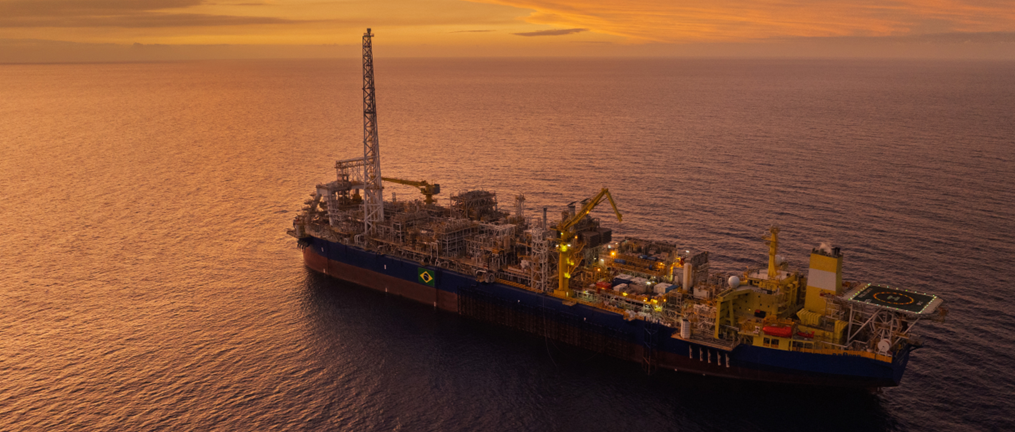
BRAVA Energia announced that the FPSO Atlanta has produced its first oil this week at the Atlanta Field in the Santos Basin. The vessel boasts a production capacity of up to 50,000 boe/d, can treat 140,000 barrels of water per day, and store up to 1.6 million barrels of oil.
Formed last year through the merger of 3R Petroleum and Enauta, BRAVA becomes the first independent O&G company in Brazil to develop a deepwater production system from the ground up.
The FPSO Atlanta is one of BRAVA’s flagship assets, underscoring its commitment to innovation and growth in the offshore sector.
On the first working day of 2025, the ANP (National Oil Agency) released its Monthly Report on Oil and Natural Gas Production for November 2025. During this period, total production (oil + gas) reached 4.301 million barrels of oil equivalent per day (boed).
Highlights
Of this total, 3.310 million barrels of oil per day were produced.
Natural gas production in November was 157.64 million cubic meters per day (m³/d).
Total production (oil + natural gas) in the pre-salt fields in November was 3.385 million boe/d, being 2,631 milion of bbl/d of oil and 119,87 milion m³/d of gas.
Discover unparalleled insight with WSB.One, the premier Offshore Oil & Gas database in the local market.
Offering comprehensive intelligence since 2008, our platform grants immediate access to an extensive archive of projects, production units. drilling rigs, and offshore vessels.
Explore detailed data on contracts, daily rates (historical and current), contract durations, charterers, and much more, empowering your decisions with unmatched precision and depth.
Unlock the future of offshore Oil & Gas exploration with WSB.One – where history informs innovation. WSB – We Support your Business
In this edition of Energy Talks, we are pleased to speak with Fredric Fuerth, CEO of Asgaard Bourbon. In addition to leading the company, he also serves as Vice-President of ABEAM (Brazilian Association of Maritime Support Companies) and Syndarma (National Union of Maritime Navigation Companies).
Drawing on his vast experience, Fredric shares his insights on the energy market, emphasizing the importance of analysis, reflection, and transition during these dynamic times.
Fred, you accepted our interview request with enthusiasm, and we noticed your eagerness to share something meaningful. What makes this moment so special?
Brazil is experiencing significant growth in its supply chain, particularly in the maritime sector, and it’s critical for suppliers to have a voice. While there’s considerable anticipation about increased oil production, there’s often insufficient focus on the practical pathways to achieve it. Shipowners need platforms to express their perspectives, and I am grateful to WSB Magazine for providing this opportunity. It’s an honor for Asgaard Bourbon to contribute to this important dialogue.
With this growing demand in Brazil, what are the key areas of focus? How do you see this unfolding?
Several key areas stand out: new technologies, fleet availability, and the energy matrix. The biggest challenge in Brazil is ensuring asset availability. Most of the local fleet is already employed due to high operator demand, creating an urgent need for additional capacity. This can be addressed through new vessel construction or partnerships with global vessel owners. For shipowners willing to take risks, Brazil offers a lucrative market.
The market’s heightened sensitivity also opens the door to discussions about newbuild OSVs and other innovative solutions. Companies like Petrobras play a pivotal role in setting industry standards. Ultimately, the most effective solutions will balance technical demands with the willingness of suppliers to adapt.
The global competition extends beyond geographical boundaries to include areas like ESG impacts. Increasingly, shipowners are evaluating not just the immediate returns of a project but also the broader implications, such as whether to allocate assets to offshore wind projects instead of oil and gas. These considerations will significantly influence the market and have direct implications for Brazil.
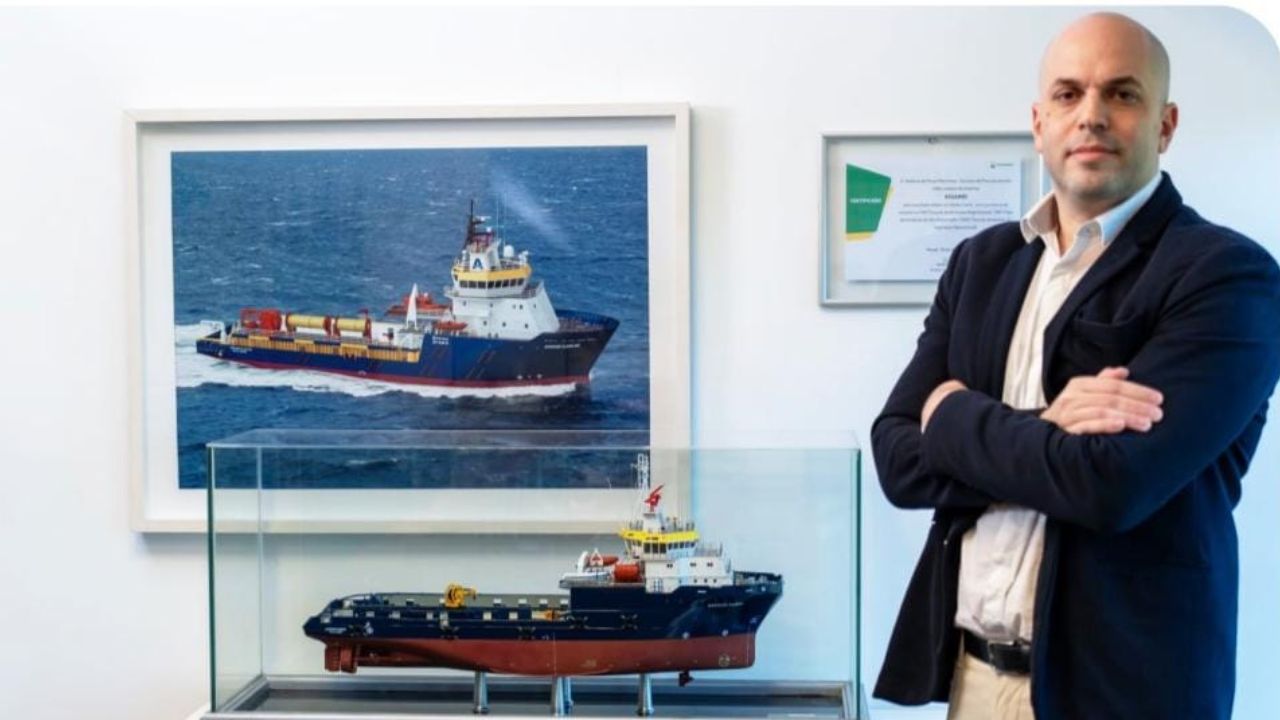
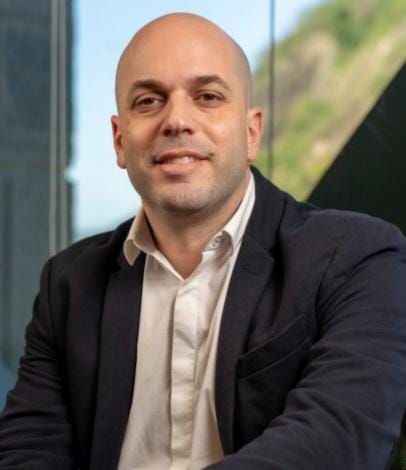
Fredric Fuerth, CEO of Asgaard Bourbon (Source: Asgaard Bourbon)
Let’s discuss ANTAQ, circularization, and blocks. What trends are you observing, and how do you assess the current scenario?
The primary challenge is meeting demand with a finite Brazilian fleet. Considering the four to five years typically required to deliver new vessels post-bid, temporary reliance on foreign or REB-registered vessels might be necessary. I anticipate a reduction in circularization and blocking practices due to the limited availability of Brazilian-flagged vessels, without diminishing the appetite for national flags.
You mentioned the energy matrix as a critical focus. Could you elaborate on this?
Brazil’s energy matrix is somewhat detached from global trends. While countries in Europe and North America are tackling heavy carbon footprints and prioritizing environmental projects, Brazil’s hydroelectric-dominated energy mix doesn’t generate the same urgency. This delayed prioritization could leave us at a disadvantage when the demand for greener solutions, like offshore wind support vessels, intensifies. Early adopters of these solutions stand to gain a competitive edge in future markets.
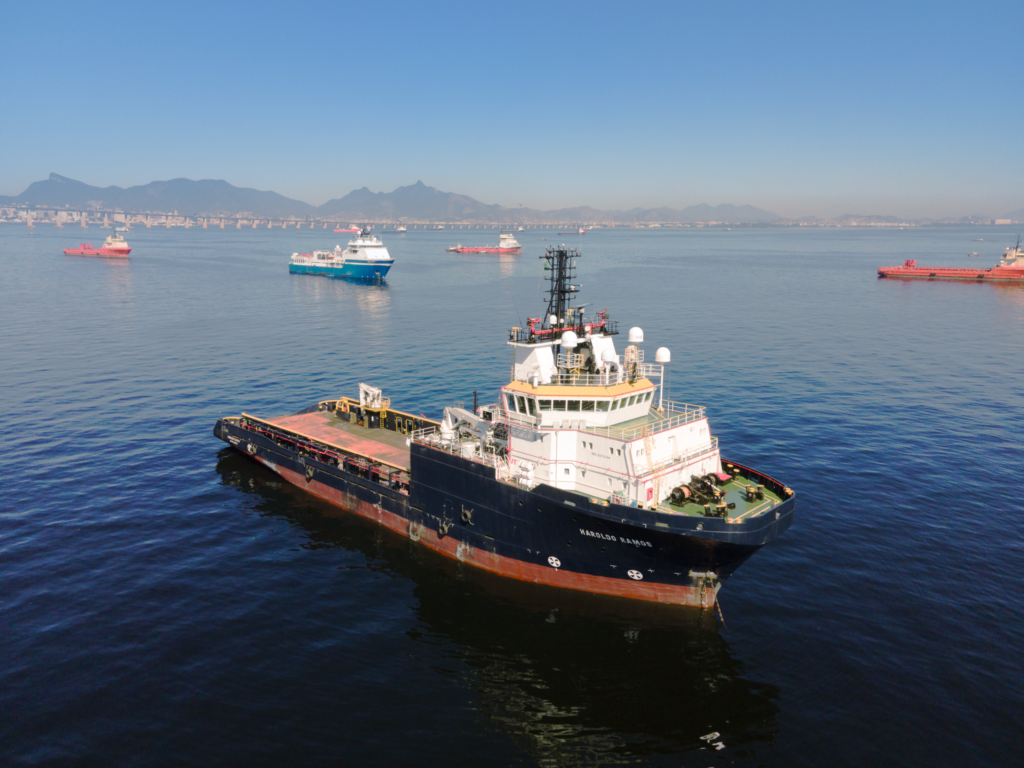
Haroldo Ramos, from Asgaard Bourbon (Source: Asgaard Bourbon)
How is Asgaard Bourbon positioning itself in this evolving landscape? What steps are you taking to differentiate?
As a group, we prioritize ESG considerations and strive to integrate these principles into our strategies. Brazil’s oil and gas industry must align with national environmental goals, moving beyond simplistic debates about whether the industry is “dirty” or not.
Our focus is on the carbon cycle as a whole. For instance, emissions are just the starting point; technologies that reduce or capture carbon, like Petrobras’ CO2 injection methods, represent the future. Developing alternatives that minimize environmental impact and achieve “net zero” goals is critical. The oil and gas sector must evolve as a source of technological innovation rather than being labeled a villain akin to the tobacco industry.
Energy transition is a gradual process. A balanced approach, such as capturing over 90% of CO2 emissions rather than halving emissions without capturing any, will yield lasting benefits. At Asgaard Bourbon, we are committed to turning ESG principles into actionable results.
You mentioned other companies making strides in the energy transition. Can you share some examples?
Several major players have rebranded and shifted focus to reflect the evolving energy landscape. Statoil became Equinor, emphasizing balance and equity. Total added “Energies” to its name, and Shell and BP have undertaken impactful renewable projects. These shifts signify a broader understanding that these companies are energy providers, not just oil operators. Such transformations challenge others to reevaluate their roles and align with changing global expectations.
What advice would you give to young professionals aspiring to join the energy sector?
The industry has shifted focus from oil and gas to energy as a whole, making adaptability crucial. While technical expertise remains vital, professionals who stand out will be those with diverse skills and flexibility. My advice is simple: be prepared. The rapid pace of technological advancements means that evolution is no longer on the horizon—it’s already here. Embrace it and position yourself to thrive in the unknown realities of the future.
Can you share a bit about your background and journey into the offshore industry?
I was born in Rio de Janeiro and spent part of my life in Goiás, where I initially studied electrical engineering. Later, I returned to Rio to pursue mechanical engineering at IME (Instituto Militar de Engenharia). During my studies, I explored opportunities in consulting, banking, and private equity, which equipped me with financial and management skills that have been invaluable in my career. I eventually transitioned to oil and gas, drawn by the sector’s potential, and have been in the industry for 15 years now.
What drew you from electrical to mechanical engineering?
As a curious child, I loved fixing things and understanding how they worked. Mechanical engineering offered a more tangible, hands-on experience, which resonated with my passion for practical applications of science.
How was your experience at Bram, and what did you learn?
Like my time at Intermoor, Bram was pivotal in developing both my technical and soft skills. I gained experience across operations, engineering, and commercial roles, working on projects that involved other group companies. This well-rounded exposure laid the foundation for my current management and commercial expertise.
As CEO of Asgaard Bourbon, how would you describe your relationship with the company?
When I joined MLog Group, I was tasked with leading its commercial department, which eventually evolved into Columbus Shipping. MLog’s partnership with Bourbon Marine & Logistics in 2022 to form Asgaard Bourbon has been a transformative journey. Drawing on my private equity and oil and gas experience, I’ve worked to strengthen the company’s position in Brazil’s offshore market. I completed my first year as CEO in May and remain committed to fostering sustainable growth.
What are your personal and professional aspirations?
My goal is to contribute meaningfully to the sustainable evolution of the oil and gas industry. Collaboration and innovation are essential to ensuring the industry’s longevity. Personally, I strive to stay informed, adopt best practices, and use my platform to drive positive change. At Asgaard Bourbon, I see immense potential to shape the industry’s future, and I’m excited to be part of this journey.
Transpetro, Petrobras’ subsidiary, has finalized negotiations with the Ecovix and Mac Laren consortium for the acquisition of four handy-size tankers (15-18k DWT). Among 20 pre-qualified bidders, this proposal stood out with a unit price of USD 69.5 million, totaling USD 278 million (approx. BRL 1.6 billion).
The contract is set to be signed in early 2025, when Transpetro/Petrobras also plans to issue a tender for eight gas carriers.
WSB Advisors is proud to have served as a consultant to the winning group in this bidding process.
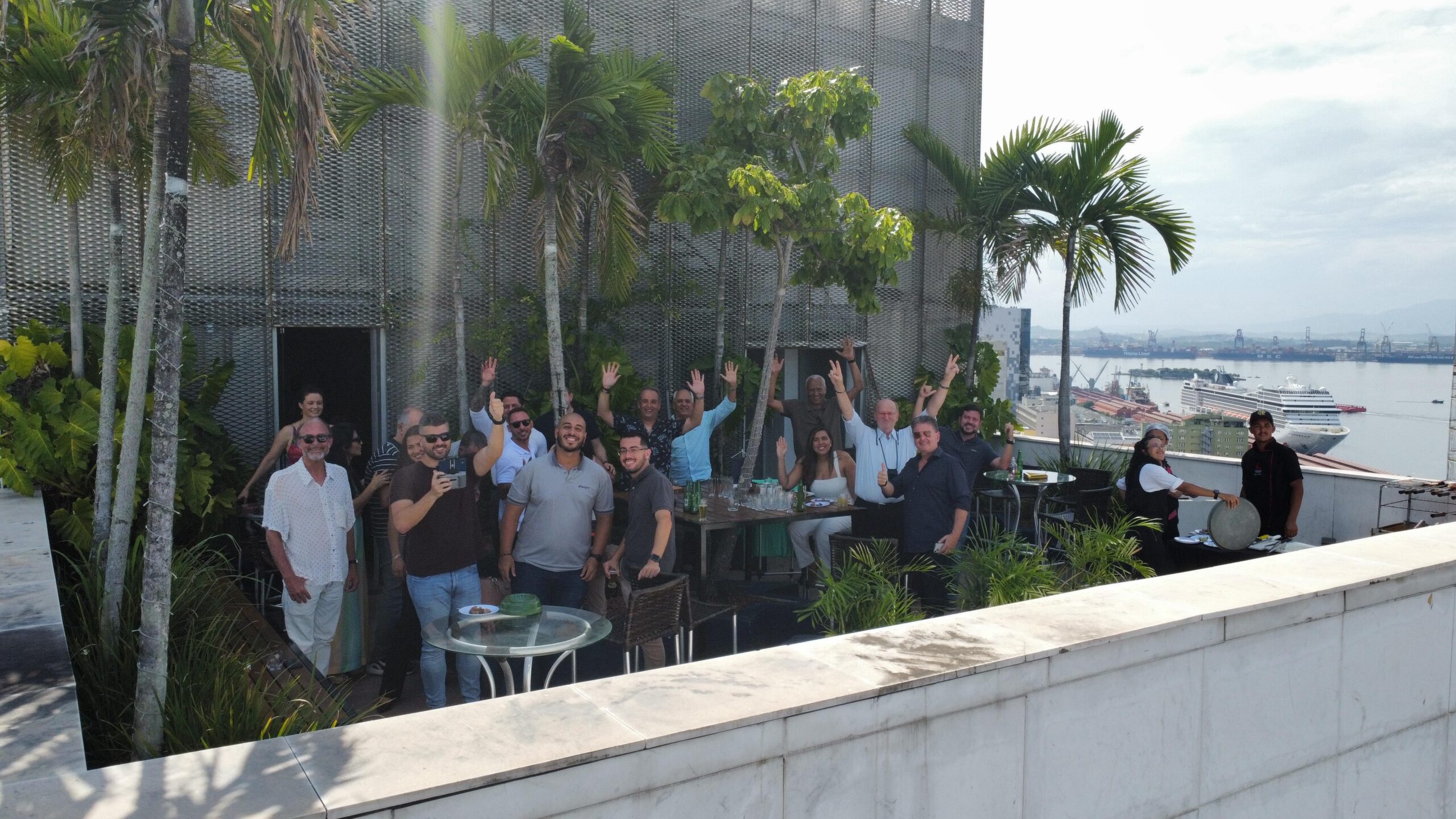
2024 concludes, and we take a moment to reflect and celebrate what has been an incredible year.
This year brought important changes to our team. While we bid farewell to some valued colleagues, having former employees join us at our year-end barbecue is a testament to the relationships we’ve nurtured and the partnerships we continue to build. At WSB Advisors, we are building a legacy as talent developers, shaping professionals who are sought after across the industry. As Richard Branson wisely said, “Train people well enough so they can leave, but treat them well enough so they want to stay.”
Another highlight of 2024 was our deep commitment to fieldwork. In the latter half of the year, our team was out on vessels, at shipyards, and within client facilities, experiencing firsthand the challenges faced by our partners. We learned a lot! To paraphrase Theodore Roosevelt, “Nobody cares how much you know until they know how much you care.” By being present in the field, we show our dedication to building genuine and lasting partnerships.
To all our employees, partners, and closest friends across WSB Advisors and the Westhon group, thank you for your tireless efforts and commitment. We look forward to even greater achievements in 2025. Cheers to all who make our journey worthwhile!