Tag: WSB

  • Open Tenders & More

    Open Tenders & More

    Dear All,

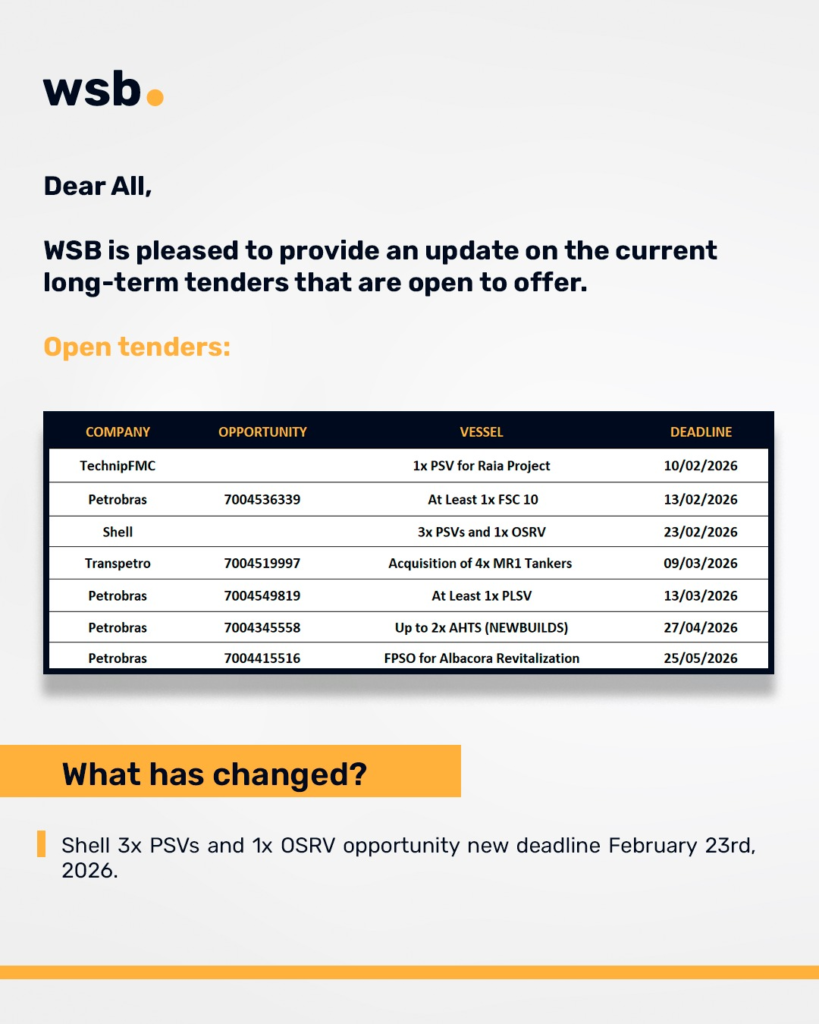
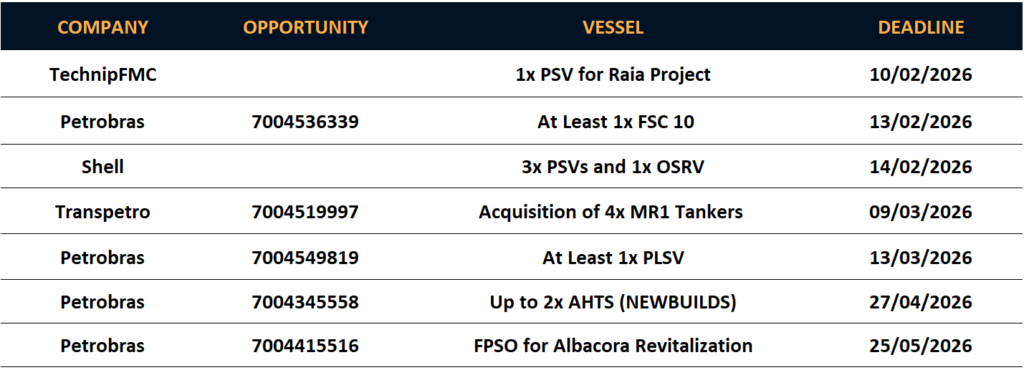
    WSB is pleased to provide an update on the current long-term tenders that are open to offer.


    Open tenders: What has changed?

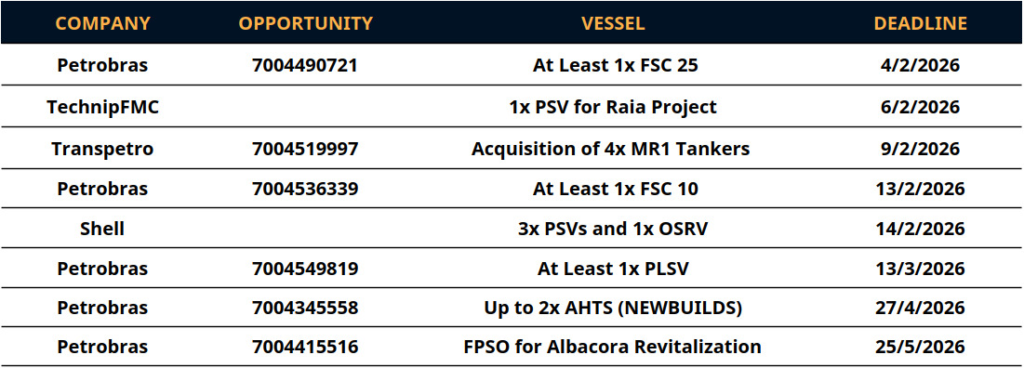
    Shell 3x PSVs and 1x OSRV opportunity new deadline February 23rd, 2026.

    Stay informed on key offshore developments — visit wsb-one.com, our data platform trusted by leading offshore companies.

  • Open tenders & More

    Open tenders & More

    Dear All,

    WSB is pleased to provide an update on the current long-term tenders that are open to offer.

    Open tenders:

    What has changed?

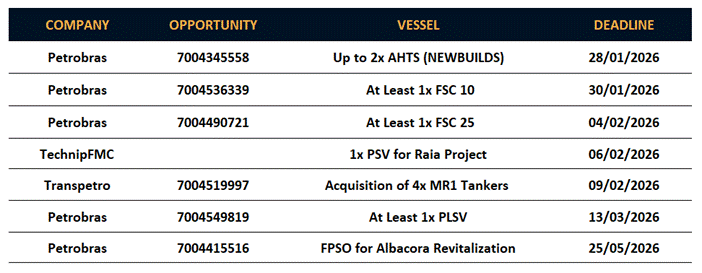
    • Petrobras Acquisition of 4x MR1 Tankers: Opportunity 7004519997 new deadline March 9th, 2026.
    • Technip 1x PSV for Raia Project new deadline February 10th, 2026.

    What else is happening?

    • Petrobras announced a partial annulment of the bidding process for the 6 SOVS tender (7004478234) due to technical and budgetary adjustments. The tender has been returned to the proposal stage, with revised documentation and a new submission timeline.
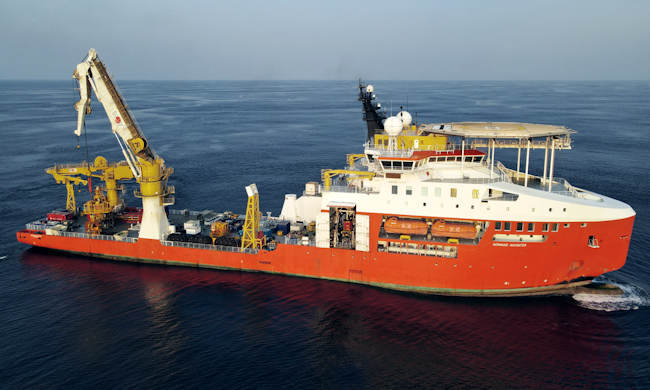
    • Solstad Maritime signed a Letter of Intent with an international subsea contractor for the CSV Normand Navigator,securing a 450-day contract starting in Q2 2026, supported by two work-class ROVs.
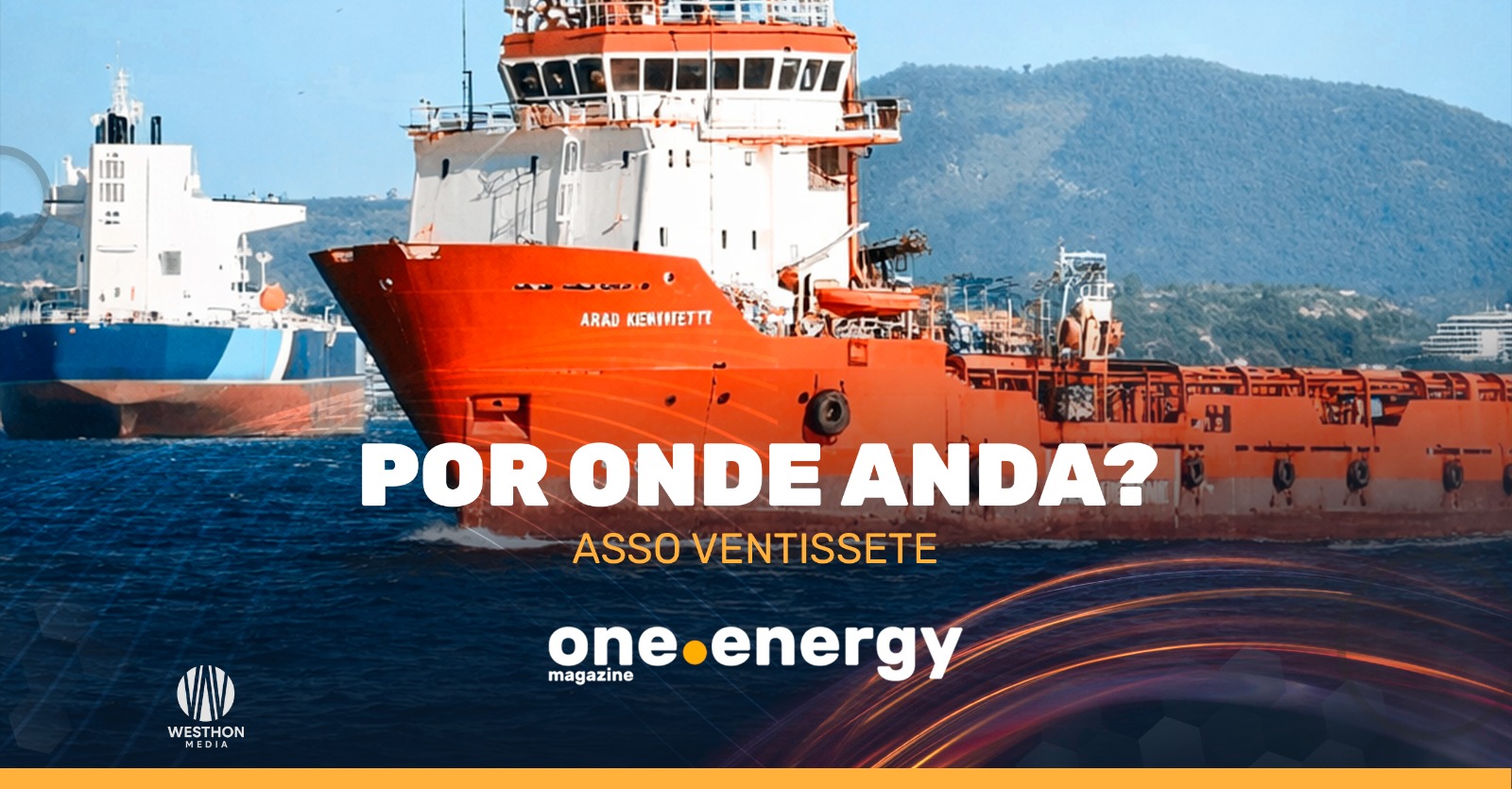
  • Special WSB: Por onde anda – Asso Ventisette

    Special WSB: Por onde anda – Asso Ventisette


    Versatility was never an exception for a PSV — it has always been part of the design.
    And increasingly, part of the challenge!

    What Asso Ventisette reveals is not a rule being broken, but a natural market filter: not every PSV can sustain extended operational roles outside the “script” over long cycles. Some step in. Very few remain.

    Built in 2007 at the former Aker Promar shipyard in Niterói, Asso Ventisette is based on the UT 755L design and classified as a PSV 3000, positioning herself within the mid-size segment that for many years formed the backbone of Brazil’s offshore logistics. With approximately 71.9 meters in length, 16 meters of beam and deadweight around 3,200 tonnes, the vessel offers about 685 m² of deck area and a cargo profile conceived for continuous offshore support rather than highly customized, single-purpose missions.

    Propulsion is provided by two Wärtsilä main engines, allowing speeds close to 14.5 knots. Dynamic positioning capability and FiFi1 notation expand operational scope, but these specifications alone do not explain the vessel’s differentiated trajectory.

    For more than four years, Asso Ventisette operated in continuous campaigns supporting shallow water diving operations for Petrobras, in cooperation with Belov. Without presenting herself as a dedicated SDSV, the vessel sustained this operational profile over a prolonged cycle — something that, in practice, few PSVs manage to achieve without compromising availability, cost efficiency, or reliability.

    The discussion here is not about typology, but about operational endurance. Extended offshore roles demand more than deck space and certificates; they require stable performance, disciplined maintenance, and operational trust built over time. Many PSVs can take on broader scopes. Few can remain there — and Asso Ventisette stands out precisely for that reason.

    So, where is she now?
    Based on market intelligence and WSB-One data, Asso Ventisette has been positioned in active employment within the PSV segment, with visibility for new contractual windows following the conclusion of the shallow diving support campaign. Vessel movement records indicate consistent offshore support activity, with operational presence in the Búzios and Roncador areas — environments where the PSV 3000 profile remains in demand by operators and logistics contract integrators.

    Sometimes, the difference between being employed or laid up is not on the spec sheet — it is how long a vessel can keep performing once the scope stops being purely theoretical.

    Every Thursday, a new “Por onde anda?” — stay tuned.

    Stay informed on key offshore and marine market developments — visit wsb-one.com

  • Breaking News

    Breaking News

    1. MODEC signs strategic LoI for offshore SOFC power generation system

    MODEC signed a Strategic Letter of Intent on 29 January 2026 with Eld Energy and Delta Electronics to jointly develop a solid oxide fuel cell (SOFC) power generation system for offshore and maritime applications. The agreement covers development of a 120 kW SOFC prototype module designed for FPSO integration, with onshore testing scheduled for 2027. According to the companies, the initiative targets higher energy efficiency and material reductions in greenhouse gas emissions from offshore operations.

    2. Brazil reaches record oil and gas production in 2025

    Brazil’s average oil and natural gas production reached a record 4.897 million barrels of oil equivalent per day in 2025, representing a 13.3% increase compared to 2024. Oil output averaged 3.77 million barrels per day, while natural gas production reached 179 million cubic meters per day, both historic highs.
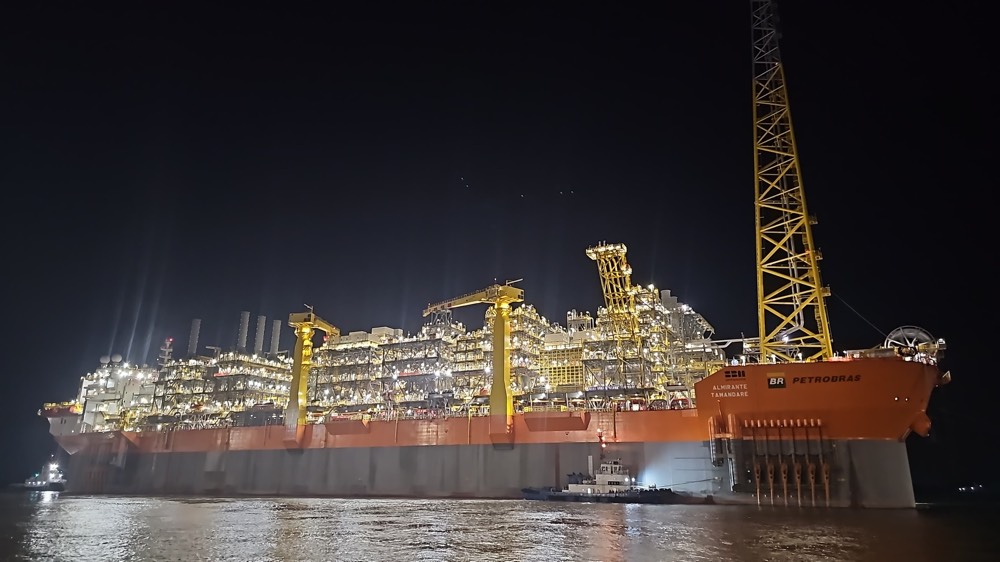
    Pre-salt fields accounted for nearly 80% of total national production during the year. In December, production totaled 5.237 million boe/d, led by the Tupi field and FPSOs Almirante Tamandaré and Guanabara.

    Stay informed on key offshore developments — visit wsb-one.com, our data platform trusted by leading offshore companies.

  • MR1 bid postponed

    MR1 bid postponed

    At the request of shipyards, Transpetro has postponed the deadline for submitting bids for the tender to acquire four MR1 tanker vessels. The new deadline has been set for March 9, exactly one month after the original closing date. The bidding process has been open since November and initially granted 90 days for bidders to submit their proposals.

    The tender covers the construction of four MR1 tankers, each with a 40,000 DWT capacity, intended for the transportation clean petroleum products along the Brazilian coast. Shipyards will be required to deliver the vessels within 33 months after contract signing. According to Transpetro, the ships will incorporate advanced technologies aimed at improving energy efficiency and reducing greenhouse gas emissions.

    Contract signing is expected to take place in the third quarter of this year (July–September).

    This bidding round follows previous tenders for 18 barges and 18 pushers, as well as four LR1 tankers, reinforcing Petrobras’ long-term logistics strategy and the ongoing revival of Brazil’s shipbuilding industry. Recently, Transpetro held an exclusive supplier event in Rio de Janeiro, where technical guidelines for the project were presented.

  • Open Tenders & More

    Open Tenders & More

    Dear All,

    WSB is pleased to provide an update on the current long-term tenders that are open to offer.

    Open tenders:

    What has changed?

    • Petrobras Al least 1x FSC 10: Opportunity 7004536339 has postponed until March 13rd, 2026.

    What else is happening?

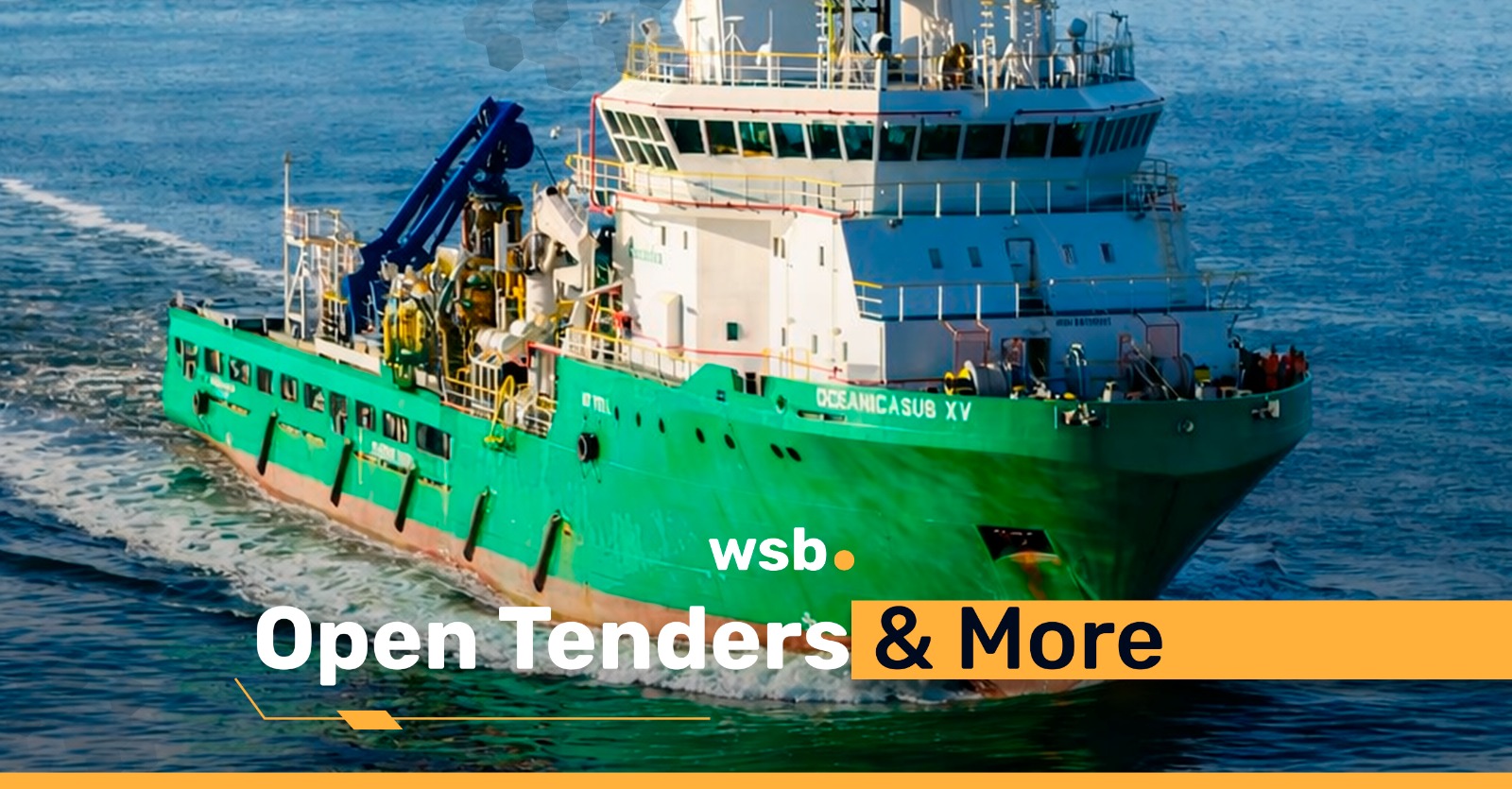
    • OceanicaSub XV (ex-Far Scimitar) has commenced a firm 4-year contract with Petrobras, with additional extension options.
    • Wilson Sons delivered the WS Halcyon yesterday in Rio de Janeiro, the first of a new series of three high-powered 2312 class tugboats built at its Guarujá shipyard, featuring 70 tonnes of bollard pull.
  • Brazil and Panama sign landmark agreement to develop a Green Maritime Corridor

    Brazil and Panama sign landmark agreement to develop a Green Maritime Corridor

    Agreement aims to accelerate the energy transition of maritime transport, focusing on sustainable fuels and logistics innovation

    Brazil and Panama announced last Wednesday (January 28) the signing of a strategic agreement to develop studies for the creation of a Green Maritime Corridor between the two countries. The initiative is intended to promote the use of sustainable fuels in shipping and to advance the decarbonization of one of the most important logistics routes in the hemisphere.

    The agreement, formalized at the conclusion of the Brazilian government’s official mission to Panama, is structured around four key pillars of cooperation: competitiveness and new trade routes, decarbonization of maritime transport, technological modernization through the use of artificial intelligence and Big Data, and workforce training and capacity building for the sector.

    The route between Brazil and the Panama Canal handles an average of 5.8 million tonnes of cargo per year, standing out as one of the most relevant corridors in international maritime logistics. The commitment aligns both countries with global greenhouse gas reduction targets and with the broader energy transition agenda of the maritime sector.

    In Brazil, this movement is already supported by regulatory and operational initiatives. A survey conducted by the National Waterway Transportation Agency (Antaq) shows that at least five Brazilian ports currently offer incentives for vessels with a lower carbon footprint: Itaqui (MA), the Pecém Private Use Terminal (CE), Paranaguá (PR), Santos (SP), and the Açu Private Use Terminal (RJ).

    The agreement also positions Brazil at the forefront of the maritime energy transition agenda in Latin America. Globally, maritime transport accounts for approximately 3% of total greenhouse gas emissions, underscoring the strategic importance of initiatives such as green corridors to decarbonize ocean shipping and support the achievement of net-zero emissions targets by 2050.

    Stay informed on key offshore developments — visit wsb-one.com, our data platform trusted by leading offshore companies.

    #EnergyTransition #GreenMaritimeCorridor #MaritimeTransport #Decarbonization #SustainableFuels #MarineIndustry #Shipping #PortInfrastructure #BlueEconomy #Offshore #Logistics #Brazil #Panama #WSBAdvisors #WesthonMedia

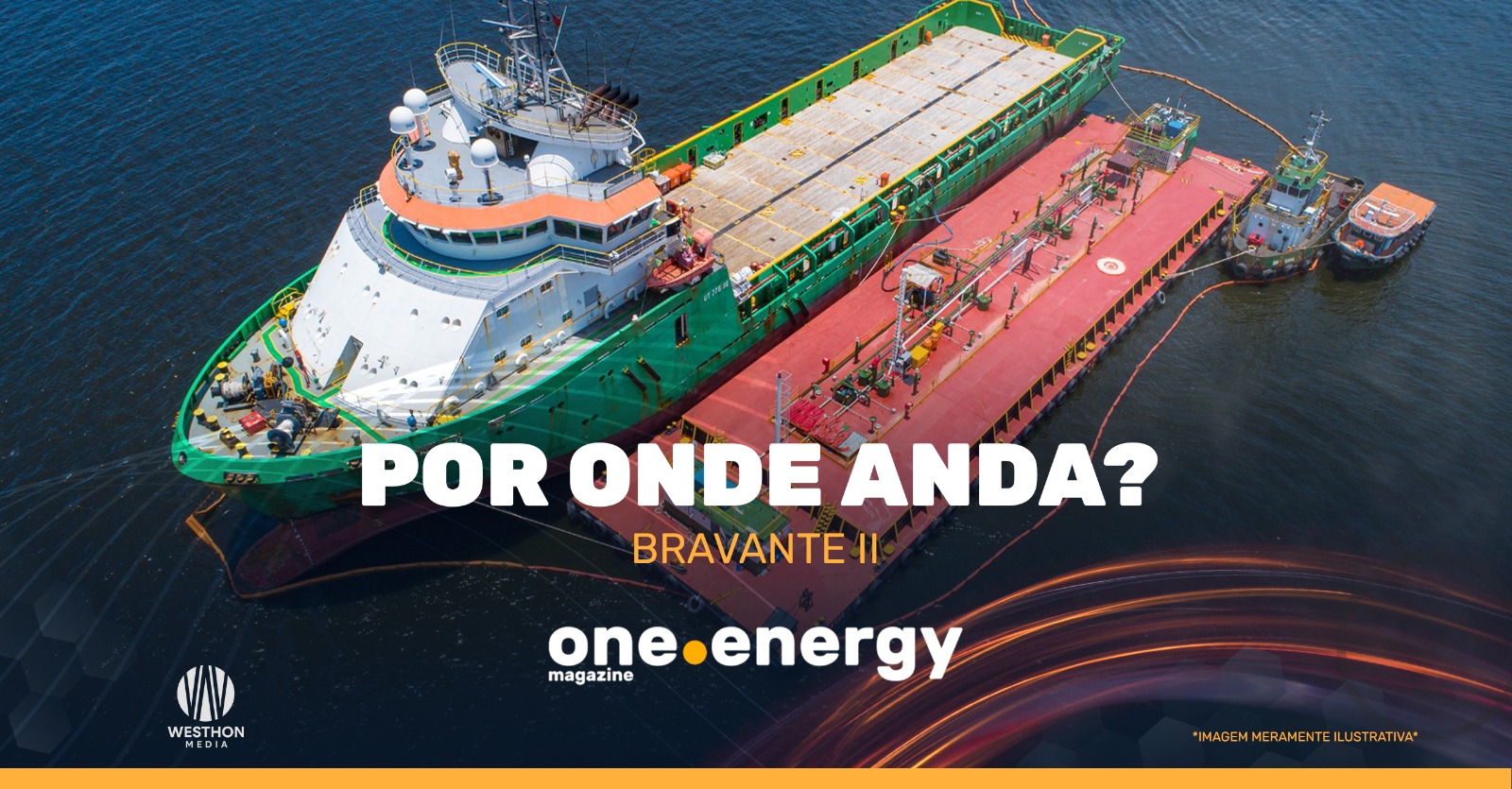
  • Special WSB: Por onde anda? Bravante II

    Special WSB: Por onde anda? Bravante II

    Forged to cross cycles — not just to fit a single market moment — Bravante II is one of those assets that, on the offshore Brazilian Battleship board, remained marked as operational while many peers had already been crossed out. Built in Brazil, it not only survived the sector’s turning point but preserved operational relevance when a large portion of the fleet fell behind.

    Built in 2017 by Estaleiro Navegação São Miguel, Bravante II belongs to a generation of offshore support vessels developed under a more disciplined environment, shaped by stricter technical, regulatory and operational requirements than those seen during the accelerated expansion phase of the previous decade.

    Classified as a PSV, Bravante II was designed to meet the typical logistics demands of Brazil’s Campos and Santos basins. With 87.9 meters LOA, 19.04 meters of beam, gross tonnage of approximately 3,983, and deadweight estimated at around 5,500 tonnes, it positions itself as a large PSV.

    From a technical standpoint, the vessel follows a more conservative concept, featuring diesel-electric propulsion with total installed power of approximately 8,500 kW, an arrangement focused on operational robustness, energy efficiency and reliability during extended campaigns. The deck area, close to 850 m², reinforces a functional profile that prioritizes cargo flow, operational simplicity and ease of maintenance — characteristics that, under demanding offshore conditions, continue to be decisive.

    Since entering service, Bravante II has remained focused on the Brazilian market, operating predominantly in regular offshore support campaigns. Unlike vessels that went through prolonged lay-up periods or multiple ownership changes, it has maintained a relatively stable trajectory, reflecting a fleet management approach centered on availability and operational predictability.

    Public tracking data indicate that, in 2026, Bravante II remains active, with AIS in operation and recent movement history. During this period, the vessel has been employed in support Pipeline project, operating on routes between Guarujá and the Raia area, assisting logistical activities associated with the Castorone pipelay vessel and the heavy-lift support chain involved in subsea infrastructure installation. There are no public records of major technical incidents, propulsion losses or structural events that have compromised its operational performance over time.

    And here lies the question the market rarely puts on paper: why does a vessel built in 2017, with a more conservative design, continue to “take jobs” from newer units? The answer lies less in cutting-edge technology and more in reliability, real availability and disciplined fleet management — attributes that, in tighter demand cycles, weigh heavily in chartering decisions.

    The vessel is a reminder that, in Brazilian offshore operations, doing the job well — for a long time — remains a tangible competitive advantage!

  • ANP: strategic decisions

    ANP: strategic decisions

    The National Agency of Petroleum, Natural Gas and Biofuels (ANP) has advanced a broad set of regulatory and strategic decisions with implications for exploration policy, contractual frameworks, project development and Brazil’s energy transition agenda across the oil and gas sector.

    ANP approved the draft of the updated Production Sharing Permanent Offer (OPP) bidding round notice, incorporating 17 additional exploratory blocks and bringing the total number of areas under consideration to 25. The proposal was unanimously endorsed by the Agency’s Board and will now be forwarded to the Ministry of Mines and Energy (MME) for review, followed by a public hearing prior to final approval and publication. Of the 25 blocks, nine already hold environmental feasibility clearances, while the remaining 16 await a Joint Manifestation by the MME and the Ministry of the Environment. The expansion seeks to reinforce Brazil’s upstream exploration pipeline, while also highlighting the regulatory interdependencies between licensing and interministerial coordination.

    In oversight of upstream development plans, ANP denied an appeal filed by Equinor related to the Raia project in the Campos Basin. The Agency upheld its decision to classify the reservoir as a single field, rejecting the proposal to split it into Raia Manta and Raia Pintada. According to ANP, the areas originate from the same exploratory block (BM-C-33) and share infrastructure and production flow, characterizing an integrated development. As a result, the unified development plan submitted by Equinor and its partners was approved, with potential fiscal implications given the application of participation special rules to unified fields.

    Another relevant regulatory decision addressed deepwater gas developments in the Sergipe-Alagoas Basin. At its meeting on 26 January, ANP approved the revised development plan for the Sergipe Águas Profundas project and exceptionally extended the concession terms for the SEAP-1 and SEAP-2 areas prior to the start of production. The measure provides long-term contractual visibility and aligns concession horizons with the expected operational lifespan of offshore infrastructure, supporting the economic viability of the project. Petrobras is required to submit updated plans reflecting the Agency’s technical requirements within the established regulatory timeframe.

    On the regulatory front for decommissioning, ANP advanced the process to revise Resolution No. 854/2021, which governs financial guarantees for the decommissioning of oil and gas facilities. The Board approved the public consultation report and identified the need for adjustments to the draft resolution, including alignment with recent legislation and enhancements to the performance bond insurance model. Technical departments were tasked with updating the regulatory framework, defining implementation strategies and establishing procedures related to insurer notification and compliance.

    In the renewable fuels segment, ANP granted its first authorization for the production and commercialization of Bio-GL, a renewable liquefied gas equivalent to LPG, to the Riograndense Refinery in Rio Grande do Sul. Produced using 100% plant-based feedstock, Bio-GL underwent industrial and laboratory testing that confirmed compliance with technical specifications and its suitability as a drop-in fuel. The product has the potential to reduce CO₂ emissions by approximately 65% to 70% compared to conventional fossil LPG.

    Taken together, these decisions illustrate ANP’s multi-front regulatory role: expanding exploration opportunities, providing clarity on upstream project development, modernizing decommissioning rules and enabling the introduction of renewable fuels. The scope and sequencing of the measures also underline the complexity of aligning industrial policy, environmental licensing and fiscal frameworks — factors that will continue to shape investment decisions across Brazil’s upstream and midstream segments in the coming years.

  • Open Tenders & More

    Open Tenders & More

    Dear All,

    WSB is pleased to provide an update on the current long-term tenders that are open to offer.

    Open tenders:

    What has changed?

    • Petrobras At least 1x PLSV: Opportunity 7004549819 released January 14th, 2026.

    What else is happening?

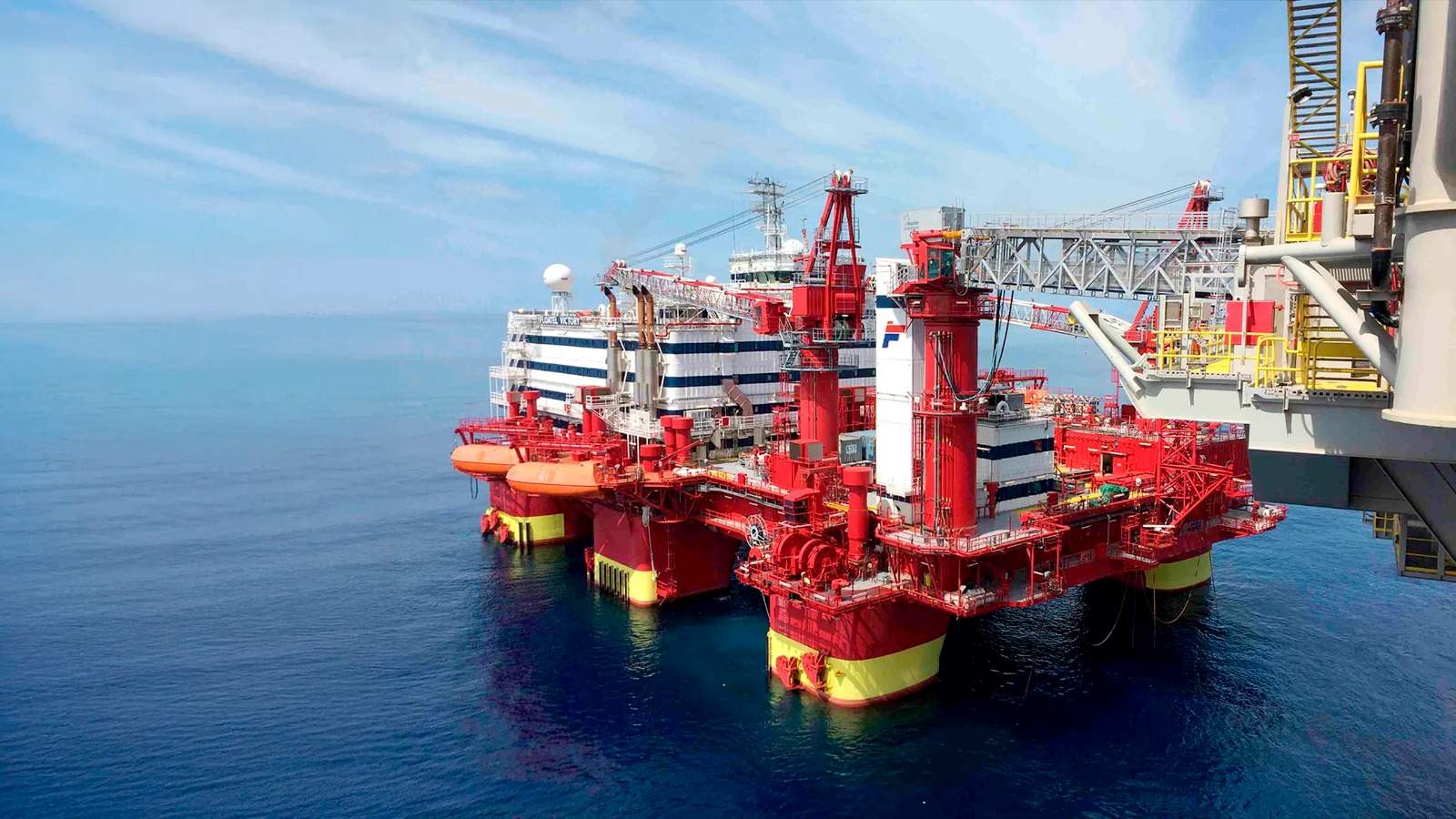
    • Floatel Victory is due to move to Karoon for a 4-6-month period after the end of its contract with PRIO, scheduled for Q1 2026 (following takeover of the field from Equinor). Rumors of a PSV will also support the floatel operation, providing supply duties to the accommodation unit.
    • Lagunero has arrived at the Guanabara Bay anchorage, where it is preparing to start an accommodation contract with Petrobras.
    • Competitive market: a high number of PSV bids is expected in the ongoing in the TechnipFMC tender, in light of Petrobras’ slowing down chartering demand.
    • OTSV Marina I has gone through an early termination by Petrobras for not meeting the technical/operational required performance

  • Special WSB: Por onde anda?

    Special WSB: Por onde anda?

    Launched in 2006 and 2007 respectively at Estaleiro Ilha S.A. (EISA), in Rio de Janeiro, the Platform Supply Vessels UP Topazio and UP Diamante represent a mature phase of Brazil’s offshore support vessel construction cycle, when local shipyards were delivering standardized PSVs to meet the rapid expansion of offshore logistics demand.

    Built as mid-size Offshore Support Vessels, both units share similar dimensions, with approximately 84.6 meters in length, 16.6 meters of beam and deadweight close to 4,200–4,300 tonnes. Designed for cargo transport, fluid handling and general offshore support, they were conceived to operate across Brazil’s offshore basins during a period of high fleet utilization.

    Registered under Brazilian flag and delivered to UP Offshore Apoio Marítimo, the vessels became part of a generation of PSVs that formed backbone of offshore logistics during 2000s and early 2010s. Like many assets of the same vintage, their operational trajectories were directly affected by sharp contraction of Brazilian offshore market after 2015, when contract terminations and vessel oversupply reshaped fleet dynamics. In this context, UP Offshore underwent a corporate reorganization, culminating in May 2021, when OceanPact concluded the acquisition of UP Offshore’s operations and legacy assets, through a corporate succession process rather than a direct vessel-by-vessel acquisition.

    From an operational standpoint, public tracking data points to a gradual exit from active service. UP Topazio still showed port-related activity in Itajaí, Santa Catarina, throughout 2024, indicating residual movements or repositioning before entering lay-up. Since then, no public AIS transmissions have been recorded. UP Diamante presents an even longer period of inactivity, with its last publicly available AIS signal dating back to June 2017, when the vessel was recorded in Rio de Janeiro.

    Today, both UP Topazio and UP Diamante are understood to be in lay-up, with no publicly visible signs of active offshore operations. Their trajectories reflect a broader reality of Brazil’s offshore support fleet, where technically viable vessels remain sidelined, awaiting either reactivation, repurposing or definitive retirement.

    Are they deteriorating quietly — or simply waiting?

    There are no public records indicating flooding, leaks, loss of propulsion or major technical incidents during their operational lives. At the same time, there are no visible signals of reactivation planning, sale processes or dismantling intentions. Curiously, both units still appear listed within OceanPact’s fleet on its corporate website, as if commercially available — a detail that contrasts with their prolonged operational silence. In absence of disclosures, silence itself becomes part of the story.

    As offshore activity selectively resumes and fleet availability tightens, the question remains — could these assets still find a path back into operation, or do they mark the closing chapter of a generation shaped by a very different market cycle?

    Every Thursday, a new “Por onde anda?” — stay tuned.

    Stay informed on key offshore and marine market developments — visit wsb-one.com.
  • Riograndense Refinery: R$ 6 bi

    Riograndense Refinery: R$ 6 bi

    Petrobras announced plans to convert the Riograndense Refinery, located in Rio Grande (RS), into Brazil’s first biorefinery, marking a significant step in the company’s strategy to expand production of lower-carbon fuels. The announcement was made on 20 January 2026 by Petrobras President Magda Chambriard during the contract-signing ceremony of the Mar Aberto program.

    According to Petrobras, the transformation is expected to begin in the second half of 2026 and will require investments of approximately R$ 6 billion. The project foresees the production of 100% bio-based products, repositioning the refinery within Petrobras’ refining portfolio and aligning the asset with the company’s energy transition roadmap.

    Magda Chambriard
    Magda Chambriard (Source: Petrobras)


    The event took place at the Ecovix Construções Oceânicas S.A. / Estaleiro Rio Grande S.A. facilities and was attended by Petrobras and Transpetro – Petrobras Transporte S. A. executives, federal authorities and industry representatives. Johan Paul Kempers, representing WSB Advisors, was present in connection with Ecovix and the Rio Grande shipyard, reinforcing WSB’s ongoing involvement and monitoring of strategic industrial developments linked to Brazil’s offshore and naval sectors.

    Petrobras has been conducting technical and industrial tests since 2023 to assess the feasibility of the conversion, with investments of around R$ 45 million, supported by financial contributions from partners Braskem and Grupo Ultra. These tests focus on adapting existing processes and evaluating technological routes for biofuel production.

    Founded in 1937, the Riograndense Refinery is the oldest refinery in Brazil, predating Petrobras itself. The facility currently has an installed capacity of approximately 17,000 barrels per day and produces road and marine fuels, petrochemical naphtha, LPG, solvents and specialty products. The planned conversion represents a strategic repositioning of the asset in response to evolving market and regulatory demands in the energy sector.

    Stay informed on key offshore developments — visit wsb-one.com, our data platform trusted by leading offshore companies.